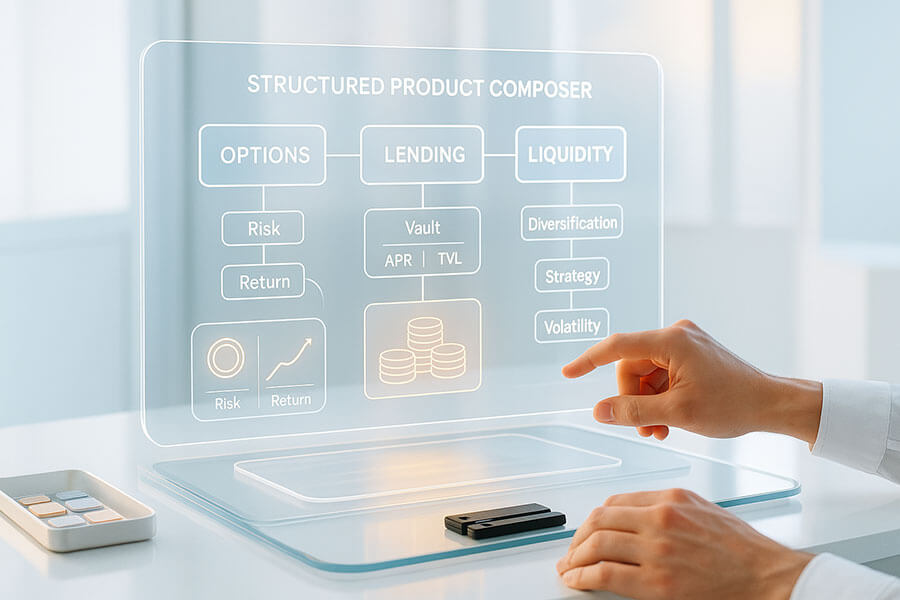
The financial landscape stands at a pivotal moment where technology and innovation converge to reshape how investors access sophisticated investment strategies. Structured products, once the exclusive domain of institutional investors and high-net-worth individuals with access to premium banking services, are undergoing a profound transformation through decentralized finance protocols. These complex financial instruments, which combine multiple components to create tailored risk-return profiles, now operate on blockchain networks that eliminate traditional intermediaries and democratize access to advanced investment strategies.
Traditional structured products have long served as powerful tools for investors seeking customized exposure to various assets while managing specific risk parameters. Investment banks have packaged combinations of bonds, options, and derivatives into products that offer principal protection, enhanced yields, or leveraged returns based on sophisticated financial engineering. However, these instruments typically require minimum investments of hundreds of thousands of dollars, involve opaque pricing mechanisms, and generate substantial fees for intermediaries who design, distribute, and manage them. The complexity and cost structure effectively exclude most individual investors from accessing these strategies.
Decentralized finance has fundamentally altered this paradigm by enabling the creation and distribution of structured products through smart contracts operating on public blockchains. These protocols automate the construction, management, and settlement of complex financial strategies without requiring banks, brokers, or other traditional intermediaries. Investors with as little as a few hundred dollars can now access sophisticated yield-enhancement strategies, principal-protected investments, and options-based products that previously required institutional relationships and substantial capital commitments. The transparency inherent in blockchain technology ensures that pricing mechanisms, fee structures, and risk parameters are visible to all participants rather than obscured within proprietary banking systems.
The emergence of DeFi structured products represents more than simple technological substitution of existing financial instruments. These protocols introduce entirely new capabilities that were impossible in traditional finance, including composability that allows products to interact seamlessly across multiple platforms, continuous 24/7 trading and rebalancing, programmable strategies that execute automatically based on market conditions, and transparent on-chain verification of all transactions and positions. The permissionless nature of these systems means that anyone can create, modify, or access structured products without requiring approval from financial gatekeepers or regulatory authorities in most jurisdictions.
The implications extend far beyond individual investment opportunities to encompass broader questions about financial inclusion, market efficiency, and the future architecture of global capital markets. When sophisticated investment strategies become accessible to anyone with internet connectivity and modest capital, the concentration of financial advantages among wealthy individuals and institutions begins to erode. Innovation accelerates as developers worldwide can build upon existing protocols without requiring permission or partnerships with established financial institutions. Market efficiency improves as transparent pricing and automated execution eliminate information asymmetries that have long benefited insiders at the expense of retail investors.
Understanding this transformation requires examining both the technical foundations that enable DeFi structured products and the practical implications for investors navigating these emerging markets. The journey from traditional structured products to decentralized alternatives involves not just technological innovation but fundamental reconceptions of how financial instruments are designed, distributed, and managed. As these systems mature and adoption accelerates, they promise to reshape investment strategies and portfolio construction for both individual and institutional participants in ways that are only beginning to emerge.
The current moment presents both extraordinary opportunities and significant challenges for investors seeking to understand and utilize DeFi structured products. Early adopters have already demonstrated the viability of these approaches through successful implementations that generate substantial returns while managing risks through sophisticated automated strategies. However, the nascent nature of these markets also creates uncertainties around smart contract security, regulatory treatment, and long-term sustainability that require careful consideration. Navigating this landscape demands both technical understanding and financial sophistication to distinguish genuine innovations from speculative experiments unlikely to endure.
Understanding DeFi Fundamentals
Decentralized finance represents a paradigm shift in how financial services are delivered, moving away from centralized institutions toward peer-to-peer networks operating through transparent, programmable smart contracts on public blockchains. Unlike traditional financial systems where banks, brokers, and exchanges serve as trusted intermediaries controlling user funds and facilitating transactions, DeFi protocols enable direct interactions between participants through self-executing code that automatically enforces agreement terms without requiring human oversight or institutional trust.
The foundation of DeFi rests on blockchain technology, which maintains synchronized, tamper-resistant records of all transactions across a distributed network of computers. This architecture eliminates single points of failure while ensuring that transaction histories remain immutable and publicly verifiable. When users interact with DeFi protocols, their transactions are recorded on the blockchain where they can be independently verified by anyone, creating unprecedented transparency compared to traditional financial systems where transaction details remain hidden within proprietary databases controlled by financial institutions.
Smart contracts serve as the fundamental building blocks of DeFi applications, enabling complex financial logic to execute automatically based on predefined conditions without intermediary involvement. These programs operate deterministically, meaning they produce identical results given the same inputs regardless of who executes them or when. This programmability enables financial products and services that automatically adjust to market conditions, execute multi-step strategies, and interact seamlessly with other protocols in ways impossible within traditional financial infrastructure constrained by manual processes and isolated institutional systems.
The composability of DeFi protocols creates powerful network effects where each new application can build upon existing infrastructure rather than developing in isolation. A lending protocol can integrate with a decentralized exchange to enable leveraged trading, while that exchange can combine with options protocols to create complex derivatives strategies. This interconnectedness allows developers to construct sophisticated financial products by combining simpler components, much like software developers build applications using modular libraries rather than coding everything from scratch.
Core DeFi Protocols and Building Blocks
Lending protocols form one of the essential foundations for DeFi structured products by enabling users to deposit assets to earn interest or borrow assets by providing collateral. These platforms operate through smart contracts that automatically match lenders with borrowers while calculating interest rates based on supply and demand dynamics for each asset. The overcollateralization requirements, where borrowers must deposit assets worth more than their loan value, protect lenders from default risk while eliminating the need for credit checks, identity verification, or institutional intermediaries.
Decentralized exchanges and automated market makers revolutionized digital asset trading by replacing traditional order book systems with liquidity pools where users can swap tokens instantly without requiring counterparties for each trade. These protocols use mathematical formulas to determine exchange rates based on the ratio of assets in liquidity pools, enabling continuous trading without relying on centralized exchange operators. The ability to execute trades and rebalance positions automatically through smart contracts provides crucial functionality for structured products that must adjust holdings based on market movements or predefined strategies.
Liquidity pools serve as the mechanism through which users provide capital to enable trading, lending, and other DeFi activities while earning returns on their deposited assets. These pools aggregate capital from many participants who earn proportional shares of fees generated by protocol activity. The concept enables structured products to access deep liquidity for executing strategies while allowing retail investors to participate in market-making activities traditionally dominated by institutional trading firms with substantial capital requirements.
Options protocols have emerged as critical infrastructure for creating structured products that incorporate derivatives strategies. These platforms enable users to buy and sell options on various digital assets, providing the building blocks for yield enhancement through covered calls, principal protection through put options, and complex multi-leg strategies that offer customized risk-return profiles. The automated settlement and transparent pricing of these on-chain options eliminate counterparty risk and pricing opacity that plague traditional options markets.
The integration of these core protocols creates an ecosystem where complex structured products can be constructed by combining lending, trading, liquidity provision, and derivatives strategies through composable smart contracts. A single structured product might simultaneously deposit collateral in a lending protocol, write covered call options, provide liquidity to automated market makers, and automatically rebalance positions based on market conditions—all without requiring manual intervention or centralized coordination. This capability transforms how financial products are engineered and delivered to end users.
What Are Structured Products
Structured products represent pre-packaged investment strategies that combine multiple financial instruments to achieve specific risk-return objectives that cannot be easily replicated through simple direct investments. These instruments typically merge a fixed-income component with derivatives exposure, creating payoff structures tailored to particular market views, risk tolerances, or investment horizons. An investor might purchase a structured note that provides principal protection while offering returns linked to equity market performance, enabling upside participation without full downside risk.
The appeal of structured products lies in their ability to address specific investment needs through customized strategies constructed by financial engineers. Traditional investors seeking equity-like returns with downside protection might purchase notes combining zero-coupon bonds with call options on stock indices. Those wanting enhanced income in low-yield environments might invest in products that sell covered calls to generate premium income while sacrificing some upside potential. Sophisticated strategies can target very specific market scenarios, such as profiting from low volatility or capturing returns within defined price ranges.
Financial institutions historically dominated structured product creation due to the expertise, infrastructure, and capital required to design, hedge, and manage these complex instruments. Banks employ teams of quantitative analysts, traders, and risk managers to construct products that meet client specifications while ensuring the institution can hedge its obligations and earn appropriate compensation for risks undertaken. This institutional involvement generates substantial fees that reduce returns for end investors while creating information asymmetries between product designers and purchasers who may not fully understand the pricing and risk characteristics.
The complexity of traditional structured products often obscures their true costs and risks from investors who lack sophisticated financial expertise. Pricing mechanisms frequently incorporate embedded fees and wide bid-ask spreads that benefit issuers at investor expense. Liquidity limitations prevent investors from exiting positions before maturity without accepting significant discounts. Credit risk exposure to the issuing institution means that even principal-protected products can result in losses if the bank fails, as investors learned during the financial crisis when several major institutions offering structured products faced solvency concerns.
Traditional Structured Products vs DeFi Structured Products
The fundamental differences between traditional and decentralized structured products extend beyond mere technological implementation to encompass accessibility, transparency, cost structure, and functional capabilities. Traditional products require minimum investments typically starting at fifty thousand dollars and often exceeding several hundred thousand dollars, effectively limiting participation to wealthy individuals and institutions. DeFi alternatives enable participation with capital as modest as a few hundred dollars, democratizing access to sophisticated strategies previously reserved for affluent investors with premium banking relationships.
Transparency represents perhaps the most dramatic distinction between these approaches. Traditional structured products involve opaque pricing where issuers determine valuations using proprietary models that investors cannot verify or challenge. Fee structures may be complex and partially hidden within pricing spreads rather than explicitly disclosed. DeFi protocols operate through open-source smart contracts where all logic, pricing formulas, and fee calculations are publicly visible and independently verifiable. Any participant can audit the code to understand exactly how strategies function and how returns are generated and distributed.
The cost differential between traditional and decentralized structured products reflects the elimination of intermediary fees and operational overhead. Banks offering traditional products must recoup expenses for sales teams, compliance departments, legal counsel, and technology infrastructure while generating profits for shareholders. These costs manifest in the form of high fees that erode investor returns. DeFi protocols automate most operational functions through smart contracts, dramatically reducing costs that are often limited to small percentage fees charged by protocol developers and governance participants.
Liquidity characteristics differ substantially between these models, with significant implications for investors who may need to exit positions before maturity. Traditional structured products typically trade in over-the-counter markets with limited liquidity where sellers must often accept substantial discounts to unwind positions early. DeFi structured products frequently incorporate exit mechanisms enabling users to withdraw capital with minimal friction, though this depends on the specific protocol design and market conditions. The continuous 24/7 operation of blockchain networks contrasts with traditional markets constrained by business hours and settlement delays.
Composability and programmability introduce entirely new capabilities in DeFi structured products that have no traditional equivalents. These protocols can interact seamlessly with other DeFi applications, enabling dynamic strategies that automatically adjust based on market conditions, combine exposures across multiple platforms, and execute complex multi-step transactions within single atomic operations. The programmable nature allows strategies to be customized and modified more easily than traditional products that require complete restructuring by institutional product teams to implement changes.
Types of Structured Products in DeFi
The landscape of DeFi structured products has evolved rapidly as developers experiment with translating traditional strategies to decentralized protocols while inventing entirely new approaches enabled by blockchain capabilities. These products span a spectrum from simple yield-enhancement strategies accessible to beginners to complex exotic instruments requiring sophisticated understanding of options pricing, volatility dynamics, and DeFi protocol interactions. The diversity reflects both the maturation of DeFi infrastructure and the creativity of developers building on composable blockchain foundations.
Product categories generally align with specific investor objectives including income generation, capital preservation, leveraged exposure, or targeted speculation on particular market scenarios. Yield-enhancement products aim to generate returns exceeding simple buy-and-hold strategies through automated options writing, lending optimization, or liquidity provision across multiple platforms. Principal-protected structures prioritize capital preservation while providing limited upside participation. Leveraged products amplify returns through borrowed capital or derivatives exposure. Exotic strategies target specific market conditions like range-bound trading or volatility harvesting.
The accessibility of these products varies considerably based on complexity and risk profiles. Simple covered call strategies implemented through user-friendly vaults require minimal DeFi expertise and present relatively straightforward risk-return tradeoffs. Advanced multi-leg options strategies or leveraged delta-neutral positions demand sophisticated understanding of Greeks, implied volatility, and liquidation mechanisms. Product selection should align with investor knowledge, risk tolerance, and time commitment for monitoring and managing positions as market conditions evolve.
Innovation continues accelerating as developers identify new opportunities to combine DeFi building blocks into novel structured products. Recent years have seen emergence of products that automatically adjust strategies based on volatility regimes, structured notes that provide downside protection through put spreads, and complex instruments that harvest yield from multiple sources simultaneously. The permissionless nature of blockchain development means that anyone can launch new products, leading to rapid experimentation and evolution but also requiring investors to carefully evaluate offerings before committing capital.
Yield-Enhanced Products
Covered call strategies represent the most prevalent yield-enhancement approach in DeFi structured products, systematically selling call options on underlying assets to generate premium income while retaining asset ownership. These automated vaults hold tokens like Ethereum or Bitcoin and regularly sell out-of-the-money call options with weekly or bi-weekly expirations. The option premiums collected provide immediate income that enhances total returns compared to passive holding, particularly beneficial during sideways or modestly bullish markets. The tradeoff involves capping upside potential, as assets are called away if prices rise significantly above the strike prices.
Protocols implementing covered call strategies have attracted billions in assets from investors seeking enhanced yields on volatile digital assets. These platforms automate the entire process of option writing, strike selection, premium collection, and position settlement through smart contracts that execute strategies without requiring users to understand options mechanics or make active trading decisions. Historical performance has demonstrated substantial yield generation during certain market conditions, though returns vary significantly based on volatility levels, strike price selection, and underlying asset performance.
Cash-secured put strategies offer another yield-enhancement approach where protocols sell put options and maintain collateral to purchase underlying assets if options are exercised. These strategies suit investors who want to acquire assets at prices below current market levels while earning premium income if assets never reach the strike prices. The automated implementation through DeFi protocols eliminates the manual monitoring and capital management required for traditional put-writing strategies, making this approach accessible to retail investors who lack sophistication to implement such strategies independently.
Volatility harvesting products employ sophisticated strategies that profit from differences between implied volatility reflected in option prices and realized volatility experienced by underlying assets. These protocols may dynamically adjust positions between long and short volatility exposure based on algorithmic assessment of market conditions, aiming to generate returns regardless of directional price movements. The complexity of these strategies requires advanced risk management and typically suits more sophisticated investors who understand volatility dynamics and associated risks including potential losses during extreme market events.
Automated yield optimization vaults aggregate strategies across multiple DeFi protocols to maximize returns through continuous rebalancing and strategic allocation of user capital. These products might simultaneously provide liquidity to automated market makers, lend assets on highest-yielding platforms, farm governance tokens through incentive programs, and compound earnings automatically. The automation and gas cost optimization achievable through smart contracts enable strategies that would be economically infeasible for individual investors to implement manually, particularly those with modest capital unable to justify transaction costs for frequent rebalancing.
Principal-Protected Products
Principal-protected structured products in DeFi markets combine elements designed to preserve initial capital investment while providing potential upside returns, typically through strategies that allocate most capital to stable or yield-generating components while using a smaller portion for leveraged or options-based exposure. These approaches appeal to risk-averse investors who want participation in potential gains without accepting full downside volatility associated with direct asset ownership.
The basic architecture involves depositing capital into yield-generating protocols like lending platforms that provide stable returns approaching or exceeding the risk-free rate. A portion of generated interest or initial capital funds options positions that provide leveraged exposure to target assets. For example, a product might invest ninety percent in stablecoin lending that generates five percent annual returns while using ten percent to purchase call options on Ethereum. If Ethereum appreciates significantly, the options provide substantial upside capture while the lending position preserves most of the initial capital even if options expire worthless.
Zero-coupon bond equivalents combined with call options represent another principal-protection approach where investors purchase tokens that guarantee repayment of initial investment at maturity while incorporating call options for upside participation. The DeFi implementation uses smart contracts to lock stablecoins in time-release vaults that return principal after specified durations while call option positions provide exposure to target assets. This structure replicates traditional principal-protected notes but with greater transparency, lower costs, and smaller minimum investment requirements enabled by blockchain automation.
Structured notes with downside buffers offer limited principal protection through put spread strategies that provide cushion against modest declines while maintaining upside exposure. These products might absorb the first ten or fifteen percent of losses in underlying assets through purchased put options while accepting losses beyond that threshold. The cost of downside protection is funded through selling put options at lower strike prices or limiting upside participation through covered calls. This structure suits investors willing to accept some downside risk in exchange for reduced costs and greater upside potential compared to full principal protection.
The effectiveness of principal-protected products depends critically on interest rate environments, options pricing, and underlying asset volatility. Low yields on stable investments reduce capital available for purchasing options, potentially limiting upside capture. High implied volatility makes options expensive, forcing reduced leverage or shorter expirations that diminish return potential. Market stress events can challenge protection mechanisms if price movements exceed modeled scenarios or if protocol dependencies create unexpected risks that undermine protection features.
Leveraged and Exotic Products
Leveraged tokens provide amplified exposure to underlying assets through automated position management that maintains target leverage ratios without requiring users to manually manage collateral or monitor liquidation risks. These products typically offer two times or three times daily returns of underlying assets through smart contracts that automatically rebalance positions using lending protocols and perpetual futures. During trending markets, leveraged tokens can dramatically amplify gains, though daily rebalancing and compounding effects create tracking differences from simple leveraged returns over longer periods.
Inverse products enable profit from declining asset prices through structured positions that rise in value when underlying assets fall. These instruments serve hedging purposes for investors seeking downside protection or speculative vehicles for bearish market views. DeFi implementations use perpetual futures, options combinations, or automated trading strategies to maintain negative correlation with target assets. The automated rebalancing ensures positions maintain intended exposure characteristics without requiring active management from users who may lack expertise in managing short positions or derivatives strategies.
Range-bound products generate returns when underlying assets trade within specified price ranges, profiting from low volatility through strategies like iron condors or butterfly spreads implemented automatically through smart contracts. These structured products suit market environments where directional movements are limited but volatility remains sufficient to generate premium income from option writing. The automated implementation across strike prices and expirations creates complex multi-leg positions that would be difficult and expensive for individual investors to construct and manage through traditional options markets.
Multi-leg options strategies accessible through DeFi protocols enable sophisticated combinations like ratio spreads, calendar spreads, and diagonal strategies that offer highly customized risk-return profiles targeting specific market scenarios. These instruments appeal to advanced traders who want exposure to volatility dynamics, time decay, or precise price movements without assuming directional risk. The composability of DeFi options protocols enables these complex strategies to be packaged into single-click products that abstract away implementation complexity from users while maintaining transparency through on-chain execution.
Complex structured products combining multiple strategy types represent the frontier of DeFi financial engineering, incorporating yield generation, principal protection, and leveraged exposure within unified instruments. A single product might write covered calls for income, maintain downside put protection, and allocate a portion to leveraged exposure on alternative assets, creating multi-dimensional risk-return profiles impossible to achieve through simple strategies. The programmable nature of smart contracts enables these sophisticated combinations to operate automatically with continuous rebalancing and risk management that adapts to market conditions without human intervention.
Benefits and Opportunities
The transformation enabled by DeFi structured products extends far beyond simple technological innovation to encompass fundamental improvements in accessibility, transparency, efficiency, and innovation potential that benefit both individual investors and the broader financial ecosystem. These advantages address longstanding limitations in traditional financial markets while creating entirely new capabilities that were impossible within centralized institutional frameworks constrained by manual processes, regulatory barriers, and profit-seeking intermediaries.
Democratized access represents perhaps the most socially significant benefit, as DeFi structured products eliminate minimum investment requirements that previously excluded most individuals from sophisticated financial strategies. Traditional structured products requiring investments of fifty thousand dollars or more effectively limit participation to the wealthiest fraction of society with substantial liquid capital. DeFi alternatives enable participation with as little as a few hundred dollars, opening sophisticated risk management and return enhancement strategies to middle-class investors worldwide who previously could only access simple buy-and-hold investments or basic mutual funds.
Transparency improvements arising from open-source smart contracts and on-chain execution provide unprecedented visibility into product mechanics, pricing, and risk characteristics. Traditional structured products obscure implementation details within proprietary systems controlled by issuing institutions, creating information asymmetries that advantage insiders over retail purchasers. DeFi protocols expose all logic publicly, enabling independent verification of strategies, fee calculations, and risk parameters. This transparency empowers investors to make informed decisions while creating competitive pressure for developers to optimize products and minimize costs.
Cost reduction through elimination of intermediaries and automation of operational processes translates directly into improved investor returns. Traditional structured products bear substantial costs for sales teams, compliance departments, legal advisors, and institutional profit margins that reduce returns for end investors. DeFi protocols automate most functions through smart contracts, reducing costs to minimal development and maintenance expenses typically charged as small percentage fees. The savings can amount to several percentage points annually, dramatically impacting long-term compounded returns.
Risks and Challenges
Despite substantial benefits, DeFi structured products present significant risks and challenges that investors must carefully evaluate before committing capital. These dangers span technical vulnerabilities, market risks, regulatory uncertainties, and complexity considerations that can result in partial or total capital loss. The nascent nature of DeFi technology means that many risks remain incompletely understood, with new vulnerability classes continuing to emerge as systems face real-world stress testing.
Smart contract risk represents the most fundamental technical vulnerability, as flaws in code can enable hackers to drain protocol funds or cause products to behave unexpectedly. Numerous high-profile exploits have demonstrated that even carefully audited contracts may contain subtle bugs that sophisticated attackers can exploit. Unlike traditional financial systems where institutions may absorb losses from operational failures, DeFi protocols typically lack insurance mechanisms or institutional backstops, meaning that smart contract failures often result in permanent capital loss for users.
Complexity and user experience challenges create barriers for investors lacking technical sophistication or deep DeFi knowledge. Many products require understanding of options Greeks, impermanent loss mechanics, liquidation risks, and protocol dependencies that exceed average investor capabilities. Poor user interfaces and confusing terminology compound these difficulties, potentially leading users to invest in products whose risks they inadequately understand. The fast-moving nature of DeFi markets and continuous protocol updates require ongoing education and monitoring that many investors cannot sustain.
Liquidity risks emerge when market conditions prevent investors from exiting positions without accepting substantial losses or when protocols lack sufficient liquidity to process withdrawal requests. During market stress, automated market makers may exhibit significant slippage, lending protocols may lack available liquidity for withdrawals, and options positions may become difficult to close at reasonable prices. Some structured products incorporate lock-up periods or withdrawal penalties that prevent immediate access to capital, creating mismatches between investor liquidity needs and product design.
Oracle dependencies introduce systemic risks as many DeFi protocols rely on external data feeds to determine prices, trigger events, or calculate exposures. If oracles provide incorrect data due to manipulation, failures, or design flaws, protocols may execute transactions at wrong prices, liquidate positions incorrectly, or distribute rewards inaccurately. The reliance on centralized or semi-centralized oracle systems creates potential single points of failure that contradict DeFi’s decentralization goals.
Market volatility impacts affect structured products differently than simple holdings, with complex interactions between strategy components potentially amplifying losses during extreme moves. Leveraged products face liquidation risks if collateral values decline precipitously. Options-based strategies may experience sharp changes in value due to volatility dynamics independent of underlying asset prices. Principal-protected products may fail to preserve capital if market movements exceed protection boundaries or if yield assumptions prove incorrect during stress periods.
Regulatory uncertainty creates substantial risks as governments worldwide grapple with how to classify and regulate DeFi activities. Potential regulatory actions could restrict access to protocols, classify certain products as securities requiring registration, impose tax reporting obligations, or penalize participants for using non-compliant platforms. The lack of clear regulatory frameworks in most jurisdictions means that investors face unknown future liabilities or restrictions that could materially impact product viability and investment returns.
Counterparty risks persist despite DeFi’s focus on eliminating intermediaries, as many protocols maintain elements of centralization including admin keys that enable developers to upgrade contracts, treasury management by core teams, and dependencies on centralized infrastructure for price feeds or off-chain computation. These centralized elements create risks that key parties may act maliciously, become compromised, or simply make errors that affect user funds.
Composability risks arise from complex dependencies between protocols where failures in one component can cascade through interconnected systems. A structured product combining lending, automated market makers, and options protocols faces compounded risks from each dependency. If any component protocol is exploited, experiences technical failures, or changes parameters unexpectedly, the structured product may malfunction or lose value even if its core smart contracts function correctly.
Case Studies and Real-World Applications
Examining real-world implementations of DeFi structured products provides concrete insights into how these systems function in practice, the benefits they deliver to users, and the challenges that emerge during actual operation. Several platforms have demonstrated successful deployment of structured products that have processed billions in transaction volume while generating substantial returns for participants, offering validated proof-of-concept for decentralized approaches to complex financial engineering.
Ribbon Finance emerged as one of the pioneering platforms for DeFi structured products, launching in 2021 and reaching over $500 million in total value locked by 2022. The protocol specializes in automated options strategies, particularly covered call vaults that systematically write out-of-the-money options on assets like Ethereum and Bitcoin. Throughout 2022 and 2023, despite challenging market conditions with significant asset price declines, Ribbon’s covered call vaults generated consistent yield for depositors through option premium collection. The protocol’s Ethereum covered call vault, for example, maintained annualized yields ranging from 15% to 40% during various periods by automatically selling weekly options and compounding returns.
The implementation demonstrated several key advantages of automated structured products. Users could deposit Ethereum and immediately begin earning enhanced yields without understanding options mechanics or making active trading decisions. The protocol handled all operational complexity including strike selection, option writing, premium collection, and position settlement through smart contracts. Gas costs were amortized across all vault participants, making the strategy economically viable even for smaller investors who couldn’t justify transaction costs for manual implementation. By August 2024, Ribbon had processed over $3 billion in cumulative volume, validating both user demand and technical viability.
Friktion emerged on the Solana blockchain in 2022 as another significant structured products platform, attracting over $200 million in deposits during its first year of operation. The protocol expanded beyond simple covered calls to offer multiple strategy vaults including cash-secured puts, crab strategies for volatility harvesting, and basis trading products. Friktion’s volt system enabled users to select strategies matching their risk preferences and market views while benefiting from automated execution and professional strategy design.
Performance data from Friktion’s various vaults demonstrated the diversity of outcomes possible with structured products under different market conditions. During periods of elevated volatility in early 2023, volatility harvesting vaults generated particularly strong returns by capitalizing on differences between implied and realized volatility. Conversely, covered call vaults underperformed during sharp upward price movements when underlying assets exceeded strike prices and were called away. By late 2023, the protocol had expanded to offer over ten distinct strategy types, each targeting specific market environments and risk-return profiles.
Struct Finance launched in 2023 with a focus on fixed-income structured products that combine DeFi lending yields with derivatives strategies to offer customized duration and credit exposure. The platform introduced tranched products where senior tranches receive priority claims on yields in exchange for accepting lower return potential, while junior tranches assume higher risk for enhanced return possibilities. This structure replicates traditional fixed-income markets’ risk-segmentation within decentralized protocols.
By early 2024, Struct had deployed products totaling over $100 million across multiple tranches with documented performance showing successful risk differentiation between senior and junior positions. During a period of protocol stress in mid-2024 when underlying lending yields declined sharply, senior tranche holders maintained target returns while junior tranches absorbed performance shortfalls, demonstrating that the protective mechanisms functioned as designed. The protocol’s transparent on-chain operations enabled investors to monitor risk exposures in real-time, contrasting favorably with opaque traditional structured products.
Hegic represents an options protocol that serves as infrastructure for various structured products, processing millions in daily trading volume by 2024. While not itself a structured product, Hegic enables developers to build complex strategies using its options primitives. Several projects have constructed structured products atop Hegic’s infrastructure, demonstrating the composability advantages of DeFi where specialized protocols provide building blocks for higher-level applications.
The challenges encountered by these platforms provide equally valuable lessons about DeFi structured product limitations. Ribbon experienced significant gas cost issues on Ethereum during periods of network congestion, with transaction fees sometimes consuming substantial portions of returns for smaller depositors. This led to minimum deposit requirements and vault restructurings to improve economics. Friktion faced user experience challenges as the platform’s initial complexity deterred less sophisticated users, prompting multiple interface redesigns to improve accessibility.
Smart contract vulnerabilities affected several platforms despite extensive auditing. A Ribbon vault experienced an exploit in late 2022 that drained several million dollars before developers could respond, though the protocol subsequently reimbursed affected users and implemented enhanced security measures. These incidents reinforced that smart contract risk remains material even for well-audited protocols with experienced development teams.
Market condition sensitivity emerged as another key lesson, with strategies that performed excellently during certain environments producing disappointing results when conditions shifted. Covered call vaults that generated strong yields during sideways markets significantly underperformed simple holding strategies during the sharp cryptocurrency rallies of late 2023 and 2024. This reinforced that structured products involve explicit tradeoffs rather than strictly superior alternatives to direct holdings.
Future Outlook and Recommendations
The trajectory for DeFi structured products points toward continued innovation, institutional adoption, and integration with traditional finance as these systems mature and address current limitations. Near-term developments will likely focus on improving user experience, enhancing security through better auditing and formal verification, and expanding strategy diversity to serve broader investor needs across risk tolerance spectrums and market environments.
Technical infrastructure improvements represent critical prerequisites for mainstream adoption. Layer-2 scaling solutions and alternative blockchain architectures will address transaction cost and speed limitations that currently constrain product accessibility and strategy sophistication. Enhanced oracle systems will provide more reliable price feeds while reducing centralization concerns. Improved wallet interfaces and account abstraction will lower technical barriers that currently deter less sophisticated users from engaging with DeFi products.
Institutional adoption appears increasingly probable as traditional financial institutions explore DeFi technologies for efficiency gains and new product offerings. Several investment banks and asset managers have launched pilot programs investigating DeFi structured products, though regulatory uncertainties have slowed mainstream integration. As regulatory frameworks crystallize and institutional-grade infrastructure emerges, significant capital flows from traditional finance into DeFi structured products become plausible, potentially dwarfing current retail-dominated markets.
Regulatory developments will substantially influence sector evolution, with scenarios ranging from accommodating frameworks that enable innovation to restrictive approaches that limit adoption or drive activities to permissive jurisdictions. Proactive engagement between DeFi developers and regulators may produce balanced frameworks that address legitimate concerns around investor protection and financial stability while preserving innovation benefits. Regulatory clarity would likely accelerate institutional adoption while potentially imposing compliance costs that affect product economics.
For investors considering DeFi structured products, several recommendations emerge from current experience and foreseeable trends. Start with simple, well-established products from reputable protocols with extensive track records rather than experimenting with novel or complex strategies. Allocate only capital you can afford to lose entirely given smart contract risks and market volatility. Diversify across multiple products and protocols to reduce concentration risk. Continuously educate yourself about product mechanics, protocol updates, and evolving risks. Monitor positions regularly as automated strategies still require oversight to ensure they remain aligned with investment objectives as market conditions evolve.
Developers building structured products should prioritize security through extensive auditing, bug bounties, and formal verification before launching products with material capital. Design products with clear risk-return profiles that users can understand without excessive technical knowledge. Implement gradual scaling with deposit caps during initial phases to limit potential losses from undiscovered vulnerabilities. Maintain transparent communication about product mechanics, risks, and performance through accessible documentation. Build with composability in mind to enable integration with other protocols while maintaining defensive design against cascading failures.
Policymakers approaching DeFi regulation should seek balanced frameworks that protect investors without stifling innovation or excluding retail participants from advanced financial tools. Consider risk-based approaches that impose greater oversight on complex products or those targeting unsophisticated users while allowing experienced investors to accept risks with appropriate disclosures. Support development of decentralized dispute resolution and insurance mechanisms that can address losses without requiring centralized intermediaries. Facilitate cross-border cooperation to prevent regulatory arbitrage while enabling legitimate innovation globally.
The research community should prioritize studies examining long-term performance characteristics, risk-adjusted returns, and systemic implications of DeFi structured products under various market conditions. Comparative analyses with traditional structured products across dimensions including costs, accessibility, and risk-adjusted returns would inform investor decision-making and policy development. Investigation of optimal design patterns, security practices, and user experience approaches would accelerate sector maturation.
Final Thoughts
The emergence of structured products within decentralized finance markets represents far more than incremental technological progress—it embodies a fundamental transformation in who can access sophisticated financial strategies and how complex instruments are designed, distributed, and managed. This shift toward democratized access to advanced investment tools challenges centuries-old patterns where financial sophistication and wealth concentration reinforced each other, creating persistent advantages for institutional investors and the already-affluent while excluding most individuals from strategies that could enhance returns or manage risks more effectively.
The broader implications for financial inclusion extend beyond individual investment opportunities to questions about economic empowerment and wealth creation in an increasingly digital global economy. When a small investor in the Philippines can access the same yield-enhancement strategies previously available only to wealth management clients at Swiss private banks, fundamental assumptions about financial privilege begin to erode. The transparency and programmability of blockchain-based systems ensure that pricing advantages cannot be captured by intermediaries operating behind informational barriers, forcing competition on merit rather than access to institutional relationships.
The intersection of technology and social responsibility becomes particularly pronounced when considering how DeFi structured products might address persistent inequities in financial services access. Traditional banking has systematically underserved developing economies and lower-income populations whose modest capital couldn’t justify the overhead costs of personalized service or complex product offerings. Automated smart contracts eliminate these economic constraints, enabling sophisticated strategies to scale efficiently to users worldwide regardless of account size or geographical location. This technological enablement of financial inclusion represents genuine progress toward more equitable capital markets.
Yet the transformative potential carries responsibility to address legitimate concerns about investor protection, systemic stability, and the risk that complexity becomes a vector for exploitation rather than empowerment. The history of financial innovation includes numerous episodes where sophisticated instruments marketed to insufficiently informed investors produced wealth destruction rather than wealth creation. Ensuring that DeFi structured products benefit users rather than extract value from them requires sustained commitment to transparency, education, and thoughtful design that prioritizes user understanding over maximizing capital inflows.
The ongoing challenges around security, regulatory clarity, and user experience represent opportunities for collaboration between technologists, financial experts, policymakers, and user communities to shape systems that realize benefits while mitigating risks. The decentralized nature of these platforms enables experimentation with governance models, dispute resolution mechanisms, and community-driven development that may prove more adaptive and user-aligned than traditional corporate structures driven primarily by shareholder returns. Success requires embracing this collaborative potential rather than replicating the concentrated power dynamics that characterized previous financial innovations.
Looking toward the future, the most significant impact may come not from specific products or protocols but from the normalization of direct access to sophisticated financial strategies for global populations previously excluded from such opportunities. As younger generations grow comfortable with blockchain technologies and decentralized platforms, expectations about financial services may shift away from reliance on institutional gatekeepers toward direct engagement with programmable markets accessible to anyone with internet connectivity. This generational shift could reshape financial services more profoundly than any single technological innovation.
The responsibility for navigating this transformation rests with all participants in these emerging ecosystems. Investors must commit to understanding products they use while maintaining appropriate skepticism about promises that sound too good to be true. Developers must prioritize user protection and long-term sustainability over short-term metrics around total value locked or token prices. Policymakers must balance innovation benefits against legitimate regulatory concerns without defaulting to restrictive frameworks that preserve incumbent advantages at the expense of broader financial inclusion.
FAQs
- What exactly are structured products in DeFi and how do they differ from traditional investments?
Structured products in DeFi are pre-packaged investment strategies that combine multiple financial instruments like lending, options, and liquidity provision through automated smart contracts to create customized risk-return profiles. Unlike traditional investments that require institutional intermediaries and substantial minimum investments, DeFi structured products operate through transparent blockchain protocols accessible to anyone with modest capital, typically starting around a few hundred dollars rather than the fifty thousand dollars or more required for traditional structured products. - How much capital do I need to start investing in DeFi structured products?
Most DeFi structured products accept deposits starting from a few hundred dollars, with some protocols allowing participation with as little as one hundred dollars worth of cryptocurrency. However, investors should consider transaction costs on the blockchain network, which can range from a few dollars to over fifty dollars during periods of network congestion on Ethereum. Some protocols on alternative blockchains like Solana or Arbitrum offer lower transaction costs that make smaller investments more economically viable. - What are the main risks I should be concerned about with DeFi structured products?
The primary risks include smart contract vulnerabilities that could result in complete loss of funds, market volatility that can cause significant value fluctuations, complexity that may lead to misunderstanding product mechanics and risks, liquidity constraints that prevent easy exits during stress periods, and regulatory uncertainty that could affect product availability or legality. Additionally, many products depend on external price oracles and other protocols, creating interconnected risks where failures in one component can affect the entire structure. - Are DeFi structured products regulated and what investor protections exist?
Most DeFi structured products currently operate in regulatory gray areas with limited formal oversight or investor protections. Unlike traditional financial products backed by deposit insurance or institutional guarantees, DeFi protocols typically lack insurance mechanisms or recourse if things go wrong. Some protocols offer optional insurance through decentralized insurance platforms, but coverage is limited and often expensive. Investors should assume they bear all risks and could lose their entire investment if protocols fail or are exploited. - How do I evaluate whether a DeFi structured product is legitimate versus a potential scam?
Key evaluation factors include whether the protocol has been audited by reputable security firms, has significant assets under management from diverse users rather than concentrated holdings, maintains transparent documentation and open-source code, has an active community and responsive development team, and has operated successfully for extended periods without major incidents. Be wary of products promising unrealistic returns, lacking clear documentation about strategy mechanics, operated by anonymous teams without track records, or exhibiting high-pressure marketing tactics. - What returns can I realistically expect from DeFi structured products?
Returns vary dramatically based on product type, market conditions, and risk levels. Conservative covered call strategies on major cryptocurrencies have historically generated annual yields ranging from 10% to 40% depending on volatility levels, while more aggressive leveraged or exotic products might promise higher returns but with correspondingly greater risk of significant losses. It’s important to understand that past performance doesn’t guarantee future results, and periods of strong returns can be followed by losses that partially or completely offset gains. - Do I need technical knowledge of blockchain and smart contracts to use these products?
While deep technical expertise isn’t strictly required to use most DeFi structured products, investors should understand basic blockchain concepts including how to use cryptocurrency wallets, execute transactions, and verify contract addresses. More importantly, users need sufficient financial literacy to understand the investment strategies employed, including options mechanics, leverage implications, and risk-return tradeoffs. Many platforms provide educational resources, but responsibility for understanding products ultimately rests with individual investors. - How liquid are DeFi structured products and can I withdraw my funds anytime?
Liquidity varies significantly across different products and protocols. Many DeFi structured products allow withdrawals at any time, though there may be short processing periods or withdrawal fees. However, some products incorporate lock-up periods ranging from days to months, while others may experience liquidity constraints during market stress when many users attempt to withdraw simultaneously. Always verify withdrawal terms before investing and ensure you can accept any lock-up periods or potential delays in accessing capital. - What tax implications should I consider when investing in DeFi structured products?
Tax treatment of DeFi structured products remains unclear in many jurisdictions and likely varies based on specific product structures and local regulations. Potential tax events include capital gains from price appreciation, income from yield generation, gains or losses from options strategies, and impermanent loss from liquidity provision. Investors should maintain detailed records of all transactions and consult qualified tax professionals familiar with cryptocurrency taxation, as reporting requirements continue evolving and tax authorities increasingly focus on DeFi activities. - How do I get started with DeFi structured products as a complete beginner?
Begin by educating yourself about basic DeFi concepts through reputable educational resources before investing any capital. Set up a secure cryptocurrency wallet and acquire small amounts of cryptocurrency to practice with. Start with simple, well-established products like covered call vaults from major protocols with extensive track records. Invest only amounts you can afford to lose completely while you learn the systems and evaluate risk-return characteristics. Join community forums where experienced users discuss products and strategies. Gradually increase exposure and complexity only after developing comfort and understanding with simpler products.