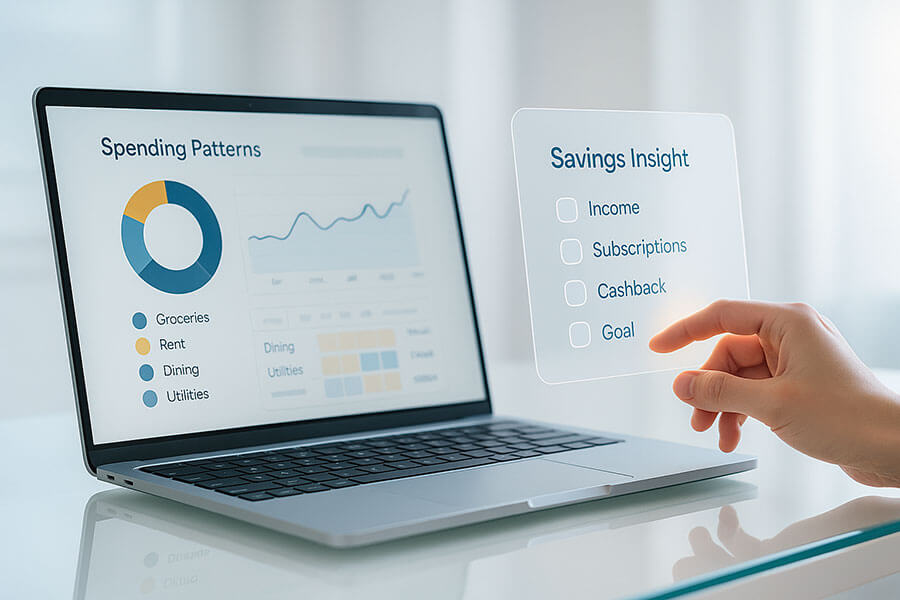
The landscape of personal finance management has undergone a dramatic transformation in recent years, driven by technological innovations that make money management more intuitive and accessible. Among these innovations, transaction enrichment stands out as a powerful tool reshaping how individuals understand and interact with their financial data. What was once a tedious process of manually categorizing expenses and deciphering cryptic bank statements has evolved into an automated, intelligent system that turns raw transaction data into actionable insights.
Every day, millions of people check their bank accounts only to encounter confusing transaction descriptions that read like garbled strings of letters and numbers. A simple purchase might appear as “DEBIT CARD PURCHASE 1234 WM SUPERCTR #MORRILTONAR” while a subscription could show up as “SP AMZN MKTP US 7X2HS1BN3.” These cryptic descriptions create friction in financial management, making it difficult for consumers to understand where money goes and preventing informed decisions about spending habits.
Transaction enrichment technology addresses this challenge by using artificial intelligence and machine learning to transform confusing descriptions into clear information complete with recognizable merchant names, accurate categories, locations, and merchant logos. This transformation enables a new generation of personal finance tools that automatically track spending patterns, identify saving opportunities, detect unusual charges, predict future expenses, and offer personalized recommendations.
The implications extend to multiple stakeholders. For consumers, transaction enrichment means less time categorizing expenses and more confidence in understanding personal cash flow. For financial institutions, it represents an opportunity to enhance customer experience, reduce support costs, and offer sophisticated digital banking services. For fintech companies, transaction enrichment provides the foundational data layer that makes advanced features like budgeting automation and predictive planning possible.
The rise of transaction enrichment reflects broader trends toward democratization and accessibility in financial technology. As traditional institutions face competition from digital-first challengers, the ability to provide clear insights from transaction data has become a key differentiator. Young consumers expect their financial tools to be as intuitive as other applications they use daily, and transaction enrichment helps meet these expectations by bringing consumer-grade experiences to financial data management.
Understanding transaction enrichment requires examining both the sophisticated technology that powers it and the practical ways it improves everyday financial management. From machine learning algorithms that recognize patterns to vast merchant databases providing context, transaction enrichment represents a convergence of artificial intelligence, data science, and financial services expertise that promises to play an increasingly central role in helping individuals achieve greater financial literacy and success.
Understanding Transaction Enrichment Technology
Transaction enrichment technology represents a sophisticated intersection of artificial intelligence, data processing, and financial services infrastructure designed to transform raw, cryptic transaction data into meaningful information that consumers can easily understand. This transformation involves multiple layers of processing, from basic data cleansing to advanced machine learning predictions, all working together to provide clarity necessary for effective personal finance management.
Transaction enrichment begins with raw data generated when purchases are made. This typically includes the transaction amount, date, and a description field that payment processors populate with whatever information the merchant provides. However, this description is often filled with technical codes, abbreviated merchant names, location identifiers, and payment processor references. A grocery store purchase might appear as “POS DEBIT WM SUPERCTR #5732 MEMPHIS TN” while an online subscription could show “RECURRING PYMT NETFLIX.COM AMSTER NL.”
The enrichment process applies multiple stages of processing to extract meaningful information. First, normalization and cleaning strips away technical prefixes, removes whitespace, and standardizes the format. This cleaned data then enters a processing pipeline where natural language processing and pattern recognition identify key components such as merchant names, locations, and transaction types. Advanced systems recognize that “WM SUPERCTR” refers to Walmart Supercenter and “AMSTER NL” indicates Amsterdam, Netherlands.
Beyond basic cleaning, enrichment systems leverage extensive databases of merchant information to add context not present in original descriptions. These databases contain details about millions of merchants worldwide, including full legal names, consumer-facing names, business categories, physical locations, websites, and logos. When the system identifies a merchant, it pulls this information from the database and attaches it to the transaction record, providing users with a complete picture of where the transaction occurred.
The true power emerges when systems apply machine learning algorithms to categorize transactions and generate insights. Rather than relying solely on rule-based keyword matching, modern platforms use trained models that understand context, handle ambiguity, and improve over time. These models consider multiple signals including merchant information, transaction amounts, purchase patterns, location data, and temporal factors to determine appropriate categories. A transaction at Target might be categorized as groceries, home goods, clothing, or electronics depending on the amount, frequency, and other contextual factors.
Core Technology and AI Systems
The artificial intelligence systems powering transaction enrichment rely on interconnected technologies working together to deliver accurate results. Natural language processing forms the foundation, enabling systems to parse and understand irregular text strings comprising transaction descriptions. These NLP models, trained on millions of transaction examples, learn to identify patterns and extract meaning from cryptic merchant codes. Systems must handle multiple languages, regional variations, and constantly evolving commerce vocabulary to maintain high accuracy.
Machine learning classification models predict appropriate categories for transactions based on patterns observed in historical data. Modern platforms employ ensemble methods combining predictions from multiple models to achieve accuracy rates exceeding ninety percent. Models continuously learn as they process new transactions, adapting to changes in merchant naming conventions, new business types, and evolving spending patterns.
Deep learning architectures enable significant advances by allowing systems to learn hierarchical representations without extensive manual feature engineering. Neural networks discover subtle patterns that simpler models might miss, leading to more accurate merchant identification and categorization. Convolutional neural networks excel at processing sequential text data, while recurrent architectures model temporal patterns in spending behavior.
Entity resolution algorithms play a critical role in matching transactions to specific merchants in enrichment databases. A single merchant may appear through dozens of name variations, requiring systems to recognize that “AMZN MKTP,” “AMAZON.COM,” and “AMAZON PRIME” all refer to the same entity. These algorithms use probabilistic matching techniques, string similarity measures, and contextual information to consolidate variations and ensure consistent enrichment.
Real-time processing capabilities have become essential as consumers expect immediate visibility into transactions. Modern platforms must process transactions within seconds of their appearance in banking systems, applying all cleaning, enhancement, and categorization steps without noticeable latency. This requires highly optimized algorithms, efficient data structures, and scalable infrastructure handling peak transaction volumes across millions of users simultaneously.
The Categorization Process
Categorizing transactions represents one of the most visible aspects of enrichment, directly influencing how users understand and manage spending. Effective categorization balances granularity with usability, providing enough detail for meaningful insights while avoiding overwhelming complexity. Modern systems typically employ hierarchical taxonomies with primary categories for broad classifications and detailed subcategories for specific spending types.
Primary categories align with common personal finance concepts users intuitively understand. These include broad classifications such as groceries, dining, transportation, shopping, entertainment, bills and utilities, healthcare, travel, and financial services. Research shows most personal finance use cases are well served by approximately fifteen to twenty primary categories, balancing simplicity and specificity.
Detailed subcategories provide granularity necessary for sophisticated analysis and budgeting. Under dining, subcategories might distinguish between fast food, casual restaurants, fine dining, bars, and coffee shops. Shopping could be subdivided into groceries, clothing, electronics, home improvement, pet supplies, and general merchandise. These detailed categories enable users to understand not just total dining spending, but specifically how much goes to coffee versus restaurant meals.
The categorization process considers multiple signals beyond merchant identification. Transaction amount provides valuable context, as larger purchases at retailers like Target or Amazon likely represent furniture or electronics while smaller purchases might be groceries. Purchase frequency and patterns also inform decisions, with regular weekly transactions at grocery stores categorized accordingly.
Location data enhances categorization accuracy by providing geographic context. A transaction at a merchant operating both restaurants and retail stores can be more accurately categorized based on specific location visited. Temporal factors influence categorization in subtle but important ways. Transactions during meal times are more likely dining expenses, while seasonal patterns affect how merchants should be categorized.
Confidence scoring provides users and applications with information about category assignment reliability. Not all transactions can be categorized with equal certainty, particularly when merchant information is ambiguous. By providing confidence levels, enrichment systems enable applications to make informed decisions about presenting category information. High-confidence categorizations display directly while lower-confidence assignments might be flagged for user review.
Key Features and Capabilities
Modern transaction enrichment platforms offer comprehensive features that extend well beyond basic categorization to provide rich, contextual information about every financial transaction. These capabilities work together to create a complete picture of consumer spending, enabling personal finance applications to deliver sophisticated insights, recommendations, and automation that were previously impossible or required extensive manual effort.
The foundation lies in data cleaning and normalization, which transforms raw transaction descriptions into standardized, readable information. This process removes technical prefixes and suffixes, standardizes merchant name formats, strips unnecessary codes, and presents essential information consistently. While basic, it represents significant user experience improvement by eliminating the burden of deciphering cryptic descriptions and reducing friction in understanding financial activity.
Merchant identification and name resolution significantly enhance transaction clarity. Enrichment systems maintain vast databases allowing them to recognize heavily abbreviated merchant identifiers and replace them with familiar consumer-facing names. A transaction appearing as “TST STARBUCKS #12345 Q12” becomes simply “Starbucks,” immediately recognizable to users. For merchants with multiple brands, enrichment systems can identify the specific brand involved, providing additional clarity.
Category assignment functionality lies at the heart of enrichment’s value proposition, automatically classifying transactions into meaningful groups enabling spending analysis and budgeting. Modern platforms employ sophisticated machine learning models trained on millions of transactions to achieve accuracy rates exceeding ninety percent. Systems handle ambiguous cases intelligently, using contextual signals such as amount, location, time, and user patterns to make informed decisions. The resulting categorized history provides the foundation for budgeting tools, spending analytics, and financial insights impractical to generate through manual categorization.
Location enhancement adds geographic context by identifying merchant locations, coordinates, and addresses from limited information in raw data. This enables location-based insights such as spending patterns by neighborhood, identification of recurring transactions at specific locations, and geographic analysis of discretionary spending. For users, seeing exactly where transactions occurred can jog memory and provide confidence that charges are legitimate rather than potentially fraudulent.
Merchant Data Enhancement
Merchant data enhancement encompasses capabilities that provide comprehensive information about businesses where transactions occur, going beyond simple name identification to deliver context, visual elements, and detailed business information. These enhancements transform sterile transaction lists into rich, informative displays that make financial data more accessible and actionable while enabling financial applications to build more engaging interfaces.
Logo integration represents one of the most visible merchant enhancements, providing instantly recognizable visual identifiers users can process more quickly than text-based names. Modern enrichment platforms maintain extensive libraries of merchant logos covering millions of businesses worldwide, automatically attaching appropriate logos based on merchant identification. These visual elements significantly improve transaction list usability, allowing users to scan financial activity at a glance. Research shows visual elements like logos improve recognition speed and reduce cognitive load compared to text-only interfaces.
Merchant website information provides users with direct connections to businesses where transactions occurred, enabling quick access to merchant information, customer service contacts, or online account management tools. This capability proves particularly valuable when users need to inquire about charges, initiate returns, or manage subscriptions. By providing direct links to merchant websites, enrichment platforms reduce friction in transaction follow-up activities and help users resolve issues more efficiently.
Business category and industry classification offers detailed information about the type of business involved in each transaction, enabling more sophisticated financial analysis and personalized recommendations. While transaction categorization focuses on consumer spending categories, merchant industry classification provides complementary information about business types revealing insights about brand preferences, business relationships, and spending diversification.
Merchant contact information including phone numbers, email addresses, and physical addresses helps users communicate with businesses when needed, particularly for customer service inquiries or transaction disputes. Having this information readily available within personal finance applications eliminates the need to search for contact details and streamlines issue resolution processes.
Pattern Recognition and Insights
Pattern recognition capabilities represent the most sophisticated aspect of transaction enrichment, leveraging historical data and advanced analytics to identify meaningful trends, predict future behavior, and generate personalized insights. These capabilities transform enrichment from a passive data enhancement service into an active financial intelligence system that proactively identifies opportunities, risks, and patterns individual users might not notice.
Spending trend analysis examines transaction histories to identify patterns in how users spend money across categories, merchants, and time periods. These analyses reveal seasonal spending patterns, gradual increases or decreases in category spending, and shifts in behavior following major life events. By presenting these trends visually through charts and graphs, enrichment-powered applications help users understand the trajectory of their financial behavior and make informed decisions about adjustments needed to achieve goals.
Recurring transaction identification automatically recognizes subscriptions, regular bills, and other predictable expenses from transaction patterns and amounts. This capability proves invaluable for budget planning and expense management, as recurring expenses often represent significant portions of monthly spending yet can be easy to overlook. Modern enrichment systems identify recurring transactions even when amounts vary slightly or payment dates shift, using fuzzy matching algorithms that recognize substantial similarity while accommodating minor variations.
Anomaly detection algorithms continuously monitor transaction patterns to identify unusual activity that might indicate fraud, billing errors, or unexpected charges. These systems learn normal spending patterns for each user and flag transactions that deviate significantly from established baselines, such as unusually large purchases, transactions in unexpected categories, or activity in unfamiliar locations. While financial institutions employ fraud detection systems, transaction-level anomaly detection within personal finance applications provides an additional layer of protection.
Predictive expense forecasting uses historical transaction data and identified patterns to predict future expenses, enabling more accurate budget planning and cash flow management. These predictive models consider seasonal patterns, recurring expenses, historical spending trends, and upcoming known obligations to generate forecasts of expected spending in various categories. Users can see predictions for likely grocery spending, transportation costs, or discretionary expenses in upcoming months.
Savings opportunity identification analyzes spending patterns to surface specific opportunities for reducing expenses or optimizing financial behavior. These insights might highlight categories where spending significantly exceeds peer benchmarks, identify multiple subscriptions offering similar services that could be consolidated, or recognize spending patterns suggesting opportunities for switching to more cost-effective alternatives.
Behavioral insights and nudges provide personalized feedback about spending behaviors and their alignment with stated financial goals. These insights might celebrate positive behaviors such as consistent saving or reduced discretionary spending, or gently highlight behaviors that undermine financial goals. Research in behavioral economics has demonstrated that well-designed nudges can significantly influence financial decision-making and help users develop healthier money management habits.
Benefits and Use Cases
Transaction enrichment technology delivers substantial benefits across multiple dimensions of personal financial management, fundamentally transforming how individuals interact with their financial data and make decisions about spending, saving, and long-term planning. These benefits extend beyond convenience improvements to create genuine financial value through better decision-making, reduced fees, time savings, and improved financial literacy.
Time savings represent one of the most immediate benefits for consumers. Manual categorization of transactions can consume hours each month for individuals maintaining detailed budgets or tracking spending across multiple accounts. By automating this process through intelligent categorization, enrichment technology eliminates tedious manual work and allows users to devote time to higher-value financial activities such as planning, goal-setting, and optimizing strategy. For busy professionals and families juggling multiple priorities, the time savings alone can justify adoption of enrichment-powered financial tools.
Improved financial awareness emerges naturally when transaction data becomes clear, categorized, and easily analyzed. Users who might previously have avoided reviewing financial activity due to friction and confusion of deciphering cryptic descriptions become more engaged when information is presented clearly and attractively. This increased engagement leads to better understanding of spending patterns, greater awareness of where money goes, and ultimately more informed financial decision-making.
Enhanced budgeting accuracy results from automatic categorization that eliminates errors inherent in manual classification. When every transaction is automatically assigned to the correct category based on sophisticated machine learning models, budget tracking becomes far more reliable and useful. Users can trust that spending totals accurately reflect their behavior rather than being skewed by miscategorized transactions or gaps in manual entry.
Early detection of financial issues becomes possible when enrichment-powered applications continuously monitor transaction patterns and flag anomalies or concerning trends. Users might discover unauthorized charges within hours rather than weeks, identify billing errors before they compound, or recognize the gradual accumulation of recurring subscription costs that have grown beyond reasonable levels.
Better cash flow management results from the visibility and predictability that transaction enrichment enables. When users can see detailed breakdowns of spending by category and time period, identify recurring expenses, and predict future obligations, they can more effectively manage cash flow to ensure sufficient funds are available when needed. This visibility helps prevent overdrafts, reduces reliance on expensive short-term credit, and enables more strategic timing of major purchases.
Case Studies in Action
Real-world implementations of transaction enrichment technology demonstrate its practical impact on financial management and user outcomes. These case studies provide concrete evidence of how enrichment capabilities translate into measurable benefits for consumers, financial institutions, and fintech companies.
The implementation by Vola, a financial services platform serving underserved consumers, demonstrates enrichment’s potential to address critical problems in financial inclusion. Founded in 2017 and utilizing Plaid’s transaction data access and enrichment capabilities, Vola built a service that analyzes users’ financial data to help them avoid costly overdraft fees through proactive alerts and small cash advances. By leveraging enriched transaction data to understand spending patterns and predict when account balances will run dangerously low, Vola has helped hundreds of thousands of users avoid overdraft fees. The platform reported helping users save over eighteen million dollars in overdraft fees. Prior to using Vola, users paid an average of twenty dollars and eighty-five cents in overdraft and insufficient funds fees each month, a burden that was reduced by half through the predictive insights enabled by transaction enrichment.
Major personal finance management platforms have leveraged transaction enrichment to dramatically improve user engagement. Plaid, a leading provider of financial data infrastructure and transaction enrichment services, reported that its enrichment capabilities deliver categorization accuracy exceeding ninety percent while processing over five hundred million transactions daily for thousands of fintech applications and financial institutions. Partners report significant improvements in user retention and engagement when enrichment-powered features are implemented. The platform’s enhancement of merchant data with logos, locations, and detailed business information has proven particularly valuable for improving visual appeal and usability.
Financial technology company Brigit demonstrated measurable improvements in service quality when upgrading to enhanced transaction enrichment capabilities. In head-to-head testing comparing enrichment providers, Brigit found twenty percent more category coverage with improved enrichment, meaning significantly more transactions could be automatically categorized without requiring manual user intervention. This improvement directly translated to better user experience through more complete spending insights and reduced friction in budget maintenance.
Banking institutions implementing transaction enrichment have reported substantial reductions in customer service costs related to transaction disputes and inquiries. When transaction descriptions are clear and enriched with merchant logos and contact information, customers can more easily identify charges and resolve issues directly with merchants rather than contacting their bank. One regional bank implementing comprehensive transaction enrichment reported a thirty-five percent reduction in transaction-related customer service calls within six months of deployment.
Digital banking platforms in the Middle East and North Africa region have pioneered the use of transaction enrichment to improve customer experience in markets where traditional banking has historically provided limited visibility. According to industry data, nearly eighty percent of millennials in these regions report using digital banking services, with thirty-one percent indicating that existing digital banking solutions are weak in key areas including transaction clarity and spending insights. Banks implementing transaction enrichment have addressed these deficiencies by providing clear merchant names, accurate categories, and spending analytics.
Challenges and Considerations
Despite significant benefits and growing adoption, transaction enrichment technology faces numerous challenges affecting its implementation, effectiveness, and user acceptance. Understanding these limitations is essential for both providers developing enrichment solutions and consumers deciding whether and how to use enrichment-powered financial tools. These challenges span technical, privacy, accuracy, and accessibility dimensions.
Technical challenges begin with fundamental variability and inconsistency of transaction data generated by different financial institutions, payment processors, and merchants. There is no universal standard governing how transaction descriptions should be formatted, what information they should include, or how merchants should identify themselves. This lack of standardization means enrichment systems must handle extraordinarily diverse data formats, from clean descriptions to cryptic codes providing minimal information. Building systems robust enough to handle this diversity while maintaining high accuracy requires extensive training data, sophisticated algorithms, and continuous maintenance.
Data quality issues present ongoing challenges for enrichment accuracy. Raw transaction data frequently contains errors, typos, truncated merchant names, and incorrect information that enrichment systems must somehow interpret and correct. When a merchant name is misspelled or abbreviated unusually, enrichment systems may struggle to match it to the correct merchant record, potentially resulting in failed enrichment or incorrect merchant identification. These data quality problems are often beyond enrichment providers’ control but directly impact quality of results delivered to users.
Scalability requirements impose significant technical demands on enrichment platforms, particularly as adoption grows and transaction volumes increase. Processing millions of transactions per minute while maintaining sub-second response times requires substantial infrastructure investment and sophisticated engineering. As enrichment systems incorporate more complex machine learning models and reference larger merchant databases, computational requirements grow, creating tensions between accuracy, speed, and cost.
Privacy and Security
Privacy concerns represent perhaps the most significant consideration for consumers evaluating transaction enrichment services, as these systems necessarily process detailed information about personal spending that many consider highly sensitive. Every transaction tells a story about an individual’s lifestyle, preferences, health conditions, and personal relationships, making transaction data among the most revealing information about personal life. Users rightfully question how this data is collected, processed, stored, and potentially shared when using enrichment-powered financial applications.
Data collection practices require careful attention to user consent and transparency about what transaction data is accessed and for what purposes. While users generally understand that personal finance applications need access to transaction data to provide budgeting and spending insights, they may not fully appreciate the detailed picture of their lives that comprehensive transaction histories reveal. Enrichment providers and applications using enrichment services must clearly communicate what data is collected, how it is used, and what happens after processing.
Data security measures must protect transaction information from unauthorized access, breaches, or leaks that could expose sensitive personal financial information. Transaction data represents an attractive target for cybercriminals who might use it for identity theft, fraud, or targeted phishing attacks. Enrichment providers must implement robust security controls including encryption of data in transit and at rest, strong authentication mechanisms, regular security audits, and incident response procedures. The consequences of security breaches in financial data systems can be severe, including financial losses for affected users, regulatory penalties for companies, and lasting damage to consumer trust.
Data retention policies determine how long transaction data is stored and when it is deleted, with implications for both privacy protection and service functionality. Longer retention periods enable better trend analysis, more accurate predictions, and richer insights into spending patterns, but they also increase privacy risks by maintaining detailed records of personal behavior over extended time periods. Users may want the ability to delete historical transaction data while continuing to use enrichment services.
Third-party sharing and data monetization practices raise concerns about whether transaction data is shared with advertisers, data brokers, or other parties beyond the primary service provider. Some business models involve sharing aggregated or anonymized transaction data with third parties for market research or other commercial purposes. While such sharing might be disclosed in privacy policies, many users do not realize it is occurring and would object if they understood how their transaction data is being used.
Regulatory compliance requirements create complex obligations for transaction enrichment providers and the applications using their services, particularly as data protection regulations evolve globally. The General Data Protection Regulation in Europe, California Consumer Privacy Act in the United States, and similar regulations in other jurisdictions impose specific requirements for obtaining user consent, providing transparency about data use, enabling user access to collected data, and allowing deletion of personal information.
Future Trends and Recommendations
The trajectory of transaction enrichment technology points toward increasingly sophisticated capabilities that will further transform personal financial management through deeper integration of artificial intelligence, broader data sources, and more proactive financial guidance. Understanding emerging trends helps consumers and financial institutions prepare for coming changes while identifying opportunities to leverage enrichment technology more effectively.
Advanced artificial intelligence techniques promise to dramatically improve enrichment accuracy while enabling entirely new categories of financial insights. Natural language processing models based on transformer architectures have already demonstrated superior performance in understanding transaction descriptions compared to earlier approaches, and continued advances will further reduce misclassified transactions and failed merchant identification. More significantly, these advanced models will enable enrichment systems to understand spending intent and context more deeply.
Behavioral prediction and personalization represent the next frontier for enrichment-powered financial applications. Rather than simply categorizing past transactions and identifying patterns, future systems will leverage enrichment data to predict how users will behave in various financial scenarios and provide personalized guidance tailored to individual circumstances. These predictions might forecast how specific spending changes would affect progress toward financial goals, warn about spending patterns that historically lead to financial stress, or suggest optimal times for major purchases based on predicted cash flow.
Real-time enrichment and instant insights will become increasingly important as consumers expect immediate feedback about their financial decisions. Current enrichment systems typically process transactions with slight delays as data flows through banking systems. Future systems will process and enrich transactions in near-real-time, enabling applications to provide instant notifications when transactions occur, immediate updates to budget balances, and real-time alerts about potential issues.
Voice and conversational interfaces will create new modalities for accessing enriched transaction data and financial insights. As voice assistants become more sophisticated and widely adopted, users will increasingly interact with their financial data through natural conversation rather than traditional application interfaces. Enrichment technology will enable these conversational experiences by providing the structured, categorized data necessary to answer questions like “How much did I spend on groceries last month” instantly and accurately.
Integration with broader financial ecosystems will expand enrichment’s impact beyond personal finance management into areas such as lending, insurance, and wealth management. Lenders are increasingly interested in using enriched transaction data as alternative credit signals to supplement or replace traditional credit scores. Insurance companies may use transaction data to understand risk profiles and offer personalized pricing. Wealth management platforms can use spending insights to inform investment strategies and retirement planning.
For consumers considering adoption of enrichment-powered financial tools, carefully evaluate privacy policies and data practices of any financial application before granting access to transaction data. Look for clear explanations of what data is collected, how it is used, whether it is shared with third parties, and what security measures protect it. Start with applications from established providers with strong reputations for security and privacy protection.
For financial institutions and fintech companies considering implementation, focus on building or partnering for enrichment capabilities that directly support strategic priorities and customer needs rather than implementing enrichment simply because it is available. Identify specific use cases where enrichment will deliver measurable value such as reducing customer service costs, improving digital banking engagement, or enabling new product offerings.
Final Thoughts
The emergence of transaction enrichment as a foundational capability in personal finance management represents a significant milestone in the ongoing democratization of financial services and the empowerment of consumers to take control of their financial lives. This technology embodies the promise of artificial intelligence and machine learning to solve practical problems that affect millions of people daily, transforming confusing financial data into clear, actionable insights that support better decision-making.
The transformative potential of transaction enrichment extends beyond individual convenience to address systemic challenges in financial inclusion and accessibility. Traditional financial services have often failed to serve lower-income consumers and those without substantial financial education effectively, leaving millions vulnerable to predatory lending, excessive fees, and financial instability. By making financial data comprehensible and providing automated insights that were previously available only through expensive financial advisors, enrichment-powered tools are bringing sophisticated financial management capabilities to broader audiences.
The intersection of technology and social responsibility becomes particularly pronounced when examining how transaction enrichment addresses concrete problems such as overdraft fees and subscription accumulation that disproportionately affect vulnerable consumers. The case of Vola helping users avoid millions of dollars in overdraft fees illustrates how enrichment-enabled insights can deliver tangible financial benefits to those who need them most. When financial applications can accurately predict cash flow problems before they occur and provide affordable alternatives to expensive overdraft fees or payday loans, they serve a social purpose beyond commercial success.
Looking toward the future, the successful integration of transaction enrichment in personal finance will likely depend on maintaining appropriate balances between innovation and privacy protection, between automation and user agency, and between commercial interests and consumer welfare. The financial services industry has not always prioritized these balances effectively, sometimes rushing to adopt new technologies without adequate attention to privacy implications or consumer protection. As enrichment capabilities grow more powerful, vigilance about data practices, algorithmic fairness, and consumer rights will be essential.
The ongoing challenges around privacy and data security should not be minimized, as they represent legitimate concerns that require sustained attention from technology providers, regulators, and users themselves. As transaction data becomes more valuable and widely shared through enrichment services, the risks associated with data breaches, unauthorized access, or misuse also increase. The financial services industry must continue investing in robust security measures, transparent data practices, and user controls that put individuals in charge of their personal information.
The responsibility for shaping transaction enrichment’s future trajectory extends across multiple stakeholders. Technology providers must continue improving enrichment accuracy while maintaining strong privacy and security protections. Financial institutions must thoughtfully integrate enrichment into digital banking offerings in ways that genuinely enhance customer experience. Fintech innovators must build applications that leverage enrichment to solve real problems and deliver authentic value. Regulators must establish frameworks that protect consumers while enabling beneficial innovation. And consumers themselves must engage with their financial data and make informed choices about which applications to trust.
Innovation and accessibility must remain balanced priorities as transaction enrichment technology matures. The most sophisticated algorithms and comprehensive merchant databases provide little value if accessible only to wealthy users or those with technical expertise. Making enrichment-powered tools genuinely accessible requires attention to user interface design that serves diverse populations, pricing models that do not exclude lower-income users, and features that address specific financial challenges faced by underserved communities.
The ultimate measure of transaction enrichment’s impact will be the extent to which it helps individuals achieve financial stability, security, and the freedom to pursue their goals. When enrichment-powered tools help a single parent avoid overdraft fees and build emergency savings, enable a young professional to pay off student debt faster through better spending awareness, or give a retiree confidence that they will not outlive their resources through improved budgeting, the technology validates its purpose.
FAQs
- What exactly is transaction enrichment and how does it work?
Transaction enrichment is a technology that transforms raw transaction data from banks and credit cards into clear, categorized, and detailed information. When you make a purchase, the transaction description in your bank account often contains cryptic codes, abbreviations, and technical information that is difficult to understand. Enrichment systems use artificial intelligence and machine learning to clean up these descriptions, identify the merchant, determine the appropriate spending category, add merchant logos and location information, and provide other enhancements that make transactions easy to understand. The process happens automatically in the background of personal finance applications, usually processing transactions within seconds to provide you with clear, organized information about where your money goes. - Is my transaction data safe when using enrichment-powered financial apps?
Security practices vary among different financial applications, but reputable providers implement multiple layers of protection for transaction data. These typically include encryption of data in transit and at rest, secure authentication mechanisms, regular security audits, and compliance with financial industry security standards. When evaluating a financial application, look for clear privacy policies that explain how your data is protected, whether data is shared with third parties, and what security certifications the provider holds. Leading enrichment platforms process millions of transactions daily for thousands of financial institutions and applications, and they invest heavily in security infrastructure to protect this sensitive information. However, users should carefully review privacy policies, use strong passwords, enable two-factor authentication when available, and monitor their accounts regularly regardless of the security measures providers implement. - How accurate is automated transaction categorization?
Modern transaction enrichment platforms typically achieve categorization accuracy rates exceeding ninety percent, meaning that more than nine out of ten transactions are automatically assigned to the correct spending category without requiring manual correction. Accuracy varies based on the quality of the underlying transaction data, the comprehensiveness of merchant databases, and the sophistication of the machine learning models used for classification. Some transactions are inherently difficult to categorize accurately, particularly when merchants operate in multiple business categories or when transaction descriptions provide limited information. Most enrichment-powered applications allow users to review and correct category assignments, and these corrections can help improve future categorization accuracy as systems learn from user feedback. - Can I use transaction enrichment if I have accounts at multiple banks?
Yes, most personal finance applications that use transaction enrichment can connect to accounts at multiple financial institutions simultaneously, aggregating transaction data from all your accounts into a single view. This multi-account capability is actually one of the key advantages of using dedicated personal finance applications rather than relying on individual bank apps that only show transactions from that specific institution. By connecting all your checking accounts, savings accounts, credit cards, and other financial accounts, you can get a complete picture of your financial activity and spending patterns across all accounts. The enrichment process works the same regardless of which financial institution provided the transaction data, ensuring consistent categorization and merchant information across all your accounts. - Does transaction enrichment work for international transactions and non-US merchants?
Transaction enrichment capabilities for international transactions depend on the specific enrichment provider and the comprehensiveness of their merchant databases. Leading enrichment platforms maintain merchant information for businesses in dozens of countries and can accurately identify and categorize international transactions in many cases. However, coverage tends to be most complete for merchants in major economies such as the United States, United Kingdom, European Union countries, and other developed markets. Transactions with smaller local merchants in less common locations may be more difficult to enrich accurately. International transactions also sometimes include foreign transaction fees or currency conversions that enrichment systems must handle appropriately. If you frequently travel internationally or make purchases from foreign merchants, check whether your personal finance application specifically advertises international transaction support. - How do enrichment systems handle transactions at merchants with multiple business lines?
Merchants that operate in multiple business categories, such as big-box retailers selling groceries, clothing, electronics, and home goods, present challenges for automatic categorization since the appropriate category depends on what was actually purchased rather than just which merchant was visited. Advanced enrichment systems use multiple signals to make educated guesses about transaction categories in these situations. Transaction amount provides useful context, as a twenty-dollar purchase at Target is more likely to be groceries or household items while a three-hundred-dollar purchase might be electronics or furniture. Purchase frequency and patterns also inform categorization decisions. Many enrichment-powered applications also allow users to split single transactions across multiple categories when appropriate, such as when a grocery store trip included both food and non-food items that should be budgeted separately. - What happens if transaction enrichment incorrectly identifies a merchant or category?
When enrichment systems make errors in merchant identification or categorization, most personal finance applications provide easy ways to make corrections. Users can typically tap or click on an incorrectly categorized transaction and select the correct category from a list, or manually edit merchant information if needed. These corrections serve two purposes: they ensure your spending data and budget tracking are accurate, and they provide feedback that can help improve the enrichment system over time. Many enrichment platforms use correction patterns from millions of users to continuously refine their algorithms and reduce error rates. Some applications also allow you to create rules for specific merchants, such as always categorizing a particular store as groceries rather than general merchandise, ensuring consistent treatment of transactions from that merchant going forward. - Can transaction enrichment help me find and cancel unwanted subscriptions?
Yes, identifying and managing subscriptions is one of the most valuable applications of transaction enrichment technology. Enrichment systems can recognize recurring transaction patterns and identify subscription services based on regular payment amounts and frequencies. Many enrichment-powered applications include dedicated subscription management features that automatically compile lists of all your active subscriptions, calculate total monthly subscription costs, and alert you to subscriptions you may have forgotten about or that you signed up for during free trial periods. Some applications even provide direct links to merchant websites where you can manage or cancel subscriptions. Given that the average consumer maintains numerous subscriptions that often cost more in aggregate than they realize, subscription visibility and management represents a significant source of potential savings. - Does using transaction enrichment mean giving up control of my financial data?
Using transaction enrichment does require granting applications access to your transaction data, but this does not necessarily mean giving up control. Reputable financial applications provide users with granular controls over what data is shared, how it is used, and how long it is retained. You typically can revoke access permissions at any time, request deletion of your data, and control whether information is shared with third parties. The key is to carefully evaluate applications before granting access, reading privacy policies to understand data practices, and choosing applications from providers with strong reputations for privacy protection. Many users find that the benefits of enrichment-powered insights and automation justify sharing transaction data with trusted applications, particularly when robust privacy controls and security measures are in place. - What is the difference between transaction enrichment provided by my bank and third-party personal finance apps?
Many banks now offer basic transaction enrichment within their own mobile banking applications, providing cleaner merchant names and basic categorization. However, third-party personal finance applications that specialize in enrichment often provide more sophisticated capabilities including higher categorization accuracy, more detailed merchant information, better handling of edge cases and ambiguous transactions, and advanced features such as spending insights and subscription detection. Third-party applications also typically excel at aggregating data from multiple financial institutions, providing a complete financial picture that bank apps limited to single institutions cannot offer. The trade-off is that using third-party applications requires sharing your financial data with additional entities beyond your bank, which introduces privacy considerations that users must weigh against the additional functionality provided. Some users prefer to use bank-provided enrichment to minimize data sharing, while others choose third-party applications for their superior capabilities.