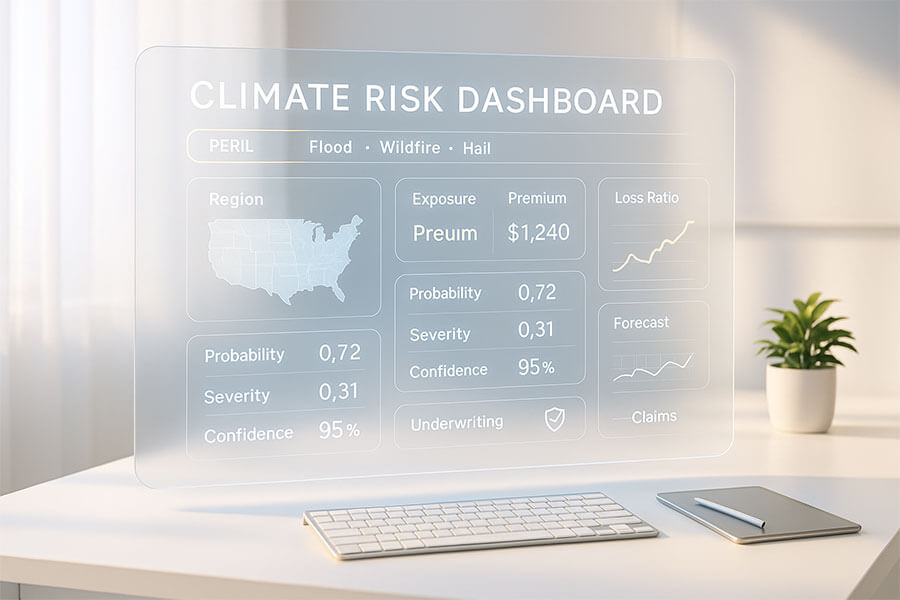
The insurance industry stands at a critical inflection point as climate change fundamentally reshapes risk landscapes across the globe. Traditional actuarial models, developed during periods of relative climate stability, are increasingly inadequate for assessing the frequency, severity, and interconnected nature of modern climate-related disasters. From unprecedented wildfire seasons that devastate entire communities to catastrophic flooding events that submerge agricultural regions, the mounting evidence of climate disruption demands a radical transformation in how insurers evaluate and price risk.
The economic consequences of this climate crisis are staggering and accelerating. Global insured losses from natural catastrophes exceeded $100 billion annually in recent years, with climate-related events accounting for the majority of these damages. Yet these figures represent only a fraction of total economic losses, as many properties and crops in vulnerable regions remain underinsured or completely uninsured due to prohibitive premiums or unavailable coverage. The protection gap between economic losses and insured losses continues to widen, leaving individuals, businesses, and entire economies exposed to financial devastation when disasters strike.
Enter InsurTech, a revolutionary fusion of insurance expertise and cutting-edge technology that promises to reshape how the industry approaches climate risk. By harnessing the power of artificial intelligence and big data analytics, InsurTech companies are developing sophisticated models that can process vast quantities of climate information, identify subtle patterns invisible to human analysts, and generate risk assessments with unprecedented accuracy and granularity. These technologies enable insurers to move beyond historical loss data toward predictive modeling that anticipates future climate scenarios and their probabilistic impacts on insured assets.
The implications extend far beyond technical improvements in risk calculation. Advanced climate risk modeling powered by AI and big data has the potential to democratize insurance access by enabling more precise, location-specific pricing that reflects actual risk exposure rather than broad geographic generalizations. For agricultural communities facing increasing weather volatility, improved modeling can mean the difference between viable crop insurance that sustains farming operations and unaffordable premiums that force producers to operate without protection. For homeowners in coastal or wildfire-prone areas, granular risk assessment can identify properties that remain insurable at reasonable rates while helping others understand and potentially mitigate their exposure through property improvements or defensive measures.
This transformation arrives at a moment when the need for innovation has never been more urgent. Climate scientists project that extreme weather events will continue intensifying in frequency and severity, creating escalating challenges for traditional insurance models built on assumptions of stable, predictable risk patterns. The industry must simultaneously manage growing loss exposures while maintaining solvency and continuing to provide affordable coverage to policyholders who need protection. Without technological breakthroughs in climate risk modeling, many insurers may choose to withdraw from high-risk markets entirely, leaving vulnerable populations without options for financial protection against increasingly probable disasters.
Understanding how AI and big data are revolutionizing climate risk assessment requires examining both the technical capabilities these technologies bring to insurance operations and the practical applications transforming property and agricultural insurance markets. The journey from traditional actuarial methods to AI-driven predictive modeling represents not merely an incremental improvement but a fundamental paradigm shift in how the insurance industry conceptualizes, measures, and manages climate-related risks.
Understanding Climate Risk and InsurTech Fundamentals
The concept of climate risk encompasses far more than simple weather variability. It represents the complex interplay between changing atmospheric conditions, geographical vulnerabilities, human development patterns, and economic exposures that create potential for loss. Unlike traditional perils that insurers have modeled for decades, climate risks are characterized by non-stationarity, meaning historical patterns no longer reliably predict future events. This fundamental shift undermines the actuarial principle that past loss experience provides a sound basis for pricing future risk.
Climate change manifests through multiple interconnected mechanisms that amplify insurance challenges. Rising global temperatures intensify the water cycle, producing more severe droughts in some regions while generating heavier precipitation and flooding in others. Warmer ocean temperatures fuel more powerful hurricanes and typhoons that maintain strength farther inland than historical patterns suggested possible. Extended dry seasons combined with earlier snowmelt create longer wildfire seasons with fires that burn hotter and spread faster than previous generations experienced. These evolving patterns create moving targets for risk modelers attempting to price coverage for assets that may face dramatically different exposures than their historical loss records suggest.
The insurance industry’s response to these challenges has evolved through distinct phases. Initially, many insurers simply raised premiums broadly across high-risk regions or withdrew from certain markets entirely when losses exceeded projections. This blunt approach failed to differentiate between properties with varying actual risk exposures, penalizing policyholders who had invested in mitigation measures while potentially underpricing truly vulnerable properties. The lack of granularity also created adverse selection problems, where only the highest-risk policyholders maintained coverage at elevated premium levels, further destabilizing insurance pools. These crude adjustments demonstrated the urgent need for more sophisticated risk assessment methodologies that could accurately differentiate exposure levels across individual properties and operations.
The Evolution of Climate Risk Assessment
Traditional actuarial methods relied heavily on historical loss data to establish baseline risk expectations. Insurance companies would examine decades of claims history, identify patterns in loss frequency and severity, and apply statistical techniques to project future losses assuming relatively stable underlying conditions. This approach worked reasonably well when climate patterns remained consistent and extreme events occurred with predictable regularity. Actuaries could calculate expected losses with confidence, set premiums at levels that covered claims plus operating expenses, and maintain profitable underwriting operations.
However, the acceleration of climate change has rendered historical data increasingly unreliable as a predictor of future risk. A coastal property that experienced one major hurricane every twenty years historically may now face multiple severe storms per decade as ocean temperatures rise and atmospheric conditions shift. Agricultural regions that reliably produced crops within historical rainfall ranges now experience wild swings between devastating droughts and destructive floods within single growing seasons. Wildfire-prone areas that once saw occasional fires during peak danger periods now face nearly year-round fire seasons with blazes of unprecedented intensity and speed.
The inadequacy of traditional models became painfully apparent through a series of catastrophic loss events that exceeded insurers’ worst-case projections. Hurricane Katrina in 2005 revealed how storm surge models failed to account for the compounding effects of wetland loss and inadequate flood control infrastructure. The 2017 Atlantic hurricane season, which produced Harvey, Irma, and Maria in rapid succession, demonstrated how multiple major events could occur within compressed timeframes. California’s Camp Fire in 2018 destroyed an entire town with such speed that evacuation orders came too late for many residents, revealing how changing forest conditions and wind patterns created fire behavior that historical models never anticipated.
These failures prompted urgent recognition that the insurance industry needed fundamentally different approaches to climate risk assessment. Legacy systems built on historical loss triangles and regression analyses could not capture the non-linear relationships and tipping points characterizing climate change impacts. Insurers required tools that could integrate climate science projections, real-time environmental monitoring, and sophisticated predictive analytics to generate forward-looking risk assessments that accounted for changing baseline conditions. This realization opened the door for technological innovation to revolutionize insurance risk modeling.
InsurTech’s Role in Insurance Innovation
InsurTech emerged from the convergence of insurance domain expertise and technological innovation driven by data science, artificial intelligence, and digital platforms. Unlike traditional insurance operations characterized by legacy systems, manual processes, and conservative adoption of new technologies, InsurTech companies embraced agile development methodologies, cloud computing infrastructure, and algorithmic decision-making from their inception. This technological foundation enabled rapid experimentation with new risk modeling approaches unencumbered by decades of accumulated technical debt and organizational inertia.
The business model innovation driving InsurTech extends beyond simply digitizing existing insurance processes. These companies fundamentally reconceptualize how insurance products are designed, priced, distributed, and serviced by leveraging technology to create previously impossible capabilities. Real-time risk monitoring through IoT sensors enables dynamic pricing that adjusts premiums based on current conditions rather than annual policy terms. Automated claims processing using computer vision and AI reduces settlement times from weeks to hours while detecting fraudulent claims with greater accuracy than human adjusters. Digital distribution channels eliminate costly intermediaries while providing consumers with instant quotes and seamless purchase experiences.
For climate risk modeling specifically, InsurTech brings critical capabilities that traditional insurers struggle to develop internally. Access to massive computing resources through cloud platforms enables processing of climate datasets that would overwhelm on-premises infrastructure. Expertise in machine learning and artificial intelligence allows development of sophisticated predictive models that can identify subtle patterns across millions of data points. Partnerships with climate scientists, remote sensing companies, and environmental monitoring organizations provide access to cutting-edge climate information unavailable through traditional insurance data sources.
The convergence of climate science and insurance technology creates powerful synergies that benefit both domains. Climate scientists gain new applications for their research and data, along with feedback about which climate indicators most strongly predict insured losses. Insurance companies access scientific expertise and advanced climate projections that inform more accurate risk assessments. Policyholders benefit from more precisely calibrated premiums that reflect their actual exposure while gaining insights about risk mitigation measures that could reduce their insurance costs. This multi-stakeholder value creation drives the business case for continued investment in AI-driven climate modeling capabilities.
The competitive dynamics reshaping the insurance industry further accelerate InsurTech adoption. Traditional insurers face growing pressure from InsurTech startups that leverage superior technology to offer better pricing, faster service, and more comprehensive coverage options. Established companies respond through multiple strategies including internal innovation initiatives, partnerships with InsurTech firms, and outright acquisitions of promising startups. This competition drives rapid advancement in climate risk modeling capabilities as companies race to develop competitive advantages through superior risk assessment accuracy. The resulting innovation ecosystem benefits the entire industry by establishing new standards for data-driven risk evaluation and pushing the boundaries of what technology can achieve in insurance applications.
AI and Machine Learning in Climate Risk Modeling
Artificial intelligence and machine learning represent transformative technologies that fundamentally change how insurers process information and generate insights about climate risks. Unlike traditional statistical models that require human experts to specify relationships between variables, machine learning algorithms can automatically discover complex patterns within data, identifying subtle correlations and non-linear relationships that would be impossible for humans to detect through manual analysis. This capability proves particularly valuable for climate risk modeling, where interactions between atmospheric conditions, geographical features, and human development patterns create intricate causal chains that determine loss outcomes.
The volume and complexity of data relevant to climate risk assessment exceed human cognitive capacity for comprehensive analysis. Climate datasets include petabytes of information from satellite observations, weather stations, ocean buoys, and atmospheric sensors accumulated over decades. Property characteristics span construction materials, building codes, landscaping features, and proximity to hazards. Historical loss records detail thousands of individual claims with circumstances specific to particular events. Synthesizing these diverse information sources to generate accurate risk predictions requires computational approaches that can process massive datasets, weight relevant factors appropriately, and continuously update models as new information becomes available.
Machine learning algorithms excel at these tasks by leveraging computational power to test millions of potential relationships between input variables and outcome predictions. Neural networks, for example, can model highly non-linear relationships through layered architectures that progressively transform raw input data into increasingly abstract representations useful for prediction. Ensemble methods combine multiple models to produce more robust predictions than any single algorithm achieves alone. Deep learning approaches automatically extract relevant features from raw data such as satellite imagery, eliminating the need for manual feature engineering that dominated traditional modeling approaches.
Predictive Algorithms and Data Processing
The technical foundations of AI-driven climate risk modeling rest on sophisticated algorithms capable of learning from historical patterns while adapting to changing conditions. Convolutional neural networks process satellite and aerial imagery to assess property characteristics and surrounding hazards with superhuman accuracy. These networks can identify roof conditions, vegetation density, proximity to water bodies, and countless other risk factors by analyzing visual information at scales ranging from individual properties to entire regions. The models learn to recognize patterns associated with high loss potential by training on thousands of examples where property characteristics and loss outcomes are known.
Recurrent neural networks and transformer architectures analyze temporal sequences of climate data to predict future conditions and assess how changing patterns affect risk exposures. These models can process decades of daily weather observations, identify trends and cycles within the data, and generate probabilistic forecasts of future conditions under different climate scenarios. The temporal modeling capability proves essential for agricultural insurance, where seasonal weather patterns throughout growing cycles determine crop yields and loss probabilities. By analyzing how temperature, precipitation, soil moisture, and other variables evolve over time, these algorithms can predict crop performance weeks or months in advance with accuracy that enables proactive risk management.
Gradient boosting machines and random forest algorithms provide powerful tools for modeling complex relationships between numerous risk factors and loss outcomes. These ensemble methods combine predictions from hundreds or thousands of simple decision trees, each focusing on different aspects of the data, to generate robust predictions that generalize well to new situations. The algorithms automatically identify which risk factors matter most for prediction accuracy and how different variables interact to create elevated or reduced risk. This interpretability helps insurers understand why particular properties receive specific risk scores, enabling more effective communication with policyholders and regulatory authorities.
The training process for machine learning models requires careful attention to data quality, representation, and validation procedures. Models learn patterns from historical examples, so biased or incomplete training data can produce inaccurate predictions that systematically disadvantage certain groups or geographies. Insurers must ensure training datasets include diverse examples spanning different property types, geographical regions, and loss scenarios to avoid models that perform well on common situations but fail on edge cases. Cross-validation techniques test model performance on data withheld during training to ensure predictions generalize to new situations rather than simply memorizing historical patterns.
Real-time data processing capabilities enable AI models to incorporate current conditions when assessing risks and processing claims. Rather than relying solely on static property characteristics determined at policy inception, modern systems can ingest real-time weather data, soil moisture readings, wildfire progression maps, and flood stage levels to dynamically adjust risk assessments as conditions evolve. This near-real-time modeling supports use cases like parametric insurance triggers that automatically pay claims when objective measurements exceed specified thresholds, eliminating lengthy loss adjustment processes while providing rapid financial relief to policyholders facing disaster impacts.
Integration with existing insurance workflows requires careful orchestration of AI systems with traditional policy administration, claims management, and actuarial processes. Machine learning models generate risk scores and loss predictions that feed into premium calculation engines, underwriting decision rules, and reserving calculations. These integrations must maintain audit trails documenting how AI recommendations influence business decisions while preserving human oversight for exceptions and edge cases where algorithmic predictions may be unreliable. The sociotechnical challenge of combining AI capabilities with human expertise and judgment often proves more complex than the purely technical aspects of model development.
Model monitoring and updating procedures ensure that AI systems maintain accuracy as climate patterns evolve and new loss experience accumulates. Unlike traditional models that remain stable for years between updates, machine learning systems require continuous monitoring for performance degradation that could indicate changing relationships between input variables and outcomes. Automated retraining pipelines regularly update models with recent data while comparing performance metrics against previous versions to detect improvements or unexpected changes. This ongoing maintenance proves essential for climate risk models operating in rapidly changing environments where yesterday’s patterns may not apply to tomorrow’s conditions.
Big Data Applications in Climate Insurance
The big data revolution has transformed climate risk modeling by enabling analysis of information sources that were previously too large, too diverse, or too unstructured for traditional analytical approaches. Insurers now access datasets measuring petabytes that capture environmental conditions, property characteristics, and loss patterns at resolutions ranging from individual structures to entire continents. This data abundance creates both opportunities and challenges as companies work to extract actionable insights from information flows that would overwhelm conventional data processing infrastructure.
The variety of data sources contributing to modern climate risk models extends far beyond the claims history and basic property characteristics that insurers traditionally analyzed. Remote sensing satellites continuously capture imagery revealing land use patterns, vegetation health, soil moisture levels, and countless other environmental indicators relevant to risk assessment. Weather radar networks generate real-time precipitation, wind, and storm intensity measurements that feed into nowcasting and short-term prediction models. IoT sensors deployed on farms, in buildings, and throughout infrastructure networks provide granular operational data that reveals actual exposure conditions rather than relying on proxy variables or assumptions.
The velocity at which climate data streams arrive requires real-time processing capabilities that can ingest, validate, and analyze information as it becomes available rather than through periodic batch updates. Wildfire risk assessment systems monitor live satellite feeds for heat signatures indicating new ignitions, enabling rapid risk status updates for properties in affected areas. Agricultural monitoring platforms process daily soil moisture and vegetation index measurements to track crop health throughout growing seasons. Hurricane tracking systems integrate multiple data sources to generate probabilistic forecasts that update every few hours as storms evolve, enabling dynamic risk assessment for coastal properties in potential impact zones.
Data Sources and Agricultural Insurance Applications
Satellite remote sensing provides comprehensive, consistent, and frequently updated observations of Earth’s surface that revolutionize agricultural risk monitoring. Multispectral imaging sensors capture reflected radiation across different wavelength bands, revealing information about crop health, soil conditions, and water availability invisible to human vision. The Normalized Difference Vegetation Index, calculated from red and near-infrared reflectance measurements, quantifies photosynthetic activity and biomass production, providing early warning signals when crops experience stress from drought, disease, or nutrient deficiencies. Time series analysis of vegetation indices throughout growing seasons enables prediction of final yields weeks before harvest with accuracy approaching on-ground measurements.
Synthetic aperture radar satellites penetrate cloud cover and operate in all weather conditions, providing consistent monitoring of agricultural regions in tropical areas where optical sensors struggle with persistent clouds. Radar measurements reveal soil moisture levels several centimeters below the surface, offering critical information about water availability for crop production. The technology also enables detection of flooding, irrigation patterns, and crop growth stages through analysis of how radar signals interact with vegetation structure. This all-weather monitoring capability proves essential for agricultural insurance products that must assess risk and validate losses regardless of atmospheric conditions that limit optical observations.
Weather station networks provide ground-truth measurements that calibrate and validate satellite observations while capturing local conditions at scales relevant to individual farming operations. Modern automated weather stations measure temperature, precipitation, wind, humidity, and solar radiation at sub-hourly intervals, generating detailed records of growing conditions that explain crop performance variations. Dense networks of stations enable spatial interpolation techniques that estimate conditions between measurement points, producing continuous coverage across agricultural regions. Integration of station data with satellite observations and numerical weather predictions creates comprehensive environmental monitoring systems supporting sophisticated risk assessment.
IoT sensors deployed directly on farms provide even more granular information about actual conditions and farming practices that determine loss probabilities. Soil moisture probes measure water availability at multiple depths throughout fields, revealing irrigation needs and drought stress before visible symptoms appear in crops. Temperature sensors detect frost events and heat stress conditions that damage sensitive crops. Rain gauges capture precipitation at individual locations, documenting the actual water inputs that statistical weather data may misrepresent. Equipment sensors track planting dates, fertilizer applications, and other management practices that influence crop performance and risk exposure.
In 2023, Climate Corporation, a leading agricultural data science company, demonstrated the power of integrating these diverse data sources through its expanded crop insurance offerings. The company’s platform processes data from over 2.5 million soil samples, daily satellite observations covering millions of acres, and weather measurements from 45,000 monitoring locations across North America. Machine learning models analyze this comprehensive dataset to generate field-level risk assessments and yield predictions that inform premium calculations and enable granular pricing tailored to specific farming operations. The system validates its predictions against actual harvest results reported by farmers, continuously refining models to improve accuracy. According to public reports from early 2024, the platform’s yield predictions achieve correlation coefficients above 0.9 with actual outcomes for major crops, representing significant improvement over traditional county-level yield models that ignore within-county variation in soil quality and management practices.
The agricultural insurance implementation enables several innovative product features that traditional approaches could not support. Parametric triggers based on verified weather measurements automatically initiate claims payments when objective conditions exceed specified thresholds, eliminating the need for loss adjusters to visit farms and assess damage. Field-level pricing reflects actual risk exposures rather than relying on county averages that poorly represent individual operations. Mid-season risk updates adjust coverage and premiums as actual growing conditions evolve, providing farmers with financial protection aligned with current risk rather than pre-season estimates that may prove inaccurate. These capabilities demonstrate how big data and AI enable insurance products that more effectively meet agricultural producers’ needs while improving insurers’ risk selection and pricing accuracy.
The integration of genomic data and precision agriculture information creates even more sophisticated risk models that account for interactions between crop varieties, soil characteristics, and environmental conditions. Modern seed companies develop crop varieties optimized for specific growing environments, with genetic traits conferring drought tolerance, disease resistance, or heat stress adaptation. When insurers incorporate information about which varieties farmers plant in which fields, risk models can more accurately predict how crops will respond to weather variations throughout the season. This genetics-informed modeling represents the cutting edge of agricultural risk assessment, where biological, environmental, and management factors combine to determine outcomes with far greater precision than traditional approaches achieved.
Property Insurance and Extreme Weather Prediction
Property insurance faces escalating challenges as climate change intensifies extreme weather events that threaten homes, businesses, and infrastructure across diverse geographical regions. Hurricanes, floods, wildfires, and severe storms generate billions in insured losses annually while creating availability crises in high-risk areas where insurers withdraw from markets or price coverage beyond affordability for average property owners. The traditional approach of analyzing historical loss patterns and applying broad rating factors based on ZIP codes or counties fails to capture the granular risk variations that determine which specific properties will sustain damage when disasters strike.
Advanced climate risk modeling powered by AI and big data enables revolutionary improvements in property-level risk assessment that benefit both insurers and policyholders. High-resolution elevation models combined with hydrological simulations predict flood risk for individual structures based on precise topography, proximity to water bodies, drainage infrastructure, and building characteristics. Wildfire risk models integrate fuel loading maps, historical fire perimeters, weather patterns, and property defensive space measurements to generate scores reflecting actual ignition probability and potential damage severity. Hurricane models simulate storm surge, wind damage, and rainfall flooding at address-level resolution, accounting for construction quality, roof characteristics, and specific exposure angles that determine vulnerability to different storm impacts.
The granularity enabled by modern risk modeling creates opportunities for more equitable and accurate insurance pricing that rewards risk mitigation investments while identifying truly hazardous exposures that require premium levels reflecting actual loss potential. Properties that implement defensible space around structures, use fire-resistant roofing materials, or maintain adequate drainage systems receive premium credits reflecting their reduced risk. High-risk properties that historical data might have bundled with safer neighbors now face prices that accurately communicate their exposure, potentially motivating mitigation investments or informed decisions about whether insurance remains cost-effective. This precise risk differentiation improves market efficiency while ensuring that premium pools adequately cover expected losses.
Real-World Implementation Examples
Neptune Flood, a technology-driven flood insurance provider, demonstrates how AI and big data transform property risk assessment through its proprietary modeling platform deployed since 2021. The company’s system analyzes over 100 risk variables for each property, including precise elevation relative to flood zones, distance to water bodies, local drainage capacity, historical rainfall patterns, and projected climate change impacts on flood frequency. Machine learning algorithms process this comprehensive data to generate risk scores and premium quotes that reflect actual flood exposure rather than the broad FEMA flood zone designations that traditional National Flood Insurance Program policies use.
By 2024, Neptune’s platform had assessed over 10 million properties across the United States, with its risk models enabling competitive pricing in many areas where traditional flood insurance was prohibitively expensive or unavailable. The company reported that approximately 40 percent of properties in high-risk FEMA zones received lower premiums through its AI-driven assessment, while previously unrecognized risks in moderate zones sometimes justified higher premiums than FEMA maps suggested. This risk redistribution demonstrates how granular modeling identifies misclassified properties that suffered from one-size-fits-all zone-based pricing.
The flood risk modeling incorporates forward-looking climate projections that account for how changing precipitation patterns and sea-level rise affect property exposures over policy terms and longer planning horizons. Rather than assuming historical patterns will continue indefinitely, the models integrate climate science projections about how flood frequencies and severities will evolve under different emissions scenarios. This forward-looking approach enables more accurate long-term risk assessment while providing property owners with transparent information about how climate change may affect their flood exposure and insurance costs in coming decades.
Hurricane risk modeling has similarly advanced through companies like One Concern, which developed AI-driven platforms for assessing tropical cyclone impacts at unprecedented resolution and accuracy. The company’s Domino platform, operational since 2022, combines machine learning with physics-based simulations to predict wind damage, storm surge, and inland flooding for individual structures before, during, and immediately after hurricane events. The system ingests real-time storm data from the National Hurricane Center, building footprint information from geospatial databases, and elevation models from LIDAR surveys to generate dynamic risk maps that update as hurricanes approach coastlines.
During the 2023 Atlantic hurricane season, insurers using One Concern’s platform could assess potential losses across their policy portfolios within hours of tropical storm formation, enabling proactive customer communications and claims resource positioning. The platform’s post-event damage assessment capabilities process satellite imagery captured after hurricane passage through computer vision algorithms that identify roof damage, flooding, and structural failures at individual properties. These automated assessments enable insurers to prioritize adjuster deployments, accelerate claims processing, and detect fraudulent claims through comparison of actual damage patterns with predicted impacts. According to company reports from early 2024, the platform’s damage predictions achieved 85 percent accuracy when validated against actual claims data from recent hurricanes, substantially exceeding the accuracy of traditional catastrophe models.
Wildfire risk assessment has emerged as a critical application area as devastating fire seasons impact western United States, Australia, and Mediterranean regions with increasing frequency and severity. Zesty.ai, an AI-powered property insights platform, developed wildfire risk models that analyze property-level characteristics including roof material, proximity to vegetation, topography, historical fire perimeters, and local firefighting response capabilities. The company’s computer vision algorithms process aerial imagery to automatically classify roof types, measure vegetation density within defensible space perimeters, and assess whether properties maintain adequate clearance from fire fuels.
By 2024, insurance companies underwriting coverage in wildfire-prone regions used Zesty.ai’s risk scores to inform pricing and coverage decisions across millions of properties. The granular assessment enables insurers to differentiate between properties taking wildfire mitigation seriously and those with dangerous exposures from overhanging trees, wood shake roofs, or dense vegetation adjacent to structures. Properties scoring well on wildfire risk metrics receive premium discounts reflecting their reduced ignition probability and potential damage severity, while high-risk properties face surcharges or coverage restrictions that incentivize mitigation investments. This risk-based approach helps maintain insurance market function in wildfire regions that might otherwise become uninsurable as carriers withdraw from entire zones due to catastrophic loss experiences.
The wildfire modeling incorporates dynamic risk factors that change throughout fire seasons based on current fuel moisture, weather patterns, and active fire locations. During peak fire danger periods when high temperatures, low humidity, and strong winds create extreme ignition potential, the models can flag properties facing elevated immediate risk and support dynamic pricing adjustments or temporary coverage modifications. This time-varying risk assessment reflects how wildfire hazards fluctuate dramatically based on environmental conditions rather than remaining constant throughout policy terms.
Benefits and Challenges
The adoption of AI and big data for climate risk modeling delivers substantial benefits across multiple stakeholder groups while introducing challenges that require careful management and ongoing attention. Understanding both dimensions proves essential for insurance companies, regulators, policymakers, and consumers navigating the transformation toward data-driven risk assessment and pricing.
For insurance companies, improved risk selection and pricing accuracy represents the most direct and immediate benefit of advanced climate modeling. When models accurately differentiate loss potential across properties, insurers can profitably underwrite risks that traditional assessment methods would have rejected as too dangerous or mispriced through overly broad rating factors. This expanded market access increases premium volume while maintaining underwriting discipline that protects profitability. The ability to identify and price risks accurately also reduces adverse selection problems where only the most dangerous exposures seek coverage, improving the overall health of insurance pools and enabling sustainable long-term operations in challenging markets.
Operational efficiency gains emerge from automating data collection, risk assessment, and pricing processes that previously required extensive manual work by underwriters and actuaries. Computer vision algorithms analyze property imagery in seconds rather than requiring human reviewers to manually inspect photographs and assess characteristics. Machine learning models generate risk scores instantly rather than underwriters spending hours researching properties and applying judgment to incomplete information. This automation reduces costs while improving consistency and eliminating human errors or biases that could compromise risk assessment quality. The efficiency improvements enable insurers to profitably serve markets where traditional high-touch underwriting would be economically unfeasible.
Claims processing speed and accuracy improve dramatically when AI systems can rapidly assess damage from extreme weather events and automate routine claims decisions. Computer vision analysis of post-event imagery identifies damaged properties and estimates repair costs within hours of disasters, enabling immediate claims payments for straightforward cases while flagging complex situations requiring human adjuster review. This responsiveness improves customer satisfaction during stressful post-disaster periods while reducing expenses associated with deploying large teams of adjusters to disaster zones. Fraud detection capabilities also improve as algorithms identify suspicious claims patterns that human reviewers might miss among thousands of concurrent claims following major events.
For policyholders, more accurate risk-based pricing creates fairness by ensuring premiums reflect actual exposure rather than subsidizing high-risk properties through broad pooling mechanisms. Property owners who invest in mitigation measures see their efforts recognized through premium reductions that provide tangible returns on risk reduction investments. The transparency that modern systems can provide about specific factors driving premiums enables property owners to make informed decisions about mitigation investments, coverage levels, and risk acceptance. This empowerment represents a significant improvement over opaque traditional pricing where property owners had limited visibility into why they received particular premium quotes.
Access to coverage improves in some market segments as granular risk assessment enables profitable underwriting of properties that broad rating factors classified as uninsurable. When insurers can identify lower-risk properties within high-risk zones through detailed analysis, they can offer coverage that traditional approaches would have denied. This expanded availability proves particularly valuable in transitional areas where blanket coverage denials would have left property owners without options despite reasonable actual risk levels. The improved risk differentiation helps insurance markets continue functioning in challenging environments rather than complete carrier withdrawals that leave entire regions uninsurable.
Society benefits from better capital allocation and disaster resilience when accurate risk assessment channels insurance capacity toward genuinely needed coverage while identifying uneconomic exposures that require alternative risk management approaches. Transparent risk information helps communities make informed decisions about development patterns, infrastructure investments, and building codes that reduce collective exposure to climate hazards. The data generated through climate risk modeling platforms also contributes to broader scientific understanding of climate change impacts and adaptation strategies, creating positive spillovers beyond insurance applications.
However, significant challenges accompany these benefits and require ongoing attention from insurers, regulators, and policymakers. Data quality and availability concerns emerge as models require comprehensive, accurate, and current information about properties and environmental conditions. Many regions lack high-resolution elevation data, detailed building characteristic databases, or sufficient weather monitoring infrastructure to support sophisticated risk modeling. Historical bias in data collection can perpetuate inequities if underrepresented communities have inadequate environmental monitoring or property data coverage. Insurers must invest substantially in data acquisition, validation, and quality assurance to ensure models operate reliably across diverse geographies and property types.
Model complexity and interpretability tensions arise as advanced machine learning algorithms achieve superior predictive accuracy through black-box approaches that resist simple explanation. Regulators, consumer advocates, and policyholders may struggle to understand or trust risk assessments generated by complex neural networks that process hundreds of variables through millions of parameters. This opacity creates challenges for regulatory approval of rate filings based on AI models and complicates efforts to identify or correct potential biases in algorithmic decision-making. Insurers must balance model performance against explainability, potentially sacrificing some accuracy to use more interpretable algorithms that stakeholders can understand and validate.
Affordability challenges intensify in some situations as accurate risk assessment reveals that certain properties face loss probabilities justifying premiums that exceed what owners can afford. When climate change drives genuine increases in risk exposure, transparent pricing communicates these elevated dangers but does not solve the underlying affordability problem for property owners facing untenable insurance costs. This creates tension between actuarial soundness and social policy objectives of maintaining insurance access for vulnerable populations. Policymakers must grapple with whether subsidies, public insurance options, or managed retreat strategies better address situations where private insurance markets cannot sustainably provide affordable coverage for high-risk exposures.
Privacy concerns arise as insurers collect and analyze increasingly detailed information about properties and policyholders to feed risk models requiring granular data. Aerial imagery analysis, IoT sensor deployment, and integration of diverse databases create comprehensive property profiles that some consumers view as invasive surveillance. Regulatory frameworks must balance insurers’ legitimate needs for risk information against privacy protections and consumer preferences for data minimization. The use of third-party data sources that property owners may be unaware of raises questions about transparency, consent, and data rights that insurance regulations must address.
Algorithmic bias risks emerge when training data or model specifications inadvertently encode discriminatory patterns that disadvantage protected groups or historically underserved communities. If training data overrepresents certain property types or geographies while underrepresenting others, models may perform well for well-represented groups while generating unreliable predictions for underrepresented populations. Proxy variables that correlate with protected characteristics like race or ethnicity could enable disparate impact discrimination even without explicit consideration of prohibited factors. Insurers must implement rigorous bias testing, diverse training data collection, and ongoing monitoring to ensure AI systems promote rather than undermine equitable access to insurance.
Cybersecurity and data protection challenges grow as insurers accumulate vast databases of sensitive property information and rely on interconnected digital systems for operations. Breaches could expose confidential property characteristics, financial information, and claims history to criminals or competitors. Ransomware attacks could disable critical systems that insurers depend on for underwriting and claims processing. The increasing sophistication and frequency of cyberattacks against insurance companies require substantial security investments and robust incident response capabilities to protect systems and data supporting climate risk modeling operations.
Regulatory adaptation proves challenging as existing insurance regulations were designed for traditional underwriting approaches and may not accommodate or appropriately govern AI-driven risk assessment. Regulators must develop expertise in machine learning, big data analytics, and algorithmic auditing to effectively oversee insurers using these technologies. Rate filing requirements may need updating to address how regulators should evaluate and approve complex models that cannot be fully documented in traditional actuarial memoranda. Fair lending and anti-discrimination regulations require interpretation and potentially modification to address algorithmic decision-making where disparate impacts may arise through subtle interactions among numerous variables rather than explicit use of prohibited factors.
Final Thoughts
Climate risk modeling through AI and big data represents far more than an incremental technological improvement in insurance operations. These innovations herald a fundamental transformation in how society understands, prices, and manages the escalating dangers that climate change poses to property, agriculture, and economic stability. The ability to accurately assess and differentiate climate risks at granular levels creates possibilities for maintaining functional insurance markets in the face of environmental challenges that would overwhelm traditional approaches relying on historical patterns and broad geographical classifications.
The transformative potential extends deeply into questions of financial inclusion and equitable access to protection against climate disasters. When sophisticated modeling enables profitable underwriting of properties that crude assessment methods would reject, insurance becomes available to communities that might otherwise be abandoned by carriers retreating from entire regions. Agricultural producers in developing countries can access parametric insurance products triggered by satellite measurements and weather data, providing financial resilience against crop failures without requiring expensive loss adjustment infrastructure. Small property owners who invest in mitigation can see these efforts reflected in premium reductions, creating economic incentives for risk reduction that benefit individual households and broader community resilience.
The intersection of technology and social responsibility emerges as central to determining whether AI-driven climate risk modeling promotes equity or exacerbates existing disparities. Algorithmic systems designed and deployed thoughtfully, with explicit attention to bias detection and diverse stakeholder needs, can democratize access to sophisticated risk assessment previously available only to large institutional players. Conversely, systems that encode historical biases or rely on data sources systematically unavailable in underserved communities could deepen divides between those who benefit from precision risk pricing and those excluded by opaque algorithmic decisions. The technical capabilities exist to promote inclusive outcomes, but realizing this potential requires intentional design choices, regulatory oversight, and ongoing vigilance against discriminatory patterns.
Forward-looking considerations about climate risk modeling must grapple with how rapidly escalating climate change will continue stressing even advanced assessment systems. Today’s state-of-the-art models incorporate climate projections and cutting-edge data sources, yet climate scientists warn that tipping points and non-linear feedbacks could produce conditions that exceed current modeling assumptions. The insurance industry must maintain humility about predictive limitations while investing continuously in improved climate science integration, model updating, and adaptation strategies for scenarios that current systems may not fully anticipate. This ongoing evolution requires sustained research, development, and collaboration between climate scientists, data scientists, and insurance practitioners.
The broader societal questions raised by increasingly sophisticated climate risk assessment extend beyond insurance into land use planning, infrastructure investment, and climate adaptation strategy. When transparent data reveals that certain coastal areas face prohibitive flood risk or specific wildfire zones cannot be economically insured, communities must confront difficult decisions about managed retreat, public adaptation investments, or acceptance of uninsured risk. Insurance serves as a financial mechanism but also as an information system communicating societal judgments about which risks remain economically manageable. The signals that risk-based pricing sends influence individual and collective decisions about where and how to build, invest, and live in a changing climate.
Innovation in climate risk modeling must continue accelerating to keep pace with environmental change while ensuring these powerful technologies serve broad social interests rather than narrow commercial objectives. Open collaboration between insurers, technology companies, academic researchers, and government agencies can accelerate progress while distributing benefits more widely than proprietary systems accessible only to well-capitalized incumbents. Public-private partnerships that make advanced climate data and modeling tools available to smaller insurers, community organizations, and developing country institutions can extend benefits globally rather than concentrating advantages among wealthy nations and large corporations.
Accessibility considerations reach beyond technical interfaces to encompass the economic accessibility of insurance products informed by sophisticated climate models. Technology that enables more accurate risk assessment provides little benefit to property owners who cannot afford actuarially sound premiums reflecting genuine exposure levels. Complementary policy interventions including targeted subsidies, public insurance options for residual risks, and proactive mitigation funding may be necessary to ensure that improved risk modeling supports rather than undermines the fundamental insurance principle of broadly distributing losses across pools of policyholders.
The journey toward climate-resilient insurance markets powered by AI and big data has only begun, with coming years likely to bring continued innovations in data sources, modeling techniques, and product designs that reshape how protection against climate disasters operates. Success will be measured not only by technical sophistication or commercial profitability but by whether these systems enable sustainable, equitable, and effective risk management that protects vulnerable populations and contributes to broader climate adaptation efforts. The tools are powerful and promising, but realizing their full potential for social benefit requires ongoing commitment to inclusive design, transparent operation, and alignment with human needs rather than purely technological possibilities.
FAQs
- What is climate risk modeling in InsurTech?
Climate risk modeling in InsurTech refers to the use of artificial intelligence, machine learning, and big data analytics to assess and predict the likelihood and severity of climate-related events that could damage insured properties or crops. These advanced models process vast amounts of environmental data from satellites, weather stations, and IoT sensors to generate accurate, granular risk assessments that enable insurers to price policies more precisely than traditional methods allowed. The technology enables forward-looking risk evaluation that accounts for changing climate patterns rather than relying solely on historical loss data. - How does AI improve insurance pricing for climate risks?
AI improves climate insurance pricing by analyzing hundreds of risk factors simultaneously and identifying complex patterns that human actuaries would miss. Machine learning algorithms can process property characteristics, environmental conditions, historical loss data, and climate projections to generate individualized risk scores that reflect actual exposure rather than broad geographical classifications. This granularity enables fair pricing where lower-risk properties receive appropriate discounts while high-risk properties pay premiums commensurate with their exposure, improving market efficiency and enabling profitable underwriting of risks that traditional methods might incorrectly price or reject entirely. - What types of data do climate risk models use?
Climate risk models integrate diverse data sources including satellite imagery that reveals property characteristics and environmental conditions, weather station measurements providing temperature, precipitation, and wind data, elevation models showing flood vulnerability, vegetation indices indicating wildfire fuel loads, soil moisture measurements for agricultural risk assessment, historical claims records documenting past losses, climate science projections forecasting future conditions, IoT sensor data capturing real-time environmental conditions, and property databases containing construction details and building characteristics. This comprehensive data integration enables multifaceted risk assessment that captures the complexity of climate-related perils. - Can climate risk modeling make insurance more affordable?
Climate risk modeling can make insurance more affordable for some properties by identifying lower-risk exposures that deserve premium reductions compared to broad geographical pricing. Property owners who implement mitigation measures or possess favorable characteristics can receive recognition through algorithmic assessment that traditional methods might overlook. However, accurate modeling can also reveal that some properties face genuinely high risks justifying increased premiums that may exceed affordability for certain owners. The technology improves pricing accuracy and fairness but does not solve underlying affordability challenges where actual risk exposure exceeds what policyholders can reasonably pay for coverage. - How do insurance companies verify the accuracy of their climate models?
Insurance companies verify climate model accuracy through multiple validation approaches including backtesting predictions against historical loss data, comparing model projections with actual claims experience from recent events, conducting sensitivity analyses that test how models respond to different scenarios, engaging independent actuarial reviews of methodologies and assumptions, participating in industry model comparison exercises, and continuously monitoring model performance as new loss data becomes available. Regulatory oversight also requires documentation of model development processes and demonstration that predictions align with observed outcomes within acceptable confidence intervals before rate filings based on model output can be approved. - What role does satellite data play in agricultural insurance?
Satellite data revolutionizes agricultural insurance by providing consistent, frequent observations of crop conditions across vast geographical areas without requiring expensive on-ground inspections. Multispectral sensors measure vegetation health, soil moisture, and biomass production throughout growing seasons, enabling yield predictions and drought stress detection weeks before harvest. This remote monitoring supports parametric insurance triggers based on verified vegetation indices, facilitates rapid loss assessment after extreme weather events, enables field-level premium pricing that reflects actual growing conditions, and reduces fraud through objective verification of crop presence and condition. The technology makes agricultural insurance economically viable in regions where traditional loss adjustment would be prohibitively expensive. - Are there privacy concerns with InsurTech climate modeling?
Privacy concerns arise as climate risk modeling involves collecting and analyzing detailed property information from aerial imagery, public records, and third-party databases that property owners may be unaware contribute to their risk assessments. Computer vision algorithms analyze roof conditions, yard maintenance, and surrounding property characteristics through imagery that some consumers view as intrusive surveillance. Insurance regulations generally permit use of publicly available information for underwriting purposes, but ethical considerations about transparency, data minimization, and consumer consent continue evolving as data collection capabilities expand. Insurers must balance legitimate needs for comprehensive risk information against consumer privacy preferences and regulatory requirements for data protection. - How do climate models account for future climate change?
Climate models account for future change by integrating climate science projections from organizations like the IPCC that forecast how temperatures, precipitation patterns, sea levels, and extreme event frequencies will evolve under different emissions scenarios. Rather than assuming historical patterns will continue indefinitely, forward-looking models adjust baseline risk assessments to reflect projected conditions over policy terms and longer planning horizons. This approach enables more accurate long-term risk evaluation while providing transparent information about how climate change may affect properties’ future exposure and insurance costs, supporting informed decisions about mitigation investments and risk management strategies. - What happens if AI models make mistakes in risk assessment?
When AI models generate inaccurate risk assessments, insurers may misprice policies leading to unexpected losses if risks are underestimated or lost business if risks are overestimated. Insurance companies implement multiple safeguards including human oversight of algorithmic decisions, confidence thresholds that flag uncertain predictions for manual review, continuous model monitoring for performance degradation, and reserve cushions that protect against underpricing errors. Regulatory requirements mandate documentation of model limitations and appropriate use cases. When systematic errors are identified, insurers must adjust premiums for affected policyholders and may face regulatory scrutiny if mistakes resulted from inadequate model validation or governance failures. - How can property owners benefit from climate risk modeling insights?
Property owners benefit from climate risk modeling by gaining transparent information about specific factors influencing their insurance premiums, enabling targeted mitigation investments that reduce risk and lower costs. Models that identify roof condition, vegetation management, or drainage improvements as significant risk factors provide actionable guidance for property modifications that could earn premium discounts. Some insurers share risk assessment details and mitigation recommendations with policyholders, creating partnerships where both parties work toward risk reduction. Access to the same climate data and modeling tools that insurers use also enables property owners to make informed decisions about where to purchase real estate, how much to invest in resilience improvements, and when uninsured risk acceptance may be more economical than continued insurance coverage.