Mental health treatment stands at a transformative crossroads. For generations, therapeutic interventions have relied primarily on face-to-face conversations between clinicians and patients, with treatment approaches that, while valuable, often follow standardized protocols that may not fully account for the unique emotional experiences and responses of individual patients. Despite significant advances in understanding mental health conditions and developing evidence-based therapies, traditional approaches face persistent challenges including limited accessibility, high costs, subjective assessment methods, and difficulty scaling personalized care to meet growing global demand.
The statistics paint a sobering picture of the mental health crisis facing modern society. According to the World Health Organization, approximately one billion people worldwide live with mental health disorders, yet fewer than half receive adequate treatment. Traditional therapy models struggle to meet this overwhelming need, constrained by shortages of trained clinicians, geographical barriers that prevent access in rural or underserved areas, financial obstacles that place treatment beyond reach for many individuals, and stigma that discourages people from seeking help through conventional channels.
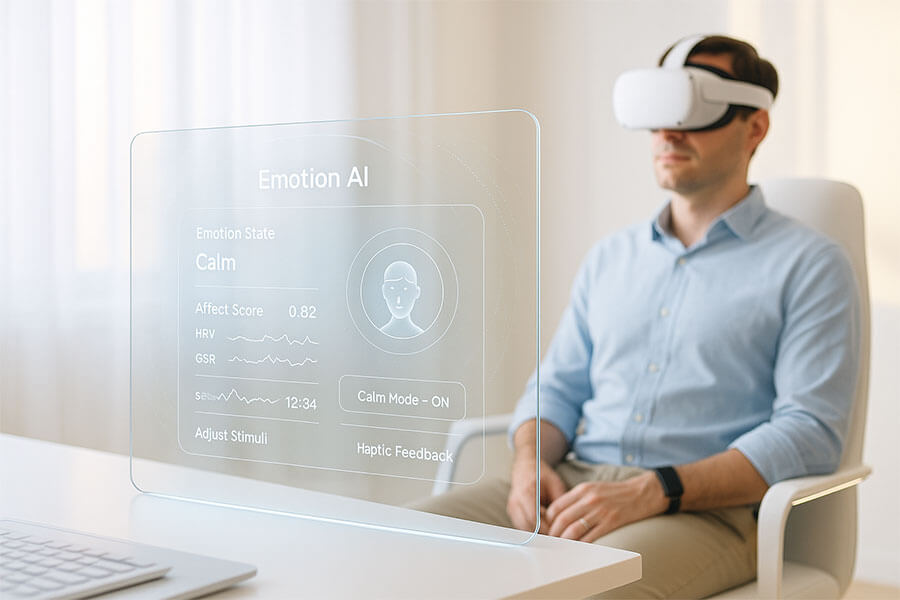
Enter the convergence of two revolutionary technologies that promise to reshape mental health care fundamentally. Emotion artificial intelligence, also known as affective computing, enables machines to recognize, interpret, and respond to human emotional states with increasing accuracy and nuance. Virtual reality therapy creates immersive therapeutic environments where patients can safely confront fears, practice coping strategies, and experience healing scenarios under controlled conditions. When these technologies combine, they create adaptive therapeutic systems that monitor patients’ emotional responses in real time and dynamically adjust treatment experiences to optimize effectiveness and engagement.
This technological fusion addresses many limitations of traditional therapy by providing personalized mental health interventions that adapt continuously to each patient’s emotional state. Instead of following predetermined treatment scripts, emotion AI-powered VR therapy systems observe physiological signals, facial expressions, voice patterns, and behavioral responses to understand how patients feel moment by moment. The system then modifies therapeutic content accordingly, perhaps reducing intensity when anxiety becomes overwhelming, introducing supportive elements when distress is detected, or advancing challenges when confidence and readiness are evident. This creates truly personalized treatment experiences that respond to individual needs with precision impossible in traditional settings.
The implications extend far beyond technological novelty. These systems have potential to democratize access to high-quality mental health care by reducing dependence on scarce specialist clinicians, providing consistent evidence-based interventions regardless of location, offering affordable alternatives to expensive traditional therapy, and eliminating many barriers associated with seeking conventional treatment. For individuals in remote areas lacking mental health services, those unable to afford ongoing therapy costs, or people uncomfortable with traditional clinical settings, emotion AI-powered VR therapy represents genuine hope for accessing effective treatment.
The timing of this technological convergence could not be more critical. The COVID-19 pandemic dramatically accelerated mental health challenges worldwide while simultaneously highlighting limitations of traditional care delivery models that rely on in-person interactions. Telehealth adoption surged, demonstrating that technology-mediated mental health care can be effective while revealing opportunities for even more innovative approaches. Meanwhile, advances in artificial intelligence, virtual reality hardware, and sensor technologies have reached maturity levels that make sophisticated emotion-responsive systems feasible for clinical deployment.
Understanding this transformation requires examining both the technological foundations that enable emotion AI and VR therapy individually, and the powerful synergies that emerge when these systems work together. The journey involves exploring how machines detect and interpret human emotions, how virtual environments facilitate therapeutic change, and how adaptive systems create personalized treatment experiences that may surpass what human clinicians alone can provide. Most importantly, it demands careful consideration of benefits, challenges, ethical concerns, and practical implementation issues that will determine whether these technologies fulfill their transformative promise or remain unrealized potential.
Understanding Emotion AI and Affective Computing
Emotion artificial intelligence represents a specialized branch of artificial intelligence focused on enabling computers to recognize, interpret, simulate, and respond to human emotions. Also known as affective computing, this field emerged from the recognition that human communication and decision-making involve emotional dimensions that traditional computing systems ignored. While conventional AI excels at logical reasoning and pattern recognition, emotion AI seeks to bridge the gap between human emotional experience and machine understanding, creating systems that can perceive subtle emotional cues and respond in contextually appropriate ways.
The theoretical foundations of emotion AI draw from multiple disciplines including psychology, neuroscience, computer science, and human-computer interaction. Psychologists have long studied how emotions manifest in observable behaviors, from facial expressions that appear universal across cultures to physiological changes that accompany different emotional states. Neuroscientists have mapped brain regions associated with emotional processing and identified neurological patterns that distinguish various feelings. Computer scientists have developed machine learning algorithms capable of detecting patterns in complex data that human observers might miss. The synthesis of these perspectives enables creation of systems that perceive emotions through multiple channels simultaneously.
Modern emotion AI systems operate by collecting data from various sources that reveal emotional states. These might include visual information captured through cameras that analyze facial expressions, audio recordings that detect vocal characteristics associated with different emotions, physiological sensors that measure bodily responses like heart rate variability or skin conductance, and textual analysis that interprets emotional content in written communication. Advanced systems integrate information from multiple sources to create comprehensive emotional assessments that are more accurate and nuanced than any single measurement could provide.
The machine learning algorithms underlying emotion AI have evolved significantly in recent years. Early systems relied on rule-based approaches where programmers explicitly coded relationships between observable features and emotional states. Contemporary systems use deep learning neural networks that discover complex patterns by analyzing vast datasets of labeled emotional expressions. These networks can identify subtle variations in facial muscle movements, detect vocal micro-expressions that indicate emotional shifts, and recognize physiological patterns associated with specific feelings. The accuracy of these systems has improved dramatically, with some applications now matching or exceeding human performance in controlled settings.
Core Technologies and Detection Methods
Facial expression analysis represents one of the most mature and widely used emotion detection methods. Building on research by psychologists like Paul Ekman, who identified universal facial expressions for basic emotions, computer vision systems analyze facial muscle movements to infer emotional states. Modern algorithms use convolutional neural networks trained on thousands of labeled facial images to detect subtle expressions that might escape conscious awareness. These systems identify action units corresponding to specific facial muscle movements, then combine this information to classify emotions with increasing sophistication. Advanced systems distinguish between genuine and forced expressions, detect masked emotions, and recognize complex emotional blends that reflect mixed feelings.
Voice analysis provides complementary emotional information by examining acoustic features of speech. Emotion affects vocal characteristics in measurable ways including pitch variations, speaking rate, voice intensity, and spectral properties of sound. Excited or anxious speakers tend toward higher pitch and faster speech, while sadness typically correlates with lower pitch and slower tempo. Machine learning models trained on emotional speech databases can classify emotions from voice alone with reasonable accuracy. These systems prove particularly valuable when facial expressions are unavailable or when analyzing phone conversations and audio recordings. Some advanced implementations detect micro-variations in voice quality that reveal emotional nuances beyond conscious control.
Physiological sensing offers objective measures of emotional arousal that complement behavioral observations. The autonomic nervous system triggers measurable bodily changes during emotional experiences including increased heart rate during anxiety or fear, changes in skin conductance reflecting emotional arousal, alterations in breathing patterns associated with different feelings, and variations in blood pressure and body temperature. Wearable sensors and biometric devices can monitor these signals continuously, providing real-time emotional state information. While physiological measures reveal arousal levels effectively, distinguishing between specific emotions proves more challenging since different feelings can produce similar physical responses. Advanced systems combine physiological data with other information sources to achieve more accurate emotion classification.
Modern emotion AI implementations increasingly use multimodal fusion approaches that integrate information from multiple detection methods. A comprehensive system might simultaneously analyze facial expressions, voice characteristics, physiological signals, and body language to build richer emotional assessments than any single channel provides. Machine learning algorithms learn optimal ways to combine these diverse information sources, weighting each appropriately based on reliability and context. This multimodal approach improves accuracy while providing redundancy when individual channels are unavailable or compromised. The resulting systems can detect emotional states with nuance approaching and sometimes exceeding human capabilities, particularly when processing subtle cues or analyzing patterns over extended periods.
Virtual Reality Therapy Fundamentals
Virtual reality therapy harnesses immersive computer-generated environments to create therapeutic experiences that would be difficult, dangerous, or impossible to replicate in physical settings. Unlike traditional talk therapy conducted in clinical offices, VR therapy transports patients into three-dimensional simulated worlds where they can directly experience therapeutic scenarios while remaining physically safe. This immersive quality creates powerful psychological presence, the sensation of actually being in the virtual environment rather than merely observing it, which enables emotional engagement and behavioral responses similar to those occurring in corresponding real situations.
The therapeutic power of virtual reality stems from several unique characteristics that distinguish it from other treatment modalities. Immersive environments capture attention completely, minimizing external distractions and enabling deep focus on therapeutic tasks. The controllability of virtual scenarios allows precise manipulation of exposure intensity, environmental factors, and challenge difficulty in ways impossible with real-world exposure therapy. Safety assurances enable patients to confront feared situations knowing they face no actual danger, reducing resistance to treatment engagement. Repeatability permits practicing coping strategies and therapeutic skills multiple times in consistent conditions, accelerating learning and confidence development. These features combine to create therapeutic experiences that are simultaneously safer, more controllable, and potentially more effective than traditional approaches.
Clinical applications of VR therapy have expanded dramatically since early implementations in the 1990s. Exposure therapy for anxiety disorders and phobias represents the most extensively researched application, with numerous studies demonstrating effectiveness for conditions including fear of heights, flying phobia, social anxiety, and post-traumatic stress disorder. Patients gradually confront feared situations in virtual environments, learning that anticipated catastrophes do not occur and developing confidence in their ability to tolerate anxiety. The controlled nature of VR exposure enables precise calibration of challenge levels, advancing through fear hierarchies at optimal paces for individual patients while maintaining safety throughout.
Beyond anxiety treatment, VR therapy addresses diverse mental health conditions through varied approaches. Depression treatment might use VR environments designed to activate positive emotions, encourage behavioral activation through engaging virtual activities, or facilitate cognitive restructuring by enabling patients to experience alternative perspectives on negative situations. Pain management applications distract patients from physical discomfort through immersive experiences or teach relaxation techniques in calming virtual environments. Rehabilitation programs use engaging VR exercises to maintain motivation during physical therapy or cognitive rehabilitation following neurological injuries. The versatility of virtual environments enables creative therapeutic approaches limited primarily by clinical imagination and technical feasibility.
Research evidence supporting VR therapy effectiveness has accumulated steadily over recent decades. Meta-analyses examining multiple studies consistently find that VR exposure therapy produces outcomes comparable to traditional in-person exposure therapy for anxiety disorders, with some studies suggesting potential advantages in treatment acceptance and dropout rates. Patients often find VR therapy more engaging and less intimidating than direct real-world exposure, increasing willingness to complete treatment. The standardization possible with virtual scenarios may also reduce variability in treatment delivery, ensuring consistent evidence-based interventions regardless of individual therapist differences. While research continues regarding optimal implementation approaches and long-term outcomes, existing evidence provides solid support for VR therapy as a legitimate clinical intervention.
The technological infrastructure supporting VR therapy has evolved dramatically, transitioning from expensive, specialized equipment accessible only in research laboratories to consumer-grade systems affordable for individual practitioners and patients. Early VR systems required elaborate setups with powerful computers, complex tracking systems, and cumbersome head-mounted displays that limited practical clinical deployment. Contemporary systems use standalone VR headsets requiring no external computers or sensors, providing high-quality immersive experiences at costs comparable to smartphones. This democratization of VR technology has expanded access to VR therapy while enabling new delivery models including remote treatment where patients use personal VR equipment in their homes under clinician guidance via telehealth.
Integration of Emotion AI in VR Therapy
The marriage of emotion AI and virtual reality therapy creates adaptive therapeutic systems that represent a qualitative leap beyond either technology alone. Traditional VR therapy, despite its advantages over conventional approaches, still follows relatively predetermined paths where therapeutic scenarios unfold according to preset scripts or therapist decisions made between sessions. Emotion AI integration transforms these static experiences into dynamic systems that continuously monitor patients’ emotional states and adapt therapeutic content in real time based on detected responses. This creates truly personalized treatment experiences that respond moment-by-moment to individual needs, optimizing therapeutic challenge levels and support to maximize effectiveness while maintaining patient safety and engagement.
The technical architecture of emotion-responsive VR therapy systems integrates multiple components working in coordinated fashion. Sensors embedded in VR headsets, handheld controllers, or supplementary wearable devices collect data about the patient’s emotional state through multiple channels simultaneously. Cameras facing the user’s eyes track pupil dilation and eye movements that reflect emotional arousal and attention. Microphones capture voice characteristics during verbal responses or vocalized emotional expressions. Physiological sensors monitor heart rate, skin conductance, and potentially other biomarkers associated with emotional states. Controllers track hand movements and interaction patterns that reveal behavioral responses to therapeutic scenarios.
Machine learning algorithms process this sensor data continuously, generating real-time assessments of the patient’s emotional state. These algorithms have been trained on extensive datasets linking specific sensor patterns to emotional experiences, enabling accurate emotion classification from multiple input sources. The system might detect increasing anxiety through rising heart rate, tense body posture, and facial tension, or recognize emerging confidence through relaxed physiological indicators and bold interaction patterns. Sophisticated implementations distinguish between different anxiety types, recognize complex emotional states involving multiple feelings, and track emotional trajectories over time to identify therapeutic progress or concerning patterns.
The VR environment itself responds dynamically to detected emotional states through various adaptive mechanisms. At the most basic level, systems might adjust scenario intensity, reducing challenge levels when anxiety becomes overwhelming or advancing difficulty when confidence and mastery are evident. More sophisticated adaptations might alter environmental characteristics including lighting, sounds, or visual elements to provide emotional support or reduce distress. Therapeutic agents within virtual environments, whether appearing as therapists, coaches, or supportive companions, can adjust their behaviors and communications based on patient emotional states, offering encouragement when needed or challenging cognitive distortions when appropriate.
The feedback loop between emotional detection and therapeutic adaptation creates continuously evolving treatment experiences. As the system modifies scenarios based on detected emotions, it simultaneously observes how these changes affect the patient’s emotional responses. This creates an iterative process of assessment and adjustment that optimizes therapeutic experiences in ways that would be extraordinarily difficult for human therapists to match, particularly given the speed and precision with which emotion AI systems can detect subtle emotional shifts and implement responsive adaptations. The result is treatment that feels personally tailored and responsive, increasing patient engagement while potentially improving therapeutic outcomes through optimized challenge-support balance.
Real-Time Adaptation and Personalization
Real-time adaptation mechanisms in emotion-responsive VR therapy operate across multiple dimensions to create personalized experiences. Difficulty adjustment represents one of the most straightforward adaptation strategies, particularly relevant for exposure therapy applications. When the system detects excessive anxiety suggesting the patient feels overwhelmed, it might reduce challenge intensity by increasing distance from feared stimuli, reducing the number of anxiety-provoking elements present simultaneously, or introducing calming elements into the environment. Conversely, when physiological and behavioral indicators suggest the patient is managing well and could handle additional challenge, the system advances difficulty to promote continued therapeutic progress and prevent boredom or disengagement.
Environmental adaptation involves modifying virtual surroundings to support therapeutic goals and patient emotional states. A patient experiencing high distress might benefit from calming environmental modifications including warmer lighting, gentler sounds, or appearance of safe spaces they can retreat to temporarily. Conversely, a patient appearing insufficiently engaged might receive environmental intensification through more vivid sensory stimuli or introduction of novel elements to capture attention. These adaptations happen seamlessly within the immersive experience, maintaining therapeutic presence while optimizing emotional state for learning and growth.
Pacing control represents another crucial adaptation dimension. Human patients vary dramatically in how quickly they can process emotional experiences, develop coping skills, and progress through therapeutic challenges. Emotion AI systems can detect when patients need more time to process current experiences, slowing therapeutic progression to allow adequate integration before advancing. Similarly, systems recognize when patients are ready to move forward, preventing unnecessary repetition that might reduce engagement. This individualized pacing ensures each person progresses at their optimal rate rather than following fixed timelines that might be too fast for some and too slow for others.
Supportive element introduction provides adaptive assistance when patients struggle. Virtual therapist avatars might offer specific coping strategy reminders when detecting rising anxiety, provide encouraging feedback when effort is evident but success is elusive, or introduce brief relaxation exercises when physiological arousal exceeds therapeutic ranges. The system might also provide visual guides, simplified instructions, or additional context to help patients understand and navigate challenging situations. This adaptive support provides scaffolding that adjusts to individual needs, offering maximum assistance when necessary while fading support as competence develops.
Clinical Applications and Treatment Areas
Anxiety disorders represent prime candidates for emotion-responsive VR therapy given the central role of exposure and anxiety management in evidence-based treatment. Social anxiety disorder benefits particularly from adaptive systems that can calibrate virtual social situations based on patient comfort levels. The VR environment might initially present low-stakes social interactions like making small talk with a single friendly virtual character, then gradually introduce more challenging scenarios involving larger groups, potentially critical audiences, or performance situations as the patient’s confidence grows. The emotion AI system detects anxiety spikes and adjusts accordingly, perhaps having virtual characters respond more supportively when high anxiety is detected or introducing brief breaks to practice calming techniques before continuing exposure.
Post-traumatic stress disorder treatment through emotion-responsive VR enables carefully controlled trauma processing that adapts to patient tolerance. Traditional prolonged exposure therapy for PTSD requires patients to recount traumatic experiences repeatedly, which can sometimes trigger overwhelming emotional responses. Emotion AI integration allows systems to monitor distress levels continuously, modulating the intensity of trauma reminders and introducing stabilization techniques when emotional arousal exceeds therapeutic windows. This might involve dimming or pausing traumatic imagery when distress becomes excessive, providing real-time coping reminders, or shifting temporarily to calming environments before gradually returning to trauma processing. Such adaptability may improve treatment completion rates by preventing overwhelming experiences that drive patients to discontinue therapy.
Phobia treatment leverages emotion-responsive VR’s ability to create graduated exposure hierarchies that automatically adjust to individual fear responses. A person with fear of heights might begin with mildly elevated virtual positions while the system monitors anxiety levels through physiological signals and behavioral indicators. As habituation occurs and anxiety decreases, the system gradually increases height, perhaps moving from a low balcony to higher floors of a virtual building, then to more challenging scenarios like glass elevators or outdoor cliffs. If anxiety escalates excessively, the system automatically moderates challenge levels rather than requiring therapist intervention, maintaining optimal therapeutic arousal that promotes learning without overwhelming the patient.
Depression treatment applications use emotion-responsive VR to promote behavioral activation and positive emotion cultivation. The system might guide patients through engaging virtual activities designed to provide achievement experiences, social connection, or pleasure while monitoring emotional responses. When detecting positive emotional shifts, the system reinforces these experiences and introduces similar activities. If emotional flatness or negative responses are detected, the system might adjust activity types or provide additional guidance and encouragement. This adaptive approach helps identify specific activities most effective for improving each individual’s mood, creating personalized behavioral activation plans optimized for their unique emotional responsiveness patterns.
Benefits and Opportunities
Enhanced treatment personalization stands among the most significant benefits of emotion-responsive VR therapy. Traditional treatment protocols, while evidence-based, necessarily involve standardization that may not optimally match every individual’s needs. Some patients progress rapidly and become bored with standard pacing, while others need more gradual progression than typical protocols provide. Emotion AI enables systems to detect these individual differences automatically and adjust treatment parameters accordingly, creating experiences perfectly calibrated for each person’s current capabilities and emotional state. This personalization extends beyond simple difficulty adjustment to encompass content selection, pacing, supportive interventions, and numerous other parameters that collectively create treatment experiences uniquely suited to individual patients.
Improved patient engagement emerges from multiple aspects of emotion-responsive VR therapy. The immersive nature of virtual reality naturally captures attention more completely than traditional talk therapy, reducing mind-wandering and increasing focus on therapeutic tasks. Real-time adaptation maintains optimal challenge levels that prevent both boredom from insufficient difficulty and overwhelm from excessive challenge, keeping patients in engagement zones where learning and growth occur optimally. The responsiveness of the system to patient emotional states creates experiences that feel personally relevant rather than generic, increasing intrinsic motivation to participate. Many patients report finding VR therapy more engaging and enjoyable than traditional approaches, potentially improving treatment adherence and completion rates.
Objective emotional measurement provides clinicians with quantitative data about patient responses that may be more accurate and comprehensive than subjective self-reports or clinical observations alone. Physiological sensors detect emotional arousal that patients might not consciously recognize or might minimize when reporting to therapists. Behavioral tracking within VR environments reveals avoidance patterns, approach behaviors, and skill utilization that inform treatment planning. Longitudinal tracking of emotional responses across therapy sessions enables precise measurement of therapeutic progress, identifying what works for specific patients and where adjustments might be needed. This objective data complements clinical judgment and patient subjective experiences, providing a more complete picture that enables better treatment decisions.
Accessibility benefits represent transformative potential for addressing global mental health treatment gaps. Emotion-responsive VR therapy reduces dependence on scarce specialist clinicians by automating significant aspects of treatment delivery that traditionally required therapist presence. Patients in rural areas lacking local mental health providers can access sophisticated evidence-based interventions remotely using consumer VR equipment. The standardization inherent in technology-delivered treatment ensures consistent quality regardless of location, eliminating disparities where treatment quality depends heavily on individual therapist skill and training. For people with mobility limitations, social anxiety that makes office visits difficult, or other barriers to accessing traditional therapy, at-home VR treatment provides accessible alternatives.
Cost-effectiveness gains emerge from multiple sources. While initial technology investments are required, emotion-responsive VR therapy potentially reduces long-term costs by automating treatment components that traditionally require expensive therapist time. Patients might need fewer therapist-led sessions when supplementing with VR therapy between appointments, or might receive autonomous VR treatment with periodic therapist check-ins rather than weekly therapy sessions. Reduced travel costs and time away from work for both patients and therapists add to economic benefits. At scale, these cost reductions could make evidence-based mental health treatment affordable for populations currently priced out of care, expanding access dramatically while potentially reducing long-term societal costs associated with untreated mental health conditions.
Scalability advantages enable serving vastly larger numbers of patients than traditional therapy models permit. Each therapist can see limited patients weekly, creating inherent scalability constraints that contribute to treatment access problems. Technology-delivered VR therapy faces no such limitations, potentially serving thousands of simultaneous users. As global mental health needs continue growing, scalable treatment delivery models become increasingly critical. Emotion-responsive VR therapy represents one of few approaches capable of meeting population-level mental health needs without requiring proportional increases in trained clinician numbers. This scalability extends to underserved populations including low-income communities, developing countries, and rural areas where therapist shortages are most acute.
Enhanced safety emerges from controlled virtual environments and continuous emotional monitoring. Patients can confront feared situations, practice challenging skills, or process difficult emotions knowing they face no actual physical danger. The system’s continuous emotional monitoring enables early detection of overwhelming distress, triggering automatic interventions before patients become severely dysregulated. This safety profile may enable more aggressive therapeutic approaches than would be prudent in traditional settings, potentially accelerating treatment progress. The comprehensive data collection also provides medicolegal protections for clinicians by documenting patient responses and treatment adaptations automatically.
Challenges and Limitations
Technical accuracy limitations persist despite remarkable progress in emotion AI capabilities. Current systems detect basic emotional states reasonably well under controlled conditions but struggle with subtle distinctions, mixed emotions, and cultural variations in emotional expression. A smile might indicate happiness, polite masking of discomfort, or sarcastic amusement, yet machine interpretation of context remains imperfect. Physiological signals reveal arousal levels but distinguishing fear from excitement or anger from enthusiasm proves challenging when bodily responses show similarities. Individual differences in emotional expression patterns further complicate accurate detection, as some people show exaggerated expressions while others display minimal outward signs despite intense internal experiences. These accuracy limitations risk therapeutic systems responding inappropriately to misinterpreted emotional states.
Privacy and data security concerns loom large when systems collect intimate emotional data and detailed physiological information. Emotion AI systems necessarily gather sensitive personal information including facial images, voice recordings, and biological measurements that could reveal private mental health details if compromised. The continuous monitoring inherent in these systems creates comprehensive digital records of emotional experiences during vulnerable therapeutic moments. Cyberattacks targeting mental health platforms could expose sensitive patient information, potentially causing harm through stigmatization or discrimination. Even without malicious breaches, questions arise about data ownership, secondary uses beyond direct treatment, and potential law enforcement or commercial access to emotional data. Robust cybersecurity measures and clear privacy protections become essential but add complexity and cost to system deployment.
Accessibility barriers include both technological and human factors that could limit who benefits from emotion-responsive VR therapy. High-quality VR equipment, while increasingly affordable, still represents significant expense that may be prohibitive for low-income individuals. Reliable internet connections required for some implementations may be unavailable in rural or developing areas. Some individuals experience motion sickness or discomfort with VR headsets, preventing their use of this treatment modality. Disabilities affecting vision, hearing, or motor control might interfere with VR therapy participation. Age-related factors including both very young children who may not engage appropriately with VR and elderly individuals who may struggle with technology adoption create additional accessibility constraints. Without deliberate efforts to address these barriers, emotion-responsive VR therapy risks becoming available primarily to privileged populations, potentially exacerbating rather than reducing health disparities.
Clinical validation requirements present substantial hurdles before emotion-responsive VR therapy achieves mainstream acceptance. While research supports basic VR therapy effectiveness, specific evidence for adaptive emotion-responsive systems remains limited. Regulatory agencies like the FDA increasingly scrutinize digital mental health interventions, requiring rigorous clinical trials demonstrating safety and efficacy before approval. These trials are expensive and time-consuming, creating barriers for smaller companies and slowing technology deployment. Questions remain about optimal adaptation algorithms, appropriate emotional thresholds for triggering interventions, and long-term outcomes compared to traditional treatment approaches. Individual system variations across different platforms and implementations complicate evidence generation, as findings with one system may not generalize to others using different emotion detection methods or adaptation strategies.
Regulatory uncertainty creates challenges for developers and potential users. Mental health regulations vary dramatically across jurisdictions, with some treating digital interventions as medical devices requiring formal approval while others allow marketing with minimal oversight. Reimbursement policies remain unclear, with insurance companies often reluctant to cover technology-based treatments lacking extensive evidence bases. Professional licensing requirements create complexity when treatment crosses state or national boundaries, as traditional regulations assume in-person care within specific jurisdictions. Data protection laws like GDPR or HIPAA impose stringent requirements that may be particularly challenging for systems collecting continuous emotional monitoring data. This regulatory ambiguity creates risks for both developers who may invest heavily in systems that later face regulatory barriers and patients who may access treatments of uncertain regulatory status.
Ethical concerns encompass multiple dimensions requiring careful consideration. Consent becomes complicated when systems adapt based on detected emotions that patients may not consciously experience or acknowledge. Should systems continue treatment when detecting resistance or avoidance, or does this violate patient autonomy? Algorithmic bias risks emerge if training data underrepresents certain populations, potentially creating systems that work well for some demographic groups while failing others. The replacement of human therapist judgment with algorithmic decisions raises questions about accountability when treatments cause harm or fail to prevent deterioration. Over-reliance on technology might reduce development of human therapeutic skills or lead to depersonalization of care. Fundamental questions arise about whether machines should make decisions about mental health treatment and what role human clinical judgment must maintain.
Real-World Implementations and Case Studies
Several pioneering organizations have implemented emotion-responsive VR therapy systems that demonstrate practical applications of these technologies while revealing implementation challenges and opportunities. These real-world deployments provide valuable insights beyond controlled research studies, showing how emotion AI and VR integration performs in actual clinical settings with diverse patient populations and operational constraints.
Oxford VR developed commercially available VR therapy platforms that incorporate adaptive features responding to patient behaviors and responses during treatment. Their automated VR therapy for acrophobia, designed to treat fear of heights, received regulatory approval as a medical device in Europe and demonstrated effectiveness in clinical trials published in 2021. The system guides patients through graduated virtual height exposure while monitoring avoidance behaviors and emotional responses, adjusting scenario difficulty accordingly. Patients wear VR headsets at home and complete treatment independently over multiple sessions without therapist presence. Clinical trial results showed significant fear reduction comparable to traditional therapist-delivered exposure therapy, with high treatment completion rates suggesting good patient acceptance. This implementation demonstrates feasibility of automated emotion-responsive therapy deployment at scale, though the specific emotion AI components focus primarily on behavioral monitoring rather than comprehensive physiological emotional assessment.
Limbix, a digital therapeutics company, launched VR exposure therapy platforms for adolescent anxiety and other mental health conditions starting in 2020. Their systems integrate multiple VR therapeutic environments designed for different anxiety disorders while incorporating engagement monitoring and adaptive difficulty progression. The platform received FDA clearance as a prescription digital therapeutic in 2020, representing one of the first VR mental health treatments to achieve this regulatory milestone. Limbix implementations in clinical settings demonstrated that adolescent patients showed high engagement with VR therapy and that clinicians found the platforms valuable supplements to traditional treatment approaches. Patient outcome data from early implementations showed promising anxiety reduction, though comprehensive long-term effectiveness studies remain ongoing. This case illustrates both the potential for emotion-responsive VR therapy in pediatric populations and the importance of regulatory pathways for establishing clinical legitimacy.
Psious represents another practical implementation providing VR therapy platforms to mental health professionals worldwide since the early 2020s. Their system offers over 70 virtual reality environments designed for exposure therapy, relaxation training, and mindfulness practice. The platform incorporates biofeedback integration allowing therapists to monitor patient heart rate and skin conductance during VR sessions, enabling real-time assessment of emotional arousal and therapy adjustment. Psious reports that over 2,500 mental health professionals across 60 countries have adopted their platform, treating various conditions including phobias, anxiety disorders, and eating disorders. User feedback highlights benefits including improved patient engagement, objective progress monitoring, and treatment efficiency gains. This widespread clinical adoption demonstrates market demand for VR therapy solutions while revealing implementation realities including the importance of therapist training, technical support needs, and integration with existing clinical workflows.
These real-world implementations reveal several consistent findings across platforms and settings. Patient acceptance and engagement with emotion-responsive VR therapy generally proves high, with many patients expressing preference for VR approaches over traditional exposure therapy. The immersive nature of VR captures attention effectively while the controlled virtual environment provides safety assurances that reduce treatment resistance. Clinicians report that VR therapy enhances their practice capabilities, enabling treatment approaches that would be impractical with traditional methods while providing objective patient response data that informs clinical decision-making.
However, implementations also expose persistent challenges that require ongoing attention. Technical reliability issues including software bugs, hardware malfunctions, and connectivity problems can disrupt treatment and frustrate both patients and clinicians. The learning curve for effectively integrating VR therapy into clinical practice requires training investments and adjustment of established workflows. Cost considerations including equipment purchases, software licensing, and maintenance expenses create barriers for smaller practices and limit accessibility for patients without insurance coverage. Regulatory and reimbursement uncertainty continues affecting commercial viability and clinical adoption rates.
The documented outcomes from these real-world implementations provide encouraging but incomplete evidence for emotion-responsive VR therapy effectiveness. Most systems demonstrate patient engagement benefits and show promising early clinical results, but long-term outcome studies comparing sustained effectiveness against traditional treatment approaches remain limited. Questions persist about which patients benefit most from VR therapy, what role human therapists should maintain, and how to optimize emotion AI adaptation algorithms for maximum therapeutic benefit. As implementations expand and mature, continued monitoring and rigorous evaluation will clarify the true potential and appropriate applications of these technologies.
Future Outlook and Recommendations
The evolution of emotion-responsive VR therapy appears poised for rapid advancement driven by converging technological improvements and increasing clinical adoption. Artificial intelligence capabilities continue improving dramatically, with emotion recognition accuracy and nuance expected to enhance significantly over coming years. Virtual reality hardware becomes progressively more affordable, comfortable, and capable while remaining accessible to broader populations. Sensor technologies advance toward less intrusive, more accurate measurement of emotional states through emerging approaches including remote photoplethysmography that detects physiological signals from video without contact sensors. These technological trajectories suggest that near-future systems will overcome many current limitations while delivering increasingly sophisticated adaptive therapeutic experiences.
Integration with complementary therapeutic approaches represents a promising direction for maximizing treatment effectiveness. Emotion-responsive VR therapy could combine with traditional talk therapy, with patients using VR for exposure and skills practice between therapist-led sessions that focus on processing, cognitive restructuring, and therapeutic relationship benefits. Pharmacological treatments might be optimized by using VR therapy data to assess medication effectiveness objectively, adjusting dosages based on emotional reactivity patterns observed during standardized VR scenarios. Group therapy approaches could leverage VR to create shared virtual spaces where multiple patients participate simultaneously, combining social support benefits with immersive therapeutic environments. These integrative models acknowledge that no single intervention optimally addresses all aspects of complex mental health conditions, creating comprehensive treatment approaches that leverage distinct advantages of each modality.
Artificial intelligence advances will enable increasingly sophisticated therapeutic agents within VR environments. Future systems might feature virtual therapists powered by large language models that conduct naturalistic therapeutic conversations while adapting to detected emotional states, potentially providing empathetic support approaching human therapist quality. These AI therapists could draw from extensive therapy transcript databases to generate contextually appropriate interventions while maintaining consistency with evidence-based treatment protocols. While such systems should complement rather than replace human clinicians, they could expand access dramatically by providing high-quality therapeutic interactions in situations where human therapists are unavailable or unaffordable.
Predictive capabilities represent another frontier for emotion AI advancement. Rather than merely reacting to current emotional states, future systems might anticipate emotional responses based on patient history, context, and subtle precursor signals. Such anticipatory adaptation could prevent overwhelming emotional experiences by intervening before distress becomes excessive, perhaps offering coping support when detecting early anxiety signs before full panic develops. Predictive systems might also identify when patients are ready for therapeutic advancement even before they consciously recognize their own readiness, optimizing therapeutic progression timing to maximize learning and minimize unnecessary repetition.
Personalization will likely extend beyond real-time adaptation to encompass treatment path customization based on comprehensive patient profiling. Machine learning algorithms could analyze emotional reactivity patterns, treatment response history, and personal preferences to recommend optimal therapeutic approaches for each individual. Some patients might benefit from gradual, gentle exposure progressions while others respond better to more intensive approaches. Certain individuals may need extensive skill-building before exposure while others succeed with minimal preparation. AI systems could identify these individual differences and customize entire treatment plans accordingly rather than merely adjusting moment-to-moment parameters within standardized protocols.
For clinicians considering emotion-responsive VR therapy adoption, several recommendations emerge from current evidence and implementations. Begin with clear therapeutic use cases where VR offers distinct advantages over traditional approaches, such as exposure therapy for specific phobias or social anxiety treatment. Invest in appropriate training to understand both the technology and optimal clinical integration approaches rather than assuming VR therapy is self-explanatory. Start with therapist-guided VR sessions before progressing to autonomous patient use, ensuring comfort with the technology and ability to troubleshoot issues. Maintain human therapeutic relationships as central to treatment even when leveraging technological tools, recognizing that VR enhances rather than replaces therapeutic relationships. Monitor outcomes systematically to assess whether VR therapy improves results for your specific patient population and practice setting.
For technology developers, recommendations include prioritizing clinical validation through rigorous research rather than rushing to market with inadequately tested systems. Engage mental health professionals throughout development to ensure platforms address real clinical needs and integrate smoothly with existing workflows. Focus on user experience design that makes systems accessible to both clinicians and patients without extensive technical expertise. Build robust privacy protections and security measures from the ground up rather than treating them as afterthoughts. Pursue appropriate regulatory pathways to establish legitimacy and enable insurance reimbursement. Consider sustainability of business models to ensure systems remain available long-term rather than disappearing when initial funding depletes.
Policymakers and regulators face the challenge of establishing frameworks that protect patient safety while enabling innovation and access to potentially beneficial technologies. Regulatory approaches should be proportionate to risk levels, with lower-risk applications facing less burdensome approval processes than higher-risk interventions. Reimbursement policies need updating to recognize legitimate digital therapeutics and enable equitable access regardless of socioeconomic status. Privacy regulations should address unique challenges of continuous emotional monitoring while enabling appropriate clinical uses. Research funding should support rigorous effectiveness studies and implementation science to build evidence bases that inform policy and clinical decisions.
The path toward widespread emotion-responsive VR therapy adoption requires coordinated efforts across technology developers, clinicians, researchers, regulators, and payers. Success depends on maintaining focus on ultimate goals of improving mental health outcomes and expanding access to effective treatment while navigating legitimate concerns about safety, privacy, and evidence. The technological potential is clear, but realizing it demands careful, thoughtful implementation that prioritizes patient welfare above commercial or technological imperatives.
Final Thoughts
The convergence of emotion artificial intelligence and virtual reality therapy represents far more than incremental improvement in mental health treatment delivery. It embodies a fundamental transformation in how we understand and facilitate psychological healing, shifting from standardized protocols applied to diverse individuals toward truly personalized therapeutic experiences that adapt continuously to unique emotional patterns and needs. This technological revolution arrives at a critical moment when global mental health needs overwhelm traditional service delivery capacity while widening disparities in treatment access threaten to leave vulnerable populations further behind.
The transformative potential extends beyond clinical effectiveness to encompass broader societal implications for how we conceptualize mental health care accessibility and delivery. Traditional therapy models, despite their evidence base and value, inherently limit access through dependence on scarce specialist professionals, geographical constraints requiring physical proximity to clinicians, and economic barriers that place consistent treatment beyond reach for many individuals. Emotion-responsive VR therapy offers genuine possibilities for democratizing access to evidence-based interventions, enabling people in remote areas, developing countries, and underserved communities to receive sophisticated treatment previously available only to privileged populations with resources to access specialists in major urban centers.
The intersection of technology and social responsibility becomes especially significant when considering financial inclusion dimensions of mental health care transformation. The economic burden of mental illness is staggering, measured not only in direct treatment costs but in lost productivity, strained social services, and immeasurable human suffering. Traditional funding models struggle to meet current needs while projected increases in mental health challenges suggest the gap will widen without innovative solutions. Emotion-responsive VR therapy introduces new economic models that could provide high-quality care at lower long-term costs through automation, scalability, and efficiency gains. This economic accessibility could prove as transformative as clinical effectiveness improvements, enabling mental health care systems to serve populations currently excluded by financial constraints.
The forward-looking perspective reveals possibilities that extend beyond addressing current mental health challenges to fundamentally reimagining how societies support psychological wellbeing. Preventive applications of emotion-responsive VR could identify early signs of mental health deterioration and intervene before conditions become severe, potentially reducing the incidence of serious disorders requiring intensive treatment. Wellness applications might help healthy individuals develop emotional regulation skills and psychological resilience that protect against future difficulties. Educational implementations could teach mental health literacy and coping strategies to young people before they develop problems, creating more psychologically healthy future generations.
Yet enthusiasm must be tempered by acknowledgment of ongoing challenges that could limit transformative potential if not addressed thoughtfully. Technical limitations, privacy vulnerabilities, regulatory uncertainties, and evidence gaps represent serious obstacles requiring sustained attention and resources to overcome. The risk of technological solutionism, believing that technology alone can solve complex social problems without addressing underlying structural issues, looms large. Mental health challenges have roots in social inequality, trauma, discrimination, and other factors that no therapeutic technology can eliminate. Emotion-responsive VR therapy must be understood as one valuable tool among many rather than a panacea that excuses failure to address fundamental social determinants of mental health.
The responsibility for shaping this technological transformation appropriately extends across all stakeholders in mental health ecosystems. Clinicians must engage critically with emerging technologies, neither dismissing them reflexively due to unfamiliarity nor embracing them uncritically due to novelty. Researchers must conduct rigorous investigations that illuminate both benefits and limitations while identifying optimal applications and vulnerable populations requiring additional protections. Technology developers must prioritize patient welfare over profit maximization, building systems that genuinely serve clinical needs rather than creating problems that justify technological solutions. Policymakers must craft regulations that protect safety while enabling beneficial innovation to reach those who need it most.
The ultimate measure of success for emotion-responsive VR therapy will be its impact on human lives and wellbeing rather than technological sophistication or commercial success. Does it enable people currently suffering without adequate treatment to access effective interventions? Does it reduce the burden on overburdened mental health systems while maintaining or improving treatment quality? Does it expand understanding of psychological healing processes and enable more effective therapeutic approaches? Does it contribute to a future where mental health care is genuinely accessible to all who need it rather than privileged few who can afford it? These questions should guide development, implementation, and evaluation of emotion-responsive VR therapy systems as they evolve from promising innovations toward mainstream clinical tools.
The journey ahead requires balancing optimism about transformative potential with realism about persistent challenges, maintaining commitment to evidence-based practice while remaining open to innovative approaches, and prioritizing human wellbeing above technological or commercial interests. Emotion-responsive VR therapy offers genuine possibilities for revolutionizing mental health treatment, but realizing this potential demands thoughtful, ethical, patient-centered implementation that serves the ultimate goal of reducing suffering and promoting psychological flourishing for all people regardless of geography, income, or social status.
FAQs
- Is emotion-responsive VR therapy safe?
Emotion-responsive VR therapy is generally considered safe when properly designed and implemented under appropriate clinical supervision. The virtual nature of experiences ensures no physical danger while continuous emotional monitoring enables early detection of overwhelming distress. Some individuals may experience temporary motion sickness from VR headsets or brief emotional discomfort during exposure therapy, but serious adverse effects are rare. Systems should include safety protocols to prevent excessive emotional distress and provide clear instructions for discontinuing sessions if needed. As with any mental health treatment, individuals with certain conditions like severe psychosis or seizure disorders should consult healthcare providers before using VR therapy. - How effective is emotion-responsive VR therapy compared to traditional therapy?
Research evidence suggests that basic VR therapy produces outcomes comparable to traditional exposure therapy for anxiety disorders, with some studies showing potential advantages in treatment engagement and completion rates. Emotion-responsive adaptations are newer with less extensive research, but preliminary evidence is encouraging. Effectiveness likely varies based on specific conditions, individual patient characteristics, and implementation quality. Current evidence suggests emotion-responsive VR therapy can be effective either as standalone treatment for certain conditions or as complement to traditional therapy rather than complete replacement. More research is needed to definitively establish comparative effectiveness across diverse populations and conditions. - How much does emotion-responsive VR therapy cost?
Costs vary significantly depending on whether treatment occurs in clinical settings or at home using consumer equipment. Clinical implementations might charge per session similarly to traditional therapy, potentially ranging from $50 to $200 per session, though some may be covered by insurance. Consumer VR headsets suitable for therapy applications typically cost between $300 and $1,000, with subscription fees for therapeutic software ranging from $20 to $100 monthly. Some platforms offer limited free content or trial periods. Long-term costs may be lower than weekly traditional therapy, particularly for conditions requiring extended treatment. Insurance coverage remains inconsistent, with some companies beginning to cover FDA-approved digital therapeutics while others do not. - Do I need a therapist to use emotion-responsive VR therapy?
Requirements vary by system and condition severity. Some platforms are designed for autonomous patient use without direct therapist involvement, receiving regulatory approval as standalone treatments. Others are intended for therapist-guided use where clinicians supervise VR sessions and integrate them with traditional therapy approaches. Individuals with severe mental health conditions, complex trauma, or suicide risk generally require professional supervision regardless of treatment modality. Those with mild to moderate symptoms of specific conditions like simple phobias might safely use certain autonomous systems. Consulting with a mental health professional can help determine appropriate supervision levels for individual circumstances. - Will my insurance cover emotion-responsive VR therapy?
Insurance coverage for VR mental health treatments remains inconsistent and evolving. Some insurance companies cover FDA-cleared digital therapeutics when prescribed by healthcare providers, treating them similarly to other medical devices or prescribed treatments. Other insurers do not yet recognize VR therapy as covered benefit. Coverage often depends on specific diagnosis, whether treatment is delivered by licensed clinicians, and whether the platform has received regulatory approval. Patients should verify coverage with insurance providers before beginning treatment and may need documentation from healthcare providers justifying medical necessity. As evidence bases grow and regulatory approvals expand, insurance coverage is expected to become more consistent. - What technology do I need to participate in emotion-responsive VR therapy?
Minimum requirements typically include a VR headset, which may be standalone device like Meta Quest or smartphone-based system like Google Cardboard, though clinical applications usually require higher-quality standalone headsets. Some systems require additional sensors for physiological monitoring, which might be integrated into headsets or worn separately as wristbands or chest straps. Reliable internet connection may be needed for cloud-based platforms or remote therapist supervision. Adequate physical space to move safely while wearing headsets is important, typically at least six feet square of clear area. Some platforms have smartphone apps for setup and progress tracking. Specific requirements vary by platform, so individuals should review system specifications before beginning treatment. - Can emotion-responsive VR therapy help with my specific mental health condition?
Emotion-responsive VR therapy has demonstrated effectiveness primarily for anxiety disorders including specific phobias, social anxiety, and post-traumatic stress disorder. Emerging applications address depression, stress management, and certain substance use disorders. The technology is less established for conditions like bipolar disorder, schizophrenia, or personality disorders, which typically require more complex interventions. Individuals should consult mental health professionals to determine whether VR therapy is appropriate for their specific diagnosis and circumstances. Some conditions may benefit from VR as supplement to traditional treatment even if not suitable as standalone intervention. Research continues expanding evidence for diverse applications, so future developments may broaden conditions effectively treated. - How private is my emotional data in these systems?
Privacy protections vary significantly across platforms and depend on regulatory jurisdictions. Reputable systems should employ strong encryption for data storage and transmission, provide clear privacy policies explaining data usage, limit data sharing with third parties without explicit consent, and comply with relevant regulations like HIPAA in the United States or GDPR in Europe. Users should carefully review privacy policies before using platforms, understand what data is collected and how it will be used, and choose providers with strong security track records. Some systems allow local data storage rather than cloud-based options for enhanced privacy. Given the sensitive nature of mental health and emotional data, privacy considerations should be paramount in platform selection. - What if I feel worse after using emotion-responsive VR therapy?
Temporary emotional discomfort during or immediately after therapy sessions is normal and expected, particularly with exposure therapy where confronting fears initially increases anxiety. This discomfort typically decreases with continued practice as therapeutic learning occurs. However, if distress persists beyond sessions, worsens over time, or includes concerning symptoms like suicidal thoughts, users should discontinue VR therapy and consult mental health professionals immediately. Most platforms include safety protocols and crisis resources for such situations. Traditional therapy or medication adjustments may be needed. Not all treatments work for all individuals, and recognizing when to seek alternative approaches is important for safety and effectiveness. - How do I get started with emotion-responsive VR therapy?
Starting points depend on individual circumstances and preferences. Individuals currently in therapy should discuss VR options with existing therapists, who may offer VR therapy or refer to colleagues providing these services. Those not currently in treatment can search for mental health providers offering VR therapy in their areas or explore platforms approved for autonomous use. Many platforms offer introductory sessions or free trials to assess comfort with the technology. Researching different options, reading reviews, and verifying regulatory approvals or clinical evidence helps inform decisions. Starting with therapist-guided sessions often provides smoother introduction than jumping directly to autonomous use, particularly for individuals unfamiliar with VR technology.