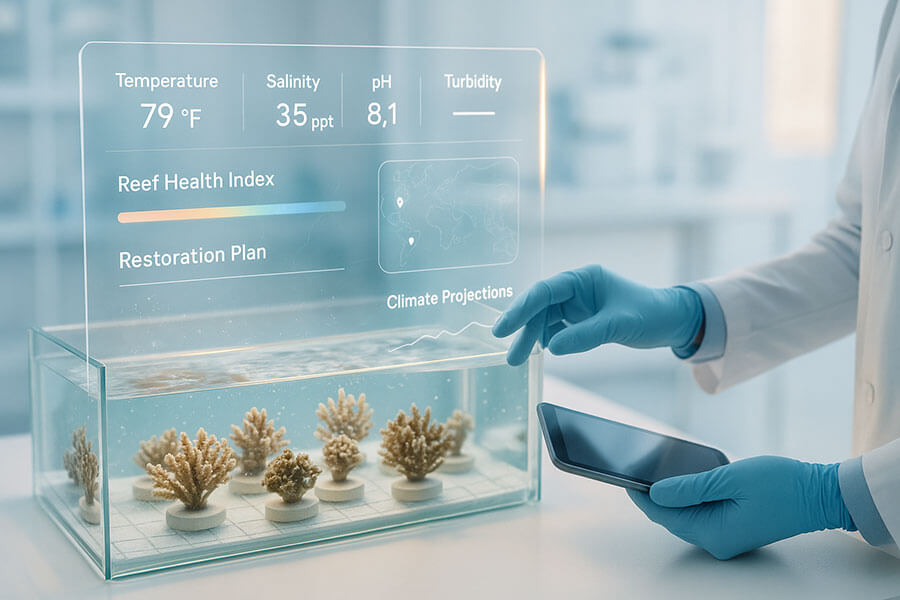
Coral reefs face an existential crisis that threatens to fundamentally alter ocean ecosystems and coastal communities worldwide. These vibrant underwater structures, often described as the rainforests of the sea, support approximately 25% of all marine species despite covering less than 1% of the ocean floor. Yet rising ocean temperatures, acidification, pollution, and destructive fishing practices have decimated reef systems globally, with scientists estimating that half of the world’s coral cover has disappeared over the past three decades. Traditional conservation approaches, while valuable, have struggled to match the scale and speed of reef degradation, creating an urgent need for innovative solutions that can transform how restoration efforts are planned, implemented, and sustained.
Artificial intelligence has emerged as a powerful ally in the race to save coral reefs, offering unprecedented capabilities for analyzing complex environmental data and optimizing restoration strategies. Machine learning algorithms can process vast amounts of information about ocean conditions, climate patterns, coral biology, and historical restoration outcomes to identify the most promising locations for rehabilitation efforts and predict which methods will yield the highest success rates. These systems consider factors that would be impossible for human planners to simultaneously evaluate, from microscale water chemistry variations to decade-long climate projections, enabling data-driven decisions that maximize the impact of limited conservation resources.
The integration of AI into coral restoration planning represents more than technological advancement—it embodies a fundamental shift in how humanity approaches marine conservation challenges. Where previous restoration efforts often relied on intuition, local knowledge, and trial-and-error experimentation, AI systems provide rigorous analytical frameworks that combine scientific understanding with computational power to reveal patterns and relationships invisible to traditional analysis methods. This transformation promises to accelerate restoration success rates, reduce costs, and enable conservation organizations to deploy their resources with surgical precision rather than hopeful approximation.
The implications extend beyond immediate restoration outcomes to encompass broader questions about environmental stewardship in an era of rapid climate change. As ocean conditions continue shifting in response to anthropogenic impacts, static conservation strategies based on historical baselines become increasingly inadequate. AI systems can dynamically adapt recommendations as conditions evolve, incorporating new data streams and adjusting predictions to account for changing environmental realities. This adaptive capacity proves essential for building resilient reef ecosystems capable of surviving in uncertain futures while maintaining the ecological services upon which millions of people depend for food security, coastal protection, and economic livelihoods.
Understanding how AI transforms coral restoration planning requires examining both the unique challenges facing reef conservation and the specific capabilities that machine learning brings to this critical environmental challenge. The journey from data collection through algorithmic analysis to implementation represents a complex process involving marine biologists, computer scientists, conservation practitioners, and local communities working together to harness technology for ecological recovery. Success demands not only sophisticated algorithms but also careful attention to data quality, validation methods, and the practical realities of implementing AI recommendations in resource-constrained field conditions.
Coral Reef Ecosystems and Restoration Fundamentals
Coral reefs represent some of Earth’s most complex and productive ecosystems, formed through symbiotic relationships between coral polyps and microscopic algae called zooxanthellae. These partnerships create the living foundations upon which entire marine communities depend, providing habitat, food sources, and nursery grounds for thousands of species. Individual coral colonies grow slowly, often adding only centimeters annually, yet over centuries they construct massive three-dimensional structures that rival terrestrial forests in biological diversity and ecological importance. The calcium carbonate skeletons left by successive generations of polyps create the physical reef structure that persists long after individual organisms die, forming barriers that protect coastlines from storm surge and erosion while creating sheltered lagoons where marine life flourishes.
The ecological services provided by healthy coral reefs extend far beyond their immediate marine environments to benefit human societies in profound ways. Reefs support commercial and subsistence fisheries that provide protein for millions of people, particularly in developing coastal nations where alternative food sources may be scarce or expensive. They generate billions of dollars annually through tourism and recreation, creating employment opportunities and economic development in regions that might otherwise lack viable industries. The physical protection they afford coastal communities against waves and storms prevents property damage and saves lives, a service that becomes increasingly valuable as climate change intensifies tropical cyclones and raises sea levels. Chemical compounds produced by reef organisms have yielded important pharmaceutical discoveries, suggesting that these ecosystems harbor medical breakthroughs yet to be realized.
Despite their resilience to natural disturbances developed over millions of years of evolution, modern coral reefs prove increasingly vulnerable to rapid anthropogenic changes that exceed their adaptive capacities. Climate change represents the most severe threat, manifesting through multiple mechanisms that compound each other’s destructive effects. Rising ocean temperatures trigger coral bleaching events where stressed polyps expel their zooxanthellae symbionts, losing both their vibrant colors and their primary energy source. While corals can recover from brief temperature spikes if conditions quickly normalize, prolonged or repeated bleaching episodes result in widespread mortality that fundamentally alters reef composition and function. Ocean acidification, caused by atmospheric carbon dioxide dissolving in seawater, reduces the availability of carbonate ions that corals need to build their calcium carbonate skeletons, slowing growth rates and weakening existing structures.
Local stressors further compromise reef health even in the absence of global climate impacts. Pollution from agricultural runoff introduces nutrients that fuel algal growth, smothering corals and shifting reef ecosystems toward algae-dominated states that cannot support diverse marine communities. Sedimentation from coastal development and deforestation buries coral polyps and blocks the sunlight necessary for photosynthesis by zooxanthellae. Destructive fishing practices including dynamite and cyanide use directly destroy reef structures while depleting herbivorous fish populations that would otherwise control algal growth. Plastic waste accumulates on reefs, introducing toxic chemicals while creating surfaces where disease-causing pathogens proliferate. These multiple stressors interact synergistically, with each additional impact reducing coral resilience and increasing vulnerability to other threats.
The Global Coral Crisis
Scientific assessments paint a sobering picture of coral reef decline across all major ocean basins, with regional variations in the timing and severity of degradation but universal trends toward deterioration. The Caribbean has lost approximately 80% of its coral cover since the 1970s, transforming vibrant reefs into algae-covered rubble fields where few corals successfully reproduce. Australia’s Great Barrier Reef, the world’s largest coral system and a UNESCO World Heritage site, experienced unprecedented back-to-back mass bleaching events in 2016 and 2017 that killed roughly half of its corals, followed by additional bleaching in 2020 and 2022 that prevented recovery. Southeast Asian reefs face particularly intense pressures from coastal development, destructive fishing, and warming waters, with some estimates suggesting that over 90% of reefs in this region are threatened by human activities.
The pace of degradation appears to be accelerating as climate change intensifies and cumulative stressors overwhelm remaining healthy reefs. Research published in recent years suggests that coral bleaching events, once occurring every 25-30 years on average, now happen every 6 years in many locations, providing insufficient time for reef recovery between disturbances. Ocean temperatures continue rising at rates that exceed coral adaptation speeds, with climate models projecting that most reef locations will experience annual bleaching-level heat stress by mid-century under current emission trajectories. This temporal compression between disturbance events represents perhaps the most concerning aspect of the coral crisis, as it eliminates the recovery periods that historically allowed reefs to persist through environmental fluctuations.
Economic and social consequences of reef loss ripple through coastal communities that depend on these ecosystems for their livelihoods and cultural identities. Small island developing states face existential threats as reef degradation undermines fishing industries, tourism revenue, and natural coastal defenses simultaneously. Indigenous communities maintaining traditional relationships with reef environments lose cultural practices and knowledge systems built over generations. The cascading effects extend to food security, with declining fish populations forcing communities to seek alternative protein sources that may be less accessible or affordable. These human dimensions of reef loss underscore the urgency of developing effective restoration strategies that can reverse degradation trends before ecosystem collapse becomes irreversible.
Traditional Restoration Approaches and Limitations
Coral restoration practitioners have developed several techniques for rehabilitating degraded reefs, each with particular advantages and constraints that shape their applicability to different situations. Coral gardening, one of the most widely adopted approaches, involves cultivating coral fragments in underwater nurseries where they grow under protected conditions before being transplanted to degraded reef sites. This method works particularly well with fast-growing branching corals that readily fragment and reattach, allowing restoration programs to rapidly propagate genetically diverse populations. Coral gardening has proven successful in numerous Caribbean and Indo-Pacific locations, with some programs documenting survival rates exceeding 80% for nursery-grown fragments transplanted to suitable sites.
Direct transplantation methods move coral colonies or fragments from healthy donor sites to degraded areas requiring rehabilitation, bypassing the nursery phase to immediately establish coral populations in target locations. This approach reduces the time and resources needed for cultivation while potentially better matching coral genotypes to destination conditions when fragments come from nearby source populations. However, direct transplantation requires careful attention to donor site impacts, as removing corals can harm source populations if not managed sustainably. The method also demands precise matching between source and destination environmental conditions, as corals transplanted to unsuitable locations experience high mortality that wastes restoration resources.
Larval propagation and seeding represent newer restoration techniques that harness natural coral reproduction processes to accelerate reef recovery. These methods collect eggs and sperm during mass spawning events, fertilize them in controlled conditions, and rear the resulting larvae through settlement and early growth stages before releasing them onto degraded reefs. Larval methods offer advantages for genetic diversity and scalability, potentially seeding large areas with millions of new coral recruits simultaneously. However, they require sophisticated timing to coincide with unpredictable spawning events, specialized equipment for larval culture, and favorable reef conditions that support successful settlement and survival of vulnerable juvenile corals.
Despite documented successes, traditional restoration approaches face significant limitations that constrain their ability to reverse reef degradation at the scale and pace necessary to address the global crisis. Site selection for restoration efforts typically relies on expert judgment and limited environmental monitoring, potentially resulting in suboptimal placement decisions that reduce project effectiveness. Restoration practitioners must choose among hundreds of potential sites while lacking comprehensive data about factors affecting coral survival, from local water quality to long-term climate trajectories. This information deficit leads to trial-and-error approaches where project failures provide expensive lessons rather than being avoided through better initial planning.
Resource constraints severely limit the scope of traditional restoration programs, with most projects addressing reef areas measured in square meters or hectares while reef systems span thousands of square kilometers. The labor-intensive nature of coral cultivation, transplantation, and monitoring creates cost structures that make landscape-scale restoration prohibitively expensive using current methods. A typical coral restoration project might rehabilitate a few hectares annually, requiring centuries to restore even a single large reef system at present implementation rates. Scaling restoration to match the pace of degradation demands either massive increases in funding or fundamental improvements in efficiency that reduce costs per unit area restored.
Adaptive management remains challenging when restoration outcomes take years to fully manifest and environmental conditions continue shifting throughout project lifespans. Restoration practitioners must make decisions based on incomplete information about how coral populations will respond to future conditions rather than historical baselines that may no longer be relevant. This uncertainty increases project risks and makes it difficult to optimize restoration strategies based on empirical evidence when feedback loops between decisions and outcomes span multiple years. The need for better predictive tools that can anticipate restoration success under various scenarios has become increasingly apparent as climate change accelerates and traditional approaches based on historical precedent prove inadequate.
AI and Machine Learning in Marine Conservation
Artificial intelligence encompasses a broad set of computational technologies designed to perform tasks that typically require human intelligence, including pattern recognition, decision-making, and prediction based on complex data analysis. Within this larger field, machine learning represents a specific approach where algorithms improve their performance through experience rather than following explicitly programmed rules. Instead of telling a computer exactly how to identify optimal coral restoration sites, machine learning systems learn patterns from historical data about successful and unsuccessful projects, environmental conditions, and restoration outcomes, developing their own internal models that can be applied to new situations.
The relevance of AI to marine conservation stems from several unique capabilities that align perfectly with the challenges facing coral reef restoration. Machine learning algorithms excel at identifying subtle patterns within massive datasets that would overwhelm human analysts, detecting relationships between variables that might not be obvious to domain experts. They can simultaneously consider hundreds or thousands of factors when making predictions or recommendations, weighing complex interactions between variables in ways that capture ecosystem complexity more faithfully than simplified models. Perhaps most importantly, AI systems can continuously update their understanding as new information becomes available, adapting recommendations to reflect changing conditions and emerging evidence about what works in restoration practice.
Different types of machine learning algorithms serve distinct purposes in marine conservation applications, each with particular strengths suited to specific analytical tasks. Supervised learning algorithms learn from labeled training data where inputs are paired with known outcomes, enabling them to predict results for new situations based on patterns identified in historical examples. These approaches prove valuable for predicting restoration success rates at proposed sites by learning from previous projects what environmental characteristics correlate with positive outcomes. Unsupervised learning algorithms discover hidden structures within unlabeled data, identifying natural groupings or anomalies without predetermined categories. Such methods can reveal previously unrecognized reef types or environmental regimes that might require different restoration strategies.
Neural networks, inspired by biological brain structures, consist of interconnected nodes that process information through multiple layers, enabling them to learn complex nonlinear relationships between inputs and outputs. Deep learning, using neural networks with many layers, has revolutionized image recognition and can identify coral species, assess reef health, or detect disease from underwater photographs with accuracy rivaling expert human observers. Random forests and decision tree ensembles combine predictions from multiple simple models to create robust forecasts less sensitive to noise or outliers in training data. Support vector machines find optimal boundaries between different categories in high-dimensional data spaces, useful for classifying reef sites based on restoration suitability or predicting which locations will experience bleaching under projected climate scenarios.
Implementing AI systems for coral restoration requires careful attention to data quality, algorithm selection, and validation processes that ensure reliable predictions supporting sound conservation decisions. The old adage that garbage in produces garbage out applies with particular force to machine learning applications, as algorithms trained on biased, incomplete, or inaccurate data will produce unreliable recommendations regardless of mathematical sophistication. Successful AI implementations depend on comprehensive datasets capturing relevant environmental variables, coral biology, and restoration outcomes across diverse conditions and geographical regions. Data standardization proves essential when combining information from multiple sources with different collection protocols, measurement units, or quality control procedures.
The interpretability of AI predictions presents ongoing challenges for conservation applications where stakeholders need to understand why systems recommend particular actions rather than simply trusting algorithmic outputs. Black box models that provide accurate predictions without explaining their reasoning can be difficult to validate or integrate with expert knowledge, potentially limiting acceptance by conservation practitioners who need to justify decisions to funders, regulators, and communities. Explainable AI techniques that reveal which factors most strongly influenced particular predictions help bridge the gap between algorithmic sophistication and practical usability, enabling conservation professionals to critically evaluate recommendations and integrate AI insights with domain expertise and local knowledge.
AI Applications in Restoration Planning
The application of artificial intelligence to coral restoration planning transforms how conservation organizations approach the complex process of designing and implementing rehabilitation projects. Traditional planning methods, while incorporating substantial scientific expertise and local knowledge, often struggle to simultaneously optimize across the many dimensions that determine restoration success. AI systems can evaluate thousands of potential restoration sites against multiple criteria, balancing factors like current environmental conditions, projected climate trajectories, coral species suitability, logistical accessibility, and cost constraints to identify locations where restoration investments will yield the greatest ecological and social returns.
Machine learning algorithms designed for restoration planning integrate diverse data sources spanning physical oceanography, climate science, marine biology, and socioeconomic information into comprehensive analytical frameworks. These systems process satellite observations of sea surface temperature, ocean color, and bathymetry alongside in-situ measurements of water quality, current patterns, and coral health. Climate model outputs provide projections of future ocean conditions under various emission scenarios, while historical restoration project databases supply empirical evidence about which techniques work under different circumstances. Socioeconomic data about coastal communities, marine protected area boundaries, and existing conservation commitments inform site prioritization decisions that account for both ecological and human dimensions of restoration.
The predictive capabilities of AI systems enable proactive restoration planning that anticipates future conditions rather than responding to past baselines that may no longer be relevant. By incorporating climate projections into site selection algorithms, AI tools can identify locations likely to remain suitable for coral growth as ocean conditions continue changing, avoiding investments in areas doomed to future unsuitable conditions. These forward-looking analyses help build climate-resilient restoration strategies that maximize the likelihood of long-term success while adapting to unavoidable changes already locked into the climate system.
Integration of AI recommendations into restoration workflows requires careful attention to how algorithmic outputs interface with human decision-making processes, expert judgment, and local stakeholder input. Successful implementations treat AI as a decision support tool that enhances rather than replaces human expertise, providing analytical capabilities that complement practitioners’ understanding of practical constraints and community priorities. The most effective restoration planning processes combine AI-generated prioritizations with stakeholder consultations that incorporate local knowledge, community needs, and practical implementation considerations that may not be captured in quantitative datasets.
Site Selection Systems
AI-powered site selection represents perhaps the most immediately impactful application of machine learning to coral restoration planning, addressing one of the most consequential decisions that shape project outcomes. Poor site selection undermines restoration efforts regardless of how well other aspects are executed, as even expertly cultivated corals planted in unsuitable locations will experience high mortality and fail to establish self-sustaining populations. Traditional site selection often relies on opportunistic choices based on accessibility, previous project locations, or limited environmental surveys that may not capture critical factors affecting long-term success.
Machine learning algorithms transform site selection by systematically evaluating all potential restoration locations against comprehensive criteria derived from scientific understanding of coral biology and empirical evidence from previous restoration projects. These systems analyze spatial data layers representing environmental variables like water temperature, light availability, wave exposure, sedimentation rates, and water quality parameters, identifying locations where conditions fall within ranges associated with successful coral growth and survival. Historical bleaching patterns inform assessments of thermal stress risk, while bathymetric data reveals depth profiles and substrate characteristics necessary for coral attachment and development.
Habitat suitability modeling uses statistical relationships between coral presence and environmental conditions to predict where specific coral species are likely to thrive, enabling selection of restoration sites optimized for particular species assemblages. These models can incorporate nonlinear relationships and interactions between variables that determine suitability in ways that surpass simpler rule-based approaches. For instance, the combined effects of temperature, light, and water flow on coral growth may exhibit complex interactions where optimal values for one variable depend on levels of others, patterns that machine learning algorithms can detect and incorporate into predictions.
Spatial optimization algorithms extend beyond identifying suitable locations to solve the more complex problem of selecting the best combination of sites from among many good options. Restoration budgets rarely allow rehabilitation of all suitable locations, requiring prioritization decisions that maximize overall impact given resource constraints. AI systems can formulate these decisions as optimization problems where the goal is selecting the site portfolio that achieves the greatest ecological benefit subject to budget, geographical distribution, and other constraints. Such approaches might identify geographically dispersed sites that reduce risks from localized disturbances while ensuring restored populations can exchange larvae and support network-wide resilience.
Climate and Ocean Condition Analysis
Integration of climate science and oceanographic modeling into AI-powered restoration planning provides critical forward-looking capabilities that account for changing ocean conditions over the decades required for coral populations to fully recover. Historical environmental data, while valuable for understanding past patterns, becomes increasingly unreliable as a guide to future conditions when climate change is rapidly altering ocean temperatures, chemistry, and circulation patterns. AI systems that incorporate climate projections can identify locations where restoration investments will remain viable as conditions evolve, avoiding efforts in areas that may become unsuitable even if currently hospitable to coral growth.
Machine learning algorithms process outputs from global climate models and regional ocean circulation models to assess how local conditions at potential restoration sites will change over coming decades. These analyses consider multiple climate scenarios representing different possible future emission pathways, enabling restoration planners to evaluate site suitability under various climate futures. Rather than assuming a single predicted future, robust restoration strategies account for uncertainty in climate projections by prioritizing sites likely to remain suitable across multiple scenarios or identifying adaptation strategies that could maintain site viability under different conditions.
Ocean temperature projections prove particularly critical for restoration planning given the direct link between heat stress and coral bleaching mortality. AI systems analyze projected temperature trajectories to estimate frequency and severity of future bleaching events at different locations, identifying thermal refugia where local oceanographic conditions may provide protection from extreme temperatures. Upwelling zones where cooler deep water rises to the surface, areas influenced by thermal buffering from large-scale current systems, or locations with high flow rates that flush away heat represent potential climate refugia where corals may survive conditions that prove lethal elsewhere.
Ocean acidification projections inform long-term restoration planning by identifying regions where declining pH levels will most severely impair coral calcification and growth. While global ocean chemistry trends affect all reef regions, local variations in carbonate chemistry driven by oceanographic processes create spatial patterns in acidification impacts. AI systems can identify locations where natural alkalinity sources, upwelling patterns, or other factors may partially buffer acidification effects, potentially supporting coral populations that would struggle in more severely affected areas. These analyses enable strategic placement of restoration efforts in locations where corals will maintain growth rates sufficient to offset mortality and sustain reef structures.
Sea level rise and changing wave climate projections factor into site selection analyses through their effects on light availability, physical disturbance regimes, and sediment dynamics that influence coral settlement and survival. AI systems integrate projections of water depth changes with models of light penetration and wave energy to assess how these factors will affect different reef locations as sea levels rise and storm patterns potentially intensify. Sites experiencing optimal conditions today might receive insufficient light as water deepens or face increased physical disturbance from stronger wave action, factors that AI-enabled planning can anticipate and incorporate into site selection decisions.
This integration of environmental monitoring data, oceanographic modeling, and climate projections through AI analytical frameworks enables restoration planners to move beyond reactive responses to current conditions toward strategic investments that build reef resilience in the face of ongoing environmental change. The sophisticated analytical capabilities that AI provides transform restoration planning from an educated gamble into an increasingly scientific process grounded in comprehensive environmental understanding and rigorous prediction of future conditions that will determine whether today’s restoration investments succeed or fail over coming decades.
Benefits and Challenges
The integration of artificial intelligence into coral restoration planning offers transformative benefits while simultaneously presenting significant challenges that must be carefully addressed for successful implementation. These advantages and obstacles span technical, practical, and institutional dimensions, requiring holistic approaches that maximize beneficial capabilities while mitigating limitations and risks that could undermine AI’s potential to advance reef conservation.
Enhanced decision-making represents the most fundamental benefit that AI brings to restoration planning, enabling conservation organizations to make more informed choices about where to invest limited resources and which restoration techniques to employ under different conditions. Machine learning algorithms process vastly more information than human planners could manually evaluate, identifying patterns and relationships that reveal optimal strategies even within highly complex environmental and biological systems. This analytical power translates directly into improved restoration outcomes when AI recommendations guide site selection, species choices, and timing decisions that determine project success or failure.
Cost efficiency gains emerge as AI systems reduce the expensive trial-and-error approaches that have characterized much traditional restoration work, where projects proceed based on limited information and outcomes reveal whether initial decisions were sound only after substantial resources have been committed. By predicting restoration success probabilities before projects begin, AI tools enable organizations to avoid investments in locations or approaches with low likelihood of achieving desired outcomes. These predictive capabilities allow the same conservation budgets to achieve more extensive restoration by concentrating resources on highest-probability opportunities rather than spreading them across sites with widely varying success potential.
Scalability improvements become possible when AI systems automate analyses that would otherwise require extensive expert time and resources to complete. A team of marine biologists might evaluate dozens of potential restoration sites through field surveys and data analysis over several months, while AI systems can assess thousands of locations in days once appropriate data and algorithms are available. This dramatic acceleration in planning timelines enables conservation organizations to operate at landscape scales rather than focusing on small individual sites, potentially matching the scope of restoration efforts to the magnitude of reef degradation that needs to be addressed.
Adaptive learning capabilities distinguish AI systems from static planning tools, as machine learning algorithms continuously improve their predictions by incorporating new data about restoration outcomes, environmental conditions, and coral biology. As restoration projects proceed and generate information about what works under different circumstances, AI systems update their models to reflect this accumulated knowledge, providing increasingly accurate guidance over time. This learning process accelerates the translation of field experience into improved practice, capturing and disseminating lessons learned more rapidly than traditional publication-based knowledge sharing.
Transparency and reproducibility in planning decisions improve when AI systems make their analytical processes explicit and documentable, enabling independent verification of recommendations and consistent application of selection criteria across different projects and organizations. Unlike intuitive or experience-based decisions that may vary between experts or prove difficult to communicate to stakeholders, AI outputs can be traced back through specific data inputs and algorithmic steps, supporting accountability and enabling constructive debates about planning assumptions and priorities.
Despite these significant advantages, important challenges limit current AI applications and require ongoing attention to ensure these technologies realize their potential for coral conservation. Data availability and quality represent fundamental constraints, as machine learning algorithms require large volumes of accurate, representative data to train reliable predictive models. Many reef regions lack comprehensive environmental monitoring or historical restoration outcome data, particularly in developing countries where much reef degradation occurs but scientific infrastructure may be limited. This data scarcity creates risks of algorithmic bias where models perform well for data-rich regions but provide unreliable predictions for under-sampled locations.
Computational resource requirements for sophisticated AI analyses can exceed capacities available to many conservation organizations, particularly smaller nonprofits working in remote locations with limited technical infrastructure. Training complex machine learning models demands substantial computing power and specialized expertise that may not be accessible outside well-funded research institutions or technology companies. Cloud computing services partially address these barriers but introduce costs and dependencies that could limit widespread adoption by resource-constrained conservation practitioners.
Validation challenges complicate assessment of AI system performance in conservation applications where ground truth data about optimal decisions may not exist or become apparent only years after planning decisions are made. Unlike applications where algorithm accuracy can be immediately verified against known answers, restoration planning recommendations prove correct or incorrect only as projects unfold over time scales spanning years to decades. This delayed feedback makes it difficult to rigorously validate AI systems and distinguish between model failures and implementation problems or unforeseeable environmental changes that affect outcomes.
Integration with existing workflows presents practical obstacles when conservation organizations must modify established practices, train staff in new technologies, and overcome institutional inertia that favors continuing familiar approaches over adopting novel methods. Even well-designed AI tools may languish unused if they prove difficult to integrate with existing data systems, require excessive user training, or fail to align with organizational decision-making processes. Successful implementation requires not just capable technology but also careful attention to change management and user-centered design that makes AI tools accessible and valuable to conservation practitioners.
Ethical considerations arise around questions of algorithmic accountability, equitable access to AI benefits, and appropriate roles for automated decision-making in conservation contexts with significant implications for ecosystems and human communities. When AI recommendations guide substantial resource allocation decisions, stakeholders rightly ask who bears responsibility if predictions prove inaccurate or unforeseen consequences emerge from algorithmic guidance. Ensuring that AI benefits reach developing country organizations and local communities rather than concentrating advantages among well-resourced institutions requires intentional efforts to democratize access to these technologies. Maintaining appropriate human oversight and incorporating local knowledge into AI-augmented planning processes preserves essential roles for community participation and traditional ecological understanding that pure algorithmic approaches might overlook.
Case Studies and Real-World Implementations
Real-world implementations of AI in coral restoration planning demonstrate both the practical potential and current limitations of these technologies when applied to actual conservation challenges. Several pioneering projects have begun integrating machine learning tools into restoration workflows, providing valuable insights about what works, what barriers remain, and how AI capabilities might evolve to better serve marine conservation needs.
The Allen Coral Atlas, launched in 2020 through collaboration between Arizona State University, Planet, the University of Queensland, and Vulcan Inc., represents one of the most ambitious applications of AI to reef conservation globally. This project uses satellite imagery and machine learning algorithms to map and monitor coral reefs worldwide, creating high-resolution habitat maps covering over 100,000 square kilometers of shallow reef environments. The system employs deep learning image classification to identify different benthic habitat types including live coral, algae, sand, and rubble from satellite observations, providing standardized global coverage that enables comparative analyses impossible with traditional survey methods. While the Atlas focuses primarily on monitoring rather than restoration planning specifically, the habitat maps and change detection capabilities it provides inform site selection decisions by revealing which locations contain suitable substrate for restoration and tracking degradation patterns that help prioritize intervention areas.
In 2023, the Marine Conservation Action Fund partnered with IBM to deploy AI tools for optimizing coral restoration site selection in the Caribbean. The system integrates environmental data from satellite observations, oceanographic models, and field monitoring with historical restoration outcome data from projects across the region. Machine learning algorithms analyze relationships between environmental conditions and restoration success rates, generating site suitability scores that rank potential restoration locations. Early results from pilot implementations in the Florida Keys showed that AI-selected sites achieved coral survival rates approximately 20% higher than comparison sites chosen through traditional expert selection methods, demonstrating measurable improvements in restoration outcomes. The project also revealed challenges around data integration when combining information from multiple monitoring programs with different protocols and quality standards, highlighting the importance of data standardization for effective AI applications.
The Coral Gardeners organization, based in French Polynesia, has been developing machine learning tools to optimize their nursery operations and transplantation strategies since 2022. Their system uses computer vision to assess coral health and growth rates from underwater photographs, automating monitoring tasks that previously required labor-intensive manual surveys. This automated assessment enables more frequent monitoring of nursery corals while reducing costs, allowing staff to identify problems earlier and adjust cultivation protocols to improve fragment survival. The organization has also implemented predictive models that forecast optimal transplantation timing based on environmental conditions, helping schedule field operations when corals are most likely to successfully attach and begin growing at outplant sites. By late 2024, the organization reported that AI-optimized transplantation scheduling improved six-month survival rates by approximately 15% compared to previous practices based on fixed seasonal schedules.
Australia’s Great Barrier Reef Marine Park Authority has integrated machine learning tools into their reef health monitoring and intervention planning processes, particularly following the devastating 2016-2017 and 2020 mass bleaching events. The authority uses AI analysis of aerial and satellite imagery to rapidly assess bleaching extent and severity across the reef’s vast 344,000 square kilometer area, enabling quicker response decisions than manual survey approaches could achieve. Machine learning models trained on relationships between environmental conditions and bleaching patterns help predict which reef sections face highest risk during developing heat stress events, informing decisions about where to deploy potential intervention strategies like coral shading or cooling. While large-scale interventions remain largely experimental, the AI-enabled monitoring and prediction capabilities provide critical situational awareness that supports adaptive management decisions.
The Indonesia-based conservation organization Mars Coral Reef Restoration Program has employed machine learning since 2023 to analyze two decades of restoration data from their reef rehabilitation projects. Their database contains detailed information about environmental conditions, restoration techniques, coral species performance, and long-term outcomes across dozens of project sites. Machine learning analysis of this longitudinal dataset revealed patterns in species suitability for different environmental conditions that were not apparent from traditional statistical analyses, leading to revised species selection protocols that better match coral genotypes to planting site characteristics. The AI analysis also identified previously unrecognized interactions between restoration timing and seasonal environmental patterns, enabling improved scheduling of field operations that work with rather than against natural cycles.
These case studies illustrate several common themes that characterize current AI applications in coral restoration. Successful implementations typically focus on specific, well-defined problems like site selection, monitoring automation, or pattern detection within existing datasets rather than attempting to replace entire planning processes with algorithmic approaches. Projects that demonstrate clearest benefits integrate AI tools into existing workflows in ways that enhance rather than disrupt established practices, providing decision support that complements expert judgment rather than substituting for human expertise. Data availability and quality emerge as consistent limiting factors, with most successful applications relying on years of systematic data collection that provides the training material necessary for reliable machine learning models.
The case studies also reveal that measuring AI impact on restoration outcomes remains challenging given the long timescales over which coral populations develop and the many factors beyond site selection or technique optimization that influence project success. While some projects report improved survival rates or efficiency gains, definitively attributing these improvements to AI rather than other concurrent changes in restoration practice proves difficult without carefully controlled comparisons. Future efforts would benefit from more rigorous evaluation frameworks that can isolate AI contributions to restoration success from other influences, providing stronger evidence for cost-effectiveness and optimal use cases.
Future Outlook and Recommendations
The trajectory of AI development suggests that machine learning capabilities will continue advancing rapidly, offering increasingly sophisticated tools for coral restoration planning while also introducing new opportunities and challenges for conservation practitioners. Emerging technologies on the near horizon promise to address current limitations while enabling applications not yet practical with existing systems, potentially transforming how restoration programs operate over the coming decade.
Autonomous underwater vehicles equipped with AI-powered coral identification and assessment capabilities will likely become more widely available and affordable, enabling systematic reef surveying at scales and costs that make comprehensive baseline mapping feasible for restoration programs. These robotic systems could autonomously collect data about coral distribution, species composition, health status, and environmental conditions across large reef areas, providing the detailed information necessary for AI-powered site selection and monitoring while reducing the risks and expenses associated with human diver surveys. Integration of real-time AI analysis on board autonomous vehicles could enable adaptive survey strategies where robots automatically focus attention on areas of particular interest or concern, improving survey efficiency.
Advanced climate modeling capabilities combined with improved machine learning techniques will enhance predictions of future ocean conditions and coral responses, enabling more confident long-term planning that accounts for climate change impacts. Ensemble approaches that combine multiple climate models and AI algorithms could provide robust predictions that quantify uncertainty and identify conditions where restoration investments face greatest risks or opportunities. These enhanced forecasting capabilities will prove particularly valuable as restoration projects increasingly need to account for conditions decades into the future when planted corals should reach maturity.
Genetic technologies merged with AI analysis will enable precision matching of coral genotypes to specific environmental conditions and future climate scenarios, potentially improving restoration success by optimizing biological compatibility between corals and planting sites. Machine learning analysis of genotype-environment relationships could identify coral strains with enhanced thermal tolerance, disease resistance, or adaptation to specific water quality conditions, guiding selective breeding programs and genotype selection for restoration. This merger of genomics and AI represents a frontier area likely to yield significant advances in coming years.
Integrated decision support platforms that combine AI capabilities with geographic information systems, project management tools, and stakeholder engagement interfaces will make sophisticated analytical capabilities more accessible to conservation practitioners with limited technical expertise. These user-friendly platforms could democratize AI benefits by packaging complex algorithms into intuitive applications that guide restoration planning without requiring users to understand underlying technical details. Cloud-based platforms could also facilitate data sharing and collaborative learning across the global restoration community, accelerating the translation of local insights into broadly applicable knowledge.
For research institutions and technology developers, priority recommendations include investing in open-source AI tools specifically designed for coral restoration applications, establishing data standards and sharing protocols that enable integration of information from diverse monitoring programs, and conducting rigorous validation studies that quantify AI performance against carefully measured restoration outcomes. Development of explainable AI systems that reveal reasoning behind recommendations will prove particularly important for gaining practitioner trust and enabling critical evaluation of algorithmic guidance. Attention to applications suitable for resource-limited settings will ensure that AI benefits reach developing country organizations where much reef degradation occurs.
Conservation organizations should begin building internal capacity for AI applications through staff training, partnerships with technical institutions, and pilot projects that provide hands-on experience with machine learning tools. Starting with focused applications addressing specific pain points rather than attempting wholesale transformation of restoration programs will enable learning while limiting risks. Participation in data sharing initiatives and open-source tool development will help organizations benefit from and contribute to community-wide progress in AI capabilities. Maintaining realistic expectations about what current AI systems can achieve while remaining open to new capabilities as technologies mature will support balanced adoption strategies.
Funding agencies can accelerate beneficial AI adoption by supporting development of specialized tools for conservation applications, funding validation studies and comparative effectiveness research, and requiring data sharing from projects they support to build the comprehensive datasets necessary for training reliable machine learning models. Recognizing AI-enabled planning in project evaluation criteria could incentivize adoption while ensuring that funded programs employ best available decision support tools. Support for capacity building initiatives that help conservation organizations develop AI expertise will address the skills gaps that currently limit widespread adoption.
Policymakers should consider how regulatory frameworks and international agreements might facilitate beneficial AI applications while addressing ethical concerns around algorithmic decision-making in conservation contexts. Establishing standards for AI validation and quality assurance could provide conservation practitioners with confidence in system reliability while protecting against poorly designed tools that might misguide restoration investments. Ensuring equitable access to AI technologies across countries and organizations will require attention to intellectual property frameworks, technology transfer mechanisms, and capacity building support for developing country institutions.
The coral restoration community should proactively shape AI development trajectories through articulating needs, providing feedback on tool usability, and maintaining standards for responsible technology adoption that serves conservation goals while respecting local knowledge and community participation in decision-making. Regular convenings that bring together conservation practitioners, AI developers, and researchers could facilitate productive exchanges that ensure technological capabilities evolve to address real-world needs rather than pursuing technically interesting but practically limited applications.
Final Thoughts
The convergence of artificial intelligence and coral reef restoration represents a pivotal moment in marine conservation, offering unprecedented capabilities to address one of the most urgent environmental challenges facing our planet. As ocean temperatures continue rising and reef ecosystems worldwide struggle under mounting pressures, the integration of machine learning into restoration planning provides desperately needed tools for maximizing the impact of limited conservation resources while building climate-resilient reef systems capable of surviving uncertain futures.
The transformative potential extends beyond immediate improvements in restoration success rates to encompass fundamental questions about how humanity approaches environmental stewardship in an era of rapid ecological change. AI technologies enable dynamic, adaptive management strategies that continuously incorporate new information and adjust recommendations as conditions evolve, moving away from static conservation approaches based on historical baselines that become increasingly irrelevant as climate change reshapes ocean environments. This adaptive capacity proves essential for effective conservation in a non-stationary world where past conditions provide incomplete guides to future challenges and opportunities.
The intersection of technology and social responsibility emerges clearly when considering how AI adoption might reshape access to restoration capabilities and influence who benefits from conservation investments. Traditional restoration approaches often concentrate resources and capabilities within well-funded institutions in developed countries, limiting participation by local communities, developing country organizations, and independent researchers who might offer valuable perspectives and innovations. Decentralized AI platforms and open-source tools could democratize access to sophisticated analytical capabilities, enabling broader participation in restoration planning while ensuring that local knowledge and community priorities shape how technologies are deployed. This democratization potential requires intentional effort to avoid replicating existing inequities through new technological means.
Financial inclusion considerations prove particularly relevant as conservation organizations explore innovative funding mechanisms for restoration programs that currently struggle to secure resources matching the scale of reef degradation. AI-enabled demonstration of restoration effectiveness could strengthen funding proposals and attract new investment sources, including impact investors and philanthropic organizations seeking quantifiable conservation outcomes. The improved cost-efficiency that AI promises through better site selection and technique optimization could make ambitious restoration targets financially achievable where they currently appear impractical, potentially unlocking resources for significantly expanded programs.
Looking ahead, successful integration of AI into reef restoration will require ongoing dialogue between conservation practitioners, technology developers, affected communities, and policymakers to ensure these powerful tools serve the full spectrum of conservation goals rather than narrowly technical objectives. The most sophisticated algorithms provide little value if they exclude local knowledge, override community preferences, or optimize for easily measured metrics while neglecting harder-to-quantify but equally important dimensions of ecosystem health and social wellbeing. Maintaining this holistic perspective as AI capabilities expand will prove essential for ensuring technologies enhance rather than undermine the collaborative, community-centered approaches that characterize the most successful conservation programs.
The challenges facing coral reefs demand nothing less than transformation in how restoration is conceived, planned, and implemented, moving from small-scale heroic efforts toward systematic, science-driven programs operating at landscape scales with measurable impact on ecosystem trajectories. AI technologies provide critical tools for achieving this transformation, offering analytical capabilities that match the complexity of reef ecosystems and the urgency of conservation needs. The question is not whether these technologies will reshape reef restoration but rather how thoughtfully they will be integrated and how equitably their benefits will be distributed across the global community of conservation practitioners and reef-dependent populations.
The ongoing evolution of AI capabilities alongside growing urgency around reef conservation creates both opportunities and responsibilities for all stakeholders in marine environmental management. Technology developers bear responsibility for creating tools that serve genuine conservation needs while remaining accessible beyond elite research institutions. Conservation organizations must thoughtfully evaluate AI applications, embracing beneficial capabilities while maintaining critical perspective on limitations and potential biases. Funding agencies should support development and validation of AI tools while ensuring that technological enthusiasm does not overshadow fundamental work of ecosystem protection and threat reduction. Communities depending on reef ecosystems deserve meaningful participation in decisions about how AI technologies shape restoration priorities and resource allocation.
The vision of vibrant, resilient coral reefs persisting through coming decades despite mounting climate pressures remains achievable if humanity marshals all available tools, knowledge, and resources toward this goal. Artificial intelligence represents a powerful addition to the conservation toolkit, offering capabilities that could significantly improve restoration outcomes while building adaptive capacity necessary for navigating uncertain environmental futures. Realizing this potential demands sustained commitment to developing, validating, and democratically deploying AI technologies in service of both ecological recovery and the human communities whose wellbeing depends on healthy reef ecosystems.
FAQs
- What is AI and how is it being used in coral reef restoration?
Artificial intelligence refers to computer systems that perform tasks requiring human-like intelligence, including pattern recognition and prediction. In coral restoration, AI analyzes environmental data, climate projections, and historical restoration outcomes to identify optimal locations for rehabilitation projects and predict which methods will succeed under different conditions. Machine learning algorithms process satellite imagery, ocean temperature data, water quality measurements, and coral biology information to provide decision support that helps conservation organizations maximize restoration success rates while minimizing costs. - Do I need technical expertise to benefit from AI restoration planning tools?
Most modern AI systems designed for conservation applications feature user-friendly interfaces that do not require programming or machine learning expertise. Conservation practitioners can typically use these tools by inputting basic project parameters and interpreting recommendations presented through maps and reports. However, organizations benefit from having at least one staff member with general understanding of AI capabilities and limitations to appropriately evaluate tool outputs and integrate algorithmic guidance with expert judgment and local knowledge. - How accurate are AI predictions for coral restoration success?
Accuracy varies depending on data quality, algorithm sophistication, and specific application contexts. Well-validated systems using comprehensive environmental data and extensive training datasets can achieve prediction accuracies exceeding 80% for outcomes like coral survival and growth rates. However, accuracy diminishes when systems are applied to regions lacking good training data or when attempting predictions far into the future where climate uncertainty increases. Responsible AI applications acknowledge prediction uncertainty and provide confidence intervals rather than presenting recommendations as certain outcomes. - What data is needed to implement AI for restoration planning?
Effective AI systems require environmental data including water temperature, depth, light availability, wave exposure, sedimentation rates, and water quality parameters for potential restoration sites. Historical restoration project data containing information about site conditions, coral species used, techniques employed, and long-term outcomes provides essential training material for machine learning algorithms. Climate model outputs, satellite imagery, and oceanographic information enhance system capabilities. Organizations lacking comprehensive datasets can still benefit from regional models trained on data from similar reef environments. - Are AI restoration planning tools affordable for small conservation organizations?
Costs vary significantly depending on system complexity and implementation approach. Cloud-based platforms using subscription models may cost hundreds to thousands of dollars annually, while open-source tools available at no licensing cost still require staff time and computing resources. Collaborative arrangements where multiple organizations share access to AI platforms can make sophisticated tools affordable for smaller groups. Some academic institutions and technology companies provide free or subsidized access to conservation organizations, particularly in developing countries where reef degradation is severe but resources are limited. - How does AI handle uncertainty about future climate conditions?
Advanced AI systems incorporate multiple climate scenarios representing different possible future conditions, evaluating restoration site suitability across this range of outcomes rather than assuming a single predicted future. Ensemble approaches combine predictions from multiple climate models and AI algorithms to quantify uncertainty and identify robust strategies that perform well across diverse scenarios. Some systems prioritize climate refugia where local conditions may provide buffering against extreme temperatures, while others identify adaptation strategies that could maintain site viability under different climate trajectories. - Can AI replace expert marine biologists in restoration planning?
AI systems function as decision support tools that enhance rather than replace human expertise. While algorithms can process more data and identify more complex patterns than human analysts, they lack the contextual understanding, ethical judgment, and practical knowledge that experienced conservation practitioners provide. The most effective approaches combine AI analytical capabilities with expert interpretation, local knowledge, and community input to make holistic decisions that account for factors beyond what algorithms capture in their quantitative models. - How is AI being validated to ensure recommendations actually improve restoration outcomes?
Validation approaches include comparing AI-selected sites against traditionally chosen locations to measure differences in coral survival and growth, conducting retrospective analyses where algorithms predict outcomes for completed projects and comparing predictions against observed results, and using cross-validation techniques where models trained on some data are tested against independent datasets they have not encountered. Rigorous validation remains challenging because restoration outcomes manifest over years, making comprehensive assessments of AI performance time-consuming and expensive. Ongoing monitoring of AI-guided projects provides accumulating evidence about system reliability. - What ethical concerns arise from using AI in coral restoration?
Key ethical considerations include ensuring equitable access to AI benefits across wealthy and resource-limited organizations, maintaining appropriate human oversight of algorithmic recommendations that affect ecosystems and communities, addressing potential biases in training data that might disadvantage certain regions or approaches, protecting privacy and intellectual property rights when sharing data necessary for AI development, and ensuring affected communities have meaningful input into how AI systems shape restoration priorities. Responsible AI implementation requires ongoing attention to these concerns through inclusive governance processes and transparent decision-making. - Where can restoration organizations access AI tools and training?
Several pathways exist for organizations seeking AI capabilities, including partnerships with universities conducting marine conservation research, commercial platforms offering subscription-based services specifically designed for restoration planning, open-source software repositories hosting freely available tools that can be customized for specific needs, and collaborative networks where conservation organizations share resources and expertise. Training opportunities include online courses covering AI fundamentals for conservation practitioners, workshops at marine science conferences, and technical assistance programs offered by some funding agencies and technology companies supporting environmental applications.