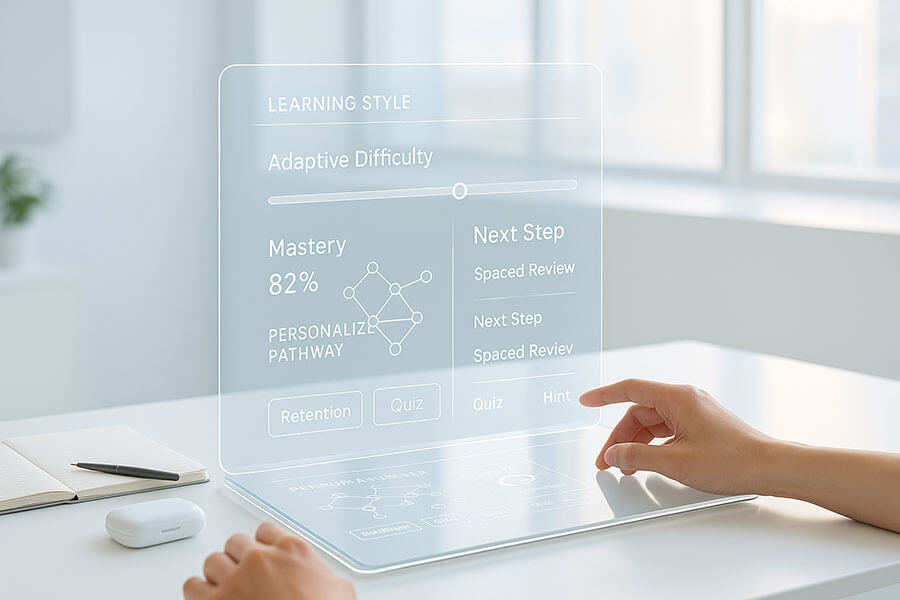
Education has long grappled with a fundamental challenge that seems almost paradoxical in its persistence: how can a single classroom teacher effectively reach thirty students who each learn differently, process information at varying speeds, and possess unique strengths and weaknesses? Traditional educational models, built around standardized curricula and one-size-fits-all instructional methods, have attempted to address this diversity through differentiated instruction techniques and ability grouping strategies. Yet despite decades of pedagogical innovation and countless professional development initiatives, the gap between educational theory and classroom reality remains stubbornly wide. Teachers find themselves constrained by limited time, overwhelming administrative demands, and the practical impossibility of creating truly individualized learning experiences for each student under their care.
The consequences of this educational mismatch extend far beyond simple inefficiency. Students who struggle with conventional teaching methods often disengage from learning entirely, their potential unfulfilled and their confidence eroded by repeated experiences of failure or frustration. High-achieving learners languish in curricula that move too slowly, their curiosity dampened by repetitive content that fails to challenge their capabilities. Meanwhile, students with diverse learning styles—those who excel with visual representations rather than verbal explanations, or who grasp concepts through hands-on exploration rather than abstract reasoning—find themselves disadvantaged by instructional approaches that privilege certain cognitive styles over others. This systemic inability to accommodate learning diversity contributes to achievement gaps, dropout rates, and widespread disillusionment with formal education.
Generative artificial intelligence technology emerges as a transformative solution to these longstanding educational challenges. Unlike earlier educational technologies that simply digitized traditional content or provided predetermined branching paths through learning materials, generative AI possesses the capability to create entirely new educational content dynamically tailored to individual learners in real time. These systems analyze student interactions, identify patterns in comprehension and engagement, and generate customized explanations, practice problems, and learning activities that match each learner’s current knowledge level, preferred learning modalities, and cognitive strengths. The technology represents a fundamental shift from static, one-directional content delivery toward responsive, adaptive learning environments that continuously evolve based on student needs.
The implications of this technological advancement extend beyond mere personalization to encompass a complete reimagining of educational possibility. Generative AI platforms can maintain the optimal challenge level for each student—neither so difficult that frustration leads to disengagement nor so simple that boredom extinguishes motivation. They can present information through multiple modalities simultaneously, allowing visual learners to see concepts illustrated while auditory learners hear complementary explanations. These systems can identify knowledge gaps that impede progress and automatically provide targeted remediation without stigmatizing students or requiring teacher intervention. Most importantly, they can scale personalized attention that was previously feasible only in expensive one-on-one tutoring situations to classrooms, schools, and entire educational systems.
The transformation promises to democratize access to high-quality, individualized education in ways that address persistent inequities in educational opportunity. Students in under-resourced schools could access the same adaptive, personalized learning experiences available to their peers in well-funded districts. Learners in remote or rural areas could benefit from educational content that adapts to their specific needs without requiring specialized teachers or expensive supplemental programs. Adult learners pursuing new skills or career transitions could engage with educational content that respects their existing knowledge while efficiently filling gaps and building competencies. The technology offers pathways toward more inclusive, effective, and equitable educational systems that honor the diversity of human learning rather than demanding conformity to narrow instructional approaches.
Understanding how generative AI achieves these outcomes requires examining both the underlying technology and its application within educational contexts. The journey from traditional standardized instruction to truly personalized learning pathways involves complex interactions between artificial intelligence systems, pedagogical principles, learning science research, and practical implementation considerations. As educational institutions worldwide begin adopting these technologies, the potential for transformation becomes increasingly tangible, while questions about optimal implementation, ethical considerations, and long-term impacts demand careful attention and thoughtful response.
Understanding Personalized Learning Fundamentals
Personalized learning represents a comprehensive approach to education that tailors instruction, curriculum, and learning environments to meet individual student needs, preferences, and interests. Unlike traditional educational models that deliver identical content and instruction to all students simultaneously, personalized learning recognizes that effective education must accommodate the profound diversity in how humans acquire, process, and retain knowledge. This approach draws upon decades of research in cognitive science, educational psychology, and learning theory that consistently demonstrates significant variation in learning preferences, cognitive processing styles, prior knowledge structures, and optimal conditions for knowledge acquisition across different individuals.
The theoretical foundations of personalized learning extend back to educational reformers who challenged factory-model schooling and advocated for student-centered approaches that honored individual differences. Progressive educators emphasized the importance of building upon students’ existing interests and experiences rather than imposing standardized curricula divorced from learners’ lives and contexts. Constructivist learning theories highlighted how individuals actively construct understanding through interaction with environments and experiences, suggesting that optimal learning occurs when instructional approaches align with learners’ cognitive development and existing knowledge structures. More recent research in neuroscience has revealed the biological basis for learning diversity, demonstrating measurable differences in brain structure and function that influence how individuals process information and acquire new skills.
Contemporary personalized learning frameworks emphasize several key principles that distinguish this approach from traditional instruction. Learning should be competency-based rather than time-based, allowing students to progress upon demonstrating mastery rather than advancing based on seat time or age-based grade levels. Instructional approaches should be flexible and varied, incorporating multiple modalities and strategies rather than assuming all students benefit equally from identical teaching methods. Students should have meaningful agency in their learning, with opportunities to pursue interests, set goals, and make choices about how they engage with content. Assessment should be continuous and formative rather than purely summative, providing ongoing feedback that informs instructional adjustments rather than simply measuring outcomes after instruction concludes.
Learning Styles and Educational Theory
Learning styles theory proposes that individuals possess distinct preferences for how they receive and process information, with these preferences significantly influencing learning effectiveness when instructional approaches align with personal cognitive strengths. The most widely recognized framework categorizes learners as visual, auditory, reading-writing, or kinesthetic based on their preferred sensory modalities for information intake. Visual learners purportedly benefit most from diagrams, charts, videos, and other graphical representations of concepts. Auditory learners excel when information is presented through spoken explanations, discussions, and verbal instructions. Reading-writing learners prefer text-based materials including written explanations, note-taking, and text-heavy resources. Kinesthetic learners require hands-on experiences, physical manipulation of materials, and learning-by-doing approaches to achieve optimal comprehension and retention.
Howard Gardner’s theory of multiple intelligences expanded beyond sensory preferences to propose distinct cognitive capacities that influence learning approaches and strengths. This framework identifies linguistic intelligence for facility with words and language, logical-mathematical intelligence for reasoning and pattern recognition, spatial intelligence for visualizing and manipulating objects mentally, bodily-kinesthetic intelligence for physical coordination and body awareness, musical intelligence for rhythm and sound patterns, interpersonal intelligence for understanding others and social situations, intrapersonal intelligence for self-awareness and reflection, and naturalistic intelligence for recognizing patterns in nature. According to this theory, effective instruction should engage multiple intelligences and allow students to demonstrate understanding through their strongest cognitive channels rather than privileging linguistic and logical-mathematical abilities exclusively.
More recent research in cognitive science has complicated simple learning styles models while affirming the broader principle that instructional approaches should accommodate cognitive diversity. Studies have questioned whether matching instruction to purported learning styles actually improves outcomes, suggesting that the scientific evidence for strong learning style effects remains limited. However, this research simultaneously confirms that individuals do differ in their cognitive strengths, prior knowledge, interest levels, and optimal learning conditions in ways that significantly impact educational effectiveness. The key insight is not that learners should receive exclusively visual or auditory instruction based on assessed preferences, but rather that effective teaching should provide multiple representations of concepts, varied practice opportunities, and flexible pathways to understanding that allow different learners to construct knowledge through approaches that leverage their cognitive strengths.
The implications for educational practice emphasize the importance of instructional variety, multiple representation of concepts, and flexibility in how students can demonstrate understanding. Rather than categorizing students into fixed learning style boxes and restricting instruction accordingly, effective personalized learning provides rich, multimodal learning experiences while allowing learners to engage with content through approaches that feel most natural and effective for their individual cognitive profiles. This nuanced understanding of learning diversity forms the foundation for how generative AI systems can create truly personalized educational experiences that accommodate individual differences while avoiding oversimplified categorizations that might limit rather than expand learning opportunities.
Generative AI Technology for Education
Generative artificial intelligence represents a category of machine learning systems capable of creating new content—including text, images, audio, and other media—rather than simply analyzing or categorizing existing information. Unlike traditional educational software that delivers pre-programmed content along predetermined pathways, generative AI systems can produce original explanations, generate practice problems with unique parameters, create customized examples relevant to student interests, and adapt instructional content in real time based on learner interactions. These capabilities emerge from sophisticated neural networks trained on vast datasets that enable the systems to understand patterns in human language, recognize conceptual relationships, and generate coherent, contextually appropriate responses to varied inputs.
The technology operates through deep learning architectures that process information through multiple layers of artificial neurons, each layer identifying increasingly abstract patterns and relationships in data. Large language models, which form the foundation of many generative AI educational applications, are trained on enormous text corpora encompassing billions of words from diverse sources including books, articles, websites, and educational materials. Through this training process, the models develop statistical understanding of language structure, conceptual relationships, common explanations for various topics, and patterns in how concepts are typically presented and explained. This statistical knowledge enables the systems to generate human-like text that explains concepts, answers questions, provides examples, and creates educational content that feels natural and pedagogically sound.
When applied to education, generative AI systems analyze student interactions to build dynamic models of individual learner characteristics including current knowledge levels, conceptual understanding, common misconceptions, engagement patterns, and learning preferences. These learner models continuously update based on responses to questions, performance on practice problems, time spent on different activities, requests for help or clarification, and patterns of success or struggle with various content types. The systems use these evolving models to inform content generation, ensuring that explanations match appropriate complexity levels, examples relate to students’ interests and prior experiences, practice problems provide optimal challenge, and instructional approaches align with observed learning patterns that indicate individual cognitive preferences.
Core Technologies and Personalization Mechanisms
Natural language processing forms the foundational technology enabling generative AI systems to understand student inputs and generate appropriate educational responses. These systems parse written or spoken language to identify intended meaning, extract key concepts, recognize questions or requests, and determine appropriate response types. Advanced NLP capabilities allow systems to understand questions phrased in multiple ways, interpret incomplete or ambiguous queries, recognize when students express confusion or frustration, and generate responses that address not just literal question content but underlying conceptual difficulties that student language patterns reveal. The technology enables conversational interactions that feel natural rather than constrained by predetermined response templates or rigid input requirements.
Machine learning algorithms continuously analyze patterns in student interaction data to identify relationships between learning activities and outcomes, classify student understanding levels, predict which instructional approaches will prove most effective for different learners, and detect early warning signs of disengagement or comprehension difficulties. Supervised learning techniques train models on labeled data showing relationships between student characteristics and effective instructional approaches. Unsupervised learning identifies natural clusters in student behavior patterns that might indicate distinct learner types requiring different support strategies. Reinforcement learning optimizes instructional sequencing by treating education as a decision-making process where the system learns which content presentations and practice sequences maximize long-term learning outcomes through trial, error, and feedback from student performance.
Adaptive algorithms implement the personalization mechanisms that adjust content difficulty, instructional approaches, and learning pathways based on individual student needs. Item response theory models estimate student ability levels and question difficulties to select practice problems that maintain optimal challenge—difficult enough to promote learning through productive struggle but not so challenging that students become overwhelmed and discouraged. Bayesian knowledge tracing maintains probabilistic estimates of student mastery for different skills and concepts, updating these estimates based on performance patterns to identify knowledge gaps requiring remediation or concepts ready for advancement to more complex applications. Collaborative filtering techniques leverage patterns across large student populations to recommend learning activities and resources that proved effective for similar learners with comparable characteristics and performance patterns.
Knowledge representation systems organize educational content into structured formats that enable AI systems to understand conceptual relationships, prerequisite dependencies, and learning progressions. Concept graphs map relationships between ideas, showing which concepts build upon others and which can be learned independently. Ontologies provide formal representations of domain knowledge including definitions, properties, and relationships that enable systems to reason about content and generate explanations that reflect accurate conceptual understanding. These structured knowledge representations allow generative AI to create coherent learning sequences, identify logical dependencies that should inform content ordering, and generate explanations that connect new concepts to students’ existing knowledge in pedagogically sound ways.
The integration of these technologies creates systems capable of remarkable pedagogical sophistication. When a student submits an incorrect answer to a mathematics problem, the system doesn’t simply mark it wrong and move on. Instead, it analyzes the error pattern to identify the underlying misconception—perhaps confusion about order of operations or difficulty with fraction manipulation. It then generates a targeted explanation addressing that specific misconception, creates analogous practice problems that isolate the problematic concept, and adjusts subsequent content presentation to reinforce correct understanding. This process occurs in real time without human intervention, providing immediate, personalized instructional support that would be impossible for teachers to deliver individually to every student in traditional classroom settings.
Current AI Learning Platforms and Case Studies
The integration of generative AI into educational practice has progressed from experimental research projects to commercially deployed platforms serving millions of students worldwide. These implementations demonstrate both the transformative potential and practical challenges associated with AI-powered personalized learning, offering valuable insights into effective design principles, implementation strategies, and measurable impacts on student outcomes. While the technology remains relatively new with most platforms launching or significantly upgrading capabilities between 2022 and 2025, early results provide encouraging evidence of meaningful improvements in learning effectiveness, student engagement, and educational accessibility.
Khan Academy launched Khanmigo in 2023 as an AI-powered tutoring assistant built on GPT-4 technology that provides personalized support to students working through mathematics, science, and humanities content. The system engages students in Socratic dialogue rather than simply providing answers, asking probing questions that guide learners toward understanding while allowing them to construct knowledge through their own reasoning. When students encounter difficulties, Khanmigo generates customized explanations that build upon their existing understanding and relate concepts to their interests and experiences. The platform adapts problem difficulty based on performance patterns and provides teachers with detailed insights into student progress, misconceptions, and areas requiring additional support. In pilot implementations during the 2023-2024 school year, participating districts reported improved student engagement metrics and higher completion rates for challenging content compared to previous years using traditional Khan Academy resources without AI assistance.
Duolingo Max, launched in early 2023, represents another significant implementation of generative AI for personalized learning in language education. The platform uses GPT-4 to provide conversational practice with an AI tutor that adapts to learner proficiency levels, generates contextually appropriate dialogue scenarios based on student interests, and offers personalized explanations of grammar rules and language patterns. The Explain My Answer feature allows learners to receive detailed feedback on their responses including why answers were correct or incorrect and how to improve. Roleplay exercises generate realistic conversational scenarios that adjust complexity and topic based on learner preferences and ability levels. Duolingo reported in 2024 that Max subscribers demonstrated 45% better speaking skill development compared to users on the standard platform, with particularly strong improvements among learners who traditionally struggled with conversational practice due to anxiety about speaking with human tutors.
Carnegie Learning’s MATHia platform, significantly enhanced with generative AI capabilities in 2024, provides adaptive mathematics instruction for middle and high school students. The system combines decades of cognitive science research on mathematics learning with modern generative AI to create highly personalized learning experiences. MATHia tracks student thinking processes as they solve problems, not just final answers, allowing the system to identify precisely where conceptual understanding breaks down. When students struggle, the platform generates scaffolding hints that provide just enough support to help learners progress without simply giving away solutions. The system also creates personalized practice problem sets that target identified knowledge gaps while maintaining engagement through problems related to student interests—generating sports statistics problems for students interested in athletics or musical rhythm problems for students passionate about music. Implementation data from the 2024-2025 school year across 47 school districts showed that students using the enhanced MATHia platform demonstrated average learning gains 1.3 times greater than expected based on historical performance data from previous years.
These platforms share several common design principles that appear crucial for effective AI-powered personalized learning. They maintain human teachers in essential roles rather than attempting to replace educators entirely, positioning AI as a tool that amplifies teacher capabilities rather than eliminates teaching positions. They prioritize transparency in how AI systems make decisions about content presentation and difficulty adjustments, allowing both educators and students to understand why particular learning activities are recommended. They implement safeguards against harmful content generation and ensure that AI interactions remain appropriate for student age levels and educational contexts. They collect extensive data on system effectiveness and student outcomes to continuously improve algorithms and instructional approaches based on evidence of what actually works in real educational settings.
The measurable impacts extend beyond academic achievement to encompass engagement, confidence, and attitudes toward learning. Students report feeling more supported and less frustrated when encountering difficult content because they receive immediate, personalized assistance rather than waiting for teacher help or struggling alone. The systems reduce stigma associated with remediation by providing targeted support privately without identifying students as requiring extra help in front of peers. Learners appreciate having control over their learning pace, with the ability to move quickly through content they find easy while spending more time on challenging concepts without feeling pressure to keep pace with classmates. Teachers note that AI-generated insights into student understanding allow them to target their limited time more effectively, providing human support where it matters most while the AI handles routine practice and basic concept reinforcement.
Creating Dynamic Learning Pathways
Dynamic learning pathways represent the core innovation that distinguishes generative AI educational platforms from earlier adaptive learning systems. While previous technologies could branch along predetermined paths based on student responses, generative AI creates entirely new learning sequences in real time based on continuous analysis of individual learner needs, preferences, and performance patterns. These systems don’t simply select from pre-authored content libraries; they generate original explanations, create unique practice problems, synthesize information from multiple sources, and construct learning experiences specifically designed for each student’s current knowledge state and learning trajectory.
The pathway generation process begins with comprehensive assessment of student starting points including prior knowledge, existing skills, conceptual understanding, and learning preferences. Rather than relying solely on traditional pre-tests, generative AI systems gather assessment data through natural interactions as students engage with content, ask questions, attempt problems, and request help or clarification. The systems analyze response patterns, time on task, error types, help-seeking behavior, and engagement indicators to build multidimensional profiles of learner characteristics. These profiles continuously update as students progress, ensuring that the system’s understanding of each learner remains current and reflects developing competencies rather than relying on potentially outdated initial assessments.
Pathway construction algorithms determine optimal content sequences by balancing multiple competing objectives including maintaining appropriate challenge levels, building systematically toward learning goals, sustaining engagement and motivation, remediating identified knowledge gaps, and providing sufficient practice for skill consolidation. The algorithms consider prerequisite relationships between concepts to ensure that foundational knowledge is established before introducing dependent advanced topics. They analyze engagement patterns to identify when variety in presentation modes or activity types might prevent boredom and sustain motivation. They incorporate spacing and interleaving principles from cognitive science research to optimize long-term retention rather than focusing solely on immediate performance.
Content Generation and Adaptation
Generative AI systems create educational content through sophisticated natural language generation processes that produce explanations, examples, practice problems, and learning activities customized to individual student needs. When generating an explanation of a mathematical concept for a particular student, the system considers multiple factors including the student’s current understanding level, identified misconceptions, successful learning patterns from previous interactions, stated interests that might inform relevant examples, and optimal explanation length and complexity based on observed attention patterns. The generated explanation might use sports statistics to illustrate probability concepts for a student interested in basketball, or music theory examples to explain fraction operations for an aspiring musician.
Example generation represents particularly powerful content customization capability. Rather than presenting generic word problems about fictional people in contrived situations, generative AI can create problems involving contexts meaningful to individual learners. A problem about calculating travel time and distance might feature locations from the student’s own city and activities they actually pursue. A biology problem about population growth could reference animals the student has expressed interest in rather than generic organisms. These personalized examples increase engagement by making abstract concepts feel relevant while improving comprehension by connecting new learning to existing knowledge and experiences. The systems can generate unlimited variations on core problem types, ensuring that students receive sufficient practice without repetitive, identical problems that might be memorized rather than truly understood.
Explanation adaptation occurs in real time as students interact with content. If a student indicates confusion or performs poorly on practice problems after receiving an explanation, the system generates alternative explanations using different analogies, more concrete examples, simpler language, or alternative presentation structures. A student who struggled with an algebraic explanation presented symbolically might receive a regenerated explanation using concrete objects and visual representations. The system might break complex explanations into smaller chunks if attention data suggests the student became overwhelmed. It might add humor or casual language if the student appears disengaged, or increase formality and precision if the student demonstrates preference for technical accuracy and detail.
Multimodal content generation extends beyond text to include diagrams, interactive visualizations, audio explanations, and video content that complement written materials. Generative AI systems can create custom diagrams that illustrate concepts discussed in text explanations, ensuring visual representations directly correspond to example problems or scenarios rather than using generic images only loosely related to content. They can generate audio narrations of text content for students who benefit from auditory presentation or who have visual impairments. They can construct interactive simulations that allow students to manipulate variables and observe outcomes, learning through exploration and experimentation rather than passive consumption of information.
Difficulty Adjustment and Knowledge Retention
Optimal difficulty calibration represents one of the most critical functions of AI-powered personalized learning systems. Educational research consistently demonstrates that learning occurs most effectively when students engage with content in what Vygotsky termed the “zone of proximal development”—material that is challenging enough to require effort and extend current capabilities but not so difficult that students become frustrated and disengage. Generative AI systems continuously analyze performance data to maintain this optimal challenge zone for each student individually, automatically adjusting problem difficulty, providing scaffolding support, or removing supports as competency develops.
The difficulty adjustment mechanisms operate through multiple complementary approaches. Item difficulty estimation algorithms analyze characteristics of problems and questions to predict their challenge level based on factors including number of steps required, complexity of concepts involved, presence of distractors or common misconceptions, and cognitive load imposed by problem presentation. Student ability estimation algorithms update probability distributions of student mastery levels based on performance patterns including not just correctness but also response time, help-seeking behavior, error types, and consistency across similar problems. Matching algorithms select or generate problems where estimated difficulty aligns with current ability estimates, ensuring appropriate challenge while accounting for uncertainty in both difficulty and ability estimates.
Scaffolding systems provide adaptive support that helps students successfully engage with appropriately challenging content without becoming overwhelmed. When students struggle with problems, the systems can generate progressively more specific hints that guide thinking without simply revealing answers. Initial hints might restate the problem or highlight relevant information. Subsequent hints might suggest solution strategies or remind students of relevant concepts and procedures. If students continue struggling, the system might break the problem into smaller sub-problems or provide a worked example of a similar problem. This graduated support ensures that students experience productive struggle that promotes learning rather than unproductive frustration that leads to disengagement.
Knowledge retention optimization extends beyond immediate problem-solving success to ensure that learning persists over time rather than fading quickly after initial instruction concludes. Generative AI systems implement spaced repetition algorithms that reintroduce concepts and skills at strategically timed intervals designed to combat forgetting and strengthen long-term memory formation. The systems track estimated memory strength for different concepts based on performance history and time since last practice, automatically generating review activities when memory strength estimates indicate risk of forgetting. Review problems are disguised within regular practice rather than segregated into obvious review sessions, maintaining engagement while reinforcing previously learned material.
Interleaving strategies mix practice on different concepts and skills rather than blocking practice by topic, a approach that research shows enhances long-term retention and transfer despite potentially slowing initial learning. Generative AI systems can implement sophisticated interleaving schedules that balance the benefits of distributed practice across topics with the need for sufficient concentrated practice to initially establish competency. The systems generate problems that require combining multiple concepts and skills, prompting students to practice discriminating between different problem types and selecting appropriate solution strategies rather than simply applying procedures in contexts where they know in advance which procedure is relevant.
Metacognitive support features help students develop self-awareness about their learning processes and regulate their own studying effectively. The systems provide visualizations of progress toward learning goals, predictions of mastery levels for different concepts, and recommendations for where to focus study efforts. They prompt students to make predictions before attempting problems, explain their reasoning after solving problems, and reflect on error patterns and correction strategies. These metacognitive prompts help students develop the self-regulated learning skills that enable continued learning beyond structured educational environments and generalize to new learning contexts throughout their lives.
Benefits and Opportunities
The adoption of generative AI for personalized learning pathways offers transformative benefits across multiple dimensions of educational practice and outcomes. These advantages manifest differently for various stakeholders including students, educators, educational institutions, and society broadly, creating opportunities to address longstanding challenges in education while enabling entirely new approaches to learning and teaching that were previously impractical or impossible.
Students experience immediate, tangible benefits through educational experiences better matched to their individual needs and characteristics. Learners who previously struggled with traditional instruction often flourish when receiving content adapted to their comprehension levels, presented through modalities aligned with their cognitive strengths, and adjusted in difficulty to maintain optimal challenge. The availability of instant, personalized feedback and support reduces frustration and sustains motivation by ensuring that students receive help precisely when needed rather than having to wait for teacher assistance or struggle unproductively. The removal of artificial time constraints allows students to master concepts thoroughly before advancing, eliminating knowledge gaps that could undermine future learning while enabling faster progress through material they find easy.
Engagement and motivation improve substantially when students perceive learning content as relevant to their interests and goals. Generative AI’s ability to create personalized examples, problems, and scenarios related to individual student interests helps learners see connections between abstract concepts and their own lives, making education feel meaningful rather than arbitrary. The sense of control students gain from having input into their learning paths and receiving educational experiences responsive to their preferences increases intrinsic motivation and feelings of autonomy that educational psychology research identifies as crucial for sustained learning effort. Success breeds further success as students who experience mastery rather than repeated failure develop confidence and positive attitudes toward learning that create upward spirals of achievement.
Educational equity advances significantly when high-quality personalized instruction becomes accessible regardless of socioeconomic status, geographic location, or institutional resources. Students in under-resourced schools can access AI-powered personalized learning experiences comparable to those available in wealthy districts, helping to close achievement gaps rooted in unequal educational opportunity. Learners with disabilities or special educational needs benefit from automatically customized accommodations and alternative content presentations without requiring expensive specialized services or stigmatizing separate programs. English language learners receive support in their native languages while acquiring English proficiency, with content adjusted to account for developing language skills while maintaining grade-appropriate cognitive challenge.
Educators gain powerful tools that amplify their effectiveness and allow them to focus attention where human expertise and connection matter most. AI systems handle routine tasks including basic concept introduction, initial practice provision, and basic assessment, freeing teachers to invest time in higher-value activities like facilitating discussions, supporting collaborative projects, addressing complex misconceptions, and building meaningful relationships with students. The detailed insights AI systems provide into student understanding enable teachers to target their limited time strategically, identifying students who would benefit most from individual attention and specific concepts requiring whole-class reteaching. Teachers can serve larger numbers of students effectively when AI handles individualized practice and basic support, expanding access to quality education without requiring proportional increases in educator workforce.
Professional development benefits emerge as teachers gain exposure to sophisticated pedagogical strategies demonstrated by AI systems. Educators can observe how AI systems explain difficult concepts through multiple representations, break complex problems into scaffolded sub-problems, select examples that build systematically toward understanding, and provide feedback that addresses specific misconceptions. These observations serve as ongoing professional learning opportunities that can improve teachers’ own instructional practices. The reduced burden of creating differentiated materials and individualized assignments allows teachers to focus on instructional improvement and deeper engagement with subject matter content.
Institutional efficiency gains result from reduced need for separate remedial programs, summer school offerings, and redundant content delivery across multiple course sections. AI-powered personalized learning enables more flexible course structures where students progress based on demonstrated mastery rather than seat time, potentially reducing time to degree completion and associated costs. Schools can serve more diverse student populations effectively without requiring extensive tracking systems or separate programs for different ability levels. Administrative costs decrease when AI systems automate routine aspects of course management, student assessment, and progress monitoring.
Scalability represents perhaps the most significant advantage of generative AI educational applications. The technology makes high-quality personalized instruction technically and economically feasible at massive scale in ways that traditional one-on-one tutoring never could. A single well-designed AI platform can serve millions of students simultaneously, each receiving genuinely personalized learning experiences comparable to those previously available only through expensive private tutoring. This scalability enables educational innovations to reach entire populations quickly rather than remaining confined to privileged communities with resources to implement labor-intensive personalized learning approaches.
Lifelong learning becomes more accessible and effective when personalized AI-powered education extends beyond K-12 and higher education into workforce development, professional skill updating, and personal enrichment learning. Adults pursuing career transitions can efficiently acquire new competencies through learning pathways adapted to their existing knowledge and available time. Workers needing to update skills in response to technological change can receive targeted training focused specifically on knowledge gaps rather than sitting through comprehensive courses that largely review familiar material. Retirees pursuing intellectual interests can engage with content calibrated to appropriate challenge levels without concerns about keeping pace with younger learners or being held back by slower classmates.
Research opportunities expand dramatically as AI systems generate unprecedented volumes of detailed data about learning processes, effective instructional strategies, and relationships between individual differences and optimal teaching approaches. Researchers can test educational hypotheses at scales previously impossible, identifying what works for whom under what conditions with much greater precision than traditional educational research allows. These insights can inform continuous improvement of AI systems while advancing fundamental understanding of human learning that benefits education broadly.
Challenges and Limitations
Despite remarkable potential benefits, the implementation of generative AI for personalized learning faces substantial challenges spanning technical, pedagogical, ethical, and practical domains. These obstacles require careful attention and thoughtful mitigation strategies to ensure that AI adoption enhances rather than undermines educational quality and equity. Many challenges have no simple solutions, demanding ongoing vigilance, iterative refinement, and willingness to modify approaches based on emerging evidence about impacts and unintended consequences.
Technical limitations currently constrain what AI systems can accomplish reliably in educational contexts. Generative models occasionally produce factually incorrect information or nonsensical explanations—a phenomenon known as “hallucination” that poses particular risks in educational settings where students trust system outputs as authoritative. The systems sometimes struggle with advanced subject matter requiring deep conceptual understanding or specialized domain knowledge beyond their training data. Mathematical reasoning remains challenging, with AI systems occasionally making computational errors or applying procedures inappropriately. The context window limitations of current language models restrict how much information about student learning history can inform content generation, potentially limiting personalization effectiveness.
Data privacy concerns emerge prominently when AI systems collect detailed information about student learning processes, performance patterns, and personal characteristics. Educational data is highly sensitive, revealing information about cognitive abilities, learning difficulties, family circumstances, and personal interests that could be misused or harm students if improperly disclosed. The extensive data collection necessary for effective personalization creates risks of surveillance, profiling, and potential discrimination based on algorithmic predictions about student potential or future outcomes. Regulations like FERPA in the United States impose strict requirements on educational data handling, and ensuring AI systems comply while maintaining effectiveness poses significant challenges.
Algorithmic bias represents a critical concern given documented patterns of machine learning systems perpetuating or amplifying biases present in training data. If AI systems are trained on historical educational data reflecting existing achievement gaps and inequitable outcomes, the models might learn patterns that disadvantage students from marginalized communities. Systems might provide less challenging content or fewer growth opportunities to students from groups that historically underperformed, creating self-fulfilling prophecies that maintain rather than reduce educational inequities. Ensuring AI systems promote rather than undermine equity requires careful attention to training data diversity, ongoing bias testing, and willingness to intervene in algorithmic decision-making when evidence suggests discriminatory patterns.
Pedagogical concerns center on whether AI-powered personalized learning might undermine important educational objectives beyond basic skill acquisition. Critics worry that excessive focus on individualization could reduce opportunities for collaborative learning, peer interaction, and development of social skills essential for life and work. The emphasis on efficiency and optimal learning might neglect intellectual exploration, creative thinking, and pursuit of knowledge for intrinsic satisfaction rather than assessment performance. The tendency of AI systems to optimize for measurable learning outcomes could inadvertently devalue aspects of education that are important but difficult to quantify, such as curiosity development, ethical reasoning, or aesthetic appreciation.
Teacher displacement fears create resistance to AI adoption among educators understandably concerned about their professional futures and the value of human expertise in teaching. While proponents argue that AI augments rather than replaces teachers, the economic incentives facing institutions under financial pressure might encourage reductions in teaching staff once AI systems handle significant instructional responsibilities. The deskilling concern suggests that over-reliance on AI might atrophy teachers’ pedagogical capabilities if they cede too much instructional decision-making to automated systems. Professional identity challenges arise when teachers’ roles shift from primary content delivery toward facilitation and support, requiring cultural adaptations and new definitions of teaching expertise.
Implementation costs present significant barriers to adoption, particularly for under-resourced institutions that might benefit most from AI-powered personalized learning. Licensing fees for commercial platforms, infrastructure upgrades to support AI systems, professional development for educators, and ongoing technical support requirements create substantial financial burdens. The initial investment required before benefits materialize may be prohibitive for schools and districts already struggling with budget constraints. Hidden costs emerge when supposedly user-friendly systems require extensive customization, troubleshooting, and maintenance beyond vendor-promised ease of implementation.
Student autonomy and agency questions arise when AI systems make decisions about learning pathways, content difficulty, and instructional approaches without student input or understanding. While personalization ostensibly serves student interests, students themselves often have limited visibility into why systems make particular recommendations or how algorithms evaluate their capabilities. The opacity of AI decision-making processes can leave students feeling controlled by mysterious systems rather than empowered as active agents in their learning. Over-reliance on AI recommendations might discourage students from developing the self-awareness and metacognitive skills needed to direct their own learning effectively.
Assessment validity concerns emerge when AI systems optimize for performance on automated assessments that might not capture the full range of learning objectives educators value. The systems naturally focus on outcomes they can measure reliably, potentially narrowing curriculum toward easily assessed knowledge and skills while neglecting higher-order thinking, creativity, and complex application abilities. The incentive to game the system might lead to surface learning strategies that produce good performance metrics without deep understanding. Distinguishing genuine competency from successful pattern-matching on AI-generated assessments poses significant challenges.
Digital divide implications mean that unequal access to technology infrastructure, reliable internet connectivity, and devices capable of running AI applications could exacerbate rather than reduce educational inequities. Students in low-income households, rural areas, or regions with poor technology infrastructure might be excluded from AI-powered learning opportunities that their more privileged peers access routinely. The shift toward AI-mediated instruction could disadvantage students and families with lower digital literacy, creating new forms of inequality even as traditional access barriers diminish.
Long-term impacts remain uncertain given the novelty of current generative AI technologies. Comprehensive research on educational outcomes, unintended consequences, and effects on student development requires years of implementation and careful longitudinal study that hasn’t yet occurred. Current enthusiasm for AI in education might reflect technology hype rather than evidence-based assessment of genuine value. The rapid pace of technological change means that today’s cutting-edge systems may become obsolete quickly, requiring continuous reinvestment and adaptation that could prove unsustainable.
Final Thoughts
Generative AI for personalized learning pathways represents a watershed moment in educational technology with the potential to fundamentally transform how humanity approaches the challenge of developing human potential through structured learning. The technology offers realistic pathways toward educational ideals that have remained frustratingly elusive despite decades of reform efforts, promising to make genuinely individualized instruction accessible at population scale rather than confined to privileged few who can afford personal tutors or highly resourced schools. The convergence of sophisticated natural language processing, adaptive algorithms, and vast computational resources creates capabilities that genuinely constitute a qualitative shift rather than mere quantitative improvement over previous educational technologies.
The implications for educational equity and financial inclusion deserve particular emphasis as these systems democratize access to high-quality personalized instruction regardless of geographic location, institutional resources, or family socioeconomic status. A student in a rural school district lacking advanced course offerings or specialized teachers can engage with content adapted to their capabilities and interests comparably to peers in wealthy suburban districts. Learners from families unable to afford private tutoring can receive individualized attention and support that previously required expensive one-on-one instruction. Adult learners pursuing career transitions or skill development can access education efficiently tailored to their existing knowledge and available time without requiring enrollment in costly programs with rigid schedules designed for traditional college-age students.
The intersection of technology and social responsibility becomes particularly salient when considering how AI-powered education might address persistent patterns of unequal opportunity and outcomes that have characterized formal schooling across societies. Educational systems have historically served to reproduce existing social hierarchies as much as to provide genuine opportunity for mobility, with students from privileged backgrounds systematically receiving more engaging instruction, richer curricula, and greater support than peers from marginalized communities. Generative AI creates genuine possibility for disrupting these patterns by providing excellent educational experiences independent of zip codes, school funding levels, or teacher quality variations. However, realizing this potential requires deliberate attention to ensuring equitable access, addressing algorithmic biases, and resisting tendencies for new technologies to concentrate benefits among already-advantaged populations.
The future trajectory of AI in education will be shaped significantly by choices made in the present regarding system design, implementation approaches, regulatory frameworks, and cultural norms around AI roles in learning. Decisions about data privacy protections, algorithm transparency requirements, and accountability for AI system impacts will determine whether these technologies serve broad public interests or primarily benefit commercial providers and privileged institutions. Professional development investments and role redefinition will influence whether educators embrace AI as capability-enhancing tool or resist it as threat to professional expertise and autonomy. Research priorities and evidence standards will affect how quickly the field distinguishes genuinely effective applications from overhyped implementations that fail to deliver promised benefits.
The ongoing challenges facing AI-powered personalized learning should neither paralyze implementation nor discourage thoughtful experimentation that generates evidence about what works under what conditions. Educational innovation has always involved uncertainty and risk, requiring willingness to try new approaches, learn from failures, and iterate toward improvement. The key is maintaining appropriate humility about technology’s capabilities, carefully monitoring for unintended negative consequences, and placing students’ genuine learning needs ahead of technological enthusiasm or commercial interests. Success will require collaboration across educators, technologists, researchers, policymakers, and communities to ensure that AI serves educational values rather than technology determining what education should become.
As generative AI capabilities continue advancing rapidly, the educational applications will certainly evolve beyond current implementations toward possibilities difficult to imagine from the present vantage point. The technology might enable entirely new models of educational organization that transcend traditional classroom structures, grade levels, and institutional boundaries. It could facilitate seamless lifelong learning where educational support is available on demand throughout life rather than concentrated in youth. It might enable forms of assessment that capture genuine understanding more validly than current testing approaches. The transformative potential extends beyond improving existing educational practices to fundamentally reimagining what learning could look like when constraints of time, place, and instructor availability no longer limit possibilities.
FAQs
- What exactly is generative AI and how does it differ from regular educational software?
Generative AI refers to artificial intelligence systems capable of creating original content rather than simply delivering pre-programmed material. Unlike traditional educational software that presents fixed content along predetermined pathways, generative AI can produce entirely new explanations, practice problems, and learning activities customized to individual students in real time. These systems use sophisticated machine learning models trained on vast amounts of educational content to generate human-like responses that adapt to student needs, learning styles, and performance patterns. The key difference is that generative AI can create unlimited variations of content specifically tailored to each learner rather than selecting from a finite library of pre-authored materials. - Will AI tutors replace human teachers?
No, the current trajectory of AI in education positions these systems as tools that augment teacher capabilities rather than replacements for human educators. AI handles routine instructional tasks like basic content delivery, practice problem generation, and immediate feedback provision, freeing teachers to focus on higher-value activities that require human expertise including facilitating discussions, supporting collaborative projects, addressing complex misconceptions, and building meaningful relationships with students. Teachers provide essential functions that AI cannot replicate including emotional support, motivation, role modeling, social-emotional learning guidance, and nuanced judgment about individual student needs in their full human complexity. The most effective implementations combine AI’s scalability and personalization capabilities with irreplaceable human elements of teaching. - How do these systems know what learning style I have?
Generative AI platforms analyze patterns in how students interact with different types of content to infer learning preferences rather than relying on explicit learning style assessments. The systems track which explanation types lead to better comprehension, how students respond to visual versus verbal presentations, whether hands-on activities produce better retention than reading, and numerous other behavioral indicators. Rather than categorizing students into fixed learning style boxes, sophisticated AI systems recognize that individuals benefit from varied instructional approaches depending on content, context, and current understanding level. The systems continuously update their models of student preferences based on ongoing interactions, ensuring personalization reflects actual observed effectiveness rather than potentially inaccurate self-reported preferences or single-assessment categorizations. - Is my learning data private and secure?
Data privacy and security depend significantly on the specific platform and institutional policies governing its use. Reputable educational AI platforms implement encryption, access controls, and data handling practices designed to protect student information from unauthorized access or misuse. However, students and parents should understand what data is collected, how it’s used, who has access, and how long it’s retained. Educational institutions using AI platforms should ensure vendors comply with relevant regulations like FERPA in the United States and should implement clear data governance policies. Students have rights to understand and often control how their educational data is used, though exercising these rights may require active inquiry rather than passive assumption of protection. - Can AI-powered learning actually improve my grades?
Research evidence increasingly demonstrates measurable learning improvements from well-designed AI-powered personalized learning systems, though results vary depending on implementation quality, subject matter, and student characteristics. Studies of platforms like Khan Academy’s Khanmigo, Duolingo Max, and Carnegie Learning’s MATHia show meaningful gains in learning outcomes compared to traditional instruction or non-AI enhanced digital learning. However, AI is a tool whose effectiveness depends on how it’s used—passive consumption of AI-generated content without active engagement will not produce better outcomes than passive engagement with traditional materials. Students who engage thoughtfully with AI-powered learning, practicing with generated problems, seeking explanations when confused, and reflecting on feedback, typically see substantial improvements in both understanding and grades. - What subjects work best with AI-powered personalized learning?
Current AI systems work particularly well for subjects with clear learning progressions, well-defined skills, and objective assessment criteria including mathematics, foreign languages, basic sciences, and technical skills like computer programming. These domains have structured knowledge that AI can model effectively and generate appropriate practice activities. Subjects involving more subjective judgment, creative expression, complex argumentation, or nuanced interpretation like advanced literature analysis, creative writing, or philosophical reasoning present greater challenges for AI systems, though capabilities continue improving. The most effective AI applications often combine strong performance in structured skill development with human teacher guidance for higher-order thinking, creative application, and interpretive analysis. - How much does it cost to access these AI learning platforms?
Costs vary dramatically depending on the platform and access method. Some AI-powered educational tools are available free or at low cost to individual users, particularly platforms supported by advertising, freemium models, or philanthropic funding. School and district implementations typically involve annual licensing fees that range from a few dollars to over fifty dollars per student depending on features and support levels. Some platforms offer free basic versions with premium features requiring subscriptions. Many schools provide access to AI platforms without direct cost to students or families, though institutional budgets bear expenses. Adult learners pursuing professional development may encounter higher costs for specialized professional training platforms, though these often remain substantially less expensive than traditional college courses or bootcamp programs. - What happens if the AI gives me wrong information?
Generative AI systems can occasionally produce incorrect information due to limitations in training data, context understanding, or mathematical reasoning capabilities. Reputable educational platforms implement multiple safeguards including fact-checking systems, human review of AI-generated content, confidence indicators that flag uncertain information, and feedback mechanisms allowing users to report errors. Students should maintain healthy skepticism and verify information from AI systems through other sources, particularly for high-stakes learning or complex topics. Teachers and institutions using AI platforms should establish clear protocols for handling errors including how students should report problems and what recourse exists when AI mistakes cause learning difficulties. Platform providers typically improve systems continuously based on error reports, but users should understand that no AI system is infallible and critical thinking remains essential. - Can I use AI learning platforms if I have learning disabilities?
Many AI-powered personalized learning platforms offer significant benefits for students with learning disabilities by automatically providing accommodations and adaptations that would require explicit teacher intervention in traditional settings. Systems can present content in multiple modalities to support students with reading difficulties, adjust pacing for students who need more time, provide additional scaffolding and support for students who struggle with complex tasks, and break assignments into smaller chunks for students who become overwhelmed. Text-to-speech, speech-to-text, adjustable fonts and colors, and simplified language options can be implemented automatically based on student needs. However, students with disabilities and their families should carefully evaluate whether specific platforms appropriately accommodate particular learning needs and should not assume all AI systems provide adequate accessibility features. - Will learning with AI prepare me for real-world work and life?
The skills developed through effective AI-powered personalized learning including self-directed learning, problem-solving, critical thinking, and comfort with technology-mediated work environments align well with demands of modern workplaces and lifelong learning requirements. However, education should balance AI-mediated individual learning with collaborative experiences, interpersonal skill development, and practice navigating unstructured problems without algorithmic guidance—all essential for real-world success. AI platforms that incorporate collaborative features, project-based learning, and explicit metacognitive skill development prepare students more effectively than those focused narrowly on individual skill mastery. Students should seek educational experiences that combine AI-powered personalized learning with human interaction, collaborative projects, and opportunities to apply knowledge in authentic contexts that reflect the complexity and ambiguity of real-world challenges.