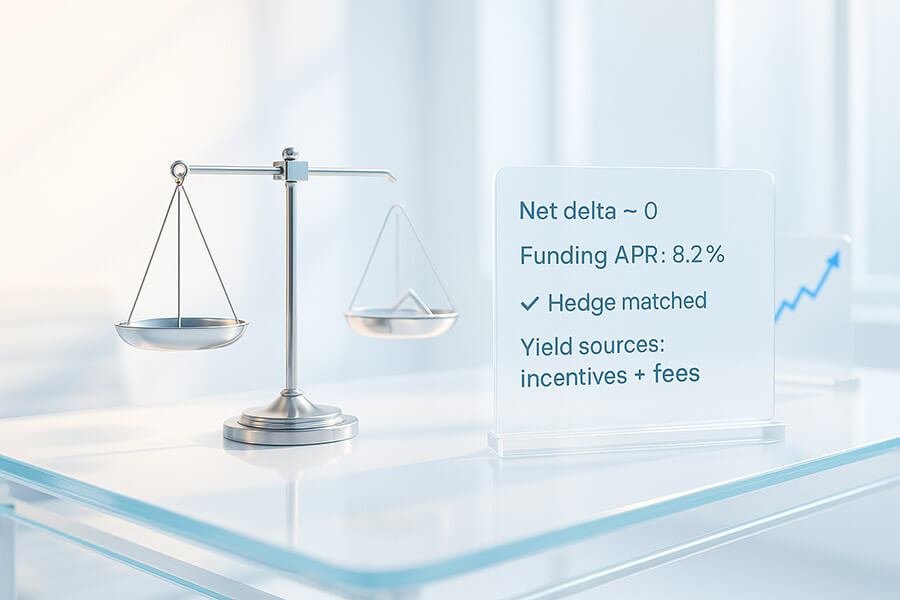
The cryptocurrency market’s notorious volatility has long been both its greatest attraction and most significant deterrent for investors seeking consistent returns. While traditional yield farming in decentralized finance protocols offers impressive annual percentage yields, these returns often come with substantial exposure to price fluctuations that can quickly erode profits or amplify losses. Delta-neutral farming strategies emerge as a sophisticated solution to this fundamental challenge, offering investors a pathway to generate yield from DeFi protocols while effectively eliminating directional market exposure through carefully balanced positions. This revolutionary approach to cryptocurrency investing fundamentally changes how market participants can interact with digital assets, creating opportunities for stable income generation in an asset class historically characterized by extreme price swings and unpredictable market dynamics.
These advanced strategies represent a paradigm shift in how investors approach cryptocurrency yield generation, moving beyond simple token staking or liquidity provision to create complex positions that profit from protocol incentives regardless of whether the underlying assets appreciate or depreciate in value. By maintaining a delta-neutral stance, farmers can harvest rewards from trading fees, funding rates, and liquidity incentives without betting on the future price direction of volatile cryptocurrencies. This approach transforms DeFi farming from a speculative endeavor into a more predictable income-generating activity, appealing to risk-averse investors and institutional participants who require stable returns without market exposure. The sophistication of these strategies has attracted significant attention from traditional finance professionals who recognize the potential for generating alpha through market-neutral approaches that were previously impossible or prohibitively expensive to implement in conventional markets.
The evolution of delta-neutral farming reflects the broader maturation of the DeFi ecosystem, where sophisticated financial engineering meets blockchain technology to create novel investment opportunities previously unavailable in traditional finance. As protocols become more complex and interconnected, the possibilities for constructing market-neutral positions expand, offering multiple pathways to generate yield while hedging against price risk. Understanding these strategies requires grasping both the theoretical foundations of delta neutrality and the practical mechanics of implementing balanced positions across various DeFi protocols, making it essential for modern crypto investors to master these concepts. The democratization of these sophisticated financial tools represents a significant advancement in financial accessibility, allowing retail investors to employ strategies that were once the exclusive domain of hedge funds and proprietary trading firms with massive capital reserves and specialized infrastructure.
The importance of delta-neutral strategies extends beyond individual profit generation to encompass broader market dynamics and ecosystem development within decentralized finance. These strategies provide crucial liquidity to DeFi protocols, enabling more efficient price discovery and reducing overall market volatility through the creation of balanced positions that absorb price shocks. The proliferation of delta-neutral farming has contributed to the development of more sophisticated risk management tools, improved protocol designs, and enhanced market efficiency across the entire DeFi ecosystem. As traditional financial institutions increasingly explore DeFi opportunities, delta-neutral strategies serve as a bridge between conventional risk management practices and the innovative possibilities of blockchain-based finance, facilitating institutional adoption while maintaining the open and permissionless nature of decentralized protocols.
Understanding Delta-Neutral Strategies in DeFi
Delta-neutral strategies in decentralized finance represent a sophisticated approach to yield generation that borrows concepts from traditional options trading and applies them to the unique characteristics of blockchain-based financial protocols. At its core, delta neutrality means constructing a portfolio where the overall value remains unchanged regardless of small price movements in the underlying assets. This mathematical concept, originally developed for options trading in traditional markets, has been adapted to address the extreme volatility inherent in cryptocurrency markets while allowing investors to capture yield from various protocol mechanisms without taking directional bets on price movements. The adaptation of these traditional finance concepts to the DeFi ecosystem has required significant innovation, as the decentralized nature of blockchain protocols introduces unique challenges and opportunities not present in conventional markets. The ability to maintain delta neutrality across multiple protocols simultaneously, while managing the complexities of gas fees, slippage, and protocol-specific risks, represents a significant achievement in financial engineering that continues to evolve as the DeFi ecosystem matures.
The fundamental principle underlying delta-neutral farming involves creating offsetting positions that cancel out price exposure while maintaining eligibility for protocol rewards and incentives. Unlike traditional yield farming where investors provide liquidity or stake tokens and remain fully exposed to price fluctuations, delta-neutral strategies employ hedging mechanisms to eliminate this risk. This approach requires understanding how different DeFi protocols interact and how various financial instruments can be combined to achieve neutrality. The strategy typically involves taking both long and short positions simultaneously, ensuring that gains from one position offset losses from another when prices move, while still collecting fees, rewards, or funding payments from the protocols being utilized. The complexity of maintaining these balanced positions has led to the development of sophisticated monitoring and management tools that help farmers track their exposure across multiple protocols and automatically adjust positions to maintain neutrality as market conditions change.
The mathematical foundations of delta-neutral strategies in DeFi extend beyond simple offsetting positions to encompass complex calculations involving correlation coefficients, volatility adjustments, and dynamic hedging ratios that must be continuously recalibrated as market conditions evolve. Understanding the Greeks, particularly delta but also gamma, theta, and vega, becomes essential for sophisticated practitioners who seek to optimize their strategies beyond basic neutrality. The application of these concepts in the DeFi context requires adaptation to account for unique factors such as impermanent loss in automated market makers, funding rate dynamics in perpetual futures markets, and the impact of liquidity mining rewards on overall position profitability. Advanced practitioners often employ multi-factor models that consider not only price movements but also changes in volatility, correlation patterns between assets, and protocol-specific variables that can affect the effectiveness of hedging strategies.
Core Components and Mechanics
The construction of delta-neutral positions in DeFi relies on several interconnected components that work together to maintain market neutrality while generating yield. Long positions, typically established through spot holdings or liquidity provision in automated market makers, form the foundation of most strategies. These positions generate yield through trading fees, liquidity mining rewards, or staking incentives offered by protocols. Simultaneously, short positions are created using derivatives platforms, perpetual futures contracts, or lending protocols where assets are borrowed and sold. The careful calibration of these opposing positions ensures that price movements in either direction result in offsetting gains and losses, preserving the portfolio’s overall value. The precision required in establishing these positions demands sophisticated understanding of how different protocols calculate exposure and how various market factors can affect the balance between long and short components. Modern delta-neutral strategies often involve multiple layers of positions across different protocols, creating complex webs of interconnected exposures that must be carefully managed to maintain overall neutrality while maximizing yield generation opportunities.
Funding rates play a crucial role in many delta-neutral strategies, particularly those involving perpetual futures contracts. These periodic payments between long and short position holders help maintain price equilibrium between spot and futures markets. When demand for long positions exceeds shorts, funding rates turn positive, requiring longs to pay shorts, creating an opportunity for delta-neutral farmers to collect these payments while maintaining balanced exposure. The mechanics of basis trading, where traders exploit price differentials between spot and futures markets, forms another cornerstone of delta-neutral strategies. By simultaneously holding spot assets and shorting futures contracts, farmers can capture the basis spread while remaining immune to price movements. The dynamics of funding rates can vary significantly across different platforms and market conditions, with rates sometimes exceeding 100% annualized during periods of extreme bullish sentiment. Understanding the factors that drive funding rates, including market sentiment, leverage usage, and open interest patterns, enables farmers to predict and capitalize on favorable funding conditions while avoiding periods of negative funding that can erode returns.
The mathematical precision required for maintaining true delta neutrality demands constant attention to position sizes, leverage ratios, and rebalancing requirements. As market conditions change and positions generate yield, the delta of the overall portfolio can drift from neutral, requiring periodic adjustments to maintain balance. Automated rebalancing tools and smart contract-based solutions have emerged to address this challenge, enabling farmers to maintain delta neutrality without constant manual intervention. Understanding these core mechanics provides the foundation for implementing more complex strategies across multiple protocols and asset pairs. The development of sophisticated rebalancing algorithms considers not only the current delta exposure but also predictive models that anticipate future drift based on historical patterns and market conditions. These algorithms must balance the cost of rebalancing against the risk of delta drift, optimizing for net profitability while maintaining acceptable risk parameters. The integration of machine learning techniques into rebalancing strategies has shown promising results, with some protocols reporting significant improvements in capital efficiency and return optimization through AI-driven position management.
The integration of these components into cohesive strategies requires sophisticated understanding of how different DeFi protocols interact and how various risk factors compound across positions. Successful delta-neutral farming demands not only theoretical knowledge but also practical experience in navigating the complexities of gas costs, slippage, and protocol-specific nuances that can impact profitability. As the DeFi ecosystem continues to evolve, new mechanisms and protocols emerge that expand the possibilities for constructing delta-neutral positions, creating opportunities for innovative strategies that push the boundaries of yield generation without market risk. The interplay between different yield sources, including trading fees, liquidity mining rewards, funding payments, and basis spreads, creates a complex optimization problem that sophisticated farmers must solve to maximize returns. Advanced strategies often involve dynamic allocation between different yield sources based on real-time analysis of market conditions, protocol metrics, and risk factors, requiring sophisticated infrastructure and analytical capabilities that continue to evolve as the ecosystem matures.
The technical implementation of delta-neutral strategies has been greatly enhanced by the development of specialized smart contracts that automate complex position management tasks. These contracts can automatically rebalance positions, compound yields, and adjust exposure based on predefined parameters, reducing the operational burden on farmers while improving execution efficiency. The emergence of decentralized automation networks has enabled even more sophisticated strategies that can respond to market conditions in real-time without manual intervention. Understanding the capabilities and limitations of these automation tools is essential for farmers seeking to implement scalable delta-neutral strategies that can operate efficiently across multiple protocols and market conditions.
Essential Building Blocks for Delta-Neutral Farming
The infrastructure supporting delta-neutral farming strategies encompasses a diverse array of DeFi protocols and platforms, each serving specific functions in the construction and maintenance of market-neutral positions. Understanding these building blocks is crucial for implementing effective strategies, as each component contributes unique capabilities that enable yield generation while maintaining balanced exposure. The sophistication of modern DeFi infrastructure allows for increasingly complex strategies that leverage multiple protocols simultaneously, creating synergies that enhance returns while distributing risk across different platforms and mechanisms. The evolution of these building blocks from simple lending and borrowing protocols to complex derivatives platforms and structured products has dramatically expanded the possibilities for delta-neutral farming, enabling strategies that were impossible just a few years ago. The interconnected nature of these protocols creates a rich ecosystem where innovation in one area quickly propagates throughout the system, leading to continuous improvements in capital efficiency and risk management capabilities.
At the foundation of most delta-neutral strategies lie automated market makers and lending protocols, which provide the liquidity and borrowing capabilities necessary for establishing balanced positions. These protocols have evolved significantly since the early days of DeFi, offering advanced features such as concentrated liquidity, dynamic fee structures, and sophisticated risk management tools that facilitate more efficient delta-neutral farming. The interoperability between different protocols, enabled by composability in the DeFi ecosystem, allows farmers to construct positions that span multiple platforms, optimizing for the best yields while maintaining market neutrality through careful position management and hedging strategies. The development of cross-chain bridges and interoperability solutions has further expanded the scope of delta-neutral strategies, enabling farmers to access liquidity and yield opportunities across different blockchain networks while maintaining unified position management. This cross-chain capability introduces new complexities in terms of bridge risks and chain-specific considerations but also opens up arbitrage opportunities and yield sources that were previously inaccessible.
The emergence of specialized protocols designed specifically for delta-neutral strategies represents a significant advancement in the DeFi ecosystem. These purpose-built platforms integrate multiple components necessary for delta-neutral farming into unified interfaces, simplifying the implementation process while maintaining the flexibility needed for strategy optimization. Protocols like Rage Trade and Polynomial have developed innovative approaches to capital efficiency, allowing farmers to maintain delta neutrality with less capital locked in hedging positions. The integration of automated vault strategies that handle rebalancing and position management has made sophisticated delta-neutral farming accessible to users who lack the technical expertise or time to manage complex positions manually. These developments reflect the broader trend toward abstraction and simplification in DeFi, where complex financial strategies are packaged into user-friendly products that maintain the underlying sophistication while reducing operational complexity.
Liquidity Provision and Hedging Mechanisms
Liquidity provision in automated market makers serves as a primary yield source for many delta-neutral strategies, generating returns through trading fees and liquidity mining rewards while creating exposure that must be carefully hedged. Modern AMMs offer concentrated liquidity features that allow providers to focus their capital within specific price ranges, potentially increasing fee generation but also amplifying impermanent loss risk. Delta-neutral farmers address this challenge by implementing sophisticated hedging strategies that offset impermanent loss through derivatives positions or by carefully selecting asset pairs with minimal correlation. The evolution of AMM designs, from constant product formulas to more complex curves optimized for specific asset types, provides farmers with diverse options for constructing positions that balance yield generation with risk management requirements. The introduction of dynamic fee tiers that adjust based on market volatility has created additional optimization opportunities for delta-neutral farmers, who can strategically position their liquidity to capture higher fees during volatile periods while maintaining hedges that protect against adverse price movements. Understanding the nuances of different AMM implementations, including the impact of fee structures, liquidity concentration parameters, and rebalancing mechanisms, is essential for maximizing returns while maintaining strict delta neutrality.
The hedging mechanisms available in DeFi have expanded dramatically with the proliferation of derivatives protocols offering perpetual futures, options, and structured products. These instruments enable precise calibration of market exposure, allowing farmers to create perfectly balanced positions that remain neutral even during significant market movements. Perpetual futures contracts, with their funding rate mechanisms, provide both hedging capabilities and additional yield opportunities when funding rates favor short positions. Options protocols introduce more sophisticated hedging strategies, including the ability to protect against tail risks while maintaining delta neutrality through dynamic hedging approaches that adjust positions based on market conditions and Greeks calculations. The development of decentralized options vaults has automated many complex hedging strategies, allowing farmers to benefit from sophisticated options strategies without needing deep understanding of options pricing models. These vaults employ strategies such as covered calls, cash-secured puts, and iron condors that generate premium income while maintaining delta neutrality through careful strike selection and position management. The integration of these options strategies with other yield-generating activities creates multi-layered approaches that can generate returns from multiple sources while maintaining strict market neutrality.
The integration of lending protocols into delta-neutral strategies adds another dimension to yield generation and risk management. By borrowing assets to establish short positions or leveraging existing holdings to increase capital efficiency, farmers can amplify returns while maintaining balanced exposure. The variable interest rates in lending markets create additional considerations for strategy optimization, as the cost of borrowing must be factored into overall profitability calculations. Advanced strategies often involve arbitraging rate differentials across different lending platforms while maintaining delta neutrality through careful position management across multiple protocols. The emergence of fixed-rate lending protocols has introduced new possibilities for delta-neutral strategies, allowing farmers to lock in borrowing costs and create more predictable return profiles. These fixed-rate products enable sophisticated carry trades where farmers can borrow at fixed rates and deploy capital into variable-rate strategies, capturing the spread while maintaining market neutrality. The development of under-collateralized lending protocols based on credit assessment and reputation systems has further expanded the capital efficiency of delta-neutral strategies, though these introduce additional counterparty risks that must be carefully evaluated.
Cross-protocol strategies that combine liquidity provision with lending and derivatives create sophisticated yield-generating mechanisms that maximize capital efficiency while minimizing risk. These integrated approaches require deep understanding of how different protocols interact, including considerations of composability risks, cascade effects during market stress, and the potential for correlated failures across interconnected positions. The development of yield aggregators and strategy vaults has simplified access to these complex strategies, automating the rebalancing and optimization processes that maintain delta neutrality while pursuing optimal yields across the DeFi ecosystem. The emergence of meta-protocols that abstract away the complexity of multi-protocol strategies has made sophisticated delta-neutral farming accessible to a broader audience, though understanding the underlying mechanics remains important for risk assessment and strategy selection. These platforms employ advanced algorithms that continuously monitor market conditions and automatically adjust positions across multiple protocols to maintain delta neutrality while optimizing for the highest risk-adjusted returns. The sophistication of these systems continues to evolve, with some platforms now incorporating machine learning models that predict market conditions and preemptively adjust strategies to maintain optimal positioning.
Popular Protocols and Implementation Strategies
The landscape of protocols supporting delta-neutral farming has evolved dramatically since 2022, with several platforms emerging as leaders in providing the infrastructure and tools necessary for implementing sophisticated market-neutral strategies. These protocols have developed unique approaches to enabling delta-neutral farming, each offering distinct advantages and trade-offs that cater to different risk profiles and capital requirements. Understanding the specific mechanisms and opportunities available on each platform is essential for farmers seeking to optimize their strategies and maximize risk-adjusted returns while maintaining market neutrality.
The maturation of the delta-neutral farming ecosystem has been marked by significant innovations in protocol design and user experience, making these strategies increasingly accessible to a broader range of participants. Major protocols have implemented features specifically designed to facilitate delta-neutral positions, including automated rebalancing mechanisms, integrated hedging tools, and sophisticated risk management systems that help maintain balance even during periods of extreme market volatility. The competitive landscape has driven continuous improvement in capital efficiency, fee structures, and yield optimization algorithms, benefiting farmers through better returns and reduced operational complexity.
Leading Platforms and Their Unique Approaches
GMX emerged as a pioneering platform in the delta-neutral farming space, launching its revolutionary GLP liquidity pool mechanism in September 2022 on Arbitrum and Avalanche networks. The protocol’s unique design allows liquidity providers to earn yields from trading fees, borrowing fees, and esGMX rewards while maintaining delta neutrality through strategic hedging. In March 2023, the Umami Finance protocol demonstrated the effectiveness of delta-neutral strategies on GMX by achieving consistent 20-25% APY returns through their USDC vault product, which maintained delta neutrality by hedging GLP exposure with perpetual short positions. The strategy processed over $50 million in total value locked by December 2023, proving the scalability and sustainability of delta-neutral approaches on decentralized perpetual exchanges.
Gains Network introduced an innovative approach to delta-neutral farming through their gDAI vault system in January 2023, which revolutionized how traders could provide liquidity while maintaining market neutrality. The protocol’s unique single-sided liquidity provision model eliminated impermanent loss concerns while generating yields from trading fees and liquidations. By November 2023, the platform had facilitated over $15 billion in trading volume with their delta-neutral vault maintaining consistent returns between 15-18% APY. The protocol’s success attracted institutional attention, with several crypto funds publicly disclosing allocations to Gains Network’s delta-neutral strategies, including Delphi Digital’s $5 million position announced in February 2024, which highlighted the protocol’s ability to generate stable yields without directional market exposure.
Polynomial Protocol on Optimism pioneered automated delta-neutral strategies through their structured products launched in April 2023, offering users simplified access to complex market-neutral positions. Their flagship Polynomial Earn vault automatically manages delta-neutral positions using a combination of perpetual futures and spot holdings, rebalancing hourly to maintain neutrality. By January 2024, the protocol had attracted over $30 million in deposits with verified returns averaging 22% APY after fees. The protocol’s transparency reports, published quarterly, showed that their delta-neutral strategies successfully maintained less than 0.5% directional exposure throughout 2023’s volatile market conditions, including the March 2023 banking crisis and subsequent recovery.
Rage Trade’s development of the 80-20 vault strategy in July 2023 represented a breakthrough in capital-efficient delta-neutral farming, allowing users to maintain 80% of funds in yield-bearing stablecoins while using only 20% for active delta-neutral positions. This innovation addressed the capital inefficiency concerns that had limited institutional adoption of delta-neutral strategies. The protocol’s partnership with Curve Finance in October 2023 created a symbiotic relationship where Rage Trade’s vaults provided additional liquidity to Curve pools while generating delta-neutral yields. By February 2024, this strategy had generated over $8 million in fees for liquidity providers while maintaining strict delta neutrality, as verified by on-chain analytics provided by Dune Analytics dashboards.
The continuous innovation in protocol design and strategy implementation has expanded the possibilities for delta-neutral farming beyond simple basis trading and funding rate arbitrage. Protocols like Ribbon Finance introduced structured products in May 2023 that combine options strategies with delta-neutral positioning, creating novel yield sources while maintaining market neutrality. Their DOV vaults generated over $200 million in premiums by December 2023 while maintaining delta neutrality through dynamic hedging algorithms. These developments demonstrate the rapid evolution of the delta-neutral farming ecosystem and the increasing sophistication of strategies available to DeFi participants.
Risk Management and Technical Considerations
The implementation of delta-neutral farming strategies requires sophisticated risk management frameworks that address both the inherent complexities of maintaining market neutrality and the unique challenges posed by the DeFi ecosystem. While these strategies aim to eliminate directional price risk, they introduce other forms of risk that must be carefully monitored and managed to ensure sustainable profitability. Understanding these risks and implementing appropriate mitigation measures is crucial for successful delta-neutral farming, as even small oversights can lead to significant losses or compromise the market-neutral nature of positions.
Technical considerations extend beyond simple position management to encompass smart contract risks, protocol dependencies, and the operational complexities of maintaining balanced positions across multiple platforms. The interconnected nature of DeFi protocols means that risks can cascade through the ecosystem, potentially affecting seemingly unrelated positions. Farmers must develop comprehensive risk assessment frameworks that account for both isolated protocol risks and systemic vulnerabilities that could impact their entire strategy. The evolution of risk management tools and practices in the DeFi space has been driven by hard lessons learned from protocol exploits, market dislocations, and unexpected correlations that have challenged assumptions about market neutrality.
Protocol Security and Rebalancing Requirements
Smart contract security represents a fundamental risk factor in delta-neutral farming strategies, as positions often span multiple protocols with varying security standards and audit histories. The importance of protocol security was starkly illustrated by the Euler Finance hack in March 2023, which resulted in $197 million in losses and affected numerous delta-neutral strategies that utilized the protocol for lending and borrowing components. Following this incident, major delta-neutral strategy providers like Polynomial Protocol and Rage Trade implemented enhanced security measures, including multi-signature requirements for strategy updates and integration only with protocols that had undergone multiple audits from reputable firms. The development of on-chain monitoring systems and real-time risk assessment tools has become standard practice, with platforms like Gauntlet providing continuous risk scoring that helps farmers evaluate protocol safety before deploying capital.
Rebalancing requirements present ongoing operational challenges for maintaining delta neutrality, particularly during periods of high volatility when positions can quickly drift from their target ratios. The cost and complexity of rebalancing must be carefully weighed against the benefits of maintaining perfect neutrality, as excessive rebalancing can erode profits through transaction fees and slippage. Advanced protocols have developed sophisticated rebalancing algorithms that optimize for cost efficiency while maintaining acceptable neutrality thresholds. In September 2023, the Brahma Finance protocol introduced their automated rebalancing system that reduced rebalancing costs by 40% through intelligent batching and timing of transactions, demonstrating the importance of efficient rebalancing mechanisms for profitable delta-neutral farming.
Liquidation risks in leveraged positions require constant monitoring and proactive management to prevent cascade failures that could compromise entire strategies. The March 2023 USDC depeg event provided a real-world stress test for delta-neutral strategies, with some positions facing liquidation threats despite maintaining theoretical market neutrality. Protocols that survived this event without significant losses had implemented robust risk management practices, including conservative leverage ratios, diversified collateral types, and automated deleveraging mechanisms that activated before liquidation thresholds. The Index Coop’s delta-neutral yield strategy, which maintained operations throughout the crisis, attributed their success to maintaining maximum leverage of 2x and implementing circuit breakers that automatically reduced exposure during extreme market conditions.
Oracle dependencies and price feed manipulations pose additional technical risks that can compromise delta neutrality even when positions are correctly balanced. The October 2023 manipulation attempt on the Compound protocol’s price oracles highlighted the vulnerability of strategies dependent on accurate price feeds for maintaining neutrality. Following this incident, leading delta-neutral protocols implemented redundant oracle systems and time-weighted average price mechanisms to prevent manipulation. The development of decentralized oracle networks like Chainlink’s Price Feeds 3.0, launched in November 2023, has provided more robust price data infrastructure, though farmers must still carefully evaluate oracle risks when selecting protocols for their strategies.
The technical infrastructure required for successful delta-neutral farming continues to evolve, with new tools and services emerging to address identified weaknesses and operational challenges. Professional farming operations now employ sophisticated monitoring systems, automated risk management protocols, and redundant fail-safes to protect against both technical failures and market dislocations. The lessons learned from past failures have informed best practices that significantly reduce operational risks while improving the reliability and profitability of delta-neutral strategies.
Practical Implementation Guide
Implementing delta-neutral farming strategies requires careful planning, methodical execution, and ongoing management to maintain market neutrality while optimizing yields. The journey from understanding theoretical concepts to successfully managing profitable positions involves numerous practical considerations that can significantly impact outcomes. This comprehensive implementation guide provides actionable steps for establishing and maintaining delta-neutral positions, addressing common challenges encountered by farmers entering this sophisticated area of DeFi. The practical aspects of implementation often determine success more than theoretical knowledge, making it essential to understand the operational requirements and tools necessary for effective strategy execution. The complexity of delta-neutral farming demands a systematic approach that begins with thorough preparation and extends through continuous monitoring and optimization of positions across multiple protocols and market conditions.
Starting with appropriate capital allocation and risk assessment forms the foundation of successful delta-neutral farming implementation. Beginners should approach these strategies with conservative position sizing and thorough testing before committing significant capital. The complexity of maintaining multiple positions across different protocols requires robust organizational systems and monitoring tools to track performance and ensure continued neutrality. Understanding transaction costs, including gas fees and protocol fees, is crucial for accurate profitability calculations, as these operational expenses can significantly impact net returns, particularly for smaller positions or during periods of network congestion. The initial setup phase should include comprehensive research on available protocols, their security track records, fee structures, and the specific mechanisms they employ for yield generation. Creating a detailed implementation plan that outlines target allocations, risk limits, and rebalancing thresholds helps maintain discipline and consistency in strategy execution. Many successful farmers begin with paper trading or small test positions to validate their strategies and identify potential issues before scaling up to meaningful capital deployments.
The selection of appropriate strategies depends on multiple factors including available capital, risk tolerance, technical expertise, and market conditions. Simple funding rate arbitrage strategies offer relatively straightforward entry points for beginners, requiring management of spot and perpetual positions to capture funding payments while maintaining delta neutrality. More complex strategies involving options, structured products, or multi-protocol positions offer potentially higher returns but demand greater expertise and more active management. The evolution of user-friendly interfaces and automated strategy vaults has lowered barriers to entry, though understanding underlying mechanics remains essential for risk management and optimization. Strategy selection should also consider the current market environment, as different approaches perform better under various conditions. During periods of high volatility and positive funding rates, perpetual-spot arbitrage strategies tend to outperform, while stable market conditions might favor liquidity provision strategies with careful impermanent loss management. Understanding these market dynamics and having multiple strategies ready for deployment allows farmers to adapt to changing conditions and maintain consistent returns across different market cycles.
Position sizing and leverage decisions significantly impact both potential returns and risk exposure in delta-neutral strategies. Conservative approaches typically limit leverage to 2-3x, reducing liquidation risks while still enhancing capital efficiency. The calculation of appropriate position sizes must account for potential market movements, rebalancing costs, and worst-case scenarios to ensure positions remain manageable even during extreme volatility. Tools like position size calculators and risk simulation models help farmers determine optimal allocations based on their specific circumstances and risk parameters. The implementation process benefits from starting with smaller positions to gain experience before scaling up to larger allocations. Advanced practitioners often employ Kelly Criterion or similar mathematical frameworks to optimize position sizing based on expected returns and win rates of their strategies. Understanding the relationship between position size, leverage, and liquidation risk is crucial for long-term success, as a single liquidation event can wipe out months of accumulated profits. Many successful farmers maintain detailed risk matrices that map out various market scenarios and their impact on positions, allowing for proactive adjustments before critical thresholds are reached.
Monitoring and maintenance requirements for delta-neutral positions extend beyond simple price tracking to encompass funding rates, basis spreads, protocol health metrics, and rebalancing triggers. Successful farmers establish systematic monitoring routines and utilize automated alerts to notify them of significant changes requiring attention. Dashboard tools like Zapper, DeBank, and protocol-specific analytics platforms provide consolidated views of positions across multiple protocols, simplifying the management process. The development of mobile monitoring applications has enabled farmers to track and adjust positions remotely, ensuring continuous oversight even when away from primary workstations. Real-time monitoring becomes particularly critical during periods of market stress when positions can quickly drift from neutrality or approach liquidation thresholds. Establishing clear action protocols for various scenarios, including emergency deleveraging procedures and fallback strategies, helps maintain composure and execute appropriate responses during volatile market conditions. Many professional farmers maintain redundant monitoring systems and establish dead man’s switches that automatically close positions if certain conditions are met, providing additional safety nets against unexpected events.
The execution process for establishing delta-neutral positions requires careful attention to timing, slippage management, and transaction ordering to minimize costs and maintain desired ratios. Smart farmers utilize limit orders when possible, execute transactions during periods of lower network congestion, and batch operations to reduce gas costs. Understanding the nuances of different protocol interfaces, including advanced features like flashloans for capital-efficient rebalancing, can significantly improve execution efficiency. The importance of maintaining detailed records for tax purposes and performance analysis cannot be overstated, as the complexity of delta-neutral strategies can create challenging accounting requirements. Transaction sequencing becomes particularly important when establishing positions across multiple protocols, as improper ordering can result in unnecessary costs or temporary exposure to market risk. Advanced execution techniques include the use of MEV-resistant transaction methods, private mempools for sensitive operations, and sophisticated routing algorithms that find optimal paths for token swaps and position adjustments. The development of intent-based protocols and solver networks has introduced new execution paradigms that can significantly improve efficiency and reduce costs for complex multi-step transactions.
Advanced implementation techniques include the use of automation tools, smart contract wallets with programmable logic, and integration with trading bots for dynamic rebalancing. Protocols like Gelato Network and Chainlink Automation enable automated strategy execution based on predefined conditions, reducing manual intervention requirements. The development of specialized delta-neutral farming platforms has created integrated solutions that handle position management, rebalancing, and yield optimization automatically. These tools represent significant advancement in making sophisticated strategies accessible to broader audiences while maintaining the precision required for successful delta-neutral farming. The integration of artificial intelligence and machine learning models into strategy implementation has opened new frontiers in optimization and risk management. Some platforms now offer AI-driven strategy selection and parameter optimization that continuously learns from market data and adjusts strategies to maintain optimal performance. Understanding the capabilities and limitations of these advanced tools while maintaining the ability to manually intervene when necessary creates the ideal balance between automation and control in delta-neutral farming implementation.
Final Thoughts
The emergence of delta-neutral farming strategies represents a fundamental shift in how value can be extracted from decentralized finance protocols, transforming volatile cryptocurrency markets into sources of stable yield generation. This transformation extends far beyond technical financial engineering to embody the democratization of sophisticated investment strategies previously reserved for institutional players in traditional markets. The ability for individual investors to implement complex hedging strategies and maintain market-neutral positions while generating substantial returns exemplifies the revolutionary potential of DeFi to level playing fields and create unprecedented opportunities for wealth generation across diverse participant groups.
The intersection of technological innovation and financial sophistication embodied in delta-neutral farming strategies highlights the maturation of the cryptocurrency ecosystem from speculative playground to legitimate alternative financial system. These strategies demonstrate that DeFi can offer risk-adjusted returns comparable to or exceeding traditional finance while providing greater transparency, accessibility, and composability. The continuous evolution of protocols and tools supporting delta-neutral farming reflects the rapid pace of innovation in the space, with each advancement building upon previous developments to create increasingly sophisticated and efficient mechanisms for yield generation without directional market exposure.
The broader implications of widespread adoption of delta-neutral farming strategies extend to questions of financial inclusion and economic empowerment. By enabling participants to generate yields without taking directional bets on volatile assets, these strategies make DeFi accessible to risk-averse investors who might otherwise avoid cryptocurrency markets entirely. This expansion of the potential participant base contributes to greater liquidity, more efficient markets, and increased stability in DeFi protocols. The development of user-friendly interfaces and automated strategy implementation has further democratized access, allowing participants with limited technical expertise to benefit from sophisticated financial strategies.
Looking toward the future, delta-neutral farming strategies are likely to play an increasingly important role in bridging traditional and decentralized finance. As institutional adoption of DeFi accelerates, the demand for market-neutral yield generation strategies will continue to grow, driving further innovation in protocol design and risk management tools. The integration of real-world assets into DeFi through tokenization will create new opportunities for delta-neutral strategies that span both digital and traditional assets. The potential for these strategies to provide stable yields in an environment of declining traditional interest rates positions them as attractive alternatives for yield-seeking capital across all market segments.
The challenges facing delta-neutral farming strategies should not be understated, as technical risks, regulatory uncertainty, and operational complexity continue to present significant hurdles. However, the rapid pace of development in risk management tools, security practices, and regulatory frameworks suggests that these challenges are surmountable. The lessons learned from protocol failures and market dislocations have strengthened the ecosystem, leading to more robust strategies and better risk management practices. The ongoing development of insurance products, audit standards, and institutional-grade infrastructure will further enhance the safety and reliability of delta-neutral farming strategies.
The transformative potential of delta-neutral farming extends beyond individual profit generation to encompass broader systemic benefits for the DeFi ecosystem and financial markets generally. By providing stable liquidity and reducing overall market volatility, these strategies contribute to more efficient price discovery and improved market stability. The sophistication of modern delta-neutral strategies demonstrates the capability of decentralized systems to support complex financial operations while maintaining transparency and accessibility. As the ecosystem continues to evolve, delta-neutral farming strategies will likely remain at the forefront of DeFi innovation, pushing boundaries of what is possible in decentralized finance while providing sustainable yield opportunities for participants willing to master their complexities.
FAQs
- What is the minimum capital required to start delta-neutral farming effectively?
The minimum capital for delta-neutral farming varies significantly depending on the chosen strategy and platform. Simple strategies on platforms like GMX or Gains Network can be started with as little as $1,000, though $5,000-$10,000 provides better flexibility for managing positions and covering gas costs. More complex multi-protocol strategies typically require $25,000 or more to be cost-effective after accounting for rebalancing expenses and protocol fees. Beginners should start with smaller amounts to gain experience before scaling up their positions. - What are realistic return expectations for delta-neutral farming strategies?
Delta-neutral farming strategies typically generate returns ranging from 10% to 30% APY, depending on market conditions, strategy complexity, and risk tolerance. Conservative strategies focusing on funding rate arbitrage might yield 10-15% annually, while more sophisticated approaches combining multiple yield sources can achieve 20-30% or higher. These returns should be evaluated against the risks involved, including smart contract vulnerabilities, rebalancing costs, and potential for strategy decay as more participants enter profitable trades. - How do delta-neutral strategies perform during extreme market volatility?
Well-constructed delta-neutral strategies should theoretically maintain stable returns regardless of market volatility, as opposing positions offset price movements. However, extreme volatility can create challenges including increased rebalancing costs, wider bid-ask spreads, elevated funding rates, and potential liquidation risks in leveraged positions. Successful strategies implement robust risk management practices including conservative leverage, automated rebalancing triggers, and sufficient capital reserves to weather extreme market conditions without compromising neutrality. - Which protocols offer the best risk-adjusted returns for delta-neutral farming?
Leading protocols for risk-adjusted returns include GMX with its GLP vault system, Gains Network’s gDAI pools, and Polynomial Protocol’s automated strategies on Optimism. Each platform offers unique advantages with GMX providing deep liquidity and established track record, Gains Network eliminating impermanent loss risks, and Polynomial offering automated rebalancing. Platform selection should consider factors including security audits, historical performance, liquidity depth, and fee structures rather than solely focusing on advertised yields. - Can delta-neutral farming strategies be fully automated?
Many aspects of delta-neutral farming can be automated through strategy vaults, smart contract automation, and trading bots. Protocols like Polynomial and Rage Trade offer fully automated delta-neutral vaults that handle position management and rebalancing without user intervention. However, complete automation may limit flexibility and responsiveness to changing market conditions. Most successful farmers combine automated tools for routine operations with manual oversight for strategy adjustments and risk management decisions. - What are the tax implications of delta-neutral farming activities?
Delta-neutral farming creates complex tax situations involving multiple transaction types including trades, lending, borrowing, and reward distributions. Most jurisdictions treat each rebalancing event as a taxable transaction, potentially creating numerous taxable events even when maintaining market neutrality. Farmers should maintain detailed records of all transactions and consult with tax professionals familiar with cryptocurrency taxation. Some jurisdictions offer more favorable treatment for hedging activities, though specific rules vary significantly by location. - How do funding rates affect the profitability of delta-neutral strategies?
Funding rates play a crucial role in many delta-neutral strategies, particularly those involving perpetual futures contracts. Positive funding rates benefit short positions, allowing delta-neutral farmers to collect payments while maintaining balanced exposure. Historical data shows funding rates averaging 10-20% annually during bullish periods, providing substantial additional yield. However, negative funding rates during bearish markets can erode returns, requiring farmers to adapt strategies or temporarily reduce positions until conditions improve. - What are the most common mistakes beginners make with delta-neutral farming?
Common mistakes include over-leveraging positions leading to liquidation risks, neglecting rebalancing costs that erode profits, failing to account for impermanent loss in liquidity provision strategies, and inadequate monitoring resulting in positions drifting from neutrality. Beginners often underestimate gas costs during high network congestion and overlook protocol risks when chasing high yields. Starting with complex strategies before mastering basics and insufficient record-keeping for tax purposes are additional frequent errors. - How does impermanent loss impact delta-neutral liquidity provision strategies?
Impermanent loss presents a significant challenge for delta-neutral strategies involving liquidity provision, as price movements create losses that must be offset through hedging mechanisms. Successful strategies address this through careful pair selection favoring correlated assets, concentrated liquidity positions that maximize fee generation, and dynamic hedging that adjusts with price movements. Some farmers avoid impermanent loss entirely by using single-sided liquidity protocols or focusing on stablecoin pairs with minimal price divergence. - What developments are expected to shape the future of delta-neutral farming?
Future developments likely include integration of real-world assets creating new delta-neutral opportunities, advancement in cross-chain strategies enabling arbitrage across multiple blockchains, and institutional-grade infrastructure supporting larger position sizes. Improvements in automated rebalancing algorithms, development of specialized derivatives for DeFi hedging, and regulatory clarity enabling broader institutional participation will expand possibilities. The evolution of decentralized options protocols and structured products will create increasingly sophisticated strategies while maintaining accessibility for retail participants.