The promise of cryptocurrency has always rested on a fundamental principle: individuals can control their own financial destiny without relying on banks, governments, or other intermediaries. This vision of self-sovereignty has attracted millions of users worldwide, yet it carries a significant burden that traditional financial systems long ago eliminated. When someone forgets their bank password, a simple phone call or branch visit restores access within minutes. When someone loses the cryptographic keys to their cryptocurrency wallet, however, the consequences can be devastating and permanent. According to blockchain analytics firm Chainalysis, an estimated $140 billion worth of Bitcoin alone remains permanently inaccessible due to lost private keys or seed phrases. This staggering figure represents not just abstract numbers but real people who have been locked out of their own wealth with no recourse for recovery.
The scale of this problem has grown alongside cryptocurrency adoption. Ledger analysts estimate that between 2.3 million and 3.7 million Bitcoin is permanently lost as of early 2025, representing roughly fifteen to twenty percent of all Bitcoin that will ever exist. These losses stem from various causes including hardware failures, forgotten passwords, deceased owners who never shared access credentials, and the simple human tendency to misplace important information over time. The cryptocurrency industry has attempted to address this challenge through seed phrases, those twelve to twenty-four word sequences that theoretically allow users to restore wallet access. Yet seed phrases introduce their own vulnerabilities, creating a single point of failure that hackers actively target and users frequently mismanage.
A 2024 global survey conducted by cryptocurrency exchange Kraken revealed that forty-eight percent of crypto users fear losing access to their funds through personal mistakes such as misplacing or incorrectly storing their seed phrase. This anxiety represents one of the most significant barriers to mainstream cryptocurrency adoption. Users accustomed to the safety nets provided by traditional banking find the all-or-nothing nature of seed phrase security profoundly unsettling. The same survey data suggests that this fear actively discourages potential users from exploring self-custody options, pushing them toward centralized exchanges that reintroduce the very intermediaries that cryptocurrency was designed to eliminate.
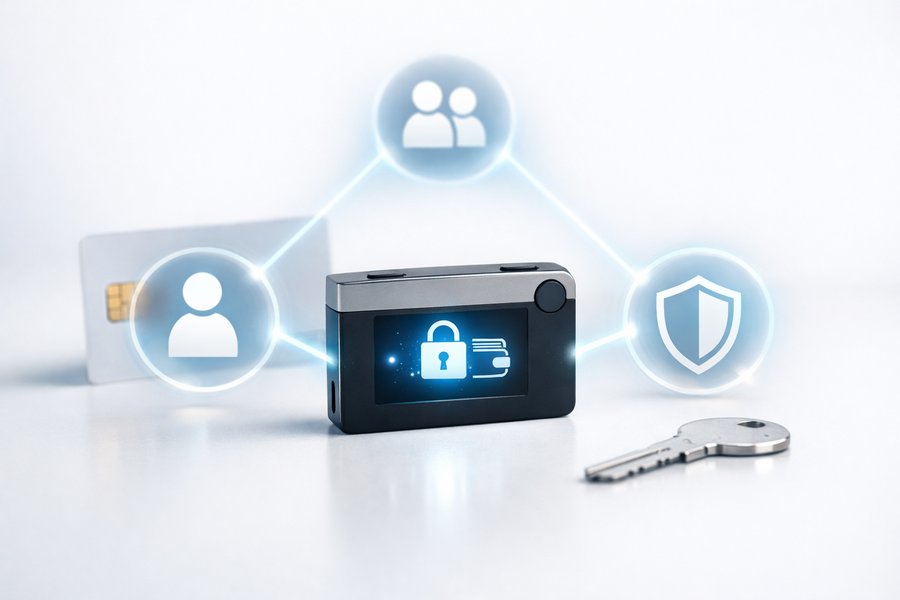
Social recovery offers a fundamentally different approach to this challenge by replacing cryptographic secrets with human relationships. Rather than entrusting wallet access to a fragile string of words written on paper, social recovery systems allow users to designate trusted contacts, known as guardians, who can collectively restore access when needed. This model mirrors how people naturally protect important assets in the physical world, relying on family members, close friends, and trusted advisors rather than hiding everything in a single location. The technology enabling social recovery has matured significantly since its initial conception, with smart contract platforms now supporting sophisticated guardian configurations that maintain decentralization while providing meaningful protection against permanent loss.
The emergence of account abstraction through Ethereum’s ERC-4337 standard has accelerated social recovery adoption by providing the programmable infrastructure necessary for complex recovery logic. Over forty million smart accounts have been deployed across Ethereum and Layer 2 networks, with nearly twenty million of those deployments occurring in 2024 alone. This growth reflects increasing recognition that sustainable cryptocurrency adoption requires security models that accommodate human fallibility rather than punishing it. Social recovery represents a paradigm shift in how the industry thinks about wallet security, moving away from cryptographic absolutism toward systems that balance mathematical certainty with practical usability.
The technical sophistication underlying social recovery systems belies their user-friendly intent. Smart contracts executing on decentralized networks can now enforce complex recovery rules involving multiple parties, time delays, and customizable approval thresholds, all without requiring users to understand the underlying cryptography. This abstraction layer transforms wallet recovery from a technical challenge into a social coordination exercise that feels natural to users accustomed to relying on trusted relationships for important matters. The convergence of improved infrastructure, growing user demand, and competitive pressure among wallet providers has created conditions for social recovery to transition from experimental feature to industry standard.
Understanding Wallet Security and the Recovery Challenge
Cryptocurrency wallets function as digital safes that store the cryptographic keys necessary to authorize transactions on blockchain networks. Unlike physical safes that contain actual valuables, cryptocurrency wallets do not technically store any coins or tokens. Instead, they hold private keys that prove ownership of assets recorded on distributed ledgers. This distinction matters because it explains why losing wallet access differs fundamentally from losing physical possessions. The cryptocurrency itself continues to exist on the blockchain, visible to anyone examining the public ledger, but without the corresponding private key, those assets become permanently frozen in place.
The private key serves as the ultimate proof of ownership in cryptocurrency systems. When users send transactions, they sign those transactions with their private key, creating a mathematical proof that only the legitimate owner could have produced. Blockchain networks verify these signatures against public keys associated with each wallet address, ensuring that only authorized parties can move funds. This cryptographic foundation provides powerful security guarantees when properly implemented, but it creates an equally powerful vulnerability when private keys are lost or compromised. There exists no central authority capable of overriding this mathematical reality, no customer service representative who can restore access through identity verification, and no appeals process for users who lose their credentials.
Seed phrases emerged as the cryptocurrency industry’s primary solution to the private key management problem. These phrases consist of randomly generated words from a standardized dictionary, typically containing twelve or twenty-four words arranged in a specific sequence. The mathematical relationship between seed phrases and private keys allows users to regenerate their wallet credentials from this word list, providing a human-readable backup for otherwise incomprehensible cryptographic data. Wallet software generates these phrases during initial setup, instructing users to write them down and store them securely. The assumption underlying this approach is that users will reliably maintain these backups over time, protecting them from theft while ensuring they remain accessible when needed.
The security model of traditional cryptocurrency wallets places enormous responsibility on individual users without providing adequate tools for meeting that responsibility. Studies estimate that twenty percent of all Bitcoin is permanently inaccessible due to lost or mishandled seed phrases, representing over one hundred twenty billion dollars at recent market valuations. This figure continues to grow as more users enter the cryptocurrency space without fully understanding the permanence of key loss. The industry has normalized a security paradigm that would be considered unacceptably risky in virtually any other context, expecting everyday users to maintain perfect custody of critical credentials over potentially decades-long investment horizons.
The contrast with traditional financial services underscores the unique challenges of cryptocurrency self-custody. Banks maintain extensive customer service infrastructure specifically designed to handle account access issues, with verification procedures that balance security against accessibility. Credit card companies can issue replacement cards, reset passwords, and verify identity through multiple channels. These recovery mechanisms exist because financial institutions recognize that humans inevitably forget passwords, lose documents, and make mistakes in record-keeping. Cryptocurrency’s design philosophy rejected this safety net in favor of mathematical certainty, creating systems that work perfectly when users perform flawlessly but fail catastrophically when human error intervenes.
The irreversibility of blockchain transactions compounds the severity of wallet access loss. Unlike traditional financial systems where fraudulent transactions can often be reversed through institutional intervention, cryptocurrency transfers are final once confirmed on the network. This irreversibility provides important benefits for transaction settlement and censorship resistance, but it also means that errors, whether from user mistakes or security breaches, produce permanent consequences. Users who lose wallet access cannot appeal to any authority for relief, and those whose credentials are stolen typically have no recourse for fund recovery. The same properties that make cryptocurrency resistant to institutional control also make it resistant to institutional help.
Traditional Recovery Methods and Their Vulnerabilities
The most common approach to protecting seed phrases involves writing them on paper and storing that paper in a secure location such as a home safe or bank deposit box. This method works reasonably well for users who maintain organized record-keeping systems and remember where they stored their backups years later. However, paper degrades over time, safes can be compromised during burglaries, and bank deposit boxes may become inaccessible due to unpaid fees or legal complications. The James Howells case from 2013 illustrates the extreme consequences of backup failure, when the Welsh IT worker accidentally discarded a hard drive containing 7,500 Bitcoin, now worth hundreds of millions of dollars. Despite years of effort and multiple proposals to excavate the landfill where his drive likely rests, Howells has never recovered his funds.
Hardware wallets represent an evolution in cryptocurrency security by storing private keys on dedicated devices that never expose those keys to potentially compromised computers. Manufacturers like Ledger and Trezor have built substantial businesses around these products, which provide strong protection against remote hacking attacks. Yet hardware wallets still depend on seed phrase backups for recovery purposes, meaning they inherit all the vulnerabilities associated with seed phrase management. When users lose their hardware wallet and cannot locate their seed phrase backup, they face the same permanent lockout scenario that affects software wallet users. The physical nature of hardware wallets also introduces additional failure modes including device malfunction, damage from environmental factors, and obsolescence as manufacturers discontinue support for older products.
Custodial solutions offered by cryptocurrency exchanges represent the opposite extreme of the security spectrum, eliminating seed phrase management by transferring key custody to professional organizations. Exchanges like Coinbase and Binance maintain private keys on behalf of their users, offering familiar password reset mechanisms that mirror traditional banking experiences. This approach successfully addresses the usability challenges of self-custody, but it fundamentally compromises the core value proposition of cryptocurrency by reintroducing trusted intermediaries. Exchange users face counterparty risk from potential exchange insolvency, regulatory seizure, or security breaches affecting the custodian. The collapse of FTX in 2022 demonstrated these risks dramatically, leaving millions of users unable to access billions of dollars in deposited funds.
Multi-signature wallets provide enhanced security by requiring multiple private keys to authorize transactions, distributing trust across several parties rather than concentrating it in a single point of failure. Organizations commonly use multi-signature configurations to ensure that no individual can unilaterally move funds, requiring consensus among designated signers. While multi-signature arrangements offer meaningful protection against internal theft and external compromise of individual keys, they introduce coordination complexity that most individual users find impractical. Managing multiple keys across different devices and locations multiplies the administrative burden of cryptocurrency ownership while still ultimately depending on seed phrase backups for each participating key.
The practical limitations of multi-signature wallets become apparent when considering the coordination requirements for routine transactions. Every transaction requires signatures from the threshold number of key holders, creating delays and communication overhead that impede normal wallet usage. Organizations with dedicated staff and established procedures can manage this complexity, but individual users typically lack the resources and motivation for such rigorous operational security. The multi-signature approach also does not address the fundamental recovery problem, as each participating key still requires its own backup mechanism that can fail independently.
Cloud backup solutions represent another attempt to bridge the gap between security and accessibility, allowing users to store encrypted versions of their credentials on services like iCloud or Google Drive. This approach leverages the redundancy and accessibility of cloud infrastructure while maintaining some level of encryption protection. However, cloud backups introduce new attack surfaces including service provider data breaches, account compromise through password reuse or phishing, and potential access by state actors through legal processes. The security of cloud-backed credentials depends on encryption key management, which ultimately returns to the same fundamental challenge of protecting critical secrets.
The fundamental tension between security and usability remains unresolved in traditional recovery paradigms, creating space for alternative approaches that address human factors more directly. Each existing method makes different tradeoffs along this spectrum, but none successfully achieves both strong security guarantees and practical usability for mainstream users. Hardware wallets sacrifice accessibility for security, custodial solutions sacrifice sovereignty for convenience, and seed phrases sacrifice recoverability for decentralization. Social recovery emerged from the recognition that this tradeoff space might be expanded through systems that leverage human relationships rather than fighting against human limitations.
How Social Recovery Systems Work
Social recovery fundamentally reimagines wallet security by replacing isolated cryptographic secrets with distributed trust networks. Instead of depending entirely on a seed phrase that users must protect independently, social recovery systems allow wallets to recognize recovery requests approved by designated trusted parties called guardians. These guardians cannot access funds or initiate transactions under normal circumstances, but they gain the collective ability to restore wallet control when the original owner loses access. The underlying philosophy treats wallet recovery as a social coordination problem rather than a purely technical challenge, acknowledging that humans naturally protect important assets through relationships rather than through solitary secret-keeping.
The technical foundation enabling social recovery relies on smart contracts, self-executing programs that run on blockchain networks and enforce predefined rules without requiring trusted intermediaries. When users create social recovery wallets, they deploy smart contracts that define both the normal operating conditions and the recovery procedures for their accounts. These contracts specify which guardians have been authorized, how many must agree to approve a recovery request, and what waiting periods apply before recovered access becomes active. All of these parameters live on the blockchain itself, visible and verifiable by anyone but modifiable only according to the rules established in the contract code.
Smart contract wallets differ architecturally from traditional externally owned accounts that most cryptocurrency users encounter. Externally owned accounts derive their authority entirely from private key signatures, creating the all-or-nothing security model that makes seed phrase loss so catastrophic. Smart contract wallets, by contrast, can implement arbitrary logic governing account control, including recovery procedures that do not require the original private key. This programmability enables social recovery by allowing contracts to recognize legitimate recovery requests based on guardian approvals rather than cryptographic proofs that only the original key holder could produce. The account abstraction movement has standardized interfaces for these smart contract wallets, making them increasingly accessible to mainstream users and application developers.
The recovery process in social recovery systems typically involves several stages designed to balance accessibility with security against unauthorized recovery attempts. When users lose access to their primary device or signing key, they initiate a recovery request through the wallet interface, identifying themselves and the guardians who will verify their claim. The system then notifies designated guardians of the pending request, prompting them to confirm through their own wallets that the recovery is legitimate. Once a sufficient number of guardians approve, the smart contract initiates a waiting period before transferring control to the new device or key. This waiting period provides a crucial safety window during which the original owner can cancel fraudulent recovery attempts if their account has been targeted by attackers rather than genuinely lost.
The user experience of social recovery has been refined through years of implementation experience and user feedback. Modern social recovery wallets guide users through guardian selection during initial setup, explaining the importance of choosing appropriate trusted parties and configuring reasonable thresholds. Recovery interfaces similarly prioritize clarity and reassurance, walking users through each step of the process and providing status updates as guardian approvals arrive. This attention to user experience reflects the understanding that social recovery’s success depends not just on technical functionality but on user willingness to engage with the system when needed.
The verification mechanisms employed during recovery help ensure that guardian approvals correspond to legitimate requests rather than sophisticated impersonation attempts. Argent’s emoji-based verification system generates random emoji sequences that both the recovering user and approving guardians must confirm match, creating a shared secret that attackers cannot easily obtain without compromising the communication channel between parties. Other implementations use cryptographic challenges, out-of-band verification codes, or video confirmation protocols to establish authenticity. These verification layers add friction to the recovery process but significantly reduce the risk of social engineering attacks targeting well-meaning guardians.
The Guardian Model and Trust Networks
Guardian selection represents the most consequential decision users make when configuring social recovery wallets, as the security of the entire system depends on choosing appropriate trusted parties. Guardians typically fall into several categories based on their relationship to the wallet owner and the trust assumptions underlying their selection. Personal guardians include family members, close friends, and trusted colleagues who know the wallet owner well enough to verify their identity during recovery situations. These guardians provide strong authentication through existing relationships but may face coordination challenges if they live in different locations or lack technical familiarity with cryptocurrency systems.
Institutional guardians offer professional recovery services, accepting guardian responsibilities in exchange for fees or as part of broader custody service agreements. Companies like Coincover have emerged specifically to fill this role, providing regulated entities that can participate in guardian networks alongside personal contacts. Institutional guardians bring reliability and availability that personal contacts may lack, maintaining operational readiness to respond to recovery requests on short notice. However, relying heavily on institutional guardians reintroduces some centralization concerns that social recovery aims to address, particularly if users concentrate guardian authority among a small number of service providers.
Hardware device guardians allow users to designate their own secondary devices as recovery participants, using hardware wallets or smartphones they control as additional verification factors. This approach keeps recovery authority entirely within the user’s control while still distributing it across multiple devices that would need to be compromised simultaneously for unauthorized access. Users might designate a Ledger hardware wallet stored in a bank deposit box as one guardian while keeping their primary access on a mobile device. The diversity of guardian types enables highly customized configurations that reflect individual risk tolerances and social circumstances.
Threshold configurations determine how many guardians must approve recovery requests before the smart contract transfers account control. Common configurations use M-of-N schemes where M represents the approval threshold and N represents the total number of guardians. A three-of-five configuration, for example, requires any three guardians from a set of five to approve recovery, providing redundancy that protects against unresponsive or unavailable guardians while still requiring meaningful consensus. Higher thresholds increase security against collusion among guardians but raise the difficulty of completing legitimate recoveries. Lower thresholds improve recovery accessibility but create larger attack surfaces for social engineering attempts targeting multiple guardians.
Time delays add another security layer by introducing mandatory waiting periods between recovery approval and account access restoration. Argent, one of the pioneering social recovery wallet providers, implements a forty-eight hour delay during which the original owner can cancel recovery attempts they did not initiate. This window protects users whose guardians might be deceived by sophisticated impersonators, giving legitimate owners time to detect and respond to unauthorized recovery attempts. The combination of guardian thresholds and time delays creates layered defenses that address both collusion risks and impersonation attacks, providing security guarantees that pure seed phrase systems cannot match while maintaining the user-friendliness that mainstream adoption requires.
The design of time delay mechanisms requires careful consideration of competing security concerns. Longer delays provide more opportunity for original owners to detect and respond to unauthorized recovery attempts, but they also extend the window during which users remain locked out of legitimate recovery situations. Emergency scenarios where users need immediate access to funds create particular tension, as the same delays that protect against attackers also prevent rapid response to urgent circumstances. Some implementations offer configurable delay periods that allow users to balance these concerns according to their individual situations, though shorter delays necessarily accept higher risk of successful unauthorized recovery.
Guardian networks can evolve over time as relationships change, guardians become unavailable, or users develop better understanding of their security needs. Social recovery systems typically provide mechanisms for adding new guardians, removing existing ones, and adjusting threshold requirements without requiring complete wallet reconstruction. These modifications usually involve their own security procedures including time delays and existing guardian approvals, preventing attackers who have compromised a user’s primary access from silently modifying the recovery configuration. The ability to maintain and update guardian networks over time distinguishes social recovery from static backup approaches that resist modification once established.
The social dynamics of guardian relationships deserve consideration beyond purely technical security analysis. Asking someone to serve as a guardian creates reciprocal obligations and expectations that may affect the underlying relationship. Guardians may feel honored by the trust implicit in their selection or burdened by the responsibility they have accepted. Recovery requests may create awkward situations if guardians have doubts about the requester’s identity or motivations. These human factors influence whether social recovery functions effectively in practice, making guardian selection a social decision as much as a technical one.
Leading Social Recovery Implementations
The social recovery landscape has evolved significantly since the concept first emerged, with multiple projects now offering production-ready implementations serving millions of users. The infrastructure supporting these systems has matured alongside growing demand for alternatives to seed phrase dependency, particularly as cryptocurrency valuations have increased the stakes associated with wallet security failures. Account abstraction standards have played a crucial role in this evolution, providing common interfaces that enable interoperability between wallets, applications, and recovery service providers while reducing the development burden for new entrants.
Ethereum’s ERC-4337 standard, which launched on mainnet in March 2023, established the technical foundation for the current generation of smart contract wallets with programmable recovery features. This standard introduced user operations as an alternative to traditional transactions, allowing smart contracts to define custom validation logic that can include social recovery rules. The ecosystem response exceeded initial expectations, with adoption metrics showing substantial growth throughout 2024. Over forty million smart accounts have been deployed across Ethereum and its Layer 2 scaling networks, with nearly twenty million of those deployments occurring during 2024 alone. Transaction volume followed similar patterns, with over one hundred million user operations processed during 2024, representing a tenfold increase from the previous year.
Network distribution reveals interesting patterns in social recovery adoption across different blockchain platforms. Base, the Coinbase-incubated Layer 2 network, has seen particularly strong growth in smart account deployments, benefiting from low transaction costs and integration with the exchange’s substantial user base. Polygon and Optimism also rank among the leading networks for ERC-4337 adoption, each supporting millions of smart accounts that can implement social recovery features. The concentration of activity on Layer 2 networks reflects practical considerations around transaction costs, as the gas fees required for smart contract interactions on Ethereum mainnet can make recovery operations prohibitively expensive during periods of network congestion.
The competitive landscape includes both specialized wallet providers focused primarily on consumer self-custody and broader infrastructure platforms serving institutional and developer audiences. Specialized providers typically emphasize user experience and accessibility, designing interfaces that hide technical complexity while guiding users through guardian configuration and recovery procedures. Infrastructure platforms offer more flexible building blocks that developers can integrate into custom applications, serving use cases ranging from gaming and social platforms to decentralized finance protocols. Both approaches contribute to ecosystem growth by expanding the range of users and applications that can benefit from social recovery security models.
Developer tools and software development kits have emerged to support integration of social recovery features into diverse applications. Wallet-as-a-Service providers offer turnkey solutions that allow application developers to embed smart account functionality without building wallet infrastructure from scratch. These services handle the complex infrastructure requirements including bundler operations, paymaster management, and smart contract deployment, allowing developers to focus on application-specific features. The availability of these tools has accelerated social recovery adoption by reducing the technical barriers to implementation.
Interoperability standards enable users to maintain consistent recovery configurations across multiple applications and networks. ERC-4337 established common interfaces that different wallet implementations can support, reducing fragmentation in the smart account ecosystem. Users can potentially recover their accounts through any compatible interface rather than depending on a single wallet provider, though practical interoperability remains limited by implementation differences and proprietary features. The standards development process continues to refine these interfaces based on production experience and emerging use cases.
Smart Contract Wallet Solutions
Argent pioneered consumer-focused social recovery when it launched in 2018, introducing the guardian concept that has since become standard across the industry. The London-based company built its wallet specifically around the premise that seed phrases create unacceptable barriers to mainstream adoption, designing every aspect of the user experience to eliminate dependency on cryptographic backups. Argent wallets deploy as smart contracts on Ethereum, with each user receiving a unique contract address that implements the guardian and recovery logic. The company’s approach has attracted over two million downloads, establishing it as one of the most widely used smart contract wallets in the ecosystem.
The Argent guardian system allows users to designate multiple trusted parties who can collectively restore wallet access without ever possessing the ability to steal funds independently. Guardians can include other Argent users, hardware wallets like Ledger and Trezor, or the company’s own default guardian service that uses phone and email verification. When users need to recover their wallet, they install the Argent application on a new device and enter their username to initiate the process. The system contacts designated guardians who must approve the recovery request through their own devices, with emoji-based verification codes ensuring that guardians authenticate the correct recovery attempt. Once a majority of guardians approve, the smart contract transfers wallet control after a mandatory forty-eight hour waiting period designed to allow the original owner to cancel fraudulent attempts.
Safe, formerly known as Gnosis Safe, has emerged as the dominant smart contract wallet platform for institutional and high-value use cases, securing over one hundred billion dollars in digital assets across its deployed contracts. In late 2023, Safe introduced the RecoveryHub feature, creating a marketplace of recovery options that allows users to customize their security configurations according to individual needs and preferences. The RecoveryHub supports multiple recovery approaches including self-custody recovery using secondary devices, social recovery with friends and family, and third-party recovery through institutional partners like Sygnum Bank and Coincover. This flexibility acknowledges that different users have different trust models and risk tolerances, providing options ranging from fully self-sovereign configurations to hybrid approaches that incorporate professional recovery services.
The partnership between Safe and Sygnum, a Swiss-regulated bank with over 3.5 billion Swiss francs in institutional custody, illustrates the convergence between traditional finance and decentralized recovery systems. Sygnum can serve as a guardian for Safe wallet users, providing institutional-grade recovery capabilities backed by regulatory compliance and professional operational standards. Similarly, Coincover offers insurance-backed recovery services specifically designed for cryptocurrency wallets, providing both guardian participation and financial coverage for recovery failures. These partnerships expand the range of users who can confidently adopt self-custody, addressing concerns from individuals and organizations that require more formal recovery guarantees than purely social arrangements can provide.
Account abstraction has enabled additional innovations beyond basic social recovery, including session keys that allow limited transaction authorization without full wallet access, spending limits that prevent large unauthorized transfers, and automated transaction approval for trusted applications. Safe has embraced ERC-4337 through its Core SDK, allowing developers to build applications that leverage smart account features including gasless transactions where application providers cover network fees on behalf of users. This infrastructure development reduces friction throughout the user journey, making social recovery wallets increasingly competitive with traditional options from both security and usability perspectives.
The evolution of social recovery implementations reflects lessons learned from production deployments and security research. Early implementations sometimes made assumptions about user behavior that proved incorrect in practice, requiring adjustments to default configurations and user guidance. Security audits and vulnerability disclosures have driven improvements in smart contract code quality and operational procedures. The maturity of current implementations reflects years of iterative refinement based on real-world experience with millions of users and significant assets under management.
Cross-chain considerations add complexity as users increasingly hold assets across multiple blockchain networks. A user might have significant holdings on Ethereum mainnet, Polygon, Arbitrum, and Base, each potentially requiring separate wallet configurations and guardian networks. Some implementations offer unified recovery configurations that span multiple networks, while others require separate setup for each chain. The fragmentation of the blockchain ecosystem creates ongoing challenges for consistent social recovery experiences, though standards efforts and wallet provider initiatives are working to address these limitations.
The business models supporting social recovery wallet development vary across providers, with some generating revenue through transaction fees, others through premium service offerings, and still others through token-based economic models. Sustainable business models matter for user security because they determine whether providers can maintain development teams, security audit programs, and customer support operations over the long term. Users evaluating social recovery wallets should consider provider viability alongside technical features, as wallet abandonment could create complications for future recovery scenarios.
Benefits and Opportunities for Stakeholders
Individual cryptocurrency holders represent the most direct beneficiaries of social recovery systems, gaining protection against the permanent loss scenarios that have haunted self-custody since Bitcoin’s earliest days. The psychological burden of sole responsibility for cryptographic credentials weighs heavily on users, particularly those holding significant values accumulated over years of investment. Social recovery alleviates this burden by distributing risk across multiple parties while maintaining the core self-custody principle that no single entity can seize or freeze user funds. Users can sleep better knowing that a forgotten password, lost device, or hardware failure will not permanently separate them from their digital assets.
The forty-eight percent of cryptocurrency users who report anxiety about self-custody mistakes in the Kraken survey represent a substantial market segment that social recovery specifically addresses. These users want the benefits of true ownership but hesitate to accept the unforgiving nature of traditional wallet security. Social recovery provides a middle path that preserves ownership benefits while adding recovery capabilities familiar from traditional financial services. The ability to designate trusted contacts as guardians feels natural to users accustomed to naming beneficiaries on bank accounts or giving spare house keys to neighbors. This familiarity reduces the learning curve for cryptocurrency adoption while maintaining meaningful security guarantees.
Institutional investors face additional considerations when evaluating custody solutions for digital assets under their management. Fiduciary responsibilities require institutions to implement appropriate safeguards against both external threats and operational failures, creating compliance requirements that traditional seed phrase approaches struggle to satisfy. Social recovery configurations can address these requirements by distributing recovery authority across multiple internal stakeholders, ensuring that no single employee can unilaterally access or lose access to institutional holdings. The involvement of regulated entities like Sygnum as potential guardians further strengthens compliance positions by adding institutional-grade oversight to recovery procedures.
Decentralized finance protocols benefit from social recovery adoption among their users by reducing the frequency of permanently locked assets that create awkward situations for platform governance. When users lose access to wallets containing tokens staked in DeFi protocols, those assets effectively exit circulation without any mechanism for reallocation. Social recovery reduces this problem by helping users maintain access to their positions over time, improving capital efficiency across the ecosystem. Protocol developers can also integrate social recovery features directly into their platforms, offering users enhanced security as part of the native platform experience rather than requiring separate wallet management.
Application developers gain new design possibilities when building on smart account infrastructure that supports social recovery and related features. Gaming applications can implement recoverable in-game asset wallets that protect player investments without requiring technical sophistication. Social platforms can offer recoverable identity solutions where user accounts persist across device changes through guardian-based verification. Financial applications can provide graduated security options that balance accessibility for everyday transactions against stronger protection for large transfers. The programmability of smart contract wallets enables creative solutions that would be impossible with traditional externally owned accounts, expanding the design space for Web3 applications.
Hardware wallet manufacturers might initially view social recovery as competitive to their products, but the relationship is actually complementary in practice. Hardware wallets serve as excellent guardians within social recovery configurations, providing cold storage security for recovery credentials without requiring users to manage additional seed phrases. Users can designate their Ledger or Trezor devices as guardians that must participate in recovery approvals, adding hardware-level security to the social recovery process. This integration preserves the security benefits of hardware wallets while addressing their recovery limitations through the broader social recovery framework.
The broader Web3 ecosystem benefits from increased mainstream adoption that social recovery enables by lowering barriers to self-custody participation. Each user who successfully maintains self-custody through social recovery rather than abandoning cryptocurrency due to security anxiety contributes to network effects that strengthen decentralized systems. More self-custody users mean more demand for decentralized applications, more participation in governance processes, and more resilience against centralized points of failure. Social recovery thus serves ecosystem development goals beyond individual user benefits, supporting the long-term vision of decentralized systems that serve global populations.
Challenges and Security Considerations
Guardian collusion represents the most fundamental security concern in social recovery systems, arising from the same trust distribution that enables recovery functionality. If a sufficient number of guardians coordinate to approve an unauthorized recovery request, they can potentially seize control of a user’s wallet without the original owner’s consent. This attack requires compromising the threshold number of guardians, whether through bribery, coercion, or social engineering, making guardian selection critically important to system security. Users who carelessly choose guardians based on convenience rather than trustworthiness expose themselves to collusion risks that would not exist in pure seed phrase systems.
The mathematics of threshold configurations create specific risk profiles that users should understand when designing their guardian networks. A three-of-five configuration requires compromising three guardians for unauthorized access, while a four-of-seven configuration raises that requirement to four. Higher thresholds provide stronger collusion resistance but increase the difficulty of legitimate recovery when guardians become unavailable. Users must balance these considerations against their specific circumstances, accounting for factors like geographic distribution of guardians, strength of relationships, and technical sophistication of potential attackers. There exists no universally optimal configuration, only tradeoffs appropriate to individual situations.
Social engineering attacks targeting guardians pose substantial risks, particularly when attackers can research guardian identities through social media or other public sources. Sophisticated attackers might impersonate the wallet owner convincingly, fabricating emergency scenarios that pressure guardians into approving recovery requests without proper verification. The emoji-based verification systems implemented by wallets like Argent help mitigate this risk by creating shared secrets that attackers cannot easily obtain, but determined adversaries may find ways to circumvent these protections. Guardians must understand their security responsibilities and maintain appropriate skepticism about recovery requests, even when they appear to come from trusted contacts.
Smart contract vulnerabilities have historically created risks for all smart contract wallet implementations, including those supporting social recovery. In 2020, security researchers at OpenZeppelin discovered a high-severity vulnerability in Argent’s wallet contracts that would have allowed attackers to seize control of wallets with zero guardians configured. The vulnerability existed in the recovery manager contract, where the logic for determining required guardian signatures could return zero for wallets without guardians, enabling anyone to initiate and complete unauthorized recoveries. Argent addressed the issue by updating their contracts and encouraging affected users to add at least one guardian, but the incident illustrates the ongoing security challenges inherent in smart contract systems.
Time delay mechanisms provide important protection but may prove insufficient against patient attackers who can wait out the security window while preventing the original owner from canceling unauthorized recoveries. If attackers compromise the user’s primary device and initiate recovery while also blocking the user’s ability to receive notifications about the recovery attempt, they might successfully complete the attack during the delay period. Wallet providers attempt to address this through multiple notification channels and prominent warnings about pending recovery requests, but users who are traveling, incapacitated, or otherwise disconnected might miss these alerts.
The tension between decentralization and usability manifests in guardian management interfaces that must balance security education against user experience friction. Comprehensive guardian configuration requires users to understand threshold mathematics, evaluate trust relationships honestly, and maintain updated guardian information over time as relationships change. Most users lack the motivation or expertise for this level of engagement, creating pressure on wallet providers to offer simplified configurations that may not optimally serve individual circumstances. Default configurations necessarily make assumptions about typical user needs that may not apply universally, potentially creating systematic vulnerabilities across large user populations.
Regulatory uncertainty affects social recovery systems in jurisdictions where guardian responsibilities might trigger compliance requirements for recovery service providers. Institutional guardians like Sygnum and Coincover operate within existing regulatory frameworks, but the legal status of informal guardian arrangements remains unclear in many jurisdictions. Questions about guardian liability for recovery failures or unauthorized approvals have not been tested in court, creating uncertainty for users considering whether to accept guardian responsibilities. This regulatory ambiguity may slow adoption among risk-averse users and institutions until clearer legal frameworks emerge.
Recovery from guardian loss creates recursive challenges when guardians themselves lose access to their wallets or become permanently unavailable due to death, incapacitation, or relationship breakdown. Users must maintain their guardian configurations over time, replacing unavailable guardians before reaching the point where recovery becomes impossible due to insufficient available approvers. This ongoing maintenance requirement reintroduces some of the management burden that social recovery aims to reduce, though the burden is arguably less severe than maintaining seed phrase backups across decades-long investment horizons.
The privacy implications of guardian networks deserve attention, as guardian relationships reveal information about users’ social connections and trust hierarchies. On public blockchain networks, guardian addresses and approval transactions are visible to anyone examining the chain, potentially exposing relationship information that users might prefer to keep private. Some implementations use privacy-preserving techniques to obscure guardian identities, but these add complexity and may reduce the practical benefits of social verification. Users with strong privacy requirements should evaluate how different implementations handle guardian confidentiality.
The education challenges facing social recovery adoption extend beyond individual user understanding to broader societal awareness of these security options. Many cryptocurrency users remain unaware that alternatives to seed phrases exist, continuing to rely on traditional backup approaches despite their documented limitations. Wallet providers, educators, and industry advocates share responsibility for communicating the availability and benefits of social recovery, reaching users before they experience the permanent losses that traditional approaches enable.
Final Thoughts
Social recovery represents more than a technical improvement to cryptocurrency wallet security; it embodies a philosophical shift toward designing systems that accommodate human nature rather than demanding that humans adapt to technological constraints. The seed phrase paradigm assumed that users would reliably perform cryptographic key management tasks historically reserved for professional security specialists, an assumption that billions of dollars in lost cryptocurrency has thoroughly disproven. Social recovery acknowledges that humans are social creatures who naturally rely on relationships and community for protection, integrating this fundamental aspect of human behavior into the security model rather than treating it as a vulnerability to be eliminated.
The implications of this shift extend beyond individual user convenience to questions of financial inclusion and equitable access to emerging economic systems. Cryptocurrency advocates have long promoted the technology as a tool for banking the unbanked and providing financial services to populations underserved by traditional institutions. Yet the technical barriers of seed phrase management have concentrated cryptocurrency ownership among technically sophisticated early adopters, contradicting the democratizing vision that motivated much of the technology’s development. Social recovery lowers these barriers by providing recovery mechanisms that feel familiar to users worldwide, requiring only trusted relationships rather than specialized technical knowledge.
The intersection between technological capability and social responsibility becomes particularly apparent when considering who benefits from improved wallet accessibility. Elderly users, who represent a disproportionate share of cryptocurrency fraud victims, often struggle with the cognitive demands of cryptographic key management. Users in developing economies may lack access to secure physical storage options for seed phrase backups. Users experiencing domestic instability may be unable to maintain consistent access to stored credentials. Social recovery addresses these diverse circumstances through flexible guardian configurations that can adapt to individual social contexts, extending self-custody benefits to populations that traditional approaches effectively exclude.
Ongoing challenges in guardian management, smart contract security, and regulatory clarity require continued attention from developers, policymakers, and users themselves. The technology remains relatively young, with best practices still emerging through real-world experience and occasional security incidents. Users adopting social recovery today should approach guardian selection thoughtfully, maintain awareness of their wallet provider’s security practices, and stay informed about developments in the rapidly evolving smart account ecosystem. The providers building this infrastructure bear responsibility for transparent communication about risks, prompt response to discovered vulnerabilities, and user education that empowers informed decision-making.
The trajectory of social recovery development suggests increasing integration into mainstream cryptocurrency infrastructure, driven by both user demand and competitive pressure among wallet providers. As account abstraction standards mature and Layer 2 networks reduce transaction costs, the practical barriers to smart contract wallet adoption continue to decline. The coming years will likely see social recovery transition from a differentiating feature to a baseline expectation, much as two-factor authentication evolved from a security innovation to a standard practice across digital services. This normalization would represent a meaningful step toward cryptocurrency systems that serve human needs rather than demanding human adaptation to technological limitations.
FAQs
- What is a social recovery wallet and how does it differ from a traditional cryptocurrency wallet?
A social recovery wallet is a smart contract-based wallet that allows users to recover access through trusted contacts called guardians rather than relying solely on seed phrases. Traditional wallets depend entirely on cryptographic backups that are permanently lost if users forget or misplace them. Social recovery wallets maintain the security benefits of self-custody while adding a human-centered recovery mechanism that can restore access even when the original credentials are unavailable. - Who should I choose as guardians for my social recovery wallet?
Guardians should be trustworthy individuals or entities who can reliably respond to recovery requests and who would never collude to access your funds without authorization. Common choices include close family members, trusted friends, hardware wallets you control, and professional recovery services. Consider geographic distribution to avoid situations where all guardians become simultaneously unavailable, and choose people who understand the responsibility involved in approving recovery requests. - Can my guardians access my cryptocurrency or see my transactions?
No, guardians cannot access your funds or view your transaction history under normal circumstances. Their only capability is participating in recovery approvals when you initiate a recovery request. Even during recovery, guardians act collectively according to the threshold you configured, meaning no single guardian can unilaterally access your account. The guardian role is specifically designed to enable recovery without compromising everyday security. - What happens if one of my guardians loses access to their own wallet or becomes unavailable?
Social recovery systems are designed with redundancy through threshold configurations. If you set a three-of-five guardian requirement, you only need three available guardians to complete recovery, providing protection against one or two unavailable guardians. However, you should proactively update your guardian list when relationships change or guardians become permanently unavailable to maintain your intended security level. - How long does the social recovery process take?
Recovery timelines vary by wallet provider but typically include a mandatory waiting period for security purposes. Argent implements a 48-hour delay between guardian approval and access restoration, giving the original owner time to cancel unauthorized recovery attempts. The total process duration also depends on how quickly your guardians respond to approval requests, making guardian responsiveness an important selection consideration. - Are social recovery wallets more expensive to use than traditional wallets?
Social recovery wallets incur smart contract transaction costs that traditional externally owned accounts do not require. On Ethereum mainnet, these costs can be significant during network congestion. However, Layer 2 networks like Base, Polygon, and Optimism offer dramatically lower fees, often reducing transaction costs to pennies. Some wallet providers also offer gasless transactions where they cover network fees on behalf of users. - What is account abstraction and how does it relate to social recovery?
Account abstraction, standardized through Ethereum’s ERC-4337, allows smart contracts to serve as primary accounts with programmable transaction validation. This technical foundation enables social recovery by allowing wallets to recognize recovery requests approved by guardians rather than requiring the original private key. Account abstraction also enables related features like gasless transactions, spending limits, and session keys that improve overall wallet usability. - Can I use a hardware wallet with social recovery?
Yes, hardware wallets can serve as guardians within social recovery configurations, combining cold storage security with social recovery flexibility. You might designate your Ledger or Trezor device as one guardian among several, requiring its participation in recovery approvals. This approach preserves hardware wallet security benefits while addressing their traditional recovery limitations through the broader social recovery framework. - What prevents my guardians from colluding to steal my cryptocurrency?
The primary protection against guardian collusion is careful guardian selection, choosing people or entities you trust not to coordinate against your interests. Technical safeguards include threshold requirements that demand multiple guardians collaborate, time delays that allow you to detect and cancel unauthorized attempts, and guardian diversity across different relationship categories. No system can fully prevent trusted parties from betraying that trust, making guardian selection the most important security decision. - Is social recovery available for all cryptocurrencies and blockchain networks?
Social recovery is currently most developed on Ethereum and Ethereum-compatible networks where smart contract wallets can implement guardian logic. Major Layer 2 networks including Base, Polygon, Optimism, and Arbitrum support ERC-4337 smart accounts with social recovery capabilities. Other blockchain ecosystems are developing similar functionality, but availability and feature maturity vary by network. Check specific wallet provider documentation for supported networks.