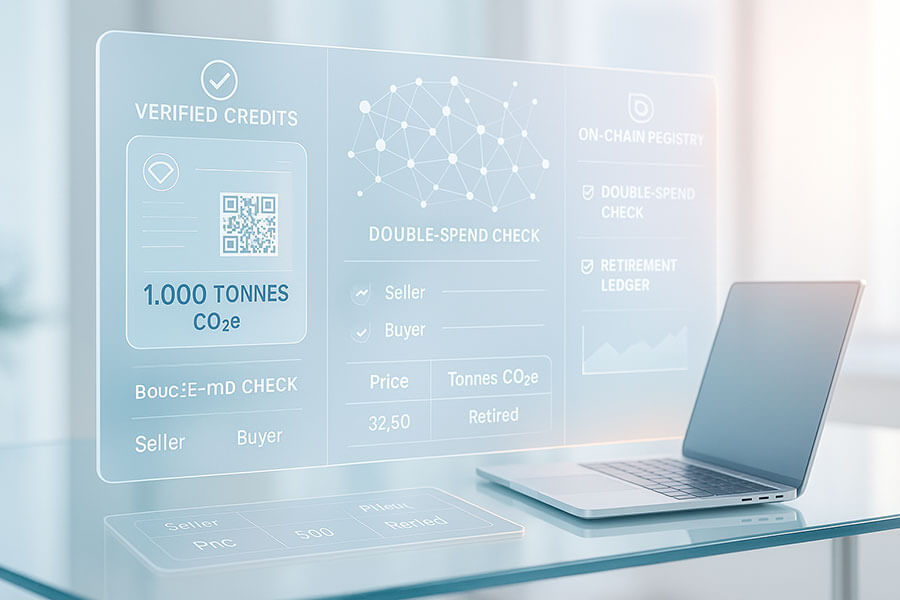
The fight against climate change has never been more urgent, and carbon offset markets have emerged as crucial tools in the global effort to reduce greenhouse gas emissions. These markets enable organizations and individuals to compensate for their carbon footprints by purchasing credits that represent verified emission reductions or removals achieved by environmental projects worldwide. Despite their potential, traditional carbon markets have long struggled with fundamental challenges that limit their effectiveness and accessibility.
The conventional carbon offset industry faces persistent issues that undermine confidence and restrict participation. Opacity in pricing and transactions makes it difficult for buyers to understand the true value of credits they purchase. High transaction costs create barriers that prevent smaller organizations and individuals from participating meaningfully in carbon offsetting. Complex verification processes and fragmented registry systems create opportunities for fraud, double-counting, and other forms of market manipulation that erode trust in the entire system. Meanwhile, access to carbon markets remains concentrated among large corporations and institutions with specialized knowledge and substantial resources, leaving smaller entities without practical pathways to contribute to climate solutions.
Enter Web3 technology—a revolutionary approach to digital infrastructure built on blockchain foundations that promises to transform carbon markets through decentralization, transparency, and automation. Web3 carbon offset marketplaces leverage distributed ledger technology to create trading platforms where verified carbon credits can be tokenized, tracked, and exchanged with unprecedented security and efficiency. These platforms address longstanding market failures by providing cryptographic proof of credit authenticity, preventing double-spending through immutable record-keeping, and enabling fractional ownership that makes carbon offsetting accessible to participants of all sizes.
The implications extend far beyond technical improvements to existing systems. Web3 carbon marketplaces represent a fundamental reimagining of how environmental assets are created, valued, and traded in the digital age. By eliminating intermediary gatekeepers and enabling direct peer-to-peer transactions, these platforms can dramatically reduce costs while increasing transparency. Smart contracts automate verification and retirement processes that traditionally require extensive manual oversight, reducing administrative burden while ensuring compliance with environmental standards. Most importantly, blockchain-based systems create permanent, publicly auditable records of all transactions, establishing levels of accountability that were previously impossible in traditional carbon markets.
This transformation comes at a critical juncture in the evolution of climate finance. As governments and corporations worldwide commit to ambitious net-zero emission targets, demand for high-quality carbon offsets continues to grow exponentially. The global voluntary carbon market reached nearly three billion dollars in value during recent years, with projections suggesting it could grow to fifty billion dollars or more by the end of this decade. Meeting this demand while maintaining environmental integrity requires innovative solutions that can scale efficiently without sacrificing transparency or accessibility. Web3 platforms offer precisely these capabilities, positioning blockchain technology as an essential infrastructure layer for the future of carbon markets.
Understanding how Web3 carbon marketplaces function and their potential to revolutionize environmental finance requires examining both the foundational concepts of carbon offsetting and the specific technical capabilities that blockchain systems bring to this domain. The journey toward decentralized carbon markets involves complex interactions between environmental science, financial innovation, and cutting-edge technology, all working together to create more effective tools for addressing one of humanity’s most pressing challenges.
Understanding Carbon Offset Markets
Carbon offset markets represent sophisticated financial mechanisms designed to incentivize emission reductions and support climate-positive projects through market-based approaches. These systems operate on a fundamental principle that has transformed environmental policy over recent decades—the idea that reducing greenhouse gas emissions can be treated as a tradable commodity with measurable economic value. Understanding how these markets function provides essential context for appreciating why Web3 innovations represent such significant advances in carbon finance.
At their core, carbon offsets are quantified units representing the reduction or removal of one metric ton of carbon dioxide equivalent from the atmosphere. Projects that generate these offsets range from renewable energy installations that displace fossil fuel consumption to reforestation initiatives that sequester carbon through natural processes. Each offset must undergo rigorous verification processes conducted by independent certification bodies that assess whether the claimed emission reductions are real, additional, permanent, and properly quantified. This verification requirement distinguishes legitimate carbon offsets from simple environmental claims, though the effectiveness of verification processes varies significantly across different standards and registries.
The carbon market ecosystem divides into two distinct segments that serve different purposes and operate under different rules. Compliance markets function under regulatory frameworks where governments cap total emissions and require regulated entities to hold sufficient allowances or offsets to cover their emissions. These mandatory systems, exemplified by programs like the European Union Emissions Trading System, create legally binding obligations that drive substantial investment in emission reduction activities. Voluntary markets, by contrast, allow organizations and individuals to purchase offsets proactively to meet sustainability goals, corporate social responsibility commitments, or personal environmental values. While voluntary markets lack regulatory enforcement mechanisms, they play increasingly important roles in channeling private capital toward climate projects and enabling entities to take responsibility for emissions beyond regulatory requirements.
Traditional carbon markets have achieved notable successes in mobilizing climate finance and supporting emission reduction projects worldwide. Over the past two decades, these markets have facilitated billions of dollars in investment flowing to renewable energy, energy efficiency, forestry conservation, and other climate-positive activities. Compliance markets in particular have demonstrated that market mechanisms can effectively drive emission reductions at scale, with some systems achieving measurable decreases in greenhouse gas output from regulated sectors. The expansion of carbon pricing globally reflects growing recognition that market-based approaches offer cost-effective tools for achieving climate goals while providing flexibility for regulated entities to find the most efficient pathways to compliance.
Traditional Systems and Their Limitations
Despite these achievements, conventional carbon offset markets suffer from structural deficiencies that limit their effectiveness and undermine confidence in their environmental integrity. The fundamental architecture of traditional systems relies heavily on centralized intermediaries, opaque processes, and fragmented infrastructure that create numerous opportunities for inefficiency and abuse. These limitations have become increasingly apparent as market participation has grown and scrutiny of offset quality has intensified.
Transparency represents perhaps the most significant challenge facing traditional carbon markets. Pricing information often remains closely guarded by brokers and intermediaries who profit from information asymmetries between buyers and sellers. Project developers in developing countries may receive a fraction of the price that corporate buyers ultimately pay, with intermediaries capturing substantial margins that provide questionable value. This opacity makes it difficult for market participants to assess fair value, understand quality differences among credits, or evaluate whether their purchases effectively support climate goals. When pricing and transaction details remain hidden, markets cannot function efficiently and trust erodes among participants who suspect they may be overpaying or receiving inferior products.
Verification and quality assurance processes in traditional markets face persistent challenges that create risks of environmental non-performance. Independent auditors must assess complex project claims using standards that may not adequately account for baseline scenarios, additionality requirements, or permanence risks. The remote locations and technical complexity of many projects make verification expensive and time-consuming, creating incentives to minimize scrutiny. Inconsistent application of standards across different certification bodies and project types further complicates quality assessment, leaving buyers uncertain about the environmental integrity of credits they purchase. Numerous investigations have revealed questionable practices in carbon offset projects, including overestimated emission reductions, projects that would have occurred regardless of carbon finance, and credits generated from activities that provide minimal climate benefit.
The problem of double-counting poses existential threats to market credibility. When the same emission reduction can be claimed by multiple parties or counted toward multiple climate goals, the environmental benefit becomes fictional rather than real. Traditional registry systems attempt to prevent double-counting through retirement mechanisms that permanently remove credits from circulation once used, but these systems operate in isolation from each other and lack robust technical safeguards against manipulation. International carbon markets face particular challenges around double-counting when countries seek to claim the same emission reductions toward their national climate commitments while also selling credits to other entities. Without reliable technical infrastructure to prevent double-counting, the entire carbon market concept becomes vulnerable to criticism that it enables greenwashing rather than genuine climate action.
Access barriers exclude vast segments of potential market participants from engaging with carbon offset systems. Small businesses, individuals in developing countries, and emerging project developers often lack the resources, expertise, and connections necessary to navigate complex registration processes, meet expensive certification requirements, or access established trading channels. Minimum transaction sizes and high broker fees make small-scale participation economically unviable, concentrating market activity among large corporations and financial institutions. This concentration not only limits market depth and liquidity but also raises equity concerns about who can benefit from carbon markets and whose climate solutions receive financial support.
Web3 Technology for Carbon Trading
Web3 represents a paradigm shift in how digital systems operate, moving away from centralized platform architectures toward distributed networks that operate without single points of control or intermediary gatekeepers. For carbon markets, this technological evolution offers solutions to fundamental challenges that have plagued traditional systems since their inception. Understanding Web3’s core concepts and capabilities provides essential foundation for appreciating how blockchain-based platforms are transforming environmental asset trading.
The term Web3 describes internet infrastructure built on blockchain technology where users interact directly through decentralized protocols rather than through centralized platforms operated by single organizations. Unlike traditional web applications that store data on company-controlled servers and route transactions through proprietary systems, Web3 applications operate on distributed networks where data and logic are shared across many independent nodes. This architecture creates systems that are inherently more transparent, resistant to censorship, and accessible to global participants without requiring permission from central authorities.
Blockchain technology forms the foundation of Web3 systems, providing distributed ledger infrastructure that maintains synchronized records across multiple computers without central coordination. Each block in the chain contains a set of transactions that are cryptographically linked to previous blocks, creating immutable histories that cannot be altered without detection. This structure enables multiple parties to maintain consensus about the state of shared data without trusting any single party to act as record keeper. For carbon markets, these properties offer powerful solutions to verification and double-counting challenges by creating permanent, tamper-resistant records of credit issuance, ownership transfers, and retirement.
Smart contracts extend blockchain capabilities by embedding executable code directly into distributed ledgers, enabling automated execution of complex agreements without manual intervention or trusted intermediaries. These self-executing programs can automatically enforce terms like access controls, payment distributions, and state transitions based on predefined logic and external data inputs. In carbon market applications, smart contracts can automate verification workflows, trigger payment releases when milestones are achieved, ensure credits are properly retired when used for offsetting claims, and execute numerous other functions that traditionally require manual administration and oversight.
Tokenization represents another crucial Web3 capability with direct relevance to carbon markets. This process converts ownership rights of real-world assets into digital tokens that can be stored, transferred, and programmed on blockchain networks. Each token carries metadata describing the underlying asset’s characteristics while enabling fractional ownership, instant transfers, and integration with broader Web3 ecosystems. When applied to carbon credits, tokenization enables each credit to be represented as a distinct digital asset with complete provenance information, allowing for transparent trading, automated compliance checking, and innovative financial applications that were previously impossible.
Blockchain and Smart Contracts Explained
Blockchain architecture achieves its unique properties through several technical mechanisms working in concert to create reliable consensus among distributed participants. Understanding these mechanisms helps clarify both the capabilities and limitations of blockchain systems for carbon market applications.
Distributed ledger technology functions by replicating the same database across numerous independent nodes that together maintain consensus about valid transactions and current system state. When a participant initiates a transaction, it broadcasts to the network where nodes validate it against consensus rules before incorporating it into a new block. This validation process ensures that transactions meet all requirements such as proper digital signatures, sufficient account balances, and compliance with smart contract logic. Once validated and added to the blockchain, transactions become part of the permanent record that cannot be altered without controlling a majority of network computing power, making fraudulent modifications economically and technically impractical.
Consensus mechanisms determine how distributed networks agree on valid transactions and the order in which they are processed. Different blockchain systems employ various consensus approaches with distinct trade-offs between security, energy efficiency, transaction speed, and decentralization. Proof-of-work systems require participants to solve computationally intensive puzzles to validate blocks, providing strong security guarantees but consuming substantial energy. Proof-of-stake alternatives allow validators to confirm blocks based on their stake in the network, dramatically reducing energy consumption while maintaining security through economic incentives. For carbon market applications, consensus mechanism selection involves balancing environmental considerations with security requirements and transaction performance needs.
Smart contract functionality enables blockchain systems to execute arbitrary logic in response to transactions and external data inputs. These programs are written in specialized programming languages and deployed to blockchain networks where they operate autonomously according to their coded instructions. Once deployed, smart contracts generally cannot be modified, ensuring that agreement terms remain fixed and predictable. However, this immutability also means that bugs or unintended behaviors in contract code can create permanent vulnerabilities that are difficult or impossible to correct. Successful smart contract deployment for carbon markets requires careful design, extensive testing, and security audits to ensure contracts behave as intended across all possible scenarios.
Tokenization standards provide frameworks for creating digital assets with consistent behaviors and interoperability across different applications. Fungible token standards treat all tokens of a given type as interchangeable, enabling them to be easily traded and divided like traditional currencies. Non-fungible token standards create unique digital assets with distinct identities and properties, suitable for representing distinct items like individual parcels of land or specific batches of carbon credits. Semi-fungible approaches combine aspects of both, allowing tokens to be unique while still being divisible and tradable in standardized ways. Carbon credit tokenization typically employs semi-fungible standards that preserve important metadata about each credit’s origin and characteristics while enabling efficient market trading.
How Web3 Carbon Marketplaces Operate
Web3 carbon marketplaces integrate blockchain technology with carbon offset infrastructure to create transparent, efficient platforms for trading environmental assets. These systems bridge traditional carbon registries with decentralized networks, enabling carbon credits to be represented as digital tokens that can be traded, verified, and retired through automated processes. Understanding the operational mechanics of these platforms reveals both their transformative potential and the technical complexities involved in their implementation.
The journey of a carbon credit through a Web3 marketplace begins with its creation in traditional registry systems operated by certification standards like Verra, Gold Standard, or Puro.earth. Projects that generate emission reductions undergo extensive verification processes to ensure their climate benefits meet rigorous standards for additionality, permanence, and accurate quantification. Once verified, credits are issued in conventional registries where they exist as database entries that can be transferred between account holders. This initial phase operates identically to traditional carbon markets, with Web3 platforms interacting with existing verification infrastructure rather than attempting to replace well-established certification processes.
Bringing these conventional credits onto blockchain networks requires bridging mechanisms that connect traditional registries with distributed ledger systems. Bridging protocols typically require credit holders to retire their credits in conventional registries while simultaneously minting equivalent tokens on blockchain networks. This retirement in the original registry prevents the credits from being traded or claimed in traditional markets, ensuring that tokenized versions represent the only active claims to those specific emission reductions. The retirement notes in traditional registries contain information linking to the blockchain tokens, creating an auditable trail that demonstrates the one-to-one correspondence between retired conventional credits and active tokens.
Once on-chain, tokenized carbon credits can be traded through decentralized exchanges and automated market makers that provide liquidity without requiring centralized order books or matching engines. Buyers and sellers interact directly through smart contracts that automatically execute trades when both parties agree on terms, with transaction details recorded permanently on the blockchain. This trading infrastructure operates continuously without requiring human intermediaries, enabling instant settlement and transparent price discovery. Market participants can access real-time information about available credits, recent transaction prices, and trading volumes, creating efficiency and transparency that far exceed what traditional over-the-counter carbon markets provide.
Tokenization and Trading Mechanisms
The tokenization process converts individual carbon credits into digital assets that carry comprehensive metadata describing their characteristics while enabling them to be traded as standardized units. Each token typically represents one metric ton of carbon dioxide equivalent reduction or removal, maintaining parity with conventional carbon credit accounting. However, unlike traditional registry entries that exist in isolated databases, blockchain tokens can be programmatically composed with other Web3 applications, enabling innovative use cases like using carbon credits as collateral in decentralized lending protocols or automating offsetting as part of other transaction flows.
Different tokenization approaches offer varying trade-offs between fungibility and information preservation. Some platforms create highly fungible token pools where credits with similar characteristics are grouped together and represented by interchangeable tokens. This approach maximizes liquidity and simplifies trading but may obscure important differences in credit quality or project characteristics. Other platforms maintain more granular token structures that preserve detailed information about each credit’s origin, vintage, methodology, and other relevant attributes. These approaches provide greater transparency and enable more sophisticated quality differentiation but may result in market fragmentation and reduced liquidity for specific token types.
Automated market makers revolutionized Web3 trading by enabling continuous liquidity provision without requiring traditional market makers or order books. These systems use mathematical formulas encoded in smart contracts to determine token prices based on available reserves of different assets in liquidity pools. Liquidity providers deposit paired assets into these pools and earn fees from trades executed against their liquidity. For carbon markets, automated market makers enable even small transactions to execute instantly at transparent prices, eliminating the negotiation processes and minimum transaction sizes that characterize traditional carbon trading. This infrastructure dramatically reduces barriers to participation while ensuring that pricing information remains publicly visible.
Price discovery in Web3 carbon marketplaces emerges organically from supply and demand dynamics as traders respond to publicly visible information about credit availability, quality assessments, and competing uses. The transparency of on-chain data enables sophisticated participants to analyze trading patterns, identify arbitrage opportunities, and develop pricing models based on comprehensive market information. This contrasts sharply with traditional carbon markets where pricing remains opaque and information advantages concentrate among a small number of specialized intermediaries. While Web3 markets still face challenges in incorporating complex quality differentiation into pricing mechanisms, they represent substantial progress toward efficient, information-driven price formation.
Verification and Double-Spending Prevention
Preventing double-counting stands as one of the most critical functions that Web3 systems perform in carbon markets. The immutable nature of blockchain records provides technical safeguards against duplicate claims that far exceed what traditional registry systems can achieve. When a carbon credit is tokenized through proper bridging mechanisms, it becomes permanently retired in the original registry while existing as a single token on the blockchain. Subsequent transfers of that token are recorded in the distributed ledger where all participants can verify its complete ownership history and confirm that it has not been simultaneously claimed by multiple parties.
Smart contracts enforce retirement protocols that ensure tokens can only be used once for offsetting claims. When an entity wishes to use a carbon credit to offset its emissions, it must permanently retire the corresponding token by sending it to a designated burn address or recording its retirement in an on-chain registry. This retirement is immediately visible to all network participants and cannot be reversed or hidden, providing cryptographic proof that the credit has been consumed. The transparency of this process enables anyone to audit an organization’s offsetting claims by examining blockchain records, creating accountability mechanisms that are far more robust than traditional attestation processes.
Integration with conventional registries remains essential for maintaining connection between tokenized credits and the underlying environmental projects that generated them. Web3 platforms must implement careful processes to ensure that retirement information in traditional registries accurately reflects the status of corresponding blockchain tokens. This typically involves automated reporting systems that update conventional registries when tokens are retired on-chain, maintaining consistency between the two record-keeping systems. Some platforms have developed two-way bridges that allow credits to move between conventional and blockchain systems in both directions, providing additional flexibility while maintaining safeguards against double-counting.
Cryptographic verification mechanisms embedded in blockchain systems provide additional layers of security beyond simple record-keeping. Digital signatures ensure that only authorized parties can initiate transfers or retirements of carbon tokens, preventing unauthorized manipulation. Hash functions link each block to previous blocks in ways that make tampering with historical records computationally impractical. Consensus mechanisms require broad agreement among network participants before any state changes are accepted, preventing single parties from unilaterally altering records to their advantage. These technical safeguards work together to create systems where carbon credit integrity is enforced by mathematics and distributed consensus rather than institutional authority.
Benefits and Real-World Applications
Web3 carbon marketplaces deliver tangible advantages that address fundamental limitations of traditional systems while enabling entirely new approaches to environmental finance. These benefits span technical improvements in transaction efficiency to broader impacts on market accessibility and environmental outcomes. Understanding both the theoretical advantages and practical implementations helps clarify how blockchain technology is reshaping carbon markets.
Transparency represents the most immediately apparent benefit of blockchain-based carbon systems. Every transaction, token mint, and retirement is permanently recorded in public ledgers where anyone can verify the complete history of each carbon credit. This visibility extends from project-level information embedded in token metadata to ecosystem-wide statistics about trading volumes, price trends, and retirement patterns. Market participants can independently verify claims about carbon credit ownership, usage, and pricing without relying on attestations from centralized authorities. This transparency builds trust while enabling more informed decision-making and reducing opportunities for fraud or misrepresentation.
Cost reduction emerges naturally from the elimination of intermediaries and automation of administrative processes. Traditional carbon markets involve numerous middlemen including brokers, aggregators, and registry administrators who each extract fees while performing functions that smart contracts can execute automatically. Transaction costs that might represent substantial percentages of credit value in traditional markets can shrink to minimal blockchain transaction fees in Web3 systems. These savings make smaller transactions economically viable, enabling participation from entities that previously faced prohibitive costs. Project developers benefit particularly from disintermediation, receiving larger shares of final sale prices as fewer intermediaries claim margins between them and end buyers.
Accessibility improvements democratize carbon market participation by lowering technical and financial barriers that exclude many potential participants. Fractional ownership enabled by tokenization allows individuals and small organizations to purchase partial carbon credits rather than requiring whole-unit transactions. Global access to blockchain networks means that anyone with internet connectivity can participate regardless of geographic location or institutional affiliation. Simplified user interfaces built on Web3 infrastructure make trading as straightforward as using consumer applications, eliminating needs for specialized knowledge about carbon market mechanics. These accessibility gains expand the pool of potential buyers while creating opportunities for project developers in underserved regions to access global markets.
Liquidity enhancement results from continuous trading infrastructure and standardized token formats that enable smooth market operations. Unlike traditional markets where transactions may take days or weeks to settle through intermediaries, Web3 platforms execute trades instantly with immediate ownership transfers. Automated market makers ensure that even smaller trades can execute immediately rather than waiting for counterparties, while standardized tokens can be easily integrated with other financial applications. This liquidity makes carbon credits more attractive as financial instruments while enabling more efficient capital allocation to climate projects.
Innovation opportunities expand dramatically when carbon credits become programmable digital assets that can be composed with other Web3 applications. Credits can be automatically retired to offset emissions from blockchain transactions, creating carbon-negative networks. They can serve as collateral in lending protocols or be integrated into decentralized prediction markets about climate outcomes. Loyalty programs can reward sustainable behaviors with carbon token distributions while supply chain applications can track and offset embedded emissions throughout product lifecycles. These innovative use cases were impractical or impossible with traditional carbon credit infrastructure but become natural extensions when credits exist as programmable tokens.
Case Studies of Leading Platforms
Toucan Protocol emerged as a pioneering infrastructure provider for bringing carbon credits onto blockchain networks. Launched in the early 2020s, Toucan developed bridging technology that enables holders of conventional carbon credits to tokenize them by retiring credits in traditional registries while minting corresponding tokens on the Polygon blockchain. By 2023, Toucan had facilitated the tokenization of approximately twenty-one million carbon credits from more than fifty climate projects, demonstrating substantial market demand for blockchain-based carbon infrastructure. The protocol introduced carbon pools that aggregate similar credits into liquid trading pools represented by reference tokens like Base Carbon Tonne and Nature Carbon Tonne, creating standardized instruments that simplified trading while maintaining important quality distinctions.
The operational mechanics of Toucan’s system illustrate how Web3 platforms bridge conventional and blockchain carbon markets. Credit holders begin by retiring their credits in established registries like Verra while including blockchain wallet addresses in retirement notes. Toucan’s verification system confirms these retirements before minting corresponding TCO2 tokens that represent the specific retired credits. These tokens can be traded individually or deposited into carbon pools in exchange for pool tokens that represent shares of aggregated credit portfolios. When users wish to use credits for offsetting, they redeem pool tokens for specific TCO2 tokens which are then permanently retired on-chain. This architecture balances the need for liquidity through fungible pool tokens with the requirement to maintain verifiable connections to underlying environmental projects.
Toucan faced significant challenges and adaptations as it scaled operations and responded to market feedback. In 2022, concerns emerged about the quality of some credits being tokenized, with critics noting that many dated from older projects and might not meet current quality standards. This led registry operator Verra to temporarily prohibit the tokenization of already-retired credits, forcing Toucan to halt certain bridging activities while developing solutions. The platform responded by introducing more sophisticated filtering mechanisms, creating multiple carbon pools with different quality criteria, and developing partnerships with registries to enable direct on-chain issuance of new credits. In October 2023, Toucan launched a two-way bridge with Puro.earth registry that allows credits to move between blockchain and conventional systems bidirectionally, addressing concerns about capital being permanently locked in on-chain ecosystems.
KlimaDAO represents an ambitious attempt to use decentralized autonomous organization structures and cryptocurrency mechanisms to accelerate carbon market development. Founded in 2021, KlimaDAO operates as a protocol that accumulates carbon credits in a treasury backing its KLIMA token, with the stated goal of increasing carbon credit prices by removing supply from traditional markets. The project achieved remarkable initial growth, with its token reaching values near twenty-five hundred dollars in November 2021 as speculative interest drove rapid treasury accumulation. During its first months of operation, KlimaDAO facilitated the tokenization and trading of millions of carbon credits while attracting over one hundred thousand token holders to participate in its decentralized governance.
The economic model underlying KlimaDAO demonstrates both the potential and challenges of applying cryptocurrency mechanisms to environmental markets. Each KLIMA token is backed by at least one tokenized carbon credit held in the protocol treasury, creating a theoretical floor value tied to underlying environmental assets. The protocol offers staking rewards that incentivize holders to lock their tokens rather than selling them, while bonding mechanisms allow participants to acquire KLIMA at discounts by contributing carbon credits or liquidity to the treasury. These mechanisms created rapid initial growth as participants anticipated that removing carbon supply from markets would drive credit prices higher, generating returns for early participants. However, the token price declined dramatically from its November 2021 peak, stabilizing between one and five dollars throughout 2023 and 2024, reflecting challenges in sustaining token economics based primarily on supply restriction rather than fundamental demand creation.
KlimaDAO’s practical impact on carbon markets provides valuable lessons about the opportunities and limitations of Web3 approaches to environmental finance. The protocol successfully demonstrated that blockchain technology could mobilize substantial capital toward carbon markets and attract participants who might not otherwise engage with environmental assets. Its transparent treasury operations and governance mechanisms enabled unprecedented public visibility into how funds were allocated and decisions made. However, critics argued that much of the initial activity represented speculative trading rather than genuine climate action, with tokens changing hands multiple times without corresponding environmental benefit. The concentration on older, lower-quality credits in Toucan’s Base Carbon Tonne pool, which backed most KLIMA tokens, raised questions about whether the protocol was actually improving carbon market quality or simply creating liquidity for credits that traditional markets had appropriately devalued.
Flowcarbon exemplifies the evolution toward more sophisticated Web3 carbon infrastructure that maintains closer connections with conventional carbon market institutions and participants. The platform focuses on bridging high-quality carbon credits from established projects and registries onto blockchain networks through curated tokenization processes. Rather than accepting any retired credits for tokenization, Flowcarbon implements selection criteria designed to ensure that only credits meeting specified quality thresholds are brought on-chain. This approach addresses criticisms that earlier blockchain carbon initiatives had been insufficiently discriminating about credit quality, potentially undermining environmental integrity in pursuit of liquidity and scale.
The platform’s partnership strategy demonstrates how Web3 carbon initiatives can integrate with established players rather than attempting to operate entirely independently. Flowcarbon has announced collaborations with major carbon registries, corporate buyers, and blockchain networks to create comprehensive ecosystems for digital carbon trading. Its Goddess Nature Token represents a curated pool of high-quality nature-based credits, while partnerships with Celo and Aptos blockchains have created dedicated infrastructure for carbon trading on those networks. In early partnerships, blockchain foundations committed to purchasing millions of dollars worth of tokenized carbon credits to offset their networks’ environmental footprints, demonstrating how Web3 platforms can facilitate large-scale institutional carbon procurement while maintaining quality standards.
Challenges and Future Outlook
Despite promising advances and successful pilot implementations, Web3 carbon marketplaces face substantial challenges that must be addressed before these systems can achieve their full transformative potential. Understanding these obstacles provides realistic perspective on the timeline and requirements for blockchain technology to fundamentally reshape carbon markets. The challenges span technical limitations, regulatory uncertainties, market structure issues, and concerns about environmental integrity that require thoughtful solutions from multiple stakeholders.
The fundamental quality concerns that plague traditional carbon markets carry over into blockchain systems and may actually be amplified by certain aspects of Web3 implementation. Tokenization does not inherently improve the environmental integrity of underlying carbon credits—it simply represents existing credits in digital form with enhanced transparency and tradability. If questionable credits are tokenized, blockchain technology may actually increase their liquidity and perceived legitimacy without improving their climate impact. Early criticism of platforms like Toucan Protocol focused precisely on this issue, noting that many tokenized credits came from older projects that likely would not meet current additionality and quality standards. The transparency of blockchain systems can exacerbate rather than solve quality problems by making low-quality credits more easily accessible to unsophisticated buyers who may not understand quality distinctions.
Regulatory uncertainty creates significant barriers to institutional adoption and large-scale implementation of Web3 carbon solutions. Many jurisdictions lack clear legal frameworks for how tokenized carbon credits should be treated under securities regulations, environmental compliance rules, and tax codes. Carbon credits may be classified as securities in some jurisdictions but not others, creating complex compliance requirements for platforms operating internationally. The relationship between tokenized credits and conventional registry systems raises questions about which entity bears responsibility for environmental performance, how disputes should be resolved, and whether blockchain retirement constitutes valid offsetting for regulatory compliance purposes. Until these regulatory ambiguities are resolved through clear guidance or precedent, institutions face risks that may discourage experimentation with Web3 carbon solutions.
Technical and Regulatory Barriers
Blockchain scalability limitations present technical obstacles to handling the transaction volumes that global carbon markets might eventually require. Most blockchain networks process transactions far more slowly than centralized databases, with confirmation times measured in seconds or minutes rather than milliseconds. As transaction volumes increase, network congestion can drive transaction fees higher, potentially negating cost advantages that Web3 systems theoretically provide. The computational overhead of consensus mechanisms and cryptographic operations inherent to blockchain systems imposes efficiency limits that become problematic when attempting to scale to mass market adoption. Layer two scaling solutions and alternative blockchain architectures offer partial solutions but introduce additional complexity and potential centralization that may compromise some benefits of blockchain-based systems.
Energy consumption concerns have emerged as significant issues for certain types of blockchain networks, creating apparent contradictions when these systems are used for environmental applications. Proof-of-work blockchains like Bitcoin consume enormous amounts of electricity for mining operations, making their use for carbon markets environmentally questionable despite their security properties. While many newer blockchains use far more energy-efficient proof-of-stake consensus mechanisms that reduce energy consumption by orders of magnitude, concerns persist about whether any blockchain-based solution can truly claim environmental benefits when accounting for its technological footprint. Some platforms have addressed these concerns by operating on carbon-negative blockchains that offset their emissions or by choosing particularly energy-efficient networks, but energy considerations remain important factors in platform selection and public perception.
Integration challenges with existing carbon market infrastructure create friction that slows adoption and limits interoperability. Traditional registries were not designed with blockchain integration in mind, requiring platforms to develop custom bridging solutions that add complexity and potential points of failure. Different registries have varying policies about credit retirement, data access, and third-party integration, making it difficult to create standardized bridging protocols that work across multiple systems. The lack of common data standards means that credit metadata may not transfer cleanly between systems, potentially losing important information during tokenization. Two-way bridges that allow credits to move back to traditional registries face additional complications around synchronizing states between fundamentally different technological architectures.
User experience barriers limit accessibility despite theoretical improvements that Web3 systems should provide. Most blockchain platforms require users to manage private keys, understand wallet software, acquire cryptocurrency for transaction fees, and navigate interfaces designed for technically sophisticated users. These requirements create steep learning curves that exclude many potential participants who lack technical expertise or access to cryptocurrency. While simplified interfaces and managed wallet solutions can reduce some barriers, they often introduce centralization and custodial relationships that undermine the trustless, decentralized properties that blockchain technology is supposed to provide. Balancing accessibility with decentralization remains an ongoing challenge that platforms must address to achieve mass market adoption.
Market fragmentation across different blockchain networks and tokenization platforms prevents the emergence of unified liquidity pools that could drive efficiency gains. Credits tokenized on one blockchain cannot easily trade on another without bridging infrastructure that adds complexity and costs. Different platforms may tokenize the same underlying credits using incompatible standards, creating artificial scarcity and reducing market efficiency. The proliferation of carbon pools with varying quality criteria and inclusion standards confuses buyers while potentially enabling quality arbitrage where credits are moved between pools to obscure their characteristics. Achieving interoperability and standardization across the emerging Web3 carbon ecosystem will require coordination among platforms that may currently view each other as competitors rather than collaborators.
Governance challenges emerge as Web3 platforms must make complex decisions about credit quality standards, pool composition, pricing mechanisms, and platform evolution. Decentralized governance through token-holder voting faces risks of capture by large holders, voter apathy that prevents meaningful participation, or populist decisions that prioritize short-term token price appreciation over long-term environmental integrity. Technical expertise required to evaluate proposals about smart contract upgrades or integration protocols may be concentrated among small numbers of developers, limiting effective oversight by broader communities. The speed of governance processes may be too slow to respond to rapidly evolving market conditions or emerging quality concerns, creating situations where problematic practices persist due to governance inertia.
Looking toward the future, Web3 carbon marketplaces appear likely to evolve through several phases as technology matures and market participants gain experience with blockchain-based systems. Near-term developments will probably focus on addressing current quality concerns through more sophisticated filtering mechanisms, enhanced verification processes, and tighter integration with conventional registries. Platforms will need to demonstrate that blockchain technology improves rather than simply replicates traditional market practices, likely through innovations in transparency, automated verification, or novel applications that were impossible without programmable carbon assets.
Medium-term evolution may see consolidation as successful platforms achieve network effects and smaller initiatives fail to gain traction. Standardization efforts could produce common protocols for tokenization, quality assessment, and cross-chain interoperability that enable smoother market operations. Regulatory frameworks will likely emerge that provide clearer guidance on legal treatment while potentially imposing requirements around disclosure, quality assurance, and consumer protection. These regulatory developments may favor established platforms with resources to achieve compliance while creating barriers for smaller experimental initiatives.
Long-term transformation could fundamentally reshape how carbon markets operate as Web3 infrastructure becomes sufficiently mature and widely adopted. Truly global carbon markets with deep liquidity and efficient price discovery could emerge if technological and regulatory obstacles are overcome. Integration with Internet of Things devices and automated monitoring systems could enable real-time verification of emission reductions that flow directly into tokenized credit issuance. Carbon tokens might become ubiquitous components of digital commerce, automatically offsetting emissions from transactions or serving as fundamental units in broader climate finance ecosystems. However, achieving this vision will require sustained development efforts, thoughtful regulation, and demonstrated environmental integrity that builds confidence among participants and observers.
Final Thoughts
The emergence of Web3 carbon offset marketplaces represents more than incremental improvement to existing environmental finance mechanisms—it signals a fundamental reimagining of how societies can mobilize resources to address climate challenges through transparent, accessible, and efficient market systems. As blockchain technology matures and gains broader adoption in carbon markets, the transformative potential extends far beyond simple digitization of conventional processes to encompass new paradigms for environmental accountability and climate action.
The intersection of blockchain innovation and environmental finance addresses a critical coordination challenge that has long limited the effectiveness of carbon markets. By creating transparent, auditable systems where every carbon credit’s journey from creation to retirement can be independently verified, Web3 platforms establish new standards for market integrity that could restore confidence eroded by years of quality concerns and greenwashing scandals. This technological accountability layer complements rather than replaces the scientific verification processes that ensure environmental credibility, creating comprehensive systems where both the carbon accounting and the market operations can be scrutinized by anyone with internet access.
Financial inclusion in climate action emerges as perhaps the most socially significant implication of Web3 carbon marketplaces. When the tools for participating in carbon markets become as accessible as using a smartphone app, barriers that previously excluded billions of people from contributing to climate solutions begin to dissolve. Small businesses in developing countries can offset their emissions without navigating complex broker relationships or meeting prohibitive minimum transaction requirements. Individual consumers can incorporate carbon considerations into everyday purchase decisions when fractional carbon tokens can be seamlessly integrated into payment systems. Project developers in underserved regions gain direct access to global buyers without surrendering substantial margins to intermediary chains. This democratization of climate finance channels resources more efficiently to where they are needed while engaging broader populations in collective action.
The technological infrastructure being built today could prove essential for achieving the ambitious emission reduction goals that governments and corporations have committed to achieving in coming decades. As net-zero targets drive exponentially growing demand for high-quality carbon offsets, markets need infrastructure that can scale efficiently while maintaining environmental integrity. Web3 platforms offer precisely these scaling properties through automated verification, instant settlement, and transparent quality differentiation that allows markets to grow without proportional increases in administrative overhead or opacity. The programmability of tokenized carbon enables integration with corporate systems, automated compliance verification, and innovative applications that could make carbon accounting as routine as financial accounting.
However, technology alone cannot guarantee environmental effectiveness or social equity in carbon markets. The quality of carbon credits matters far more than the sophistication of the infrastructure used to trade them. Web3 platforms must prioritize environmental integrity over liquidity or transaction volumes, implementing rigorous quality standards and supporting verification processes that ensure tokenized credits represent genuine climate benefits. The transparency that blockchain provides should be leveraged to highlight quality differences rather than obscuring them behind fungible token pools. Platform governance must balance efficiency with accountability, ensuring that decisions about inclusion standards and market operations reflect genuine environmental priorities rather than solely economic incentives.
The responsibility for shaping Web3 carbon market evolution extends across multiple stakeholder groups who each play crucial roles in determining whether this technology fulfills its transformative potential. Platform developers must prioritize user experience improvements that make blockchain carbon markets accessible to non-technical participants while maintaining the decentralization and transparency that provide Web3’s core advantages. Registry operators and certification standards need to embrace technological integration while maintaining rigorous verification requirements that ensure environmental credibility. Regulators must develop frameworks that provide legal clarity without stifling innovation or creating barriers that prevent beneficial applications. Corporate buyers should demand transparency and quality while supporting platforms that demonstrably improve market operations rather than simply providing digital facades for traditional practices.
Looking beyond immediate technical challenges and market development, Web3 carbon marketplaces represent initial steps toward more comprehensive systems for managing environmental resources through decentralized technologies. The principles and infrastructure being established for carbon markets could extend to other environmental assets including biodiversity credits, water rights, renewable energy certificates, and sustainable agriculture premiums. This broader regenerative finance movement envisions financial systems fundamentally restructured around environmental and social value creation rather than purely economic returns. While this vision remains aspirational, the practical progress being demonstrated in carbon markets provides proof that blockchain technology can support real-world environmental applications with measurable impact.
The ultimate measure of success for Web3 carbon marketplaces will not be their technological sophistication, transaction volumes, or token valuations, but rather their contribution to reducing atmospheric greenhouse gas concentrations and supporting communities affected by climate change. Technology serves as a tool for achieving environmental goals, not as an end in itself. As these platforms mature and gain adoption, sustained focus on environmental outcomes and social equity must guide development decisions and market operations. The transparency that Web3 systems provide creates unprecedented opportunities for accountability, enabling stakeholders to verify that carbon markets genuinely support climate solutions rather than providing comfortable illusions of progress while emissions continue rising.
FAQs
- What are Web3 carbon offset marketplaces and how do they differ from traditional carbon markets?
Web3 carbon offset marketplaces are blockchain-based platforms that enable transparent trading of tokenized carbon credits through decentralized systems. Unlike traditional carbon markets that rely on centralized intermediaries and opaque pricing, Web3 platforms use distributed ledger technology to create publicly auditable records of all transactions, automated smart contract execution that reduces costs and settlement times, and direct peer-to-peer trading that eliminates many middlemen. These platforms convert conventional carbon credits into digital tokens that can be traded globally with fractional ownership capabilities, making carbon offsetting more accessible while providing cryptographic safeguards against double-counting and fraud. - How does tokenization prevent double-counting of carbon credits?
Tokenization prevents double-counting through a combination of retirement in traditional registries and blockchain immutability. When carbon credits are tokenized, they must first be permanently retired in their original registry systems with retirement notes linking to corresponding blockchain tokens. This retirement ensures the credits cannot be claimed or traded in conventional markets. Subsequently, all transfers and ultimate retirement of the blockchain tokens are recorded in distributed ledgers where every network participant can verify the complete transaction history. When tokens are used for offsetting claims, they are permanently retired on-chain through transactions that are publicly visible and irreversible, creating cryptographic proof that prevents the same emission reduction from being claimed multiple times. - What are the main benefits of using blockchain technology for carbon markets?
Blockchain technology delivers several transformative benefits for carbon markets including unprecedented transparency where all transactions and token movements are publicly visible in immutable ledgers, dramatic cost reductions through elimination of intermediaries and automation of administrative processes, enhanced accessibility through fractional ownership that enables smaller transactions and global participation without institutional requirements, improved liquidity from continuous trading infrastructure and standardized token formats, stronger fraud prevention through cryptographic verification and distributed consensus mechanisms, and innovation opportunities from programmable carbon assets that can be integrated with other applications. These advantages address longstanding problems in traditional carbon markets while enabling entirely new approaches to environmental finance. - Are tokenized carbon credits as environmentally credible as traditional offsets?
The environmental credibility of tokenized carbon credits depends entirely on the quality of underlying projects and verification processes rather than the tokenization technology itself. Blockchain technology provides improved tracking, transparency, and anti-fraud mechanisms but does not inherently make credits represent better climate outcomes. High-quality traditional credits that are tokenized maintain their environmental integrity while gaining improved tradability and verification. Conversely, low-quality or questionable credits that are tokenized remain problematic despite blockchain representation. Buyers should evaluate tokenized credits using the same rigorous quality criteria they would apply to conventional offsets, examining project methodologies, vintage, verification standards, and additionality evidence. Leading Web3 platforms implement filtering and curation mechanisms to ensure only credits meeting specified quality thresholds are tokenized. - What costs are involved in using Web3 carbon marketplaces?
Costs for Web3 carbon marketplaces typically include blockchain transaction fees that vary depending on network congestion and typically range from cents to a few dollars per transaction, platform fees that some marketplaces charge for bridging credits onto blockchain networks or facilitating trades, potential cryptocurrency acquisition costs if platforms require payment in specific digital assets, and wallet management expenses if using custodial services. However, these costs are generally substantially lower than traditional carbon market expenses where broker fees and intermediary margins often represent significant percentages of credit prices. The reduced costs make smaller transactions economically viable while enabling project developers to retain larger portions of final sale prices. - How can individuals and small businesses participate in Web3 carbon markets?
Participation in Web3 carbon markets has become increasingly accessible for individuals and small businesses through user-friendly platforms that abstract technical complexity. Most platforms now offer simplified interfaces that function similarly to conventional e-commerce sites, allowing users to browse available carbon credits, view transparent pricing and project details, purchase fractional amounts rather than requiring whole credit transactions, and receive immediate confirmation of purchases and retirements. Getting started typically involves creating a digital wallet through straightforward signup processes, connecting it to a carbon marketplace platform, acquiring cryptocurrency or using fiat payment options that many platforms now support, and selecting credits based on project type, location, vintage, or other preferences. Many platforms provide educational resources and customer support to help new users navigate the process. - What happens if a Web3 carbon platform ceases operations?
The fate of tokenized carbon credits if a platform ceases operations depends on how the platform is structured and whether credits are truly decentralized or depend on platform infrastructure. Properly designed systems create tokens that exist independently on public blockchains where they remain accessible and transferable even if the originating platform disappears. Users maintain control through private keys that allow them to manage tokens using any compatible wallet or application. However, some platforms may incorporate dependencies on proprietary infrastructure for critical functions like accessing credit metadata, processing retirements, or connecting to traditional registries. Users should understand whether their tokenized credits are fully decentralized and portable, or whether platform-specific infrastructure is required for key operations. Some platforms implement two-way bridges allowing credits to be moved back to traditional registries, providing additional safety mechanisms. - How do Web3 carbon marketplaces ensure credit quality and verification?
Quality assurance in Web3 carbon marketplaces operates through multiple layers including reliance on conventional verification by established certification standards like Verra, Gold Standard, and Puro.earth that conduct rigorous audits before credits are issued, platform-level filtering where marketplaces implement inclusion criteria that screen credits based on vintage, methodology, additionality assessments, and other quality indicators, transparent metadata that blockchain systems preserve and make publicly accessible so buyers can independently evaluate project characteristics, reputation systems and third-party ratings that provide quality assessments from independent analysts, and continuous monitoring where some platforms track ongoing project performance and environmental outcomes. The blockchain transparency enables unprecedented scrutiny of quality claims while creating accountability mechanisms that were impossible in opaque traditional markets. - Can tokenized carbon credits be used for regulatory compliance?
The acceptability of tokenized carbon credits for regulatory compliance varies significantly by jurisdiction and specific compliance program. Most existing regulations were written before blockchain-based carbon markets emerged and do not explicitly address tokenized credits. Some compliance programs accept credits from traditional registries but have not clarified whether tokenized versions of those same credits qualify. Emerging regulatory frameworks are beginning to address this question, with some jurisdictions indicating openness to blockchain-based carbon accounting while others maintain requirements for conventional registry systems. Organizations considering using tokenized credits for compliance purposes should consult with legal advisors familiar with applicable regulations and confirm acceptability with relevant authorities before relying on Web3 platforms to meet regulatory obligations. Many platforms focus primarily on voluntary offsetting where regulatory acceptance is not required. - What is the future outlook for Web3 carbon markets?
The future of Web3 carbon markets appears promising but will depend on successfully addressing current challenges around quality assurance, regulatory clarity, scalability, and user experience. Near-term developments likely include improved filtering mechanisms that better differentiate credit quality, enhanced integration with traditional registries and verification systems, clearer regulatory frameworks that provide legal certainty for tokenization and blockchain-based trading, consolidation around leading platforms that achieve network effects and liquidity, and broader institutional adoption as large corporations gain confidence in blockchain infrastructure. Long-term evolution could see Web3 platforms becoming standard infrastructure for carbon markets globally, with tokenized credits seamlessly integrated into corporate accounting systems, payment platforms, and broader environmental asset markets. Success will require sustained focus on environmental integrity alongside technological advancement.