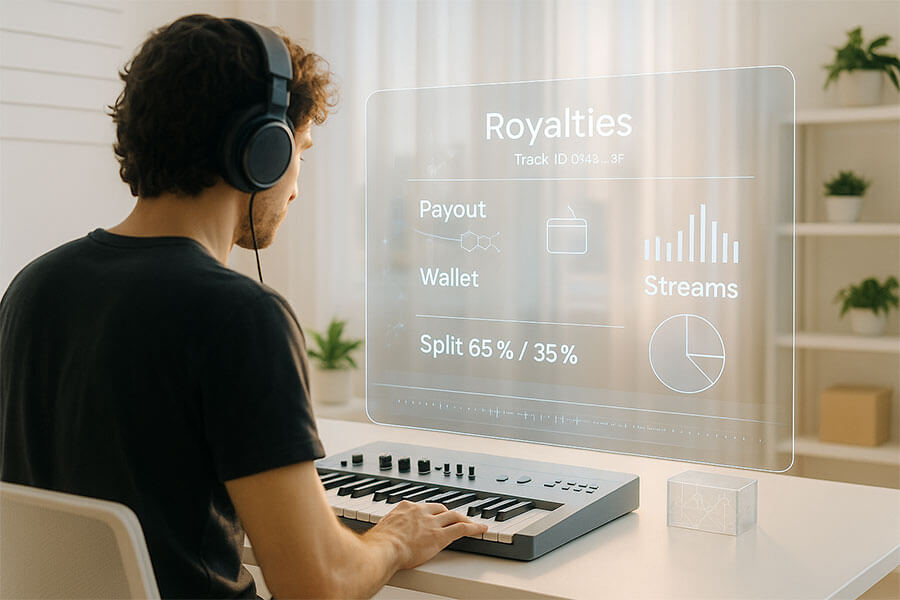
The music industry faces a fundamental crisis of fairness that grows more acute with each passing year. Despite generating over 28 billion dollars in global revenue during 2023, the vast majority of musicians struggle to earn sustainable incomes from their creative work. Streaming platforms have become the dominant mode of music consumption, accounting for more than 67 percent of total music industry revenue, yet their economic model systematically disadvantages the very artists whose creativity fuels the entire ecosystem. Independent musicians earn fractions of a cent per stream, with many needing millions of plays just to earn minimum wage for a single month. A 2023 study revealed that 90 percent of streaming revenue flows to just one percent of artists, leaving the remaining 99 percent to share the scraps.
This broken system stems from deeply entrenched structural inequalities built into traditional streaming economics. Multiple intermediaries extract value between fans and artists, including record labels, distributors, collection societies, and platforms themselves. Each layer takes its share before artists receive payment, often resulting in creators receiving less than 15 percent of the revenue their music generates. Payment delays stretch for months or even years, making financial planning nearly impossible for working musicians who need consistent income to cover basic living expenses and fund future creative projects. Opacity pervades every aspect of the system, with artists unable to verify streaming counts, track how royalties are calculated, or understand where their money goes before it reaches their accounts.
The consequences of this inequity extend beyond individual artist struggles to threaten the entire cultural ecosystem. Talented musicians abandon their creative pursuits for more financially stable careers, depriving society of innovative voices and diverse artistic perspectives. The middle class of working musicians has virtually disappeared, replaced by a handful of superstars and millions of struggling creators unable to sustain themselves through their art. Young artists entering the industry face an increasingly bleak landscape where even moderate success on streaming platforms generates insufficient income to justify the time and resources required to develop their craft.
Web3 technology offers a revolutionary alternative that could fundamentally transform how musicians earn from their work. Built on blockchain foundations and powered by decentralized protocols, these emerging platforms enable direct artist-to-fan connections that eliminate unnecessary intermediaries while ensuring transparent, immediate, and fair compensation. Smart contracts automatically execute payment terms without requiring trusted third parties, cryptographically securing artist rights while providing real-time royalty tracking. Decentralized storage enables music distribution without reliance on corporate servers that can be shut down or censored. Token economics create new monetization models that align creator and listener incentives in ways impossible under traditional platforms.
Web3 music platforms have the potential to democratize an industry long dominated by major labels and corporate streaming services, empowering independent artists to build sustainable careers without surrendering creative control or accepting exploitative contract terms. These systems enable new forms of fan engagement where supporters can invest directly in artists they believe in, sharing in their success while receiving exclusive benefits and experiences. Musicians gain unprecedented transparency into exactly who listens to their work, how their music spreads across networks, and what financial returns their creative efforts generate. The technology makes it possible for artists to maintain complete ownership of their master recordings while still accessing global distribution networks.
This transformation comes at a critical juncture for the music industry as a whole. As streaming becomes increasingly consolidated among a handful of major platforms, artists have diminishing leverage to negotiate better terms or challenge unfair practices. Traditional systems optimized for physical distribution and radio play have failed to adapt appropriately to digital realities, leaving musicians dependent on algorithms and corporate decisions beyond their control. The need for alternative models that genuinely serve creator interests has never been more urgent, making Web3 solutions not just attractive but potentially necessary for the future of music as a viable creative profession.
Understanding this technological shift requires examining both the specific failures of current streaming economics and the particular capabilities that Web3 platforms bring to music distribution. The journey toward decentralized music involves technical innovations, cultural changes within the industry, and new economic models that challenge established practices while promising to unlock fairer, more sustainable ways for artists to earn from their craft.
The Current Music Industry Landscape
The modern music industry presents a troubling paradox. Global music consumption has reached unprecedented levels with billions of daily streams, yet most musicians cannot earn sustainable incomes. Fans enjoy nearly limitless catalogs for modest subscription fees while streaming services tout billions in total payouts, but wealth concentrates overwhelmingly among superstars and corporate intermediaries rather than the diverse creative community producing the music.
This disconnect reveals systemic problems with how value flows through the music ecosystem. Traditional platforms operate on business models optimized for investor returns rather than creator welfare, treating music as content to attract subscribers. The complex web of contracts and payment structures evolved from physical media eras, failing to adapt to digital streaming economics. Artists remain trapped in systems designed for different technological realities.
Traditional Streaming Economics and Revenue Models
Major streaming platforms like Spotify, Apple Music, Amazon Music, and YouTube operate on remarkably similar economic models despite differences in their corporate structures and business strategies. These platforms collect revenue primarily through subscriber fees and advertising, then distribute roughly 70 percent to rights holders based on complex formulas that determine per-stream payouts. Spotify, which dominates the market with over 600 million users globally as of 2024, maintains this general revenue split while negotiating specific terms with major labels that may include advances, minimum guarantees, and promotional commitments that smaller independent artists cannot access.
The per-stream payment calculation follows a pro-rata model that divides the total royalty pool based on each song’s share of total platform streams during a given period. If a song accounts for one percent of all streams in a month, it receives one percent of the available royalty pool regardless of whether those streams came from premium subscribers paying monthly fees or ad-supported free tier users generating lower per-stream revenue. This approach creates several problematic dynamics that disadvantage niche artists and independent musicians. Per-stream rates fluctuate based on total platform activity, meaning an artist’s earnings can vary significantly month-to-month even with consistent stream counts. Popular mainstream artists effectively receive subsidies from fans of niche genres whose subscription fees support the entire pool, as money flows based on total platform listening rather than individual subscriber preferences.
Actual per-stream payments vary considerably but generally range from approximately one-third of a cent to one-half cent per stream on major platforms, with significant variations based on geographic location and subscription type. Spotify’s average payment hovers around 0.003 to 0.004 dollars per stream, meaning an artist needs roughly 250 to 330 streams to earn a single dollar before any additional deductions. Apple Music pays slightly higher rates at around 0.007 to 0.01 dollars per stream, positioning itself as a more artist-friendly option though still far from providing sustainable income for most musicians. YouTube’s payments are notably lower at 0.001 to 0.002 dollars per view, reflecting its advertising-based revenue model. Amazon Music and other services fall somewhere within this range, with none offering rates that enable the majority of artists to earn living wages from streaming alone.
These figures represent gross payments before further splits among multiple rights holders including record labels, publishers, songwriters, producers, and other stakeholders who may have claims on royalty income. The distribution chain introduces numerous additional deductions that dramatically reduce what artists ultimately receive. Record labels typically take 80 to 85 percent of master recording royalties under traditional contracts, leaving artists with just 15 to 20 percent of the already minimal per-stream payment. Even favorable independent label deals rarely exceed 50-50 splits, and many artists signed before streaming’s dominance operate under even worse terms negotiated when physical sales and radio play dominated revenue models.
Distribution services that independent artists use to access streaming platforms without label representation charge fees that further reduce income. Some distributors like DistroKid and TuneCore charge annual flat rates ranging from twenty to fifty dollars, which can exceed total earnings for artists with modest audiences. Others like CD Baby take percentage cuts of streaming revenue, typically around nine percent, which compounds with platform deductions. Performance rights organizations and mechanical licensing collectives that handle publishing royalties take their own administrative fees, typically three to five percent, for collecting and distributing payments. By the time money flows through this complex chain and reaches artists’ bank accounts, the effective per-stream rate may be less than 0.001 dollars, requiring millions of streams to generate even modest income that barely covers recording and production costs.
Payment timing compounds these economic challenges significantly and creates severe practical problems for working musicians. Most streaming platforms pay rights holders on 60 to 90 day schedules, with some extending to quarterly or even longer periods depending on contractual terms and minimum payment thresholds. Distributors and labels add their own processing delays on top of platform schedules, meaning artists typically wait three to six months or more between when fans stream their music and when they receive corresponding payments in their accounts. This creates devastating cash flow problems for musicians who need consistent income to cover living expenses, studio time, equipment purchases, and promotional costs. The inability to predict monthly earnings or access streaming revenue promptly makes financial planning nearly impossible for all but the most successful artists with steady, high-volume streaming activity.
Artist Compensation Challenges
Beyond low payment rates, artists face structural obstacles preventing fair earnings. Lack of transparency represents the most fundamental problem, with musicians unable to verify streaming counts or understand royalty calculations. Platforms treat payment formulas as proprietary information, providing minimal detail about how factors like geographic location or playlist placement affect rates. Artists receive basic reporting but lack granular data about listener demographics or specific calculations.
Contract terms often disadvantage artists in ways apparent only after signing. Recoupment clauses require artists to repay label advances from royalty shares before receiving additional payments. Many pre-streaming contracts contain unfavorable terms allocating disproportionate streaming income to labels based on physical sales formulas. Artists who achieved earlier success may receive tiny fractions of streaming income despite millions of plays.
Independent artists face different challenges. Building audiences without label marketing requires enormous effort, with most struggling to reach stream volumes necessary for sustainable income. Algorithmic playlist placement strongly influences success, but platforms provide limited transparency about selection criteria. Payment thresholds create additional barriers, with many distributors only processing payments once earnings exceed ten to 100 dollars. Small artists report money trapped indefinitely in distributor accounts.
The cumulative effect manifests in stark statistics. Research shows most streaming revenue concentrates among the top one percent of artists, with thousands earning less than fifty dollars annually from millions of streams. Many working musicians need day jobs despite dedicated fanbases and consistent activity. The promise that digital distribution would democratize music has largely failed, instead creating winner-take-all dynamics where algorithmic visibility and label backing determine success more than artistic merit.
Web3 Technology for Music
Web3 technology represents a fundamental reimagining of how digital systems operate, moving away from centralized corporate platforms toward decentralized networks where users maintain control over their data, assets, and economic relationships. For musicians accustomed to traditional streaming services and standard internet applications, Web3 introduces concepts that may initially seem complex but offer powerful tools for addressing the specific inequities that plague current music industry economics. Understanding these technologies requires moving beyond technical jargon to grasp how blockchain systems, smart contracts, and decentralized networks can solve real problems that artists face daily in their careers.
At its foundation, Web3 builds upon blockchain technology, which creates permanent, tamper-resistant records of transactions and ownership that are verified by distributed networks of computers rather than central corporate authorities. Unlike traditional databases controlled by single companies like Spotify or Universal Music Group, blockchain systems maintain synchronized copies of information across thousands of independent computers worldwide, making it virtually impossible for any single entity to manipulate records, censor content, or unilaterally change terms. This inherent transparency and decentralization directly addresses music industry problems around payment opacity and intermediary control, enabling systems where royalty calculations are publicly verifiable and where artists can interact directly with fans without platform gatekeepers determining access or taking excessive cuts from every transaction.
The implications for music distribution become clear when considering how Web3 technologies fundamentally restructure power dynamics and economic relationships. Traditional streaming platforms function as powerful intermediaries who control exclusive access to listeners, set payment terms unilaterally without artist input, and extract enormous value by operating as unavoidable chokepoints between artists and audiences. Web3 platforms can eliminate or dramatically reduce these intermediaries by enabling true peer-to-peer connections where artists distribute music directly to fans through decentralized networks, with smart contracts automatically handling complex payment distributions and rights management without requiring trusted third parties who might act in their own interests rather than serving artists fairly.
Key Technologies Explained
Blockchain technology forms the foundational layer enabling Web3 platforms to operate without centralized control. A blockchain is a digital ledger recording transactions in sequential blocks cryptographically linked together, creating an immutable history. This ledger is maintained across thousands of independent computers that must reach consensus before adding new information.
For music applications, blockchain enables verifiable records of song ownership, streaming activity, and royalty payments that all parties can audit independently. When fans stream songs on blockchain platforms, interactions are recorded permanently and cannot be manipulated. Artists can verify exactly how many times their music was played and what factors determined royalties.
Smart contracts represent automated programs stored on blockchains that execute specified actions when predetermined conditions are met. Unlike traditional contracts requiring lawyers or courts for enforcement, smart contracts execute themselves according to reviewable code. In music contexts, smart contracts automatically distribute royalty payments to all rights holders immediately when songs are streamed, eliminating multi-month delays. Artists can program specific split percentages for collaborators, with contracts automatically dividing revenue without requiring manual intervention.
Tokenization introduces new economic possibilities by representing ownership or value as digital tokens that can be transferred or fractionally owned. Music platforms use tokens including platform currencies facilitating transactions, ownership tokens representing song rights, and social tokens providing exclusive content access. Non-fungible tokens specifically enable sales of unique digital collectibles including songs, albums, and concert recordings. Musicians can sell limited editions as NFTs, with smart contracts automatically paying them percentages when NFTs are resold in secondary markets.
Decentralized storage systems solve hosting challenges without relying on centralized corporate servers. The InterPlanetary File System distributes files across many independent providers while using cryptographic hashing to ensure integrity. Songs uploaded to IPFS are broken into pieces and distributed to multiple nodes, with systems automatically retrieving and reassembling them when requested. This ensures music remains accessible even if individual providers go offline.
Cryptocurrency enables direct financial transactions between artists and fans without requiring banks or payment processors that charge fees and impose cross-border restrictions. Digital currencies like Ethereum facilitate instant global value transfer with minimal fees. Musicians receive payments directly to cryptocurrency wallets immediately when music is streamed, rather than waiting months for platforms to process royalties through traditional banking.
Web3 Music Platforms in Practice
Web3’s theoretical benefits become concrete through actual platforms implementing decentralized systems for music streaming and artist compensation. These real-world examples demonstrate both significant potential and practical challenges requiring mainstream adoption. Several pioneering projects have attracted substantial user bases while generating measurable improvements in creator compensation compared to traditional services.
These platforms vary in their approaches, with some focusing on comprehensive streaming experiences while others emphasize collectibles or fractional ownership. Common threads include transparent royalty systems, elimination of intermediary value extraction, and novel tokenization models enabling new artist monetization. The most successful implementations balance Web3 innovation with accessible user experiences.
Case Study: Audius
Audius stands as the most successful Web3 music streaming platform, achieving genuine mainstream traction with over 7 million monthly active users as of 2024 and more than 250,000 artists uploading content. Launched in 2019 with support from prominent investors including Katy Perry and Nas, Audius directly challenges traditional services by offering artists significantly better economics while providing fans familiar streaming experiences without requiring cryptocurrency expertise.
The platform’s architecture distributes music storage and streaming infrastructure across a decentralized network of node operators earning AUDIO tokens for providing computational resources. This eliminates centralized server costs while creating systems that cannot be shut down or censored by single entities. Artists upload music stored on IPFS and distributed through the node network, with blockchain tracking plays and managing rights.
Audius’s economic model dramatically improves artist compensation. The platform takes zero percent commission on direct artist-to-fan payments including tips and premium sales. For advertising revenue, Audius distributes 90 percent to artists based on stream share, retaining only 10 percent for operations. This contrasts sharply with Spotify’s model where artists receive approximately 70 percent after intermediary deductions, with most going to labels.
The platform implements unique token economics where AUDIO tokens serve multiple purposes including governance, artist rewards, and node payments. Artists achieving significant streaming milestones receive AUDIO token bonuses, with over 50 million tokens distributed since launch. These tokens have real economic value tradeable on cryptocurrency exchanges, providing additional income streams beyond standard royalties.
Concrete results demonstrate impact. Independent producer RAC reported earning more from Audius in one week than years of Spotify streams despite smaller audiences. Multiple emerging artists have built substantial followings without label support. A 2021 TikTok partnership enables artists to distribute Audius tracks directly to the video platform, providing billion-plus user exposure while maintaining rights control. Governance allows AUDIO token holders to vote on platform development priorities and policy changes, giving artists and fans direct input.
Emerging Platforms and Innovation
Royal represents a different approach focused on enabling fans to purchase fractional ownership rights in songs, receiving ongoing royalty payments whenever tracks generate streaming revenue on any platform. Founded in 2021 by producer 3LAU, Royal has attracted attention by offering limited edition ownership NFTs for tracks by prominent artists including Nas and Diplo. Each NFT represents a specific percentage of streaming royalties, with smart contracts automatically distributing payments to token holders.
The platform’s first major sale involved Nas offering ownership stakes in two unreleased songs, with 760 NFTs selling out within minutes and generating over 560,000 dollars. NFT holders began receiving quarterly royalty payments as songs accumulated streams across major platforms. This model creates new revenue opportunities for artists who can raise capital by selling future royalty stakes while maintaining majority ownership. Fans gain financial incentives to actively promote songs they own stakes in.
Sound.xyz focuses specifically on music NFTs as premium collectible releases, enabling artists to sell limited edition songs directly to collectors with built-in streaming and community features. Artists set their own pricing, typically ranging from 50 to several hundred dollars per edition, with sales going directly to musicians minus minimal platform fees. The platform has facilitated sales generating six-figure revenues for individual releases, demonstrating significant market demand among Web3 enthusiasts.
Catalog operates as a curated marketplace for one-of-one music NFTs where each song is released as a unique auction item. The platform targets serious collectors and audiophiles by emphasizing high-quality releases from respected artists across electronic and independent genres. Sales frequently exceed tens of thousands of dollars for single tracks, with some auctions reaching six figures. The platform launched in 2021 and has facilitated over 20 million dollars in total sales.
These emerging platforms demonstrate the diversity of Web3 music approaches, from comprehensive streaming alternatives to specialized marketplaces for collectibles and fractional ownership. While none yet match Audius’s user scale, each addresses specific limitations in traditional models while creating new monetization opportunities that did not previously exist.
Benefits of Decentralized Music Distribution
Web3 music platforms deliver tangible advantages addressing longstanding frustrations with traditional streaming services. These benefits extend beyond marginal improvements to enable fundamentally new relationships between creators and audiences impossible under centralized models. The transformation occurs across multiple dimensions including economics, transparency, creative control, and community engagement.
For artists, financial improvements represent the most immediate benefit. Decentralized platforms typically enable musicians to retain 80 to 95 percent of streaming revenue compared to 10 to 20 percent under traditional label contracts. Direct payment processing eliminates intermediary layers extracting value, while smart contract automation reduces administrative costs. Fans benefit from knowing support reaches artists directly rather than being diluted through corporate bureaucracies. The ability to purchase fractional ownership or exclusive NFT content creates deeper engagement than passive streaming provides.
Advantages for Artists and Fans
Revenue transparency emerges as one of the most valued features among artists who have adopted Web3 platforms, directly addressing pervasive frustrations with black-box payment calculations on traditional services that provide minimal reporting and no meaningful audit capabilities. Blockchain-based systems make all streaming activity and corresponding payments publicly verifiable through distributed ledgers, enabling musicians to audit exactly how their royalties are determined and confirm that platform calculations are accurate and fair. Smart contracts that automatically split revenues among collaborators ensure that featured artists, producers, songwriters, and other contributors receive their agreed shares immediately and automatically without needing to trust labels, publishers, or platform administrators to distribute payments correctly according to complex contractual arrangements.
Instant payment processing represents another transformative improvement over traditional streaming economics that can take months to deliver earned income to artists. Artists on platforms like Audius can receive payments within minutes or hours of streams occurring rather than waiting the typical 60 to 180 days for platforms and distributors to process royalties through conventional banking systems with their multiple intermediaries and manual reconciliation processes. This immediate access to earned income dramatically improves financial stability for working musicians who need consistent and predictable cash flow to cover basic living expenses, rent studio time, purchase equipment and software, fund promotional campaigns, and invest in future creative projects. The elimination of payment delays also enables more dynamic pricing and promotional strategies, with artists able to adjust their offerings and experiment with different approaches based on real-time performance feedback rather than waiting months to see how changes affect their income and audience engagement.
Higher per-stream royalty rates across Web3 platforms reflect reduced platform overhead costs and the elimination of excessive intermediary fees that plague traditional distribution chains. While traditional services pay approximately 0.003 to 0.004 dollars per stream before label and distributor deductions that can reduce artist shares to less than 0.001 dollars, decentralized platforms can offer effective rates that are three to five times higher by cutting out middlemen and operating with leaner cost structures enabled by automation and community participation. Artists who have migrated their catalogs to Web3 services frequently report earning significantly more from thousands of decentralized platform streams than from millions of plays on major streaming services like Spotify, even when accounting for the currently smaller audience sizes on newer blockchain-based platforms.
Creative control reaches unprecedented levels when artists can distribute music directly to global audiences without requiring approval from record labels, traditional distributors, or platform content moderation systems that may censor, deprioritize, or remove certain types of artistic expression based on corporate policies or advertiser concerns. Musicians maintain complete ownership of their master recordings rather than signing away rights in exchange for label advances that must be recouped, ensuring they benefit from long-term catalog value appreciation and can license their work on their own terms for film, television, advertising, and other uses. The ability to set their own pricing structures for premium content, special releases, exclusive access, and various tiers of fan engagement gives artists unprecedented flexibility to experiment with different monetization models and find approaches that work best for their specific audience rather than accepting one-size-fits-all platform policies designed to maximize corporate profits.
New revenue streams emerge through innovative tokenization mechanisms and NFT sales that can supplement or in some cases dramatically exceed traditional streaming income for artists with engaged communities. Artists can sell fractional ownership stakes in their songs through platforms like Royal, generating substantial upfront capital to fund recording, production, and marketing while retaining majority control and continuing to earn from streams across all platforms including traditional services. Limited edition NFT releases through specialized marketplaces like Sound.xyz and Catalog create entirely new collectible markets where dedicated fans and collectors pay premium prices ranging from hundreds to thousands of dollars for exclusive versions, unreleased tracks, concert recordings, collaborative remixes, or unique artwork and experiences associated with songs. Some musicians report that NFT sales for a single carefully curated track release have generated more revenue than multiple years of accumulated streaming royalties across all platforms combined, though this model currently serves primarily engaged Web3 audiences and serious collectors rather than mainstream casual listeners.
Community building becomes more meaningful and sustainable when platforms enable direct, ongoing artist-to-fan interactions rather than mediating all communication through algorithmic feeds and corporate-controlled social features designed primarily to maximize user engagement time for advertising purposes. Musicians can maintain direct relationships with their most dedicated supporters through token-gated Discord servers, exclusive Telegram groups, private livestreams, and early access content for NFT holders, creating genuine communities of support rather than passive audiences of algorithmic content consumers. This deeper engagement creates powerful loyalty and active support that passive streaming consumption can never match, with dedicated community members enthusiastically promoting artists they feel personally invested in and connected to rather than simply consuming content that algorithms serve to them based on behavioral manipulation patterns.
Fan empowerment manifests through multiple innovative mechanisms including fractional ownership opportunities that transform listeners into stakeholders, governance participation that gives audiences genuine voice in platform development, and direct economic benefits from supporting artists early in their careers before mainstream success. Fans who purchase Royal ownership NFTs representing percentages of song royalties receive ongoing quarterly payments as tracks accumulate streams across all major platforms, fundamentally aligning their financial interests with artist success in ways that transform them from passive consumers into active stakeholders and promoters with skin in the game. Early supporters on platforms like Audius can earn valuable platform tokens as rewards for discovering and promoting emerging artists before they achieve wider recognition, creating tangible financial incentives for genuine musical exploration and community curation beyond the intrinsic enjoyment of discovering great new music.
Discovery mechanisms that rely primarily on community curation and direct peer-to-peer promotion rather than opaque algorithmic recommendations can surface diverse, innovative music that corporate platforms systematically overlook in favor of safe, mainstream content that maximizes user retention metrics. Fans who earn platform token rewards for early artist discovery have strong incentives to actively seek new sounds and promote deserving musicians to their networks and communities, creating organic discovery paths that can elevate talented artists regardless of marketing budgets or industry connections. Global accessibility improves dramatically when platforms eliminate arbitrary geographic restrictions and work around payment processing limitations that prevent fans in certain countries from supporting artists they love, with cryptocurrency payments enabling direct financial transfers regardless of local banking infrastructure limitations or international payment restrictions that traditional systems impose.
Challenges and Limitations
Despite significant potential and early successes, Web3 music platforms face substantial obstacles before achieving mainstream adoption. These challenges span technical limitations affecting user experience and scalability, market dynamics favoring entrenched incumbents, regulatory uncertainties creating compliance risks, and cultural barriers slowing adoption. Understanding these limitations is essential for realistic assessment of Web3 music’s trajectory.
The tension between Web3 innovation and mainstream usability creates immediate friction limiting platform growth beyond cryptocurrency-native audiences. While blockchain offers powerful capabilities, it introduces complexity many music fans find confusing. Managing cryptocurrency wallets, understanding gas fees, and navigating NFT marketplaces create barriers preventing casual listeners from trying Web3 platforms even when they offer superior artist compensation.
Economic sustainability questions persist around whether platforms can achieve profitability without relying on speculative token price appreciation. Many platforms launched during cryptocurrency bull markets when token valuations supported generous rewards, but maintaining economics during downturns tests whether underlying business models are genuinely sustainable. Competition with established services benefiting from massive network effects, exclusive content, and brand recognition creates difficult challenges for emerging platforms.
Technical and Market Adoption Barriers
User experience complexity represents the most immediate obstacle limiting mainstream adoption. Setting up cryptocurrency wallets requires understanding unfamiliar concepts like private keys and seed phrases that most music fans have no reason to know. Purchasing cryptocurrency involves navigating exchanges and completing identity verification. The risk of losing access through forgotten passwords creates anxiety that deters participation, while transaction irreversibility means mistakes cannot be easily corrected.
Transaction costs on certain blockchain networks can make small payments economically impractical, particularly when network congestion drives up gas fees. Artists have reported cases where transaction fees to claim royalties exceeded payment values. While layer-2 solutions offer lower costs, fragmentation across networks creates additional complexity and interoperability challenges.
Platform scalability constraints limit how many simultaneous users Web3 services can support compared to traditional infrastructure designed for hundreds of millions of concurrent listeners. Blockchain transaction throughput and decentralized storage bandwidth may struggle under mainstream loads. Mobile experience limitations affect adoption among users primarily consuming music on smartphones. Many Web3 applications require browser extensions unavailable on mobile devices, making platform access difficult for on-the-go listening.
Network effects strongly favor established platforms already hosting the vast majority of music and listeners, making it difficult for new entrants to reach critical mass. Artists are reluctant to focus effort on platforms with limited audiences even if economics are superior, while fans are unlikely to switch from services providing comprehensive catalogs and existing playlists. Content licensing availability limits Web3 appeal when major label releases remain exclusive to traditional services. Fans wanting mainstream hits alongside independent music cannot use Web3 services as complete replacements.
Regulatory uncertainty around cryptocurrency transactions and token classifications creates compliance risks preventing institutional adoption. If tokens are classified as securities in major jurisdictions, platforms may face extensive registration requirements or prohibitions. Environmental concerns about blockchain energy consumption have generated criticism deterring environmentally conscious artists and fans, particularly regarding proof-of-work systems. Educational barriers prevent many musicians from understanding Web3 technologies well enough to evaluate whether platforms serve their interests. Artist resistance to change can slow adoption even when platforms offer clear benefits, particularly among established musicians comfortable with existing relationships and workflows.
Final Thoughts
The emergence of Web3 music platforms represents far more than incremental technological progress or niche alternatives for cryptocurrency enthusiasts. These systems embody fundamental challenges to power structures that have exploited musicians for decades while promising a more equitable future where artists can build sustainable careers through fair compensation and direct community support. As blockchain technology matures and platforms refine their approaches to balance innovation with accessibility, we stand at a pivotal moment that will determine whether music remains dominated by extractive corporate intermediaries or evolves toward genuinely artist-centric ecosystems.
The implications for financial inclusion in music cannot be overstated. Traditional industry gatekeepers have systematically excluded talented musicians based on geography, economic background, institutional connections, and other factors unrelated to artistic merit. Web3 platforms offer pathways for artists anywhere in the world to reach global audiences and earn from their work without requiring label deals, expensive marketing campaigns, or industry insider status. When a musician in Lagos, Manila, or São Paulo can distribute music globally and receive immediate cryptocurrency payments from fans worldwide, the transformative potential for democratizing creative careers becomes tangible rather than merely aspirational.
The intersection of technology and social responsibility demands careful attention as these systems develop. While Web3 platforms promise to redistribute power and value toward creators, implementation details determine whether they genuinely serve artist interests or simply create new forms of exploitation under decentralized branding. Platform governance structures must authentically empower artist and fan communities rather than consolidating control among wealthy token holders or founding teams. Economic models need sustainable foundations based on real value creation rather than speculative token dynamics that benefit early adopters at the expense of later participants.
Forward-looking perspectives reveal both tremendous opportunities and significant uncertainties about how Web3 music will evolve. If platforms can overcome current technical and usability limitations while building comprehensive catalogs that rival traditional services, they may achieve mainstream adoption that fundamentally reshapes music industry economics. Artists would gain unprecedented control over their careers and compensation while fans develop more meaningful connections with music they support financially and emotionally. The gradual erosion of major label dominance and platform monopoly power could accelerate as musicians recognize viable alternatives that better serve their interests.
Alternatively, established platforms may co-opt beneficial Web3 innovations while maintaining their market dominance through superior resources, network effects, and institutional relationships. Traditional services could implement blockchain-based transparency, improve artist payment rates, and adopt tokenization features without surrendering their central control or business model fundamentals. This outcome would deliver some improvements for musicians while preserving existing power structures that ultimately prioritize shareholder returns over creator welfare.
The responsibility for determining this trajectory extends across the entire music ecosystem. Artists must educate themselves about Web3 opportunities and risks while demanding better terms from all platforms regardless of their underlying technology. Fans need to consider how their consumption choices affect musicians they value, supporting systems that genuinely compensate creators fairly rather than optimizing solely for personal convenience or cost. Developers and entrepreneurs building Web3 music platforms must prioritize sustainable economics and accessible user experiences over speculative token gains or technological complexity for its own sake.
The ongoing challenges should inspire urgency rather than complacency. Every day that musicians struggle to earn sustainable incomes despite creating culture that billions of people enjoy represents a failure of the systems we have collectively allowed to dominate music distribution. Web3 technologies provide concrete tools for building better alternatives, but technology alone cannot overcome entrenched interests or cultural inertia without concerted effort from artists, fans, and technologists committed to more equitable outcomes.
Innovation and accessibility must advance together rather than being treated as competing priorities. The most sophisticated blockchain architecture provides little value if ordinary musicians and fans cannot use it effectively, while perfectly accessible platforms that fail to deliver on promises of fair compensation and transparency merely replicate existing problems with different branding. Success requires persistent focus on solving real problems that artists face while gradually reducing technical barriers that prevent mainstream adoption.
The ultimate measure of Web3 music’s impact will be whether it enables more musicians to build sustainable careers doing work they love while receiving fair compensation for their creative labor. Technical metrics like transaction throughput or token market capitalization matter only insofar as they support this fundamental goal. The vision that motivates Web3 music development—a world where artists control their work, earn fairly from their creativity, and connect directly with audiences who value their contributions—deserves sustained effort to realize even as obstacles and setbacks inevitably arise along the path toward systemic change.
FAQs
- What exactly is Web3 music streaming and how does it differ from Spotify or Apple Music?
Web3 music streaming uses blockchain technology and decentralized networks to distribute music directly between artists and fans without corporate intermediaries controlling access or payments. Unlike traditional platforms where companies own the infrastructure and set all terms unilaterally, Web3 services typically operate on distributed networks where users collectively maintain the system. The key differences include transparent royalty calculations that anyone can verify, immediate payments to artists instead of multi-month delays, higher artist revenue shares because fewer intermediaries extract fees, and often community governance where users influence platform development rather than accepting corporate decisions. Artists maintain ownership of their music rather than signing rights to labels or platforms. - Do I need to own cryptocurrency to use Web3 music platforms?
Requirements vary by platform. Some Web3 music services like Audius allow free listening without any cryptocurrency, functioning similarly to traditional streaming with optional token features for artists and power users. Other platforms focused on NFT sales or premium features require cryptocurrency to purchase music or access exclusive content. For artists receiving payments, most platforms distribute earnings in cryptocurrency that can be converted to traditional currency through exchanges, though this adds steps compared to direct bank deposits. As Web3 music matures, platforms are implementing more options to use credit cards and traditional payment methods while still leveraging blockchain technology in the background. - How much more money can artists actually earn on Web3 platforms compared to traditional streaming?
Earnings improvements vary significantly depending on platform, audience size, and engagement levels, but documented cases show substantial differences. Artists on Audius often report effective per-stream rates 3 to 5 times higher than Spotify after accounting for distribution fees and label cuts, while some musicians have earned more from thousands of Web3 streams than millions of traditional platform plays. NFT sales can generate even more dramatic income differences, with individual song releases sometimes producing tens of thousands of dollars through limited edition sales compared to mere hundreds from streaming equivalent attention. However, Web3 platforms currently have smaller audiences than major streaming services, meaning total income potential depends on successfully building communities on newer platforms. - Are Web3 music platforms legal and safe to use?
Legitimate Web3 music platforms operate legally and implement security measures comparable to or exceeding traditional services, though the regulatory landscape continues evolving. Platforms like Audius have been operating since 2019 without legal issues while growing to millions of users. The blockchain technology underlying these services provides inherent security advantages through cryptographic verification and decentralized storage that eliminates single points of failure. However, users bear more responsibility for security including protecting wallet credentials and verifying transaction details before confirming them. The irreversibility of blockchain transactions means mistakes cannot always be corrected, requiring more careful attention than traditional platforms where customer service can often reverse errors. As with any online platform, users should research specific services and follow security best practices. - What happens to my music if a Web3 platform shuts down?
This depends on the platform’s architecture and whether music is stored on truly decentralized networks or company-controlled servers. Platforms using decentralized storage like IPFS maintain music files across distributed networks that persist even if the original platform ceases operation, making content theoretically recoverable through alternative applications that can access the same decentralized storage. Artists who upload to blockchain-based systems retain ownership records that survive platform failures, unlike traditional services where content may become inaccessible when companies shut down. However, the practical ability to access music after platform closure depends on having the necessary information like content identifiers and whether alternative applications exist to retrieve decentralized files. Artists should maintain local copies of their work and understand specific platform storage approaches before relying solely on any distribution service. - Can I listen to major label artists on Web3 platforms?
Currently, Web3 music platforms have limited major label content because most prominent artists remain under exclusive contracts with traditional streaming services or labels that have not yet embraced decentralized distribution. Audius has secured some major label content through partnerships and independent distribution deals, but catalogs remain smaller than comprehensive libraries available on Spotify or Apple Music. The Web3 music ecosystem currently emphasizes independent artists, electronic music producers, and musicians willing to experiment with new distribution models. This limitation is gradually changing as more artists recognize economic benefits of Web3 platforms and as major labels explore blockchain-based rights management, but comprehensive major label catalogs remain mostly exclusive to traditional services for now. - How do artist royalty payments actually work on blockchain-based platforms?
When fans stream music on blockchain platforms, the activity is recorded as a transaction on the blockchain’s distributed ledger where it becomes permanent and verifiable. Smart contracts automatically calculate royalty amounts based on platform policies and any specific agreements the artist has configured, such as revenue splits with collaborators. These contracts execute automatically when conditions are met, immediately transferring payment to artist wallets without requiring manual processing or approval from platform administrators. Payment amounts are typically denominated in cryptocurrency tokens that artists can hold, trade, or convert to traditional currency. All transactions are publicly visible on the blockchain, enabling artists to verify that calculations are accurate and payments are processed correctly, unlike traditional platforms where royalty accounting is opaque. - What are music NFTs and should artists create them?
Music NFTs are unique digital tokens on blockchain networks that represent ownership or rights to specific songs, albums, or music-related content. Unlike regular digital files that can be copied infinitely, NFTs provide verifiable scarcity and ownership tracked on blockchains. Artists can sell limited edition releases as NFTs, creating collectible markets where fans pay premium prices for exclusive versions rather than nominal per-stream royalties. Smart contracts can program ongoing royalty payments to artists whenever NFTs are resold, generating long-term revenue from collector trading activity. Whether artists should create NFTs depends on their audience and goals—musicians with engaged communities that value collectibles and exclusive access often generate significant income from NFT sales, while artists focusing on broad accessibility might prefer traditional streaming distribution. Many successful musicians now use both approaches simultaneously. - How can I start using Web3 music platforms as a listener?
Starting as a listener typically requires creating an account on the platform of interest, with basic listening often available without cryptocurrency requirements. For Audius, simply visit the website or download the mobile app, create a free account using email or social login, and begin streaming music immediately like traditional services. To access premium features like tipping artists or purchasing NFTs, you will need a cryptocurrency wallet and tokens on the appropriate blockchain network. Setting up wallets involves downloading software like MetaMask for web browsing or Rainbow for mobile, creating an account, and securing your seed phrase carefully. You can then purchase cryptocurrency through exchanges and transfer it to your wallet for platform transactions. Many platforms now offer simplified onboarding that guides users through these steps. - Will Web3 music platforms eventually replace Spotify and other major streaming services?
Whether Web3 platforms replace traditional services remains uncertain and depends on how both evolve. Decentralized platforms offer clear advantages in artist compensation, transparency, and community governance that address genuine problems with current streaming economics. However, major platforms benefit from massive user bases, comprehensive catalogs, sophisticated recommendation algorithms, and brand recognition that create substantial competitive advantages. More likely scenarios include Web3 platforms capturing significant market share among independent artists and crypto-native audiences while major services adopt beneficial blockchain features like transparent royalty accounting. Traditional platforms may ultimately integrate Web3 technologies without fully decentralizing their operations, creating hybrid systems that offer some benefits of both approaches. The outcome will likely depend on whether Web3 platforms can solve current usability challenges and achieve mainstream adoption before established services co-opt their innovations.