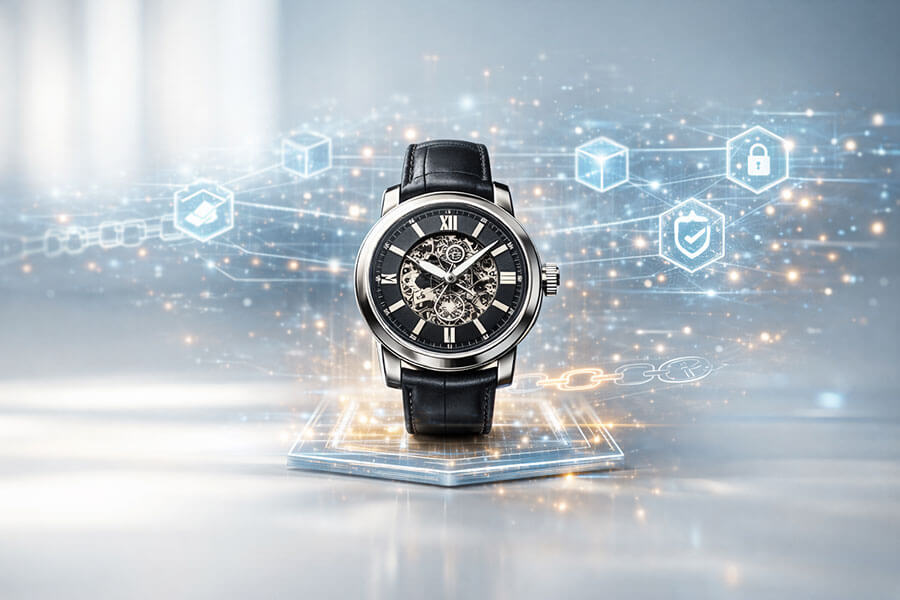
The luxury watch industry stands at a critical inflection point where centuries-old craftsmanship meets cutting-edge digital innovation. For collectors, dealers, and enthusiasts navigating a market valued at over forty-six billion dollars in 2024, the question of authenticity has never been more pressing. Counterfeit timepieces have proliferated to the point where industry analysts estimate that over forty million fake watches enter circulation annually, a figure that surpasses the entire Swiss watch industry’s legitimate production by twenty-five percent. This flood of fraudulent products does not merely represent lost revenue for manufacturers; it erodes the very foundation of trust upon which the luxury watch ecosystem depends.
Traditional authentication methods have served the industry for generations, yet they were designed for a different era. Paper certificates can be forged, serial numbers can be replicated, and even sophisticated holograms have proven vulnerable to increasingly skilled counterfeiters. The secondary market, which has grown to approximately twenty-seven billion dollars and continues expanding at a compound annual growth rate exceeding nine percent, faces particularly acute challenges. When a collector purchases a pre-owned timepiece through an online platform or independent dealer, verifying that the watch is genuine, that its service history is accurate, and that the seller legitimately owns it requires a leap of faith that many buyers are no longer willing to take.
Blockchain technology offers a fundamentally different approach to solving these problems. Rather than relying on physical documents that can be lost, damaged, or counterfeited, distributed ledger technology creates permanent, tamper-proof digital records that accompany a watch throughout its entire existence. From the moment raw materials enter a manufacturing facility to decades later when a collector resells a vintage piece, every meaningful event in the timepiece’s life can be recorded on an immutable ledger that anyone can verify but no one can alter. This technology does not simply digitize existing processes; it reimagines what provenance documentation can accomplish in an interconnected world.
The adoption of blockchain-based authentication has accelerated dramatically since 2019, when pioneering manufacturers began experimenting with digital passports for their timepieces. Major luxury conglomerates have invested substantial resources in developing proprietary platforms, while independent protocols have emerged to serve brands across the industry. The technology has matured from experimental pilots to production-ready systems deployed across millions of watches, demonstrating both its practical viability and its potential to reshape how ownership, authenticity, and service history are documented and verified.
This comprehensive guide explores how blockchain technology creates tamper-proof records of watch authenticity, ownership history, and service records throughout the timepiece lifecycle. It examines the technical foundations that make this possible, analyzes real-world implementations by leading manufacturers, and considers both the benefits and challenges that different stakeholders face as this technology becomes increasingly prevalent. Whether you are a collector considering your first blockchain-authenticated purchase, a dealer evaluating how to incorporate these systems into your business, or simply curious about the intersection of horology and digital innovation, understanding blockchain provenance has become essential knowledge for anyone engaged with the luxury watch market.
The significance of this technological shift cannot be overstated for an industry built on tradition, craftsmanship, and the preservation of value across generations. Luxury watches represent more than functional timekeeping devices; they embody investments, heirlooms, and status symbols that families pass down through decades. The ability to document and verify these artifacts’ histories with cryptographic certainty transforms how collectors evaluate acquisitions, how dealers conduct business, and how the entire market assigns value to provenance itself. As the following sections reveal, blockchain technology has moved from experimental concept to deployed reality, with millions of watches now carrying digital identities that will accompany them throughout their existence.
Understanding the Luxury Watch Authentication Problem
The challenge of authenticating luxury watches extends far beyond simple concerns about counterfeit products. While the proliferation of fake timepieces represents the most visible symptom, the underlying problem encompasses a complex web of documentation failures, information asymmetries, and trust deficits that affect every participant in the luxury watch ecosystem. Understanding why traditional authentication methods have proven inadequate requires examining both the nature of the threats they face and the structural limitations inherent in paper-based provenance systems.
Counterfeiting operations have evolved into sophisticated enterprises capable of producing remarkably convincing replicas. Modern counterfeiters employ advanced manufacturing equipment, source high-quality materials, and study genuine timepieces in exhaustive detail to create fakes that can deceive even experienced collectors. The most problematic category involves so-called super clones, which replicate not just the external appearance but also the weight, finishing, and even some mechanical characteristics of authentic watches. These products frequently enter the market through channels that appear legitimate, sometimes accompanied by forged documentation that mirrors genuine certificates with disturbing accuracy. Customs authorities in the United States alone seized over one point four million counterfeit watches in 2024, representing an estimated market value exceeding one billion dollars, yet these seizures capture only a fraction of the total counterfeit volume reaching consumers.
Paper certificates of authenticity, which have traditionally served as the primary proof of a watch’s provenance, suffer from fundamental vulnerabilities that no amount of sophisticated printing can fully address. Physical documents can be separated from the watches they authenticate, enabling unscrupulous sellers to pair genuine papers with counterfeit timepieces. Certificates can be photographically reproduced, digitally manipulated, or simply fabricated from scratch using templates that circulate in counterfeiting networks. Even legitimate certificates deteriorate over time, becoming damaged, lost, or destroyed through accidents, floods, fires, or simple carelessness. When a collector inherits a vintage watch from a deceased relative, the accompanying documentation has frequently vanished, leaving the new owner without means to prove the timepiece’s authenticity or service history.
The grey market presents additional complications that traditional authentication cannot address. Authorized dealers sometimes divert inventory to unauthorized channels, where watches enter circulation without proper documentation or with papers that obscure their true origin and warranty status. Stolen watches represent another persistent challenge; a thief who acquires a timepiece through burglary may possess genuine documentation yet have no legitimate claim to ownership. Traditional certificates cannot distinguish between a watch sold through proper channels and one that has been stolen, nor can they track whether a previous owner legitimately transferred the piece or whether intervening transactions involved fraud, theft, or other improprieties.
Service history documentation presents its own constellation of problems. When a watch receives maintenance or repair, the work should be recorded to inform future owners and technicians about what has been done to the movement. Paper service records, however, are easily lost and difficult to verify. A seller might claim that a watch received a complete factory service last year, but proving this assertion requires trusting the word of someone who has financial incentive to exaggerate the timepiece’s condition. Even when service records exist, confirming that they actually correspond to the specific watch in question rather than a different example with a similar reference number requires detective work that most buyers cannot perform.
The pre-owned market magnifies all these challenges. Transactions between private parties occur without the institutional oversight that authorized dealers provide, and online platforms connect buyers with sellers across thousands of miles where inspecting a watch before purchase becomes impractical. Authentication services have emerged to fill this gap, but they add cost and delay to transactions while introducing their own potential for error or fraud. The fundamental problem remains that traditional documentation creates isolated islands of information that cannot communicate with each other, cannot be verified programmatically, and cannot establish an unbroken chain of custody from manufacture to present day.
The economic consequences of these authentication failures ripple throughout the luxury watch ecosystem. Legitimate brands invest heavily in marketing and quality control to maintain reputations that counterfeiters exploit without bearing similar costs. Honest dealers spend significant resources on authentication procedures that dishonest competitors circumvent. Collectors pay premiums for genuine articles while facing persistent anxiety about whether their purchases are what they purport to be. The secondary market operates with friction and inefficiency that reduces liquidity, increases transaction costs, and depresses values below what properly documented watches might otherwise achieve. Industry observers estimate that the collective impact of counterfeiting, documentation failures, and resulting trust deficits costs legitimate participants billions of dollars annually in lost revenue, increased expenses, and diminished market efficiency.
How Blockchain Technology Works for Watch Provenance
Blockchain technology provides the foundation for a new paradigm in watch authentication by creating distributed, immutable records that no single party controls. Understanding how this technology applies to luxury timepieces requires grasping several interconnected concepts: distributed ledgers, cryptographic security, smart contracts, and the mechanisms that link physical objects to their digital representations. While the technical details can become complex, the fundamental principles are accessible to anyone willing to engage with them thoughtfully.
A blockchain functions as a shared database maintained simultaneously across many independent computers rather than stored on a single centralized server. When new information enters the system, specialized participants called validators verify that the data is legitimate before it becomes permanently recorded. Once information is added to the blockchain, it cannot be altered or deleted because doing so would require simultaneously modifying the records on thousands of independent machines, a practical impossibility given the cryptographic protections that secure the network. This immutability distinguishes blockchain from conventional databases where administrators can modify or delete records at will.
The Ethereum blockchain, which underlies most watch provenance systems currently deployed, supports a particular type of digital asset called a non-fungible token. Unlike cryptocurrencies where any unit is interchangeable with any other unit of the same denomination, each non-fungible token possesses unique characteristics that distinguish it from every other token. This uniqueness makes non-fungible tokens ideal for representing physical objects like luxury watches, where the goal is to create a one-to-one correspondence between a specific timepiece and its digital identity. The token associated with a particular watch contains or points to information about that watch, including its model, serial number, manufacturing date, and other relevant characteristics.
Smart contracts automate much of the functionality that makes blockchain provenance systems practical. These self-executing programs live on the blockchain and perform predetermined actions when specified conditions are met. When a watch changes ownership, a smart contract can automatically update the ownership record, transfer the associated token to the new owner’s digital wallet, and record the transaction details without requiring manual intervention from any human party. Smart contracts also enforce rules about what information can be added to a watch’s record and who has permission to add it, ensuring that only authorized parties can update service histories or other sensitive data.
The cryptographic infrastructure securing these systems relies on pairs of mathematically related keys: a public key that identifies a participant and a private key that proves that participant’s authority to perform actions. When a manufacturer creates a digital identity for a new watch, they sign the record with their private key, producing a cryptographic signature that anyone can verify using the manufacturer’s public key but that only the manufacturer could have produced. This signature proves that the information comes from a legitimate source without requiring trust in any intermediary. Similarly, when ownership transfers occur, the new owner’s control over the associated token is secured by cryptographic keys that only they possess.
Linking physical watches to their digital identities presents unique challenges that blockchain alone cannot solve. Several complementary technologies bridge this gap between the tangible and digital worlds. Near-field communication chips embedded in watches or their packaging allow smartphones to read identifying information by simply tapping the device against the timepiece. Quick response codes printed on warranty cards or etched into case backs provide another scanning mechanism. Some manufacturers employ visual recognition algorithms that analyze the unique microstructure of watch components, creating a biometric fingerprint as distinctive as human DNA. These physical identifiers connect specific watches to their corresponding blockchain records, enabling anyone with appropriate scanning equipment to verify a timepiece’s digital identity.
The relationship between physical and digital authentication creates a robust verification framework that neither element could achieve independently. A counterfeiter who produces a convincing physical replica still cannot generate the cryptographic credentials necessary to create a legitimate blockchain record. Conversely, if someone somehow obtained the blockchain credentials but not the physical watch, they would possess a digital token with no corresponding physical asset, obvious to anyone who attempts verification. The security of the system derives from this dual requirement: legitimate watches possess both authentic physical characteristics and valid blockchain records, while fraudulent items inevitably fail one test or the other.
Several blockchain platforms have emerged to serve the luxury watch industry, each with distinct characteristics and governance structures. The Arianee protocol operates as an open-source, nonprofit consortium where no single company controls the infrastructure. The Aura Blockchain Consortium brings together competing luxury conglomerates to share technology while maintaining separate brand experiences. Proprietary systems developed by individual manufacturers offer tighter integration with specific brand ecosystems at the cost of interoperability with other platforms. The choice between these options involves tradeoffs between control, standardization, and network effects that different stakeholders evaluate according to their particular priorities and circumstances.
Creating a Digital Identity for Physical Timepieces
The process of establishing a digital identity for a luxury watch begins at the moment of manufacture and involves careful coordination between physical production processes and digital systems. When a timepiece completes assembly, the manufacturer creates a corresponding record on the blockchain that will accompany the watch throughout its existence. This digital birth certificate captures essential information about the watch’s specifications while establishing the cryptographic foundations for all future interactions with its provenance record.
During manufacturing, each watch receives a unique identifier that links the physical object to its digital counterpart. This identifier might take the form of a near-field communication chip embedded within the case, a microscopic engraving visible only under magnification, or a unique pattern in the material structure of certain components. The identifier serves as a bridge between the tangible watch and the intangible blockchain record, enabling verification of their correspondence. Breitling, for example, embeds electronic warranty cards with each timepiece that owners scan with their smartphones to access their digital passports. The scanning process reads the card’s unique cryptographic signature and retrieves the corresponding blockchain record, confirming that the card and the watch information it unlocks have not been separated or tampered with.
The initial blockchain record created at manufacture typically includes the watch’s reference number, serial number, case material, movement caliber, and date of production. Manufacturers may also record information about the sourcing of materials, particularly for watches containing precious metals or gemstones where ethical provenance has become increasingly important to consumers. Breitling’s partnership with Sourcemap and Arianee enables tracking of artisanal gold and lab-grown diamonds from their origins through the complete manufacturing process, with this information permanently recorded on the blockchain for future owners to access. This transparency around material sourcing addresses growing consumer demand for ethical luxury goods while creating differentiation for brands willing to invest in comprehensive traceability.
The digital identity exists in the form of a non-fungible token held in a digital wallet controlled initially by the manufacturer. When the watch sells to an authorized dealer, the token transfers to the dealer’s wallet, recording the transaction on the blockchain. When a consumer purchases the watch, the token moves again, establishing the buyer as the legitimate owner according to the blockchain record. Each transfer creates an indelible entry in the watch’s provenance history, building an ownership chain that future buyers can verify with confidence. The token itself does not contain all information about the watch but rather points to a detailed record stored in a manner that the blockchain can verify for integrity and authenticity.
Privacy considerations shape how identifying information is handled within these systems. Many watch owners prefer that their identity remain confidential, and well-designed blockchain provenance systems accommodate this preference. The blockchain record need not contain the owner’s name or personal details; instead, ownership is proven by control over the cryptographic keys associated with the token. An owner can demonstrate legitimate possession by signing a verification request with their private key, proving they control the wallet holding the watch’s token without revealing their personal identity. This approach balances the transparency benefits of blockchain with reasonable privacy expectations, enabling verification while protecting owner anonymity.
The digital identity remains with the watch even as it ages and changes hands across decades. Unlike paper certificates that deteriorate and become separated from their associated timepieces, blockchain records persist indefinitely in a form that anyone can access and verify. A collector purchasing a vintage watch with blockchain provenance can trace its complete history from manufacture through every subsequent sale, service, and ownership transfer. This comprehensive record provides confidence that traditional documentation simply cannot match, transforming how collectors evaluate potential acquisitions and how the market prices watches with verified versus uncertain histories.
The Watch Lifecycle on the Blockchain
A luxury watch’s journey from factory to collector’s wrist and potentially through multiple subsequent owners generates numerous events worthy of documentation. Blockchain provenance systems capture these events as they occur, building a comprehensive record that grows richer and more valuable over time. Understanding how different lifecycle stages are recorded reveals both the practical mechanics of these systems and the benefits they deliver to various participants in the watch ecosystem.
The lifecycle documentation begins even before a watch exists as a finished product. For manufacturers committed to comprehensive traceability, blockchain records track components and materials as they move through the supply chain. Precious metals arrive at refineries with documentation of their mining origin, conflict-free status, and chain of custody through smelting and processing. Movement blanks receive serial numbers that link them to specific production batches and quality control results. Case components carry records of the alloy compositions, finishing treatments, and dimensional specifications verified during manufacturing. When assembly brings these elements together, the resulting watch inherits the documented history of its constituent parts, creating a provenance record far more detailed than any paper certificate could practically contain.
The retail sale represents the first major ownership transfer recorded on the blockchain. When an authorized dealer sells a watch to a consumer, the transaction triggers an update to the blockchain record that transfers the associated token from the dealer’s digital wallet to the buyer’s wallet. The record captures the date of sale and typically the dealer’s identity, though the buyer may remain anonymous as discussed previously. This transaction serves multiple purposes: it establishes the buyer as the legitimate owner for warranty and service purposes, it activates the warranty period for the timepiece, and it creates the first link in the ownership chain that future buyers will examine when evaluating the watch’s provenance.
Service events constitute some of the most important records in a watch’s blockchain history. When a timepiece receives maintenance at an authorized service center, technicians document the work performed, parts replaced, and any observations about the watch’s condition. This information uploads to the blockchain, becoming a permanent part of the watch’s record that future owners and technicians can reference. A collector considering a pre-owned purchase can review the complete service history to understand how well the watch has been maintained, whether it has required unusual repairs, and when the next service will likely become necessary. Service centers benefit from access to previous service records, which inform their diagnostic processes and ensure continuity of care across different locations and technicians.
Ownership transfers in the secondary market present particular challenges that blockchain provenance addresses effectively. When a collector sells a watch through a dealer, auction house, or directly to another collector, the transaction should update the blockchain record to reflect the new ownership. Well-designed systems facilitate this transfer through user-friendly applications that guide parties through the process of reassigning the token associated with the watch. The seller initiates the transfer, the buyer accepts it, and the blockchain records the event with cryptographic proof that both parties consented. This documented chain of custody provides confidence that the seller legitimately owned the watch and had authority to transfer it, reducing the risk that buyers unknowingly purchase stolen property.
Insurance claims and theft reports add another dimension to lifecycle documentation. When a watch is stolen, the owner can flag the corresponding blockchain record, alerting potential buyers and dealers that the timepiece’s provenance is compromised. Anyone who subsequently checks the watch’s blockchain status will see the theft report and can avoid purchasing stolen goods. If the watch eventually surfaces and law enforcement becomes involved, the blockchain record provides evidence supporting the legitimate owner’s claim. Insurance companies find value in these systems as well, since verified ownership records simplify the claims process and reduce fraudulent claims where policyholders attempt to collect on watches they no longer possess.
The aggregation of lifecycle events creates a comprehensive narrative that traditional documentation cannot match. A watch with twenty years of blockchain history tells a story through its records: the original purchase at an authorized dealer in Geneva, routine servicing every five years at factory-authorized centers, ownership transfers to collectors in New York, then Tokyo, then London, each documented with dates and cryptographic verification. This rich history transforms the watch from a mere object into a documented artifact with verified provenance, enhancing both its collectibility and its monetary value. The market increasingly recognizes this distinction, with blockchain-documented watches commanding premiums over comparable pieces lacking verifiable histories.
The permanence of blockchain records introduces considerations that participants must understand and plan for thoughtfully. Unlike paper documents that can be lost, destroyed, or simply discarded, blockchain records persist indefinitely and cannot be selectively edited. A watch’s complete history remains visible to all future owners and verifiers, including information that some might prefer to keep private. Ownership transfers that occurred at particular dates, service events that might reveal how heavily a watch was worn, and even the fact that a watch passed through certain dealers or geographic markets all become permanent parts of the recorded history. This transparency generally benefits market integrity but requires that participants consider the long-term implications of information they add to blockchain records.
The blockchain lifecycle framework also creates opportunities for enhanced consumer protection that traditional documentation could not support. Warranty verification becomes instantaneous and incontrovertible when warranty status is recorded on the blockchain. Recall notifications can reach current owners even if manufacturers do not know their identities, since the blockchain record indicates which wallet controls a particular watch. Consumer protection agencies could theoretically monitor blockchain records to identify patterns suggesting systematic fraud or defects. These capabilities remain largely unrealized in current implementations but represent potential extensions that future development might enable.
Real-World Implementations and Case Studies
The transition from theoretical possibility to practical reality has accelerated dramatically as major luxury watch manufacturers deploy blockchain provenance systems at scale. Examining specific implementations reveals how different companies have approached common challenges, the results they have achieved, and the lessons that inform continued development of these technologies. Three cases merit particular attention for their scope, innovation, and influence on industry direction.
Breitling became the first luxury watch brand to extend blockchain-based digital passports to its entire production when it announced in October 2020 that all new watches would include this technology. The company partnered with Arianee, an independent nonprofit consortium that developed an open-source protocol for digital certification of luxury goods. Each Breitling watch now comes with an electronic warranty card that owners scan with their smartphones to claim their digital passport. The passport lives in the Arianee wallet application and provides access to product information, warranty status, service initiation, and ownership transfer capabilities. By 2023, Breitling reported that approximately thirty percent of clients had adopted the digital passport feature, a figure expected to grow as awareness increases and additional services become available.
The Breitling implementation demonstrates several important principles. First, the choice of an open-source protocol rather than a proprietary system reflects a strategic decision to support industry-wide adoption rather than create a walled garden. Breitling’s chief digital and technology officer publicly stated that the company wants the entire industry to work together on a global standard for digital certificates and has made its integration work freely available to other brands. Second, the partnership with Sourcemap to document material provenance shows how blockchain authentication can extend beyond product authenticity to encompass ethical sourcing concerns. The Super Chronomat Automatic 38 Origins, launched in 2023, became the first traceable luxury watch with blockchain-verified documentation of its artisanal gold and lab-grown diamonds from source to finished product.
The Aura Blockchain Consortium represents a different model: a collaborative platform developed by competing luxury conglomerates. LVMH initiated the project in 2019 with technology partners ConsenSys and Microsoft Azure, then expanded it into a consortium in April 2021 when Prada Group and Richemont’s Cartier joined as founding members. Mercedes-Benz and OTB Group subsequently became consortium members, creating an unprecedented alliance of luxury industry rivals cooperating on shared infrastructure. The consortium went live in January 2022, with participating brands including Louis Vuitton, Bulgari, Hublot, and Cartier actively using the platform.
Hublot’s implementation within the Aura ecosystem illustrates innovative approaches to the physical-digital link. Rather than relying solely on embedded chips or printed codes, Hublot developed an e-warranty system that authenticates watches through visual recognition. Using artificial intelligence similar to facial recognition technology, the system analyzes the unique microstructure of each watch’s components and materials, creating a biometric fingerprint that cannot be replicated. Customers verify authenticity by photographing their watch with a smartphone camera; the system compares the image against the stored fingerprint to confirm a match. This approach addresses concerns about chips being removed or codes being copied, since the authentication derives from inherent physical characteristics rather than added identifiers.
Vacheron Constantin, part of the Richemont group, pioneered blockchain certification beginning in May 2019 with its Les Collectionneurs vintage watch collection. The choice to start with vintage pieces rather than new production demonstrated sophisticated understanding of where provenance concerns are most acute. Vintage watches by their nature have uncertain histories, since decades may have passed since original sale and documentation is frequently incomplete or missing. Blockchain certification for these pieces creates new provenance records that can accompany the watches going forward, even when historical documentation is unavailable. By the end of 2021, Vacheron Constantin extended blockchain certification to all new watches, using the Arianee protocol through an exclusive digital platform called The Hour Club that provides clients with authentication, service initiation, event invitations, and community features.
These implementations share common elements while differing in significant details. All use Ethereum-based technology for the underlying blockchain, benefiting from that network’s established security and broad developer ecosystem. All recognize that authentication must extend beyond simple product verification to encompass service history, ownership transfer, and customer engagement. All acknowledge that open standards and interoperability serve the industry better than proprietary fragmentation. The coexistence of the Arianee protocol and the Aura consortium, with some brands participating in one or the other and Richemont having connections to both, suggests that the industry may ultimately converge on compatible approaches rather than competing incompatible systems.
The measurable outcomes from these implementations provide evidence of both adoption progress and remaining challenges. Breitling’s reported thirty percent adoption rate among clients demonstrates meaningful uptake while indicating that most purchasers have not yet engaged with the digital passport feature. Hublot’s visual recognition technology solves the physical-digital linking problem in innovative ways but requires sophisticated image processing infrastructure that may not be practical for all brands to replicate. The Aura consortium’s inclusion of competing luxury groups demonstrates remarkable industry cooperation, yet questions remain about how governance decisions will be made when member interests conflict. These early implementations provide valuable lessons that inform ongoing development and help subsequent adopters avoid repeating mistakes.
The investment required to implement blockchain provenance at scale has proven substantial but manageable for major luxury brands. Development costs include technology licensing or development, integration with existing enterprise systems, training for personnel across multiple functions, and ongoing infrastructure maintenance. These expenses must be weighed against benefits that include anti-counterfeiting protection, customer relationship enhancement, and potential regulatory compliance. For brands producing hundreds of thousands of watches annually at price points exceeding several thousand dollars, the per-unit cost of blockchain authentication becomes negligible relative to the value protected and the competitive advantages gained.
Benefits and Challenges by Stakeholder
Blockchain provenance technology affects different participants in the luxury watch ecosystem in distinct ways, creating benefits for some while presenting challenges for others. Analyzing these impacts by stakeholder category clarifies who gains from adoption, who faces adjustment costs, and how competing interests might be balanced as the technology matures. Four primary stakeholder groups merit examination: watch brands, authorized dealers, collectors and secondary market participants, and service centers.
Watch brands implementing blockchain provenance gain powerful tools for protecting intellectual property and strengthening customer relationships. The technology creates significant barriers for counterfeiters, who must now replicate not just physical characteristics but also digital records secured by cryptographic systems they cannot compromise. Even sophisticated counterfeiters producing convincing physical replicas cannot generate legitimate blockchain tokens, since only the genuine manufacturer holds the cryptographic keys necessary to create authentic records. This enhanced anti-counterfeiting capability protects brand reputation and preserves pricing power by maintaining clear distinctions between genuine and fraudulent products. Brands also benefit from direct digital connections with end customers, enabling targeted marketing, personalized service, and insights into how their products move through the market. Previously, brands lost visibility once watches left authorized distribution channels; blockchain records restore this visibility while respecting customer privacy through anonymous ownership verification.
The challenges brands face involve primarily implementation costs and strategic coordination. Building blockchain infrastructure requires substantial investment in technology, personnel, and process redesign. Brands must integrate blockchain systems with existing enterprise software, train staff across manufacturing, sales, and service functions, and educate consumers about new verification procedures. Strategic questions about platform selection carry long-term implications: choosing a proprietary system maximizes control but limits interoperability, while joining an industry consortium requires cooperation with competitors and acceptance of shared governance. Brands must also manage the transition period during which blockchain-documented watches coexist with the installed base of traditionally documented pieces, avoiding any implication that older watches are somehow less legitimate or valuable.
Authorized dealers occupy an intermediary position where they serve as crucial touchpoints for activating and transferring blockchain records but may find their traditional gatekeeping role diminished. When blockchain systems enable direct relationships between brands and consumers, dealers risk disintermediation in some aspects of their business. However, dealers also gain capabilities that strengthen their value proposition: they can verify incoming inventory with cryptographic certainty, demonstrate provenance to customers in compelling ways, and streamline transactions by initiating blockchain transfers at point of sale. Dealers participating in certified pre-owned programs benefit particularly from blockchain records that document service history and ownership chain, reducing authentication costs and increasing buyer confidence in pre-owned inventory. The net impact on dealers likely depends on how well they adapt their business models to leverage new capabilities while identifying services that remain valuable even as information flows become more direct.
Collectors and secondary market participants stand to gain substantially from blockchain provenance, though they also face new learning curves and potential complications. The primary benefit is dramatically reduced uncertainty when purchasing pre-owned watches. Blockchain records enable buyers to verify that a watch is genuine, that the seller legitimately owns it, and that its service history matches representations made during the sales process. This transparency should reduce fraud, increase confidence in online transactions, and potentially increase liquidity by making distant buyers comfortable purchasing from unfamiliar sellers. Collectors building significant collections benefit from permanent records that document their acquisitions and simplify eventual estate planning or collection liquidation. The challenges collectors face involve mastering new verification procedures, managing digital wallets securely, and navigating the transition period when some watches have blockchain records while comparable pieces do not.
Service centers, whether factory facilities or independent workshops, experience mixed impacts from blockchain provenance adoption. Factory service centers gain efficiency from accessing complete service histories before watches arrive, enabling better preparation and more accurate quotes. Blockchain records ensure that service information follows the watch permanently, building comprehensive histories that inform future service decisions. Independent service centers, however, may face restrictions if brands configure blockchain systems to accept service records only from authorized facilities. This gatekeeping could disadvantage independent shops that rely on servicing luxury watches and might drive consolidation in the service sector. The independent service industry has pushed back against such restrictions, arguing that consumers benefit from competitive service options and that blockchain systems should accommodate authorized independents meeting appropriate quality standards.
Privacy concerns cut across all stakeholder categories and merit particular attention. While blockchain systems can be designed to protect owner anonymity, the detailed transaction records they create could potentially be exploited for surveillance, targeted theft, or intrusive marketing. Brands must implement robust privacy protections and resist temptations to harvest data inappropriately. Collectors must understand what information their blockchain interactions reveal and how to protect their privacy while still benefiting from provenance verification. Regulators in various jurisdictions may eventually impose requirements around blockchain data handling, adding compliance complexity for global brands operating these systems across multiple markets.
The Future of Blockchain in Luxury Watch Authentication
The trajectory of blockchain adoption in the luxury watch industry points toward deeper integration, broader standardization, and expanded functionality that extends well beyond current implementations. Several developments appear likely to shape how this technology evolves and what additional benefits it may deliver to industry participants over the coming years.
Interoperability between different blockchain platforms represents perhaps the most significant pending development. Currently, watches documented on the Aura consortium blockchain cannot easily have their records verified by systems designed for Arianee-based tokens, and vice versa. This fragmentation creates friction for collectors who own watches from multiple brands using different platforms and complicates the work of dealers and auction houses handling diverse inventory. Industry bodies are exploring standardization efforts that would enable cross-platform verification, allowing a collector to view all their watches’ provenance records through a single application regardless of which underlying blockchain hosts the data. Technical solutions exist for bridging different blockchain networks, and commercial pressure from consumers and dealers wanting unified experiences will likely accelerate their implementation.
Integration with financial services represents another frontier where blockchain provenance can deliver value. Insurance underwriters could access verified ownership records and service histories when pricing policies, potentially offering favorable terms for well-documented watches. Lenders offering loans secured by watch collections could verify collateral through blockchain records rather than physical inspection, enabling new financing products. Resale platforms could incorporate blockchain verification into their authentication workflows, reducing costs and speeding transactions. Some observers envision futures where watch ownership itself becomes more liquid, with blockchain tokens serving as the basis for fractional ownership structures or instant collateralized lending against timepiece value.
Regulatory developments will inevitably shape how blockchain provenance systems operate, particularly as governments worldwide consider frameworks for digital assets and data protection. The European Union’s forthcoming Digital Product Passport requirements may mandate certain traceability capabilities for products sold within the bloc, potentially making blockchain documentation obligatory rather than optional for watches sold in European markets. Privacy regulations like the General Data Protection Regulation create tensions with blockchain’s inherent permanence, requiring careful system design to respect deletion rights while maintaining record integrity. Anti-money laundering regulations may increasingly require that high-value watch transactions generate auditable records, a requirement blockchain systems can satisfy while traditional paper documentation cannot.
The vintage and heritage watch market presents particular opportunities for blockchain technology to create value where none currently exists. Millions of vintage watches circulate without any meaningful provenance documentation, their histories lost to time and circumstance. Manufacturers could create retrospective blockchain records for verified vintage pieces, establishing new baselines for documentation going forward even when historical records are unavailable. Authentication services could register their findings on blockchain, creating permanent records of expert opinions that follow watches through subsequent transactions. Collector communities could develop reputation systems where experienced members validate pieces and have their assessments recorded immutably. These applications would gradually extend blockchain benefits to market segments where documentation gaps are most severe.
The fundamental value proposition of blockchain provenance will become increasingly apparent as the technology matures and adoption spreads. Watches with comprehensive blockchain histories will trade at measurable premiums to comparable pieces lacking such documentation. Buyers will increasingly expect and demand blockchain verification, shifting market norms in ways that pressure holdout brands to adopt similar systems. The collector community will develop new literacy around evaluating blockchain records, identifying red flags, and making informed judgments based on digital provenance. Over time, the distinction between blockchain-documented and traditionally documented watches may become as fundamental as the distinction between genuine and counterfeit pieces, reshaping how the market understands and prices provenance itself.
The generational dimension of blockchain adoption will shape its trajectory over coming decades. Younger collectors who have grown up with digital technology often find blockchain verification intuitive and compelling, while older collectors more accustomed to traditional methods may require additional education and persuasion. As generational transition occurs within the collector community, comfort with digital provenance systems will increase naturally. Manufacturers and dealers who establish strong blockchain infrastructure now position themselves to serve future generations of collectors who will expect such capabilities as baseline requirements rather than innovative differentiators.
Industry standardization efforts continue advancing through multiple channels including trade associations, technology consortiums, and informal coordination among major market participants. The Federation of the Swiss Watch Industry has engaged with blockchain developments, potentially laying groundwork for industry-wide standards that could eventually become requirements for using certain designations or accessing certain markets. Academic institutions have contributed research examining technical, legal, and economic aspects of blockchain provenance in luxury goods markets. This growing institutional attention suggests that blockchain authentication is transitioning from experimental technology to established industry practice, with corresponding evolution in how standards, regulations, and best practices are developed and maintained.
Final Thoughts
The integration of blockchain technology into luxury watch authentication represents more than a technical upgrade to existing documentation practices. It embodies a fundamental rethinking of how trust, authenticity, and provenance can be established and maintained in markets where these qualities command enormous premiums. The technology’s implications extend beyond the immediate benefits of fraud prevention and service tracking to touch on deeper questions about ownership, privacy, and the relationship between physical objects and their digital representations in an increasingly connected world.
The luxury watch market has always depended on trust relationships that paper documentation could only partially secure. Collectors trusted dealers to sell genuine merchandise; dealers trusted manufacturers to honor warranties; service centers trusted that watches presented for maintenance were legitimately owned. Each link in this chain of trust presented opportunities for fraud, misrepresentation, or simple error. Blockchain provenance does not eliminate the need for trust but rather establishes it on a more secure foundation where verification replaces faith and cryptographic proof substitutes for reputation alone. This shift benefits honest participants while making deception significantly more difficult and risky for those inclined to attempt it.
The democratizing potential of blockchain authentication deserves particular recognition. Traditionally, the expertise required to evaluate watch authenticity remained concentrated among specialists, creating information asymmetries that disadvantaged ordinary collectors. Professional dealers and experienced collectors could identify subtle signs of fraud that novices would miss, creating a two-tier market where informed participants extracted value at the expense of less knowledgeable ones. Blockchain systems level this playing field by making provenance verification accessible to anyone with a smartphone. A first-time buyer can verify a watch’s authenticity and ownership chain with the same confidence as a lifelong dealer, reducing the expertise premium and making the market more accessible to new participants.
The environmental and ethical dimensions of blockchain provenance also merit attention as sustainability concerns increasingly influence luxury consumption. Comprehensive traceability enables verification of responsible sourcing claims that consumers and regulators increasingly demand. Brands documenting that their gold comes from certified mines, that their diamonds were grown in laboratories rather than extracted from conflict zones, and that their manufacturing processes meet environmental standards can prove these claims rather than merely assert them. This transparency may reshape competitive dynamics in the industry, rewarding brands that invest in genuine sustainability while exposing those whose claims cannot withstand scrutiny.
The technology itself continues evolving, with improvements in energy efficiency, transaction costs, and user experience addressing criticisms leveled at earlier blockchain implementations. Concerns about the environmental impact of blockchain networks have motivated development of more efficient consensus mechanisms that dramatically reduce energy consumption compared to earlier approaches. User interfaces have progressed from the intimidating complexity of early cryptocurrency wallets to polished applications that hide technical details behind intuitive interactions. These improvements make blockchain provenance increasingly practical for mainstream adoption rather than remaining limited to technically sophisticated early adopters.
The luxury watch industry’s embrace of blockchain technology reflects broader recognition that authenticity, transparency, and verifiable provenance have become competitive necessities rather than optional differentiators. Brands that master these capabilities position themselves advantageously for a future where consumers expect cryptographic certainty about the products they purchase. The infrastructure now being built will serve the industry for decades, establishing standards and practices that shape how watches are documented, verified, traded, and valued long after current models have become vintage collectibles themselves.
FAQs
- Does blockchain authentication add cost to luxury watch purchases?
The direct cost to consumers for blockchain authentication is typically minimal or nonexistent, as manufacturers absorb the infrastructure expenses as a cost of doing business. The technology costs for creating and maintaining blockchain records amount to small fractions of luxury watch retail prices, making them economically insignificant for products selling for thousands or tens of thousands of dollars. Some observers suggest that blockchain-authenticated watches may eventually command price premiums in the secondary market due to their verified provenance, but this represents value appreciation rather than added purchase cost. - What happens to my blockchain record if the watch manufacturer goes out of business?
Well-designed blockchain provenance systems address this concern by storing records on public, decentralized networks rather than proprietary servers that might disappear with a failed company. Records on the Ethereum blockchain, for example, persist independently of any single organization’s survival. The Arianee protocol specifically operates as a nonprofit consortium designed to outlast any individual member, with governance structures intended to ensure continuity. Even if a manufacturer ceases operations, the blockchain records they created remain accessible and verifiable in perpetuity. - Can blockchain authentication be applied to vintage watches I already own?
Several pathways exist for adding blockchain documentation to vintage watches lacking such records. Manufacturers operating certified pre-owned programs can create new blockchain records when vintage pieces pass through their authentication processes. Independent authentication services may offer blockchain registration for watches they verify. Some platforms allow collectors to self-register watches with whatever documentation they possess, though such records carry less weight than manufacturer-verified entries. The growing vintage blockchain documentation ecosystem provides options for collectors seeking to enhance provenance records for existing collections. - How do I verify a watch’s blockchain record when considering a purchase?
Verification typically requires a smartphone application that can scan the watch’s embedded identifier and retrieve the corresponding blockchain record. Different platforms use different applications, so you may need the specific app associated with the watch’s provenance system. The scanning process reads information from a near-field communication chip, quick response code, or visual recognition system and queries the blockchain for matching records. The application then displays the watch’s documented history, including manufacturing details, ownership transfers, and service events. If the physical identifier and blockchain record do not match, or if no record exists, this discrepancy should prompt careful investigation before proceeding with purchase. - What information about me is stored on the blockchain when I own a watch?
Privacy-respecting blockchain systems do not store your personal identity information on the blockchain itself. Ownership is represented by control over a digital wallet identified by a cryptographic address rather than your name, home address, or other identifying details. The blockchain records that a particular wallet address owns a particular watch token, not that a specific named individual owns that token. You may need to provide identity information to manufacturers for warranty purposes or to platforms for account creation, but this information is stored in conventional databases rather than on the public blockchain, subject to applicable privacy regulations and the company’s privacy policies. - Can independent watchmakers service my blockchain-authenticated watch?
This depends on how the manufacturer has configured their blockchain system. Some systems accept service records only from factory-authorized service centers, while others allow authorized independent watchmakers to submit records if they meet specified qualifications. The trend appears to be moving toward more inclusive systems as independent watchmakers advocate for access and consumers express preferences for competitive service options. Before having an independent watchmaker service your blockchain-authenticated watch, verify whether their work will be recorded on the blockchain or whether choosing independent service will create a gap in your documented history. - What prevents someone from creating fraudulent blockchain records?
The cryptographic architecture of blockchain systems makes fraudulent record creation effectively impossible for anyone lacking the proper cryptographic keys. Only the manufacturer holds the keys necessary to create legitimate records for their watches, and these keys are protected by enterprise security systems comparable to those protecting financial institutions. To create a convincing fraudulent record, an attacker would need to either compromise the manufacturer’s key infrastructure or break the underlying cryptographic algorithms, both of which are considered practically impossible with current technology. While someone could create records on a blockchain claiming a fake watch is genuine, such records would not come from the legitimate manufacturer’s verified account and would be easily identified as fraudulent. - How does blockchain authentication affect watch insurance?
Blockchain provenance records can streamline insurance processes in several ways. When applying for coverage, verified ownership records eliminate ambiguity about what you own and its documented condition. When filing claims for loss or theft, blockchain records provide proof of ownership that insurers can verify independently. Some insurers may offer favorable rates for blockchain-documented watches given the reduced fraud risk and simplified claims processing. Additionally, marking a watch as stolen on its blockchain record can deter theft by making stolen watches difficult to resell, potentially reducing loss rates and insurance costs across the market. - Will watches without blockchain documentation become less valuable?
Market evidence increasingly suggests that provenance documentation affects value, though the magnitude varies by brand, model, and market segment. Watches with complete original documentation have always commanded premiums over identical pieces with missing papers. Blockchain documentation represents an evolution of this dynamic, providing even more comprehensive and verifiable records than traditional papers could offer. As blockchain authentication becomes standard for new production, the secondary market will likely develop tiered pricing where blockchain-documented watches trade above comparable undocumented pieces. Vintage watches predating blockchain technology will continue to be valued based on traditional documentation standards, though retroactive blockchain certification programs may create new value for pieces that pass authentication. - Can blockchain records be transferred if I sell my watch privately rather than through a dealer?
Yes, blockchain provenance systems are designed to accommodate private sales between individuals. The specific process varies by platform but generally involves the seller initiating a transfer request through their wallet application, which sends a notification to the buyer. The buyer accepts the transfer through their own application, and the blockchain records the ownership change with cryptographic signatures from both parties. Some platforms charge small transaction fees for these transfers, while others include unlimited transfers as part of the original authentication. Private sellers should familiarize themselves with the transfer process before listing watches for sale to ensure smooth transactions and proper documentation for buyers.