Sleep occupies roughly a third of every human life, and the quality of that sleep shapes nearly everything about the other two-thirds, from daily mood and memory to immune function, metabolism, emotional regulation, and the trajectory of long-term physical and mental health. Yet for all its profound importance, sleep has long remained deeply mysterious to the very people experiencing it, since a sleeper is by definition unconscious during precisely the hours they might most want to observe and understand. People have traditionally known very little about their own sleep beyond a vague morning sense of feeling rested or groggy, with the detailed reality of how long they actually spent in each stage, how often they briefly woke, and what specifically disturbed their rest entirely hidden from their own view. Measuring sleep precisely once required spending an entire night in a specialized laboratory wired to elaborate and uncomfortable equipment, an expensive option available to almost no one for routine use, leaving the vast majority of people with no real window at all into a phenomenon that profoundly affects every aspect of their waking lives.
The combination of small, affordable, and increasingly accurate sensors and machine learning has begun to change this situation dramatically. A new generation of devices and platforms, ranging from rings and wristbands worn through the night to smart mattresses and clinically validated software programs, now uses artificial intelligence to analyze the subtle signals of sleep and to help ordinary people understand and improve it. These systems gather data from sensors that track heart rate, movement, body temperature, and other physiological signals throughout the night, apply machine learning models to infer what is actually happening during each phase of sleep, and combine this with information about a person’s environment and daily lifestyle to generate tailored recommendations for better rest. Crucially, the most sophisticated of these systems aim to personalize their analysis and their advice to each individual user, recognizing that what constitutes genuinely good sleep, and what actually helps improve it, can differ substantially from one person to another.
This article examines how machine learning is being used to analyze sleep and to provide personalized recommendations for improving it, written for a reader with no background in either sleep science or artificial intelligence. It explains what sleep is and how it is measured, the ways machine learning tracks sleep and generates tailored advice and interventions, and the technology and data that make this possible. It weighs the genuine benefits and the real limitations, including the important risk that an unhealthy preoccupation with sleep data can itself harm sleep, and it grounds the discussion in documented platforms and the validation studies behind them. The aim is to convey both the genuine promise of bringing personalized insight to a long-mysterious part of life and the careful, balanced perspective needed to use these tools in a way that actually helps a person rest better rather than harms their sleep through anxiety.
Understanding Sleep, Its Measurement, and Why Personalization Matters
To understand how machine learning improves sleep, one must first understand what sleep is and why measuring it has been so difficult. Sleep is not a uniform state of unconsciousness but a structured process that cycles through distinct stages over the course of a night, each with its own characteristics and functions. These stages include lighter and deeper phases of non-rapid-eye-movement sleep, during which the body repairs tissue and consolidates certain memories, and rapid-eye-movement sleep, associated with vivid dreaming and the processing of emotions and other memories. A healthy night involves cycling through these stages multiple times in a particular pattern, and the amount and timing of each stage, along with how often a person wakes and how long it takes them to fall asleep, together determine the quality and restorativeness of their rest.
The gold standard for measuring sleep is a clinical test called polysomnography, which records brain waves, eye movements, muscle activity, heart rhythm, breathing, and other signals while a person sleeps, typically in a sleep laboratory. Polysomnography allows trained technicians to determine precisely which sleep stage a person is in at each moment and to diagnose sleep disorders, making it the authoritative reference against which all other methods are judged. However, it is expensive, requires specialized equipment and expertise, and involves sleeping in an unfamiliar clinical setting wired to numerous sensors, which is impractical for routine monitoring and may itself disturb the very sleep it measures. This means that for the vast majority of people, the detailed reality of their sleep has remained invisible, accessible only through the imperfect proxy of how they feel in the morning, and the gap between the precision of clinical measurement and the inaccessibility of that measurement for everyday use is precisely the gap that consumer sleep technology aims to fill.
Consumer sleep tracking attempts to estimate the information that polysomnography provides using simpler, wearable, or environmental sensors, but doing so requires solving a difficult inference problem. A wearable device cannot directly measure brain waves the way a clinical setup does; instead, it measures more accessible signals such as heart rate, the variation between heartbeats, movement, and skin temperature, and must infer from these indirect signals what stage of sleep the person is likely in. This is fundamentally a problem of pattern recognition, of learning the relationship between the easily measured signals and the underlying sleep stages, which is exactly the kind of task that machine learning excels at. The challenge is that the relationship is complex and noisy, and the indirect signals provide a less complete picture than the direct brain measurements, so the accuracy of consumer sleep tracking depends heavily on how well the machine learning models can extract meaningful sleep information from limited data.
The case for personalization, and the role machine learning plays in it, arises from the substantial variation in sleep between individuals. What constitutes healthy, restorative sleep is not identical for everyone, since sleep needs, patterns, and physiology vary with age, fitness, genetics, health conditions, and other factors, so that the same amount or structure of sleep may be perfectly adequate for one person and insufficient for another. Likewise, the factors that disturb or improve a given person’s sleep, whether caffeine, exercise timing, room temperature, stress, or countless other influences, differ from individual to individual, meaning that generic advice may help some people while doing nothing for others. Machine learning is well suited to personalization because it can learn the patterns specific to an individual from their own data, recognizing what their normal sleep looks like, what disrupts it, and what improves it, and tailoring its analysis and recommendations accordingly. This capacity to move beyond one-size-fits-all guidance toward advice calibrated to the individual is much of what distinguishes modern AI-driven sleep tools from earlier approaches, and understanding both the structure of sleep and the deep variation between people is the foundation for appreciating what these tools attempt to do.
It is worth dwelling on why sleep, more than many other health metrics, benefits so much from continuous, longitudinal data of the kind these systems provide. A single measurement of sleep, like a single night in a laboratory, captures only a snapshot, and sleep is notoriously variable from night to night, influenced by countless transient factors such as a stressful day, a heavy meal, a warm room, or a late workout. A one-time measurement therefore reveals little about a person’s typical sleep or about the factors that systematically affect it, because any single night may be unrepresentative. By contrast, tracking sleep continuously over weeks and months allows the genuine patterns to emerge from the noise, distinguishing a one-off bad night from a persistent problem and revealing correlations between behaviors and outcomes that only become visible across many nights. This longitudinal richness is precisely what enables meaningful personalization, since a system needs many examples of an individual’s sleep under varying conditions to learn what is normal for them and what reliably helps or harms their rest. The shift from the occasional snapshot of clinical measurement to the continuous record of consumer tracking is thus not merely a matter of convenience but a qualitative change in what can be learned, and it is much of what makes personalized, data-driven sleep improvement possible in a way it never was before.
How Machine Learning Analyzes and Improves Sleep
Machine learning contributes to sleep improvement through two connected kinds of work, the analysis of sleep itself, inferring its structure and quality from sensor data, and the generation of personalized recommendations and interventions to improve it. The first turns the raw signals from wearables and other sensors into meaningful information about a person’s sleep, estimating how long they slept, what stages they passed through, how often they woke, and how restorative their rest was. The second uses that information, combined with data about the person’s environment and lifestyle, to offer tailored advice or to actively intervene in the sleep environment, aiming to help the person sleep better. Together these span the full path from measuring sleep to improving it.
The two subsections that follow examine each kind of work in turn. The first concerns the foundational task of tracking and staging sleep, the inference of sleep structure from the indirect signals that wearable and environmental sensors provide, which is where machine learning’s pattern-recognition capabilities are most directly applied. The second concerns the generation of personalized recommendations and the active intervention in the sleep environment, the ways these systems translate their analysis into guidance and action tailored to the individual, from advice about behavior to automatic adjustment of conditions like temperature. Understanding both the measurement and the intervention is necessary to grasp how machine learning moves from observing sleep to actually improving it.
Tracking and Staging Sleep from Sensor Data
The foundational capability of AI-driven sleep technology is the inference of sleep structure from sensor data, the process of taking the signals a device can measure and estimating from them the sleep stages and quality that polysomnography would directly observe. Consumer devices measure signals such as heart rate, heart rate variability, movement, and skin temperature, which change in characteristic ways across the sleep stages, and machine learning models learn to map these patterns to the underlying stages. When a person is in deep sleep, for example, their heart rate and movement tend to follow particular patterns that differ from those during rapid-eye-movement sleep or wakefulness, and a well-trained model can recognize these signatures and classify each period of the night into the likely stage, reconstructing the architecture of the person’s sleep from indirect clues.
The accuracy of this inference has improved substantially as the underlying machine learning has advanced and as the datasets used to train the models have grown. Earlier sleep trackers, relying mainly on movement, could distinguish sleep from wakefulness reasonably well but struggled to identify the specific stages, while modern systems using richer physiological signals and more sophisticated models, often trained on large amounts of data paired with simultaneous clinical measurement, can classify sleep stages with considerably greater accuracy. The best consumer systems now achieve meaningful agreement with polysomnography in distinguishing the multiple stages of sleep, a substantial achievement given that they rely on far less information than the clinical gold standard, and independent validation studies have confirmed that leading devices can track sleep with accuracy approaching, though not matching, that of laboratory measurement. This progress reflects both better sensors and, crucially, better machine learning models trained on extensive datasets that teach them the subtle relationships between accessible signals and true sleep stages.
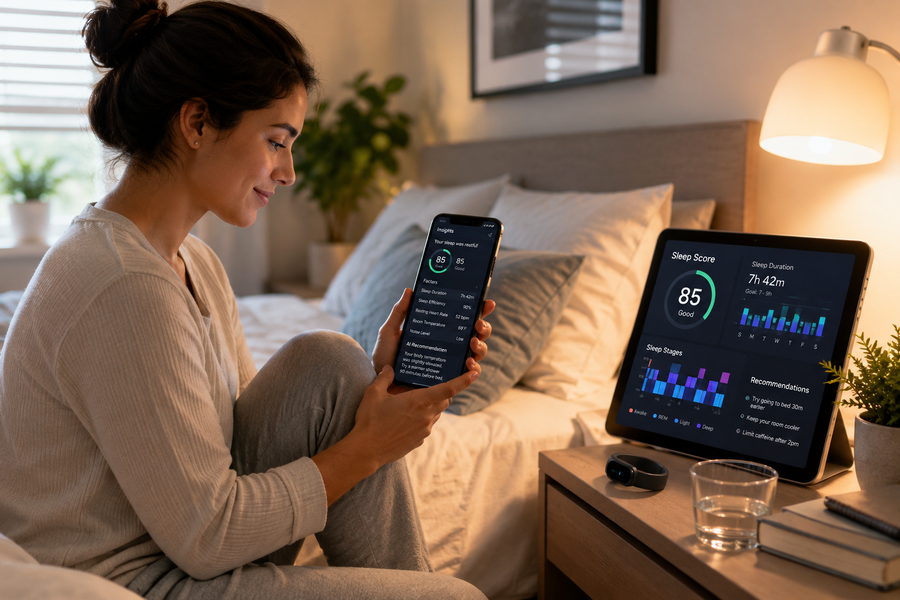
The value of this tracking lies in making the previously invisible architecture of sleep visible to ordinary people on a nightly basis, in their own beds rather than a laboratory. Where once a person knew only that they felt rested or tired, they can now see estimates of how long they slept, how much time they spent in deep and rapid-eye-movement sleep, how often and when they woke, and how their sleep varied from night to night, building a detailed picture of their own rest over time. This continuous, longitudinal view is something polysomnography, with its occasional single-night measurements, cannot provide, and it allows patterns to emerge that would otherwise remain hidden, such as how sleep changes with the seasons, the workweek, or particular behaviors. The accuracy of consumer tracking is not perfect, and the estimates should be understood as informed approximations rather than clinical truth, but the ability to render the hidden structure of one’s own sleep visible, night after night, represents a genuine advance, and it is the essential foundation on which the personalized analysis and recommendations are built, since one cannot improve what one cannot measure.
Personalized Recommendations and Environmental Intervention
Building on the analysis of sleep, AI-driven platforms generate personalized recommendations intended to help individuals improve their rest, moving from measurement to actionable guidance. By analyzing a person’s sleep data over time alongside information about their behavior and environment, these systems attempt to identify the factors that affect that specific individual’s sleep and to offer tailored advice, such as adjusting bedtime, modifying caffeine or alcohol consumption, changing exercise timing, or altering the sleep environment. The personalization is key, since the system learns from the individual’s own data what is normal for them and what seems to disturb or improve their sleep, allowing it to offer guidance calibrated to that person rather than generic tips that may not apply. Some platforms present this as a daily readiness or recovery indicator that synthesizes sleep and other physiological data into a simple signal of how well-rested and prepared for exertion the person is, nudging them toward rest or activity accordingly.
The sophistication of these recommendations has grown with the integration of more data and more advanced models, including the use of conversational artificial intelligence to deliver personalized coaching. Recent systems combine sleep data with detailed information about a person’s habits, activities, and self-reported behaviors to produce richer insights into what drives their sleep, and some have integrated advanced language models that allow users to ask questions about their data and receive tailored, conversational advice about how to improve their sleep and recovery. This represents a shift from static reports toward interactive, personalized guidance, in which the system can explain what its data suggests, answer questions, and offer specific recommendations grounded in the individual’s own patterns and in sleep science. The aim is to make the insights from sleep tracking genuinely actionable, helping people understand not just how they slept but what they might do differently to sleep better, tailored to their particular circumstances.
A distinct and increasingly important approach moves beyond recommendations to active intervention in the sleep environment, using machine learning to automatically adjust conditions in real time to improve sleep. Rather than merely advising a person to change their environment, some systems directly control elements of it, most notably temperature, which strongly affects sleep. Smart sleep systems use sensors to track a person’s sleep stages and physiology through the night and machine learning to adjust the temperature of the sleeping surface dynamically, cooling or warming it to match the body’s needs at each stage of sleep, making frequent automatic adjustments through the night in response to the person’s changing physiological state. Because body temperature naturally shifts across the sleep cycle and an optimal thermal environment supports deeper, less interrupted sleep, this real-time, personalized temperature management can improve sleep quality without requiring the person to do anything, and clinical research has indicated that such stage-based temperature adjustment can enhance deep sleep and related physiological metrics. This active-intervention approach represents a more direct application of machine learning to sleep improvement, closing the loop from sensing to action by continuously optimizing the sleep environment in a personalized way, and together with personalized recommendations it illustrates the range of ways AI translates the analysis of sleep into genuine improvement.
A particularly powerful application of personalization lies in the delivery of behavioral therapy for sleep disorders, especially insomnia, where the leading evidence-based treatment is a structured form of cognitive behavioral therapy. This therapy involves techniques such as adjusting the times a person spends in bed, changing the associations between the bed and wakefulness, and addressing the anxious thoughts that perpetuate sleeplessness, and it is highly effective but has traditionally required access to a trained therapist, which is scarce and expensive. Machine learning and software allow this therapy to be delivered digitally and personalized to the individual, with an algorithm tailoring the program to a person’s specific sleep patterns and progress, guiding them through the techniques, adjusting the plan based on their data, and providing the structure and feedback that a human therapist would. This personalization is essential to the therapy’s effectiveness, since the adjustments to sleep timing and behavior must be calibrated to the individual’s actual sleep, and the digital, algorithm-driven approach makes it possible to deliver this calibrated, evidence-based treatment to vast numbers of people who could never access a specialist. The application of personalization to behavioral treatment, as distinct from tracking or environmental control, shows how machine learning can extend not just insight but genuine, clinically grounded therapy, addressing the causes of poor sleep through tailored behavior change rather than merely measuring its symptoms or adjusting its environment.
The Technology and Data Behind Sleep AI
The capabilities of AI-driven sleep technology rest on a foundation of sensors, data, and machine learning methods, and understanding this foundation clarifies both how the systems work and the factors that determine their accuracy and usefulness. At the most basic level are the sensors that gather the physiological signals from which sleep is inferred. Wearable devices such as rings and wristbands contain sensors that measure heart rate and its variability through optical means, movement through accelerometers, and skin temperature, while environmental systems built into mattresses or bedside devices can measure movement, heart rate, breathing, and other signals without being worn. The choice and placement of sensors affects the quality of the signals available, with different form factors offering different trade-offs between comfort, convenience, and the richness of the data they capture, and the continuing improvement of these sensors has expanded the physiological information available for analysis.
The machine learning models that interpret these signals are the heart of the technology, and their performance depends critically on the data used to train them. To learn the relationship between accessible signals and true sleep stages, models must be trained on large datasets in which the sensor signals are paired with simultaneous clinical measurement, so that the model can learn which patterns of heart rate, movement, and temperature correspond to which sleep stages as determined by the gold standard. The leading systems have been trained on very large quantities of such paired data, in some cases many thousands of hours of clinical sleep measurement, which allows the models to learn the subtle and complex relationships needed for accurate staging. The scale and quality of this training data is a major determinant of a system’s accuracy, and it represents a significant investment and competitive advantage for the companies that have assembled large, high-quality datasets, since a model is only as good as the data it learns from.
Validation against the clinical gold standard is an essential part of the technology, providing the evidence for how accurate a system actually is and distinguishing credible products from unsupported claims. Because consumer sleep tracking infers rather than directly measures sleep, its accuracy cannot be assumed and must be demonstrated through studies that compare the system’s output to simultaneous polysomnography in real people. Reputable systems undergo such validation, often in partnership with academic or clinical researchers, and the results of these studies, including measures of how well the system agrees with polysomnography across the sleep stages, provide the basis for assessing their reliability. Independent validation, conducted by researchers not affiliated with the manufacturer, carries particular weight, and the field has increasingly emphasized the importance of transparent, rigorous validation, since the accuracy of these consumer systems varies and claims of clinical-grade precision should be supported by evidence. The existence and quality of validation studies is thus a key signal of whether a sleep technology can be trusted, separating those with genuine scientific support from those making unsubstantiated marketing claims.
The methods of personalization form the final layer of the technology, determining how a system tailors its analysis and advice to the individual rather than applying generic standards. Personalization can take several forms, from learning an individual’s baseline patterns so that deviations can be detected, to identifying the specific factors that correlate with better or worse sleep for that person, to adapting recommendations and interventions based on how the individual responds. The integration of diverse data, including not just sleep but activity, behavior, self-reported information, and environmental conditions, enables richer personalization by giving the system more to learn from about what drives a particular person’s sleep. The most advanced systems combine this rich, individualized data with sophisticated models, including conversational interfaces, to deliver guidance that feels genuinely tailored, and the continuing development of personalization methods is central to the field’s ambition of moving beyond one-size-fits-all sleep advice. Together, the sensors, the training data, the validation, and the personalization methods constitute the technological foundation that turns the signals of a sleeping body into personalized insight and intervention, and the quality of each element shapes how well the resulting system can actually understand and improve a person’s sleep.
Benefits and Challenges Across Stakeholders
AI-driven sleep technology produces distinct effects for the various parties involved, and a balanced assessment requires weighing its genuine benefits against its real limitations across individuals, clinicians, and researchers, with particular care about the risk that the technology can sometimes worsen the very thing it aims to improve. Individuals gain unprecedented insight into their own sleep and tools to improve it, clinicians and researchers gain access to rich, real-world sleep data, yet these benefits come alongside limits on accuracy, the danger of an unhealthy preoccupation with sleep metrics, privacy concerns, and the risk of mistaking consumer estimates for medical truth. The technology is genuinely valuable and increasingly validated, but it must be used thoughtfully, so a clear-eyed view must hold the benefits and the cautions together.
The analysis below organizes these considerations by stakeholder and by category, first examining the benefits that accrue to individuals, clinicians, and researchers when the technology is used well, then turning to the risks, limitations, and the particular danger of over-reliance that determine whether the technology helps or harms. Keeping these perspectives distinct helps move past both the marketing that presents sleep tracking as a perfect window into health and the dismissal that treats it as a useless gadget, arriving at a grounded understanding of what these tools genuinely offer and the care their use requires.
Benefits for Individuals, Clinicians, and Research
For individuals, the central benefit is unprecedented insight into their own sleep and the tools to act on it, transforming a previously invisible part of life into something they can understand and influence. By rendering the structure and quality of their sleep visible night after night, these systems allow people to learn how they actually sleep, to recognize patterns and problems, and to see how their behavior and environment affect their rest, knowledge that was simply unavailable to most people before. This awareness can motivate and guide beneficial changes, as a person who sees that late caffeine or irregular bedtimes harm their sleep gains a concrete reason and a feedback mechanism to change, and the personalized recommendations and interventions can directly help them sleep better. For people struggling with poor sleep, the ability to track, understand, and address their rest, sometimes with clinically validated programs, can meaningfully improve their sleep and through it their broader health and wellbeing, making the technology a genuinely useful tool for those who use it wisely.
For clinicians, AI-driven sleep technology offers access to rich, longitudinal, real-world data about patients’ sleep that can complement clinical assessment and extend care beyond the occasional lab visit. A clinician treating a patient with a sleep problem traditionally relies on the patient’s subjective reports and, at most, an occasional clinical sleep study, but consumer sleep data can provide a continuous record of how the patient actually sleeps over weeks or months in their own environment, offering context that the snapshot of a single lab night cannot. While consumer data is not a substitute for clinical diagnosis and must be interpreted with awareness of its limitations, it can help clinicians identify patterns, monitor the effects of treatment over time, and engage patients in their own care, and clinically validated digital therapeutics can extend evidence-based treatment for conditions like insomnia to far more people than could access traditional therapy. This extension of insight and treatment beyond the clinic represents a meaningful benefit, particularly given the shortage of sleep specialists and the difficulty many people face in accessing clinical sleep care.
For research, the vast quantities of real-world sleep data generated by these systems offer an unprecedented resource for understanding sleep at scale, far beyond what laboratory studies alone could achieve. Traditional sleep research has been limited by the cost and difficulty of polysomnography, which restricts studies to small numbers of participants measured for short periods, whereas consumer sleep technology can gather data from enormous numbers of people over long periods in their natural environments, enabling studies of sleep patterns, their determinants, and their relationships to health that were previously impossible. Researchers have used such data to study how factors like exercise, behavior, and environment affect sleep across large populations, and the scale and ecological validity of this data, reflecting real sleep in real life rather than artificial laboratory conditions, can yield insights that complement and extend traditional research. This contribution to scientific understanding, made possible by the deployment of validated tracking to large populations, is a significant benefit of the technology beyond its direct value to individuals, advancing the collective knowledge of a phenomenon central to human health.
Risks, Limitations, and the Danger of Over-Reliance
The most distinctive risk of sleep technology is the phenomenon sometimes called orthosomnia, in which an unhealthy preoccupation with achieving perfect sleep metrics paradoxically harms sleep by creating anxiety about it. The very act of tracking sleep and fixating on the numbers can cause stress, and stress and anxiety are themselves major enemies of good sleep, so that a person who becomes obsessed with optimizing their sleep scores may lie awake worrying about their data, check their metrics compulsively, and feel distressed by imperfect readings, undermining the relaxed state that sleep requires. This is a genuine and recognized danger, because the technology can shift a person’s relationship with sleep from a natural process into a performance to be measured and optimized, and the pursuit of ideal numbers can become counterproductive. Healthy use of sleep technology requires treating the data as informative rather than authoritative, using it to guide gentle, sustainable improvements rather than as a source of anxiety, and recognizing that feeling rested matters more than any score, a balance that the design and marketing of these tools do not always encourage.
Limitations on accuracy and the risk of mistaking consumer estimates for medical truth form a second important concern. Despite impressive progress, consumer sleep tracking infers rather than directly measures sleep, and its estimates, while increasingly good, are not perfect and can be wrong, particularly for individuals whose physiology differs from the populations the models were trained on or who have sleep disorders. Treating these estimates as precise clinical truth can mislead, and the technology is not a diagnostic tool, so a person with a genuine sleep disorder should seek professional evaluation rather than relying on consumer data, which may miss or misrepresent serious problems. The accuracy also varies considerably between products, and not all marketing claims are supported by rigorous validation, so users should be appropriately skeptical and understand that even the best consumer systems provide informed approximations rather than the certainty of clinical measurement. Conflating the convenience of consumer tracking with the authority of medical diagnosis is a real risk that can lead people to either undue worry or false reassurance.
The remaining concerns involve privacy, equity, and the broader limits of the technology. Sleep and physiological data are sensitive and personal, revealing information about health, habits, and even location and activity, and the collection and use of such data by commercial companies raises real privacy concerns about how it is stored, shared, and potentially exploited, which users should consider when adopting these systems. There are also questions of equity, since the most capable devices and platforms can be expensive, potentially limiting the benefits to those who can afford them, and of whether the models, often trained on particular populations, perform equally well for everyone. More fundamentally, sleep technology addresses sleep largely as an individual, technological matter, while many causes of poor sleep, including stress, overwork, noise, and other environmental and social factors, lie beyond what a device or app can fix, so the technology should not be mistaken for a complete solution to sleep problems that often have deeper roots. None of these limitations negates the genuine value of AI-driven sleep technology, but together they make clear that it is a useful tool to be used thoughtfully rather than a magic solution, that its data should inform rather than dominate a person’s relationship with sleep, and that its benefits come with responsibilities around privacy, accuracy, and the recognition that good sleep depends on far more than what any technology can measure or control.
Real-World Implementations and Measured Outcomes
AI-driven sleep technology is embodied in real products with documented validation, and three examples illustrate the range of approaches, from wearable tracking to environmental intervention to clinically validated behavioral therapy. These cases span a ring that tracks and stages sleep with validated accuracy, a smart sleep system that actively adjusts the sleep environment, and a digital therapeutic that delivers evidence-based treatment for insomnia, together demonstrating that machine learning for sleep has produced not just consumer gadgets but tools with genuine scientific support. Each is grounded in documented developments and validation studies, showing that the field has moved beyond marketing claims toward measured outcomes.
The Oura Ring exemplifies the wearable sleep-tracking approach and the importance of validated accuracy, demonstrating how far machine learning has advanced consumer sleep staging. The ring measures physiological signals including heart rate, heart rate variability, movement, and temperature, and applies a machine learning sleep staging algorithm trained on a large dataset of clinical sleep measurement, reportedly many thousands of hours of polysomnography, to classify a person’s sleep into stages and assess its quality. The accuracy of this approach has been validated in independent studies, including research finding that the ring achieves meaningful agreement with polysomnography in distinguishing the four stages of sleep, on the order of nearly eighty percent agreement, and a 2024 validation study conducted at a major university involving dozens of participants and hundreds of thousands of measured sleep epochs found that the ring’s measurements did not significantly differ from polysomnography on key metrics. The system also personalizes its analysis, recognizing that good sleep differs between individuals based on factors like age and fitness, and it synthesizes sleep and other data into personalized readiness guidance. Oura demonstrates that a small, wearable device can track sleep with accuracy approaching clinical measurement, validated by independent research, representing a substantial achievement of applied machine learning. The progression of its algorithms over successive generations also illustrates how these systems improve over time, as larger training datasets and more advanced models steadily raise accuracy, so that a device purchased today may grow more capable through software updates that refine the underlying machine learning without any change to the hardware. This capacity for the analysis to improve continuously, decoupled from the physical sensor, is a notable feature of software-driven sleep technology, meaning that the validation of a system is never entirely final but tracks an evolving algorithm, which is part of why ongoing, transparent validation against the clinical standard matters so much for maintaining trust as the technology advances.
Eight Sleep exemplifies the active environmental intervention approach, using machine learning not merely to track sleep but to improve it directly by controlling the sleep environment. The company’s smart sleep system, built into a mattress cover, uses sensors to track a sleeper’s physiological signals and sleep stages through the night and a deep learning algorithm to dynamically adjust the temperature of the sleeping surface, cooling or warming it in real time to suit the body’s needs at each stage of sleep and making frequent automatic adjustments through the night in response to the person’s changing state and conditions. Because temperature strongly affects sleep and the body’s thermal needs shift across the sleep cycle, this personalized, real-time temperature management aims to improve sleep quality automatically, without requiring the person to do anything. Clinical research has supported the approach, with studies indicating that real-time, sleep-stage-based temperature adjustment can improve measures such as deep sleep and cardiovascular metrics, and that sleeping on a temperature-controlled surface can enhance sleep and recovery. Eight Sleep illustrates the active-intervention model, closing the loop from sensing to action by continuously optimizing the sleep environment in a personalized way, and demonstrating how machine learning can directly intervene to improve sleep rather than merely measure and advise.
Sleepio, developed by Big Health, exemplifies the clinically validated digital therapeutic approach, applying personalization to deliver an evidence-based behavioral treatment for insomnia at scale. Rather than tracking sleep with sensors, Sleepio delivers a digital program based on cognitive behavioral therapy for insomnia, the leading evidence-based treatment, using an algorithm-driven, personalized approach that tailors the therapy to the individual and guides them through the techniques shown to improve sleep. The platform’s effectiveness has been demonstrated through rigorous clinical research, including a placebo-controlled randomized trial and numerous additional randomized controlled trials, with reported results indicating that a large majority of patients, around three-quarters, achieve clinical improvement in their insomnia, and further research has shown benefits extending to anxiety and to specific populations such as stroke patients in rehabilitation. Notably, Sleepio became the first digital therapeutic to receive favorable guidance from a major national health technology assessment body, confirming its clinical and cost effectiveness. Sleepio demonstrates that personalized, algorithm-driven digital tools can deliver genuine, clinically validated treatment for a real sleep disorder, extending evidence-based care to far more people than could access traditional therapy. Its example is especially important because it counters the impression that sleep technology is merely about tracking and gadgets, showing instead that the same digital and algorithmic tools can deliver the most effective known treatment for insomnia, addressing the disorder’s underlying behavioral and cognitive causes rather than simply measuring its effects. In a world where trained sleep therapists are scarce and many people with chronic insomnia go untreated or are prescribed medications with their own drawbacks, a validated digital therapeutic that can scale to large populations represents a meaningful expansion of access to care, and its formal endorsement by a national health technology body marks a significant milestone in the recognition of software as a legitimate medical treatment. Taken together, these three implementations, the validated wearable tracker, the active environmental intervention, and the clinically proven digital therapeutic, demonstrate the range and the genuine scientific grounding of machine learning applied to sleep, showing that the field has produced tools with real, measured benefits across tracking, intervention, and treatment.
Final Thoughts
Machine learning for sleep improvement represents a meaningful advance in bringing personalized insight to a part of life that has long been mysterious and largely invisible to the people living it. By using affordable sensors and sophisticated models to infer the structure and quality of sleep, to identify the factors that affect a given individual’s rest, and to offer tailored recommendations or to actively optimize the sleep environment, these technologies have made the hidden world of sleep accessible to ordinary people in their own homes, a capability that once required a clinical laboratory and remained out of reach for nearly everyone. The progress has been genuine and is increasingly backed by rigorous validation, with leading systems achieving accuracy approaching clinical measurement and clinically validated programs delivering real treatment, demonstrating that this is not merely a wave of gadgets but a serious application of technology to human health.
The broader significance of this work lies in its potential to improve wellbeing on a wide scale by extending insight and effective intervention to a population that has had little access to either. Sleep profoundly affects physical and mental health, yet good sleep care has been scarce, with sleep specialists in short supply and effective treatments difficult to access, and AI-driven sleep technology can extend awareness, guidance, and even clinically validated treatment to far more people than the traditional system could ever reach. For individuals struggling with their sleep, the ability to understand their rest and to access personalized, evidence-based help can meaningfully improve their health and quality of life, and the scale at which these tools operate means their cumulative effect on public wellbeing could be substantial. The intersection of technology and health is vivid here, in the prospect of democratizing access to the understanding and improvement of sleep.
The responsibility that accompanies this promise centers on ensuring that the technology genuinely serves wellbeing rather than undermining it, a concern that is unusually acute for sleep. The same tools that can illuminate and improve sleep can, if used unwisely, breed an anxious preoccupation with metrics that harms the very rest they aim to enhance, and the design and marketing of these products do not always encourage the healthy, balanced use that serves people best. There are real obligations around the accuracy of claims, the protection of sensitive personal data, the avoidance of fostering unhealthy fixation, and the honest acknowledgment that consumer tools are not medical diagnoses and that good sleep depends on far more than technology can measure or control. The user’s wellbeing must remain the measure of these tools, which means encouraging their use as a gentle aid rather than a source of stress, and recognizing that the goal is restful sleep and a healthy life, not perfect scores.
The most balanced understanding is that machine learning for sleep is a genuinely valuable technology that, used thoughtfully, can help people understand and improve a vital aspect of their health, while demanding care to avoid the pitfalls of over-reliance and anxiety. As the accuracy of these systems improves, as their personalization deepens, and as clinically validated tools extend effective treatment to more people, the prospect grows of a future in which everyone can access personalized insight into their sleep and evidence-based help in improving it. The enduring promise of this technology lies in turning the long-mysterious experience of sleep into something people can understand and gently improve, and realizing that promise responsibly, in a way that calms rather than agitates and that serves genuine rest rather than the pursuit of metrics, represents a worthwhile contribution to accessible, personalized health.
FAQs
- How does a wearable device track my sleep stages?
A wearable cannot directly measure brain waves the way a clinical sleep study does, so instead it measures more accessible signals such as heart rate, the variation between heartbeats, movement, and skin temperature. These signals change in characteristic ways across the different sleep stages, and a machine learning model trained on large amounts of data learns to recognize these patterns and classify each period of the night into the likely stage. The result is an inference, an informed estimate of your sleep structure, rather than the direct measurement that clinical equipment provides. - What is polysomnography?
Polysomnography is the clinical gold standard for measuring sleep, a test that records brain waves, eye movements, muscle activity, heart rhythm, breathing, and other signals while a person sleeps, usually in a sleep laboratory. It lets trained technicians determine precisely which sleep stage a person is in and diagnose sleep disorders. However, it is expensive, requires specialized equipment and expertise, and involves sleeping wired to sensors in an unfamiliar setting, making it impractical for routine use. Consumer sleep technology aims to estimate the information polysomnography provides using simpler sensors and machine learning. - How accurate are consumer sleep trackers?
Accuracy has improved substantially and varies by product, with the best systems now achieving meaningful agreement with polysomnography in distinguishing the multiple sleep stages, in some cases on the order of nearly eighty percent agreement, validated by independent studies. However, because they infer rather than directly measure sleep, their estimates are not perfect and can be wrong, especially for people whose physiology differs from the training populations or who have sleep disorders. They should be understood as informed approximations rather than clinical truth, useful for tracking patterns but not a substitute for medical diagnosis. - Why does personalization matter for sleep?
Sleep needs, patterns, and physiology vary considerably between people based on age, fitness, genetics, health, and other factors, so what counts as healthy, restorative sleep and what helps improve it differs from person to person. Generic advice may help some and do nothing for others. Machine learning is well suited to personalization because it can learn the patterns specific to an individual from their own data, recognizing what their normal sleep looks like, what disrupts it, and what improves it, and tailoring its analysis and recommendations accordingly, moving beyond one-size-fits-all guidance. - Can these systems actually improve my sleep, not just measure it?
Yes, in several ways. They generate personalized recommendations, such as adjusting bedtime, caffeine, or exercise timing based on your own data, helping you make beneficial changes. Some actively intervene in the sleep environment, using machine learning to adjust conditions like the temperature of the sleeping surface in real time to suit your body’s needs at each sleep stage. And clinically validated digital therapeutics deliver evidence-based behavioral treatment for conditions like insomnia. The measurement is the foundation, but the value comes from turning that insight into guidance and action that improves rest. - What is orthosomnia?
Orthosomnia is a recognized phenomenon in which an unhealthy preoccupation with achieving perfect sleep metrics paradoxically harms sleep by creating anxiety about it. Because stress is a major enemy of good sleep, a person who becomes obsessed with optimizing their sleep scores may lie awake worrying about their data, check metrics compulsively, and feel distressed by imperfect readings, undermining the relaxed state sleep requires. It is a real danger of sleep tracking, and healthy use means treating the data as informative rather than authoritative and remembering that feeling rested matters more than any score. - How is temperature used to improve sleep?
Body temperature naturally shifts across the sleep cycle, and an optimal thermal environment supports deeper, less interrupted sleep. Some smart sleep systems use sensors to track a sleeper’s stages and physiology and machine learning to dynamically adjust the temperature of the sleeping surface, cooling or warming it in real time to match the body’s needs at each stage and making frequent automatic adjustments through the night. Clinical research has indicated that such stage-based temperature adjustment can improve deep sleep and related metrics, allowing the system to enhance sleep automatically without the person needing to do anything. - Are sleep-tracking devices a substitute for seeing a doctor?
No. Consumer sleep technology is not a diagnostic tool, and its estimates, while increasingly accurate, are not clinical measurements and can miss or misrepresent serious problems. A person who suspects they have a genuine sleep disorder, such as sleep apnea or chronic insomnia, should seek professional evaluation rather than relying on consumer data. The technology can complement clinical care by providing real-world data over time, and clinically validated digital therapeutics can deliver genuine treatment, but consumer tracking should inform rather than replace professional medical assessment of sleep problems. - What data do these systems collect, and is it private?
These systems collect sensitive physiological and behavioral data, including heart rate, movement, temperature, sleep patterns, and sometimes self-reported habits, which can reveal information about your health, routines, and activity. The collection and use of such data by commercial companies raises real privacy concerns about how it is stored, shared, and potentially used, so users should consider a product’s privacy practices before adopting it, review what data is collected and how it is handled, and choose providers they trust. The intimacy of sleep and health data makes privacy an important consideration in using these technologies. - Have any of these tools been clinically validated?
Yes. Leading wearable trackers have been validated in independent studies comparing their output to polysomnography, with some found to achieve accuracy approaching clinical measurement. Smart sleep systems that adjust temperature have clinical research supporting their effect on sleep metrics. Most notably, Sleepio, a digital therapeutic delivering cognitive behavioral therapy for insomnia, has been validated in a placebo-controlled trial and numerous randomized controlled trials, with a large majority of patients achieving clinical improvement, and it became the first digital therapeutic to receive favorable guidance from a major health technology assessment body, confirming its clinical and cost effectiveness.