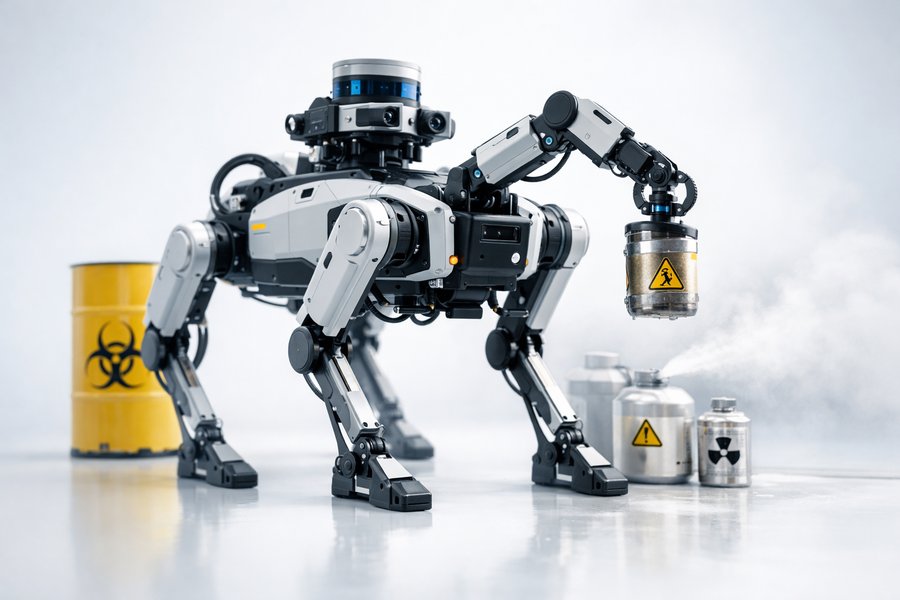
The remediation of hazardous materials represents one of the most challenging and dangerous undertakings in environmental management. From radioactive waste at nuclear facilities to chemical contamination at industrial sites, the presence of toxic substances poses immediate threats to human health while demanding specialized expertise and equipment for safe removal. For decades, this work has required human workers to enter contaminated zones wearing cumbersome protective equipment, exposing themselves to radiation, toxic chemicals, and other life-threatening hazards despite extensive safety protocols. The physical and psychological toll on these workers, combined with the inherent limitations of human endurance in hostile environments, has long constrained the pace and effectiveness of cleanup operations at sites around the world.
Autonomous artificial intelligence systems mounted on robotic platforms are fundamentally transforming this landscape by enabling the remediation of contaminated sites without placing human workers in harm’s way. These sophisticated machines combine advanced sensors capable of detecting and characterizing contamination with AI algorithms that process environmental data in real time, allowing robots to navigate hazardous terrain, identify toxic materials, and execute cleanup tasks with minimal human intervention. The convergence of robotics, machine learning, and specialized sensor technology has created systems capable of operating in environments too dangerous for human presence, from the radiation-saturated interiors of damaged nuclear reactors to chemical storage facilities containing volatile compounds.
The significance of this technological advancement extends far beyond worker safety considerations. Hazardous waste sites around the world represent a legacy of industrial activity, nuclear weapons production, and inadequate waste disposal practices that continues to threaten communities and ecosystems. The United States alone has identified more than 1,300 Superfund sites requiring remediation, while nuclear facilities from Japan to the United Kingdom face decommissioning challenges that will span decades. Traditional cleanup methods have proven slow, expensive, and sometimes incomplete, with contamination spreading while authorities struggle to allocate sufficient resources and trained personnel. Autonomous systems offer the potential to accelerate remediation timelines, reduce costs, and achieve more thorough cleanup outcomes by operating continuously in conditions that would quickly exhaust human workers.
The development of AI-guided hazmat cleanup robots represents the culmination of advances across multiple technological domains. Robotic platforms have evolved from simple teleoperated manipulators to agile machines capable of traversing stairs, opening doors, and manipulating objects with dexterity approaching human capability. Sensor technology has advanced to enable real-time detection and characterization of radioactive isotopes, chemical compounds, and biological agents across a broad spectrum of concentrations. Machine learning algorithms have matured to the point where they can process complex environmental data, identify contamination patterns, and make autonomous decisions about remediation approaches. The integration of these capabilities into coherent systems represents a paradigm shift in how society can address the toxic legacy of past industrial practices while preventing similar problems in the future.
This examination explores the emergence of autonomous AI systems as transformative tools for hazardous material cleanup, beginning with an understanding of contamination challenges and traditional remediation approaches before examining the core technologies enabling these advances. Through documented case studies from nuclear facilities and contaminated sites, the analysis demonstrates how these systems are already changing remediation practices. The benefits and challenges associated with autonomous cleanup systems reveal both the promise and the practical obstacles facing wider adoption, illuminating a path toward safer, faster, and more effective environmental restoration.
Understanding Hazardous Material Contamination and Traditional Remediation
Hazardous material contamination encompasses a diverse range of substances and exposure scenarios that pose distinct challenges for remediation efforts. Radioactive contamination, perhaps the most feared category, involves materials that emit ionizing radiation capable of causing cellular damage, cancer, and death at sufficient exposure levels. Nuclear facilities, weapons production sites, and areas affected by nuclear accidents contain radioactive isotopes with half-lives ranging from seconds to thousands of years, requiring containment and monitoring across timeframes that exceed human lifespans. Chemical contamination includes industrial solvents, heavy metals, petroleum products, and synthetic compounds that can persist in soil and groundwater for decades while causing neurological damage, organ failure, and developmental disorders in exposed populations. Biological contamination involves pathogens, toxins, and other organic materials that may cause disease outbreaks or long-term health effects in affected communities.
The physical characteristics of contaminated sites present additional complications that make remediation extraordinarily difficult. Many hazardous waste sites feature deteriorating infrastructure, unstable structures, and confined spaces that restrict access even before considering the toxic materials present. Nuclear facilities often contain equipment and materials that have become intensely radioactive through decades of exposure to neutron bombardment, creating environments where radiation levels would prove fatal within minutes to unprotected humans. Chemical storage facilities may contain corroded containers holding volatile or reactive substances that could release toxic clouds or cause explosions if improperly handled. These physical hazards combine with contamination risks to create environments that severely constrain what human workers can accomplish, regardless of available protective equipment.
Traditional remediation approaches have relied heavily on human workers equipped with personal protective equipment and specialized tools to contain, remove, or neutralize hazardous materials. In nuclear settings, this typically involves strict time limitations on worker exposure, with individuals rotating through contaminated areas in carefully monitored shifts to keep cumulative radiation doses below regulatory limits. Workers wear dosimeters that track exposure, and when approaching dose limits, must be removed from hazardous work regardless of whether their tasks are complete. This approach inherently limits the amount of work that can be accomplished while requiring large numbers of trained personnel to maintain progress on cleanup activities. The physical burden of wearing full protective suits, respirators, and other safety equipment further reduces worker efficiency and limits the duration of productive work periods.
The human toll of hazardous material remediation has been substantial across decades of cleanup efforts. Workers at nuclear sites have experienced elevated rates of cancer and other radiation-related illnesses, prompting ongoing legal battles over compensation and responsibility. Chemical exposure has caused neurological disorders, respiratory conditions, and other chronic health problems in cleanup workers who believed their protective equipment would shield them from harm. Beyond physical health effects, the psychological stress of working in environments known to contain deadly materials takes its toll on workers and their families, contributing to mental health challenges and difficulties retaining experienced personnel in the remediation workforce. These human costs have driven increasing interest in alternatives that could accomplish cleanup objectives without requiring workers to enter the most dangerous zones.
Conventional remediation technologies have achieved significant progress at many contaminated sites but face inherent limitations that constrain their effectiveness. Excavation and removal of contaminated soil works well for relatively shallow contamination but becomes impractical at depth or in areas with complex underground infrastructure. Pump-and-treat systems can address groundwater contamination but often require decades of operation to achieve cleanup goals, with contaminants sometimes proving more persistent than initial models predicted. Containment approaches that cap contaminated areas or install barriers to prevent migration address immediate exposure risks but leave hazardous materials in place for future generations to manage. Each of these approaches depends on accurate characterization of contamination extent and distribution, yet the difficulty of obtaining comprehensive data in hazardous environments often leads to surprises during remediation that delay progress and increase costs.
The economic dimensions of traditional remediation have proven staggering at large contaminated sites. The Hanford Site in Washington State, which produced plutonium for nuclear weapons during the Cold War, has already consumed tens of billions of dollars in cleanup funding while estimates suggest the total cost could approach six hundred billion dollars over the cleanup lifetime. Similar cost escalations have affected nuclear decommissioning projects worldwide, with initial estimates routinely proving inadequate as the true extent of contamination becomes apparent. These economic pressures create powerful incentives to find more efficient approaches that could accelerate cleanup timelines while reducing per-unit costs, making autonomous systems increasingly attractive despite their own substantial development and deployment expenses.
The limitations of traditional remediation become particularly apparent when examining the timeline challenges at major contaminated sites. Decommissioning programs for nuclear facilities routinely span multiple decades, with workers retiring before completing projects they joined at career start. The Fukushima Daiichi cleanup carries an official target of thirty to forty years, which many experts consider optimistic given the unprecedented technical challenges involved. Sellafield’s highest hazard facilities have required remediation efforts spanning over half a century, with completion still years away. These extended timelines not only increase total costs but also create intergenerational equity concerns, as communities continue bearing contamination risks while resources flow to cleanup activities that may not reach completion within their lifetimes. The inability of traditional approaches to achieve timely results has become a primary driver for seeking technological alternatives that could fundamentally accelerate progress.
Core Technologies Powering Autonomous Cleanup Systems
The autonomous systems transforming hazardous material remediation represent the integration of multiple technological capabilities that have matured significantly over the past decade. Robotic hardware provides the physical platforms capable of navigating challenging terrain and manipulating objects in contaminated environments. Sophisticated sensor arrays enable detection and characterization of hazardous substances across the spectrum of radiological, chemical, and biological threats. Artificial intelligence and machine learning algorithms process the data streams from these sensors while controlling robot movements and decision-making processes. Communication systems maintain connectivity between autonomous platforms and human operators who provide oversight and high-level direction. The synergy among these technological components creates systems with capabilities far exceeding what any single technology could achieve in isolation.
The development pathway for autonomous hazmat cleanup systems has drawn extensively from advances in adjacent fields including manufacturing robotics, autonomous vehicles, and military applications. Industrial robots have demonstrated remarkable precision and reliability in controlled factory environments, establishing the mechanical foundations for more capable mobile platforms. Self-driving vehicle programs have advanced sensor fusion techniques and real-time navigation algorithms that translate effectively to robotic systems operating in unstructured contaminated environments. Military robotics programs have addressed ruggedization requirements and remote operation challenges that apply directly to hazardous material applications. The cross-pollination of ideas and technologies across these domains has accelerated progress in autonomous cleanup systems while reducing development costs through the adaptation of existing solutions.
Robotic Platforms and Sensor Arrays
The physical platforms serving as the foundation for autonomous cleanup systems span a diverse range of form factors optimized for different operational environments and task requirements. Ground-based mobile robots include wheeled vehicles capable of carrying heavy payloads across relatively smooth surfaces, tracked platforms that can traverse rubble and debris, and legged robots that can climb stairs, step over obstacles, and access confined spaces inaccessible to wheeled or tracked designs. Boston Dynamics’ Spot robot has emerged as a prominent example of quadrupedal design, with its ability to navigate complex terrain while carrying sensor payloads and manipulation attachments making it valuable for inspection and characterization tasks at nuclear facilities including Sellafield in the United Kingdom and Fukushima Daiichi in Japan. Aerial drones provide rapid survey capabilities and access to elevated or otherwise inaccessible areas, while underwater remotely operated vehicles address contamination in flooded facilities, cooling ponds, and aquatic environments.
Sensor technologies integrated into these platforms enable comprehensive detection and characterization of hazardous materials across multiple modalities. Radiation sensors including gamma spectrometers, neutron detectors, and alpha particle monitors can identify specific radioactive isotopes while quantifying contamination levels, enabling robots to map radiological conditions throughout a facility. Chemical sensors employing spectroscopic techniques, ion mobility spectrometry, and electronic nose technologies can detect and identify a broad range of toxic compounds from volatile organic chemicals to heavy metals. Visual sensors including high-resolution cameras, thermal imagers, and LiDAR systems enable three-dimensional mapping of physical environments while identifying structural hazards and contamination indicators visible to optical systems. The integration of multiple sensor types enables comprehensive situational awareness that supports both autonomous operation and human decision-making.
The ruggedization requirements for sensors operating in hazardous environments present substantial engineering challenges that have driven significant innovation. Electronic components exposed to ionizing radiation experience degradation that can cause failures or erratic behavior, requiring either radiation-hardened designs or shielding that adds weight and bulk. Chemical environments may corrode sensor housings or contaminate optical surfaces, necessitating protective enclosures and cleaning mechanisms. Temperature extremes, humidity, and particulate contamination common in industrial settings require environmental protection that maintains sensor accuracy while surviving harsh conditions. The development of robust sensor packages capable of extended operation in these challenging environments has been essential to making autonomous cleanup systems practical for real-world deployment.
Data fusion algorithms combine information from multiple sensors to create comprehensive models of contaminated environments that exceed what any single sensor could provide. A robot equipped with radiation detectors, cameras, and LiDAR can simultaneously map physical structures, identify contamination hotspots, and create three-dimensional visualizations that help human planners understand site conditions without entering hazardous areas. These fused datasets support both immediate operational decisions and long-term planning by providing detailed records of site conditions that can be analyzed and reanalyzed as understanding improves. The ability to generate rich, multi-modal datasets represents a significant advantage over traditional characterization approaches that typically rely on discrete sampling at limited locations.
The modular design philosophy adopted by many robotic platform developers enables customization for specific mission requirements while maintaining core capabilities. Base platforms can be equipped with different sensor packages, manipulation tools, and specialized attachments depending on the tasks they will perform. A single Spot robot might carry radiation detection equipment for one mission, then be reconfigured with cameras and LiDAR for structural inspection, or equipped with a manipulator arm for object handling. This flexibility reduces the number of specialized platforms organizations must procure while enabling rapid adaptation to evolving mission requirements. Standardized interfaces and protocols support interoperability between components from different manufacturers, creating an ecosystem of compatible hardware and software that benefits both developers and end users.
Machine Learning and Decision-Making Algorithms
Artificial intelligence algorithms provide the cognitive capabilities that transform robotic platforms from remote-controlled tools into autonomous systems capable of independent operation in complex environments. Machine learning models trained on environmental data can recognize contamination patterns, predict contamination distribution in unsampled areas, and identify anomalies that may indicate previously unknown hazards. Navigation algorithms enable robots to plan efficient paths through cluttered environments while avoiding obstacles and hazards detected by onboard sensors. Task planning systems break complex remediation objectives into sequences of specific actions that robots can execute, adapting plans in real time as conditions change or unexpected situations arise. The integration of these algorithmic capabilities enables autonomous operation that reduces the burden on human operators while improving consistency and reliability.
Simultaneous localization and mapping represents a foundational capability that enables robots to navigate unknown environments while building maps that support both current operations and future planning. SLAM algorithms process data from cameras, LiDAR, and other sensors to estimate robot position while constructing detailed models of surrounding structures. In hazardous environments where GPS signals may be unavailable and pre-existing maps may be inaccurate or nonexistent, this capability proves essential for effective autonomous operation. Recent advances incorporating machine learning have improved SLAM performance in challenging conditions including low-visibility environments, dynamic scenes, and areas with repetitive structures that can confuse traditional algorithms. The detailed maps produced by SLAM-equipped robots provide valuable documentation of site conditions while supporting navigation by subsequent robotic systems.
Reinforcement learning approaches have shown particular promise for optimizing remediation strategies in complex, uncertain environments. Unlike supervised learning methods that require extensive labeled training data, reinforcement learning enables systems to improve performance through trial and error in simulated or real environments. Robots can learn effective approaches to tasks like manipulating contaminated objects, navigating debris fields, or optimizing sampling strategies without requiring explicit programming for every possible scenario. This adaptability proves valuable in contaminated sites where conditions vary unpredictably and prior experience may not directly apply to novel situations. Research collaborations involving national laboratories and universities continue advancing reinforcement learning applications specifically targeting remediation challenges.
Decision support systems that combine AI analysis with human oversight represent the current operational model for most autonomous cleanup applications. Rather than operating in complete autonomy, robots typically execute tasks under supervision from human operators who provide high-level direction and approve significant decisions. AI systems analyze sensor data, propose action plans, and flag potential problems for human attention, enabling operators to manage multiple robots efficiently while maintaining appropriate oversight. This collaborative approach leverages the strengths of both artificial and human intelligence while building the operational experience and trust necessary for expanded autonomy in future systems. The balance between autonomous operation and human control continues evolving as technology matures and operational track records demonstrate system reliability.
Predictive modeling capabilities enabled by machine learning provide valuable support for remediation planning and resource allocation. AI models trained on historical data from contaminated sites can predict contamination distribution in unsampled areas, estimate remediation timelines based on site characteristics, and identify factors that influence cleanup success or failure. These predictive capabilities help organizations allocate resources more effectively, prioritize activities with greatest impact, and anticipate challenges before they cause delays. Integration of predictive models with real-time sensor data enables dynamic updating of forecasts as new information becomes available, supporting adaptive management approaches that respond to evolving conditions. The combination of prediction and monitoring creates feedback loops that improve model accuracy over time while supporting more effective remediation decisions.
Real-World Applications and Verified Case Studies
The deployment of autonomous AI systems for hazardous material cleanup has progressed from research demonstrations to operational reality at some of the world’s most challenging contaminated sites. Nuclear facilities facing decommissioning challenges have emerged as early adopters, driven by the combination of extreme hazards, long remediation timelines, and substantial funding that characterizes the nuclear sector. Chemical contamination sites and environmental disaster responses have also seen increasing robotic deployment as technology has matured and costs have declined. These real-world applications provide valuable evidence regarding system capabilities, limitations, and the conditions under which autonomous approaches offer advantages over traditional methods. The documented outcomes from these deployments inform ongoing technology development while building the operational experience necessary for wider adoption.
The Fukushima Daiichi Nuclear Power Station in Japan represents perhaps the most demanding application environment for autonomous cleanup systems anywhere in the world. The 2011 earthquake and tsunami triggered meltdowns in three reactors, creating conditions of extreme radioactivity that have severely constrained human access throughout the subsequent decommissioning effort. Tokyo Electric Power Company has deployed numerous robotic systems to survey reactor interiors, characterize contamination, and begin the extraordinarily difficult process of retrieving melted nuclear fuel debris. In November 2024, TEPCO achieved a significant milestone when a telescopic robotic device successfully retrieved approximately 0.7 grams of fuel debris from the Unit 2 reactor, marking the first extraction of melted fuel since the accident. A second sample retrieval conducted in April 2025 obtained additional debris for analysis, with results confirming the presence of nuclear fuel material including americium-241 and europium-154. The total estimated 880 metric tons of fuel debris across the three damaged reactors will require decades of robotic operations to remove, with a 22-meter robotic arm developed by Mitsubishi Heavy Industries and other partners scheduled for deployment in fiscal year 2026 to enable more extensive interior investigations and debris sampling.
The United Kingdom’s nuclear decommissioning program has emerged as a global leader in deploying advanced robotics and AI for hazardous cleanup operations. Sellafield, the sprawling nuclear complex in Cumbria that served as Britain’s primary plutonium production and fuel reprocessing facility, presents remediation challenges that will span much of this century. In March 2025, Sellafield Ltd and AtkinsRéalis achieved what they described as an industry first by successfully operating a Boston Dynamics Spot robot remotely from a location outside the nuclear site’s license boundary, demonstrating the potential for virtual site access that could reduce personnel requirements while maintaining safety and security. The Robotics and Artificial Intelligence Collaboration program, a partnership involving Sellafield Ltd, the Nuclear Decommissioning Authority, UK Atomic Energy Authority, and the University of Manchester, has established dedicated facilities where researchers can develop and test robotic systems in environments mimicking actual nuclear conditions. A simulation system developed for the Pile Fuel Cladding Silo uses LiDAR scanning data collected by a Spot robot to create digital replicas that enable virtual testing of robot upgrades and procedural changes before deployment in the actual radioactive environment.
The Nuclear Decommissioning Authority announced in June 2025 a pioneering partnership investing up to 9.5 million pounds over four years to develop the Auto-SAS system for autonomous waste sorting and segregation. This project, delivered by ARCTEC, a partnership between AtkinsRéalis and Createc, will deploy robotic systems at the NRS Oldbury site in South Gloucestershire to autonomously categorize and sort radioactive waste retrieved from storage vaults. The system uses sensors to characterize waste materials before robotic manipulators sort items into appropriate disposal pathways, distinguishing between low-level and intermediate-level waste categories. Manual segregation of radioactive waste is complex and hazardous due to the nature of the materials, leading current practices to categorize mixed waste conservatively as intermediate-level waste even when much of it could qualify for less stringent disposal routes. The autonomous sorting system promises to reduce waste disposal costs potentially by hundreds of millions of pounds while removing workers from direct contact with radioactive materials. The project will proceed in two phases, with the first delivering a fully operational system in an inactive environment by August 2027 before active demonstration at Oldbury.
The Hanford Site in Washington State, the most contaminated nuclear facility in the United States, has employed robotic systems for various remediation tasks as part of the multi-decade cleanup effort. The site produced plutonium for nuclear weapons from 1943 to 1987, generating enormous quantities of radioactive and chemical waste that contaminated soil, groundwater, and facility structures across the 580-square-mile complex. Remote-controlled equipment has been used to excavate contaminated soil from beneath buildings too hazardous for human entry, with robots cutting through concrete floors and retrieving radioactive materials. In one notable deployment, Washington River Protection Solutions deployed a coating repair cobot to repair a protective liner inside an underground valve pit, marking the first use of this type of collaborative robot at the site. The cobot performed a sequence of programmed maneuvers to clean and repair the liner while workers remained safely at ground level, demonstrating applications that extend beyond characterization and removal to include maintenance and repair tasks. Hanford’s current lifecycle cost estimate approaches six hundred billion dollars, creating powerful incentives to identify technologies that could accelerate cleanup while reducing costs.
Environmental monitoring and contaminated site assessment have benefited substantially from drone-based systems equipped with specialized sensors. The U.S. Environmental Protection Agency has established a formal Unmanned Aircraft Systems program that deploys drones for Superfund site assessments, oil spill monitoring, and emergency response operations. Drones equipped with thermal sensors can detect groundwater seepage, identify underground storage tank leaks, and locate subsurface features not visible from ground level. The EPA-approved SnifferDRONE system provides compliance-grade methane monitoring at landfills, collecting air samples directly at ground level while correlating measurements with precise GPS coordinates. This drone-based approach enables more comprehensive, consistent, and safer monitoring than traditional methods requiring workers to traverse potentially hazardous terrain. The recognition of autonomous systems as acceptable for regulatory compliance represents a significant milestone that supports broader adoption across diverse environmental remediation applications.
Beyond these flagship projects, numerous smaller-scale deployments are demonstrating autonomous system value across diverse contamination scenarios. Oil spill response operations have begun incorporating robot swarms capable of cleaning thousands of gallons per minute while coordinating movements to maximize coverage efficiency. Chemical facilities have deployed autonomous inspection robots that can detect leaks and characterize contamination without requiring human entry into potentially explosive atmospheres. Mining sites with heavy metal contamination have used autonomous sampling robots to characterize soil conditions across large areas more thoroughly than discrete manual sampling could achieve. Each successful deployment adds to the collective understanding of how autonomous systems can address contamination challenges while building the operational experience base that supports technology refinement and broader adoption. The cumulative effect of these diverse applications is a steadily expanding evidence base demonstrating autonomous system effectiveness across the spectrum of hazardous material scenarios.
Benefits Across Stakeholders and Environmental Outcomes
The deployment of autonomous AI systems for hazardous material cleanup generates benefits that extend across multiple stakeholder groups while advancing environmental protection objectives. Workers who previously faced direct exposure to dangerous substances gain protection through systems that can operate in areas too hazardous for human presence. Facility operators and government agencies responsible for remediation programs achieve operational efficiencies that accelerate cleanup timelines while potentially reducing lifecycle costs. Communities affected by contaminated sites benefit from faster cleanup progress and reduced risks of contamination spreading beyond current boundaries. Environmental outcomes improve through more thorough characterization and remediation that addresses contamination more completely than traditional approaches. Regulatory agencies gain better data for oversight decisions while seeing improved compliance with environmental standards. Understanding these multi-dimensional benefits helps explain the growing investment in autonomous systems despite the substantial development and deployment costs involved.
Worker safety represents the most compelling and immediate benefit of autonomous cleanup systems. Nuclear decommissioning workers face cumulative radiation exposure limits that constrain the amount of time any individual can spend in contaminated areas, regardless of protective equipment effectiveness. When these limits are reached, workers must be removed from hazardous assignments, losing their specialized experience and requiring organizations to train replacements continuously. Autonomous systems face no such exposure constraints, enabling continuous operation in radiation fields that would prove fatal to humans within minutes. Chemical hazards present analogous challenges, with protective equipment providing imperfect protection against substances that can penetrate barriers or accumulate over repeated exposures. The ability to accomplish remediation tasks without human entry into the most dangerous zones eliminates entire categories of occupational health risks while enabling work in environments that would otherwise remain inaccessible.
Operational efficiency improvements emerge from several characteristics of autonomous systems that differentiate them from human workers. Robots can operate continuously without rest breaks, shift changes, or the extensive preparation and decontamination procedures required when humans enter and exit controlled areas. At Sellafield, operators have noted that a Spot robot can conduct inspections in a fraction of the time required for human workers, who must dress in protective gear, manage exposure carefully, and undergo decontamination upon exiting. This efficiency advantage compounds over the extended timelines characteristic of major remediation projects, potentially reducing total project durations significantly. Consistent performance quality represents another efficiency factor, as robots execute programmed tasks with repeatability that human workers cannot match across thousands of repetitions over years of operation. Reduced variability in task execution improves predictability and planning while minimizing errors that could create additional contamination or delays.
Data collection capabilities of autonomous systems generate benefits that extend well beyond immediate operational tasks. Robotic platforms equipped with comprehensive sensor suites can characterize contaminated environments with unprecedented thoroughness, mapping radiation fields, chemical concentrations, and physical conditions at densities impossible to achieve through human sampling. This detailed characterization supports better planning of remediation activities, reduces surprises during cleanup operations, and provides documentation that supports regulatory compliance and long-term monitoring. The three-dimensional models created through LiDAR scanning and photogrammetry enable virtual exploration of hazardous facilities, supporting training, planning, and stakeholder communication without requiring physical access. These data assets retain value long after collection, enabling reanalysis as understanding improves and supporting decisions about future remediation approaches.
Cost implications of autonomous systems present a complex picture that includes significant upfront investment offset by potential operational savings. Robotic platforms and AI systems require substantial capital expenditure, with sophisticated systems costing hundreds of thousands to millions of dollars. Development of custom solutions for specific applications adds engineering costs that can exceed hardware expenses. However, these investments can generate returns through reduced labor costs, accelerated project timelines, and avoided costs associated with worker injuries and illnesses. The nuclear robots market, valued at approximately 1.82 billion dollars in 2023, is projected to grow at a compound annual rate exceeding twelve percent through 2032, reflecting widespread assessment that robotic approaches offer favorable economics despite initial costs. The hazardous environment robots market more broadly, valued at approximately 2.5 billion dollars in 2025, is projected to grow at fifteen percent annually, indicating substantial investment in autonomous systems across multiple sectors.
Community and environmental benefits flow from the improved remediation outcomes that autonomous systems can achieve. Faster cleanup progress reduces the duration of community exposure to contaminated sites while accelerating the return of land to productive use. More thorough characterization identifies contamination that might otherwise be missed, preventing future discoveries that could require additional remediation campaigns. The reduced potential for worker contamination events eliminates incidents that could spread radioactive or chemical materials beyond controlled boundaries. Continuous monitoring capabilities enable early detection of changing conditions that might indicate containment failures or contaminant migration. These outcomes serve the fundamental environmental protection objectives that motivate remediation programs while delivering tangible benefits to communities that have lived with contaminated sites for decades.
The transparency and documentation capabilities of autonomous systems create additional value for regulatory compliance and stakeholder communication. Robotic platforms continuously record their activities, sensor readings, and environmental observations, creating comprehensive audit trails that demonstrate compliance with regulatory requirements and operational procedures. This documentation supports regulatory interactions by providing objective evidence of work performed and conditions encountered, reducing disputes over characterization results or remediation effectiveness. For communities concerned about cleanup progress and safety, the detailed data generated by autonomous systems enables more meaningful communication about site conditions and remediation achievements than traditional approaches could provide. Public confidence in cleanup programs may increase when advanced technology visibly demonstrates thorough, methodical approaches to addressing contamination.
Research and development benefits emerge as autonomous systems generate operational data that advances understanding of contamination behavior and remediation effectiveness. The comprehensive datasets collected by sensor-equipped robots provide researchers with information about contamination distribution, migration patterns, and cleanup outcomes that would be difficult or impossible to obtain through traditional sampling. This data supports improved predictive models, refined remediation techniques, and better planning for future projects. Academic institutions and national laboratories partnering with operational programs gain access to real-world testing environments that accelerate technology development while contributing to practical cleanup objectives. The research ecosystem surrounding autonomous cleanup systems continues expanding as demonstrated success attracts additional investment and talent.
Challenges and Implementation Barriers
Despite the substantial benefits autonomous AI systems offer for hazardous material cleanup, significant challenges constrain their adoption and effectiveness. Technical limitations of current systems restrict the range of tasks robots can perform autonomously while creating reliability concerns in harsh operating environments. Regulatory frameworks developed for human-centered remediation activities may not accommodate autonomous approaches or may require extensive adaptation. Economic factors including high initial costs and uncertain returns create barriers for organizations considering adoption. Workforce implications including potential job displacement and skills gaps present social dimensions that influence acceptance and implementation success. Understanding these challenges provides essential context for realistic assessment of autonomous cleanup system potential while identifying areas requiring continued development and policy attention.
Technical limitations of robotic hardware operating in contaminated environments present ongoing engineering challenges. Electronic components exposed to ionizing radiation experience damage that causes failures or erratic behavior, with cameras proving particularly vulnerable to radiation-induced degradation. TEPCO’s Fukushima operations have experienced camera failures during critical operations, requiring design modifications and backup systems to maintain visual feedback. Mechanical systems including motors, bearings, and seals face accelerated wear in environments containing corrosive chemicals, abrasive particles, or extreme temperatures. Power systems must operate for extended periods without the recharging or refueling access that might be straightforward in conventional settings but becomes complicated when equipment is contaminated. These hardware challenges require robust designs, extensive testing, and acceptance that some equipment may become irretrievably contaminated and require disposal as radioactive waste.
Artificial intelligence capabilities, while advancing rapidly, remain limited in ways that constrain autonomous operation in complex, unpredictable environments. Current systems excel at well-defined tasks with clear success criteria but struggle with novel situations that fall outside training parameters. Contaminated sites frequently present unique combinations of conditions that differ from anything systems have encountered previously, requiring human judgment to adapt approaches appropriately. Sensor limitations mean AI systems work with incomplete and sometimes inaccurate information, creating potential for errors when algorithms extrapolate beyond directly observed data. The consequences of AI errors in hazardous environments can be severe, potentially creating additional contamination or damaging equipment that becomes difficult or impossible to recover. These limitations argue for continued human oversight even as autonomous capabilities expand, maintaining checks that can catch and correct AI mistakes before consequences compound.
Regulatory frameworks governing hazardous material remediation were developed with human workers and established technologies in mind, creating potential mismatches with autonomous approaches. Nuclear regulatory requirements specify detailed procedures for activities including waste handling, contamination control, and worker protection that may assume human performers and require interpretation or modification for robotic applications. Environmental regulations mandate specific sampling protocols and analytical methods that may not accommodate continuous monitoring approaches enabled by robotic sensors. Approval processes for new technologies can require extensive documentation and demonstration before operational deployment is authorized, creating timelines that delay implementation even when technical readiness exists. The regulatory evolution necessary to accommodate autonomous systems proceeds incrementally, with agencies gaining experience through pilot projects and demonstrations before establishing broader frameworks.
Cybersecurity vulnerabilities associated with networked autonomous systems create risks that require careful management in critical infrastructure settings. Remote operation capabilities that enable efficient management of robotic fleets also create potential attack surfaces that malicious actors could exploit. Nuclear facilities present particularly attractive targets given the potential consequences of disrupted operations or malicious control of equipment handling radioactive materials. The March 2025 remote operation demonstration at Sellafield required extensive digital and cybersecurity protections implemented over months of preparation to ensure safe and secure connectivity. As autonomous systems become more prevalent and more capable, cybersecurity requirements will necessarily become more stringent, potentially constraining operational approaches that would otherwise offer efficiency advantages.
Economic barriers extend beyond initial capital costs to include operational complexity and uncertain return calculations. Organizations considering autonomous system adoption must evaluate not only equipment costs but also requirements for specialized personnel, maintenance capabilities, and integration with existing operations. The skills required to operate, maintain, and repair sophisticated robotic systems differ substantially from traditional remediation workforce capabilities, potentially requiring extensive training or recruitment. Return on investment calculations involve substantial uncertainty given limited operational history and site-specific factors that influence outcomes. These economic considerations may favor continued reliance on established approaches, particularly for organizations with limited capital or risk tolerance, even when autonomous systems might offer superior long-term economics.
Workforce transition concerns present social dimensions that influence autonomous system acceptance. Workers in remediation industries may perceive autonomous systems as threats to their livelihoods, creating resistance that complicates implementation. Trade unions representing nuclear and environmental workers have legitimate interests in protecting member employment while ensuring that any transition treats affected workers fairly. The skills transformation required as autonomous systems assume tasks previously performed by human workers creates training and education needs that existing institutions may be unprepared to address. Successful implementation of autonomous cleanup systems requires attention to these human dimensions alongside technical and economic factors, with approaches that engage affected communities and provide pathways for workforce adaptation.
Public perception and acceptance considerations influence the pace at which autonomous cleanup systems can be deployed, particularly at sites where communities have experienced broken promises or inadequate communication from responsible parties. Residents near contaminated sites may view new technologies with skepticism if previous assurances about cleanup timelines or safety have proven unreliable. The introduction of autonomous systems requires effective communication about capabilities, limitations, and the role these technologies will play in achieving cleanup objectives that matter to affected communities. Transparency about both the potential and the constraints of autonomous approaches helps build realistic expectations while establishing credibility that supports ongoing community engagement. Programs that involve community representatives in oversight and monitoring activities can address concerns while demonstrating commitment to accountability.
Supply chain and manufacturing constraints affect the availability of autonomous cleanup systems and their components. Specialized sensors, radiation-hardened electronics, and robotic platforms suitable for hazardous environments are produced by limited numbers of suppliers, creating potential bottlenecks as demand increases. The specialized nature of many components limits opportunities for economies of scale that could reduce costs over time. Quality control requirements for equipment destined for nuclear or chemical applications add complexity and expense to manufacturing processes. Building robust supply chains capable of supporting widespread autonomous system deployment represents an ongoing challenge that influences adoption timelines and costs. Diversification of suppliers and development of domestic manufacturing capabilities for critical components have become priorities for programs seeking to expand autonomous system use.
Final Thoughts
The emergence of autonomous AI systems for hazardous material cleanup represents a fundamental transformation in humanity’s capacity to address the toxic legacy of industrial civilization and nuclear weapons production. For generations, the contamination left behind by nuclear weapons production, chemical manufacturing, and inadequate waste disposal practices has posed ongoing threats to communities and ecosystems while demanding that workers accept serious health risks to make incremental progress toward remediation. The convergence of advanced robotics, sophisticated sensors, and artificial intelligence now offers pathways to accomplish cleanup objectives that would have been unthinkable using traditional approaches, enabling work in environments too dangerous for human presence while generating data of unprecedented comprehensiveness and quality.
The implications of this technological shift extend beyond operational efficiency to touch on fundamental questions of environmental justice and intergenerational responsibility. Communities that have borne the burden of living near contaminated sites for decades may finally see meaningful progress toward cleanup rather than continuing deferrals driven by costs and technical challenges. The obligation to future generations that current societies hold regarding hazardous materials can be addressed more effectively when autonomous systems enable faster, more thorough remediation at reduced human cost. The workers who have historically accepted elevated health risks to perform essential cleanup activities can transition to supervisory and technical roles that leverage their expertise without requiring direct exposure to dangerous materials.
The financial dimensions of autonomous cleanup systems deserve recognition alongside their technical capabilities. While initial investment requirements can prove substantial, the potential for reduced labor costs, accelerated timelines, and avoided worker health consequences creates favorable lifecycle economics for many applications. The growth projections for nuclear robots and hazardous environment robots markets reflect widespread assessment across multiple industries that autonomous approaches offer superior value propositions despite their costs. As technology matures and operational experience accumulates, costs should decline while capabilities expand, making autonomous systems accessible for a broader range of applications.
Realizing the full potential of autonomous cleanup systems will require continued progress across technical, regulatory, and social dimensions. Hardware reliability in harsh environments must improve to enable the extended autonomous operation that maximizes efficiency advantages. Artificial intelligence capabilities must advance to handle the unpredictable conditions that characterize real contaminated sites while maintaining the safety margins that hazardous materials demand. Regulatory frameworks must evolve to accommodate autonomous approaches while maintaining the protective standards that public safety requires. Workforce development must provide pathways for workers to acquire the skills that autonomous systems require while supporting those whose roles may be displaced.
The documented achievements at Fukushima, Sellafield, Hanford, and other challenging sites demonstrate that autonomous AI systems have already moved from laboratory demonstrations to operational reality. The successful retrieval of fuel debris from damaged reactors, the remote operation of robotic platforms across secure networks, and the deployment of autonomous waste sorting systems represent milestones that establish foundations for expanded applications. Each operational success builds experience, identifies improvement opportunities, and demonstrates capabilities that support broader adoption. The trajectory from current capabilities toward more autonomous, more capable systems seems clear, even as the pace of progress remains subject to technical challenges and resource availability.
The transformation of hazardous material remediation through autonomous AI systems ultimately serves the broader goal of environmental restoration that benefits both current and future generations. The contamination accumulated through decades of industrial activity represents a debt that societies must eventually pay, and autonomous systems offer means to accelerate that payment while reducing the human cost of making it. The communities living near contaminated sites, the workers performing remediation tasks, the ecosystems affected by toxic materials, and the future generations who will inherit whatever remains all stand to benefit from the continued development and deployment of these transformative technologies.
FAQs
- What types of hazardous materials can autonomous AI robots detect and clean up?
Autonomous cleanup robots equipped with specialized sensors can detect and address multiple categories of hazardous materials including radioactive isotopes, chemical compounds, heavy metals, and biological contaminants. Radiation sensors can identify specific radioactive elements while measuring exposure levels, chemical sensors employ spectroscopic techniques to detect toxic compounds, and visual systems identify contamination indicators across broad environments. The specific materials a system can address depend on its sensor configuration and physical capabilities, with systems customized for particular site conditions and contamination types. - How do autonomous robots navigate contaminated environments without GPS signals?
Autonomous robots use simultaneous localization and mapping techniques that combine data from cameras, LiDAR scanners, and other onboard sensors to estimate position while building detailed maps of surrounding environments. These SLAM algorithms enable navigation in GPS-denied environments such as building interiors or underground facilities by recognizing landmarks and tracking robot movement relative to known features. Advanced systems incorporate machine learning to improve performance in challenging conditions including low visibility, dynamic environments, and areas with repetitive structures. - What happens if an autonomous cleanup robot breaks down in a contaminated area?
Operators design autonomous systems with recovery contingencies including redundant components, fail-safe mechanisms, and retrieval capabilities. Some systems include winches or tethers that enable physical recovery if autonomous mobility fails. Remote operation capabilities may allow troubleshooting and continued limited function even after partial failures. In worst cases, equipment may need to remain in contaminated areas permanently or be recovered through specialized retrieval operations using other robotic systems. Equipment costs and potential loss are factored into operational planning. - How much do autonomous hazmat cleanup robots cost compared to traditional human-based remediation?
Sophisticated autonomous cleanup systems range from tens of thousands of dollars for basic platforms to millions of dollars for specialized nuclear-rated systems with advanced capabilities. While upfront costs exceed traditional equipment, autonomous systems can operate continuously without exposure limits, reduce labor costs over extended projects, and avoid expenses associated with worker health issues. Lifecycle cost analyses for major remediation projects increasingly favor autonomous approaches despite higher initial investment, contributing to projected market growth exceeding twelve percent annually. - Are autonomous cleanup robots capable of completely replacing human workers?
Current autonomous systems supplement rather than completely replace human workers, with robots performing tasks in hazardous zones while humans provide oversight, planning, and decision-making from safe locations. Fully autonomous operation remains limited by AI capabilities that struggle with novel situations outside training parameters. The emerging model involves human-robot collaboration where autonomous systems handle dangerous or repetitive tasks while humans address complex decisions and unexpected situations, leveraging the strengths of both human and artificial intelligence. - How do these robots handle radiation exposure that would harm humans?
Unlike humans, robots have no biological vulnerability to radiation and can operate in radiation fields that would prove fatal to people within minutes. However, electronic components do experience radiation damage over time, requiring radiation-hardened designs, shielding, or acceptance of limited operational lifetimes. Cameras prove particularly vulnerable, sometimes failing during critical operations. Engineers design systems with redundancy and replaceability in mind, treating some equipment as consumable given the extreme operating environments. - What role does machine learning play in autonomous hazmat cleanup operations?
Machine learning algorithms enable autonomous systems to recognize contamination patterns, predict contamination distribution, optimize navigation paths, and adapt to changing conditions without explicit programming for every scenario. Reinforcement learning approaches allow systems to improve performance through experience, developing effective strategies for manipulation, sampling, and navigation tasks. Machine learning also supports predictive maintenance, anomaly detection, and decision support systems that help human operators manage complex remediation campaigns. - How are autonomous cleanup systems regulated and approved for use?
Regulatory frameworks vary by jurisdiction and contamination type, with nuclear applications typically requiring approval from nuclear regulatory agencies while chemical sites fall under environmental protection authorities. Approval processes generally require demonstration of safety, reliability, and effectiveness through testing and documentation before operational deployment. Regulatory frameworks continue evolving to accommodate autonomous technologies, with agencies gaining experience through pilot projects that inform broader policy development. - Can autonomous robots work together as coordinated teams for large-scale cleanup operations?
Multi-robot coordination represents an active area of development with swarm robotics approaches showing promise for large-scale applications. Coordinated robot teams can cover larger areas efficiently, provide redundancy if individual units fail, and combine different capabilities for comprehensive site coverage. Current deployments more commonly involve individual robots or small groups operating under human coordination, but research continues advancing autonomous coordination capabilities for future applications. - What advancements in autonomous cleanup technology can we expect in the coming years?
Near-term developments include improved AI capabilities enabling greater autonomy for complex tasks, enhanced sensor technologies providing more comprehensive contamination detection, and refined human-robot interfaces supporting efficient remote operation. Longer-term advances may include fully autonomous multi-robot systems capable of planning and executing complete remediation campaigns with minimal human intervention. Integration of emerging technologies including advanced materials, improved power systems, and enhanced communications will continue expanding operational capabilities while reducing costs.