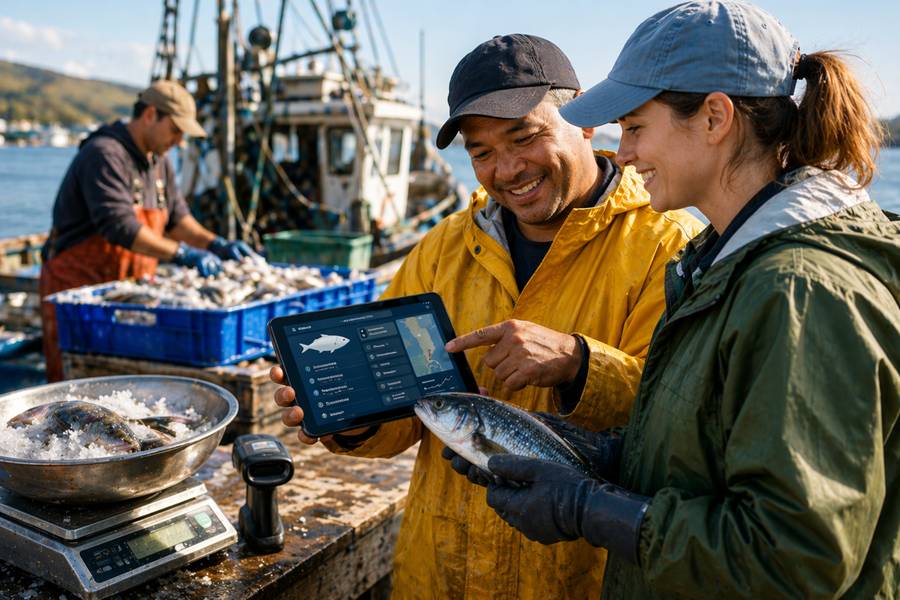
The world’s oceans are under siege. Decades of aggressive harvesting, lax enforcement, and sprawling supply chains have pushed marine ecosystems toward a tipping point, threatening not only the biodiversity of aquatic habitats but also the food security and economic stability of billions of people who depend on the sea for sustenance and livelihood. The global fishing industry generates nearly two hundred billion dollars in annual revenue and employs an estimated two hundred million people worldwide, yet it remains plagued by practices that undermine the very resources on which it depends. Illegal, unreported, and unregulated fishing accounts for roughly one in every five fish caught globally, imposing an estimated annual economic toll of twenty-six to fifty billion dollars on the global economy, according to research cited by the World Economic Forum and the University of British Columbia.
At the heart of this crisis lies a fundamental transparency problem. Conventional seafood supply chains are notoriously opaque, with a single fish often passing through four to seven intermediaries between the moment it leaves the water and the moment it reaches a consumer’s plate. Paper-based documentation, fragmented regulatory oversight, and the sheer geographic sprawl of international trade routes create ideal conditions for mislabeling, species substitution, and the laundering of illegally harvested catches into legitimate markets. A comprehensive meta-analysis published in Food Control in 2024, covering more than four thousand samples across thirty-five studies, found that approximately thirty-nine percent of seafood sold in the United States was mislabeled, with species substitution alone affecting more than a quarter of all products tested. These figures underscore a systemic failure that traditional monitoring and certification programs have been unable to resolve at scale. The consequences extend beyond economic deception. Mislabeled seafood can expose consumers to undisclosed allergens, elevated mercury levels, and species that carry health risks not associated with the product they believed they were purchasing. For marine conservation, mislabeling obscures the true volume of pressure on vulnerable species, undermining the scientific stock assessments on which fisheries management decisions depend. The United States imports more than eighty percent of the seafood its citizens consume, and the complexity of international supply chains that connect distant fishing grounds to domestic dinner tables creates ample opportunity for fraud at every stage of the process.
Blockchain technology has emerged as a compelling candidate for addressing these deep-rooted challenges. Originally developed as the distributed ledger underpinning digital currencies, blockchain’s core properties of immutability, decentralized consensus, and cryptographic security make it well suited to supply chain applications where trust between multiple independent parties is difficult to establish. By creating a tamper-resistant digital record that follows a seafood product from the point of catch through processing, transportation, and retail, blockchain-based traceability systems promise to close the information gaps that enable fraud, obscure environmental damage, and perpetuate labor abuses. This article examines how distributed ledger tracking is being deployed to ensure that seafood products come from sustainable sources, explores the benefits and challenges of adoption across different stakeholder groups, and evaluates real-world implementations that illustrate both the potential and the limitations of this transformative technology.
The Global Challenge of Unsustainable Fishing
The scale of the world’s fishing problem is staggering in both ecological and economic terms. The United Nations Food and Agriculture Organization has consistently documented the deterioration of global fish stocks, with its most recent assessments indicating that more than a third of commercially exploited marine populations are being harvested at biologically unsustainable levels. Combined with the estimated eight to fourteen million metric tons of fish caught illegally each year, the cumulative pressure on ocean ecosystems threatens to destabilize marine food webs that have sustained coastal communities for millennia. The regions most severely affected by illegal, unreported, and unregulated fishing are those that can least afford the losses. Africa, Asia, and South America together account for an estimated eighty-five percent of global catch losses attributable to illicit harvesting, with the economic reverberations felt most acutely among small-scale fisheries and subsistence communities that lack the resources to compete with well-financed criminal operations. West Africa has been consistently identified as the global epicenter of the problem, with estimates suggesting that up to thirty-seven percent of fish caught in the region are unreported or illegal. The environmental consequences compound the economic damage, as illegal fishing methods frequently involve destructive practices such as bottom trawling in sensitive habitats, the use of explosives or chemicals, and indiscriminate harvesting that depletes not only target species but also the broader ecosystem on which marine biodiversity depends. Bycatch from these operations further exacerbates fish stock depletion and contributes to ocean pollution when discarded catches are returned to the sea.
The drivers behind unsustainable fishing are multifaceted and deeply interconnected. High financial returns on sought-after species create powerful economic incentives for illicit operators, particularly when enforcement is weak and the probability of detection is low. Government subsidies that expand fleet capacity beyond what fish populations can sustain further exacerbate the problem by making even marginal fishing operations profitable. The World Trade Organization’s Agreement on Fisheries Subsidies, which entered into force in September 2025 after years of negotiations, represents a landmark attempt to address this driver by prohibiting governments from providing subsidies to fisheries engaged in illegal fishing or targeting already overfished stocks, though negotiations on broader provisions covering subsidies that contribute to overcapacity remain ongoing. The use of flags of convenience allows vessel owners to register their ships in jurisdictions with minimal regulatory oversight, effectively insulating them from the fisheries management regimes that apply in the waters where they actually operate. Transshipment at sea, where catches are transferred from fishing vessels to cargo ships without ever entering port, further complicates monitoring efforts by creating opportunities to commingle legally and illegally caught products before they reach shore.
Traditional approaches to combating these problems have achieved only limited success. The Port State Measures Agreement, which entered into force in 2016, represents one of the most significant international instruments for preventing illegally caught fish from reaching markets by requiring participating countries to inspect foreign vessels seeking access to their ports. While the agreement has demonstrated promise, its effectiveness has been constrained by uneven implementation, persistent data gaps, and the reluctance of some major fishing nations to participate fully. Vessel monitoring systems that use satellite and transponder technology to track fishing fleet movements have improved surveillance capabilities, yet an estimated seventy-five percent of industrial fishing vessels still do not appear in public monitoring systems, according to Global Fishing Watch. The combination of inadequate international cooperation, insufficient enforcement capacity in developing nations, and the sheer vastness of the ocean creates an environment in which bad actors can operate with relative impunity.
The traceability challenge extends well beyond the water. Once fish enter the processing and distribution chain, the paper-based documentation systems that most countries rely upon introduce numerous opportunities for manipulation. Catch certificates can be falsified, weight declarations can be doctored, and species can be substituted at various points along the supply chain without detection until the product has already been consumed. The United States Seafood Import Monitoring Program, established in 2018, requires traceability documentation for thirteen categories of imported seafood deemed at high risk for fraud or illegal harvesting, but the program covers only a fraction of the species entering the country and traces products only from the vessel to the point of entry rather than through the entire domestic supply chain. The European Union has pursued more comprehensive measures, with its revised Fisheries Control Regulation entering into force in January 2024 mandating full digital traceability for fresh, frozen, and aquaculture products, but many of these provisions will not take full effect until January 2026 and beyond. The gap between regulatory ambition and operational reality remains wide, and it is precisely this gap that blockchain-based traceability systems aim to close.
How Blockchain Technology Enables Seafood Traceability
Understanding how blockchain applies to seafood traceability requires a foundational appreciation of the technology’s core architecture and the specific properties that make it relevant to supply chain management. At its most fundamental level, a blockchain is a distributed digital ledger that records transactions across a network of computers in a manner that makes retrospective alteration extremely difficult without the consensus of all participants. Each new entry, or block, contains a cryptographic hash of the preceding block, a timestamp, and the transaction data itself, creating a chain of records that is inherently resistant to tampering. When applied to seafood supply chains, this architecture means that once catch data is recorded on the blockchain, it becomes part of a permanent, verifiable record that no single party can unilaterally modify or delete.
The distributed nature of the technology is particularly significant in the context of seafood, where supply chains typically involve multiple independent actors across different jurisdictions who may not inherently trust one another. In a conventional centralized database, the entity that controls the system also controls the data, creating vulnerabilities related to single points of failure, unauthorized access, and deliberate manipulation. A blockchain-based system distributes copies of the ledger across all participating nodes, meaning that every authorized party in the supply chain can independently verify the integrity of the records without relying on any single intermediary. This property is what gives blockchain its frequently cited characteristic of creating trust in environments where trust between individual parties does not naturally exist.
Smart contracts represent another critical component of blockchain-based traceability systems for seafood. These are self-executing programs stored on the blockchain that automatically enforce predefined rules and trigger specific actions when certain conditions are met. In the context of fishing, a smart contract might be programmed to verify that a catch was harvested within a legally designated fishing zone by cross-referencing the GPS coordinates recorded at the time of capture against a database of permitted areas. If the coordinates fall outside the approved zone, the smart contract could automatically flag the catch for review, prevent it from advancing through the supply chain, or trigger an alert to regulatory authorities. Smart contracts can also automate compliance verification for temperature thresholds during cold chain transport, triggering notifications if sensor data indicates that seafood has been stored outside acceptable temperature ranges at any point during its journey. Additionally, smart contracts can facilitate automated payments between supply chain participants upon verified delivery of product that meets predefined quality and provenance criteria, reducing the administrative overhead and payment delays that are common in international seafood trade. This automation reduces reliance on manual inspection processes, which are inherently limited in scale and susceptible to corruption, and enables verification to occur in near real time rather than days or weeks after the fact.
The technical infrastructure supporting blockchain-based seafood traceability typically combines the distributed ledger with complementary technologies that capture and transmit data at each stage of the supply chain. Radio frequency identification tags, or RFID tags, can be attached to individual fish or containers at the point of catch, carrying a unique digital identifier that links the physical product to its blockchain record. Internet of Things sensors can monitor environmental conditions such as temperature, humidity, and location throughout transport and storage, automatically recording this data to the blockchain to ensure cold chain integrity. QR codes printed on consumer packaging enable end buyers to scan a product with a smartphone and access the complete provenance record, including where the fish was caught, what species it is, how it was processed, and what certifications apply. The Global Dialogue on Seafood Traceability has developed interoperability standards, known as the GDST framework, that define the key data elements required for effective seafood traceability, and many blockchain platforms in this space have aligned their data structures with these standards to facilitate information exchange across different systems and jurisdictions.
The choice of blockchain platform also matters in practical deployment. Permissioned blockchain networks such as Hyperledger Fabric have emerged as the preferred foundation for most enterprise-grade seafood traceability solutions because they allow participating organizations to control who can join the network, what data each party can access, and how consensus is reached on new transactions. This contrasts with public, permissionless blockchains where anyone can participate and all data is visible to all users, an architecture that raises legitimate concerns about commercial confidentiality in competitive seafood markets. The permissioned approach enables fishing companies, processors, distributors, and retailers to share the specific supply chain data necessary for traceability verification while retaining control over proprietary business information that they do not wish to disclose to competitors or the general public.
From Vessel to Retailer: Tracking the Journey of a Fish
To understand how blockchain traceability functions in practice, it is helpful to trace the journey of a single catch from the moment it leaves the water to the point at which a consumer purchases it from a retail shelf or restaurant menu. Consider the example of a tuna caught in the Pacific Ocean. The process begins aboard the fishing vessel, where the crew records the essential catch data. This includes the species identification, the weight of the catch, the precise GPS coordinates of the vessel at the time of capture, the date and time, the fishing method employed, and the vessel’s registration and license information. In a blockchain-enabled system, this data is entered into a mobile application or shipboard computer system and transmitted to the blockchain network, where it is timestamped, cryptographically secured, and distributed across the participating nodes. If the vessel is operating in an area monitored by satellite-based vessel tracking systems, the GPS data recorded on the blockchain can be cross-referenced against independent satellite feeds to verify that the vessel was actually where it claims to have been when the catch was made.
When the vessel returns to port or transfers its catch to a transport vessel, the next handoff in the chain is recorded. Port authorities or receiving agents scan the RFID tag or enter the product’s unique identifier into the system, confirming receipt and logging any relevant inspection data such as temperature checks, quality assessments, and customs documentation. The blockchain record is updated to reflect the transfer of custody, and the new custodian assumes responsibility for maintaining the integrity of the product and its associated data as it moves to the next stage.
At the processing facility, the tuna undergoes cleaning, filleting, packaging, and potentially freezing or canning. Each transformation event is recorded on the blockchain, including the specific processing methods applied, the facility’s food safety certifications, and the resulting product forms and quantities. This is a critical stage for traceability because processing is one of the primary points at which species substitution and mislabeling occur in conventional supply chains. By linking the processed output directly to the incoming raw material through the blockchain record, the system creates an auditable chain of custody that makes it significantly more difficult to introduce undocumented product into the stream.
The OpenSC platform, developed through a partnership between WWF-Australia and BCG Digital Ventures, illustrates this end-to-end approach in a commercial fishing context. Working with Austral Fisheries, a subsidiary of Japan’s Maruha Nichiro Group, OpenSC deployed its blockchain and IoT tracking system to trace Glacier 51 Patagonian toothfish from the sub-Antarctic waters where it is caught through to final customers in Asia, Europe, and the Americas. The system uses vessel monitoring data, machine learning algorithms, and RFID technology to verify that each fish was caught in legally designated waters, and the data is recorded on a tamper-proof blockchain that consumers can access by scanning a QR code on the product packaging. This provides a specific, data-backed assurance that supplements the Marine Stewardship Council certification of the fishery as a whole, offering verification at the individual product level rather than merely at the fishery level.
From the processing facility, the product moves through distribution networks that may span multiple countries and involve cold storage warehouses, freight forwarding companies, customs brokers, and wholesale distributors. At each transfer point, the blockchain record is updated with location data, handling conditions, and custody information. When the product finally arrives at a retail store or restaurant, the complete provenance record is available for verification by both the business and the end consumer. The retailer can confirm that the product meets its sourcing standards and sustainability commitments, while the consumer can access a simplified version of the traceability data through a smartphone scan, gaining confidence that the fish on their plate is what the label claims it to be and that it was harvested in a manner consistent with sustainable fishing practices.
The cumulative effect of this multi-stage tracking process is a supply chain in which every participant has both greater accountability and greater visibility, creating a system where the economic incentives for fraud are significantly reduced because the risk of detection is correspondingly increased.
Benefits of Blockchain-Verified Fishing Practices
The advantages of implementing blockchain-based traceability in seafood supply chains extend across the entire ecosystem of stakeholders, from the fishing communities that harvest the catch to the consumers who ultimately purchase and consume the product. Each group stands to gain in distinct ways, and understanding these differentiated benefits is essential for evaluating the technology’s potential to drive meaningful change in the global fishing industry.
For fishing communities, particularly small-scale and artisanal operations in developing regions, blockchain verification offers a pathway to economic empowerment that has historically been difficult to achieve. Fishers who can demonstrate through verifiable digital records that their catch was harvested sustainably, legally, and using responsible methods gain access to premium market segments that reward transparency with higher prices. In conventional supply chains, the value associated with sustainable practices is frequently captured by downstream intermediaries rather than by the fishers themselves, because there is no reliable mechanism for transmitting verified provenance information from the point of catch to the point of sale. Blockchain changes this dynamic by creating a direct, unalterable link between the fisher’s practices and the consumer’s willingness to pay for sustainability, enabling more equitable distribution of the price premium throughout the supply chain. Fishcoin, a blockchain-based data ecosystem designed specifically for the seafood industry, exemplifies this approach by using tokenized incentives that reward fishers and first-mile supply chain actors for capturing and sharing traceability data, shifting the economic burden of data collection toward the downstream buyers who benefit most from the information.
Seafood processors and distributors benefit from blockchain traceability through improved operational efficiency, reduced risk exposure, and enhanced brand credibility. The ability to trace a product back to its origin in seconds rather than days dramatically reduces the scope and cost of product recalls when food safety issues arise. In a conventional supply chain, identifying the source of contaminated or mislabeled product can require days of manual investigation through paper records, during which time potentially affected products continue to reach consumers. Walmart’s implementation of blockchain for food traceability demonstrated this advantage dramatically when it reduced the time required to trace the origin of a mango from more than six days to just 2.2 seconds. For seafood specifically, where cold chain integrity and species authenticity are paramount concerns, the ability to verify these attributes in real time through blockchain records provides processors and distributors with a powerful tool for quality assurance and risk management. The Norwegian Seafood Trust, launched by the Norwegian Seafood Association and Atea using IBM blockchain technology, has enabled salmon farming companies like Nova Sea to share verified supply chain data with customers worldwide, creating a permanent digitized record of each transaction as products move from Norwegian waters to international markets.
Regulators and enforcement agencies gain significant advantages from blockchain-based traceability through enhanced monitoring capabilities and more efficient deployment of limited enforcement resources. Rather than relying primarily on physical inspections at ports and processing facilities, which can examine only a fraction of the seafood entering commerce, authorities can leverage blockchain data to conduct risk-based assessments that identify suspicious patterns and anomalies requiring further investigation. The immutable nature of blockchain records also strengthens the evidentiary basis for enforcement actions, since the data cannot be retroactively altered to conceal violations. Cross-border cooperation, which has been a persistent challenge in combating illegal fishing due to inconsistent data standards and mutual distrust between national agencies, becomes more feasible when all parties can reference a shared, tamper-resistant ledger of verified transactions. The analytical capabilities that blockchain data enables are particularly valuable in this context. Authorities can aggregate transaction records across multiple supply chains to identify systemic patterns, such as specific ports that consistently handle disproportionate volumes of high-value species relative to known fishing activity in their surrounding waters, or processing facilities whose output volumes appear inconsistent with their documented inputs. These pattern-recognition capabilities transform enforcement from a reactive exercise in responding to individual violations into a proactive strategy for identifying and disrupting the networks that facilitate illegal fishing at scale.
For end consumers, the most immediately visible benefit is the ability to make genuinely informed purchasing decisions about the seafood they buy and eat. Rather than relying solely on labels and certifications that may be difficult to verify independently, consumers in a blockchain-enabled supply chain can scan a QR code on a product’s packaging and access detailed information about its origin, harvesting method, processing history, and sustainability credentials. This transparency has measurable market effects. Raw Seafoods, a Massachusetts-based company that implemented IBM Food Trust blockchain traceability for its wild-caught Atlantic scallops, reported that scallop sales involved in the blockchain initiative increased by more than thirty percent year-over-year, demonstrating that consumers respond positively when given access to verifiable provenance information and that transparency can translate directly into commercial advantage for responsible operators.
The environmental benefits that flow from these stakeholder-specific advantages are substantial. By making it more difficult to launder illegally caught fish into legitimate supply chains, blockchain traceability reduces the economic viability of illegal fishing operations. By enabling consumers and retailers to preferentially source from verified sustainable fisheries, the technology creates market-based incentives for responsible practices that complement and reinforce regulatory measures. The cumulative effect is a supply chain environment in which transparency becomes a competitive advantage rather than an optional add-on, driving a virtuous cycle of increasing sustainability that benefits ocean ecosystems and the communities that depend on them.
Challenges and Limitations
Despite its considerable promise, the deployment of blockchain-based traceability in the fishing industry faces significant obstacles that must be acknowledged and addressed if the technology is to achieve its transformative potential. These challenges span technological, economic, regulatory, and practical dimensions, and they affect different segments of the industry in different ways.
The most frequently cited technological challenge relates to connectivity. Commercial fishing often occurs in remote ocean areas far from cellular or internet infrastructure, making real-time data transmission from vessels to blockchain networks difficult or impossible. While some systems address this by allowing data to be recorded locally on shipboard devices and uploaded to the blockchain when the vessel returns to port or enters cellular range, this delay introduces a window during which data could potentially be altered before it is committed to the immutable ledger. Satellite communication systems can provide connectivity in open ocean environments, but the bandwidth costs associated with these systems can be prohibitive for small-scale operations. The practical challenge of requiring fishers to operate digital devices in harsh marine environments, where salt water, extreme temperatures, and physical labor create inhospitable conditions for electronic equipment, adds another layer of difficulty that technology designers must account for.
The economic barriers to adoption are particularly acute for the small-scale fisheries that dominate the industry in many developing countries. Implementing a blockchain-based traceability system requires investment in hardware such as RFID tags, sensors, and scanning devices, software platforms and subscription fees, training for personnel who may have limited digital literacy, and ongoing maintenance and connectivity costs. For small-scale fishers operating on thin margins, these costs can represent a significant financial burden, especially when the price premium associated with verified sustainable products may take time to materialize in local markets. The risk of creating a two-tier system in which well-capitalized industrial fleets can afford blockchain traceability while artisanal fisheries are excluded from premium markets is a genuine concern that could exacerbate rather than alleviate existing economic inequalities in the global fishing industry. Some platform designs, such as Fishcoin’s tokenized incentive model, attempt to address this by shifting data capture costs to downstream actors who derive the greatest commercial benefit from traceability information, but these models have yet to demonstrate widespread commercial viability.
Regulatory fragmentation represents another formidable challenge. Fisheries governance involves a complex patchwork of national laws, regional fisheries management organization rules, bilateral agreements, and international conventions that vary significantly across jurisdictions. A blockchain traceability system that operates across international supply chains must navigate these diverse regulatory environments, integrating different data requirements, certification standards, and inspection protocols into a coherent digital framework. The European Union’s revised Fisheries Control Regulation, which mandates digital traceability beginning in 2026, signals growing regulatory support for digitized supply chain records, but many countries have yet to establish clear legal frameworks for the admissibility and legal status of blockchain-based evidence in enforcement proceedings. Without regulatory harmonization, the full potential of cross-border blockchain traceability cannot be realized.
Perhaps the most fundamental limitation is what practitioners refer to as the “first-mile problem” or the “garbage in, garbage out” challenge. A blockchain can guarantee the integrity of data once it has been recorded on the ledger, but it cannot independently verify the accuracy of the data at the point of initial entry. If a fisher falsely records the species, location, or quantity of a catch when entering data into the system, the blockchain will faithfully preserve and propagate that false information throughout the supply chain with the same immutability it would apply to accurate data. Addressing this vulnerability requires complementary verification mechanisms such as satellite-based vessel monitoring, onboard observer programs, DNA testing at processing facilities, and cross-referencing blockchain records against independent data sources like the vessel activity data maintained by Global Fishing Watch. The integration of these multiple verification layers is technically feasible but adds complexity and cost to the system, and the effectiveness of any blockchain traceability system ultimately depends on the robustness of the non-blockchain verification mechanisms that feed data into it.
Interoperability between different blockchain platforms and existing legacy systems presents additional technical challenges. The seafood industry has not converged on a single blockchain standard, and multiple competing platforms operate across different segments of the market. Unless these systems can exchange data seamlessly, the result may be traceability silos that provide visibility within individual supply chain segments but fail to deliver the end-to-end transparency that is needed to effectively combat fraud and illegal fishing. Initiatives such as the Global Dialogue on Seafood Traceability’s interoperability standards represent important steps toward addressing this challenge, but achieving true cross-platform data exchange in a commercially competitive environment remains an ongoing endeavor.
Real-World Implementations and Case Studies
The transition from theoretical promise to operational reality is best illustrated through specific implementations that have moved beyond pilot phases into sustained commercial deployment. Several initiatives across different regions and species demonstrate both the capabilities and the practical complexities of blockchain-based seafood traceability.
The Sustainable Shrimp Partnership in Ecuador represents one of the most well-documented cases of blockchain adoption in aquaculture. Launched as a collaboration between Ecuadorian shrimp producers and IBM Food Trust, the initiative brought blockchain traceability to the five-million-ton-per-year global shrimp industry, which has historically been associated with environmental degradation, excessive antibiotic use, and labor rights concerns. Three Ecuador-based producers, Omarsa, Songa, and Promarisco-Grupo Nueva Pescanova, implemented the platform to record comprehensive data about their production practices on the blockchain, including farming methodologies, antibiotic-free status, and Aquaculture Stewardship Council certification. Consumers can access this information by scanning a QR code on each package of SSP Blue Box branded shrimp. The initiative is particularly significant because it demonstrates how blockchain can serve as a verification layer that reinforces existing certification standards, providing consumers with an immutable digital record that supports the sustainability claims associated with third-party certifications. The producers benefit from differentiation in a crowded market where price competition has historically driven a race to the bottom on environmental and social standards. Ecuador’s shrimp industry, which is one of the world’s largest, faces particular pressure from competitors in countries where environmental regulations and labor protections are less stringent. By adopting blockchain traceability, the SSP members created a mechanism for communicating their commitment to responsible aquaculture practices in a way that is verifiable and credible, rather than relying solely on marketing claims that consumers have learned to regard with skepticism. The platform also provides regulatory authorities with a more efficient means of monitoring compliance with the antibiotic-free and environmental impact standards that differentiate SSP shrimp from conventional products.
OpenSC’s deployment with Austral Fisheries for Glacier 51 Patagonian toothfish, discussed earlier in the context of the catch-to-consumer journey, provides another instructive case study that has progressed from pilot to scaled rollout. What distinguishes this implementation is the integration of multiple verification layers beyond the blockchain itself. The system combines vessel monitoring system data with machine learning algorithms that analyze vessel movement patterns to verify fishing locations, IoT sensors that track product temperature and handling conditions through the supply chain, and RFID technology that maintains a physical-to-digital link between the product and its blockchain record. Following successful pilots on Patagonian toothfish and prawns, OpenSC expanded its work to additional supply chains and began testing consumer-facing verification experiences with major retail and restaurant partners across the Asia-Pacific region. The platform has also collaborated with Nestlé on tracing milk and palm oil supply chains, demonstrating the versatility of the underlying blockchain architecture across different commodity types.
The Raw Seafoods partnership with IBM Food Trust in the United States illustrates how blockchain traceability can generate measurable commercial outcomes in a domestic seafood market. Raw Seafoods, one of the largest independent seafood processors in the northeastern United States, implemented the platform to digitize the supply chain for wild-caught Atlantic sea scallops harvested from the Atlantic Sea Scallop Fishery. Scallopers upload catch data directly from their vessels, including the date, location, and size of each harvest, and this information flows through the blockchain to distributors, retailers, and ultimately consumers who can scan QR codes on packaging and restaurant menus. The platform enables boat owners to maintain a direct digital connection with end consumers throughout the entire distribution process, providing verifiable information about catch freshness and origin that was previously impossible to communicate through conventional supply chain documentation. The reported thirty-percent increase in year-over-year sales for blockchain-traced scallops demonstrates that consumer willingness to pay for transparency is not merely theoretical but translates into tangible revenue growth for producers and processors who invest in verification infrastructure.
These implementations share several common lessons. First, successful deployment requires collaboration across the supply chain rather than adoption by any single actor in isolation. Second, blockchain traceability is most effective when combined with complementary technologies, including IoT sensors, satellite monitoring, and machine learning, that address the first-mile verification challenge. Third, consumer engagement through accessible interfaces such as QR codes is essential for translating supply chain transparency into market demand for sustainable products. Fourth, the technology must be designed with the end users in mind, particularly fishers who may have limited digital literacy and who operate in challenging physical environments. The Tracy project in the Philippines, a blockchain-based information technology initiative developed to support Filipino fishermen facing challenges with varying international export standards and catch certification requirements, demonstrated the importance of mobile-first design principles by deploying a smartphone application that allows fishers to view the history of their fish captures and exchanges in a simple, intuitive format adapted to the realities of small-scale fishing operations. The growing body of evidence from these and other deployments provides an increasingly solid foundation for evaluating the business case and informing future investment decisions across the industry.
The Future of Blockchain in Sustainable Fisheries
The trajectory of blockchain-based seafood traceability points toward increasingly sophisticated integrations with complementary technologies, evolving regulatory mandates, and new economic models that could fundamentally reshape how the fishing industry operates and how marine resources are governed.
The convergence of blockchain with the Internet of Things and satellite monitoring represents perhaps the most significant near-term development. As IoT sensor costs continue to decline and satellite coverage of ocean areas becomes more comprehensive, the ability to capture and verify supply chain data automatically and in near real time will expand dramatically. Global Fishing Watch’s collaboration with Planet Labs, announced in late 2024, exemplifies this trend. The partnership provides three-meter optical satellite imagery spanning most of the world’s coastlines, enabling the detection of small vessels that are not using Automatic Identification Systems or Vessel Monitoring Systems. When satellite vessel detections are cross-referenced against blockchain supply chain records, the result is a multi-layered verification system that is significantly more difficult to circumvent than any single technology operating in isolation. The integration of synthetic aperture radar imagery from Sentinel-1 satellites has further enhanced these capabilities, enabling vessel detection regardless of cloud cover or time of day and creating a more complete picture of fishing activity that can serve as an independent check on the data recorded in blockchain traceability systems.
Artificial intelligence and machine learning are adding powerful analytical capabilities to blockchain-based traceability frameworks. Rather than simply recording and storing supply chain data, AI-enabled systems can analyze patterns across large volumes of blockchain transactions to identify anomalies that may indicate fraudulent activity, such as catches that are inconsistent with known species distributions for a particular fishing area, processing volumes that exceed what would be expected given the recorded inputs, or unusual shipping routes that may suggest transshipment of undocumented product. The SmartFish platform, introduced in academic research in 2024, represents one approach to this integrated architecture, combining blockchain, AI, and IoT in a unified system designed to provide both traceability and predictive analytics for the fishing industry.
Tokenized incentive models represent an emerging economic innovation that could help address the cost barriers that currently limit blockchain adoption among small-scale fisheries. Rather than requiring fishers to bear the upfront cost of traceability infrastructure, these models use blockchain-based digital tokens to create economic rewards for data capture and sustainable practices. The concept, pioneered by platforms like Fishcoin, envisions a system in which the flow of tokenized value moves from downstream buyers to upstream producers, effectively compensating fishers for the additional effort and cost of recording and sharing traceability data. While this model has yet to achieve mainstream adoption, the underlying principle of using tokenized incentives to align economic interests with sustainability goals represents a promising direction for making blockchain traceability economically accessible to the small-scale fisheries that account for a significant share of global catch but have been largely excluded from technology-enabled supply chain solutions.
The regulatory landscape is evolving in ways that will likely accelerate blockchain adoption. The European Union’s mandate for full digital traceability of seafood products, with key provisions taking effect in January 2026, creates a powerful market incentive for blockchain-based solutions across the entire supply chain feeding into the EU market. The EU Cluster for Food Traceability and Trust, launched in 2024, brings together more than a dozen Horizon Europe research projects focused on developing blockchain, IoT, and smart registry solutions for food supply chain transparency, with several projects specifically targeting seafood applications. In the United States, the strengthening of the Seafood Import Monitoring Program and growing Congressional attention to supply chain transparency signal a similar, if slower, movement toward mandatory digital traceability requirements.
Consumer-facing verification tools are becoming increasingly sophisticated and accessible, moving beyond simple QR code scans to deliver rich, interactive provenance experiences. These tools have the potential to transform consumer engagement with sustainability from a passive reliance on third-party certification labels to an active, data-driven exploration of how and where seafood products were produced. As consumer awareness of ocean sustainability issues continues to grow and as younger demographics with higher digital literacy enter the marketplace as primary food purchasers, the market demand for transparent, verifiable seafood sourcing is likely to expand significantly.
The path forward will require continued investment in interoperability standards, collaborative governance frameworks, and capacity-building programs that ensure the benefits of blockchain traceability are shared equitably across the global fishing industry rather than concentrated among the largest and most technically sophisticated operators.
Final Thoughts
Blockchain technology’s application to sustainable fishing practices represents more than a technical upgrade to existing supply chain management systems. It constitutes a fundamental reimagining of how trust, accountability, and value flow through one of the world’s oldest and most geographically dispersed food production networks. The distributed ledger’s capacity to create permanent, verifiable records across organizational and jurisdictional boundaries addresses a problem that has resisted decades of conventional regulatory and market-based interventions, and the growing body of real-world implementations demonstrates that this capacity can translate from theoretical architecture into operational infrastructure that delivers measurable outcomes.
The broader societal implications extend well beyond the immediate objectives of combating illegal fishing and reducing seafood fraud. When small-scale fishers in developing regions gain the ability to document and communicate the sustainability of their practices through immutable digital records, they acquire a tool for economic empowerment that can disrupt the structural power imbalances that have historically characterized global seafood trade. The transparency that blockchain enables can serve as a countermeasure against not only environmental degradation but also the labor rights abuses that have been documented across multiple segments of the fishing industry, from forced labor on distant-water fishing vessels to exploitative conditions in processing facilities. By making supply chains visible in ways that were previously impossible, the technology creates accountability mechanisms that benefit the most vulnerable participants in the system.
The intersection of technological innovation and environmental stewardship presents both an opportunity and a responsibility. The ocean’s capacity to sustain human needs is not infinite, and the window for reversing the decline of marine ecosystems is narrowing. Blockchain-based traceability systems cannot by themselves restore depleted fish stocks or eliminate the economic drivers of illegal fishing, but they can provide the informational infrastructure necessary for markets, regulators, and civil society to make better decisions about how marine resources are harvested and traded. The evidence from early adopters suggests that transparency generates its own momentum, creating market rewards for sustainable practices that complement and reinforce regulatory enforcement efforts.
Significant challenges remain. The cost and complexity of implementation must be addressed to prevent the technology from becoming another barrier that excludes the small-scale fisheries most in need of market access and economic protection. Regulatory frameworks must evolve to recognize and integrate blockchain-based evidence into enforcement proceedings. Interoperability standards must mature to enable seamless data exchange across the diverse platforms operating in different regions and market segments. The persistent first-mile verification challenge demands continued innovation in the complementary technologies, from satellite monitoring to DNA testing, that ensure the accuracy of the data entering the blockchain.
The trajectory, however, is clear. As regulatory mandates like the European Union’s digital traceability requirements take effect, as consumer demand for transparency continues to grow, and as the cost of the enabling technologies continues to decline, blockchain-verified seafood is moving from the margins of the industry toward the mainstream. The ultimate measure of success will not be the sophistication of the technology itself but rather its impact on the health of ocean ecosystems, the fairness of seafood markets, and the livelihoods of the millions of people worldwide who depend on sustainable fisheries for their food and their future.
FAQs
- What is blockchain-verified sustainable fishing, and how does it work? Blockchain-verified sustainable fishing uses distributed ledger technology to create a permanent, tamper-resistant digital record of a seafood product’s journey from the point of catch through processing, distribution, and retail. Data such as species identification, catch location, harvesting method, and handling conditions are recorded at each stage of the supply chain and stored on a blockchain that all authorized participants can access and verify but no single party can unilaterally alter. This creates an auditable chain of custody that helps ensure seafood products come from legal and sustainable sources.
- How can consumers verify that their seafood is sustainably sourced using blockchain? Consumers can typically verify blockchain-traced seafood by scanning a QR code printed on the product’s packaging using their smartphone camera. The scan directs them to a digital interface that displays the product’s provenance information, including where and when it was caught, the species, the fishing method used, relevant certifications, and the supply chain path it followed to reach the retail shelf. This process takes only seconds and provides a level of product-specific detail that traditional certification labels alone cannot offer.
- What types of data are recorded on the blockchain in seafood traceability systems? Typical data points include the species of fish, the GPS coordinates and timestamp of the catch, the vessel identification and fishing license details, the fishing gear or method used, weight and quantity measurements, processing activities performed at each facility, temperature and storage conditions during transport, food safety inspections and certifications, and custody transfers between supply chain participants. Some systems also record environmental data from IoT sensors, such as sea temperature and water conditions at the time of harvest.
- Is blockchain technology expensive for small-scale fishers to implement? The cost of implementation varies depending on the platform and the scale of deployment, but it can represent a meaningful financial burden for small-scale fisheries operating on thin margins. Costs include hardware such as RFID tags and scanning devices, software subscriptions, connectivity expenses, and training. Some platforms address this by shifting data capture costs to downstream actors like retailers and restaurants who benefit most from traceability data. Tokenized incentive models are also being developed to compensate fishers for capturing and sharing data, though these models are still in relatively early stages of adoption.
- How does blockchain help combat illegal, unreported, and unregulated fishing? Blockchain combats illegal fishing by making it significantly more difficult to introduce undocumented or illegally caught products into legitimate supply chains. Because each transaction is permanently recorded and visible to authorized parties, attempts to substitute, mislabel, or commingle illegal catches with legal ones are more easily detected. When combined with satellite vessel monitoring and GPS verification through smart contracts, blockchain systems can automatically flag catches that originated in restricted areas or were harvested by unlicensed vessels.
- What is the “first-mile problem” in blockchain-based seafood traceability? The first-mile problem refers to the challenge of ensuring that the data initially entered into the blockchain at the point of catch is accurate. A blockchain guarantees the integrity of data once recorded but cannot independently verify whether that data was truthful at the point of entry. If a fisher misreports the species, location, or quantity of a catch, the blockchain will preserve that false information just as reliably as it would preserve accurate data. Addressing this requires complementary verification tools such as satellite monitoring, DNA testing, electronic monitoring systems, and onboard observers.
- How does blockchain-based traceability compare to traditional seafood certifications like MSC? Blockchain traceability and traditional certifications like the Marine Stewardship Council serve complementary rather than competing functions. MSC certification evaluates and certifies the sustainability of entire fisheries based on comprehensive assessments of fish stocks, ecosystem impacts, and management practices. Blockchain traceability operates at the individual product level, verifying that a specific piece of seafood was actually caught in a certified fishery and followed a legitimate supply chain path to the consumer. The combination of fishery-level certification with product-level blockchain traceability provides a more robust assurance system than either approach can deliver independently.
- What role do IoT sensors and satellite technology play in blockchain seafood traceability? IoT sensors and satellite technology serve as critical data input mechanisms that strengthen the reliability of blockchain records. IoT sensors attached to containers and storage facilities automatically capture temperature, humidity, location, and other environmental data, which is transmitted directly to the blockchain without manual intervention, reducing opportunities for human error or manipulation. Satellite technology, including vessel tracking systems and synthetic aperture radar imagery, provides independent verification of vessel locations and movements that can be cross-referenced against the catch data recorded on the blockchain.
- Are there regulatory requirements mandating blockchain-based seafood traceability? No government currently mandates blockchain specifically, but regulatory trends are moving strongly toward mandatory digital traceability that blockchain platforms are well positioned to support. The European Union’s revised Fisheries Control Regulation, with key provisions taking effect in January 2026, requires full digital traceability for fresh, frozen, and aquaculture products throughout the supply chain. The United States Seafood Import Monitoring Program mandates digital catch documentation for thirteen categories of imported seafood. These regulatory frameworks create market conditions that favor blockchain-based solutions capable of delivering the required digital traceability infrastructure.
- What is the current market size of blockchain-based seafood traceability, and how fast is it growing? The global seafood traceability blockchain market reached approximately two hundred thirty-six million dollars in 2024, according to industry research, and is projected to grow at a compound annual growth rate of approximately twenty-four percent through 2033, potentially reaching nearly one point nine billion dollars by the end of that period. The Asia-Pacific region leads the market, reflecting its status as the world’s largest seafood producing and exporting region, while North America and Europe represent mature markets driven by regulatory mandates and strong consumer demand for transparency. Growth is being propelled by increasing regulatory requirements, rising consumer awareness, and declining technology implementation costs.