Musculoskeletal pain is the single largest contributor to disability worldwide, affecting more than 1.7 billion people and consuming a substantial share of healthcare spending in every developed economy. Physical therapy remains the most effective non-surgical intervention for the majority of these conditions, yet a stubborn gap has defined the field for decades. Patients are prescribed home exercise programs and forget the movements within days, perform them incorrectly when they remember, or simply stop trying when no one is watching. Adherence rates for traditional home-based rehabilitation routinely fall below thirty percent in published studies, which means that most of the value of a physical therapist’s expertise evaporates the moment a patient walks out of the clinic.
This gap is now closing in a quiet and largely unheralded way. Computer vision systems running on smartphones, tablets, and inexpensive cameras can watch a patient perform an exercise, compare the movement against a biomechanical model, identify compensatory patterns, and deliver corrective feedback within milliseconds. Machine learning models track recovery trajectories across thousands of sessions and adjust treatment plans based on what the data shows is actually working. The patient sees a coach in their pocket. The physical therapist sees a clinical dashboard with data that no previous generation of practitioner could have imagined.
The premise of this article is straightforward. Artificial intelligence is not replacing physical therapists, and the hyperbolic predictions about robotic clinicians have largely faded from serious discussion. What is happening instead is more interesting and more durable. AI is becoming infrastructure, dissolving into existing rehabilitation pathways the way payment networks dissolved into commerce a generation ago. Patients who would never have completed a traditional home program are completing AI-guided ones at rates two to three times higher. Conditions that required weekly in-person visits are being managed remotely with outcomes that match or exceed clinic-based care. Health systems that struggled to scale physical therapy capacity are finding that one human clinician supported by an AI platform can manage caseloads an order of magnitude larger than was previously possible.
The scale of this transformation deserves emphasis because it is easy to underestimate. Several of the leading digital physical therapy platforms now serve member populations measured in the millions, partnering with major employers and health plans to deliver care that would have been physically impossible to deliver in clinics with the same resources. The economics that enable this scale are themselves a meaningful innovation, with outcome-based pricing models displacing the traditional fee-for-service approach that has long defined rehabilitation reimbursement. The underlying clinical question of whether AI-driven rehabilitation can match the quality of in-person care has been substantially answered for several common conditions, though important nuances remain in how and when these platforms should be deployed.
What follows is a detailed examination of how this technology works, where it is already producing verified clinical results, who benefits across the healthcare system, and what real obstacles remain. Three case studies anchor the discussion in documented outcomes rather than vendor projections. The intended reader is someone with no prior background in machine learning or rehabilitation medicine who wants to understand what is actually happening in this space and why it matters.
How AI and Computer Vision Power Modern Rehabilitation
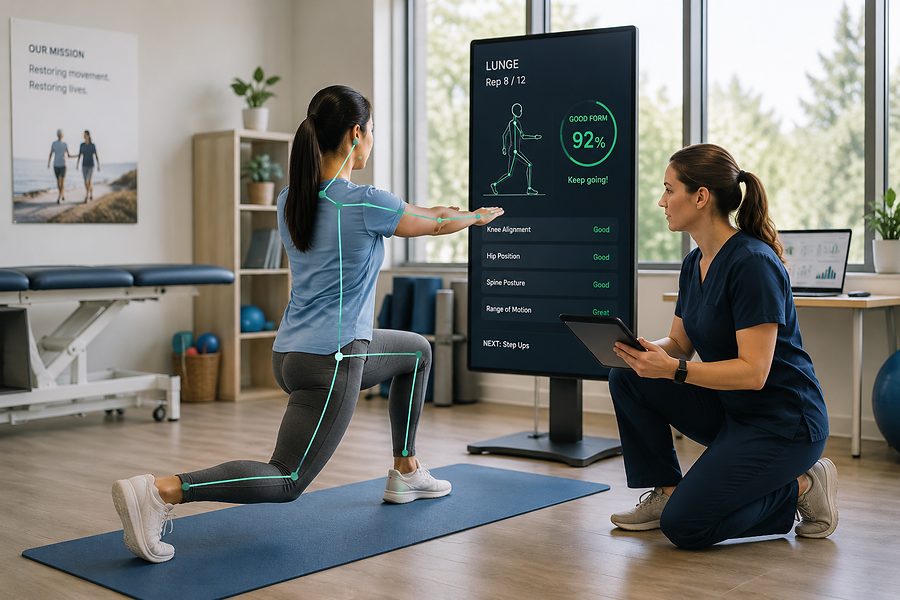
Understanding AI-driven physical therapy requires a brief tour of the technical stack that makes it possible. Modern rehabilitation platforms are not single algorithms but layered systems that combine multiple specialized models, each handling a different piece of the problem. A camera captures video at thirty or sixty frames per second. A pose estimation model identifies the location of key body points in each frame. A biomechanical inference layer converts those points into joint angles, velocities, and accelerations. A clinical reasoning layer compares the resulting motion signature against reference patterns for the prescribed exercise and the patient’s individual baseline. A feedback layer decides what to communicate to the patient and when. All of this happens in real time, often entirely on the user’s own device.
The hardware that runs these systems is now ordinary. A five-year-old smartphone has more computational capacity than the workstations used in research-grade motion capture laboratories a decade ago. This matters because the economics of rehabilitation only work at consumer scale. A platform that requires specialized cameras, calibration markers, or dedicated computing hardware cannot reach the populations who most need affordable physical therapy. The shift to markerless, smartphone-based tracking has been the single most important enabling development for AI-driven rehabilitation, and it is the foundation everything else builds on.
The development of these systems has followed a recognizable arc that mirrors the broader trajectory of artificial intelligence applications in medicine. Early systems in the 2010s focused on basic motion tracking with limited clinical integration, often producing demonstrations of technical capability without clear pathways to deployment. The current generation of platforms has prioritized clinical workflow integration alongside technical capability, partnering with practicing physical therapists, orthopedic surgeons, and rehabilitation researchers from the earliest stages of product development. This shift in development philosophy explains why platforms entering the market today produce clinically meaningful outcomes from launch, rather than spending years in pilot programs before achieving practical relevance.
The Mechanics of Pose Estimation and Movement Analysis
Pose estimation is the technology that allows a computer to see a human body in a video and identify where the joints are. Older systems required physical markers attached to the body, careful camera calibration, and a controlled lighting environment. Modern markerless pose estimation uses deep neural networks trained on millions of annotated images to identify body landmarks directly from raw video. The most widely used models in rehabilitation include open-source systems like Google’s MoveNet and MediaPipe, alongside proprietary models developed by digital health companies that have been tuned specifically for clinical use cases.
The output of a pose estimation model is a set of two-dimensional or three-dimensional coordinates for between seventeen and thirty-three keypoints on the body. These typically include the major joints of the shoulders, elbows, wrists, hips, knees, and ankles, along with reference points on the head, torso, hands, and feet. A research-grade system like MoveNet Thunder running on a modern smartphone can identify these points with sub-pixel accuracy at thirty frames per second. Studies published in journals like the Journal of NeuroEngineering and Rehabilitation have found that markerless pose estimation can detect movement abnormalities with accuracy approaching that of laboratory-grade marker-based systems.
From keypoints, the system calculates the geometric quantities that physical therapists actually care about. The angle between the upper arm and the torso reveals shoulder flexion. The angle of the knee during a squat reveals the depth and control of the movement. The relative timing of hip and knee motion during a step reveals gait quality. Velocity and acceleration values can identify whether a patient is moving too quickly, hesitating in ways that suggest pain, or losing control near the end of their available range. The clinical reasoning layer compares these measurements against reference patterns for the exercise, taking into account the patient’s individual anatomy, age, and known limitations.
The next layer of sophistication involves recognizing that the same exercise looks different in different bodies. A textbook lunge performed by a twenty-five-year-old marathon runner has very different geometry than the same lunge performed by a sixty-eight-year-old recovering from a knee replacement, and both can be clinically correct. AI systems handle this by establishing patient-specific baselines during initial sessions, then tracking deviations from those baselines rather than from a universal ideal. This personalization is what distinguishes a rehabilitation system from a generic fitness application, and it is the foundation for everything else the technology can do.
The accuracy of these systems has crossed an important threshold in the past three years. Peer-reviewed research has consistently found that AI-driven motion analysis matches or exceeds the consistency of human visual assessment, particularly for the repetitive measurement tasks that occur during longitudinal rehabilitation. Where a human therapist might assess a patient’s squat depth visually during a fifteen-minute appointment, an AI system can measure the same parameter on every repetition of every session, generating a dense dataset that reveals patterns invisible to even the most attentive clinician.
The architectural choices that platform developers make at this layer have meaningful consequences for clinical utility. Two-dimensional pose estimation, where keypoints are identified as pixel coordinates in the camera frame, is faster and works reliably on lower-end devices. Three-dimensional pose estimation, where depth is also estimated, provides richer biomechanical information at the cost of computational complexity and potential accuracy degradation. Most modern platforms use a hybrid approach, performing two-dimensional pose estimation as the primary capture method and reconstructing three-dimensional information through biomechanical modeling that incorporates known constraints of human anatomy. This approach delivers most of the clinical value of full three-dimensional capture while maintaining the device compatibility and computational efficiency that consumer deployment requires.
A related design consideration involves the choice between cloud-based and on-device processing. Cloud-based pose estimation allows platforms to deploy larger and more accurate models than would fit on a phone, but it requires transmitting video to remote servers and introduces both privacy concerns and latency that can interfere with real-time feedback. On-device processing eliminates these concerns at the cost of constraining model size and accuracy. The platforms that have achieved the strongest clinical outcomes have generally chosen on-device processing for the real-time inference loop while reserving cloud resources for the longitudinal analytics that do not require immediate response.
Real-Time Form Correction and Adaptive Programming
Two capabilities together define what AI-driven rehabilitation platforms actually do for patients. The first is real-time feedback during exercise sessions, the in-the-moment coaching that has historically been available only inside a clinic. The second is longitudinal adaptation, the progressive adjustment of treatment plans as the patient’s condition evolves. Each capability addresses a distinct failure mode of traditional home-based therapy, and together they explain why digital rehabilitation programs have achieved engagement and completion rates that conventional home exercise programs cannot match.
The combination is what matters most. Real-time feedback without longitudinal adaptation produces a polished exercise app that fails to advance care meaningfully. Longitudinal adaptation without real-time feedback produces a sophisticated tracking system that still allows patients to practice incorrect movements for weeks at a time. The platforms that have demonstrated the strongest clinical outcomes are those that have built both capabilities into a coherent system, with clinician oversight layered on top to handle the cases that fall outside what the algorithms can manage independently.
Live Coaching During Exercise Sessions
Real-time form correction is the feature most patients encounter first and the one they remember most vividly. When a patient performs a prescribed exercise in front of their device camera, the system continuously evaluates the movement against the expected pattern and intervenes when something needs adjustment. The most common interventions involve identifying compensatory movements, where the patient uses a different muscle group than the one being targeted because the intended muscles are weak or painful. A patient performing a shoulder rotation might unconsciously shrug their upper back to complete the motion, defeating the therapeutic purpose. The system identifies this within a single repetition and prompts a correction before the pattern becomes habitual.
Latency requirements for this feedback are unforgiving. Research on motor learning indicates that corrective cues must arrive within roughly two hundred milliseconds of the movement to be integrated effectively. Cues that arrive after a repetition is complete may modify the next attempt, but they cannot correct the current one. The platforms that have succeeded clinically are those that have invested in low-latency inference pipelines, often running pose estimation entirely on the patient’s device rather than sending video to remote servers. This has the additional benefit of preserving privacy, since the raw video never leaves the device.
The vocabulary of feedback matters as much as its timing. Effective coaching cues are specific, encouraging, and actionable. A system that simply tells a patient they are doing something wrong does not produce better movement, and it tends to produce frustration and disengagement. A system that explains what to adjust, ideally with a brief visual demonstration, produces correction and confidence together. The leading platforms encode feedback strategies developed in collaboration with physical therapists, varying their tone and content based on the patient’s history, current pain level, and observed emotional state across sessions.
Kaia Health offers the most rigorously documented example of how this technology performs in clinical practice. The German digital therapeutics company’s Motion Coach uses smartphone-based computer vision to evaluate exercises for back, neck, shoulder, hip, knee, and other musculoskeletal conditions without requiring any wearable sensors. The platform was evaluated in the Rise-uP randomized controlled trial conducted at the Center for Interdisciplinary Pain Medicine at the Technical University of Munich, which enrolled 1,237 patients with non-specific lower back pain. Results published in 2022 showed that patients using the Kaia app experienced a 46 percent reduction in pain intensity at twelve months, compared with 24 percent in the control group receiving standard care. The cost-effectiveness analysis associated with the trial showed healthcare cost reductions of up to 80 percent versus traditional care pathways. A subsequent prospective cohort study published in the Journal of Medical Internet Research established that the Motion Coach provided exercise feedback consistent with human physical therapists across multiple exercise types, validating computer vision as a clinically meaningful coaching mechanism rather than a consumer convenience.
Adapting Programs Based on Recovery Progress
Live coaching addresses what happens within a session. The harder problem is what happens across sessions, where the system must decide when to advance a patient, when to hold them at their current level, and when to escalate concerns to a human clinician. This longitudinal adaptation is where the machine learning component of AI-driven rehabilitation does its heaviest work, and it is the capability that distinguishes a clinical platform from an instructional video library.
The data that feeds these decisions comes from multiple sources. The biomechanical metrics extracted from each exercise repetition provide objective measurements of range of motion, movement quality, control, and symmetry. Patient-reported outcomes captured between sessions provide subjective measurements of pain, function, and confidence. Engagement patterns reveal which exercises the patient is actually performing, which they are skipping, and whether the prescribed program is creating adherence problems that need to be addressed independently of clinical progress. Together these data streams form a continuous picture of recovery that no traditional appointment-based care model can produce.
Machine learning models then transform this picture into specific adjustments. Reinforcement learning approaches have proven particularly effective for exercise selection, learning over many patient interactions which sequences and combinations produce the best outcomes for specific conditions and patient profiles. Supervised learning models predict which patients are at risk of plateau, which may benefit from program intensification, and which show patterns that suggest worsening rather than improving conditions. The output is not a single recommendation but a set of adjustments to repetition counts, exercise selection, progression timing, and clinical escalation triggers. A clinician remains in the loop for material changes, but the routine adjustments that previously required appointment time happen automatically.
Sword Health, a Portuguese digital health company that became the first FDA-listed digital physical therapy platform in 2016 and filed for an initial public offering in 2025, has built one of the more sophisticated predictive adaptation systems in the field. The company’s Predict tool, introduced in May 2023, uses machine learning trained on the platform’s accumulated patient data to assess surgical risk and identify candidates for non-surgical care pathways. In September 2024, the company introduced Outcome Pricing, a contracting model under which fees are tied to clinically significant outcomes for members rather than to engagement or session counts. This pricing structure is only viable because the underlying technology has matured to the point that vendors can confidently predict, rather than merely hope for, specific clinical results from specific intervention sequences.
The integration between the algorithmic and human components of these systems deserves specific attention because it represents one of the more thoughtful aspects of how leading platforms have been designed. The algorithm handles the routine work of session-to-session adjustment, but it surfaces decisions that exceed defined thresholds to the supervising clinician for human review. A patient whose pain scores are improving steadily and whose biomechanical metrics show consistent progress remains under algorithmic management. A patient whose pain scores spike, whose engagement drops sharply, or whose movement quality degrades unexpectedly generates a clinician alert that triggers direct human intervention. This tiered approach allows clinicians to focus their attention where it adds the most value while still maintaining the appropriate safety net for the cases that require human judgment.
The combination of live coaching and adaptive programming closes the loop that has historically left home-based rehabilitation underperforming. A patient receives correction in the moment, sees their program evolve in response to their actual progress, and benefits from clinical oversight that can be focused on the cases where it matters most. The result is a fundamentally different kind of physical therapy, one in which the human clinician’s expertise is amplified rather than diluted by scale.
Clinical Applications and Verified Case Studies
AI-driven personalized rehabilitation has moved well beyond proof-of-concept demonstrations and pilot deployments. The technology is now integrated into employer benefit packages covering tens of millions of members, reimbursed under public health insurance schemes in several European countries, and built into the standard care pathways of large health systems in North America and Europe. The breadth of clinical application has expanded alongside the technology’s maturity, with platforms addressing chronic pain, post-surgical recovery, stroke rehabilitation, pelvic health, and a growing list of additional conditions.
What follows examines two of the most thoroughly validated application domains. The discussion is grounded in documented implementations and peer-reviewed outcomes from 2022 through 2025, rather than in vendor projections or theoretical possibilities. The intent is to give readers an accurate picture of where AI-driven rehabilitation has produced verified clinical value and where the evidence base remains thinner.
Musculoskeletal Pain Management Platforms
Musculoskeletal pain is the largest single application of AI-driven rehabilitation and the area where the evidence base is strongest. The conditions involved are common, the exercises are well-understood, the response to treatment is measurable, and the population of patients who would benefit from better adherence to home exercise is enormous. Most of the major digital physical therapy platforms began with back pain and have expanded outward into knee, shoulder, hip, neck, and other regions of the body.
The randomized controlled trial that most clearly established AI-driven physical therapy as clinically comparable to in-person care was conducted by Sword Health in partnership with the Physical and Rehabilitation Medicine Center at Emory University in Atlanta. Results were published in Nature Digital Medicine in 2023 and announced publicly in July of that year. The trial demonstrated that Sword’s digital physical therapy program produced clinical outcomes equivalent to those of best-in-class in-person physical therapy for chronic musculoskeletal pain, while achieving engagement and completion rates more than twice as high as the in-person comparator. This was a meaningful finding because patient adherence is the single largest determinant of physical therapy success, and the historical assumption had been that direct human supervision was necessary to achieve high engagement.
Sword’s platform combines computer vision with motion-tracking sensors and a connection to a physical therapist who reviews patient data and adjusts care plans remotely. Patients perform exercises at home while the system provides real-time feedback on form, range of motion, and effort. As of October 2024, the company reported a member base of approximately 112,000 patients with documented outcomes, and an analysis conducted by Risk Strategies Consulting in June 2024 examined the medical cost savings associated with the program. The company’s published research includes studies on chronic musculoskeletal pain across BMI categories, predictive modeling of pain response in remote rehabilitation, and the impact of demographic concordance between patients and supervising physical therapists on engagement and outcomes.
Hinge Health, the other dominant player in the U.S. digital musculoskeletal care market, illustrates the scale that AI-driven rehabilitation has now reached. The company completed its initial public offering in 2025 and reported $390 million in revenue for 2024, with delivery of approximately 25 million activity sessions through a care team of 438 employees. The arithmetic implied by these numbers is striking. A traditional outpatient physical therapy practice with eight-hour days and forty-eight working weeks per year can deliver roughly 2,640 sessions per clinician annually. Hinge’s platform averaged approximately 57,750 sessions per care team employee in 2024, a productivity increase of more than twenty times that of conventional practice. The company’s technology stack combines wearable motion sensors with computer vision software acquired through its 2021 acquisition of wrnch, an artificial intelligence company that had built specialized models for tracking human motion, shape, and intent. Hinge’s Enso wearable device adds non-invasive electrical nerve stimulation for pain relief, integrated with the AI-driven exercise platform. In October 2025, the company announced new AI-powered care tools including a Movement Analysis capability that uses computer vision to track musculoskeletal outcomes and an AI Care Assistant called Robin that provides instant support for members between clinician interactions.
The competitive dynamics among the leading platforms have produced meaningful differences in technical approach that are worth understanding. Sword Health has historically emphasized motion sensors worn on the body during exercises, providing precise inertial measurement data that complements computer vision input. Kaia Health has emphasized a software-only approach using smartphone cameras without any wearable hardware, reducing friction for patients but constraining the kinds of measurements the system can make. Hinge has pursued a hybrid strategy combining sensors and cameras to achieve the broadest possible measurement coverage. Each approach has clinical merits and trade-offs, and the longer-term trend has been toward platforms that support multiple input modalities and can adapt to the patient’s available hardware and preferences rather than mandating a specific configuration.
The independent evidence base for these platforms has grown substantially. Multiple peer-reviewed studies have established that AI-driven musculoskeletal care produces outcomes equivalent or superior to in-person care for many common conditions, particularly chronic back pain, knee osteoarthritis, and post-surgical rehabilitation following common orthopedic procedures. Critics have correctly noted that much of the published research has been funded or conducted by platform vendors, a limitation that applies broadly to digital health evidence and that highlights the need for continued independent validation as these technologies become standard components of care.
Neurological and Post-Surgical Rehabilitation
Neurological rehabilitation is a more demanding clinical environment than musculoskeletal care, but it is also an area where AI-driven approaches are producing increasingly compelling results. Stroke survivors, patients recovering from traumatic brain injury, and individuals with spinal cord injuries face rehabilitation challenges that are simultaneously more complex and more time-sensitive than typical orthopedic recovery. The neural reorganization that underlies functional recovery depends on intensive, repetitive, task-specific practice, and the practical reality is that most patients receive far fewer hours of supervised therapy than the research literature suggests they need. AI-driven systems offer a way to close this dosage gap.
Markerless pose estimation has been particularly valuable for gait analysis in stroke recovery. Traditional gait assessment requires either subjective clinician observation or expensive laboratory-based motion capture systems that few rehabilitation centers can afford. Computer vision systems running on standard cameras can now extract clinically meaningful gait parameters including cadence, walking speed, stride length, and symmetry from video recorded in ordinary environments. Research published in 2024 demonstrated convolutional neural network approaches that estimate these parameters with accuracy approaching that of laboratory systems, enabling gait monitoring in home, community, and clinical settings without specialized infrastructure.
The most rigorous recent evidence on AI-driven neurological rehabilitation comes from a randomized controlled trial published in Frontiers in Neurology in 2025. The trial, conducted by researchers led by Kim and colleagues, evaluated whether self-guided AI-driven cognitive and motor telerehabilitation could match the efficacy of traditional therapist-supervised stroke rehabilitation. The results demonstrated non-inferiority, meaning that patients using the AI-driven self-guided system achieved recovery outcomes statistically comparable to those receiving direct therapist supervision. This is a significant finding because it suggests that the consistency and intensity advantages of AI-driven systems can offset the loss of direct human supervision for at least a meaningful subset of stroke patients, opening possibilities for dramatically expanded access to neurorehabilitation in settings where therapist availability is limited.
Robotic and exoskeleton systems represent another important branch of AI-augmented neurological rehabilitation. The Armeo Spring upper-limb rehabilitation system developed by Hocoma, originally designed for stroke recovery, has incorporated increasingly sophisticated adaptive control algorithms that adjust the device’s support and resistance based on real-time analysis of the patient’s effort and progress. Deep reinforcement learning has been applied to lower-extremity exoskeletons for adaptive gait support, with research showing improvements in patient participation and motor learning when the device’s behavior adapts to the individual’s recovery trajectory rather than following a fixed program. A 2022 study published in the journal Stroke documented that AI-augmented exoskeleton therapy improved walking speed in post-stroke patients meaningfully more than conventional therapy alone, providing concrete clinical justification for the increased complexity and cost of these systems.
Post-surgical orthopedic rehabilitation represents a clinical bridge between musculoskeletal and neurological applications. Recovery from procedures like total knee replacement, anterior cruciate ligament reconstruction, and rotator cuff repair requires precise progression through phases of healing, with specific exercises appropriate at specific times and contraindicated at others. The penalty for errors is real, ranging from delayed healing to surgical revision in the worst cases. AI-driven rehabilitation platforms have been increasingly deployed in this space, where the structured nature of post-surgical protocols matches well with algorithmic guidance and where the consequences of poor adherence justify the investment in personalized monitoring. Hinge Health and several specialized platforms have built post-surgical pathways into their offerings, and orthopedic surgical groups have begun incorporating digital rehabilitation into their standard discharge planning for major procedures.
The case studies and clinical evidence accumulated since 2022 establish that AI-driven personalized rehabilitation is a clinically valid modality across a meaningful range of conditions, with the strongest evidence in chronic musculoskeletal pain and rapidly growing evidence in stroke and post-surgical care. Continued expansion into pelvic health, vestibular rehabilitation, pediatric therapy, and other specialized domains is well underway, with the pattern of careful clinical validation followed by scaled deployment now established as the path these technologies typically follow into mainstream practice.
Benefits Across Healthcare Stakeholders
The benefits of AI-driven personalized rehabilitation accrue differently to different participants in the healthcare system, and a complete picture requires examining each stakeholder group on its own terms. The technology’s appeal varies meaningfully across patients, clinicians, health systems, and payers, and the long-term sustainability of the model depends on each group finding value commensurate with what they invest in adoption.
For patients, the most immediate benefit is access. Physical therapy capacity in most developed countries falls far short of clinical need, and the shortfall is particularly severe in rural areas, in lower-income communities, and among populations with limited transportation options. A patient who cannot get an appointment within three weeks, cannot easily travel to a clinic twice weekly, or cannot afford the copays associated with extended courses of in-person therapy has historically faced a choice between inadequate care and no care at all. AI-driven platforms transform this equation. A smartphone and a wifi connection are sufficient to access evidence-based rehabilitation that responds to the individual patient’s anatomy, condition, and progress. The dignity of receiving care in one’s own home, on one’s own schedule, has additional value that is difficult to quantify but consistently appears in patient satisfaction research. Adherence rates that exceed those of in-person care reflect not just the convenience of digital access but the fact that patients actually prefer this mode of care for many conditions.
For physical therapists and other clinicians, the benefits center on the transformation of their work rather than its replacement. The traditional outpatient physical therapy visit involves a substantial proportion of time spent on observation, repetition counting, basic form correction, and administrative documentation. AI-driven platforms absorb most of these activities, freeing clinicians to focus on the diagnostic reasoning, treatment planning, complex case management, and therapeutic relationship that genuinely require human expertise. Therapists working within these platforms typically manage caseloads several times larger than those of their conventional counterparts, but they spend their time on the cognitively demanding portions of clinical work rather than on the manual repetition that automation can handle. The data-rich monitoring between visits produces a clinical picture that traditional appointment-based care cannot match, allowing earlier identification of patients who are not progressing as expected and earlier intervention when problems arise.
For clinics and health systems, the benefits are operational and financial. Patient throughput increases substantially when clinicians can manage larger caseloads with appropriate algorithmic support. Documentation burden decreases because the platform captures detailed session data automatically. No-show rates, which historically have eroded the financial viability of many outpatient physical therapy practices, fall sharply when patients can complete sessions on their own schedules. Hinge Health’s operational data, with approximately 57,750 sessions per care team employee annually, illustrates the scale of efficiency improvement that is achievable, though most hybrid models that combine in-person and digital care produce more modest but still meaningful gains. Health systems facing physical therapist shortages can extend the reach of their existing clinical workforce dramatically without compromising the quality of care.
For payers, including health insurers, self-insured employers, and government health programs, the benefits center on outcomes and cost predictability. Musculoskeletal conditions are among the largest single drivers of healthcare spending in commercial insurance and Medicare populations, and the costs are concentrated in surgical procedures and chronic pain management that conservative care could often prevent. Sword Health’s introduction of Outcome Pricing in September 2024 reflects the broader payer demand for contracting models that align vendor incentives with clinically significant patient outcomes rather than with engagement metrics or session counts. Hinge Health has reported that approximately six percent of members typically drive about eighty-five percent of musculoskeletal costs, and AI-driven platforms increasingly use predictive analytics to identify these high-cost members early and direct them toward conservative care pathways before surgical interventions become the default. When the technology works as intended, payers see lower surgical conversion rates, reduced opioid prescriptions, and decreased downstream complications, all of which translate into measurable medical cost savings.
The convergence of these stakeholder interests is unusual in healthcare, where benefits to one party often come at the expense of another. AI-driven rehabilitation produces value for patients through better access and adherence, for clinicians through more meaningful work and larger caseloads, for clinics through operational efficiency, and for payers through better outcomes and predictable costs. The fact that all four groups can identify genuine benefits explains why the adoption curve has been steeper than in many other digital health categories and why the market for these platforms has matured rapidly from venture-backed startup to publicly traded enterprise. The remaining question is not whether AI-driven rehabilitation works for these stakeholders but how it should be regulated, integrated, and scaled to extend its benefits to populations that have not yet been reached.
Challenges and Practical Considerations
The achievements of AI-driven personalized rehabilitation should not obscure the genuine challenges that responsible deployment must address. The technology has clear limitations, the evidence base has gaps that further research must fill, and the broader social implications of large-scale adoption involve trade-offs that deserve more attention than they typically receive in the marketing materials. A balanced understanding of where the technology can and cannot reliably help patients is essential for clinicians, administrators, and policymakers making decisions about adoption.
On the technical side, pose estimation accuracy degrades meaningfully in conditions that differ from the training data. Poor lighting reduces keypoint detection reliability. Loose clothing obscures the joint locations the algorithms need to track. Patients with non-standard body types, including those with limb differences, severe obesity, or unusual proportions, may receive less accurate feedback than the system delivers to patients who match the population on which it was trained. Fine motor movements of the hands and fingers remain particularly difficult to track with smartphone-based cameras, limiting the technology’s usefulness in conditions like post-stroke hand recovery or rheumatologic disorders affecting small joints. The gap between detecting incorrect form and understanding why a patient cannot execute correctly is real and clinically important. A patient who cannot achieve full knee extension may have a mechanical block, a neurological inhibition, an emotional fear response, or simply weakness, and the appropriate intervention differs for each cause. AI systems currently identify the symptom much more reliably than they identify the underlying cause.
Clinical considerations include the ongoing debate about appropriate scope of practice and the proper role of human supervision. The most successful platforms have consistently been those that maintain meaningful clinician oversight rather than attempting to remove human practitioners entirely. Patients with complex comorbidities, atypical presentations, or unclear diagnoses still benefit from in-person evaluation by an experienced clinician, and the algorithms perform best when they are managing relatively well-defined conditions within established treatment protocols. The legitimate concern that vendor-funded research dominates the published evidence base for these platforms reflects a broader pattern in digital health and underscores the importance of independent academic and government-funded validation studies. Several major publicly funded trials are underway, but the field would benefit from more diverse and adversarial evaluation of vendor claims.
Privacy and data security concerns are substantial and require active management rather than passive compliance. AI-driven rehabilitation platforms capture continuous video of patients performing exercises in their homes, biometric data including joint angles and movement signatures that are arguably more uniquely identifying than fingerprints, and patient-reported outcome data covering pain, function, and emotional state. The handling of this data implicates HIPAA in the United States, GDPR in Europe, and a patchwork of additional regulations elsewhere. Most platforms now process pose estimation entirely on the patient’s device rather than transmitting video to remote servers, which addresses the most acute privacy concerns but does not eliminate them. Patients deserve clear, accessible information about what data is collected, how it is used, who has access, and what happens to it if they discontinue care or switch platforms.
Algorithmic bias presents a related set of concerns that the field has begun to acknowledge but has not yet fully addressed. Pose estimation models trained predominantly on younger, lighter-skinned, conventionally proportioned bodies may perform less reliably on older patients, on patients with darker skin tones, and on patients with body shapes underrepresented in training datasets. Sword Health has published research specifically examining whether race and gender concordance between patients and supervising physical therapists affects digital MSK outcomes, reflecting the field’s growing recognition that equity considerations cannot be afterthoughts. The digital divide also creates an exclusion risk. Older patients without smartphone fluency, lower-income patients without reliable internet access, and rural patients with poor mobile coverage may be unable to use these platforms even when they would clinically benefit. Addressing these gaps requires deliberate investment in accessibility, in low-bandwidth modes of operation, and in supportive onboarding processes that meet patients where they are rather than where the developers wish them to be.
The regulatory landscape continues to evolve in ways that affect deployment and reimbursement. The U.S. Food and Drug Administration has established frameworks for software as a medical device, and several digital rehabilitation platforms have received specific clearances for particular indications. Germany’s DiGA reimbursement framework, which provides public insurance coverage for clinically validated digital therapeutics, has supported broad adoption of platforms like Kaia Health for back pain treatment. U.S. payer coverage remains uneven, with some commercial insurers and self-insured employers covering AI-driven rehabilitation as a standard benefit while others treat it as an unproven technology. The trajectory is clearly toward broader coverage and more standardized regulatory treatment, but the current patchwork creates real friction for patients trying to access these services and for clinicians trying to integrate them into care pathways.
Final Thoughts
The most important thing to understand about AI in personalized physical therapy and rehabilitation is that it has stopped being a story about future possibility and become a story about current infrastructure. Computer vision systems are quietly evaluating exercise form for millions of patients across employer health plans, public insurance programs, and direct-to-consumer applications. Machine learning models are adapting treatment programs based on millions of accumulated patient outcomes. Physical therapists are managing caseloads that would have been operationally impossible five years ago. None of this is happening in laboratory demonstrations or pilot programs but in the routine delivery of care to ordinary patients facing ordinary musculoskeletal and neurological challenges.
The broader implications extend well beyond the specific conditions these platforms currently address. Healthcare access has been constrained for generations by the geographic distribution of expensive specialists, by the high marginal cost of clinical time, and by the practical difficulty of extending evidence-based care to populations that cannot easily reach urban medical centers. AI-driven rehabilitation offers a working model for how these constraints can be loosened without sacrificing quality or clinical rigor. A patient in a rural community without a local physical therapist now has access to the same evidence-based programs available to a patient in a major metropolitan area. A worker whose employer provides digital MSK benefits as part of a health plan now has access to therapy that would have been financially out of reach as out-of-pocket care. The financial inclusion dimension of this technology, while less dramatic than the clinical efficacy story, may ultimately prove more consequential for population health.
The intersection of technology and social responsibility in this space requires honest acknowledgment of trade-offs that are sometimes minimized in commercial discussions. Algorithmic systems trained on the populations that historically had access to care may underperform when applied to populations that were excluded from that earlier care. The digital divide threatens to exclude exactly the patients who would benefit most from low-cost, scalable rehabilitation. Vendor-funded research, while methodologically rigorous in many cases, cannot fully substitute for independent evaluation by parties without commercial stakes in the outcomes. These are solvable problems, but solving them requires deliberate investment and continued scrutiny rather than complacency about the technology’s evident benefits.
The path forward involves deeper integration with the rest of healthcare rather than the establishment of a parallel system. Electronic health record integration, surgical pathway coordination, and care coordination across primary care, specialty care, and rehabilitation all represent next-phase challenges that the leading platforms are actively addressing. The growing connection between wearable health technology, surgical decision-making, and post-acute rehabilitation suggests that the boundaries between these traditionally separate domains will continue to blur. Patients increasingly experience healthcare as a continuous data stream rather than as a series of episodic appointments, and AI-driven rehabilitation fits naturally into that emerging model.
The most encouraging aspect of where this technology stands in 2026 is the alignment of incentives it has produced across stakeholders who have historically been at cross purposes. Patients want better access, clinicians want more meaningful work, health systems want operational efficiency, and payers want predictable outcomes. AI-driven personalized rehabilitation, when implemented with appropriate clinical oversight and attention to equity, delivers on all four requirements simultaneously. The technology is neither the magic solution that enthusiastic boosters describe nor the dystopian replacement that anxious skeptics fear. It is a tool that, deployed thoughtfully, makes evidence-based rehabilitation available to more people, more affordably, with better adherence and outcomes than the systems that came before. That is enough to justify the attention it is now receiving from clinicians, administrators, and patients across the healthcare system.
FAQs
- What does AI-driven physical therapy actually mean in everyday use?
In practical terms, AI-driven physical therapy means using a smartphone or tablet camera to perform prescribed exercises while a computer vision system watches your movement, compares it to the correct form for that exercise, and gives you immediate feedback about adjustments to make. Over time, the underlying machine learning models track your progress and adjust your exercise program based on what is and is not working. Most patients access these programs through their employer’s health benefits, their health insurance plan, or directly as a consumer application, with sessions typically lasting fifteen to thirty minutes and occurring several times per week from the patient’s home. - Does this technology replace human physical therapists?
No. The most successful AI-driven rehabilitation platforms keep human physical therapists meaningfully involved in care, typically through remote review of patient data, video consultations for assessment and care planning, and direct intervention when patients are not progressing as expected or when complications arise. The technology handles the routine portions of exercise supervision and program adjustment that previously consumed clinician time, freeing therapists to focus on diagnostic reasoning, treatment planning, complex cases, and patient relationships. The clinical evidence consistently shows that hybrid models combining AI capabilities with human clinician oversight produce the strongest outcomes. - What hardware do patients need at home to use these platforms?
Most modern platforms work with any smartphone or tablet manufactured in the past five years, requiring only the device’s built-in camera and an internet connection for initial setup and clinician communication. Some platforms add wearable motion sensors that provide additional precision, particularly for movements that are difficult to capture with a camera alone. Higher-end platforms may also include specialized hardware like electrical nerve stimulation devices for pain management. Patients generally do not need to purchase additional cameras, computers, or specialized equipment, and the consumer hardware accessibility is a deliberate design choice that keeps the technology affordable. - How accurate is computer vision form correction compared to a human therapist’s visual assessment?
Peer-reviewed research has consistently found that AI-driven motion analysis matches or exceeds the consistency of human visual assessment for the repetitive measurement tasks that occur during rehabilitation, with some studies reporting accuracy approaching ninety-eight percent for detecting movement abnormalities. Where a human therapist might visually assess form during a fifteen-minute appointment, an AI system can measure the same parameters on every repetition of every session. The technology has real limitations in poor lighting, with loose clothing, and for fine motor movements, but for the major joint movements that dominate rehabilitation exercises, the accuracy is now clinically reliable. - Which conditions are these platforms most effective for?
The strongest evidence base exists for chronic musculoskeletal pain affecting the back, knees, shoulders, hips, and neck, where multiple randomized controlled trials have established that AI-driven programs produce outcomes equivalent to or better than traditional in-person physical therapy. Post-surgical orthopedic rehabilitation following procedures like total knee replacement and rotator cuff repair has a growing evidence base. Stroke rehabilitation has shown promising results, including a 2025 randomized controlled trial demonstrating non-inferiority of self-guided AI telerehabilitation versus therapist-supervised care. Pelvic health, vestibular rehabilitation, and pediatric applications are areas of active development with growing but earlier-stage evidence. - What evidence exists that AI-driven rehabilitation programs actually work?
The published evidence base includes randomized controlled trials in peer-reviewed journals like Nature Digital Medicine, npj Digital Medicine, and Frontiers in Neurology, along with prospective cohort studies and large-scale observational analyses. Kaia Health’s Rise-uP trial enrolled 1,237 patients and demonstrated 46 percent pain reduction at twelve months versus 24 percent in controls. Sword Health’s trial with Emory University established clinical equivalence to in-person physical therapy. Multiple independent reviews have generally confirmed efficacy, while noting the legitimate concern that vendor-funded research dominates the literature and that further independent evaluation would strengthen confidence in the findings. - How does insurance and employer benefits coverage typically work for these platforms?
Coverage models vary substantially. In Germany, the DiGA reimbursement framework provides public health insurance coverage for clinically validated digital therapeutics including Kaia Health for back pain. In the United States, many self-insured employers offer AI-driven rehabilitation as part of their health benefits package, often through direct contracts with platforms like Sword Health and Hinge Health. Some commercial health insurance plans cover these services as standard medical benefits, while others treat them as wellness offerings or do not yet cover them at all. Sword Health introduced Outcome Pricing in September 2024, under which fees are tied to clinically significant patient outcomes, reflecting the growing payer preference for value-based contracting models. - How is patient data protected when using AI-driven rehabilitation platforms?
The leading platforms have invested substantially in privacy protections, with most pose estimation processing now occurring entirely on the patient’s device so that raw video never leaves the phone or tablet. HIPAA compliance is standard for platforms operating in the United States, and GDPR compliance is required in Europe. Patients should expect clear disclosures about what data is collected, how it is used, who has access, and what happens if they discontinue the service. The biometric data captured during sessions is arguably more uniquely identifying than fingerprints, and reputable platforms treat it accordingly with encryption, access controls, and limited retention policies. - What happens if the AI system detects pain or injury risk during a session?
Most platforms include multiple safety layers designed to identify concerning patterns and escalate them to human clinicians. Real-time feedback during sessions will prompt patients to stop or modify movements that appear unsafe. Patient-reported pain scores between exercises trigger program adjustments when they exceed defined thresholds. Algorithmic monitoring across sessions identifies patterns suggesting that a condition is worsening rather than improving, which typically generates an alert for the supervising physical therapist to review. Patients can also initiate direct contact with the clinical team through messaging or video consultation when they have concerns that the system has not addressed. - How does someone get started with an AI-driven rehabilitation program?
The most common entry point is through employer health benefits, where eligible employees can typically enroll directly through their benefits portal. Health insurance plans that cover these services may require a primary care or specialist referral, though many digital MSK programs allow self-referral. Direct consumer access is available through several platforms, with monthly subscription pricing typical for self-pay users. Initial enrollment generally involves a brief intake assessment, often including a video evaluation of baseline movement, followed by a personalized program developed in consultation with a licensed physical therapist. Most patients can complete enrollment and begin their first session within a few days, a substantial improvement over the multi-week waits common for in-person physical therapy appointments.