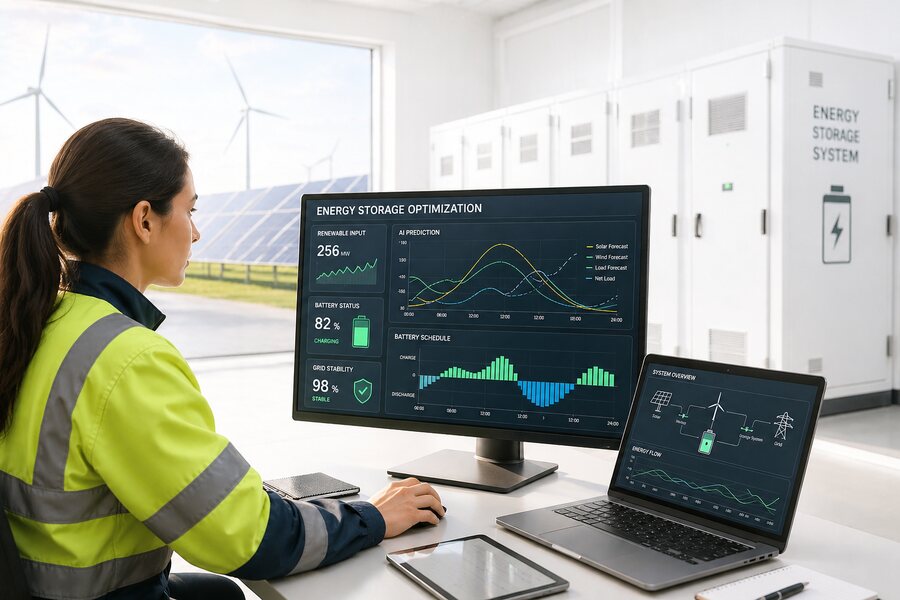
The global energy landscape is undergoing a transformation unlike anything seen since the electrification of cities in the late nineteenth century. Governments, utilities, and private enterprises are pouring unprecedented capital into renewable energy sources such as solar and wind, driven by the urgent need to decarbonize electricity generation and meet ambitious climate targets set by international agreements. Global battery energy storage capacity reached a record 375 GWh by the end of 2024, with over 200 GWh of new projects coming online in that year alone, according to data from Rystad Energy. BloombergNEF projects that worldwide energy storage deployments will exceed 92 GW in 2025, representing a 23% increase over 2024 levels. These numbers reflect a market experiencing explosive growth, yet they also underscore a fundamental challenge that has plagued renewable energy adoption from the beginning: the sun does not always shine, and the wind does not always blow. Renewable energy accounted for approximately 30% of global electricity generation by 2023, and that share continues to climb rapidly, but each percentage point of additional renewable penetration amplifies the operational complexity of managing a grid that was originally designed around dispatchable fossil fuel generators. The mismatch between when renewable energy is produced and when it is consumed creates a problem that no amount of additional solar panels or wind turbines can solve on its own.
Energy storage systems, particularly large-scale battery installations, serve as the critical bridge between intermittent renewable generation and the constant, reliable electricity supply that modern economies demand. A solar farm may produce abundant energy during midday hours but contribute nothing after sunset, precisely when residential demand peaks. Wind farms can generate surplus power during overnight gusts that no one needs, only to fall silent during calm afternoons when air conditioners strain the grid. The scale of this timing mismatch is substantial: in California, the state’s grid operator regularly curtails thousands of megawatt-hours of solar generation during spring months when supply exceeds demand, only to fire up natural gas peaker plants hours later when the sun sets and demand surges. Without intelligent management of when batteries charge and discharge, much of this renewable energy goes to waste through curtailment, while fossil fuel peaker plants continue to fill the gaps. The International Energy Agency has estimated that annual investment in battery energy storage exceeded $20 billion by 2022, and the pace of investment has only accelerated since, reflecting a growing recognition that storage is not merely complementary to renewable generation but essential for its success.
Machine learning has emerged as the most promising technology for solving this optimization puzzle. Unlike traditional rule-based battery management systems that follow static schedules and simple threshold triggers, machine learning models can process enormous volumes of data from weather forecasts, electricity market prices, grid frequency signals, historical demand patterns, and battery health metrics simultaneously. These algorithms learn from experience, continuously refining their predictions and decisions to determine the optimal moments for storing energy and releasing it back to the grid. The result is a battery system that operates not as a passive reservoir but as an intelligent, adaptive participant in the energy ecosystem. From Tesla’s Autobidder platform autonomously trading energy on wholesale markets to deep reinforcement learning agents managing frequency regulation at utility-scale installations, machine learning is fundamentally changing how the world stores and deploys clean energy. Understanding how these systems work, where they are already delivering measurable results, and what challenges remain is essential for anyone interested in the future of sustainable power.
The Renewable Energy Storage Challenge
The transition from fossil fuels to renewable energy sources presents a paradox that engineers, policymakers, and grid operators must confront. Solar and wind power are now among the cheapest forms of electricity generation in many parts of the world, with costs falling dramatically over the past decade. Yet these sources share a characteristic that makes them fundamentally different from the coal, natural gas, and nuclear plants they are designed to replace: their output is determined by weather conditions rather than human control. A grid operator cannot dispatch additional sunlight during an evening demand spike, nor can a utility command stronger winds when summer heat drives millions of air conditioners to full power. This mismatch between when renewable energy is available and when consumers need it creates a structural problem that battery storage is uniquely positioned to solve.
The scale of the challenge becomes clear when examining how modern electricity grids operate. Grid operators must balance supply and demand in real time, maintaining the alternating current frequency within extremely tight tolerances, typically within 0.5 Hz of the standard 50 or 60 Hz depending on the region. Even minor imbalances can cascade into voltage fluctuations, equipment damage, or widespread blackouts. Traditional grids relied on large spinning generators that provided natural inertia to absorb these fluctuations, but as renewable penetration increases, this mechanical stability diminishes. Battery energy storage systems can respond to frequency deviations in milliseconds, far faster than any conventional generator, making them indispensable for maintaining grid stability in a high-renewables future. The lithium-ion chemistry that dominates the market, accounting for more than 90% of installed capacity, has benefited from massive economies of scale driven by the electric vehicle industry, pushing costs down to the point where utility-scale battery projects are increasingly economically viable without subsidies. China alone installed over 100 GWh of new battery storage capacity in 2024, while the United States added 35 GWh, and markets in Germany, Australia, and the United Kingdom rounded out the top five. However, the sheer volume of decisions involved in operating these systems optimally, from choosing when to charge and discharge to deciding how much capacity to reserve for emergency frequency response, quickly overwhelms human operators and static control algorithms. Each battery installation operates within a unique context of local weather patterns, grid topology, market rules, and regulatory requirements, creating an optimization landscape that demands adaptive, data-driven solutions rather than one-size-fits-all approaches.
Why Intermittency Demands Intelligent Solutions
Solar energy generation follows a predictable daily curve, peaking around midday and dropping to zero at night, but cloud cover, seasonal variation, and atmospheric conditions introduce significant short-term variability that can cause output to swing by 50% or more within minutes. Wind power presents an even more complex forecasting challenge, as wind speeds can change rapidly and are influenced by terrain, temperature gradients, and large-scale weather systems that interact in nonlinear ways. When a large cloud bank rolls over a solar farm, the sudden drop in generation must be compensated immediately to prevent grid instability. When wind gusts exceed a turbine’s rated capacity, the excess energy must either be stored or curtailed, representing wasted potential. These dynamics create an environment where the optimal battery charging and discharging strategy changes constantly, driven by variables that interact in ways too complex for simple rule-based systems to handle.
Conventional battery management systems typically operate on fixed schedules or respond to predefined price thresholds. A basic system might charge during overnight hours when electricity prices are low and discharge during afternoon peak hours when prices are high. While this approach captures some value through energy arbitrage, it fails to account for the many variables that influence optimal battery operation. Weather patterns, grid congestion, real-time electricity market signals, battery degradation rates, neighboring generators’ outage schedules, and upcoming demand forecasts all affect the ideal charging and discharging strategy at any given moment. A battery system that charges during what was historically a low-price period might miss a sudden drop in wholesale prices caused by unexpected wind generation, or it might discharge too early and have insufficient reserves when a transmission line trips and the grid desperately needs emergency power.
The data-rich environment of modern energy systems makes machine learning a natural solution to this optimization problem. Smart meters, weather stations, grid sensors, and market data feeds generate continuous streams of information that ML algorithms can analyze to identify patterns and make predictions that far exceed human capability. A single utility-scale battery installation may need to process data from dozens of weather models, hundreds of grid measurement points, and real-time market data updating every five minutes. The proliferation of IoT devices and improved data collection techniques has further amplified the volume and granularity of available information, creating datasets that grow richer with every operational hour. Machine learning models can synthesize these inputs, identify correlations that would be invisible to human operators, and generate charging and discharging strategies that adapt dynamically to changing conditions. The transition from static rules to intelligent, data-driven optimization represents a fundamental shift in how energy storage assets are managed, unlocking value that was previously inaccessible and enabling battery systems to serve as active participants in the complex, fast-moving energy markets that define the modern grid.
How Machine Learning Optimizes Battery Charging and Discharging Cycles
Machine learning brings a fundamentally different approach to battery management by treating the charging and discharging decision not as a simple on-off switch but as a continuous optimization problem with multiple competing objectives. At the highest level, an ML-optimized battery system ingests data from four primary categories: weather and renewable generation forecasts, electricity demand and market pricing signals, grid condition and frequency data, and battery health and degradation metrics. These inputs feed into mathematical models that learn from historical patterns and real-time observations to predict future conditions and determine the optimal battery action for each time interval, whether that means charging at full capacity, discharging at a specific rate, holding reserves for grid services, or remaining idle to minimize wear on the cells. The distinction between ML-driven optimization and traditional approaches is not merely one of speed or accuracy but of fundamental capability, because machine learning can simultaneously optimize across multiple objectives and time horizons in ways that rule-based systems fundamentally cannot.
The general pipeline for deploying machine learning in energy storage begins with data collection and preprocessing, where raw sensor readings, market feeds, and weather forecasts are cleaned, normalized, and organized into features that the model can process. Feature engineering plays a critical role at this stage, as domain experts identify which variables are most predictive and how they should be combined. For instance, the relationship between ambient temperature, battery state of charge, and degradation rate may require a specialized feature that captures their nonlinear interaction. Once the data is prepared, training algorithms learn the patterns that connect inputs to optimal outcomes, using historical data to build predictive models. These trained models are then deployed into production environments where they generate real-time recommendations or directly control battery operations through automated dispatch systems. Continuous monitoring and retraining ensure that models adapt to changing conditions, such as seasonal shifts in solar generation patterns, evolving market structures, or gradual battery degradation over time.
The sophistication of these systems varies depending on the application and the complexity of the optimization problem. Some implementations use relatively straightforward supervised learning models to predict energy prices or demand, feeding those predictions into a separate optimization algorithm that determines the battery schedule. Others employ end-to-end reinforcement learning agents that learn optimal strategies directly from interaction with the grid environment, without requiring explicit predictions as intermediate steps. The choice of approach depends on factors such as the availability of historical data, the computational resources available, the regulatory environment governing battery dispatch, and the specific revenue streams the battery owner seeks to capture. Regardless of the approach, the common thread is a shift from reactive, rule-based control to proactive, data-driven decision-making that continuously improves over time.
Predictive Analytics and Demand Forecasting Models
Predictive analytics form the foundation of most ML-optimized energy storage systems because accurate forecasting of supply, demand, and pricing is essential for making intelligent charging and discharging decisions. Several families of machine learning models have proven particularly effective in this domain. Long Short-Term Memory networks, a type of recurrent neural network designed to capture temporal dependencies in sequential data, have become widely used for energy demand forecasting because they can learn patterns across multiple time horizons, from hourly fluctuations driven by daily routines to seasonal trends influenced by climate and economic activity. LSTM models are particularly valuable for capturing the complex, nonlinear relationships between weather variables and energy consumption, such as the way heating demand responds differently to temperature drops depending on the time of day, the day of the week, and the season.
Random Forest models, which combine predictions from many individual decision trees to produce robust and accurate forecasts, have demonstrated exceptional performance in energy storage applications. A 2024 study published in the journal Atmosphere evaluated multiple ML approaches for renewable energy system optimization and found that Random Forest achieved the lowest mean absolute error among the models tested, reducing prediction error by approximately 8.5% compared to baseline approaches. The same research documented a 10 to 20% improvement in battery storage efficiency when ML-driven forecasting guided charging and discharging decisions, along with a 15% improvement in overall grid efficiency. These results highlight how even modest improvements in forecast accuracy can translate into significant operational gains, because a battery that charges at precisely the right time captures more low-cost renewable energy, while one that discharges at the optimal moment commands higher market prices and provides more valuable grid services.
ARIMA-based models, which have a long history in time series forecasting, continue to serve an important role in energy storage optimization, particularly for shorter-term predictions where linear patterns dominate. Modern implementations often combine ARIMA with machine learning approaches in hybrid architectures, using ARIMA to capture the linear trend and seasonal components of the demand signal while neural networks handle the residual nonlinear patterns. Support Vector Machines provide another tool in the forecasting toolkit, excelling at classification and regression tasks where the relationship between inputs and outputs involves complex boundaries. In practice, many energy storage operators deploy ensemble methods that combine predictions from multiple model types, weighting each model’s contribution based on its recent accuracy. This ensemble approach provides more reliable forecasts than any single model, which is critical for battery operations where a poor prediction can result in missed revenue, unnecessary battery degradation, or failure to provide contracted grid services.
The practical impact of these forecasting improvements becomes tangible when examining how they change battery behavior. A battery operating under traditional control might follow a simple time-of-use schedule, charging from midnight to 6 AM and discharging from 4 PM to 9 PM every day regardless of conditions. An ML-optimized system recognizes that tomorrow’s weather forecast calls for heavy cloud cover, reducing solar generation and likely driving afternoon electricity prices higher than usual. It adjusts its strategy accordingly, reserving additional capacity for the afternoon discharge cycle and potentially charging earlier to capture the morning wind generation surplus. When the forecast also indicates that a heat wave will begin later in the week, the system adjusts its degradation-aware charging profile to preserve battery capacity for the higher-value days ahead. Each of these decisions involves processing dozens of variables simultaneously and balancing competing objectives in ways that static rules simply cannot accommodate. The cumulative effect of these optimized decisions compounds over time, as batteries managed by ML algorithms consistently capture more value from the same hardware than their conventionally managed counterparts, translating into faster payback periods for project investors and lower levelized costs of storage that benefit the entire electricity system.
Reinforcement Learning and Real-Time Decision Systems
While predictive analytics provide the forecasting foundation, reinforcement learning takes ML-driven battery optimization to a qualitatively different level by enabling systems to learn optimal strategies through direct interaction with the grid environment. In reinforcement learning, an AI agent observes the current state of the system, such as battery charge level, electricity prices, grid frequency, and weather conditions, takes an action like charging at a certain rate or discharging a specific amount, and receives a reward signal that indicates how good that action was. Over millions of simulated or real interactions, the agent learns a policy that maps states to actions in a way that maximizes cumulative reward. Deep reinforcement learning extends this approach by using neural networks to approximate the policy, enabling the agent to handle the high-dimensional state spaces and continuous action spaces that characterize real-world energy storage systems.
The power of reinforcement learning for battery optimization lies in its ability to discover strategies that human operators and traditional optimization methods would never consider. A DRL agent managing a utility-scale battery might learn that partially discharging during a moderate price spike preserves enough capacity to capture a second, higher spike later in the day, a strategy that requires anticipating future conditions and managing risk across multiple time horizons simultaneously. Research published in Environmental Science and Technology in early 2026 demonstrated that deep reinforcement learning could deliver over 6% energy reduction and over 8% water savings in data center cooling applications, while also optimizing battery storage dispatch for renewable integration across ten globally representative sites. These results illustrate how DRL agents can simultaneously optimize multiple objectives that interact in complex ways, a capability that distinguishes them from simpler optimization approaches.
Tesla’s Autobidder platform represents one of the most commercially significant implementations of AI-driven autonomous energy trading for battery assets. Autobidder functions as a real-time trading platform that uses machine learning to forecast energy prices, grid load, and renewable generation output, then autonomously executes charging and discharging decisions to maximize revenue. The platform manages battery assets across wholesale energy markets, executing trades around the clock without human intervention. It employs a library of optimization algorithms that balance energy arbitrage, which involves buying low and selling high, with grid services revenue from frequency regulation and capacity markets. Tesla’s complementary platform, Opticaster, extends this intelligence to behind-the-meter assets like residential Powerwalls, determining ideal times to charge from solar during the day and discharge to reduce energy costs during peak price hours, while also aggregating distributed batteries into virtual power plants that can participate in wholesale markets.
The integration of reinforcement learning with real-time grid signals enables battery systems to provide fast frequency response, one of the most valuable and technically demanding grid services. When grid frequency drops below its nominal value, indicating that demand is exceeding supply, a RL-optimized battery can begin injecting power within milliseconds, stabilizing the grid before conventional generators can ramp up. This capability proved its worth at Neoen’s Hornsdale Power Reserve in South Australia, where the 150 MW battery became the first large-scale installation in the world to provide synthetic inertia services through Tesla’s Virtual Machine Mode technology in 2022. The system provided an estimated 2,000 megawatt-seconds of inertial response to the South Australian grid, a service traditionally supplied exclusively by coal and gas generators. In its first four months of operation, the battery reduced the cost of frequency control ancillary services to the Australian Energy Market Operator by 90%, demonstrating how ML-optimized batteries can simultaneously deliver grid stability services and generate significant revenue for their operators.
Real-World Implementations and Case Studies
The transition from laboratory research to commercial deployment of ML-optimized energy storage has accelerated dramatically since 2022, with projects spanning from individual countries’ national grids to multinational portfolios managed by AI-driven platforms. These real-world implementations provide concrete evidence of the value that machine learning brings to battery operations, demonstrating measurable improvements in efficiency, revenue, and grid reliability. The trajectory is clear in the numbers: Tesla deployed a record 31.4 GWh of energy storage products in 2024, while Fluence contracted over 22,000 MWh across 90 projects in the United States alone. Examining several verified case studies reveals both the achievements and the practical challenges of deploying these systems at scale, and the patterns that emerge provide a roadmap for the industry’s continued expansion.
Neoen’s battery storage portfolio in Australia represents one of the most extensively documented examples of AI-optimized energy storage delivering measurable grid-level benefits. The Hornsdale Power Reserve, originally commissioned in December 2017 as a 100 MW installation and expanded to 150 MW and 193.5 MWh in 2020, fundamentally changed the economics and operations of South Australia’s electricity market. The battery employs Tesla’s automated control systems to participate in multiple market segments simultaneously, using 70 MW of capacity for grid stabilization services under a government contract while using the remaining capacity for energy arbitrage and frequency control. After six months of operation, the Hornsdale Power Reserve was responsible for 55% of all frequency control and ancillary services in South Australia. The battery’s automated trading algorithms earned Neoen approximately €30 million in operating profit from Australian battery storage in 2020 alone, with the most significant revenue coming during an 18-day failure of the Heywood interconnector in January 2020, when the battery provided critical grid support while limiting wholesale electricity price spikes for consumers. In July 2022, the Hornsdale Power Reserve achieved another milestone by becoming the first large-scale battery in the world to provide synthetic inertia services at scale, delivering an estimated 2,000 megawatt-seconds of inertial response to the South Australian grid through Tesla’s Virtual Machine Mode technology, a capability that had previously been available only from coal and gas generators with large spinning turbines. The two-year testing and validation process, conducted in collaboration with the Australian Energy Market Operator and ElectraNet, demonstrated that ML-controlled batteries could replicate the physical inertia properties of conventional generators while simultaneously providing other market services, a finding with profound implications for grids worldwide seeking to retire fossil fuel assets without compromising stability.
Building on the lessons from Hornsdale, Neoen deployed the 300 MW and 450 MWh Victorian Big Battery at the Moorabool terminal station near Geelong, which commenced operations in December 2021. Funded in part by a $160 million loan from Australia’s Clean Energy Finance Corporation, the installation uses 212 Tesla Megapacks and provides up to 250 MW of peak capacity to the existing Victoria-to-New South Wales interconnector. The Victorian Big Battery demonstrates how ML-optimized storage systems scale beyond individual market participation to address transmission-level constraints. The battery’s intelligent dispatch system allows it to absorb excess renewable generation that would otherwise be curtailed due to interconnector capacity limits, storing that energy and releasing it during periods when the transmission link can accommodate additional power flows. In 2023, Neoen and Tesla began retrofitting the Victorian Big Battery with grid-forming inverter capability through Tesla’s Virtual Machine Mode, a $5.9 million project supported by the Australian Renewable Energy Agency. This upgrade enables the battery to provide synthetic inertia and voltage support services that were previously available only from fossil fuel generators, further expanding the range of grid services that ML-optimized storage can deliver.
The emergence of AI-powered energy trading platforms has created a new category of battery optimization that extends beyond individual installations to portfolio-level management. Tesla’s Autobidder platform now manages battery assets across multiple markets globally, executing autonomous trading decisions based on real-time market conditions, weather forecasts, and grid signals. Tesla reported record energy storage deployments in 2024, reaching 31.4 GWh for the full year with a new quarterly record of 11.0 GWh in the fourth quarter alone. The company’s Megafactory in Lathrop, California, reached full production capacity targeting 40 GWh annually, while a new Shanghai Megafactory began production in early 2025 with a target annual output of 10,000 units. Each Megapack unit deployed with Autobidder integration functions as a node in an intelligent network that continuously optimizes charging and discharging decisions across the entire fleet. The platform’s machine learning algorithms analyze price spreads across different market intervals, forecast renewable generation and demand, and coordinate battery operations to maximize total portfolio value rather than optimizing each unit independently. This portfolio-level optimization can capture value that individual battery optimization misses, such as geographic arbitrage opportunities where surplus renewable generation in one region can be stored and discharged to serve demand in an adjacent market.
In Europe, Fluence Energy has established itself as a leading provider of AI-optimized storage solutions, with over 22,000 MWh of battery capacity deployed or contracted across more than 90 projects in the United States alone and operations spanning nearly 50 markets globally. The company’s Mosaic optimization platform automates revenue stacking by analyzing thousands of market variables to determine the optimal allocation of battery capacity across energy arbitrage, frequency regulation, capacity markets, and other revenue streams. Fluence’s 250 MW Grid Booster project for German transmission system operator TransnetBW, announced in 2022, demonstrates how AI-optimized storage addresses transmission congestion at critical grid nodes. The battery system supports grid stability at a crucial hub in Baden-Württemberg, using intelligent dispatch algorithms to absorb surplus renewable generation and release it when transmission capacity is available. In November 2025, LEAG Clean Power and Fluence announced plans to build Europe’s largest battery energy storage system, a 1 GW and 4 GWh installation at Jänschwalde, Germany, powered by Fluence’s Smartstack technology. This project, designed to deliver grid stability services, support energy trading, and reinforce Germany’s energy security, illustrates the trajectory toward ever-larger AI-managed storage installations that can influence wholesale market dynamics at a national scale.
These case studies reveal several common themes about the current state of ML-optimized energy storage. First, the most commercially successful deployments combine multiple revenue streams, using AI to dynamically allocate battery capacity across arbitrage, frequency services, and capacity markets based on real-time conditions rather than fixed contracts. Second, the operational benefits extend beyond the battery owner’s revenue to include system-wide improvements in grid stability, reduced renewable curtailment, and lower electricity costs for consumers. Third, the technology continues to evolve rapidly, with capabilities like grid-forming inverter control and portfolio-level optimization representing recent advances that unlock additional value from existing hardware. Fourth, scale matters considerably, as larger installations and fleet-level management enable optimization strategies that are simply not available to individual battery operators, creating competitive advantages for companies that can integrate hardware, software, and market expertise into unified platforms.
Benefits and Challenges Across Stakeholders
The impact of machine learning-optimized energy storage extends across the entire energy ecosystem, creating distinct benefits and challenges for each group of participants. Understanding these stakeholder-specific dynamics is essential for grasping how ML-driven storage reshapes the economics, operations, and governance of modern electricity systems. The value proposition differs significantly depending on whether a stakeholder is a utility managing grid reliability for millions of customers, a developer seeking to maximize returns on a solar-plus-storage project, a homeowner exploring a residential battery for backup power and bill savings, or a regulator attempting to design market structures that incentivize optimal system behavior. Each perspective reveals both opportunities that ML-optimized storage uniquely enables and challenges that must be addressed for the technology to reach its full potential.
Utilities and grid operators stand to gain the most immediate benefits from ML-optimized energy storage because these systems directly address the core challenge of maintaining grid stability as renewable penetration increases. Automated frequency response from AI-managed batteries can replace expensive spinning reserves from fossil fuel generators, reducing both operating costs and carbon emissions. When batteries respond to grid frequency deviations in milliseconds rather than the seconds or minutes required by conventional generators, the quality of frequency regulation improves, reducing wear on other grid equipment and lowering the risk of cascading failures. Grid operators also benefit from reduced renewable curtailment, because ML-optimized batteries can absorb surplus generation that would otherwise be wasted, storing it for release during high-demand periods. Rystad Energy’s analysis found that the global average cost of battery storage projects fell below $300 per kWh in 2024, and projects that the cost could decline to $250 per kWh, which would bring the cost of stored electricity to approximately $60 per MWh, making stored renewable energy cost-competitive with natural gas peaker plants in many markets. However, utilities also face significant challenges in integrating ML-optimized storage into their operations. Legacy grid management systems were not designed to interact with autonomous AI trading platforms, and coordinating thousands of distributed battery assets requires new communication protocols, cybersecurity frameworks, and regulatory approvals. The computational infrastructure needed to run sophisticated ML models in real time demands investment in data centers, high-speed communications, and specialized engineering talent that many utilities currently lack.
Renewable energy developers benefit from ML-optimized storage through enhanced asset value and improved project economics. A solar farm paired with an intelligently managed battery can offer firm, dispatchable power rather than intermittent generation, commanding higher prices in power purchase agreements and providing more attractive returns for investors. ML algorithms that accurately forecast solar and wind output allow developers to optimize the sizing of their storage systems, avoiding the capital expense of oversized batteries while ensuring sufficient capacity to capture the most valuable renewable generation. The ability to participate in multiple revenue streams simultaneously, including energy arbitrage, frequency regulation, and capacity markets, transforms the business case for renewable-plus-storage projects from marginal to compelling. Developers also gain operational advantages from predictive maintenance algorithms that monitor battery health in real time, detecting early signs of cell degradation, thermal anomalies, or connector failures before they cause downtime. Neural networks trained on historical degradation data can forecast battery health trajectories, enabling proactive maintenance scheduling that reduces downtime by an estimated 20% according to research from the National Renewable Energy Laboratory. The challenge for developers lies in the complexity and cost of implementing these systems, particularly the need for high-quality data infrastructure and the ongoing expense of model training and validation.
Consumers and communities experience the benefits of ML-optimized storage primarily through lower electricity costs and improved reliability. When batteries reduce the need for expensive peaker plants and decrease renewable curtailment, wholesale electricity prices decline, and those savings can flow through to retail rates. Virtual power plant programs, which aggregate thousands of residential batteries under centralized AI control, allow homeowners to earn revenue by contributing their stored energy to the grid during peak demand periods. Over 50,000 homes in the United States participated in utility-sponsored virtual power plant programs by 2024, and more than 150,000 homes worldwide were enrolled in aggregation programs that enable their batteries to provide grid services. These programs demonstrate how ML optimization can democratize participation in energy markets, allowing individual households to benefit from the same sophisticated trading strategies that were previously available only to large commercial operators. Communities in regions prone to extreme weather events gain additional resilience benefits, as AI-managed batteries can provide backup power during grid outages, automatically prioritizing critical loads and maximizing the duration of backup supply based on real-time conditions and weather forecasts. The challenge for consumers centers on data privacy concerns, as smart battery systems collect detailed information about household energy usage patterns, and on the digital divide that may exclude lower-income households from participating in these programs if they cannot afford the upfront cost of battery systems.
Policymakers and regulators face the dual challenge of supporting ML-optimized storage deployment while establishing appropriate oversight frameworks. Data-driven approaches to grid management can inform more effective energy policy by providing granular visibility into how storage affects market dynamics, renewable integration, and system reliability. Regulatory innovations such as Australia’s frequency control ancillary services markets have demonstrated how well-designed market structures can incentivize ML-optimized batteries to provide services that benefit the entire grid. The European Union’s Renewable Energy Directive amendments in 2023 explicitly recognized energy storage as a tool for meeting renewable energy targets, while India’s Viability Gap Funding initiative and Energy Storage Obligation have created new pathways for large-scale storage deployment in emerging markets. However, the autonomous nature of AI trading systems raises questions about market manipulation, as algorithms that can predict and respond to market conditions faster than human traders could potentially exploit market vulnerabilities. Regulators must also address standardization challenges, as the proliferation of proprietary AI platforms from different vendors creates interoperability concerns and risks vendor lock-in for utilities and developers. The Federal Energy Regulatory Commission in the United States updated its storage incentive regulations in 2024, and similar regulatory evolution is underway in Europe and Asia, but the pace of technological change consistently outstrips the pace of regulatory adaptation, creating uncertainty for investors and developers. The need for transparent, interpretable AI algorithms in energy systems has also become a regulatory focus, as grid operators and market overseers require the ability to audit and understand the decision-making processes of automated trading systems to ensure fair market participation and prevent systemic risks.
The Future of AI-Driven Energy Storage
The convergence of advancing machine learning capabilities with next-generation battery technologies is poised to dramatically expand the scope and impact of intelligent energy storage over the coming decade. Several emerging trends are reshaping the landscape in ways that will influence how energy is stored, traded, and consumed worldwide.
The integration of machine learning with emerging battery chemistries represents one of the most promising frontiers. Sodium-ion batteries, which use abundantly available sodium instead of lithium, are gaining traction for grid-scale applications where cost per kilowatt-hour matters more than energy density. Machine learning plays a critical role in maximizing the performance of these newer chemistries throughout their lifecycle, from accelerating the discovery of high-performance electrode and electrolyte materials using computational screening to optimizing real-time charge management that accounts for the different degradation characteristics of sodium-ion cells compared to lithium-ion. Solid-state batteries, which replace the liquid electrolyte with a solid material to improve safety and energy density, present another area where ML-driven optimization is essential. These batteries exhibit different thermal behaviors, charging dynamics, and degradation patterns than conventional lithium-ion systems, requiring control algorithms that can adapt to chemistry-specific characteristics rather than applying one-size-fits-all management strategies. Machine learning’s ability to learn these nuanced behaviors from operational data makes it an essential technology for extracting maximum value from batteries that the industry is still learning to manufacture and operate at scale.
Federated learning is emerging as a potential solution to one of the most significant barriers to ML adoption in energy storage, namely the reluctance of battery operators to share sensitive operational data. In traditional ML approaches, training effective models requires aggregating large datasets from multiple installations, which raises competitive and privacy concerns. Federated learning enables ML models to be trained across many distributed battery systems without the underlying data ever leaving the local installation. Each battery’s local controller trains a model on its own data and shares only the model updates, not the raw data, with a central server that aggregates the improvements. This approach allows the entire network to benefit from the collective learning experience without exposing individual operators’ proprietary information about battery performance, market strategies, or customer behavior. Edge AI extends this concept further by deploying sophisticated ML models directly on the battery management hardware, enabling real-time optimization decisions without relying on cloud connectivity. This is particularly valuable for remote installations, microgrids in developing regions, and applications where communication latency could compromise the speed of frequency response or other time-critical grid services.
The convergence of energy storage optimization with electric vehicle charging infrastructure and data center power management is creating new use cases that push the boundaries of ML-driven control. As electric vehicle adoption accelerates, charging hubs and depots face complex optimization challenges that mirror those of grid-scale batteries: when to charge vehicles at the lowest cost, how to balance charging across many vehicles simultaneously without overloading the local grid connection, and how to use vehicle batteries as distributed storage assets through vehicle-to-grid technology. Machine learning algorithms that have been proven in stationary storage applications are being adapted for these dynamic environments, where the additional variables of vehicle arrival and departure schedules, driver preferences, and trip requirements add layers of complexity. Data centers present a parallel opportunity, as the rapid expansion of AI computing infrastructure is creating enormous and highly variable electricity loads. Tesla’s deployment of 150 MW of Megapack batteries at xAI’s Colossus supercomputer facility in Memphis, Tennessee, demonstrated how AI-optimized battery systems can stabilize the power demands of high-performance computing infrastructure while participating in utility demand response programs. This convergence of energy storage with computing and transportation represents the next chapter of ML-driven optimization, where the same algorithmic principles that manage a single utility-scale battery are extended to orchestrate complex energy ecosystems spanning generation, storage, computing, and mobility.
The trajectory of these developments points toward a future where autonomous, self-optimizing energy grids manage vast fleets of distributed storage assets with minimal human intervention. Achieving this vision requires continued progress on several fronts, including improving the interpretability of ML models so that regulators and grid operators can understand and trust automated decisions, developing robust cybersecurity frameworks to protect increasingly connected energy infrastructure from attack, and creating regulatory environments that encourage innovation while maintaining system reliability. The pace of progress suggests that these challenges are solvable, and the economic incentives for solving them are enormous. As battery costs continue to decline and ML capabilities continue to advance, the combination of intelligent software and flexible hardware is positioned to become the backbone of a decarbonized, reliable, and affordable energy system.
Final Thoughts
Machine learning-optimized energy storage represents far more than an incremental improvement in battery management. It is a foundational technology that determines whether the world’s massive investment in renewable energy generation translates into a reliable, affordable, and equitable electricity system or remains constrained by the inherent variability of wind and solar power. The ability of ML algorithms to process vast streams of data and make split-second decisions about when to charge and discharge batteries transforms these hardware assets from passive containers into active, intelligent participants in the energy market. This transformation has immediate and practical consequences: lower electricity costs for consumers, reduced carbon emissions from displaced fossil fuel peaker plants, and improved grid stability in regions where renewable penetration is pushing legacy infrastructure to its limits.
The financial inclusion dimension of this technology deserves particular attention. Historically, participation in energy markets was limited to large utilities and commercial operators with the capital and expertise to navigate complex trading environments. ML-optimized virtual power plants are changing this equation by enabling individual homeowners with rooftop solar and a residential battery to contribute stored energy to the grid during peak demand periods, earning revenue through programs that aggregate thousands of small assets into market-scale resources. Over 150,000 homes worldwide participate in such programs, and the number is growing rapidly. For communities in developing regions, ML-optimized microgrids powered by solar and battery storage offer a path to reliable electricity that does not depend on extending expensive centralized grid infrastructure. The intelligence embedded in these systems allows them to maximize the value of limited energy resources, ensuring that essential services like healthcare facilities, schools, and water treatment systems receive reliable power even when generation resources are constrained.
The intersection of technological capability and social responsibility creates both opportunity and obligation. As AI-driven energy systems become more autonomous, questions about algorithmic fairness become urgent. An optimization algorithm that maximizes revenue for a battery operator might inadvertently prioritize serving wealthy neighborhoods where electricity prices are highest over low-income communities where the need for reliable power is greatest. Ensuring that ML-optimized storage contributes to energy equity rather than reinforcing existing disparities requires deliberate design choices, regulatory oversight, and ongoing community engagement. The technology itself is neutral; its impact depends on the values and priorities embedded in the algorithms and the market structures within which they operate.
The challenges that remain are real but surmountable. Data quality and availability continue to limit ML model performance in many regions. The computational cost of training sophisticated deep learning models creates barriers for smaller operators. Cybersecurity risks grow as energy systems become more connected and automated. Regulatory frameworks in most jurisdictions lag behind the pace of technological change, creating uncertainty that slows investment. Yet the trajectory of progress offers reason for measured optimism. Battery costs have fallen dramatically and continue to decline. ML algorithms grow more capable and more efficient with each generation. The economic case for intelligent energy storage strengthens with every GWh of new renewable generation capacity that comes online. The convergence of cheaper hardware and smarter software is not merely an industry trend; it is the mechanism through which renewable energy fulfills its promise of clean, reliable, and accessible power for all.
FAQs
- What is machine learning in the context of renewable energy storage? Machine learning in renewable energy storage refers to the use of algorithms that learn from data to optimize how battery systems charge, discharge, and participate in electricity markets. These algorithms process information from weather forecasts, electricity prices, grid conditions, and battery health metrics to make intelligent decisions about when to store energy and when to release it. Unlike traditional rule-based systems that follow fixed schedules, ML models continuously adapt their strategies based on changing conditions and past performance.
- How does machine learning determine the optimal time to charge and discharge batteries? ML models analyze multiple data streams simultaneously, including renewable generation forecasts, electricity demand predictions, real-time market prices, grid frequency signals, and battery state of charge. The algorithms identify patterns in this data to predict when electricity prices will be lowest for charging and highest for discharging. Advanced systems using reinforcement learning go further by learning optimal strategies through trial and error, discovering approaches that balance immediate revenue against long-term battery health and future market opportunities.
- What types of machine learning models are most commonly used in energy storage optimization? The most widely used models include Long Short-Term Memory networks for time series forecasting of energy demand and prices, Random Forest models for robust prediction with high accuracy, ARIMA-based approaches for capturing seasonal and trend patterns, Support Vector Machines for handling nonlinear relationships, and deep reinforcement learning agents for real-time decision-making. Many commercial systems use ensemble methods that combine predictions from multiple model types to achieve more reliable results than any single model provides.
- What measurable improvements has machine learning delivered in energy storage operations? Documented results include 10 to 20% improvements in battery storage efficiency, approximately 8.5% reduction in prediction errors using Random Forest models, 15% improvement in overall grid efficiency, and over 6% energy reduction in integrated renewable and storage systems using deep reinforcement learning. At Australia’s Hornsdale Power Reserve, ML-optimized battery operations reduced the cost of frequency control ancillary services by 90% within the first four months of operation.
- What is the difference between energy arbitrage and grid services in ML-optimized battery systems? Energy arbitrage involves buying electricity when prices are low, typically during periods of high renewable generation, and selling it when prices are high, usually during peak demand. Grid services include frequency regulation, where the battery injects or absorbs power to maintain grid frequency stability, capacity services that guarantee availability during peak periods, and synthetic inertia that helps stabilize grids with high renewable penetration. ML algorithms optimize battery dispatch across all these revenue streams simultaneously, a practice known as revenue stacking.
- How much does it cost to implement ML-optimized energy storage systems? The cost of battery energy storage systems fell below $300 per kWh globally in 2024 and is projected to decline further toward $250 per kWh. The ML software layer adds costs for data infrastructure, model development, and ongoing maintenance, but these expenses are typically offset by the additional revenue and efficiency gains that intelligent optimization delivers. Platforms like Tesla’s Autobidder and Fluence’s Mosaic are commercially available and can be deployed with utility-scale battery installations.
- What role do virtual power plants play in ML-optimized energy storage? Virtual power plants aggregate thousands of distributed battery systems, such as residential Powerwalls or commercial backup batteries, under centralized AI control. The ML platform coordinates charging and discharging across all connected batteries to provide grid services and participate in wholesale markets at a scale that individual batteries could not achieve independently. Over 50,000 homes in the United States and more than 150,000 globally participated in such programs by 2024, enabling household battery owners to earn revenue while contributing to grid stability.
- What data does an ML-optimized battery system need to operate effectively? Effective operation requires continuous access to weather forecast data including solar irradiance and wind speed predictions, historical and real-time electricity demand data, wholesale and retail electricity market prices, grid frequency and voltage measurements, battery state of charge and health metrics including temperature and cycle count, and information about scheduled grid events such as planned outages or maintenance. Higher quality and more granular data generally leads to better optimization performance.
- How does machine learning address battery degradation in energy storage systems? ML models monitor battery health indicators such as internal resistance, capacity fade, temperature patterns, and voltage profiles to predict degradation trajectories. These predictions allow the optimization algorithm to adjust charging and discharging strategies to extend battery life, for example by reducing charge rates during high-temperature periods or avoiding deep discharges that accelerate cell degradation. Tesla’s AI-powered Battery Management System has helped maintain over 90% battery capacity in many vehicles even after 200,000 miles, and similar principles apply to grid-scale storage.
- What emerging technologies will shape the future of ML-optimized energy storage? Key emerging technologies include sodium-ion and solid-state batteries that offer different performance characteristics requiring chemistry-specific ML optimization, federated learning that enables collaborative model training without sharing sensitive operational data, edge AI that deploys optimization algorithms directly on battery hardware for real-time decisions without cloud connectivity, and vehicle-to-grid integration that uses electric vehicle batteries as distributed storage assets managed by the same ML platforms that optimize stationary installations. The convergence of these technologies points toward autonomous, self-optimizing energy grids.