Somewhere in the United States today, a stranger who has never met a particular consumer will sit down with that person’s name, birth date, and Social Security number and try to open a credit card in their name. This is not a rare event; it is a routine, almost bureaucratic act of fraud that happens tens of thousands of times a day, and the only real defense standing between that stranger and a new line of credit is whether the three companies that keep records on nearly every adult in the country — Equifax, Experian, and TransUnion — will hand over that person’s credit file to a lender who asks for it. For decades, controlling that decision meant sending a letter, standing in a phone queue, or filling out a web form that took days to process and often required paying a small fee for the privilege of protecting one’s own identity. That friction was not incidental. It was the main reason a tool widely agreed to be one of the most effective defenses against new-account fraud sat unused in the vast majority of American credit files even as identity theft complaints climbed year after year.
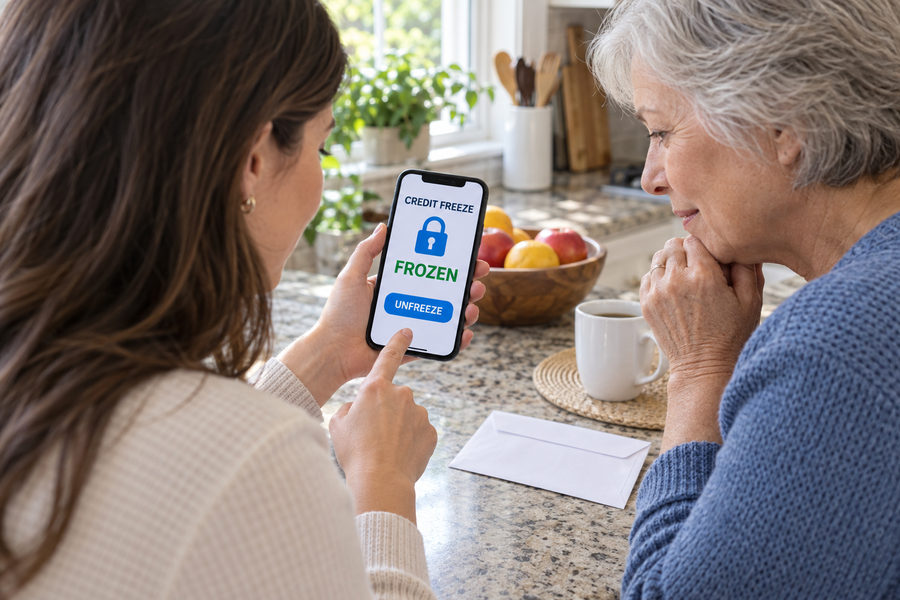
What has changed in the past several years is not the underlying legal right to restrict access to a credit file, but the interface sitting on top of it. Each of the three major bureaus now offers some version of a mobile app that lets a consumer lock or unlock their credit file with a single tap, a swipe, or a fingerprint, turning what used to be a multi-day administrative process into something closer to toggling airplane mode. Experian calls its version CreditLock. Equifax calls its Lock & Alert. TransUnion has taken a more complicated path, discontinuing its own app-based lock product while keeping a free freeze available through its website and a locking feature inside a separate paid subscription. Together, these tools represent the fintech industry’s answer to a problem that has existed since credit bureaus began compiling files on consumers: if the barrier to protecting a credit file is measured in days and dollars, most people will not bother until after something has already gone wrong.
The stakes behind this shift are not abstract. In September 2017, Equifax disclosed that hackers had stolen the personal information of 147 million people, one of the largest breaches of financial data in American history, and the regulatory and legal fallout from that single event reshaped how credit freezes work at a national level. Seven years later, a far less famous company called National Public Data suffered a breach that plaintiffs’ attorneys alleged exposed billions of records, and the company collapsed into bankruptcy within months. Between those two events, and continuing through the most recent data the Federal Trade Commission has published, identity theft has remained one of the most commonly reported consumer harms in the country, with more than a million reports filed through the FTC’s IdentityTheft.gov portal in a single recent year. Instant, app-based locking did not emerge in a vacuum. It emerged because breaches kept happening, because the old freeze process was too slow to serve as a real-time response to those breaches, and because the credit bureaus themselves had a commercial incentive to offer something faster.
This article works through what one-tap credit freezing and locking actually is, starting with the legal foundation that made freezes free and the well-documented reasons most consumers still do not use them. It looks at how the technology functions behind the scenes, examines the specific tools Experian, Equifax, and TransUnion have built and, in TransUnion’s case, discontinued, and organizes the real benefits of instant locking by who receives them: consumers, lenders, and the bureaus themselves. It also walks through documented, dated examples of how actual breaches and government data have shaped adoption, because the case for this technology is strongest when it rests on events that happened and numbers that can be checked against public records. Finally, it takes seriously the limitations of these tools, including the legal differences between a freeze and a lock, the cost of premium locking features, and the risk of putting so much control inside a single app on a single phone. None of this is a claim that one-tap freezing has solved identity theft; it is an account of how a genuinely useful piece of financial technology came to exist, what it can and cannot do, and why it is reasonable to expect it to become the default way people protect their credit rather than a tool reserved for the aftermath of a crisis.
Why Credit Freezes Exist and Why Adoption Has Lagged
A credit freeze, in the legal sense that matters to lenders, is a restriction placed on a consumer’s credit file that blocks most third parties from viewing it, which in practice means a lender cannot approve a new credit card, auto loan, or mortgage in that person’s name because the application process requires pulling a credit report that the freeze makes inaccessible. This is different from simple credit monitoring, which only alerts a consumer after an account has already been opened or an inquiry has already been made; a freeze acts before the fact, denying the file to anyone who does not already have an established relationship with the consumer or a court order compelling access. Because the freeze blocks the file rather than merely watching it, consumer advocates and government agencies have consistently described it as the single most effective tool an individual can use to prevent a stranger from opening new credit in their name, more effective than monitoring, more effective than fraud alerts, and more effective than any password or verification question a lender might ask.
For most of the freeze’s history, though, that effectiveness came at a cost, both literal and practical. Before 2018, whether a credit freeze was free depended entirely on the state a consumer lived in, and in many states bureaus were permitted to charge a fee, often around ten dollars per bureau, simply to place or lift a freeze, with an identical fee charged again every time the consumer needed to temporarily thaw their file to apply for new credit. That changed with the Economic Growth, Regulatory Relief, and Consumer Protection Act, a federal law signed on May 24, 2018, and effective as of September 21, 2018, which required all three nationwide credit bureaus to offer security freezes and freeze removals free of charge to every consumer in the country, regardless of state law. The same law extended the standard duration of a fraud alert from ninety days to a full year and, notably, gave parents and guardians the ability to freeze a minor child’s credit file until that child turns sixteen, closing a gap that had previously left children’s largely inactive credit histories especially vulnerable to identity thieves who specifically target Social Security numbers with no existing credit activity to flag as suspicious.
Removing the fee did not remove the friction, and that distinction turns out to matter enormously. Even after freezes became free nationwide, placing one still generally required visiting each bureau’s website separately, since federal law does not obligate a bureau to notify the other two when a consumer freezes their file with one of them, in contrast to a fraud alert, which one bureau is required to pass along to the other two automatically. A consumer who wanted comprehensive protection needed to complete the process three separate times, keep track of three separate login credentials, and remember to repeat the process again for a minor child’s file at each bureau. Public survey research conducted for the Identity Theft Resource Center found that more than three-quarters of consumers said they were familiar with how a credit freeze works, yet fewer than one-third of respondents had ever actually placed one for any reason, and specifically among consumers who believed their information had been exposed in a data breach, only three percent said they froze their credit in direct response to that breach notice. That gap between broad awareness and rare use is precisely the problem that app-based, one-tap locking sets out to close, by replacing a multi-step administrative process most people postpone indefinitely with an action fast enough to complete while still reading the breach notification email.
The bureaus themselves have had every commercial reason to close that gap, since a consumer who fears they cannot easily unfreeze their file when they actually need new credit is more likely to avoid freezing at all, leaving both the consumer and the bureau’s own long-term reputation exposed to the next fraud incident. Once the legal requirement to offer free freezes was in place, the remaining competitive question became how fast and how convenient each bureau could make the process of turning that protection on and back off again, which is exactly the question that Experian, Equifax, and TransUnion have each answered in different ways over the years since the 2018 law took effect, with mobile apps as the primary battleground.
How One-Tap Freezing and Locking Actually Works
Behind a single tap in a bureau’s mobile app sits a fairly simple technical arrangement once the legal groundwork of a free, on-demand freeze is already in place: the app communicates directly with the bureau’s own database in real time, flipping a status flag on the consumer’s file that either blocks or allows outside access, rather than queuing a request for a human employee to process manually. Because the entire chain of communication happens between the consumer’s phone and the bureau’s own servers, with no paper form, no mailed confirmation letter, and no hold time on a customer service line, the change can take effect within seconds rather than the several business days that a mailed request historically required. This is the same basic shift that has transformed plenty of other everyday interactions with financial institutions, from checking an account balance to depositing a check, applied specifically to the question of who is allowed to see a person’s credit history at any given moment.
What differs meaningfully between the three bureaus is not the underlying speed of the technology so much as the business model wrapped around it, the branding used to describe it, and, in one notable case, whether the bureau has decided to keep offering an app-based lock at all. Understanding those differences matters because the term “credit freeze” and the term “credit lock” are often used interchangeably in casual conversation but are not identical under the law, a distinction covered in more detail later in this article; for now, it is enough to say that a lock is generally the faster, app-controlled version of blocking file access, while a freeze is the version specifically protected by the 2018 federal law regardless of which company is providing it. The sections that follow trace how that instant-locking landscape actually took shape, beginning with the single event most responsible for pushing the credit bureau industry toward faster, more consumer-controlled tools in the first place, before examining what each of the three bureaus has actually built.
From Paperwork to Push Notifications: The Technology Shift
Before mobile apps existed as a serious channel for financial services, requesting a credit freeze typically meant writing a letter to each bureau, including specific pieces of identifying documentation, and mailing it to a physical address, a process that consumer guides from that era routinely estimated could take one to several business days to process even after the letter arrived, on top of however long the postal system took to deliver it in the first place. Some bureaus also accepted freeze requests by phone, but that channel carried its own friction in the form of hold times and identity verification steps conducted verbally with a call center representative, which made the phone option only marginally faster than mail for many consumers. Lifting a freeze temporarily, something a consumer needs to do whenever they actually want to apply for a mortgage, a car loan, or a new credit card, required repeating a version of the same process in reverse, meaning the total time cost of freezing and later unfreezing a file could easily stretch into a week or more when done entirely through mail or phone channels.
The arrival of bureau-branded mobile apps changed the channel available to consumers, but the more important change was legal and architectural rather than purely technological: once the 2018 federal law guaranteed that a freeze had to be available electronically and at no cost, each bureau had a clear incentive to build a direct, real-time toggle into its own app rather than simply digitizing the old mail-based workflow into a web form that still took days to process. This is a distinction worth sitting with, because a website that simply lets a consumer submit an electronic version of the same request a mail-in form would carry is not the same thing as a system that changes the file’s access status the moment a button is pressed. The one-tap lock and freeze tools operating today are built on the latter model, with the mobile app functioning as a direct front end onto the bureau’s live consumer file rather than as a submission portal that queues a request for later processing.
That architectural shift also made it possible to layer real-time notifications on top of the underlying lock or freeze status, which turned out to be just as important to consumer trust as the speed of the lock itself. A consumer who locks their file and receives an immediate, verifiable confirmation that the lock is active, along with an alert any time a third party attempts to access the locked file, has a fundamentally different relationship with the tool than someone mailing a letter and hoping it was received and processed correctly. This combination of instant status changes and real-time access alerts is the core technical pattern behind every one-tap credit protection tool discussed in this article, even though the three bureaus have implemented it with different pricing, branding, and levels of commitment over time.
The 2017 Equifax Breach and the Law That Made Freezes Free
In September 2017, Equifax announced that attackers had exploited an unpatched software vulnerability to gain access to its systems, ultimately stealing the names and dates of birth of at least 147 million people, the Social Security numbers of roughly 145.5 million of them, and the payment card numbers and expiration dates of about 209,000 consumers. The scale of the breach was unprecedented for a company whose entire business model depends on being trusted to safeguard exactly this kind of sensitive financial data, and the subsequent investigation by regulators found that Equifax had failed to implement basic security practices, including a formal policy for patching known vulnerabilities and network segmentation that could have limited how far the attackers were able to move once they gained initial access.
The regulatory response was equally unprecedented in scope. Equifax reached a global settlement with the Federal Trade Commission, the Consumer Financial Protection Bureau, and 50 U.S. states and territories, agreeing to pay up to 700 million dollars in total, including up to 425 million dollars set aside specifically to compensate affected consumers for their losses and to pay for credit monitoring services going forward. That settlement, however, did not take effect immediately; legal challenges delayed its implementation for years, and the agreement did not receive final court approval until February 2022, meaning consumers affected by a 2017 breach were still waiting for the settlement’s protections to become fully available roughly four and a half years later. As part of that settlement, eligible consumers could claim up to four years of free credit monitoring through Experian, along with the option of cash compensation for documented out-of-pocket losses, and the claims window for losses tied to identity theft or fraud stemming from the breach was extended through January 2024, with free identity restoration services made available to affected consumers through January 2029.
The breach’s most lasting effect on the credit freeze landscape, though, came not from the settlement itself but from the legislative response it triggered well before the settlement was finalized. Within months of the breach becoming public, Congress moved to pass the Economic Growth, Regulatory Relief, and Consumer Protection Act, the law described earlier in this article that made credit freezes free nationwide starting in September 2018. It is not a coincidence that a law guaranteeing every American a no-cost, on-demand way to block access to their credit file passed less than a year after the country’s largest credit bureau admitted losing control of nearly half the adult population’s most sensitive financial identifiers; the Equifax breach turned freezing one’s credit from a niche precaution into a mainstream expectation almost overnight, and it gave lawmakers the political momentum to remove the fees that had discouraged so many consumers from using the tool in the first place. Once that free, legally guaranteed freeze existed as a baseline, the three bureaus faced growing pressure to make the process not just free but fast, which is the direct lineage connecting the 2017 breach to the one-tap locking apps in use today.
Experian CreditLock and Equifax Lock & Alert
Experian’s version of instant locking, branded CreditLock, lets a consumer turn access to their Experian credit file on and off from within the Experian mobile app or online dashboard, with the company describing the change as taking effect instantly, meaning a lender attempting to pull a report while the file is locked will be blocked within seconds of the toggle being switched, and unlocking works the same way in reverse. Experian also sends an alert whenever a third party attempts to access the locked file, giving the consumer real-time visibility into exactly who is requesting their credit information and when. Unlike the baseline freeze protected by the 2018 federal law, however, Experian offers CreditLock as part of a paid identity-protection subscription rather than as a free standalone feature, with pricing around 24.99 dollars per month following an initial seven-day free trial, a package that bundles the lock feature together with three-bureau credit monitoring and identity theft insurance coverage of up to one million dollars. This means a consumer who wants Experian’s specific one-tap lock experience, as opposed to Experian’s separate, free, federally mandated security freeze, is generally paying for a broader identity-protection product rather than for the lock feature in isolation.
Equifax has taken a notably different approach with its own tool, called Lock & Alert, which the company offers free to United States consumers rather than bundling it into a paid subscription. Lock & Alert lets a consumer lock or unlock their Equifax credit report with what the company describes as a simple click or swipe inside the app, sending an alert each time the file’s lock status changes so the consumer has a running record of when their file was open and when it was closed. The app supports biometric login, letting consumers unlock the app itself with a fingerprint or face scan before toggling their credit file’s lock status, and importantly, Lock & Alert operates on a separate account system from the broader myEquifax portal, meaning a consumer typically needs to manage two distinct logins if they want both general account access and the lock feature specifically. It is also worth being precise about what Lock & Alert actually restricts: locking an Equifax file blocks access to that file by certain third parties, primarily lenders checking credit for new account applications, but it does not affect access to a consumer’s credit report at Experian or TransUnion, meaning a consumer seeking comprehensive protection still needs to separately lock or freeze their file at all three bureaus rather than assuming one bureau’s tool covers the others.
Comparing the two tools directly illustrates the tradeoff running through the entire one-tap locking market: Experian’s CreditLock comes wrapped inside a more expensive, more feature-rich subscription that also includes monitoring and insurance, while Equifax’s Lock & Alert offers the core locking function at no cost but without the broader monitoring bundle unless a consumer separately pays for Equifax’s own premium products. Neither approach is objectively superior for every consumer, since someone who already has credit monitoring through a bank, an employer benefit, or a separate identity-theft protection service may reasonably prefer Equifax’s free, narrowly scoped lock tool, while someone without any existing monitoring coverage might find more value in Experian’s bundled subscription despite its monthly cost.
TransUnion’s Retreat From App-Based Locking
TransUnion’s history with instant credit locking has followed a noticeably different trajectory than its two competitors, and it is worth documenting honestly rather than assuming all three bureaus have converged on the same basic offering. TransUnion previously operated a product called TrueIdentity, which for years functioned as the company’s consumer-facing identity protection service and included a credit lock feature alongside monitoring tools, giving TransUnion customers an app-based locking experience broadly comparable to what Experian and Equifax still offer today. At some point in its product lifecycle, however, TransUnion discontinued both TrueIdentity and its separate TransUnion Credit Monitoring product entirely, shutting down the lock feature that had been built into those services along with them, a change that has left some longtime TransUnion customers confused about where their previous lock protection went when they log in expecting to find it.
In place of the discontinued TrueIdentity lock, TransUnion now directs consumers toward its free credit freeze, available by creating an account through the company’s Service Center, positioning the freeze rather than a branded lock product as the primary self-service tool available to the general public at no cost. This freeze functions the same way the federally guaranteed freeze does at the other two bureaus, in that it is free to place, free to lift, and free to lift temporarily for a specific lender, without a recurring subscription fee attached to the base functionality. For consumers who specifically want an app-based, one-click locking experience closer to what CreditLock or Lock & Alert provide rather than the standard freeze workflow, TransUnion offers that functionality only within its paid Credit Premium subscription tier, which includes a one-click credit lock feature inside the app alongside other monitoring and credit-education tools, mirroring Experian’s model of pairing instant locking with a broader paid product rather than offering it as a free standalone feature.
TransUnion’s path is a useful reminder that the one-tap locking market is not a uniform, fully settled landscape across all three bureaus, and it has continued to shift even after the initial wave of lock-and-alert style apps launched following the 2018 federal law. A consumer comparing the three bureaus’ offerings today needs to check current product pages directly rather than assuming that whatever free or paid lock option existed at one bureau several years ago still exists in the same form now, since TransUnion’s own discontinuation of TrueIdentity demonstrates that even a well-established, previously free consumer product can be retired and replaced with a different tier structure. Taken together, the three bureaus’ current offerings show an industry that agrees on the underlying value of instant, app-based access control but has not settled on a single business model for delivering it, leaving consumers to navigate three separate sets of terms, costs, and login systems even though the underlying legal right to a free freeze applies equally at all three.
Benefits Across Stakeholders: Consumers, Lenders, and Bureaus
The case for instant credit locking is strongest when it is broken down by who actually benefits, because the advantages look different depending on whether the perspective is that of an individual consumer managing their own risk, a lender trying to approve legitimate applications quickly while rejecting fraudulent ones, or a credit bureau trying to run a sustainable, trustworthy consumer-facing business. Each of these groups has a distinct stake in how fast and how easy it is to change a credit file’s access status, and the design choices behind one-tap locking reflect an attempt to serve all three simultaneously rather than optimizing for just one at the expense of the others.
For consumers, the single biggest practical benefit is the ability to keep a file locked by default and unlock it only for the brief window an actual credit application requires, rather than facing the old binary choice between leaving a file permanently open to any inquiry or accepting a multi-day delay every time legitimate credit is needed. Someone shopping for a mortgage, for instance, can unlock their file the morning of a scheduled rate lock, let the lender pull the report, and lock it again that same afternoon, a pattern of use that was simply impractical under a mail-based freeze system where each unlock and re-freeze could take days to process in each direction. This shift changes the practical calculus around freezing entirely: instead of being a defensive measure reserved for after a breach notification arrives, a lock becomes something a consumer can reasonably leave active nearly all the time, treating an unlocked file as the unusual, temporary state rather than the default one.
Lenders benefit in a less obvious but still meaningful way, because a credit reporting system where more consumers keep their files locked by default reduces the volume of fraudulent applications that reach underwriting in the first place, since an application tied to a locked file simply cannot be processed until the legitimate account holder unlocks it, forcing a fraudster to abandon the attempt rather than proceed with a stolen identity. This matters directly to a lender’s own cost structure, since every fraudulent application that gets far enough to require manual review, or worse, gets approved and later charged off as fraud, carries real investigative and financial costs that ultimately get priced into the credit products offered to legitimate customers. A credit reporting ecosystem where locking is fast and common, rather than slow and rare, functions as a kind of early filter that keeps fraudulent applications from consuming underwriting resources that would otherwise go toward processing real applicants more efficiently.
The bureaus themselves gain operational advantages that are easy to overlook because they are largely internal, but they help explain why Experian, Equifax, and TransUnion all invested in building these tools even where a baseline free freeze was already a federal requirement. Every freeze or unfreeze request handled through an automated, real-time app interaction is one that does not require a call center employee’s time, a piece of mail to be processed, or a manual identity verification step conducted over the phone, and at the scale of tens of millions of consumers interacting with their credit files, the difference between a mostly automated process and a mostly manual one represents a substantial ongoing operating cost. There is also a reputational dimension specific to Equifax, whose 2017 breach and years-long settlement process gave the company a direct commercial incentive to demonstrate that it had modernized its consumer protection tools rather than continuing to rely on the same slow, manual processes that were already in place at the time of the breach. Across all three stakeholder groups, the underlying pattern is consistent: reducing the time and friction required to change a credit file’s access status produces real, measurable benefits for the consumer protecting their identity, the lender trying to separate real applicants from fraudulent ones, and the bureau trying to run its own operations efficiently while rebuilding public trust in an industry that has not always earned it.
Documented Case Studies in Breach-Driven Freeze Adoption
Beyond the 2017 Equifax breach already examined in detail, two additional documented episodes help show how real events and government data, rather than marketing claims from the bureaus themselves, have shaped the case for instant credit locking. The first is a 2024 data breach at a company most consumers had never heard of before it happened, which nonetheless triggered one of the more significant surges in credit protection sign-ups in recent years. The second is not a single breach at all but a body of federal government data, published on a regular schedule by the Federal Trade Commission, that quantifies the scale of identity theft reporting closely enough to show why faster, easier locking tools are addressing a real and growing problem rather than a hypothetical one.
Both examples were chosen because they can be checked against public records rather than a single company’s own promotional materials, and both come with specific, named institutions, dates, and figures rather than vague claims about a general upward trend in identity theft. Reading them together also illustrates an important pattern: the credit bureaus are not the only companies capable of exposing the kind of information that makes new-account fraud possible, and government reporting data shows that the underlying problem of identity theft has continued growing even years after the 2018 law made credit freezes free nationwide, which is part of why continued investment in faster locking tools remains relevant rather than something the industry solved once and moved past.
The 2024 National Public Data Breach and the Freeze Surge
In December 2023, an unauthorized party gained access to systems belonging to National Public Data, a background-check and data-aggregation company that most consumers had never directly interacted with but that had nonetheless compiled extensive personal records on hundreds of millions of people. That access went undetected for months, and the stolen data began appearing for sale and eventually for free download on dark web forums between April and August of 2024, with the full scope of the exposure becoming broadly public in August 2024 after a database reported to be around 277 gigabytes in size was posted online. Subsequent lawsuits filed against the company alleged that the breach exposed as many as 2.9 billion records covering up to 170 million people across the United States, United Kingdom, and Canada, including full names, current and past home addresses, Social Security numbers, dates of birth, and phone numbers, an extraordinary volume of exactly the kind of static, rarely-changing identifying information that fraudsters use to open new credit accounts.
National Public Data’s own public response disputed the scale alleged in the litigation, with the company stating that the actual number of individuals whose data was compromised was far smaller than the billions of records cited in press coverage and legal filings, closer to roughly 1.3 million people by the company’s own account. That gap between the plaintiffs’ figures and the company’s own disclosure is itself a documented and honest part of the story, since even background-check and data-broker companies with access to sensitive personal records are not required to follow the same breach-notification and public-disclosure standards that apply to regulated financial institutions like the credit bureaus, which made establishing a single, agreed-upon scope of the breach far more difficult than it was in Equifax’s case seven years earlier. What is not disputed is the outcome for the company itself: National Public Data filed for bankruptcy in December 2024, only months after the breach became public, illustrating how quickly a company whose entire business model depends on safely handling sensitive personal data can collapse once that trust is broken at scale.
The breach’s effect on consumer behavior was immediate and widely reported at the time, with financial media outlets covering how to freeze credit specifically in response to National Public Data publishing guidance within days of the breach becoming national news, and industry observers noting a broad, immediate increase in credit monitoring and freeze sign-ups across all three major bureaus in the weeks that followed, as consumers who had never done business with National Public Data directly nonetheless found their static personal information potentially exposed through a company operating almost entirely outside their awareness. This is precisely the scenario that one-tap locking tools are built to handle well: a consumer receiving unexpected news that their Social Security number may be circulating publicly has no time to mail a letter or wait on hold, and the difference between a lock that activates in seconds and a freeze request that takes days to process is the difference between closing the door before a fraudster tries it and closing the door after they have already walked through.
What FTC Data Reveal About the Freeze Adoption Gap
The Federal Trade Commission’s Consumer Sentinel Network, which aggregates fraud and identity theft reports from consumers, law enforcement, and other government agencies, provides the closest thing available to an authoritative, government-published measure of how large the identity theft problem actually is in any given year. According to the Commission’s published data book covering 2023, the network received 5.4 million total consumer reports that year, and identity theft was the single most commonly reported category, accounting for 19.2 percent of all reports filed, ahead of every other type of consumer complaint tracked by the agency. The following year’s data showed the volume continuing to climb rather than leveling off: Sentinel received 6.5 million total reports in 2024, and more than 1.1 million of those were identity theft reports filed specifically through the FTC’s dedicated IdentityTheft.gov portal, the government’s primary online tool for reporting and beginning recovery from identity theft.
The financial scale behind those report counts is equally significant. The FTC’s own announcement of its 2024 data found that consumers reported losing more than 12.5 billion dollars to fraud that year, a 25 percent increase over the total reported just one year earlier, and the share of people who reported losing money after experiencing fraud rose sharply as well, from 27 percent of people reporting fraud in 2023 to 38 percent in 2024. These figures describe fraud broadly rather than new-account credit fraud specifically, since Sentinel’s categories include everything from imposter scams to online shopping fraud, but the consistent year-over-year growth in both the number of identity theft reports and the total dollar losses reported provides a government-verified backdrop against which the push toward faster, easier credit locking makes practical sense: the underlying threat has not diminished as awareness of tools like credit freezes has spread, which is precisely why reducing the friction involved in using those tools continues to matter years after they first became free.
Reading this data alongside the National Public Data breach and the earlier Equifax case makes clear that instant locking tools respond to a problem that has continued to grow rather than one already solved by the 2018 law making freezes free. A free tool that still takes several days to activate protects a consumer well against a threat they anticipate in advance, but it protects them far less effectively against the specific pattern these two case studies illustrate: a breach becoming public with little or no warning, followed immediately by a narrow window in which fraudsters race to use freshly stolen data before consumers have a chance to react. Closing that window is the specific, measurable problem that one-tap locking exists to solve, and the continued upward trend in the FTC’s own identity theft reporting data is the clearest evidence that the problem remains large enough to justify the continued investment.
Limitations, Risks, and Open Questions
For all the genuine improvement that instant locking represents over the old mail-and-phone freeze process, it is worth being precise about what these tools do not solve, starting with the legal distinction between a credit freeze and a credit lock that is easy to overlook amid the marketing language both terms attract. A credit freeze is the specific mechanism protected under the 2018 federal law, meaning it must be offered free of charge and is governed by consumer protection statutes that create clear legal obligations for the bureaus. A credit lock, by contrast, is a contractual product each bureau designs on its own terms, and while it typically achieves a similar practical result, blocking third-party access to a file, it is not necessarily subject to the same statutory guarantees, meaning the specific protections, cancellation terms, and liability provisions attached to a lock can vary by bureau and can change over time, as TransUnion’s discontinuation of TrueIdentity’s lock feature demonstrated directly.
Cost is a second real limitation, and it falls unevenly across the three bureaus in ways that matter for consumers deciding which tools to actually use. Experian’s CreditLock and TransUnion’s one-click lock are both packaged inside paid subscriptions running in the range of twenty to twenty-five dollars a month, meaning a consumer who wants the fastest, most convenient locking experience at those two bureaus is paying an ongoing fee for a feature that the underlying freeze right guarantees for free, just without the instant app-based interface. Equifax’s free Lock & Alert stands as something of an exception, but even there, the fact that it operates on a separate login from the broader myEquifax account adds a layer of complexity that undercuts some of the simplicity a one-tap tool is supposed to provide. A consumer seeking comprehensive, fast protection across all three bureaus without paying a subscription anywhere has to accept a genuinely uneven experience, moving between a free instant lock at one bureau, a free but slower freeze at another, and a choice between a paid lock or a free freeze at the third.
A third and more structural risk concerns exactly what makes one-tap locking convenient in the first place: concentrating control of a financial protection into a single app on a single device. A freeze or lock that can be lifted in seconds by anyone holding an unlocked phone or a compromised set of app credentials is, by the same logic that makes it convenient for its rightful owner, potentially vulnerable to a bad actor who gains access to that phone or account through phishing, a SIM swap, or a stolen device. This does not mean instant locking is less secure than the old mail-based system in every respect, since a thief with only a name and Social Security number cannot generally unlock a properly secured app-based account the way they might exploit weaknesses in a phone-based identity verification call, but it does mean that the security of the entire one-tap system rests heavily on how well each consumer secures their own phone and app credentials, an assumption that was simply not part of the threat model when freezing required a mailed letter with a physical signature.
Finally, there remains an open question about how much further the credit bureau industry will standardize these tools versus continuing to let each company set its own pricing, branding, and feature set independently. TransUnion’s decision to discontinue TrueIdentity’s free lock feature and consolidate instant locking into a paid tier suggests that the direction of travel is not uniformly toward more free, instant options over time, and there is no federal requirement, comparable to the 2018 law’s freeze mandate, that specifically compels any bureau to offer an app-based instant lock at all, free or otherwise. Whether Congress or state regulators eventually extend the same kind of mandate to instant locking that already applies to the underlying freeze right, or whether the market is left to sort out pricing and features on its own the way it has so far, will likely determine whether one-tap protection becomes as universally available as the free freeze it currently sits alongside, or remains a patchwork of free and paid options that varies by bureau and can change without much public notice.
Final Thoughts
The transformation of credit freezing from a multi-day, sometimes fee-based ordeal into a one-tap action inside a mobile app is more significant than a simple user-experience upgrade. It changes what a credit freeze functionally is to most people: no longer an emergency measure reserved for the days after a breach notification arrives, but a setting that can realistically stay active by default, the way a locked front door is the ordinary state of a home rather than something reserved for when a break-in seems imminent. That shift in default behavior matters more than any single feature of the underlying technology, because the security value of a freeze depends entirely on whether people actually use it, and the well-documented gap between broad awareness of credit freezes and their genuinely low rate of active use shows how much a slow, cumbersome process can undermine even a legally guaranteed, cost-free consumer protection.
This has a real bearing on financial inclusion that goes beyond the convenience enjoyed by any single consumer who avoids a fraudulent account. The people least equipped to absorb the consequences of new-account fraud, including the time spent disputing fraudulent charges, the temporary damage to a credit score, and the emotional toll of discovering a stranger operating under one’s own name, are often the same people with the least slack to navigate a multi-day, multi-bureau mail-based freeze process. A tool that takes seconds rather than days to activate is disproportionately valuable to exactly the consumers who have historically been least able to use the slower version effectively, which is part of why the uneven split between free and paid instant-locking features across the three bureaus, discussed earlier, deserves continued scrutiny rather than being treated as a settled, acceptable status quo.
None of this technology functions in isolation from the broader pattern of data breaches that keeps making it necessary. The 2017 Equifax breach and the 2024 National Public Data breach are separated by seven years and involve very different kinds of companies, one a regulated credit bureau and the other a largely unregulated data broker, yet both produced the same lesson: enormous quantities of static personal information, the kind that cannot be reissued the way a stolen credit card number can, keep ending up in the hands of people with no legitimate claim to it, often through companies consumers never chose to interact with directly. Faster credit locking treats a downstream symptom of that pattern effectively, but it does not address the upstream question of how so much sensitive personal data keeps accumulating inside companies, whether credit bureaus or lightly regulated data aggregators, that have repeatedly shown they cannot fully protect it.
What the credit bureau industry has built since 2018 is a genuine, measurable improvement over what existed before, and the federal government’s own identity theft reporting data shows a threat large and persistent enough to justify treating that improvement as necessary rather than optional. The bureaus have not solved identity theft, and the uneven, sometimes paid nature of the fastest tools means the benefit is not yet distributed as evenly as the underlying legal right to a free freeze suggests it should be. What has changed, concretely and verifiably, is that the technology to close the gap between a breach becoming public and a file becoming safe again now exists, has moved into daily use by tens of millions of people, and keeps improving as each bureau competes for the trust of consumers who have every reason, given the last decade of headlines, to remain skeptical of any company asking to hold their most sensitive financial information.
FAQs
- What is the difference between a credit freeze and a credit lock?
A credit freeze is the specific protection guaranteed free of charge under the 2018 federal Economic Growth, Regulatory Relief, and Consumer Protection Act, and it is governed by consumer protection law that applies equally at Equifax, Experian, and TransUnion. A credit lock is a similar but separately branded product that each bureau designs on its own terms, often built for faster, app-based toggling, but not necessarily covered by the same statutory guarantees, and in some cases, such as Experian’s CreditLock or TransUnion’s Credit Premium lock, offered only as part of a paid subscription. - Are one-tap credit locks actually free?
It depends on the bureau. Equifax’s Lock & Alert is free for U.S. consumers. Experian’s CreditLock and TransUnion’s one-click lock are both offered as part of paid identity-protection subscriptions priced in the twenty-to-twenty-five-dollar-per-month range. All three bureaus, however, are legally required to offer a basic credit freeze free of charge, even if their fastest app-based lock experience carries a subscription cost. - Why did credit freezes become free in the first place?
Congress passed the Economic Growth, Regulatory Relief, and Consumer Protection Act in May 2018, effective that September, which required all three nationwide credit bureaus to offer free security freezes and free freeze removals to every consumer. The law followed closely on the heels of the 2017 Equifax breach, which exposed the personal data of 147 million people and created substantial political pressure to remove the fees that had previously discouraged many consumers from freezing their credit. - Does locking my file at one bureau protect me at all three?
No. Locking or freezing a file at Equifax, for example, blocks access to that specific bureau’s file but has no effect on a consumer’s Experian or TransUnion file. Comprehensive protection requires separately locking or freezing a credit file at each of the three bureaus, since federal law does not require one bureau to notify the others when a consumer places a freeze. - What happened in the 2017 Equifax breach, and how was it resolved?
Attackers exploited an unpatched vulnerability to steal the names, birth dates, and Social Security numbers of roughly 147 million people, along with payment card data belonging to about 209,000 consumers. Equifax eventually reached a settlement with the FTC, the CFPB, and 50 states worth up to 700 million dollars, which received final court approval in February 2022, including up to 425 million dollars set aside for consumer compensation and credit monitoring. - What was the National Public Data breach, and how is it different from the Equifax breach?
National Public Data, a background-check company, suffered a breach discovered in December 2023 that became publicly known in mid-2024, with lawsuits alleging exposure of billions of records covering up to 170 million people, while the company itself said the true number affected was closer to 1.3 million. Unlike Equifax, National Public Data was not a regulated credit bureau, which made establishing an agreed-upon scope of the breach more difficult, and the company filed for bankruptcy in December 2024. - How quickly does an app-based credit lock actually take effect?
Each bureau describes its app-based lock as taking effect within seconds of the consumer toggling it, since the app communicates directly with the bureau’s live database rather than submitting a request for manual processing. This is a significant change from the traditional mail-in or phone-based freeze process, which historically could take several business days to complete in each direction. - Is it risky to control something as important as a credit freeze from a phone app?
There is a genuine tradeoff. The same instant access that makes locking and unlocking convenient for the rightful account holder could, in principle, be exploited by someone who gains unauthorized access to that person’s phone or app credentials through phishing, a SIM swap, or a stolen device. Consumers can reduce this risk by using strong, unique passwords, enabling biometric login where available, and keeping their phone’s own security features up to date. - What do FTC statistics show about how big the identity theft problem actually is?
The FTC’s Consumer Sentinel Network received 5.4 million consumer reports in 2023, with identity theft accounting for the largest single category at 19.2 percent, and 6.5 million reports in 2024, including more than 1.1 million identity theft reports filed through IdentityTheft.gov. Total reported fraud losses reached 12.5 billion dollars in 2024, a 25 percent increase over the prior year, showing that the underlying threat has continued to grow even years after credit freezes became free nationwide. - Should I lock my credit file even if I am not planning to apply for new credit soon?
Most consumer protection guidance treats a locked or frozen file as a reasonable default state precisely because new-account fraud can happen at any time without warning, and unlocking briefly for a specific application takes only seconds with an app-based tool. Leaving a file locked most of the time and unlocking it only for the specific window a lender needs to pull a report is generally considered safer than leaving a file permanently open on the assumption that credit will be needed again soon.