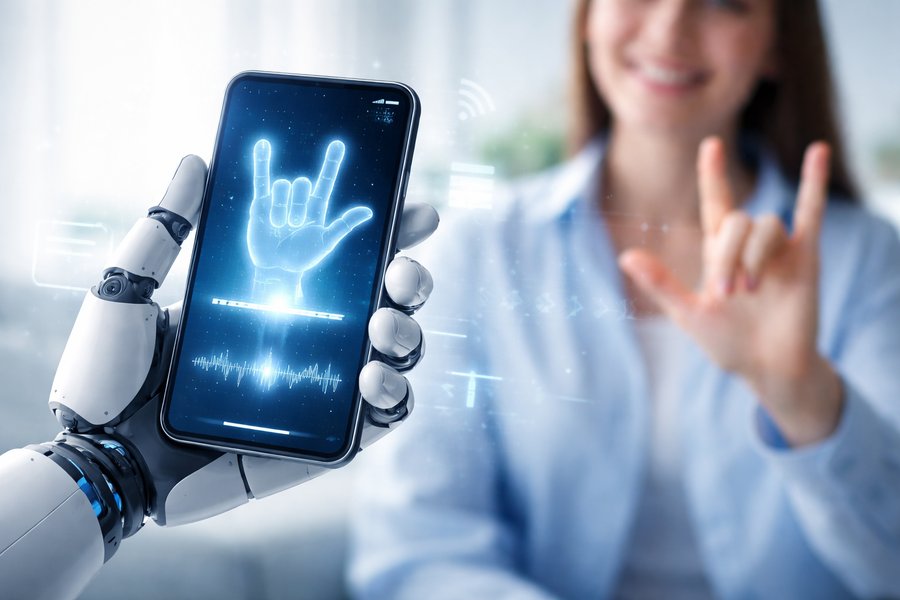
The World Health Organization estimates that over 430 million people worldwide currently live with disabling hearing loss, a figure projected to exceed 700 million by 2050 as populations age and exposure to harmful noise levels increases. Among these individuals, approximately 70 million deaf people rely on sign languages as their primary means of communication, utilizing more than 300 distinct sign languages across different countries and regions. This substantial global population faces persistent communication barriers when interacting with hearing individuals who do not understand sign language, creating challenges in healthcare settings, educational institutions, workplaces, and everyday social interactions. The shortage of qualified human interpreters compounds these difficulties, as many regions lack sufficient professionals to meet the communication needs of their deaf and hard-of-hearing communities. In the United States alone, approximately 11 million people identify as deaf or hard of hearing, representing about 3 percent of the population, yet the availability of certified interpreters falls far short of meeting demand across educational, medical, legal, and professional settings.
Neural network technology has emerged as a transformative force in addressing these communication barriers through automated sign language translation systems. These sophisticated artificial intelligence systems leverage advances in computer vision and deep learning to recognize and interpret the complex visual patterns that constitute sign language, converting them into spoken or written text in real time. Unlike earlier approaches that relied on specialized hardware such as sensor-equipped gloves or multiple camera arrays, modern neural network systems can operate using standard smartphone cameras or webcams, making the technology increasingly accessible to everyday users. The development of these systems represents a convergence of multiple technological domains including natural language processing, gesture recognition, and machine translation, all working together to bridge the communication gap between deaf and hearing communities. The past five years have witnessed particularly rapid progress, with transformer-based architectures and improved pose estimation algorithms enabling capabilities that seemed distant just a decade ago.
The significance of real-time sign language translation extends far beyond mere convenience, touching on fundamental questions of accessibility, inclusion, and human rights. Deaf individuals often encounter barriers when seeking medical care, pursuing education, or participating in civic life, barriers that automated translation technology has the potential to reduce or eliminate. Healthcare providers can communicate more effectively with deaf patients when interpretation is available on demand, potentially improving diagnostic accuracy and treatment adherence. Studies have documented that communication barriers in healthcare settings contribute to diagnostic errors, medication misunderstandings, and reduced patient satisfaction among deaf individuals. Educational institutions can create more inclusive learning environments where deaf students participate fully alongside their hearing peers, addressing graduation rate disparities that currently disadvantage deaf learners. Employment opportunities expand when communication barriers no longer limit workplace interactions, potentially addressing the underemployment that affects deaf workers at disproportionate rates. The economic implications are equally substantial, with the World Health Organization estimating that unaddressed hearing loss costs the global economy nearly one trillion dollars annually in lost productivity, healthcare expenses, and social support services.
The development of neural network-based sign language translation represents both a remarkable technical achievement and an ongoing challenge that requires continued collaboration between technologists, linguists, and deaf communities themselves. Current systems have demonstrated impressive capabilities in controlled environments while also revealing the substantial complexity that remains to be addressed before these technologies achieve the accuracy and reliability necessary for widespread deployment. The linguistic complexity of sign languages, which utilize spatial grammar, simultaneous expression, and non-manual markers in ways that differ fundamentally from spoken languages, presents challenges that cannot be solved through simple adaptation of text-based translation approaches. Understanding how these systems work, what they can currently accomplish, and where their limitations lie provides essential context for anyone interested in the intersection of artificial intelligence and accessibility technology. This examination of neural network-based sign language translation encompasses the technical foundations, current implementations, benefits, and challenges that define this rapidly evolving field.
Understanding Sign Language as a Complex Visual Communication System
Sign languages represent complete, natural languages that have evolved organically within deaf communities throughout human history, possessing the same linguistic complexity and expressive capacity as any spoken language. These visual-gestural communication systems convey meaning through the coordinated use of hand movements, facial expressions, body posture, and spatial relationships, creating a multidimensional form of expression that operates fundamentally differently from the linear, sequential nature of spoken and written languages. The World Federation of the Deaf recognizes over 300 distinct sign languages used by deaf communities worldwide, each with its own grammar, vocabulary, and cultural context that reflects the unique history and needs of its users. American Sign Language differs significantly from British Sign Language despite both countries sharing English as their primary spoken language, illustrating that sign languages develop independently of spoken languages and cannot be considered simple visual representations of their spoken counterparts. This independence means that developing translation technology for one sign language provides limited transfer to others, requiring separate development efforts for each language community.
The grammatical structures of sign languages often differ markedly from those of spoken languages, utilizing spatial relationships and simultaneous expression in ways that have no direct equivalent in audio-based communication. Where spoken English follows a subject-verb-object word order, American Sign Language frequently employs a topic-comment structure where the subject or context is established first, followed by commentary or additional information about that topic. This structural difference means that effective translation cannot simply substitute signs for words in sequence but must reorganize information to produce natural output in the target language. Facial expressions serve grammatical functions in sign languages, distinguishing questions from statements, indicating conditional relationships, and modifying the intensity or scope of signed concepts. A raised eyebrow can transform a declarative statement into a yes-or-no question, while specific mouth movements accompany certain signs to provide additional semantic information. These non-manual markers are not optional emotional expressions but essential grammatical components without which signed sentences may be incomplete or ambiguous. The integration of manual and non-manual elements creates a communication system where meaning emerges from the simultaneous coordination of multiple channels rather than the sequential presentation of discrete units.
The spatial nature of sign languages allows signers to establish referents in the signing space around their bodies and then refer back to those locations throughout a conversation, creating a form of pronoun system that operates through physical positioning rather than verbal labels. A signer discussing two people might place one to their left and another to their right, then indicate which person is being discussed by directing subsequent signs toward the appropriate location. This use of space extends to depicting relationships, movements, and actions, with signers able to show how objects relate to each other or how events unfold through the positioning and movement of their hands in three-dimensional space. Classifier constructions allow signers to represent objects and their movements through iconic gestures that depict rather than describe, enabling detailed visual narratives that would require many words to convey in spoken language. The richness of this spatial grammar enables sign languages to convey complex narratives and abstract concepts with precision and nuance, though it also presents significant challenges for machine translation systems designed primarily around the sequential processing of linear text. Capturing and interpreting the three-dimensional spatial relationships that convey meaning in sign languages requires computer vision capabilities that go beyond simple gesture recognition.
The Structural Elements That Make Sign Language Translation Challenging
The fundamental components of sign language production can be categorized into manual and non-manual markers, each contributing essential information to the meaning of signed communication. Manual markers encompass the hand shapes, movements, palm orientations, and locations of signs relative to the body, with each parameter capable of distinguishing one sign from another much as individual phonemes distinguish spoken words. A change in hand shape while maintaining identical movement and location can produce an entirely different sign with unrelated meaning, requiring translation systems to track multiple parameters simultaneously with high precision. The speed at which fluent signers produce these movements further complicates recognition, as natural signing often involves coarticulation where the features of one sign blend into the next, similar to how spoken words flow together in continuous speech. Fluent signers may produce three to four signs per second during natural conversation, leaving minimal time for systems to process each sign independently before the next begins.
Non-manual markers including facial expressions, head movements, eye gaze, and body posture carry grammatical and semantic information that cannot be ignored without losing essential meaning. Eyebrow position indicates question types, with raised eyebrows marking yes-or-no questions and furrowed eyebrows accompanying wh-questions asking who, what, where, when, or why. Head tilts and nods provide affirmation, negation, or emphasis, while specific mouth morphemes accompany particular signs to indicate manner, size, or intensity. A sign produced with puffed cheeks conveys large size, while the same sign with pursed lips indicates small size, demonstrating how non-manual markers modify meaning in ways that hand movements alone cannot express. Eye gaze serves multiple functions including indicating the subject of a sentence, showing role shifts when quoting or depicting another person’s words, and maintaining conversational turn-taking between signers. Translation systems that focus exclusively on hand movements while ignoring these non-manual components risk producing incomplete or incorrect translations that miss crucial grammatical information. The challenge is compounded by the fact that non-manual markers often operate simultaneously with manual signs rather than sequentially, requiring systems to process multiple information streams in parallel.
The temporal dynamics of sign language add another layer of complexity that distinguishes it from static gesture recognition tasks. Signs unfold over time with specific movement patterns, holds, and transitions that convey meaning, and the boundaries between consecutive signs are not always clearly demarcated. Continuous signing involves smooth transitions where one sign flows into the next, making segmentation challenging for automated systems attempting to identify where one sign ends and another begins. Additionally, sign languages employ productive morphology where signers can modify the movement, speed, or repetition of signs to express aspectual or adverbial information, creating variations that may not appear in training datasets but carry distinct meanings that competent translators must recognize and convey. A sign produced quickly conveys urgency, while the same sign produced slowly with exaggerated movement might indicate deliberateness or emphasis. These modifications are not merely stylistic choices but carry semantic content that accurate translation must preserve. The combination of spatial complexity, simultaneous multi-channel expression, and temporal dynamics makes sign language translation fundamentally more challenging than translating between written languages where input arrives as discrete sequential symbols.
How Neural Networks Process Visual Sign Language Data
Neural network architectures designed for sign language translation must address the fundamental challenge of extracting meaningful patterns from continuous video data where relevant information is distributed across both spatial and temporal dimensions. The spatial dimension encompasses the configuration of hands, arms, face, and body at any given moment, while the temporal dimension captures how these configurations change over time to form complete signs and sentences. Deep learning approaches have proven particularly effective for this task because they can automatically learn hierarchical feature representations from raw input data, identifying the visual patterns that distinguish different signs without requiring engineers to manually specify which features matter. The progression from early convolutional neural network approaches to modern transformer-based architectures reflects the field’s growing understanding of how to effectively capture the complex spatio-temporal patterns inherent in signed communication. Each architectural advance has brought improved ability to handle the temporal dependencies, spatial relationships, and contextual factors that determine meaning in sign languages.
Convolutional neural networks originally developed for image recognition tasks provided the foundation for many early sign language recognition systems by enabling automatic extraction of visual features from individual video frames. These networks apply learned filters across input images to detect edges, shapes, and textures that combine hierarchically to represent increasingly complex visual concepts. When applied to sign language video, CNNs can identify hand shapes, body positions, and facial configurations within individual frames, providing a spatial representation of the signer’s pose at discrete moments in time. The hierarchical nature of CNN feature extraction mirrors the compositional structure of visual scenes, with early layers detecting simple features like edges and gradients while deeper layers combine these into representations of complex objects and configurations. However, because signs derive their meaning from movement patterns rather than static poses, CNNs alone cannot capture the temporal dynamics essential for accurate recognition. A static hand shape might correspond to multiple different signs depending on the movement that precedes or follows it, requiring additional mechanisms to model how visual features evolve across consecutive frames. This limitation motivated the development of hybrid architectures that combine CNN-based spatial feature extraction with temporal modeling components.
Recurrent neural networks and their more sophisticated variants including long short-term memory networks and gated recurrent units introduced the capacity to model temporal sequences by maintaining internal state that persists across time steps. These architectures process video frames sequentially, updating their hidden state at each frame based on both the current input and the accumulated context from previous frames. The recurrent structure enables information to flow across time, allowing later processing steps to incorporate context from earlier observations. LSTM networks specifically addressed the vanishing gradient problem that plagued earlier recurrent architectures, enabling them to capture dependencies spanning dozens or hundreds of frames rather than just a few consecutive moments. The gating mechanisms in LSTM cells control information flow, selectively retaining relevant context while discarding irrelevant details, which proves essential for sign language where the meaning of a sign may depend on context established much earlier in the sentence. For sign language translation, this capacity to model long-range temporal dependencies proves essential because grammatical structures like topic-comment ordering require understanding relationships across extended sequences. Encoder-decoder architectures combining CNN feature extraction with LSTM sequence modeling achieved early successes in sign language translation, establishing baselines that subsequent approaches have sought to improve upon.
The introduction of transformer architectures marked a significant advancement in sequence modeling that has profoundly influenced sign language translation research. Unlike recurrent networks that process sequences one element at a time, transformers use self-attention mechanisms to directly model relationships between all positions in a sequence simultaneously. This parallel processing not only enables more efficient computation on modern hardware but also facilitates learning dependencies between distant positions without the information having to flow through many intermediate steps. The attention mechanism allows the model to focus on relevant earlier signs when interpreting later ones, dynamically weighting the importance of different positions based on learned patterns. Sign language transformers can attend to relevant earlier signs when interpreting later ones, capturing the non-linear dependencies that characterize natural language structure. Research published in 2024 and 2025 demonstrates that transformer-based approaches consistently outperform earlier recurrent methods on benchmark sign language translation tasks, achieving higher BLEU scores that indicate closer correspondence between machine-generated translations and human reference translations. The Sign Language Transformers framework introduced joint end-to-end training of recognition and translation components, enabling the system to learn representations optimized for the ultimate translation task rather than intermediate recognition objectives.
Computer Vision Foundations and Gesture Recognition Technology
The computer vision pipeline underlying modern sign language translation begins with pose estimation and hand tracking algorithms that identify and localize key body landmarks within video frames. MediaPipe, developed by Google, represents one of the most widely adopted frameworks for this purpose, providing real-time detection of hand landmarks, body pose, and facial features using models optimized for on-device execution. The hand tracking component identifies 21 landmarks per hand corresponding to finger joints and key points on the palm, while the pose estimation module tracks 33 landmarks across the full body including shoulders, elbows, wrists, hips, and knees. Facial mesh detection adds hundreds of additional points capturing detailed facial geometry and expression. These landmark positions provide a structured representation of the signer’s configuration that abstracts away background variation, lighting conditions, and individual differences in appearance, enabling translation models to focus on the gestural content rather than irrelevant visual details. The ability to extract consistent landmark representations across different cameras, environments, and users has proven essential for building robust translation systems that generalize beyond their training conditions.
Graph neural networks have emerged as a particularly effective architecture for processing the skeletal landmark data produced by pose estimation systems. Rather than treating landmarks as independent points or flattening them into simple feature vectors, graph neural networks explicitly model the structural relationships between connected body parts. The hand skeleton forms a natural graph structure where nodes represent joints and edges connect physically adjacent landmarks, allowing the network to learn representations that respect anatomical constraints and capture meaningful relationships between finger positions. Message passing operations propagate information along graph edges, enabling features at each node to incorporate context from neighboring nodes. Spatio-temporal extensions of graph neural networks add temporal edges connecting the same landmark across consecutive frames, creating a unified representation of how the skeletal structure evolves over time. Research published in early 2025 on spatio-temporal graph convolutional networks demonstrated that incorporating skeleton-based features alongside traditional RGB video features significantly improves translation accuracy by capturing both the detailed configuration of signing hands and their broader context within the overall body pose. The SignFormer-GCN architecture achieved state-of-the-art results on multiple benchmark datasets by combining graph convolutional processing of keypoint features with transformer-based modeling of temporal sequences.
The fusion of multiple input modalities represents an active area of research aimed at maximizing the information available to translation models. RGB video frames capture appearance information including facial expressions, mouth movements, and subtle details that may not be fully represented by skeletal landmarks alone. Depth sensors when available provide three-dimensional spatial information that resolves ambiguities present in two-dimensional projections, such as distinguishing whether a hand is positioned in front of or beside the body. Keypoint features derived from pose estimation offer robustness to visual variation while maintaining essential positional information. Systems that effectively combine these complementary data sources consistently outperform those relying on any single modality, though the computational requirements of multi-modal processing present challenges for real-time applications on resource-constrained devices such as smartphones. Research continues to explore efficient fusion strategies that capture the benefits of multiple modalities while maintaining practical processing speeds. The skeleton-aware neural network approach published in 2024 demonstrates one successful strategy, using skeleton data to guide attention mechanisms that weight the importance of different spatial regions in RGB frames, achieving both improved accuracy and computational efficiency compared to naive fusion approaches.
Current Technologies and Real-World Applications
The landscape of sign language translation technology spans a spectrum from academic research systems achieving state-of-the-art performance on benchmark datasets to commercial applications designed for practical deployment in real-world settings. Academic research has primarily focused on advancing the technical capabilities of translation models, developing new architectures, training procedures, and evaluation methodologies that push the boundaries of what automated systems can achieve. These research efforts typically evaluate performance using standardized datasets such as RWTH-PHOENIX-Weather, which contains German Sign Language videos with corresponding German text translations, or How2Sign for American Sign Language. The PHOENIX dataset has become a standard benchmark despite its limitations, including a restricted domain of weather forecasts and a relatively small vocabulary compared to the full range of sign language expression. BLEU scores, originally developed for evaluating machine translation between spoken languages, provide quantitative measures of translation quality by comparing machine output against human reference translations, with current state-of-the-art systems achieving scores that indicate meaningful but imperfect correspondence with human translation quality. Researchers continue to develop additional evaluation metrics that better capture the unique aspects of sign language translation quality.
Commercial sign language translation applications have begun entering the market with varying capabilities and target use cases, ranging from educational tools that help hearing individuals learn sign language to communication aids that facilitate interaction between deaf and hearing people. The transition from research prototypes to deployed products requires addressing numerous practical considerations beyond raw translation accuracy, including latency requirements for real-time communication, privacy implications of processing video data, accessibility across different devices and network conditions, and the need to support the specific vocabulary and conventions relevant to particular use contexts. Products designed for educational settings may prioritize clear feedback and incremental learning experiences, while communication tools must minimize delay to enable natural conversational flow. The diversity of potential applications has led to varied approaches, with some developers targeting specific narrow use cases where constrained vocabulary and predictable context enable higher accuracy, while others pursue more general-purpose translation capabilities. Healthcare applications represent a particularly important vertical where the consequences of translation errors can be serious, motivating careful validation and conservative deployment strategies.
The accuracy of current sign language translation systems varies considerably depending on the specific task, dataset, and evaluation conditions. Isolated sign recognition, where systems identify individual signs presented in controlled conditions, has achieved accuracy rates exceeding 95 percent on some benchmark datasets, demonstrating that neural networks can effectively distinguish between thousands of different signs when each is presented independently. These high accuracy rates reflect the relatively constrained nature of isolated recognition, where systems need only classify which sign is being performed without handling the complexities of continuous discourse. Continuous sign language recognition, which involves segmenting and identifying signs within flowing signed discourse, presents greater challenges and typically achieves lower accuracy rates due to the difficulties of determining sign boundaries and handling coarticulation effects. Sign language translation, which requires not only recognizing signs but also generating grammatically correct output in the target spoken language, represents the most challenging task and currently achieves BLEU scores that indicate substantial room for improvement before matching human translation quality. The gap between isolated recognition accuracy and continuous translation quality illustrates the challenge of moving from laboratory demonstrations to practical communication tools. Systems evaluated on domain-specific content with limited vocabulary tend to perform better than those facing open-domain translation across unrestricted topics, suggesting that specialized applications may achieve practical utility before general-purpose translation becomes reliable.
Case Studies in Deployment and Implementation
SignAll Technologies, a Budapest-based company that has partnered with Gallaudet University since 2017, represents one of the most sustained efforts to develop and deploy automated sign language translation technology. The company’s collaboration with Gallaudet, the world’s leading university for deaf and hard-of-hearing students, provided access to linguistic expertise and native ASL users essential for developing accurate translation systems. This partnership exemplifies the importance of community involvement in translation technology development, with Gallaudet faculty providing professional consultation while students contributed as ASL models and operators of recording technology. SignAll’s initial implementations utilized multiple cameras with depth sensors and colored marker gloves to achieve precise tracking of hand movements, though subsequent development leveraging MediaPipe has enabled glove-free operation using standard cameras. The company deployed a translation system at Gallaudet’s visitor welcome center designed to facilitate communication between deaf staff and hearing visitors, demonstrating real-world application of automated ASL-to-English translation. This deployment required extensive work to build domain-specific vocabulary including signs unique to the Gallaudet community and context-specific terminology. In 2021, SignAll launched the Ace ASL mobile application, which uses the company’s sign recognition technology to provide real-time feedback for individuals learning American Sign Language, representing a pivot toward educational applications that leverage the same underlying translation capabilities. The application tracks and analyzes users’ signing in real time, offering feedback that was previously available only through human instruction.
Google’s contributions to sign language translation technology center on the MediaPipe framework and more recent developments including the SignGemma model announced in May 2025. MediaPipe’s hand tracking and pose estimation capabilities have become foundational infrastructure for numerous sign language recognition projects, providing accurate landmark detection that runs efficiently on mobile devices and in web browsers. The iterative improvements to MediaPipe’s hand tracking between 2020 and 2024 significantly enhanced recognition of hand shapes commonly used in sign language that were previously problematic due to underrepresentation in training data. Google has published comparative demonstrations showing substantial improvements in tracking accuracy for challenging hand configurations where fingers overlap or partially occlude each other. SignGemma, released as a developer preview with broader availability expected in late 2025, provides on-device ASL translation capabilities designed for integration into applications and services. The on-device processing model addresses privacy concerns by enabling translation without transmitting video data to external servers, though it also imposes constraints on model size and computational complexity. Google has published model documentation outlining training data sources, demographic representation, and known limitations including reduced performance in low-light conditions, reflecting growing attention to transparency and responsible AI development practices in this domain. The documentation acknowledges that performance may vary for regional ASL variants and that complex grammatical structures involving role shifting remain challenging.
Ava, an accessibility technology company, has developed AI-powered captioning services that combine machine learning with human scribes to achieve accuracy rates the company reports at 99 percent for real-time conversation captioning. While not a sign language translation system per se, Ava’s services address overlapping accessibility needs and demonstrate the hybrid human-AI approach that many experts believe will characterize near-term accessibility solutions. The company’s products integrate with major video conferencing platforms including Zoom, Microsoft Teams, and Google Meet, and provide mobile applications for in-person communication, enabling deaf and hard-of-hearing users to participate more fully in meetings, classes, and social interactions. Ava’s approach uses AI to provide rapid initial captioning that human scribes then review and correct in real time, combining the speed of automation with the accuracy of human oversight. This model achieves both faster delivery and higher accuracy than either approach alone, while maintaining costs substantially below traditional captioning services. Ava’s experience highlights the importance of combining AI capabilities with human expertise to achieve the reliability that accessibility applications demand, a lesson applicable to sign language translation where hybrid approaches pairing automated recognition with human review may deliver better outcomes than fully automated systems operating independently. The company’s success in the captioning market demonstrates demand for AI-augmented accessibility services while also illustrating that full automation remains elusive even for the comparatively simpler task of speech-to-text transcription.
Benefits for Deaf and Hard-of-Hearing Communities
The potential benefits of real-time sign language translation technology extend across virtually every domain of life where deaf individuals interact with hearing people who do not sign, promising to reduce barriers that have historically limited full participation in society. Healthcare settings represent one of the most critical application areas, where communication barriers can directly impact health outcomes by impeding accurate diagnosis, informed consent, and treatment adherence. Deaf patients frequently report experiences of healthcare encounters where communication difficulties led to misunderstandings about symptoms, missed information about medications or procedures, and reduced ability to ask questions or express concerns. Research has documented that deaf patients are more likely to leave emergency departments without being seen, less likely to receive preventive care recommendations, and more likely to experience adverse events related to communication failures. The availability of qualified medical interpreters varies widely by geography and time of day, leaving many deaf patients without adequate communication support during healthcare visits. Rural areas and night shifts present particular challenges, as interpreter availability concentrates in urban centers during standard business hours. Automated translation technology accessible through smartphones or tablets could provide on-demand interpretation for routine medical encounters, ensuring that communication support is available whenever needed rather than only when human interpreters can be scheduled in advance. Even imperfect translation could facilitate basic communication for scheduling appointments, describing symptoms, or understanding discharge instructions while awaiting professional interpretation for complex medical discussions.
Educational settings present equally compelling opportunities for sign language translation technology to promote inclusion and expand access to learning. The National Deaf Center reports that deaf students in the United States graduate from high school at lower rates than their hearing peers, a disparity attributable in part to communication barriers that limit access to instruction and classroom participation. Deaf students may struggle to follow lectures delivered without interpretation, participate in class discussions, or collaborate effectively with hearing classmates on group projects. While educational interpreters and captioning services provide essential support, their availability remains insufficient to meet demand in many schools and universities. Interpreter shortages force some deaf students to proceed without adequate communication access or to limit their course selections to those where interpretation is available. AI-powered translation and captioning tools have begun appearing in educational technology platforms, with surveys indicating that 63 percent of disability services offices at American colleges and universities now provide AI-powered notetaking tools and 61 percent offer auto-captioning for streamed educational events. Research published in 2024 found that deaf college students using text-based AI tools reported reduced language barriers and easier communication with hearing peers, suggesting that these technologies can meaningfully contribute to educational inclusion when implemented thoughtfully. The ability to access AI-generated captions for recorded lectures enables deaf students to review content at their own pace, potentially compensating for information missed during live sessions.
Employment represents another domain where communication barriers create significant disadvantages for deaf individuals that translation technology could help address. Labor force participation rates for deaf adults consistently lag behind those of hearing adults, with unemployment and underemployment affecting the deaf community at disproportionate rates. Data indicates that deaf individuals who are employed full-time earn less on average than their hearing counterparts in comparable positions, reflecting both occupational segregation into lower-paying jobs and barriers to advancement within organizations. Workplace communication challenges can limit deaf employees’ access to informal information sharing, professional networking, team collaboration, and advancement opportunities that depend on fluid interaction with hearing colleagues. The casual conversations around coffee machines and in hallways where colleagues build relationships and share information often exclude deaf employees who cannot easily participate without interpretation. Video conferencing became ubiquitous following the COVID-19 pandemic, creating both challenges and opportunities for deaf professionals who may struggle with platforms lacking adequate captioning while also benefiting from text-based communication features that level the playing field. Sign language translation integrated into video conferencing platforms could enable deaf employees to participate more fully in meetings without requiring the coordination of human interpreters for every call, potentially expanding professional opportunities and workplace inclusion.
The broader theme unifying these specific applications is autonomy, the ability of deaf individuals to communicate independently without requiring the availability, scheduling, and coordination of human intermediaries. Human interpreters provide irreplaceable value for complex, high-stakes, or nuanced communication situations, but their limited availability means that deaf individuals often face choices between proceeding with inadequate communication support or delaying or foregoing activities until interpretation can be arranged. Scheduling interpretation for a medical appointment requires advance planning that may not accommodate urgent needs, and obtaining interpretation for spontaneous social interactions is rarely practical. Technology that provides adequate if imperfect translation on demand empowers deaf individuals to handle routine communication independently, reserving human interpreter services for situations where their expertise is most valuable. This shift from dependence on scarce human resources to technology-augmented autonomy mirrors broader trends in accessibility technology where AI-powered tools enable people with disabilities to accomplish tasks independently that previously required assistance. The psychological benefits of increased autonomy complement practical advantages, as deaf individuals gain greater control over their communication experiences and reduced dependence on others’ availability and willingness to accommodate their needs.
Challenges and Limitations in Sign Language Translation Systems
Despite significant technical progress, current sign language translation systems face substantial limitations that prevent them from matching the accuracy and reliability of skilled human interpreters. The accuracy gap between machine translation and human interpretation remains considerable for continuous signing in natural conversational contexts, where systems must handle the full complexity of grammatical structures, contextual references, and expressive variation that characterize fluent sign language use. Benchmark evaluations tend to use carefully controlled datasets that may not reflect the variability encountered in real-world deployment, where lighting conditions, camera angles, signer diversity, and domain-specific vocabulary all present challenges. Systems trained primarily on data from young adult signers in laboratory settings may struggle when encountering older signers, signers with different physical characteristics, or signing styles that differ from the training distribution. The requirement for real-time processing adds additional constraints, as translation must complete quickly enough to support natural conversational pace without introducing disruptive delays. Latency requirements mean that systems cannot take unlimited time to refine their translations, forcing tradeoffs between processing speed and accuracy that may favor faster but less accurate output.
The difficulty of capturing non-manual markers represents a persistent technical challenge that current systems address incompletely. While pose estimation and facial landmark detection have improved substantially, translating the grammatical and semantic information encoded in eyebrow position, head movement, eye gaze, and mouth morphemes into corresponding structures in spoken language remains challenging. A translation system that accurately recognizes hand movements but ignores facial grammar may produce output that is technically related to the signed input but missing essential information about sentence type, conditional relationships, or adverbial modification. The distinction between a statement and a question, or between a simple assertion and a conditional hypothesis, often depends entirely on non-manual markers that automated systems may fail to detect or interpret correctly. Research systems increasingly incorporate facial feature processing, but achieving the precision necessary to distinguish between grammatically meaningful facial configurations and incidental variation requires further development. The tight integration between manual and non-manual components in natural signing means that these elements cannot be processed independently but must be interpreted in coordination, adding complexity to system architectures. Furthermore, non-manual markers operate on different timescales than manual signs, sometimes extending across multiple signs to mark phrase boundaries or topicalization, requiring models that can track these overlapping temporal structures simultaneously.
Regional variation and the diversity of sign languages worldwide present scalability challenges for translation technology development. The over 300 sign languages used globally each require separate training data, linguistic analysis, and system development, yet research and commercial attention has concentrated heavily on a small number of languages, particularly American Sign Language. Even within ASL, regional variations, community-specific signs, and evolving vocabulary create gaps between what systems have learned and what users actually sign. Signs used in one city or community may be unfamiliar to systems trained primarily on data from other regions, and the vocabulary of sign languages continues to evolve as deaf communities create new signs for emerging concepts and technologies. Technical terms, proper names, and culturally specific concepts may not appear in training datasets, leaving systems unable to recognize or translate content outside their training distribution. The resources required to develop high-quality translation systems for each sign language community exceed what has been invested to date, raising questions about whether smaller language communities will benefit from technological advances or be left further behind. Deaf communities in developing countries, who already face greater barriers to communication access, may find themselves excluded from technologies developed primarily for users of ASL and a handful of European sign languages.
Ethical considerations around community involvement and the appropriate role of automation add important dimensions beyond technical performance metrics. The deaf community has expressed legitimate concerns about AI systems developed without adequate input from deaf individuals, potentially encoding biases, perpetuating misconceptions about sign language, or failing to address actual community needs. Guidelines published by organizations including the European Union of the Deaf emphasize that AI systems must operate transparently, accurately represent the cultural context and nuances of deaf communities, and involve deaf individuals in development and evaluation processes. The faithful rendition of non-manual signals and facial expressions requires understanding not just technical parameters but the cultural meanings and appropriate contexts for their use. Questions about whether automated translation might reduce demand for human interpreters, potentially threatening the livelihoods of deaf interpreters who serve their communities, add economic and social dimensions to discussions of technology deployment. Some community members worry that overreliance on imperfect automated translation could lead to situations where deaf individuals receive inadequate communication support because hearing counterparts assume technology has solved the problem. The most thoughtful approaches to sign language translation development recognize that technology exists to serve human needs rather than the reverse, requiring ongoing engagement with deaf communities to ensure that systems are designed and deployed in ways that genuinely advance accessibility and inclusion rather than creating new forms of marginalization or dependence.
Final Thoughts
Neural network technology for real-time sign language translation stands at a pivotal moment in its development, having demonstrated sufficient capability to prove the fundamental viability of automated translation while also revealing the substantial challenges that remain before these systems can reliably serve as bridges between deaf and hearing communities. The convergence of advances in computer vision, deep learning architectures, and mobile computing has created technological conditions that make practical sign language translation increasingly feasible, yet the gap between current system performance and the reliability required for consequential communication contexts demands continued research investment and careful attention to deployment conditions. The 430 million people worldwide living with disabling hearing loss, projected to exceed 700 million by mid-century, constitute a population whose communication needs have historically received insufficient technological attention, making progress in this domain both a technical challenge and an imperative of social responsibility. The economic burden of unaddressed hearing loss, estimated by the World Health Organization at nearly one trillion dollars annually, underscores the substantial returns that effective translation technology could generate through improved access to healthcare, education, and employment.
The intersection of accessibility technology and artificial intelligence raises important questions about how innovation can be directed toward human needs rather than merely technological capabilities. Sign language translation systems developed without meaningful input from deaf communities risk encoding assumptions, biases, or limitations that undermine their practical value for the people they purport to serve. The most promising development efforts recognize deaf individuals not merely as end users but as essential collaborators whose linguistic expertise, lived experience, and community knowledge must inform system design, training data collection, and evaluation criteria. This participatory approach to technology development reflects broader principles of disability justice that emphasize self-determination and challenge technological solutions imposed from outside affected communities. Research institutions, technology companies, and funding agencies all have roles to play in ensuring that deaf communities shape the development of technologies that will affect their lives. The partnerships between technology developers and institutions like Gallaudet University demonstrate one model for this collaboration, though expanding such partnerships to include a wider range of deaf communities and sign languages remains an ongoing challenge.
Financial inclusion themes emerge naturally from consideration of sign language translation technology, as communication barriers contribute significantly to the economic disparities experienced by deaf individuals. Reduced access to education limits career preparation, workplace communication challenges constrain employment options, and healthcare communication difficulties can impose both direct costs and long-term health consequences. Technology that reduces these barriers offers the potential to expand economic participation and improve financial outcomes for deaf individuals and their families, though realizing this potential requires that translation tools be accessible and affordable rather than available only to those who can pay premium prices. The business models through which sign language translation technology reaches users will substantially determine whether innovation narrows or widens existing disparities. Solutions that require expensive hardware, subscription fees, or reliable high-speed internet access may remain inaccessible to precisely those communities that could benefit most from communication support.
The path forward requires holding two perspectives simultaneously, maintaining ambitious vision about the transformative potential of technology while remaining grounded in honest assessment of current limitations and the complexity of human communication needs. Sign language translation will not replace human interpreters for high-stakes situations requiring nuanced judgment, cultural competency, and the flexibility to handle unexpected circumstances. What technology can provide is expanded access to adequate communication support for routine interactions where human interpretation is unavailable or impractical, enabling greater autonomy while preserving human expertise for situations that most require it. This complementary relationship between automated systems and human professionals characterizes effective technology deployment across many domains and offers a realistic model for how sign language translation might evolve to serve deaf communities while respecting the essential role of qualified interpreters. The continued development of this technology, guided by both technical excellence and genuine community engagement, offers hope for a future where communication barriers no longer limit the full participation of deaf individuals in society.
FAQs
- How do neural networks translate sign language into text or speech?
Neural networks process video input through multiple stages, first using computer vision algorithms to detect and track hand positions, body pose, and facial expressions, then applying deep learning models to recognize patterns corresponding to specific signs, and finally generating output text that conveys the meaning of the signed input. Modern systems typically combine convolutional neural networks for spatial feature extraction with transformer architectures that model the temporal sequences and long-range dependencies characteristic of natural language. The process involves extracting skeletal landmarks, processing these through graph neural networks that model anatomical relationships, and then translating the recognized sign sequences into grammatically appropriate spoken language output. - What accuracy rates do current sign language translation systems achieve?
Accuracy varies significantly depending on the specific task and conditions. Isolated sign recognition systems can exceed 95 percent accuracy for identifying individual signs from controlled datasets, while continuous sign language translation achieves lower accuracy when handling natural conversational signing with complex grammar and unrestricted vocabulary. BLEU scores for translation tasks indicate meaningful but imperfect correspondence with human reference translations, with performance generally better for domain-specific applications than open-domain translation. Real-world deployment conditions often reduce accuracy compared to laboratory benchmarks due to variations in lighting, camera angles, and signer characteristics. - Which sign languages do translation systems currently support?
Research and commercial development has concentrated primarily on American Sign Language, with additional work on German Sign Language, British Sign Language, Chinese Sign Language, and several others. However, the majority of the world’s 300-plus sign languages lack adequate training data and development attention, meaning that translation technology remains unavailable for most deaf communities globally. The resource requirements for developing high-quality systems for each language mean that smaller deaf communities may wait years or decades before benefiting from translation technology. - What is the difference between sign language recognition and sign language translation?
Sign language recognition involves identifying which signs are being produced, essentially labeling video segments with sign glosses that name individual signs. Sign language translation goes further by generating grammatically correct output in a target spoken language, accounting for the different grammatical structures between sign and spoken languages. Translation is considerably more challenging because it requires understanding meaning and producing appropriate output rather than simply identifying gestures, and must handle the reorganization of information necessary when converting between languages with different grammatical structures. - How do these systems handle privacy concerns when processing video data?
Privacy approaches vary across different systems and implementations. Some applications process video data on-device without transmitting it to external servers, addressing concerns about video data being stored or analyzed remotely. Google’s SignGemma model, for example, processes video locally on the user’s device. Other systems use cloud processing with various data retention and security policies. Users should review privacy policies for specific applications and consider whether on-device processing options align with their privacy preferences, particularly for sensitive communication contexts like medical consultations. - Are sign language translation applications free or do they require payment?
Both free and paid options exist across the market. Some research prototypes and basic applications are available without cost, while commercial products with more advanced features typically require subscription payments or one-time purchases. Educational institutions and organizations may have access to enterprise versions through institutional licenses. The accessibility and affordability of translation technology remains an important consideration for ensuring broad benefit, particularly for deaf individuals in lower-income communities or developing countries who may most need communication support. - Why do current systems struggle with continuous conversational signing?
Continuous signing presents challenges including the difficulty of determining where one sign ends and another begins, coarticulation effects where signs blend together smoothly rather than appearing as discrete units, the need to interpret non-manual grammatical markers alongside hand movements, and handling of the spatial grammar and referencing systems that sign languages employ. These factors combine to make continuous translation substantially more difficult than isolated sign recognition, where each sign is presented independently with clear boundaries. - Can sign language translation be integrated into video conferencing platforms?
Integration efforts are underway, with some applications offering connections to major video conferencing platforms including Zoom, Microsoft Teams, and Google Meet. Current integrations primarily provide AI-powered captioning rather than full sign language translation, though this represents an active area of development. Technical challenges include latency requirements for real-time communication and the need to process video feeds while maintaining platform performance. The hybrid approach used by services like Ava, which combines AI captioning with human scribe review, demonstrates one model for achieving reliable accessibility in video conferencing contexts. - When will sign language translation technology be widely available and reliable?
Predictions vary, but most experts anticipate gradual improvement over the coming years rather than sudden breakthroughs that make translation universally reliable. Narrow applications for specific domains with limited vocabulary may achieve adequate reliability sooner than general-purpose translation across unrestricted topics. Widespread availability depends not only on technical progress but also on business models, distribution channels, and decisions about which languages and communities receive development attention. The timeline for different sign language communities will vary based on the resources invested in each language. - How can deaf communities provide feedback to improve translation technology?
Many research projects and companies maintain channels for user feedback through their websites, applications, or social media presence. Academic researchers often seek deaf participants for studies and evaluations, with universities like Gallaudet serving as important partners in this research. Advocacy organizations representing deaf communities engage with technology developers on policy and design questions. Individuals can contribute by participating in user studies, reporting errors in applications they use, and supporting organizations that advocate for deaf community involvement in technology development. The European Union of the Deaf and similar organizations have published guidelines emphasizing the importance of community involvement that developers should follow.