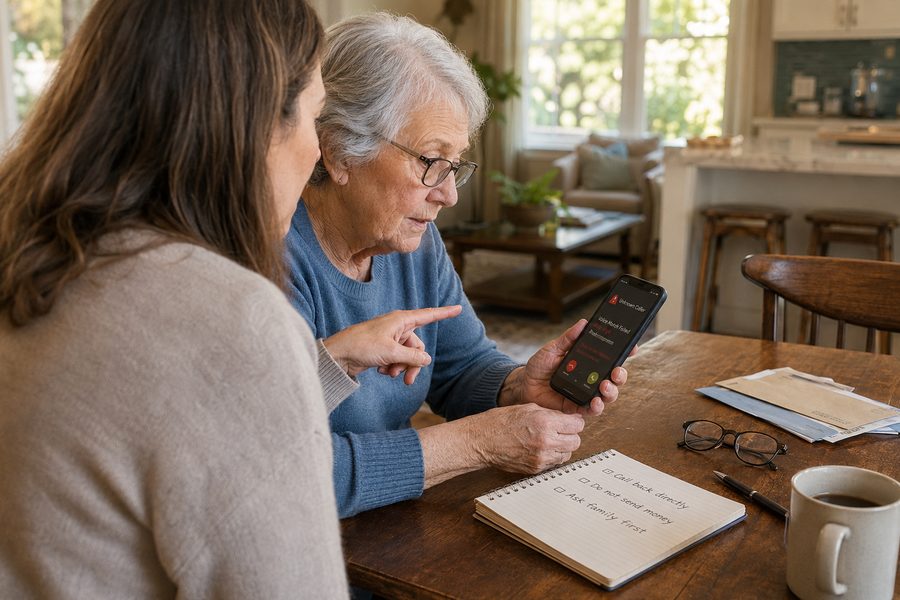
The telephone, once a simple instrument of connection, has become one of the most dangerous channels through which criminals reach into people’s lives, and the danger has grown more acute as artificial intelligence has handed scammers tools of unprecedented power. The familiar phone scam, in which a stranger spins a story to frighten or entice a victim into sending money, has been transformed by technology that can now clone a person’s voice from a few seconds of audio, generate convincing conversations in real time, and impersonate a trusted family member or institution so persuasively that even careful people are deceived. The result has been a surge in losses, with Americans losing billions of dollars to imposter scams and the techniques growing more sophisticated by the month, so that the comforting assumption that one would recognize a scam, or recognize a loved one’s voice, no longer holds against criminals armed with artificial intelligence.
Yet the same technology that has empowered the scammers is also being turned against them, as artificial intelligence is increasingly deployed to detect fraudulent calls, recognize the patterns of manipulation, verify the authenticity of callers, and warn potential victims before money changes hands. The major technology companies have begun building scam detection directly into the phones that people carry, using artificial intelligence that listens for the hallmarks of a scam and alerts the user in real time, while new methods of verifying that a call genuinely comes from the person it claims to be aim to expose impersonation before it can do harm. This has created a contest between offensive and defensive uses of the same underlying technology, a contest in which the tools available to protect families are growing more capable even as the threats they confront grow more dangerous, and understanding both sides of this contest is essential for anyone who wishes to protect themselves and the people they love.
This article examines AI scam call detection for readers who may have heard alarming stories about voice-cloning scams but do not understand how the technology works on either side, beginning with the nature and scale of the threat that AI-powered fraud now poses. It explains how voice cloning turns the trust we place in familiar voices into a weapon, how AI detection technology fights back through on-device screening and caller verification, and what tools are actually available today, grounding the discussion in real features and documented cases. It then focuses on the protection of vulnerable relatives who are most often targeted, sets out concrete and practical steps that any household can take immediately, including measures that require no technology at all, and confronts honestly the limits of detection, the privacy questions it raises, and the ongoing arms race between scammers and defenders, aiming throughout to give readers both an understanding of the technology and a practical plan for keeping their families safe from a threat that has become impossible to ignore.
The Rise of AI-Powered Phone Fraud
The threat of phone fraud has reached a scale that would have been difficult to imagine only a few years ago, driven by the way artificial intelligence has lowered the cost and raised the effectiveness of scams that prey on human trust and fear. Imposter scams, in which a criminal pretends to be someone the victim trusts, have become the most reported form of fraud, with the number of cases rising sharply and the losses mounting into the billions of dollars, as Americans lost nearly three billion dollars to such scams in one recent year and even more the next, with cases climbing by roughly a fifth to around a million reported instances and losses topping three and a half billion dollars. These figures, drawn from official tracking of fraud complaints, capture only the reported cases and therefore understate the true scope of a problem that many victims never report out of embarrassment or resignation, so that the real toll is considerably larger than even these alarming numbers suggest.
What has changed to produce this surge is the arrival of accessible and powerful artificial intelligence tools that have transformed the economics and effectiveness of fraud, allowing criminals to operate at greater scale and with greater persuasiveness than ever before. Where a scammer once had to rely on a script and their own voice, hoping the victim would not detect the deception, they can now use AI to clone the voice of a specific person, generate convincing dialogue, and even create fake video, deploying these tools through inexpensive services that package sophisticated capabilities into ready-made kits available for modest monthly fees. The barrier to committing convincing fraud has fallen dramatically, with a single person able to build a scam operation for a small monthly cost, and criminal networks now offering fraud tools as a service, so that the capability to impersonate a loved one or an executive convincingly is no longer the preserve of sophisticated operators but is available to anyone willing to pay.
It is worth understanding why the telephone in particular has become such a fertile channel for this fraud, since the reasons illuminate why detection has proven both necessary and difficult. The phone call carries an immediacy and an intimacy that written communication lacks, reaching a person directly and demanding a response in real time, which deprives the victim of the pause for reflection that might otherwise expose a deception, and it delivers the human voice, the signal people have evolved over millennia to trust as proof of a familiar identity. A scammer reaching a victim by phone thus exploits both the urgency of live conversation and the deep credibility of the spoken voice, advantages that no email or text message can match, and the addition of voice cloning to this already potent channel removes the last natural defense, the victim’s ability to recognize that the voice does not truly belong to the person it claims. The phone has therefore become the channel where the new technology of deception is most devastating, which is precisely why so much of the defensive effort has concentrated on protecting it.
The effectiveness of these AI-enhanced scams has grown correspondingly, with attacks that exploit cloned voices and deepfakes surging in frequency and causing enormous losses, as voice-based phishing attacks enhanced by AI multiplied many times over in a short period and inflicted substantial damage. The combination of greater scale, lower cost, and higher persuasiveness has made AI-powered phone fraud one of the most pressing security threats facing ordinary people, since unlike many forms of cybercrime that target systems and require technical sophistication to defend against, these scams target human trust directly, reaching people through the familiar medium of a phone call and exploiting emotions that no firewall can protect. The rise of this threat is the reason that detection technology has become so important, since the traditional defenses of skepticism and voice recognition have been undermined by tools that can fake exactly the signals people rely upon to judge whether a call is genuine, leaving people in need of new means of protection against a danger that has outgrown the old ones.
How Voice Cloning Turns Trust into a Weapon
The most frightening capability that artificial intelligence has given to scammers is voice cloning, the ability to create a synthetic copy of a specific person’s voice that can be used to say anything the scammer wishes, turning the deep trust people place in the familiar voices of their loved ones into the very mechanism of their deception. The technology works by analyzing a sample of a person’s voice and building a model that captures its distinctive characteristics, its pitch, cadence, and tonal qualities, which can then generate new speech in that voice, and the amount of audio required has shrunk to almost nothing, with as little as three seconds of recorded speech sometimes sufficient to produce a convincing clone. This means that the raw material for cloning a person’s voice is readily available, since a brief video posted on social media, a voicemail greeting, or any other recording of a person speaking can provide enough audio to build a model capable of impersonating them.
The cruelty of voice cloning lies in how it exploits the strongest of human instincts, the impulse to help a loved one in distress, by enabling scams in which a victim receives a call that sounds exactly like their child, grandchild, or other relative claiming to be in trouble and needing money urgently. In these family emergency scams, the cloned voice begs for help, perhaps claiming to have been in an accident, arrested, or kidnapped, and the victim, hearing what seems unmistakably to be the voice of someone they love in genuine peril, is driven by love and panic to act quickly, sending money before they have time to question whether the call is real. The emotional power of hearing a loved one’s voice in apparent distress overwhelms the caution that might otherwise protect the victim, and because the voice sounds authentic, the usual warning signs that might trigger suspicion are absent, making these scams extraordinarily effective at extracting money from people who would never fall for a more obvious deception.
The same technology threatens not only families but institutions and businesses, as demonstrated by sophisticated scams in which cloned voices and deepfake video are used to impersonate executives and authorize fraudulent transactions, with one notable case involving a finance employee who was deceived into transferring a vast sum after joining a video call on which every apparent colleague, including the company’s chief financial officer, was an AI-generated fake. This case, in which the employee transferred the equivalent of tens of millions of dollars across many transactions believing he was following the instructions of his real superiors, illustrates the terrifying potential of the technology to defeat even the verification that comes from seeing and hearing apparent colleagues, and it shows that the threat extends from the most personal of family scams to the highest levels of corporate finance. The common thread is that voice and video, the signals people have always relied upon to know who they are dealing with, can no longer be trusted as proof of identity, a profound shift that undermines the foundations of how people verify one another and that creates the urgent need for new forms of detection and verification.
How AI Fights Back: Detection Technology
If artificial intelligence has armed the scammers, it has also armed the defenders, and a growing array of detection technologies now uses AI to identify fraudulent calls, recognize the patterns of manipulation, and verify the authenticity of callers, fighting the threat with the same kind of technology that created it. The core insight behind AI scam detection is that fraudulent calls, despite their sophistication, tend to follow recognizable patterns, employing characteristic tactics, language, and demands that distinguish them from legitimate conversations, and an AI system trained on these patterns can learn to recognize a scam as it unfolds and warn the user before they are harmed. This approach shifts the burden of detection from the human, who may be deceived by a convincing voice or panicked by an urgent story, to a system that listens dispassionately for the hallmarks of fraud, providing a layer of protection that does not depend on the user’s own ability to recognize the deception.
The detection of scams through AI operates on several levels, from analyzing the content and patterns of a conversation to verifying the technical authenticity of a call, and these approaches complement one another in building a defense against fraud. Content analysis examines what is being said during a call, listening for the tactics that scammers use, such as creating urgency, demanding unusual forms of payment, or making the kinds of requests that characterize fraud, and alerting the user when these patterns appear, while verification approaches focus on confirming whether a call genuinely originates from the source it claims, exposing impersonation by checking the authenticity of the connection rather than the content of the conversation. Together these methods address the threat from different angles, with content analysis catching scams by their behavior and verification catching them by their false claims of identity, and the most effective protection combines both so that a scam that evades one method may be caught by the other.
A crucial feature of the most advanced scam detection is that it can operate in real time and, importantly, on the user’s own device, analyzing calls as they happen and warning the user immediately while keeping the sensitive audio private by processing it locally rather than sending it to remote servers. This real-time, on-device approach addresses both the need for timely warning, since a scam must be detected while the call is happening to prevent harm, and the legitimate concern for privacy, since people are understandably reluctant to have their phone calls monitored and analyzed by distant systems, and by processing the audio on the device itself and discarding it immediately, these systems can provide protection without compromising the privacy of the user’s conversations. The combination of real-time analysis, on-device processing, and immediate warning represents a significant advance in the practical protection of ordinary people, bringing sophisticated fraud detection to the phones people already carry, and the specific mechanisms by which this works, examined next, reveal both its power and its careful attention to privacy.
On-Device Screening and Caller Verification
On-device screening works by running artificial intelligence models directly on the user’s phone, allowing the device itself to analyze a call as it happens and to recognize the signs of a scam without any audio leaving the phone, a design that protects privacy while providing real-time warning. When a call is in progress, the on-device system listens to the conversation and applies models trained to recognize the patterns of fraud, and if it detects the hallmarks of a scam, such as a caller pressuring the user to provide payment through unusual means to resolve some fabricated problem, it alerts the user through a combination of on-screen warnings and audible or tactile notifications, drawing attention to the danger while there is still time to avoid it. The privacy protection in this design is fundamental rather than incidental, since the audio is processed within the phone’s memory and immediately discarded, never stored or transmitted, so that the analysis happens entirely on the device and the content of the call remains private to the user, an arrangement that allows the protection to operate without the surveillance that cloud-based analysis would entail.
The strength of on-device screening lies in its ability to catch scams by their behavior regardless of how convincing the caller sounds, since it responds to the substance of what is being requested rather than to the authenticity of the voice, which means it can protect a user even against a scam using a cloned voice. A scammer using a perfect clone of a loved one’s voice may fool the user’s ears, but if the call follows the patterns of a fraud, demanding urgent payment through gift cards or other suspicious means, the detection system can recognize these patterns and warn the user, providing a check that does not depend on the user’s ability to detect that the voice is fake. This behavioral approach is valuable precisely because it sidesteps the problem that voice cloning creates, since rather than trying to determine whether a voice is genuine, which is increasingly difficult, it focuses on whether the call exhibits the characteristics of a scam, a question that remains answerable even when the voice itself is indistinguishable from the real thing.
Caller verification approaches the problem from a different direction, seeking to confirm whether a call genuinely originates from the contact it claims to be, and thereby to expose impersonation directly rather than inferring it from the content of the conversation. One emerging method works by having the devices of contacts exchange a silent, encrypted confirmation when one calls the other, so that when a person receives a call appearing to come from a known contact, their device checks for a signal confirming that the contact’s device is actually placing the call, and if that confirmation is absent, the device can verify directly with the contact’s phone whether the call is genuine, warning the recipient to hang up if it is not. This verification of the call’s technical authenticity addresses the impersonation of known contacts, exposing calls that spoof a contact’s identity by confirming whether the supposed caller’s device is really involved, and it complements content analysis by catching a category of fraud, the impersonation of trusted contacts, that behavioral detection alone might miss. Together, on-device content screening and caller verification form a layered defense, the one catching scams by their fraudulent behavior and the other by their false claims of identity, and their combination on the devices people already carry brings a sophisticated and privacy-respecting protection to the front line of the fight against phone fraud.
The Tools Available Today
The detection technologies described in the abstract have become concrete features available on real devices, and examining the tools that exist today, with their documented capabilities and the protections they offer, shows that the defense against AI-powered phone fraud has moved from concept to practical reality for many users. The major technology companies have begun integrating scam detection directly into the software of the phones people use, treating protection against fraud as a core feature of the device rather than an optional add-on, and these features have rolled out to substantial numbers of users, bringing AI-powered protection to the everyday experience of using a phone. The capabilities now available span the detection of scam calls, the verification of caller identity, and even the recognition of fraudulent text messages, reflecting a broad effort to protect users across the channels through which fraud reaches them.
Among the most prominent examples is the scam detection feature that Google introduced for its phone application on Pixel devices, which uses artificial intelligence processed on the device itself to analyze calls in real time and warn users of potential scams as they happen. Introduced to users in the United States and rolled out more broadly in early 2025, this feature listens during a call for the patterns characteristic of fraud and, if it detects that a caller is attempting a scam, such as pressuring the user to provide payment through gift cards to resolve a fabricated problem, alerts the user through audio and tactile notifications and displays a warning that the call may be a scam. The privacy design of this feature is notable and deliberate, since the audio is processed only within the phone’s memory and immediately discarded, never leaving the device or being stored, so that the protection operates without compromising the privacy of the user’s calls, an arrangement that the company has emphasized in describing how the feature works.
A complementary feature addresses the verification of caller identity through the technical confirmation of authenticity, rolling out as a protection that exposes calls falsely claiming to come from a known contact. This fake call detection works by having a contact’s device send a silent, encrypted confirmation signal when placing a call, so that the recipient’s device can verify that the call genuinely originates from the contact, and if that signal is absent, the recipient’s device checks directly with the contact’s actual phone to confirm whether the call is real, warning the recipient to hang up immediately if the contact’s device confirms it is not placing the call. Designed to be enabled by default and to roll out across a range of devices, this feature targets the impersonation of trusted contacts specifically, providing a direct check on whether a call claiming to come from someone known to the user is authentic, and it represents an important addition to the behavioral detection of scams by addressing the spoofing of contact identity that behavioral analysis alone might not catch.
The protection has extended beyond voice calls to the text messages through which a great deal of fraud is also conducted, with AI used to detect the patterns of scam messages and warn users in real time when a message appears to be fraudulent. This message scam detection applies the same fundamental approach used for calls, analyzing the content of messages for the hallmarks of fraud and alerting the user to potential scams, recognizing that fraud reaches people through multiple channels and that comprehensive protection must address text as well as voice. Together, these tools, the real-time scam detection for calls, the verification of caller authenticity, and the detection of scam messages, constitute a substantial and growing arsenal of AI-powered protections that are available to users today, and while they are not perfect and do not yet reach every device or every user, they demonstrate that the defensive use of artificial intelligence against fraud has become a practical reality, putting real protection in the hands of ordinary people. The continued expansion of these features across devices and the addition of new capabilities suggest that this protection will become more widespread and more capable over time, an encouraging counterweight to the growth of the threats they confront.
It bears emphasizing that the availability of these tools varies considerably and that households should not assume their phones are protected without checking, since the features often reach particular devices, regions, and languages first and may need to be enabled rather than working automatically. A family wishing to take advantage of these protections should verify which features their phones support, ensure that scam detection and caller verification are turned on where available, and pay particular attention to the devices used by vulnerable relatives, who may carry older phones that lack the latest protections and who may need help enabling the features that their devices do support. The gap between the protection that exists in principle and the protection actually active on a given person’s phone is a real one, and closing it requires a deliberate effort to check and configure the available tools rather than a passive assumption that the technology is already at work, an effort that is well worth making given the stakes and that costs nothing but a little attention to the settings of the devices a family already owns.
Protecting Vulnerable Relatives
While AI-powered fraud threatens everyone, it falls with particular weight on the most vulnerable members of families, especially older adults, who are disproportionately targeted by scammers and who may be less equipped to recognize and resist the new techniques, making their protection a special priority for families. Older adults are more likely to be victimized for a combination of reasons that scammers exploit deliberately, including a greater tendency to answer calls from unknown numbers, less familiarity with the existence and capabilities of voice synthesis technology, and the painful fact that they often have grandchildren and other relatives whose voices are available in public social media posts that provide the raw material for cloning. These factors combine to make older people both more likely to be targeted and more likely to be deceived, since a grandparent who does not know that voices can be cloned and who hears what sounds exactly like a grandchild in distress has little defense against a scam engineered precisely to exploit their love and their unfamiliarity with the technology.
The family emergency scam represents the most cruel and effective attack on older relatives, using a cloned voice to impersonate a grandchild or other family member in trouble and exploiting the natural and admirable impulse of a grandparent to help a loved one in danger. In these scams, the older person receives a call from what sounds unmistakably like their grandchild, perhaps claiming to have been in an accident or arrested and needing money urgently, often accompanied by pleas for secrecy that discourage the victim from checking with other family members, and the combination of the convincing voice, the urgent emergency, and the emotional manipulation drives the victim to send money before the deception can be uncovered. The effectiveness of these scams against older people stems not from any failing on their part but from the deliberate exploitation of their love and trust by criminals using technology specifically designed to defeat the natural caution that might otherwise protect them, and protecting vulnerable relatives requires recognizing that the traditional advice to simply be skeptical is inadequate against a scam that sounds exactly like a beloved family member.
A particular cruelty of these scams is the way they isolate the victim at the moment of greatest vulnerability, since the scammer typically insists on secrecy, urging the frightened relative not to tell other family members because doing so might supposedly endanger the grandchild or cause embarrassment. This demand for secrecy serves the criminal’s purpose precisely by cutting the victim off from the very people who could most easily expose the deception, so that an older person who might be saved by a quick word with another relative is instead pressed to act alone and in haste, denied the second opinion that would reveal the scam. The manipulation is psychological as much as technological, combining the convincing voice with a deliberate exploitation of the victim’s love, fear, and desire to protect a family member, and recognizing this pattern of enforced secrecy and manufactured urgency is itself a valuable defense, since a request for secrecy in an emergency should be treated as a warning sign rather than a reason for compliance.
Protecting vulnerable relatives therefore demands a combination of technology, education, and family planning that addresses the threat from multiple directions, since no single measure suffices against so insidious a danger. On the technological side, ensuring that vulnerable relatives have phones equipped with scam detection features and that those features are enabled provides a layer of automated protection that does not depend on the relative recognizing the scam themselves, while call-blocking and screening tools can reduce the number of fraudulent calls that reach them in the first place. Beyond technology, educating older relatives about the existence and nature of voice-cloning scams is essential, since a person who knows that voices can be faked and that emergency calls demanding money should be verified is far better equipped to resist a scam than one who has never heard of the technique, and this education must be delivered with patience and without condescension, framed as information that protects rather than as a test of the relative’s competence. The most important protective measure, however, may be the establishment of family practices that allow the verification of supposed emergencies, a subject addressed in the practical steps that follow, since these practices provide a defense that works even when the voice is perfect and the story is convincing.
Practical Steps Households Can Take Today
Beyond understanding the threat and the technology, the most valuable thing a household can do is to take concrete, practical steps to protect itself, and many of the most effective measures require no special technology at all but rather simple agreements and habits that any family can adopt immediately. The single most powerful and widely recommended defense against voice-cloning scams is the establishment of a family safe word, a secret code phrase known only to the immediate family and never shared outside it or posted online, which serves as a means of verifying that a caller is genuinely the family member they claim to be. The principle behind the safe word is elegant and effective, since it provides a piece of information that an AI clone cannot possibly know, because the clone is built from a person’s voice but has no access to a secret that was never spoken publicly, so that requiring the safe word before acting on any emergency call demanding money exposes a scam regardless of how convincing the voice may be.
Creating and using a family safe word is straightforward and can be accomplished in a single conversation, and the guidance from fraud-prevention authorities on how to do it is clear and practical. The safe word should be a random, nonsensical phrase that is not associated with the family’s life and could not be guessed, avoiding pet names, street names, or other words that a scammer might discover or deduce, and once chosen, the family establishes the rule that any emergency call requesting money or urgent action must include the safe word before anyone acts on it. When a call comes claiming an emergency, the family member receiving it asks for the safe word, and if the caller cannot provide it, the family member knows they are speaking with a scammer and can hang up, a simple verification that defeats even a perfect voice clone because the scammer, however convincingly they reproduce the voice, cannot supply the secret they never possessed. This low-technology defense is endorsed by major fraud-prevention organizations precisely because it is both highly effective and accessible to everyone, requiring no devices or services but only an agreement among family members.
Beyond the safe word, households can adopt a range of other practical habits that strengthen their defenses against phone fraud and that work together to reduce both the likelihood and the consequences of an attack. A fundamental habit is to verify independently any emergency call demanding money by hanging up and calling the supposed family member back on their known number, or contacting other relatives to confirm the story, since a genuine emergency will withstand verification while a scam will collapse the moment the victim tries to confirm it through a separate channel, which is why scammers press for immediate action and secrecy. Families should also be cautious about the audio they make available publicly, recognizing that videos and recordings posted on social media can provide the raw material for voice cloning, and limiting such exposure, particularly for children and grandchildren whose voices scammers may seek to clone, reduces the supply of material available to criminals. When a scam call is received, reporting it to the appropriate authorities and forwarding the number to the carrier’s spam-reporting service helps the broader effort against fraud, since these reports feed the systems that block and flag fraudulent numbers and contribute to the data that improves detection for everyone. Many carriers offer their own call-blocking and screening services, often at no extra cost, and enrolling in these adds a further filter that stops many fraudulent calls before they ever reach the household, a simple and frequently overlooked step that complements the protections built into the phone itself and that a household can usually activate in a few minutes through the carrier’s app or website. Ensuring that scam-detection and call-screening features are enabled on the household’s phones adds an automated layer of protection, while a general posture of healthy skepticism toward unexpected calls demanding urgent payment, especially through unusual means like gift cards, wire transfers, or cryptocurrency, guards against the many scams that rely on pressure and unconventional payment methods that are difficult to reverse once the money is sent. These steps, taken together, create a layered defense that combines the human verification of the safe word and the call-back habit with the technological protection of detection features, providing households a practical and achievable plan for protecting themselves against a threat that no single measure can entirely eliminate.
Limits, Privacy, and the Arms Race
Honesty about the protection that AI scam detection offers requires acknowledging its limits, since the technology, however valuable, is not a complete or permanent solution and operates within constraints that users should understand to avoid a false sense of security. No detection system catches every scam, and the technology can produce both false negatives, in which a genuine scam goes undetected, and false positives, in which a legitimate call is flagged as suspicious, so that users must continue to exercise their own judgment rather than relying entirely on automated protection. The scam detection features available today, valuable as they are, do not reach every device or every user, are often limited to particular phones, languages, and regions, and depend on the user having the features enabled, which means that many people remain unprotected by them and that the technology cannot be assumed to cover everyone in a family, particularly the vulnerable relatives who may have older or different devices. These practical limits mean that technological detection must be combined with the human measures described earlier rather than treated as a substitute for vigilance.
The privacy dimension of scam detection deserves careful consideration, since the analysis of phone calls and messages, even for the protective purpose of detecting fraud, involves the examination of private communications and raises legitimate questions about how that analysis is conducted and what happens to the data. The better detection systems address this concern through their design, processing audio on the device itself and discarding it immediately rather than sending it to remote servers, an approach that allows the protection to function without creating a record of the user’s conversations or exposing them to surveillance, and this on-device, ephemeral processing is an important safeguard that users should look for and value. Nonetheless, the broader trend of phones analyzing the content of communications, however well-intentioned and carefully designed, is one that warrants attention, since the same capabilities that detect scams could in principle be used for other purposes, and users are right to want assurance that the analysis serves their protection alone and respects the privacy of their communications, a concern that the responsible design of these features can address but that should not be ignored.
It is also worth recognizing that the legal and regulatory system has begun to respond to AI-powered fraud, providing a backdrop against which the technological and personal defenses operate, though regulation alone cannot solve the problem. Authorities have moved to classify AI-generated voice calls as illegal under existing rules against unwanted automated calls, and fraud-prevention agencies have proposed broader measures aimed at impersonation fraud and at applying established telemarketing rules to AI-enabled scam calls, signaling that the law is adapting to treat these new techniques as the crimes they are. These legal developments matter because they create consequences for perpetrators and a framework for enforcement, and because they encourage carriers and technology companies to build the protective tools that reach ordinary users. Yet enforcement against scammers, who often operate across borders and behind layers of anonymity, is inherently difficult, and the practical reality is that regulation works slowly and incompletely against a fast-moving and elusive threat, which is why it complements rather than replaces the technological detection and personal vigilance that protect families directly.
The deepest limit on scam detection is the nature of the contest itself, an arms race in which defenders and scammers continually adapt to one another, so that no defense can be final because the criminals respond to each new protection by developing new techniques to evade it. As detection systems learn to recognize the patterns of current scams, scammers alter their tactics to avoid those patterns, and as voice cloning and deepfakes improve, the task of distinguishing the genuine from the fake grows harder, ensuring that the technology of fraud and the technology of detection will continue to evolve in response to each other without either achieving permanent victory. This dynamic means that protection against phone fraud can never be a matter of installing a tool and forgetting about it, but must be an ongoing practice of staying informed, keeping protections updated, and maintaining the human habits of verification that do not depend on any particular technology, since the safe word and the call-back habit remain effective even as the technological contest shifts. The realistic understanding is that AI scam detection is a powerful and improving aid in an unending struggle rather than a solution that ends the threat, and that the wisest approach combines the best available technology with durable human practices and a clear-eyed recognition that vigilance must be continuous because the adversary never rests.
Final Thoughts
The struggle against AI-powered phone fraud captures in miniature one of the defining challenges of the age of artificial intelligence, the way that a single technology can serve both to harm and to protect, with the same capabilities that enable criminals to clone voices and deceive victims also enabling defenders to detect fraud and shield the vulnerable. This dual nature means that the rise of AI fraud is not simply a story of technology turning against people but a contest within technology itself, in which the protective applications race to keep pace with the harmful ones, and the outcome for any individual family depends in part on which tools they adopt and which habits they cultivate. The technology has raised the stakes, making scams more convincing than ever before, but it has also placed in people’s hands new means of protection that did not exist a few years ago, and the honest picture is neither one of helpless vulnerability nor of easy safety but of an ongoing effort in which prepared families can substantially protect themselves even against a formidable threat.
The most important lesson that emerges from this contest is that the protection of families against phone fraud cannot rest on technology alone but must combine the best available tools with durable human practices and continuous vigilance, since no automated system is perfect and the adversary constantly adapts. The simple measures that require no technology, above all the family safe word and the habit of independently verifying emergencies, provide a defense that works even when the voice is perfect, and their power lies in their independence from the technological arms race, since a secret known only to the family cannot be cloned and a verification call to a known number cannot be deceived by a synthetic voice. These human practices, combined with scam detection features and a general skepticism toward urgent demands for money, give families a realistic means of protecting themselves, one that requires not technical expertise but only awareness and a few sensible agreements.
The intersection of technology and human trust visible in this struggle raises a poignant reflection on what AI fraud threatens, namely the deep and instinctive trust people place in the voices of those they love, a trust that has always been a foundation of human connection and that voice cloning turns into a vulnerability. The defense of families is therefore not merely a technical matter but an effort to preserve the trust that makes relationships possible, and the measures that protect against fraud, the safe words and the verification habits, are in a sense efforts to safeguard that trust by giving it a means of authentication the technology cannot counterfeit. The response families must make is to adapt to a world in which trust requires verification without surrendering the trust itself.
Looking ahead, the contest between fraud and detection will continue, with both growing more sophisticated, and the protections available to families will likely improve and spread even as the threats evolve. For the household seeking to protect itself today, the enduring guidance is to combine the technological protections now available with the timeless human practices of verification and skepticism, to pay particular attention to the vulnerable relatives most likely to be targeted, and to recognize that safety lies in a layered and vigilant approach that adapts as the threat does. In an age when the voice of a loved one can be counterfeited, the ability to protect one’s family rests on the willingness to understand the danger, adopt the available defenses, and maintain the habits that keep trust safe.
FAQs
- How do AI voice-cloning scams work?
Scammers use artificial intelligence to analyze a sample of someone’s voice, sometimes as little as a few seconds of audio taken from a social media video or voicemail, and build a model that can generate new speech in that voice. They then use the cloned voice to impersonate a family member or other trusted person, typically claiming an urgent emergency that requires money immediately. Because the voice sounds authentic, victims are driven by love and panic to act before they question whether the call is real. - How much audio does it take to clone a voice?
Surprisingly little. Voice-cloning technology has advanced to the point where as little as three seconds of recorded speech can sometimes be enough to produce a convincing clone. This means the raw material is widely available, since a brief video posted on social media, a voicemail greeting, or any recording of a person speaking can supply enough audio. The ease of obtaining source material is part of what makes these scams so dangerous and so difficult to prevent through secrecy alone. - What is AI scam call detection?
It is technology that uses artificial intelligence to identify fraudulent calls and warn users before they are harmed. It works mainly in two ways: by analyzing the content of a call in real time to recognize the patterns of a scam, such as pressure to pay urgently through unusual means, and by verifying whether a call genuinely comes from the contact it claims to be. The most advanced versions run on the user’s own phone, analyzing calls as they happen and warning the user immediately. - Does scam detection record or listen to my private calls?
The better systems are specifically designed to protect privacy by processing call audio only on the device itself, within the phone’s memory, and discarding it immediately rather than sending it to remote servers or storing it. This on-device, ephemeral approach allows the protection to function without creating a record of your conversations or exposing them to surveillance. When choosing a scam-detection feature, it is worth confirming that it processes audio locally and does not transmit or retain your call content. - What tools are available to detect scam calls today?
Major technology companies have built scam detection into their phones. Google, for example, introduced a scam detection feature for its phone app on Pixel devices that uses on-device AI to analyze calls in real time and warn users of likely scams, rolling out more broadly in early 2025. A related fake call detection feature verifies whether a call truly comes from a known contact, and message scam detection applies similar analysis to text messages. These features are expanding across more devices over time. - What is a family safe word and how does it help?
A family safe word is a secret code phrase known only to your immediate family, never shared outside it or posted online. The rule is that any emergency call requesting money must include the safe word before anyone acts. It works because an AI voice clone, however convincing, cannot know a secret that was never spoken publicly, so a scammer cannot provide it. Fraud-prevention authorities widely recommend the safe word as the single most effective low-technology defense against voice-cloning scams. - How do I create a good family safe word?
Choose a random, nonsensical phrase that has nothing to do with your family’s life and could not be guessed, avoiding pet names, street names, or anything a scammer might discover. Share it only with immediate family, never write it where others could find it, and never post it online. Then establish the rule that any urgent call demanding money must include the safe word, and that if the caller cannot provide it, the family treats the call as a scam and hangs up. - Why are older adults especially targeted by these scams?
Older adults are targeted because several factors make them both more likely to be reached and more likely to be deceived. They tend to answer calls from unknown numbers more readily, may be less familiar with the existence of voice-cloning technology, and often have grandchildren whose voices appear in public social media posts that supply cloning material. Scammers exploit the natural impulse of a grandparent to help a grandchild in apparent distress, using a convincing cloned voice to overwhelm their caution. - What should I do if I get a call claiming a relative is in trouble?
Stay calm and do not act immediately, since scammers rely on panic and urgency. Ask for your family safe word if you have one. Whether or not you do, hang up and call the relative back on their known number, or contact other family members to confirm the situation, because a genuine emergency will withstand verification while a scam collapses the moment you try to confirm it independently. Be especially wary of demands for secrecy or for payment through gift cards or wire transfers. - Can AI scam detection completely protect my family?
No single measure offers complete protection. Detection technology is valuable but imperfect, can miss scams or flag legitimate calls, and does not reach every device or user. It works best combined with human practices that do not depend on technology, such as the family safe word, the habit of verifying emergencies by calling back, caution about sharing audio publicly, and skepticism toward urgent demands for money. Because scammers constantly adapt, protecting your family requires layered defenses and ongoing vigilance rather than reliance on any one tool.