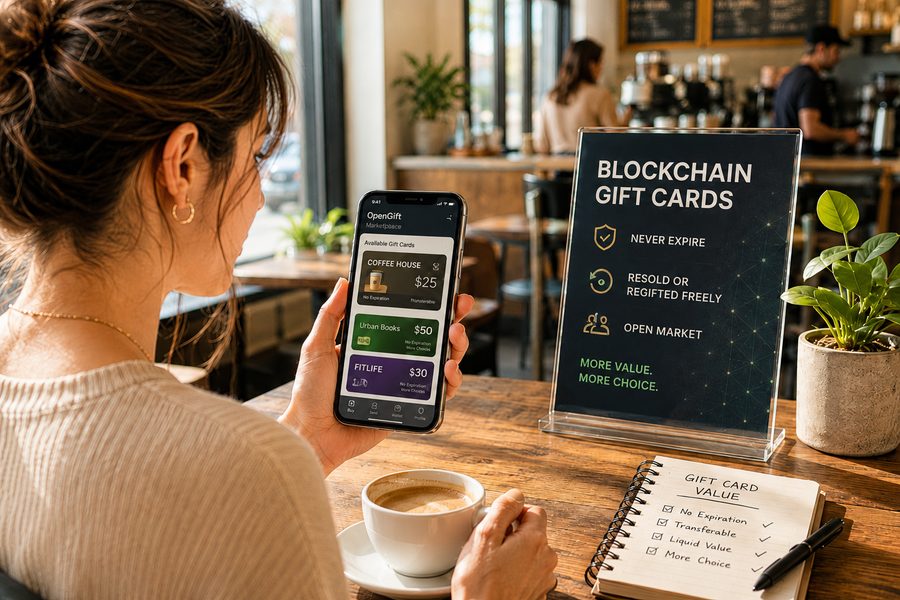
The gift card has become one of the most familiar objects in modern commerce, a small rectangle of plastic or a string of digits in an email that represents a promise of value to be redeemed at some future date, and it has grown into an enormous business because it is so convenient a way to give a present without the risk of choosing the wrong thing. Yet behind the cheerful ubiquity of the gift card lies a quieter reality, which is that a staggering quantity of the value loaded onto these cards is never actually spent, lost to forgotten balances, misplaced cards, and expiration dates that quietly extinguish what a giver paid for and a recipient never claimed. Industry estimates have put the value of unused gift cards in the United States at well over twenty billion dollars a year, a figure that represents real money paid by real people that ends up benefiting the issuing companies rather than the recipients it was meant for, and surveys have found that a large share of adults carry unused gift cards at any given moment, with a meaningful fraction reporting that a card expired before they ever got the chance to use it.
This pattern of waste is not an accident but in many respects a feature of how traditional gift cards are designed, since the companies that issue them benefit when cards go unredeemed, recognizing the unspent value as revenue in an accounting phenomenon known as breakage, and the closed, single-retailer nature of most cards means that a balance stuck at a store one no longer visits is effectively trapped, neither spendable elsewhere nor easily converted back into money. The plastic card that cannot be split, transferred, or moved beyond the issuer’s walls, combined with expiration terms and the simple human tendency to lose track of small balances, produces a system in which a portion of every dollar loaded is statistically likely to vanish, a quiet tax on gift-giving that most people never consciously notice but collectively surrender in vast amounts each year.
A new approach built on blockchain technology proposes to rethink the gift card from the ground up by issuing its value not as an entry in a single company’s database but as a digital token that the holder genuinely owns, a token that can be designed never to expire, that can be freely transferred or resold, and that exists independently of any one retailer’s closed system. When a gift card becomes a token held in a person’s own digital wallet rather than a balance recorded only on a company’s servers, the dynamics that produce so much waste begin to change, because an asset that the holder controls and that does not vanish on a schedule is far harder to lose to breakage, and an asset that can be moved, traded, or regifted is far more likely to find its way to someone who will actually use it. The technology that underlies cryptocurrencies, often associated with speculation and volatility, turns out to offer properties, permanence, ownership, and transferability, that address the very problems that have long plagued the humble gift card.
This article examines blockchain gift cards and what they could mean for the way value is given and redeemed, written for readers who may have bought and received many gift cards without ever considering where their unused value goes. It begins by laying out the real problems with traditional gift cards, then explains in plain language what a blockchain gift card actually is and how the underlying tokens, wallets, and smart contracts work, before exploring how these tokens can end expiration and reclaim lost balances and how they open the possibility of free resale and regifting in open markets. It surveys the companies actually building these systems today, considers what the shift means for retailers and consumers alike, and confronts honestly the risks and frictions that stand in the way. The aim throughout is to make an unfamiliar idea concrete and comprehensible, so that readers come away understanding not only how blockchain gift cards work but why they might matter for anyone who has ever let a gift card go to waste.
The Trouble with Traditional Gift Cards
To appreciate what blockchain gift cards propose to change, one must first understand the genuine shortcomings of the traditional gift card, a product whose convenience masks a set of structural problems that quietly cost consumers enormous sums every year. The most significant of these problems is the phenomenon known in the industry as breakage, which refers to the value loaded onto gift cards that is never redeemed, whether because the card is lost, forgotten, allowed to expire, or simply abandoned with a small remaining balance too inconvenient to bother spending. This unredeemed value does not disappear into nothing but typically becomes revenue for the issuing company, which is permitted under accounting rules to recognize as income the portion of gift card sales it can reasonably expect will never be claimed, creating a situation in which businesses have a quiet financial interest in cards going unused. Estimates of the scale of this breakage in the United States have reached well above twenty billion dollars annually, and individual companies report substantial sums, with the coffee chain Starbucks alone disclosing well over a billion dollars in unredeemed gift card balances on its books, a figure that grew year over year, illustrating how much value accumulates in the gap between what people load onto cards and what they actually spend.
The mechanisms that produce breakage are partly human and partly structural, and understanding both is necessary to see why the problem persists. On the human side, people are simply forgetful, losing physical cards in drawers and wallets, misplacing the emails that contain digital codes, and failing to remember the small balances left after a partial purchase, so that surveys consistently find that a large share of adults carry unused gift cards and that many admit to having forgotten about cards entirely. On the structural side, the design of traditional gift cards actively contributes to waste, because most cards are tied to a single retailer and cannot be spent anywhere else, meaning that a balance at a store a person no longer frequents becomes effectively stranded, neither usable elsewhere nor easily converted back to cash. The combination of human forgetfulness and structural rigidity is what makes breakage so reliably large, and it is no coincidence that the system is designed in ways that happen to benefit the issuers when value goes unclaimed.
Expiration dates and fees compound the problem, and although consumer protection laws in the United States, notably the federal legislation enacted in 2009 to govern gift cards, restrict how quickly cards may expire and limit certain fees, the protections are imperfect and many consumers remain unaware of their rights or find that the rules do not fully prevent value from eroding. Surveys have found that a notable fraction of consumers report having had a gift card expire before they could use it, and the existence of expiration terms at all, even when delayed by law, introduces a ticking clock that contributes to the sense that gift card value is perishable rather than permanent. The result is that a product marketed as a simple transfer of value carries hidden conditions that can diminish or destroy that value over time, conditions that the recipient often does not fully understand and that work against their interest.
A further set of problems concerns fraud and the fragility of the systems on which traditional gift cards depend, since the value of a card is recorded only in a company’s database and accessed through a code that, if stolen or compromised, can allow a thief to drain the balance with little recourse for the legitimate holder. Gift card fraud has become a significant concern, with criminals stealing card numbers, manipulating cards on store racks, and using gift cards as a favored instrument in scams precisely because their value is easy to transfer and difficult to trace once redeemed. The centralization of gift card value in corporate databases also means that the holder is entirely dependent on the issuing company’s continued existence and goodwill, so that if a retailer goes bankrupt or discontinues a program, the value of its outstanding cards can evaporate, leaving holders with worthless plastic and no practical means of recovery. These vulnerabilities reflect the underlying reality that a traditional gift card does not represent something the holder truly owns but rather a claim against a company, a claim only as reliable as that company and the systems it maintains.
Taken together, these problems, breakage and the incentives behind it, the rigidity of closed single-retailer systems, the erosion of value through expiration and fees, and the vulnerability to fraud and issuer failure, describe a product that serves consumers considerably less well than its popularity might suggest. The amounts lost are not trivial, the design favors issuers over recipients, and the experience of holding a gift card is one of managing a perishable and constrained form of value. It is against this backdrop of longstanding shortcomings that the idea of a fundamentally different kind of gift card, one built on blockchain technology and designed to give the holder real ownership of durable, transferable value, takes on its appeal, and understanding what such a card actually is requires examining the technology that makes it possible.
What a Blockchain Gift Card Really Is
A blockchain gift card is, at its essence, a representation of gift card value as a digital token recorded on a blockchain and held in the recipient’s own digital wallet, rather than as a balance recorded solely in a retailer’s private database, and this seemingly technical difference in where and how the value is stored turns out to change the nature of the gift card in fundamental ways. A blockchain is a kind of shared digital ledger maintained across many computers rather than controlled by any single company, a record of who owns what that is extremely difficult to alter or falsify and that exists independently of any one organization, and when gift card value is recorded on such a ledger as a token, that value gains properties that a database entry on a company’s server cannot easily provide, including genuine ownership by the holder, resistance to unilateral cancellation, and the ability to be transferred directly from one person to another. The token is not merely a digital version of a plastic card but a different kind of object altogether, one that the holder controls directly and that does not depend on a retailer’s continued cooperation for its existence.
These tokens can take different forms depending on how a given system is designed, and understanding the main varieties helps clarify what blockchain gift cards can be. Some are denominated in stablecoins, the cryptocurrencies pegged to a stable value such as the dollar, so that the token represents a fixed amount of spending power that does not fluctuate, while others take the form of unique tokens, sometimes called non-fungible tokens, that represent a specific gift card with particular terms, a particular issuer, and a particular value attached. In either case the defining characteristic is that the token lives in the holder’s wallet and can be moved, redeemed, or in many designs resold or regifted, without requiring permission from the issuer for each transfer, which stands in sharp contrast to the traditional card whose balance can only be spent at one retailer and cannot easily be moved to anyone else. The token model thus transforms the gift card from a closed claim against a single company into an open, ownable, and transferable asset.
The practical experience of using a blockchain gift card is in many implementations designed to feel familiar despite the unfamiliar technology underneath, because the goal of most serious efforts is to deliver the benefits of tokenization without forcing ordinary users to grapple with the complexities of cryptocurrency. A recipient might receive a token in an app that looks much like any other gift card app, see a balance and a list of where it can be spent, and redeem it with a few taps, all while the underlying value is actually held as a token on a blockchain that gives it permanence and transferability. The complexity of wallets, keys, and blockchains is increasingly hidden behind ordinary-feeling interfaces, so that the user gains durable value they truly own and can move freely without needing to understand the machinery that provides it, reflecting a recognition that the technology will only reach a broad audience if it does not demand that ordinary people become cryptocurrency experts.
Tokens, Wallets, and Smart Contracts in Plain Language
To understand how a blockchain gift card works without getting lost in jargon, it helps to grasp three simple ideas, the token, the wallet, and the smart contract, each of which plays a distinct role in making tokenized value function. A token is simply a unit of value or a unique item recorded on a blockchain, an entry in the shared ledger that says a particular holder owns a particular thing, whether that thing is an amount of stablecoin worth a certain number of dollars or a specific gift card with its own identity and terms. Because the token is recorded on a ledger maintained across many computers rather than on one company’s server, it cannot be quietly deleted, altered, or canceled by a single party, which is what gives the token its permanence and what allows it to represent value that the holder genuinely owns rather than merely a claim that a company could choose not to honor. The token is the digital embodiment of the gift card’s value, and its existence on the shared ledger is what distinguishes it from a traditional balance.
A wallet is the holder’s means of controlling their tokens, a piece of software, often an app on a phone, that holds the cryptographic keys proving ownership of the tokens recorded on the blockchain and that allows the holder to view, send, and redeem them. The wallet does not literally contain the tokens, which live on the blockchain itself, but rather holds the keys that authorize their use, much as a bank card does not contain one’s money but authorizes access to it, and possession of the wallet and its keys is what constitutes ownership of the tokens. In the context of gift cards, the wallet is where a recipient holds their tokenized cards, sees their balances, and initiates redemptions or transfers, and many systems provide wallets designed to be as simple as any familiar app so that holders need not understand the cryptography to use them effectively. The wallet is the holder’s point of control, the place from which they exercise the genuine ownership that tokenization provides.
A smart contract is the third piece, a small program stored on the blockchain that automatically executes its instructions when certain conditions are met, and it is what gives blockchain gift cards their programmable behavior. A smart contract can be written to govern how a gift card token behaves, defining how it may be redeemed, whether and how it may be transferred or resold, and what rules apply to it, and because the contract runs automatically on the blockchain without depending on any company to carry out its terms, the behavior it defines is reliable and tamper-resistant. A gift card whose rules are enforced by a smart contract can be made to never expire simply by writing no expiration into the contract, can be made freely transferable by allowing transfers in its code, and can even be designed to support resale on open markets, all through the logic embedded in the program that governs it. The smart contract is the mechanism that turns the abstract advantages of tokenization into concrete features, encoding the permanence, transferability, and openness that distinguish a blockchain gift card from its traditional counterpart.
These three elements work together to produce a gift card that is fundamentally different from the plastic card or database balance most people know, a token that the holder genuinely owns, held in a wallet under the holder’s control, and governed by a smart contract that can guarantee permanence and transferability. The technology may sound complex, but its effect is to deliver something simple and desirable, gift card value that does not expire, that the holder truly controls, and that can move freely to wherever it will actually be used, and it is this combination of properties, rather than the technical details, that makes blockchain gift cards worth understanding. With the mechanics in place, the most immediate and tangible benefits of this approach come into focus, beginning with the end of expiration and the recovery of value that traditional cards so often lose.
Ending Expiration and Reclaiming Lost Balances
The most direct benefit that blockchain gift cards offer is the elimination of expiration and the breakage that flows from it, because a token held in a person’s own wallet and governed by a smart contract that contains no expiration date simply does not vanish on a schedule the way a traditional card can. Where a conventional gift card carries the implicit or explicit threat that its value will diminish or disappear if not used within a certain period, a tokenized card can be designed to endure indefinitely, retaining its full value until the holder chooses to spend it, which removes one of the principal mechanisms by which gift card value is lost. This permanence is not a promise that a company makes and might break but a property built into the token itself through the logic of the smart contract that governs it, so that the holder need not rely on the issuer’s goodwill or remember to beat a deadline, since the value persists as long as the holder retains the token. The simple fact of value that does not expire addresses a problem that costs consumers enormous sums each year, and it does so structurally rather than through a policy that could change.
The recovery of lost balances follows naturally from the nature of tokenized ownership, because a token the holder genuinely owns in their own wallet is far harder to lose track of than a balance buried in a forgotten email or recorded only on a company’s server. When gift card value lives in a single wallet alongside a person’s other tokens, it becomes visible and manageable in one place rather than scattered across plastic cards, emails, and accounts, which reduces the forgetting and misplacement that contribute so heavily to breakage. The small residual balances that traditionally go to waste because they are too inconvenient to use can, in well-designed token systems, be combined, transferred, or applied more flexibly, so that the value does not become stranded simply because it is awkward. The shift from scattered, company-held balances to consolidated, holder-controlled tokens changes the everyday experience of managing gift card value in ways that make loss less likely.
The deeper significance of this change lies in the reversal of the incentives that have long shaped the gift card business, because a system in which value does not expire and balances are not easily lost removes the breakage that issuers have come to rely upon as a source of revenue. The traditional gift card model quietly benefits from consumers failing to use their cards, since unredeemed value becomes income for the issuer, but a tokenized card designed to endure and to remain under the holder’s control denies the issuer that windfall, aligning the product more closely with the interest of the person who holds it. This does not mean that businesses cannot profit from issuing tokenized gift cards, since there are other ways to derive value from such programs, but it does mean that the particular profit that comes from value going to waste is diminished, which represents a meaningful shift in whose interest the gift card serves. The end of expiration and the recovery of lost balances are therefore not merely conveniences but a rebalancing of a relationship that has long tilted toward the issuer at the consumer’s expense.
It is worth being clear that these benefits depend on the tokenized card being designed to provide them, since the technology enables permanence and holder control but does not by itself guarantee that every implementation will offer them. The point is that blockchain technology removes the structural necessity of expiration and breakage, making it possible to build gift cards that do not waste value, whereas the traditional system embeds these losses in its very design. Whether a given card actually ends expiration and recovers lost balances depends on the choices of those who build it, but the capability is real, and the leading efforts have emphasized exactly these benefits as central to their appeal, recognizing that durable, holder-controlled value is precisely what consumers have been losing under the old model and what tokenization can restore.
Open Markets: Reselling, Regifting, and Liquidity
Beyond ending expiration, the most transformative property of blockchain gift cards is their potential to be freely transferred, resold, and regifted, turning a closed and stranded form of value into something liquid that can move to wherever it will actually be used. A traditional gift card is typically locked to its recipient and its issuing retailer, so that a person who receives a card for a store they never visit has little practical recourse beyond letting the value go to waste or navigating the cumbersome and often unfavorable secondary markets that exist for reselling cards at a steep discount. A tokenized gift card, by contrast, can be designed to be transferred as easily as any other token, sent directly from one person’s wallet to another’s, which means that an unwanted card need not be wasted but can be given to someone who wants it, swapped, or sold, restoring to gift card value a fluidity that the closed traditional system denies it.
The ability to resell tokenized gift cards on open markets has the potential to create genuine liquidity for a form of value that has historically been illiquid and trapped. When gift card tokens can be bought and sold on marketplaces, a holder who does not want a particular card can sell it to someone who does, and the existence of such markets means that gift card value need not be stranded merely because its original recipient has no use for it, since there is almost always someone, somewhere, who would value a card to a given retailer. This liquidity benefits everyone in the system, allowing unwanted value to flow to those who want it rather than evaporating as breakage, and it transforms the gift card from a one-way transfer that often ends in waste into a tradable asset that can find its most valued use. The smart contracts that govern tokenized cards can be written to enable this resale directly, building the capacity for open markets into the cards themselves rather than relying on the awkward third-party reselling services that characterize the traditional market.
Regifting becomes similarly effortless in a tokenized system, addressing a common situation in which a person receives a card they do not want but would happily pass along to someone who would. With a traditional card, regifting is clumsy, requiring the physical handing over of plastic or the forwarding of a code with no easy way to verify the remaining balance, but a tokenized card can be sent directly from one wallet to another with the transfer recorded on the blockchain, giving the new holder genuine ownership and a verifiable balance. This ease of transfer means that gift card value can circulate naturally among people until it reaches someone who will use it, rather than dying in the hands of a recipient who has no interest in a particular retailer, and it makes the social practice of passing along an unwanted gift, often fraught and awkward, into a simple and transparent transaction. The capacity for frictionless regifting further reduces the waste that closed traditional cards produce, channeling value toward actual use.
The emergence of open gift card markets carries implications that extend beyond individual convenience into the structure of the gift card economy as a whole, because liquidity changes the nature of what a gift card is. When gift cards can be freely traded, they begin to function less like locked claims against a single retailer and more like a flexible form of value that can move through a marketplace, which could over time blur the rigid boundaries that have defined the business and create new dynamics around pricing and demand. A card to a popular retailer might trade near its face value while a card to a less desirable one might trade at a discount, with open markets revealing the true demand for each issuer’s cards, a transparency that departs sharply from the opaque traditional system. The promise of open markets is not merely that individual consumers can avoid waste but that gift card value as a whole becomes more efficient, flowing to where it is wanted rather than accumulating uselessly, though this openness also raises challenges that the closed system did not face.
Who Is Building This: Real-World Implementations
The idea of blockchain gift cards is not merely theoretical, and a number of companies have built real systems that bring tokenization, crypto payment, or blockchain-based features to the gift card experience. Examining these documented implementations, rather than speculative possibilities, gives a grounded sense of where the technology stands. The efforts range from platforms that let people buy traditional gift cards with cryptocurrency to systems that aggregate and transfer gift card value in digital wallets to the broader movement of tokengated commerce that uses blockchain tokens to unlock retail benefits, and together they illustrate the practical state of the field.
One prominent example is the platform Bitrefill, which has built a substantial business around allowing people to purchase gift cards using cryptocurrency, bridging the crypto world and everyday retail spending. Bitrefill offers thousands of gift cards from a wide range of well-known retailers, with reports indicating its catalog has grown to several thousand products spanning brands such as Amazon, Apple, Walmart, and many others, and it allows customers to pay using a variety of cryptocurrencies including Bitcoin, the Lightning Network, Ethereum, and the stablecoins USDC and USDT. The platform operates across well over a hundred countries, and the gift card codes it sells are delivered nearly instantly after payment, giving holders of cryptocurrency a practical way to convert their digital assets into spendable value at conventional stores. While Bitrefill’s core service centers on using crypto to buy otherwise traditional gift cards rather than issuing fully tokenized cards, it demonstrates the real and operating connection between blockchain-based money and the gift card economy, and it has established that there is genuine demand for crypto-to-retail bridges of this kind.
Another significant effort came from the partnership between Bakkt, a digital asset company, and Blackhawk Network, one of the largest gift card and branded payment providers, which together built a system enabling consumers to purchase electronic gifts using digital assets. Through this collaboration, users of the Bakkt application could buy eGift cards from a range of retailers, reported to number in the dozens and including well-known names such as DoorDash and PetSmart, using bitcoin, supported loyalty points, or cash, and the app provided functionality to aggregate physical and digital gift cards, check balances, and buy, spend, or send cards from a single place. Notably, the Bakkt App supported peer-to-peer transfer of gift cards between users, allowing value to move from one person to another, which reflects the transferability that distinguishes blockchain-influenced approaches from closed traditional cards. The partnership, which integrated digital assets and loyalty points with the established gift card infrastructure that Blackhawk operates, demonstrated how a major player in the conventional gift card business could incorporate blockchain-related capabilities, bringing the aggregation and transfer of gift card value into a unified digital experience.
The broader movement of tokengated commerce, particularly as enabled by the e-commerce platform Shopify, illustrates another way that blockchain tokens are being woven into retail, using ownership of a token to unlock products, discounts, and experiences in a manner that overlaps with the gift card concept. In tokengated commerce, a customer connects a digital wallet to a store, and a smart contract checks whether the wallet holds a required token, automatically unlocking hidden items, special prices, or exclusive access if the token is present, which turns a blockchain token into a key that grants retail benefits much as a gift card grants spending value. Major brands have implemented such systems, with the athletic company Nike building a platform that drew hundreds of thousands of registered digital wallets and conducted token-based product drops, including a digital sneaker release in 2023 that generated significant volume within its first days, and other brands experimenting with token-based perks and access. While tokengating is not identical to issuing gift cards, it demonstrates the same underlying principle of using ownable blockchain tokens to confer retail value and benefits, and it shows that significant retailers have already begun to build commerce experiences on token ownership, laying groundwork on which tokenized gift card concepts can build.
These implementations, spanning crypto-to-gift-card platforms like Bitrefill, digital asset and gift card integrations like the Bakkt and Blackhawk partnership, and the tokengated commerce enabled by platforms like Shopify and embraced by brands like Nike, demonstrate that the connection between blockchain and gift cards is real and operating today rather than a distant prospect. They also reveal that the space is still evolving, with different companies emphasizing different aspects, some focused on payment, some on aggregation and transfer, and some on token-based access, so that a fully realized vision of tokenized gift cards that never expire and trade freely is being assembled from these various efforts rather than springing into existence all at once. The practical state of the field is one of active construction with real products in the hands of real users, even as the most ambitious version of the idea continues to take shape, and this grounding in actual implementation is what distinguishes the blockchain gift card from mere speculation.
What It Means for Retailers and Consumers
The shift toward blockchain gift cards carries distinct implications for the two principal groups involved, the retailers who issue gift cards and the consumers who buy and receive them, and the interests of these groups do not always align, making it important to consider what the technology offers each. For consumers, the benefits are largely straightforward and favorable, since tokenized gift cards that do not expire, that the holder genuinely owns, and that can be freely transferred or resold address precisely the frustrations that have long made gift cards a less satisfying form of value than they appear. A consumer who receives a tokenized card need not worry about it expiring, can manage it alongside other value in a single wallet, can pass it along or sell it if it is for a store they do not use, and holds an asset that does not depend on the issuer’s continued goodwill for its existence, all of which represent meaningful improvements over the traditional experience. The consumer gains control, durability, and flexibility, recovering value that the old system so often allowed to slip away.
For retailers, the calculus is more complicated, because some of the consumer benefits come at the expense of advantages that retailers have enjoyed under the traditional model, most notably the breakage revenue that flows from unredeemed cards. A retailer accustomed to recognizing a portion of gift card sales as income from value that will never be claimed stands to lose that windfall under a system in which cards do not expire and balances are not easily lost, which gives some retailers reason for hesitation about embracing tokenized cards wholeheartedly. The free resale and transfer of tokenized cards also complicates the retailer’s relationship with its gift card program, since cards that can be sold on open markets may end up in the hands of people the retailer did not anticipate, and the loss of control over where cards go and how they are used represents a departure from the closed system that retailers have long maintained. These tensions mean that retailers may approach blockchain gift cards with caution, weighing the loss of certain traditional advantages against the potential benefits.
Yet retailers also stand to gain real benefits from blockchain gift cards, and these advantages may over time outweigh the loss of breakage revenue for forward-looking businesses. Tokenized gift card programs can reduce certain costs and fraud risks, since the security properties of blockchain can make cards harder to counterfeit or fraudulently drain, and they can appeal to younger, digitally native customers who value the ownership and flexibility that tokenization provides, helping retailers attract and engage a demographic that is comfortable with digital assets. The transferability and liquidity of tokenized cards can also expand the reach of a retailer’s gift cards, since cards that can be freely traded may circulate more widely and reach new customers who acquire them on secondary markets, potentially driving new business that the closed traditional card could not generate. Furthermore, the broader movement toward tokengated commerce and blockchain-based loyalty suggests that retailers can build richer relationships with customers through token ownership, using tokens to confer benefits, access, and engagement in ways that go beyond the simple stored value of a traditional card, opening new possibilities for marketing and customer loyalty.
The likely path forward involves a negotiation between these competing interests, with the benefits to consumers creating demand for tokenized cards while the concerns of retailers shape how the technology is implemented. Retailers that recognize the appeal of durable, flexible, consumer-friendly cards and that value the engagement of digitally native customers may embrace tokenization despite the loss of breakage revenue, finding that the goodwill and new business it generates compensate for the lost windfall, while others may resist or adopt only limited versions that preserve more of the traditional advantages. What is clear is that the technology shifts the balance of the gift card relationship toward the consumer, restoring value and control that the traditional system concentrated in the hands of issuers, and that this shift, however it is negotiated, represents a meaningful change in a longstanding arrangement.
Risks, Frictions, and Open Questions
For all their promise, blockchain gift cards face genuine risks, frictions, and unresolved questions that temper the optimistic case and that an honest account must address, beginning with the challenge of volatility and value stability. Gift cards denominated directly in volatile cryptocurrencies would carry the risk that their value could swing unpredictably, so that a card worth a certain amount when given might be worth considerably more or less when redeemed, which is undesirable for a product meant to represent a fixed amount of spending power. This problem is addressed in many designs by denominating tokenized gift cards in stablecoins pegged to a steady value or in fixed retailer-specific terms, but the reliance on stablecoins introduces its own considerations, since the stability of a stablecoin depends on the soundness of its backing and the trustworthiness of its issuer, and not all stablecoins are equally reliable. The need to ensure that tokenized gift card value remains stable and predictable is a real design challenge, and one that must be solved well for the technology to deliver the dependable value that gift cards are supposed to provide.
The custody and security of tokenized assets present a second set of risks, because the genuine ownership that makes blockchain gift cards appealing also places responsibility on the holder in ways that can be unforgiving. A token held in a self-managed wallet is controlled by whoever holds the cryptographic keys, which means that a holder who loses their keys or has them stolen may lose access to their gift card value with little recourse, a harsher consequence than the lost-card replacement that traditional issuers sometimes offer. The very property that protects tokenized value from unilateral cancellation by an issuer, namely that it depends on the holder’s keys rather than a company’s database, also means that the holder bears the burden of securing those keys, and the history of cryptocurrency is replete with stories of value lost through forgotten passwords, misplaced keys, and theft. Many implementations mitigate this by providing managed wallets and recovery options that ease the burden on users, but doing so reintroduces some dependence on a company and partially compromises the pure self-ownership model, illustrating a genuine tension between the security of true ownership and the convenience and safety net that ordinary users expect.
Fraud and scams remain a concern even in a blockchain context, and in some respects the irreversibility of blockchain transactions can heighten certain risks, since a transfer of tokens, once made, typically cannot be undone in the way a fraudulent card transaction sometimes can. Gift cards have long been a favored instrument of scammers precisely because their value is easy to transfer and hard to recover, and tokenized cards that can be sent instantly and irreversibly from one wallet to another could, if not carefully designed, offer scammers similar or greater opportunities, with the added difficulty that blockchain transfers cannot be reversed by a sympathetic issuer. The security benefits of blockchain, such as resistance to counterfeiting, must be weighed against these new risks, and the design of tokenized gift card systems must grapple with how to protect users from fraud in an environment where transactions are final, a challenge that the traditional system, for all its faults, sometimes handles through the ability to cancel and reissue compromised cards.
Regulation and adoption present further open questions that will shape whether and how blockchain gift cards spread. The legal treatment of tokenized gift cards is still developing, and questions about how existing gift card laws apply to tokens, how they interact with rules governing cryptocurrencies and money transmission, and what consumer protections apply remain partly unresolved, creating uncertainty that can slow adoption as companies await clarity. The friction of requiring consumers to use wallets and engage, however indirectly, with blockchain technology also poses a hurdle, since the broad public is largely unfamiliar with these tools, which is why the most promising implementations work hard to hide the complexity behind familiar interfaces. The success of blockchain gift cards depends not only on the technology working but on regulators providing workable rules, on companies building experiences ordinary people can use, and on consumers becoming comfortable with a new way of holding value, none of which is guaranteed.
Acknowledging these risks does not negate the real advantages that blockchain gift cards offer, but it places them in a realistic context, as a promising approach that must overcome genuine obstacles to fulfill its potential. The volatility of value, the burdens of custody, the persistence of fraud in new forms, the uncertainty of regulation, and the friction of adoption are all real, and they explain why blockchain gift cards, despite their appeal, have not yet swept away the traditional model and why their future will be shaped by how well these challenges are met.
Final Thoughts
The blockchain gift card represents, at its core, a quiet but meaningful proposition about ownership, that value given as a gift should belong genuinely to the person who receives it, should endure until they choose to use it, and should be theirs to keep, transfer, or pass along as they see fit, rather than remaining a fragile and constrained claim that too often slips away into the issuer’s pocket. The traditional gift card, for all its convenience, embodies a different and less generous principle, one in which value is loaded onto a closed and perishable instrument designed in ways that quietly favor the company over the recipient, so that billions of dollars given in good faith each year evaporate as breakage, expire before they can be used, or sit stranded in stores their holders never visit. The technology of tokenization, by making value durable, ownable, and transferable, offers a way to realign this relationship around the interest of the person the gift was meant for, which is a modest but real advance in fairness within an everyday corner of commerce that touches almost everyone.
The broader significance of this shift lies in what it suggests about applying blockchain technology to ordinary problems rather than to speculation and finance, because the gift card is a humble and universal object, and improving it through tokenization shows that the properties of blockchains, permanence, genuine ownership, and frictionless transfer, can address concrete frustrations in everyday life. The same characteristics that make cryptocurrency interesting to investors turn out to solve practical problems for ordinary consumers, ending the expiration that wastes their money and the closed systems that trap their value, and this unglamorous usefulness may be where the technology ultimately proves its worth to the broadest audience.
The questions of fairness that run through the gift card story extend beyond the cards themselves to the larger matter of who benefits from the design of financial products and who bears their hidden costs. Gift card breakage is a small example of a broader pattern in which the fine print and structural choices of financial instruments quietly transfer value from ordinary people to companies, and the ability of tokenization to reverse this particular transfer hints at a wider potential for technology to make financial products more transparent and more aligned with the interests of those who use them. A world in which value given is value kept would be a fairer one, and the blockchain gift card, however modest, points in that direction.
The path to a future in which tokenized gift cards are commonplace remains uncertain, shaped by the resolution of real challenges around stability, custody, fraud, regulation, and adoption, and it would be a mistake to assume that the appealing logic of the concept guarantees its triumph. Yet the direction is suggestive, toward gift cards that respect the ownership and serve the interests of the people who hold them, toward open markets that let value flow to where it is wanted rather than wasting away, and toward a relationship between consumer and issuer that is more balanced than the one that has prevailed. The humble gift card may seem an unlikely place to find a meaningful application of one of the most discussed technologies of the era, but it is precisely in such ordinary corners of life that a technology proves whether it can make things genuinely better, and the prospect of value that endures and belongs truly to its holder is a reminder that innovation, at its best, can extend fairness and control to the people whom existing systems have quietly shortchanged.
FAQs
- What is a blockchain gift card?
A blockchain gift card is gift card value represented as a digital token recorded on a blockchain and held in the recipient’s own digital wallet, rather than as a balance stored only in a retailer’s private database. Because the value lives on a shared ledger that the holder controls, it can be designed never to expire, can be genuinely owned, and can in many cases be freely transferred or resold, which addresses the waste and rigidity of traditional cards. - How is a blockchain gift card different from a regular gift card?
A regular gift card is typically a claim against a single retailer, recorded in that company’s database, locked to one store, and subject to expiration and the risk of being lost, with unused value benefiting the issuer as breakage. A blockchain gift card is a token the holder truly owns, governed by a smart contract that can guarantee it never expires and can allow it to be transferred or resold, shifting control and durable value to the recipient rather than the issuer. - Why do so many traditional gift cards go unused?
Traditional gift cards go unused because of a combination of human forgetfulness, people lose cards, misplace codes, and forget small balances, and structural design, cards are locked to one retailer and carry expiration terms that work against the holder. Industry estimates put unused gift card value in the United States at well over twenty billion dollars a year, value that often becomes revenue for the issuing companies through the accounting phenomenon known as breakage. - Can blockchain gift cards really never expire?
Yes, a blockchain gift card can be designed never to expire, because its value is a token governed by a smart contract that contains no expiration date, so the value persists as long as the holder keeps the token. This permanence is built into the token itself rather than depending on a company’s policy, though it is worth noting that the benefit depends on the particular system being designed to provide it, since the technology enables but does not by itself guarantee non-expiration. - What is a smart contract in the context of gift cards?
A smart contract is a small program stored on a blockchain that automatically executes its rules when conditions are met, and for gift cards it defines how a token behaves, including how it may be redeemed, whether it can be transferred or resold, and whether it expires. Because the contract runs automatically on the blockchain without depending on any company to enforce it, the behavior it defines, such as never expiring or being freely transferable, is reliable and tamper-resistant. - Can I resell or regift a blockchain gift card?
In many designs, yes, because tokenized gift cards can be transferred directly from one wallet to another and can be designed to support resale on open markets, unlike traditional cards that are usually locked to their recipient. This means an unwanted card need not be wasted but can be given to someone who wants it, swapped, or sold, creating liquidity for value that the closed traditional system typically strands. - Are blockchain gift cards safe from fraud?
Blockchain gift cards offer some security advantages, such as resistance to counterfeiting because value is recorded on a tamper-resistant ledger, but they also introduce new risks, since blockchain transfers are typically irreversible and cannot be undone the way a fraudulent card transaction sometimes can. Holders must also protect the keys to their wallet, since losing them can mean losing access to the value, so safety depends heavily on how a given system is designed and on the holder’s own care. - Do I need to understand cryptocurrency to use one?
Not necessarily, because the most promising implementations are designed to hide the complexity of wallets, keys, and blockchains behind familiar interfaces that look much like ordinary gift card apps. The goal of serious efforts is to deliver the benefits of tokenization, durable value the holder owns and can transfer, without requiring users to become cryptocurrency experts, though the degree to which the complexity is hidden varies from one system to another. - Which companies are building blockchain gift cards?
Several companies have built systems connecting blockchain and gift cards, including Bitrefill, which lets people buy thousands of retailer gift cards using cryptocurrency, and the partnership between Bakkt and Blackhawk Network, which enabled buying and transferring eGift cards using digital assets. More broadly, tokengated commerce on platforms like Shopify, embraced by brands such as Nike, uses blockchain tokens to unlock retail benefits, demonstrating related applications of the underlying technology. - What are the main risks of blockchain gift cards?
The main risks include value volatility if cards are tied to fluctuating cryptocurrencies rather than stable value, the burden and danger of custody since losing wallet keys can mean losing the value, the persistence of fraud in new and sometimes irreversible forms, and regulatory uncertainty about how existing laws apply. There is also the friction of adoption, since many consumers are unfamiliar with blockchain tools, which is why ease of use and clear regulation will heavily influence whether the technology spreads widely.