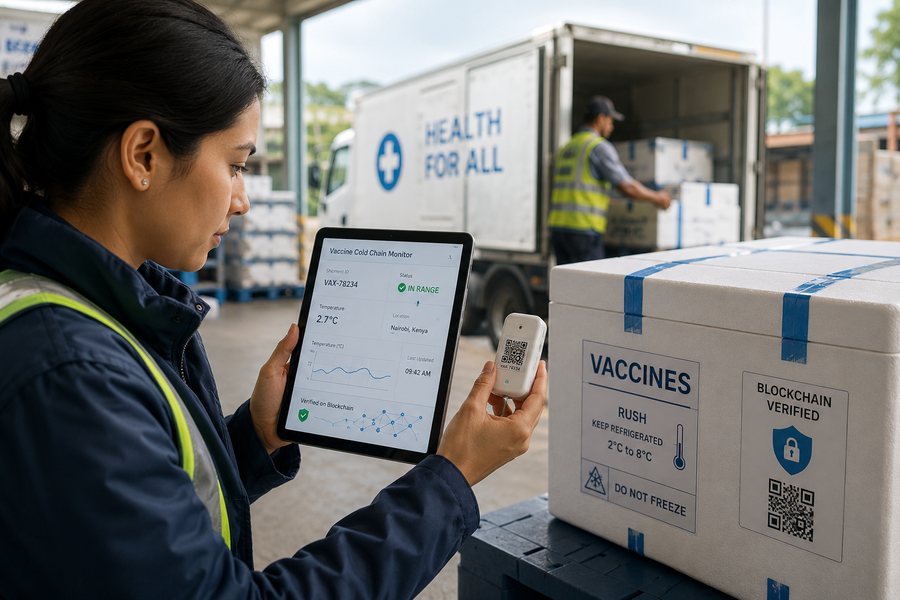
A vaccine is only as effective as the journey it survives. Every dose that leaves a manufacturing facility begins a transit that may cross continents, change hands a dozen times, and pass through warehouses, customs holds, refrigerated trucks, regional depots, last-mile carriers, and clinic refrigerators before reaching a patient. At every one of those touchpoints, temperature matters. A few hours outside the recommended range can quietly destroy the biological activity that makes a vaccine work, and unlike a contaminated water bottle or a spoiled medication, a degraded vaccine often looks identical to a perfectly preserved one. There is no visible signal of failure. The dose is administered, the patient assumes protection, and only the absence of immunity in the population reveals that something went wrong.
The scale of this hidden problem is striking. The World Health Organization has estimated that up to fifty percent of vaccines are wasted globally each year, with improper temperature management responsible for a significant share of that loss. Industry analyses place the annual global cost of pharmaceutical cold chain failures at roughly thirty-four to thirty-five billion dollars. Recent research focused on Sub-Saharan African delivery networks suggests that more than a quarter of vaccine doses in some regions are compromised by failures in cold chain custody. The downstream effects are difficult to measure but easy to imagine. Children who appear to be vaccinated may not actually be protected, donor funding intended for immunization may be effectively burned in transit, and outbreaks of vaccine-preventable diseases that should have been impossible may emerge anyway. Beneath these numbers sits a deeper trust problem. Patients, clinicians, regulators, and donors all rely on assurances that vaccines have been kept within specification, yet for most of the supply chain those assurances have rested on paper logs, after-the-fact audits, and the assumption that no one in a long chain of operators had any reason to falsify a temperature record. That assumption has held in much of the system most of the time, but it has held imperfectly, and the gaps it leaves are precisely the gaps that emerging verification technology aims to close.
The combination of Internet of Things sensors and distributed ledger technology aims to replace that fragile trust with verifiable evidence. IoT sensors handle the measurement layer, capturing temperature, humidity, location, and shock data continuously and automatically as a shipment moves. Blockchain provides the verification layer, writing those readings into a tamper-evident record that no single participant can quietly edit, delete, or backdate. Smart contracts add an automation layer on top, enabling immediate flagging, quarantine, or release decisions the moment a sensor reading crosses a defined threshold. The architecture is not science fiction and not a thought experiment. It is being deployed today in pilots and production systems by pharmaceutical consortia, hospital networks, postal services, and United Nations agencies, with documented results that can be examined and verified.
This article walks through how the technology actually works, who benefits and how, where real-world implementations have produced measurable outcomes, and what limitations and regulatory pressures are shaping the path ahead. The aim is to give a reader new to the subject a grounded view of what these systems do, what they do not do, and why the quiet integration of blockchain into vaccine logistics represents a meaningful shift in how the world handles the most temperature-sensitive medicines it produces.
Understanding the Vaccine Cold Chain Crisis
The vaccine cold chain is the temperature-controlled supply chain that maintains biological products within specified ranges from manufacturing through administration. The World Health Organization defines it as a system of equipment, transport, and trained personnel working together to ensure that vaccines remain safe and effective at every stage. The chain has no single owner. A typical dose may be manufactured by a multinational pharmaceutical company in one country, shipped via air freight to a national distribution center in another, transferred to a regional cold storage facility, broken down into smaller consignments for transport to district clinics, and finally stored in a clinic refrigerator until administration. Each handoff is a potential failure point, and the chain is only as strong as its weakest link.
Temperature specifications vary by vaccine, but the standards published by health authorities such as the United States Centers for Disease Control and Prevention establish clear ranges. Most refrigerated vaccines must be kept between two and eight degrees Celsius. Some vaccines require frozen storage, typically between negative fifty and negative fifteen degrees Celsius. The mRNA vaccines introduced during the COVID-19 pandemic pushed requirements further, with some formulations demanding ultracold storage as low as negative seventy degrees Celsius. The margins are narrow and unforgiving. Recent research published in 2025 examining African immunization infrastructure noted that approximately eighty percent of WHO-prequalified vaccines require active cold chain support, meaning that the vast majority of routinely administered immunizations cannot tolerate ambient transport even briefly. Excursions outside specification do not always destroy a vaccine immediately, but each event reduces what manufacturers and regulators call the stability budget, the cumulative tolerance a product has for environmental deviation before its potency can no longer be guaranteed.
Temperature Requirements and Why Precision Matters
The reason narrow temperature ranges matter so much comes down to the underlying biology. Vaccines are not stable chemicals. Many contain attenuated viruses, viral vector platforms, recombinant proteins, or mRNA fragments encapsulated in lipid nanoparticles. These biological agents have evolved or been engineered to function within specific physical conditions, and exposure to heat or freezing temperatures can denature proteins, disrupt lipid structures, or otherwise degrade the molecular components that trigger an immune response. The damage is often invisible. A heat-damaged vaccine vial typically looks identical to an unaffected one, with the same color, clarity, and labeled expiration date. Only laboratory potency testing can confirm whether the product retains its immunological activity, and such testing is not performed on individual doses before administration.
The consequences of administering a compromised vaccine are particularly serious because they create false confidence. A patient who receives a degraded measles vaccine, for instance, may have no protection against the disease while believing themselves immunized. If this happens at scale, herd immunity thresholds can be quietly undermined without anyone realizing until an outbreak occurs. Documented incidents reinforce the stakes. In January 2021, authorities in Michigan announced that nearly twelve thousand doses of the Moderna COVID-19 vaccine had been ruined by a temperature control malfunction during shipment, and similar incidents during the same period saw thousands of doses spoiled in Maine and Boston. A 2024 freezer failure at a New York clinic threatened approximately twenty thousand dollars worth of vaccines and was averted only through documented emergency procedures and a backup unit.
Where Cold Chains Break Down Today
Cold chain failures cluster around predictable weak points, and understanding those points clarifies why a tamper-evident verification layer addresses a real gap rather than an imagined one. The most visible failure mode is equipment malfunction, including refrigerators that drift out of range due to mechanical failure, thermostat miscalibration, or door seals that no longer close properly. These problems are often discovered only when someone manually checks a temperature log, which may happen daily, weekly, or in some settings even less frequently. By the time a fault is identified, the entire stored inventory may have been compromised.
A second cluster of failures occurs at handoffs between organizations. A shipment leaving a manufacturer’s warehouse is monitored by that manufacturer’s systems until it transfers to a logistics provider, which uses its own monitoring approach, which may differ again from what the receiving distributor or clinic uses. Data does not flow cleanly across these boundaries. Each organization maintains its own records, often in formats that cannot be readily reconciled, and gaps in monitoring during transit are common. The last mile is particularly fragile, especially in regions where reliable electricity, road infrastructure, and trained personnel are scarce. Research focused on African immunization noted that fragile last-mile logistics combined with aging cold chain equipment, insecure grid electricity, and a lack of technicians have contributed to roughly twenty percent of African children failing to receive a complete immunization schedule, with more than thirty million children under five experiencing vaccine-preventable diseases annually. A third source of failures is intentional. Diversion, counterfeiting, and theft in pharmaceutical supply chains create both direct losses and indirect risks when illegitimate product enters the legitimate chain, sometimes carrying falsified temperature documentation that obscures its true history.
The structural problem underneath all of these failure modes is that vaccine cold chains have historically relied on paper logs, isolated digital systems, and after-the-fact reconciliation rather than continuous, verifiable measurement. The technical capability to fix this has existed for years, but the trust infrastructure to make the data credible across organizational boundaries has not. That is the gap the IoT-blockchain architecture is designed to close.
How IoT Sensors and Blockchain Work Together
The integration of Internet of Things sensors and distributed ledger technology in vaccine cold chains is best understood as a layered system rather than a single product. At the physical layer, sensors embedded in shipments, storage units, and packaging continuously measure environmental conditions and transmit those readings to digital systems. At the verification layer, blockchain networks accept those readings and write them into records that cannot be quietly altered after the fact. At the automation layer, smart contracts apply pre-defined rules to the verified data and trigger actions such as alerts, quarantine flags, or release authorizations without requiring human intervention. Each layer addresses a specific weakness in the traditional approach, and the combination produces an audit trail that no single participant controls.
Neither technology resolves the cold chain problem on its own. IoT sensors generate continuous data, but in a conventional architecture that data flows into a centralized database owned by one party, which means it can be edited, deleted, or selectively shared. A logistics provider could in principle adjust readings to hide an excursion, or a manufacturer could discard inconvenient data before sharing summaries with regulators. Blockchain, by contrast, makes records immutable once written, but it has no inherent way to know whether the data it receives is accurate. Garbage in, permanent garbage out. The combined architecture works because the sensors provide measurement at the source, cryptographic signatures bind those measurements to specific devices and timestamps, and the distributed ledger ensures that the resulting records cannot be retroactively modified by any single participant. The system does not eliminate every risk, but it materially raises the cost and visibility of any attempt to falsify the cold chain record.
IoT Sensors as the Real-Time Data Layer
The sensor layer is where physical reality becomes digital data. Modern temperature loggers fall into several broad categories. Single-use loggers are inexpensive devices packed inside shipping containers that record temperature readings throughout transit and are downloaded at the destination. Reusable wireless loggers use Bluetooth, cellular, or LoRaWAN connections to transmit readings in near real time to cloud platforms, allowing live monitoring rather than retrospective review. Passive radio-frequency identification tags with embedded temperature indicators offer a low-power option for tracking individual vials or cartons through automated scan points. More sophisticated devices combine temperature with humidity, GPS location, light exposure, and shock measurement, building a comprehensive environmental record for each shipment.
The choice of transmission method matters because cold chain shipments do not always travel where networks reach. Cellular and Wi-Fi connections work in most urban and well-developed transit corridors, but the last mile in many low-resource settings depends on areas where coverage is intermittent or absent. LoRaWAN provides longer range at lower bandwidth and has seen adoption in rural deployments where cellular is unreliable. Satellite-based tracking solves the coverage problem at higher cost and is reserved for high-value or particularly remote shipments. The data captured at the sensor layer is only useful if it reaches a system that can act on it, and the transmission choice often shapes which deployments are practical in which environments.
The fundamental limitation of any sensor layer is that sensors themselves are imperfect. Devices can fail, batteries can drain, signal can drop, and in some cases sensors can be tampered with by anyone who has physical access to the shipment. A blockchain record of corrupted or manipulated sensor data does not protect anyone. This is why robust implementations build redundancy into the sensor layer, use cryptographically signed transmissions that bind readings to specific certified devices, and treat the absence of data as a flag in itself rather than assuming silence means everything is fine.
Distributed Ledgers and Immutable Verification
Once sensor readings exist as digital data, the question becomes how to make those records trustworthy across organizations that may not fully trust each other. A traditional database stored by one company is only as reliable as that company chooses to make it, and parties that did not generate the data have no way to verify it has not been altered. Distributed ledger technology, commonly known as blockchain, addresses this by storing identical copies of the record across multiple participants and using cryptographic hashing to make any retroactive change immediately detectable.
In a typical pharmaceutical cold chain deployment, the relevant participants might include the manufacturer, one or more logistics providers, a wholesale distributor, regulatory authorities, and the receiving health facility. Each participant operates a node on the network, receives a copy of the ledger, and validates new entries according to agreed rules. When a sensor reading arrives, it is bundled with other recent transactions, cryptographically signed, and added to the chain. From that point forward, modifying that record would require coordinated changes across all participants, which is detectable and effectively prevents quiet tampering. The technology does not require any single participant to be trusted because the integrity of the record rests on the network itself.
Most enterprise pharmaceutical deployments use permissioned blockchains rather than public networks like Bitcoin or Ethereum. Permissioned networks such as Hyperledger Fabric allow operators to control who participates, how identity is established, and what data each party can see. This addresses two pressing concerns in pharmaceutical operations. Confidentiality is preserved because competitors do not see each other’s shipment data, and throughput is improved because the network does not need to achieve consensus across thousands of anonymous participants. A common misconception is that blockchain replaces databases. It does not. Production systems generally store full sensor readings, documents, and analytical data in conventional databases, while writing cryptographic fingerprints and key transaction events to the blockchain. The ledger acts as an integrity anchor that proves the underlying data has not been altered, while the bulk of the data lives where it can be queried efficiently.
Smart Contracts for Automated Compliance
Smart contracts are self-executing programs that run on a blockchain and perform actions automatically when specified conditions are met. In the cold chain context, they translate static temperature specifications into active logic that responds to incoming sensor data in real time. The simplest example is an excursion alert. A smart contract monitors readings for a given shipment and, the moment a temperature crosses a defined threshold for longer than an allowed duration, automatically writes a flag to the ledger and notifies designated parties. No human review is required to detect the event, and no manual reporting can suppress it.
More sophisticated implementations apply this logic to release decisions. A shipment of vaccines may be configured so that the smart contract evaluates the full temperature history on arrival and either releases the product for distribution or quarantines it pending review. Some systems implement stability budget tracking, in which each excursion deducts a calculated amount from the vaccine’s remaining usable shelf life. A product that experienced several minor excursions during transit might still be safe to administer but with a shortened expiration, while a product that experienced a single severe excursion might be flagged for disposal even though it spent most of its transit in range. The logic is encoded in the contract rather than left to the judgment of a quality assurance officer working from a printed log, which reduces both human error and the opportunity for inconsistent enforcement.
The practical effect of automating compliance in this way is twofold. Decisions happen faster, which matters because a quarantine or release decision made at the moment a shipment arrives can prevent compromised product from entering distribution. Equally important, decisions become consistent and auditable. Every action taken by the contract is recorded on the ledger with the inputs that triggered it, which gives regulators, auditors, and downstream partners a transparent view of how each batch was handled. Taken together, the sensor, ledger, and smart contract layers transform cold chain verification from an after-the-fact paperwork exercise into a continuous, automated, and tamper-evident process that operates as the shipment moves.
Benefits Across the Distribution Ecosystem
The value of an integrated IoT-blockchain cold chain verification system is not distributed evenly. Different stakeholders capture different benefits, and the strongest deployments succeed when value flowing to one group helps finance infrastructure that serves another. A multinational pharmaceutical manufacturer may invest in verification systems primarily to reduce wastage and meet regulatory obligations, but the same infrastructure can give a rural clinic worker confidence that the doses they are about to administer have not been compromised during transit. Understanding who benefits and how clarifies why these systems gain adoption in some contexts and stall in others.
The benefits also vary by type. Some are direct economic gains, such as reduced wastage or lower insurance premiums. Some are operational, such as faster recall execution or reduced administrative burden. Some are reputational, such as demonstrable compliance with regulatory requirements or donor expectations. And some are public health benefits that do not show up on any single organization’s balance sheet but accrue across the system as a whole, including stronger immunization coverage and reduced exposure to counterfeit or substandard product. The following discussion organizes these benefits by the stakeholder groups most directly affected, recognizing that the picture is interconnected rather than neatly partitioned.
For Manufacturers and Distributors
Pharmaceutical manufacturers and their distribution partners face direct economic pressure to reduce vaccine wastage, both because lost product represents lost revenue and because manufacturers are increasingly held accountable for cold chain integrity by their customers and regulators. Verified cold chain data reduces the percentage of doses written off due to suspected excursions, and just as importantly, it allows for more nuanced quality decisions. A shipment with a documented minor excursion can be evaluated against its stability budget rather than discarded as a precaution, which preserves usable product that would previously have been written off in the absence of detailed data. Faster recall execution is another tangible benefit. When a manufacturer needs to identify and retrieve compromised product, a verified chain of custody makes it possible to locate affected lots in minutes rather than days.
Insurance costs and tender competitiveness also respond to verifiable data. Cargo insurance carriers underwrite cold chain shipments with limited visibility into actual transit conditions, and shippers that can demonstrate continuous monitoring and tamper-evident records can negotiate better terms. In donor-funded markets and large institutional tenders, the ability to provide cryptographically verified provenance is becoming a meaningful differentiator. The UCLA Health pilot of the BRUINchain blockchain system, conducted under the FDA’s Drug Supply Chain Security Act Pilot Project Program and documented in Blockchain in Healthcare Today, projected compliance costs of seventeen cents per unit using commercial off-the-shelf technology, with potential reduction to thirteen cents at scale across the roughly 4.2 billion prescriptions dispensed annually in the United States, implying approximately one hundred eighty-three million dollars in annual labor savings if adopted broadly.
For Regulators and Public Health Agencies
Regulators benefit from real-time visibility into supply chains that have historically been opaque to anyone outside the operating companies. The United States Drug Supply Chain Security Act, which reached its serialized track-and-trace enforcement milestone on November 27, 2024, with staggered exemptions extending through 2025 for some trading partners, requires unit-level traceability and interoperable electronic data exchange across manufacturers, wholesalers, dispensers, and other partners. Blockchain-based architectures provide one technical approach to meeting these interoperability requirements, although the regulation itself is technology-neutral. The European Union’s Falsified Medicines Directive imposes similar serialization and verification obligations across member states, and similar regulatory frameworks are being developed or expanded in other jurisdictions.
Beyond compliance, regulators gain investigative leverage. When a quality issue emerges, the ability to trace a specific lot through its entire journey and identify exactly when and where it may have been compromised dramatically reduces the time and cost of inquiry. Public health agencies also benefit from supply chain visibility in outbreak response, where the ability to confirm that vaccines deployed in an emergency campaign have been kept within specification reduces both medical risk and the political risk of public scandal. International donor organizations such as Gavi, the Vaccine Alliance increasingly attach verification requirements to funded vaccine programs, with the goal of ensuring that doses paid for by donors actually reach recipients in usable condition. As of the end of 2024, Gavi reported reaching more than one billion children vaccinated through routine programs since the alliance was founded, with seventeen African countries offering malaria vaccines through routine childhood immunization by year-end 2024.
For Healthcare Providers and Patients
Healthcare providers operate at the point where the cold chain ends and the immunological intent begins. A clinician preparing to administer a vaccine has historically had limited ability to verify what happened to that dose before it arrived at the clinic. Verified cold chain data changes this. With access to a tamper-evident transit history, providers can confirm that a vial has been kept within specification or, conversely, flag it for return if the record indicates compromise. The administrative dimension matters too. Manual temperature logging, paper-based receipt confirmation, and the related documentation burden absorb significant clinician time, and automating these workflows frees professional capacity for direct patient care.
Patient-facing verification is the most aspirational dimension of these systems. In principle, a patient could scan a vaccine vial’s identifier and view its complete provenance, an outcome that would dramatically expand transparency and could meaningfully address vaccine hesitancy in some populations. In practice, most deployments today expose verified data primarily to providers and institutional partners rather than to individual patients. The technical capability exists, but the user-facing interfaces, regulatory frameworks, and operational workflows for patient-level verification remain underdeveloped in most markets. The benefits to patients are real but mostly indirect, flowing through reduced wastage that keeps vaccines affordable and available, through stronger confidence in immunization programs, and through the gradual extension of verified provenance to the populations most affected by counterfeit and substandard pharmaceuticals.
Taken across all three stakeholder groups, the benefits of verified cold chain systems compound. Manufacturers reduce loss and gain competitive advantage, regulators gain enforcement leverage and public health insight, and providers and patients gain confidence and reduced exposure to substandard product. The deployments that have produced the most measurable outcomes are those that have aligned these benefits explicitly, structuring participation so that each party captures enough value to sustain its share of the operating cost.
Real-World Implementations and Case Studies
Three deployments illustrate the practical state of blockchain-verified cold chain systems as of 2024 and 2025, each operating at a different scale and addressing a different layer of the problem. None is a complete solution, and none has eliminated the underlying challenges of cold chain failure, but each has produced measurable outcomes that move beyond theoretical promise and into documented practice. Looking at them together gives a clearer picture of where the technology has earned its place and where it remains under construction.
The MediLedger Network, operated by San Francisco-based technology company Chronicled, has become one of the most prominent examples of blockchain-based pharmaceutical traceability in the United States. The network was developed as an industry consortium with broad participation, with the FDA-accepted Drug Supply Chain Security Act pilot project growing to twenty-four industry-leading companies. The participant list spans the major pharmaceutical manufacturers, large wholesale distributors, and major retail pharmacy chains, including AmerisourceBergen, Amgen, Cardinal Health, Genentech, Gilead, GSK, Lilly, McKesson, Novartis, Novo Nordisk, Pfizer, Sanofi, Walgreens, and Walmart, alongside logistics providers such as FedEx and industry standards bodies including GS1. Its primary objective has been to enable Drug Supply Chain Security Act compliant verification of serialized prescription drugs through a permissioned blockchain in which member organizations exchange product verification queries and transaction histories across the supply chain.
The pilot’s final report, submitted to the FDA in early 2020, concluded that a single blockchain solution could achieve the transaction throughput, speed, and reasonable cost required to meet DSCSA requirements at industry scale while preserving the confidentiality each participant needed. Industry analyses published in 2025 noted that MediLedger reported sub-second verification response times under pilot conditions, demonstrating that blockchain networks can support real-time traceability at production-relevant scale. The network has also moved beyond pilot status into commercial use for verification of saleable drug returns and contracting and chargebacks processes, demonstrating that blockchain-based pharmaceutical infrastructure can sustain ongoing transaction volume rather than functioning only as a proof of concept. As the DSCSA’s November 27, 2024 enforcement milestone took effect, with staggered exemptions extending into 2025 for some categories of trading partners, MediLedger has become one of several technical infrastructures that participants use to meet the law’s interoperability requirements. The deployment also illustrates the limitations of network-specific solutions. Distributors operating on MediLedger cannot natively exchange data with manufacturers on competing platforms such as IBM Food Trust or the SAP Information Collaboration Hub for Life Sciences, and the resulting fragmentation has slowed industry-wide convergence around any single architecture.
The UCLA Health blockchain pilot conducted with technology partner LedgerDomain produced perhaps the most concrete economic data published in the academic literature on dispenser-side blockchain implementation. The project, known as BRUINchain, was selected for participation in the FDA’s Drug Supply Chain Security Act Pilot Project Program and was documented in detail in a peer-reviewed publication in Blockchain in Healthcare Today. The system was tested across UCLA Health’s network of five distinct facilities and more than two hundred clinics, serving approximately six hundred thousand unique patients across roughly 2.5 million annual visits, with the explicit goal of meeting DSCSA’s last-mile verification requirements using commercial off-the-shelf hardware and software. The system requirements documented in the publication included scanning drug packages for correctly formatted two-dimensional barcodes, flagging expired products, verifying authenticity with the originating manufacturer, and quarantining suspect or illegitimate products at the dispenser-patient interface, which the published analysis characterized as the most complex area of the drug supply chain.
The peer-reviewed results projected DSCSA compliance costs at seventeen cents per unit with the demonstrated implementation, with the potential to decrease to thirteen cents per unit if manufacturers adopted highly performant end-to-end distributed ledger technology. Applied across the approximately 4.2 billion prescriptions dispensed annually in the United States, the implementation projected one hundred eighty-three million dollars in annual labor cost savings. The cost reduction came primarily from automating verification through real-time interrogation of manufacturer databases by the blockchain-based system, removing the manual review steps that previously required pharmacist time on each verification. Training time for pharmacy staff to use the system averaged eighteen minutes, a figure that matters because deployment friction often limits the practical reach of new compliance technology in clinical settings. The pilot demonstrated that real-time verification at the dispenser level is technically feasible, though full industry adoption depends on continued investment by manufacturers and other upstream partners. UCLA Health was also notable as one of the rare institutional pilots that engaged frontline pharmacy staff in testing rather than confining the evaluation to technical teams, which produced more grounded data about actual workflow integration in a live clinical environment.
The StaTwig VaccineLedger represents the strongest documented case of blockchain-based cold chain verification reaching low and middle income contexts. The Hyderabad-based company was selected for the first cohort of the UNICEF Innovation Fund’s blockchain investments, and in 2021 it announced a strategic partnership with Tech Mahindra to scale the VaccineLedger platform globally. The system uses unit-level QR codes that bind each vial to a digital identity on the blockchain, with IoT-enabled temperature, humidity, location, and chain-of-custody data recorded at each handoff. The platform supports aggregation and disaggregation logic so that the number of QR code scans required at pallet, box, and vial levels can be reduced significantly, addressing one of the practical concerns that has historically limited unit-level traceability in environments where every handoff scan adds workflow burden on already overstretched health workers.
Documented deployments include a pilot in Arunachal Pradesh, a state in northeastern India, tracking the delivery of vaccines from the state’s central warehouse in the capital city to Lohit district, as well as deployments tested with UNICEF program teams in India, the Middle East, and North Africa. The implementation is significant because it addresses verification in environments where cold chain failures cluster, where last-mile infrastructure is often the weakest, and where the cost of a single compromised batch can translate directly into preventable disease outbreaks. The Tech Mahindra partnership added enterprise-scale system integration capabilities to the StaTwig platform, including security modules designed to meet manufacturer and government requirements across multiple jurisdictions. The last verified milestone documented in publicly accessible UNICEF Office of Innovation materials notes that StaTwig graduated from the Innovation Fund program after successful multi-country pilot deployments lasting between six and twelve months and involving multiple stakeholders across complex global supply chains, with the system continuing to evolve through the Tech Mahindra commercial partnership.
What these three deployments share is a focus on integration rather than novelty. None of them invented new blockchain protocols or new sensor technologies. Instead, each combined existing components in ways that solved specific verification problems at production scale, and each documented results that allow others to evaluate their relevance. What they do not share is uniformity. The MediLedger Network targets multi-organization commercial supply chains in a high-resource regulatory environment, the UCLA BRUINchain pilot focused on the dispenser end of a serialized prescription system, and StaTwig has pursued the last-mile humanitarian use case in resource-constrained settings. The diversity of these approaches reflects the fact that the cold chain problem is itself not uniform. Different points of failure require different combinations of sensor density, network architecture, and operational integration, and the strongest evidence for the technology’s practical value comes from this kind of focused, documented work rather than from comprehensive platform claims.
Challenges, Limitations, and the Regulatory Path Forward
The accumulated evidence from real-world deployments shows that blockchain-verified cold chain systems can produce measurable benefits, but it would be misleading to describe the technology as mature, ubiquitous, or self-evidently superior to alternative approaches. Significant challenges remain, and the regulatory environment that is now driving adoption is itself still resolving fundamental questions about how distributed verification systems should be governed, audited, and integrated with existing infrastructure. A grounded view of the landscape requires examining these limitations honestly, alongside the regulatory forces that are reshaping the field.
The first set of challenges is technical and structural. Interoperability across competing networks remains a persistent obstacle. Industry analyses tracking the U.S. pharmaceutical supply chain note that multiple blockchain platforms exist for DSCSA-related applications, including the MediLedger Network, IBM Food Trust, and the SAP Information Collaboration Hub for Life Sciences, and that interoperability between these networks is limited. A distributor operating on one network cannot natively exchange data with a manufacturer on another, which means that DSCSA compliance for the broader industry currently runs primarily through centralized verification platforms and EPCIS-based data exchange protocols rather than through pure blockchain architectures. Transaction throughput is another technical concern. The U.S. pharmaceutical supply chain processes roughly ten billion prescription transactions annually, and pilot-scale performance does not always translate to production volume across more than one thousand wholesale distributors and the more than sixty-seven thousand pharmacies and hospital dispensers required to participate. Onboarding costs create additional friction at the small-dispenser level, where independent pharmacies representing roughly a third of community pharmacies by some industry estimates face technical lift and cost structures for blockchain participation that exceed those of conventional verification systems.
Infrastructure barriers in low-resource settings compound these technical questions. Sensor hardware costs remain meaningful in regions where vaccine programs operate on tight budgets, and the connectivity required to transmit sensor data in real time is uneven in many last-mile environments. Power reliability affects both the sensors themselves and the cold storage equipment they monitor. Organizational challenges are equally significant. Successful deployments require coordination across multiple parties who may have different incentives, different technical capabilities, and different risk tolerances, and the absence of a single accountable owner of the cold chain across organizational boundaries means that even well-designed systems can stall during implementation.
Technical and Infrastructure Barriers
The technical limitations of current blockchain implementations have practical consequences for how the technology is deployed. Throughput constraints mean that production systems generally write only key transaction events and cryptographic fingerprints to the blockchain itself, with full sensor data streams stored in conventional databases that are linked to the ledger by hash references. This architecture preserves the integrity guarantees of the blockchain while accommodating the volume of data that continuous sensor monitoring generates, but it requires careful design to ensure that the data referenced by the ledger remains accessible and accurately matched. The hybrid approach is technically sound, but it complicates the auditing process because verifying any specific claim requires checking both the blockchain record and the off-chain data store it references, and the integrity guarantees of the system depend on those two layers remaining properly synchronized over time.
Network governance is another open question. FDA guidance does not specify who maintains blockchain infrastructure, who adjudicates disputes when ledger records are contested, or how recalls are executed when the authoritative product record is distributed across multiple participants. The absence of regulatory clarity on governance creates legal risk for participants responsible for compliance under their state licenses and federal registrations. Multiple states now require DSCSA compliance documentation as part of wholesale drug distributor license applications, with Ohio’s State Board of Pharmacy adding the requirement in September 2024 and California following in January 2025, but those state requirements are themselves silent on the specific technical architecture, leaving distributors to make their own judgments about acceptable infrastructure.
Sensor reliability in production deployments is a continuing engineering challenge rather than a solved problem. Batteries fail, signals drop in transit through certain environments, and devices can be physically tampered with by anyone with access to a shipment. Robust implementations build redundancy into the sensor layer, use cryptographically signed transmissions, and treat data gaps as flags requiring investigation, but no implementation is perfectly tamper-proof at the physical sensor itself. The combination of these factors means that blockchain-verified cold chain systems should be understood as raising the cost and visibility of falsification rather than as eliminating the possibility entirely. This is still a meaningful improvement over paper logs and isolated digital records, but it is an improvement of degree rather than a wholesale transformation, and treating it as anything more invites overconfidence in environments where careful operational discipline still matters.
Regulatory Frameworks Driving Adoption
The regulatory environment in 2024 and 2025 has done more to accelerate blockchain adoption in pharmaceutical cold chains than any commercial pressure. The Drug Supply Chain Security Act reached its serialized track-and-trace enforcement milestone on November 27, 2024, with the FDA issuing staggered exemptions in October 2024 that extended deadlines into 2025 for some trading partners. Manufacturers and repackagers gained additional time until May 27, 2025, and wholesale distributors until August 27, 2025. The FDA’s June 2024 guidance on Product Identifiers under the Drug Supply Chain Security Act clarified that distributors may use third-party verification services but ultimate responsibility for compliance remains with the licensed entity. In the first quarter following base enforcement, the FDA issued warning letters to distributors still using paper-based transaction documentation, signaling that enforcement is active rather than aspirational. Industry tracking has documented twelve warning letters in the fourth quarter of 2024 citing failures to maintain electronic transaction history, transaction information, and transaction statement data, the so-called T3 data that DSCSA requires across the supply chain.
Beyond direct FDA enforcement, market pressure has reinforced the regulatory effect. Large retail pharmacy chains and health systems have increasingly rejected products without valid Electronic Product Code Information Services data regardless of FDA enforcement posture, which has effectively created a parallel compliance imperative driven by downstream trading partners. The European Union’s Falsified Medicines Directive imposes parallel serialization and verification obligations across member states, and EPCIS 2.0 JSON-LD has emerged as an evolving standard for data exchange that early adopters are migrating toward through 2025 and 2026. The result is a regulatory and market environment in which serialized track-and-trace infrastructure has moved from optional to expected, with blockchain functioning as one of several technical approaches participants can use to meet the underlying interoperability and verification requirements.
The Future of Verified Cold Chains
The realistic trajectory for blockchain-verified cold chains over the next several years involves convergence rather than revolution. Existing serialization infrastructure built on EPCIS and centralized verification platforms is not being replaced wholesale by blockchain. Instead, blockchain is settling into a role as an integrity layer for verification across organizational boundaries, complementing rather than supplanting the underlying serialization and tracing infrastructure. Artificial intelligence and predictive analytics applied to verified data are emerging as a meaningful next development, using the high-quality historical record produced by IoT-blockchain systems to anticipate equipment failures, optimize routing, and identify systemic patterns in cold chain performance. Standardization efforts continue to chip away at interoperability barriers, with international coordination bodies working toward common data formats and bridging protocols between competing networks. Donor-driven adoption in low-resource settings, exemplified by initiatives like Gavi’s increasing emphasis on verified delivery and UNICEF’s continued investment in blockchain-based humanitarian applications, is gradually extending verification infrastructure into environments where it is most needed but historically least available. The technology will not solve every cold chain problem, but the combination of regulatory pressure, accumulating evidence from documented deployments, and gradual standardization makes its continued expansion across vaccine supply chains the most likely path.
Final Thoughts
The transformative potential of blockchain-verified cold chains is not primarily about blockchain. It is about the long-overdue extension of verifiable trust into one of the most consequential supply chains in modern medicine, where the cost of failure is measured not in shipping delays or damaged inventory but in lost immunity, preventable disease, and quietly compromised confidence in public health systems. The technology matters because it changes what can be known about a vaccine’s journey, and what can be known changes what can be accomplished by every actor downstream of the manufacturer.
The deeper implication is one of equity. The same infrastructure that allows a multinational pharmaceutical company to demonstrate regulatory compliance in a high-income market can give a clinic worker in a rural African district reason to trust the doses delivered to her freezer that morning. This is not a coincidence of the technology. Verification systems designed for one context can extend into others at much lower marginal cost than building parallel systems from scratch, and the diminishing economics of sensors, connectivity, and computation are making it increasingly practical to bring the same standard of cold chain integrity to environments that have historically been served by paper logs and assumption. Financial inclusion is not the usual frame for vaccine distribution, but the underlying principle is similar. Populations that have been excluded from reliable infrastructure benefit disproportionately when that infrastructure becomes accessible, and verified cold chains represent a meaningful step toward closing that exclusion gap.
The intersection of technology and social responsibility in this domain is more concrete than it sometimes is in discussions of emerging technology. Cold chain verification does not require a new philosophical framework or a redefinition of how supply chains operate. It requires the patient, careful application of existing components to a problem that has been understood for decades but rarely addressed with the tools now available. Pharmaceutical manufacturers, regulators, logistics providers, donor organizations, and software vendors all have roles to play, and the implementations that have produced documented results are those where these parties have aligned around shared verification standards rather than competed to own the underlying platform. The work is incremental, and the rewards accrue across the system rather than to any single entity, which is one reason adoption has been steady rather than dramatic.
Challenges remain that should not be obscured by the encouraging evidence from real-world deployments. Interoperability across competing networks remains incomplete, the economics of last-mile sensor deployment are still difficult in the lowest-resource settings, and the regulatory governance of distributed verification systems continues to develop. None of these are reasons to dismiss the trajectory, but all are reasons to engage with realistic expectations. The technology is not a single platform that will win adoption everywhere, but a set of capabilities being integrated unevenly into supply chains shaped by different regulatory, economic, and humanitarian forces. The combined arc, across these contexts, points toward more verifiable, more transparent, and more equitable vaccine distribution.
What makes this an encouraging story is precisely that it is not a story about disruption. Blockchain in this domain is dissolving quietly into the infrastructure of vaccine logistics, the way good infrastructure usually does, becoming visible only when it works and increasingly taken for granted when it does. Innovation and accessibility are not opposing forces here. They are converging in a domain where the stakes have always been measured in lives protected against preventable disease, and where the slow extension of verifiable trust into the cold chain is one of the more meaningful applications of emerging technology to a problem that has long needed exactly this attention.
FAQs
- Why are standard refrigeration temperature logs not sufficient for vaccine cold chain verification?
Conventional logs depend on manual or semi-automated recording, are typically stored in systems controlled by a single party, and can be edited, replaced, or selectively shared after the fact. They also leave gaps at handoffs between organizations, where data does not flow cleanly across boundaries. Verified IoT-blockchain systems address these issues by capturing continuous sensor data automatically and writing tamper-evident records that no single participant can alter quietly. - What is the difference between IoT temperature monitoring and blockchain verification?
IoT temperature monitoring captures the actual environmental readings using sensors embedded in shipments or storage units. Blockchain verification provides a tamper-evident record of those readings that no single party can modify retroactively. The two are complementary rather than competing. Sensors handle measurement at the source, and blockchain provides integrity for the resulting record across multiple organizations. - Are public or private blockchains used in vaccine cold chain applications?
Almost all enterprise pharmaceutical deployments use permissioned blockchains such as Hyperledger Fabric rather than public networks like Ethereum. Permissioned networks allow operators to control participation, preserve confidentiality between competitors, and achieve the throughput required for production volumes. Public networks are rarely used because they expose data that supply chain participants need to keep private and because their transaction characteristics do not match commercial pharmaceutical requirements. - How much does it cost a small pharmacy or clinic to participate in a blockchain cold chain system?
Costs vary widely by implementation, but the UCLA Health BRUINchain pilot documented in Blockchain in Healthcare Today projected DSCSA compliance costs of seventeen cents per unit at the dispenser level using commercial off-the-shelf hardware and software, with potential reduction to thirteen cents per unit at full industry scale. Onboarding friction remains a meaningful concern for independent pharmacies, which is why much of the current U.S. compliance infrastructure relies on centralized verification services rather than requiring every dispenser to operate a blockchain node directly. - What happens when a temperature excursion is detected in a verified cold chain system?
Smart contracts encoded with the relevant specifications automatically flag the event on the ledger and notify designated parties at the moment the excursion exceeds defined thresholds. Depending on the system configuration, affected product may be automatically quarantined, its stability budget recalculated, or its release pending review. The flag itself is immutable, which means that no party in the chain can later suppress the record of the event. - Can patients verify the integrity of their vaccines using these systems?
The technical capability exists, but patient-facing verification remains aspirational in most current deployments. Production systems primarily expose verified data to providers, regulators, and institutional partners rather than to individual patients. Some implementations include QR codes on packaging that could in principle be scanned by end users, but user-facing interfaces, regulatory frameworks, and operational workflows for patient-level verification remain underdeveloped in most markets. - What role do smart contracts play in cold chain compliance?
Smart contracts translate static temperature specifications into automated logic that responds to sensor data in real time. They handle excursion alerts, automatic quarantine flags, release decisions on arrival, and stability budget tracking. The automation reduces both decision latency and the opportunity for inconsistent enforcement across organizations, since the same rules apply uniformly to every shipment processed by the contract. - How does the system handle sensor failures or gaps in data transmission?
Robust implementations treat the absence of data as a flag rather than as silent normality. Redundant sensors, cryptographically signed transmissions, and explicit gap detection are common design elements. The system does not assume that missing data means a shipment was within specification, and gaps trigger investigation just as detected excursions do. Sensor reliability remains an engineering challenge, and no system is perfectly tamper-proof at the physical device itself. - What regulatory requirements currently drive blockchain adoption in pharmaceutical cold chains?
In the United States, the Drug Supply Chain Security Act reached serialized track-and-trace enforcement on November 27, 2024, with staggered exemptions extending into 2025 for some trading partners. Manufacturers and repackagers gained additional time until May 27, 2025, and wholesale distributors until August 27, 2025. The European Union’s Falsified Medicines Directive imposes parallel obligations across member states. The regulations themselves are technology-neutral, but blockchain has emerged as one approach to meeting their interoperability and verification requirements. - What is realistic to expect from blockchain cold chain systems over the next five years?
The most likely trajectory is gradual integration rather than dramatic disruption. Blockchain is settling into a verification and integrity layer that complements existing serialization and EPCIS-based infrastructure rather than replacing it. Artificial intelligence applied to verified data, gradual interoperability improvements, and donor-driven extension into low-resource settings are the main developments to watch. The technology will not solve every cold chain problem, but its role in raising the floor of verifiability across global vaccine supply chains will continue to expand.