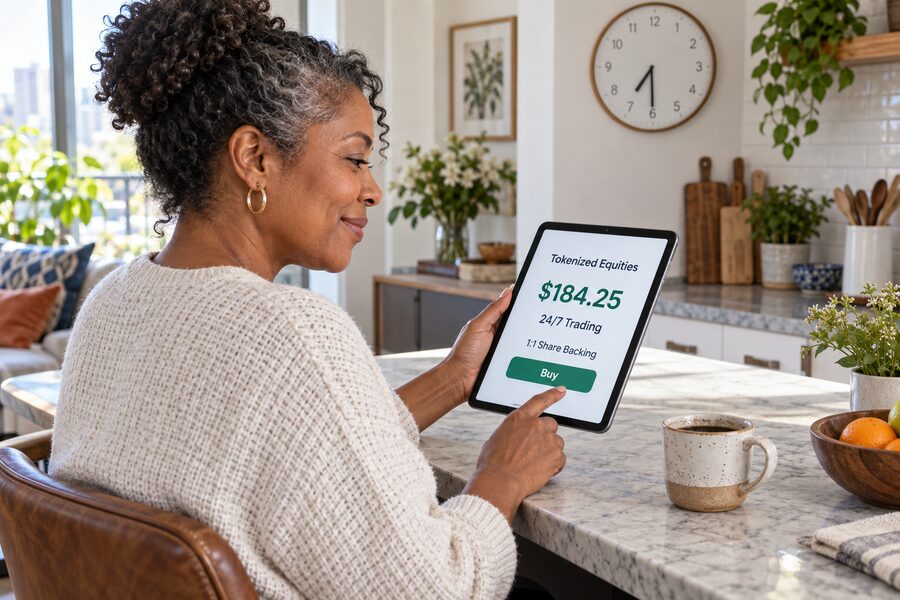
Picture an investor in Singapore watching a major American technology company report earnings at what is, for them, the middle of a Tuesday afternoon. The numbers beat expectations, the stock is set to jump, and every instinct says to buy immediately. But the New York Stock Exchange will not open for another nine hours, and by the time it does, the news will already be fully priced in by the American traders who got to act on it first. The investor is not missing information. They are missing a market. This repeats constantly across time zones, weekends, and holidays, pointing to a structural mismatch that has quietly shaped who profits from stock market news: markets open to a genuinely global, always-connected pool of buyers and sellers are still gated behind a schedule built for a single country’s business hours.
That mismatch is not an oversight. Stock exchanges settled on fixed trading hours, standardized settlement cycles, and centralized clearing decades before the internet made it possible for anyone with a phone to watch a company’s share price update in real time from anywhere on earth. The infrastructure behind buying and selling a share of a public company, from the exchange’s matching engine to the clearinghouse that finalizes ownership transfers, was built around the assumption that trading activity would cluster inside a predictable window, with market makers, exchange staff, and back-office settlement teams all working the same business day. That assumption made sense when a stock’s owners and its exchange were mostly in the same country. It makes considerably less sense now that a company like Apple or Tesla has shareholders and prospective buyers spread across every time zone on the planet, most of whom have no way to act on news the moment it breaks unless it happens to break during New York trading hours.
Tokenized stocks are one of the more concrete attempts to close that gap, and they have moved, over the past two years, from a niche crypto-industry talking point into products that real brokerages and exchanges have actually launched, with real regulators actively responding to them. At the simplest level, a tokenized stock is a blockchain-based instrument meant to give an investor exposure to a public company’s share price outside the hours and geographic restrictions of the traditional stock market. What that token actually represents, legally and financially, varies enormously from one product to the next, and that variation is not a minor technical detail. It is the single most important thing a prospective investor needs to understand before treating a stock token as anything close to equivalent to owning the underlying share.
This article works through what tokenized stocks are, why the traditional market’s fixed hours created the opening for them in the first place, and the meaningful legal differences between a token that merely tracks a share’s price and a token that represents an actual, recorded claim on company equity. It examines the infrastructure that makes genuinely around-the-clock trading possible, and it walks through three documented, verifiable examples that illustrate the different models in active use today: Robinhood’s 2025 launch of stock tokens for European users, Kraken’s xStocks product built on tokens issued by the Swiss firm Backed Finance, and Exodus Movement’s own tokenization of its actual company shares on the Algorand blockchain. It also looks honestly at the benefits and risks this technology creates for everyday investors, and at a regulatory landscape that, as of this writing, is still very much being written rather than settled.
The Problem: Why Stock Markets Still Close
The fixed hours that govern exchanges like the New York Stock Exchange and Nasdaq are not an arbitrary inconvenience; they exist because of how the entire equity trading system is built to function together during a defined window. A stock exchange is not simply a venue where buyers and sellers happen to show up. It is the center of a coordinated system involving designated market makers who commit to providing liquidity, brokerages that route customer orders to the exchange, and a clearing and settlement apparatus that finalizes the transfer of ownership after a trade executes. All of these participants staff their operations around a known trading day, and extending that day meaningfully would require every part of that chain, not just the exchange’s own matching engine, to operate on an expanded schedule. Limited after-hours and pre-market sessions do exist on major exchanges, but they typically involve a fraction of the participants and liquidity of the regular session, which is precisely why price moves during those windows tend to be more volatile and less reliable than moves during standard trading hours.
Settlement adds another layer of friction. When an investor buys a share of stock, that trade does not instantly and irreversibly transfer ownership; it enters a settlement process that, in U.S. markets, was shortened to one business day after the trade date only in 2024, having taken two business days for years before that. That settlement window depends on banks, clearinghouses, and custodians all being open and processing transactions, meaning the entire machinery behind a trade, not just the visible act of clicking “buy,” is built around conventional business hours. A system this interconnected cannot simply start operating at 3 a.m. on a Sunday without redesigning how every participant confirms and finalizes a transaction.
The result is a set of investors who are structurally disadvantaged by geography and time zone in ways that have nothing to do with how much capital they have or how well they understand the company they want to invest in. An investor in Tokyo, Mumbai, or São Paulo who wants exposure to a U.S. company has always had options, including American depositary receipts, international brokerage accounts, and index funds, but virtually all of those options still route back through the same exchange hours, meaning that investor’s ability to react to breaking news is delayed by however many hours separate their local time from the U.S. market’s open. Retail investors inside the United States face a narrower but still real version of the same problem: a company reporting disappointing earnings after the closing bell on a Thursday leaves everyone holding or wanting to trade that stock stuck waiting until Friday morning, watching the stock move in aftermarket sessions with much thinner liquidity, unable to fully act until the broader market reopens.
None of this means fixed trading hours are a design flaw that needs fixing at any cost. Concentrated trading hours create deep, reliable liquidity during the session itself, and market makers are only willing to commit capital to keeping bid-ask spreads tight because they know exactly when their obligations begin and end each day. But the mismatch between a market that runs on a fixed regional schedule and a global, always-online population of potential investors created a clear opening, and it is that opening, more than any abstract enthusiasm for blockchain technology, that tokenized stocks are built to fill.
What “Tokenized Stock” Actually Means
The phrase “tokenized stock” describes a category of products with one shared feature and one crucial difference. The shared feature is that each product uses blockchain technology, rather than a traditional brokerage’s internal ledger, to represent an investor’s economic interest in a publicly traded company’s shares. The crucial difference is what that blockchain token actually is in a legal sense, and that difference determines everything about what an investor genuinely owns, what protections apply if something goes wrong, and what happens if the company issuing or backing the token runs into financial trouble. Two tokens can look nearly identical on a trading app, both labeled with a company’s ticker and both moving in lockstep with that company’s real share price, while representing fundamentally different legal claims underneath.
Understanding that difference matters more here than in most other blockchain applications, because the underlying asset is not a novel digital collectible or a speculative cryptocurrency with no traditional equivalent. It is a share of stock, an asset class with more than a century of accumulated securities law, shareholder rights, and investor protection built around it. When a blockchain token is inserted between an investor and that underlying share, the question of whether the investor still receives the protections that law was built to provide becomes the central issue, not an afterthought. Broadly, the tokenized-stock products that have actually launched fall into two categories: those where the token is a synthetic or derivative instrument tracking a share’s price without conferring direct ownership, and the far rarer case where a company tokenizes its own actual shares of record.
Sitting alongside this legal distinction is a practical one: the technical infrastructure that makes it possible for either kind of token to trade at any hour, on any day, regardless of whether the underlying company’s home exchange is open. That infrastructure, built from custody arrangements, blockchain settlement rails, and a different breed of market maker willing to provide liquidity around the clock, is what actually delivers the “trading whenever you want” experience that tokenized stocks are marketed around, and it operates somewhat differently depending on which of the two ownership models a given token follows.
Derivative and Synthetic Exposure Tokens
The large majority of tokenized-stock products that have reached real users are structured as derivatives or synthetic exposure instruments rather than direct claims on the underlying share. In this model, an issuing entity, typically a regulated broker-dealer, a licensed electronic money institution, or a special purpose vehicle set up for this purpose, holds the real underlying shares or an equivalent hedge in a custody account, and then issues a separate blockchain token designed to track that share’s price. The investor who buys the token is not registered as a shareholder of the underlying company in any traditional sense; they hold a contractual claim against the issuer that is designed to move in value alongside the referenced stock, similar in spirit to how a contract for difference or a total return swap works in traditional finance, just wrapped in blockchain infrastructure and made available through a crypto-native interface.
This structure exists for practical, largely regulatory reasons rather than as a shortcut around investor protection. Directly registering thousands of individual blockchain-token holders as shareholders of record for a company like Apple or Nvidia would require rebuilding significant parts of the corporate shareholder registry and proxy voting infrastructure, cooperation from the underlying company that most issuers of these tokens do not have, and clearance from multiple securities regulators in multiple jurisdictions simultaneously. Building a token that references the share’s price, backed by shares an issuer already holds through conventional brokerage or custody relationships, is a far more achievable engineering and compliance project, which is why nearly every tokenized-stock product built by an exchange or brokerage without the underlying company’s direct involvement uses some version of this synthetic model.
The tradeoff is that token holders in this model typically do not receive the full bundle of rights that come with owning a share outright. Voting rights at shareholder meetings are usually absent entirely, since the issuer, not the token holder, is the one legally registered as the shareholder. Dividend treatment varies by product, with some issuers passing through an equivalent cash payment to token holders and others not addressing dividends as clearly. Perhaps most importantly, the token holder’s claim runs against the issuing entity rather than against the underlying company directly, meaning that if the issuer becomes insolvent, mismanages its custody arrangements, or simply fails to honor redemptions, the token holder’s recourse depends entirely on how that specific issuer structured its legal obligations and what jurisdiction’s insolvency law applies, rather than on the well-established protections that apply to a shareholder of record.
Issuer-Native Tokenized Equity
A much smaller and legally distinct category involves a company tokenizing its own actual shares, using the blockchain not as a synthetic wrapper layered on top of shares held somewhere else, but as the official record of who owns what. In this model, when an investor buys a tokenized share, they are not buying a derivative contract referencing the company’s stock; they are buying the stock itself, with the blockchain functioning as the authoritative ledger of ownership in place of, or alongside, a traditional stock transfer agent’s records. This is a meaningfully different legal relationship, because the token holder is a genuine shareholder of record, generally entitled to whatever rights, including voting rights and dividend entitlements, that class of shares carries under the company’s own governing documents and applicable securities law.
This model is rare in practice because it requires the company itself to be the one doing the tokenizing, typically working with a regulated transfer agent and pursuing a securities offering structure, such as a qualified Regulation A+ offering in the United States, that has been specifically cleared by a securities regulator to use blockchain-based recordkeeping. It cannot be bolted on after the fact by a third-party exchange or brokerage the way a synthetic token can, because it touches the company’s actual capitalization table and its relationship with its own securities regulator, not just a trading venue’s product catalog. That is precisely why examples of this model are so much less common than the synthetic, third-party version, and why the handful of companies that have pursued it, discussed later in this article through the case of Exodus Movement, are treated as unusual test cases for what fully native, on-chain equity ownership can look like when a securities regulator explicitly signs off on the structure.
The practical benefit for an investor in this model is a much closer alignment with what owning stock has traditionally meant, since the token is not a claim against a third-party issuer’s promise to honor a redemption, but a direct record of equity ownership in the underlying company. The tradeoff is that issuer-native tokenized shares are, so far, limited to the specific companies that have chosen to structure their own securities this way, meaning an investor cannot get issuer-native tokenized exposure to an arbitrary blue-chip stock the way they can get synthetic exposure through a brokerage or exchange token product. Wanting on-chain, always-tradable exposure to a company that has not tokenized its own equity means, at least for now, accepting a synthetic structure instead.
The Infrastructure Behind Around-the-Clock Trading
Regardless of which legal model a tokenized stock follows, delivering genuinely continuous trading requires solving the same practical problem: how do you price and trade an instrument tied to a company’s stock during hours when that company’s home exchange, the primary source of a reliable, continuously updated price, is completely closed. The answer used by every product examined in this article rests on three components working together. The first is custody, meaning a regulated entity, whether a broker-dealer, a licensed financial institution, or a specialized custodian, holds the real underlying shares (in the synthetic model) or maintains the definitive record of ownership (in the issuer-native model), providing the anchor that gives the token its value in the first place. The second is a blockchain settlement layer, typically a network capable of processing transactions cheaply and near-instantly, which allows token transfers to be finalized within seconds rather than the one-business-day settlement cycle that conventional stock trades require, and which does not observe holidays, weekends, or business hours at all.
The third component, and the one that actually determines whether off-hours trading is meaningful rather than just theoretically possible, is the presence of market makers and liquidity providers willing to quote prices and take the other side of trades when the underlying exchange is shut. During those hours, there is no live price from the primary market, so market makers on these platforms typically rely on a combination of the last confirmed exchange price, correlated signals from other open markets, such as index futures or foreign exchanges, and their own risk models to decide what price to quote. This means that prices for a tokenized stock during hours when its home exchange is closed are, by construction, an estimate of what the market would likely do rather than a confirmed transaction price from the underlying market itself, and that estimate can diverge meaningfully from where the stock actually opens once the primary exchange resumes trading, particularly around major news events.
This is also why liquidity for tokenized stocks tends to be noticeably thinner during off-hours than during the underlying exchange’s regular session, even on the more successful products. Fewer market makers are willing to take on the pricing risk of quoting a stock with no live reference price, which typically means wider bid-ask spreads and a greater chance that a large order will move the price more than it would during normal trading hours. None of this makes off-hours trading pointless, since even an imperfectly priced ability to react to breaking news outside standard market hours is more than most investors previously had, but it does mean that the “trade anytime” pitch behind tokenized stocks comes with a genuine liquidity tradeoff that is easy to overlook amid the novelty of the underlying technology.
Taken together, these three pieces of infrastructure, custody of or a claim on the real underlying equity, a blockchain settlement layer that never closes, and market makers willing to provide liquidity without a live reference price, are what actually make round-the-clock tokenized stock trading function in practice rather than remaining a marketing concept. How well each of the products now operating in the real world has executed on these pieces, and how transparent each has been about the legal structure underneath its tokens, varies significantly, which is exactly what the documented case studies that follow are meant to illustrate.
Documented Case Studies in Tokenized Equities
The theoretical distinction between synthetic exposure tokens and issuer-native tokenized equity becomes considerably more concrete when examined through products that have actually launched, attracted real trading volume, and in some cases drawn direct regulatory scrutiny. Three examples in particular illustrate the range of what “tokenized stock” means in practice as of this writing: Robinhood’s 2025 rollout of stock tokens to European users, which triggered a public dispute over what those tokens actually represented; Kraken’s xStocks product, built on tokens issued by the Swiss firm Backed Finance and custodied against real shares; and Exodus Movement, a publicly traded company that tokenized its own actual common stock rather than relying on a third party to wrap someone else’s shares.
These three were chosen because each has independently verifiable details attached to it, including named companies, public launch dates, and documented regulatory or market responses, rather than vague claims made only in a company’s own promotional materials. They also, collectively, span the full range of structures discussed earlier in this article: Robinhood’s product is a clear example of the synthetic, third-party exposure model, and one whose limitations became a matter of public record almost immediately after launch; Kraken’s xStocks sits in a similar synthetic category but with a different custody and issuance structure worth examining on its own terms; and Exodus represents the rare issuer-native case where the tokenized instrument is the company’s actual securities offering rather than a wrapper built around someone else’s stock.
Robinhood’s Stock Tokens Launch in the EU
On June 30, 2025, at an event held in Cannes, France, Robinhood launched a product called Stock Tokens, making more than 200 tokenized U.S. stocks and exchange-traded funds available to verified customers across the European Union and European Economic Area. The tokens were built to trade around the clock, five days a week, offered without Robinhood-added commissions or spreads on top of the underlying execution, and designed to support dividend pass-through for the companies that pay them. Robinhood paired the launch with the announcement of Robinhood Chain, a dedicated layer-2 blockchain built on the Arbitrum Orbit stack specifically to support tokenized real-world assets and continuous trading, positioning the stock tokens as the first major application running on that new infrastructure. The announcement was well received by markets: Robinhood’s own publicly traded shares jumped roughly 13 percent that day, touching an all-time high above ninety-three dollars, reflecting investor enthusiasm for the company’s broader push into tokenized assets even though the launch itself was limited to customers outside the United States, since no equivalent regulatory framework yet exists for offering these tokens to American retail investors.
The launch also included tokens tied to the price of shares in privately held companies, most notably OpenAI and SpaceX, neither of which trades on any public stock exchange at all. This is where the product ran into its most consequential controversy. Robinhood structured these particular tokens through a special purpose vehicle designed to hold an indirect economic interest tied to those companies’ valuations, giving retail investors in the EU synthetic exposure to price movements in businesses they otherwise have no legal way to invest in directly. OpenAI responded within days, stating publicly that it had not partnered with Robinhood, was not involved in creating the tokens, and did not endorse the product, adding pointedly that “these ‘OpenAI tokens’ are not OpenAI equity.” The distinction OpenAI was drawing, between a token that tracks an estimate of a private company’s value and an actual ownership stake in that company, is precisely the synthetic-versus-direct-ownership divide discussed earlier in this article, made unusually visible because the referenced company spoke up about it in public.
The dispute drew the attention of Robinhood’s lead regulator in the European Union, the Bank of Lithuania, which oversees Robinhood’s EU operations under the passporting arrangements that let a license issued in one EU member state cover activity across the bloc. The Bank of Lithuania stated that it had contacted Robinhood and was awaiting clarification regarding the structure of the OpenAI and SpaceX tokens specifically, as well as the adequacy of the consumer-facing communications describing what those tokens actually represented, indicating that a full assessment of the products’ legality and compliance would follow once that information was received. Robinhood’s own defense, articulated publicly by chief executive Vlad Tenev, was that the tokens provide investors with exposure through the special purpose vehicle’s holdings rather than a claim to be an actual OpenAI or SpaceX shareholder, a legally distinct proposition from owning equity outright, and one the company argued was already clear from the product’s design and disclosures.
The Robinhood case is instructive precisely because it shows the synthetic exposure model’s central tension playing out in full public view almost immediately after launch, rather than remaining an abstract legal distinction. A large brokerage with a genuine regulatory license in the European Union built a product straightforwardly marketed as giving investors a way to own tokenized versions of stocks, extended that same framing to tokens referencing private companies that have no public shares to reference at all, and found itself needing to publicly clarify, under regulatory pressure, that what customers were actually purchasing was several legal steps removed from the direct equity ownership the marketing implied. That gap between the product’s framing and its underlying legal structure is exactly the kind of detail this article emphasizes throughout: the blockchain wrapper is the least important part of understanding what an investor in one of these tokens actually owns.
Kraken’s xStocks and the Backed Finance Model
Kraken, one of the longer-established cryptocurrency exchanges, took a different route into tokenized equities by partnering with Backed Finance AG, a Swiss financial technology firm that serves as the actual issuer of the underlying tokens. The resulting product, xStocks, went live on May 22, 2025, with roughly sixty tokenized U.S. stocks and exchange-traded funds available at launch, including well-known names such as Apple, Nvidia, Tesla, Amazon, Microsoft, Coinbase, MicroStrategy, and the S&P 500-tracking SPY fund. Each xStocks token is issued as a token on the Solana blockchain, structured to represent one-to-one economic exposure to a specific underlying U.S.-listed stock or fund, with the referenced shares held in custody at a prime broker in Switzerland to back the tokens on a fully collateralized basis. Kraken has made these tokens available to non-U.S. customers, and reporting indicates the product later expanded to serve customers within the European Union as well, alongside additional distribution through other trading venues, including the exchange Bybit, and support on additional blockchain networks beyond Solana.
The growth trajectory of xStocks has been substantial by the standards of a product barely more than a year old. The token lineup expanded from the roughly sixty tickers available at launch to around one hundred fully backed, one-to-one tokenized U.S. stocks and exchange-traded funds, and combined trading volume across exchanges and on-chain activity reportedly surpassed ten billion dollars within the product’s first six months of operation. That figure, drawn from Kraken and Backed Finance’s own reporting, reflects genuine trading activity across the venues where xStocks tokens are listed, though as with any number sourced primarily from the companies operating a product, it is worth treating as a company-reported milestone rather than an independently audited statistic. Kraken subsequently announced an agreement to acquire Backed Finance itself, a move the companies described as a step toward unifying the issuance, trading, and settlement of xStocks tokens under one roof rather than maintaining the exchange-and-third-party-issuer split that characterized the product at launch.
The legal structure underneath xStocks places it firmly in the synthetic exposure category discussed earlier in this article, notwithstanding the one-to-one collateralization: a token holder owns a claim on Backed Finance’s custodied position in the underlying shares, not a direct shareholder registration with the referenced company itself. Backed Finance has been relatively explicit about this structure, describing the tokens as providing economic exposure backed by real shares held in custody, language that is more precise than some competing products in acknowledging that the token is a wrapper around, rather than a substitute for, direct share ownership. This relative transparency about the underlying structure is one of the more notable differences between the xStocks product and the controversy that emerged around Robinhood’s tokens referencing private companies, even though both ultimately rely on a similar custodial, synthetic-exposure model for the publicly traded names in their respective lineups.
Exodus Movement: A Company’s Own Shares, Tokenized
Exodus Movement, the company behind a widely used cryptocurrency wallet application, represents the clearest documented example of the issuer-native model described earlier in this article, in which a company tokenizes its own actual shares rather than a third party wrapping someone else’s stock. Exodus became a publicly traded company through a securities offering qualified under Regulation A+, a Securities and Exchange Commission exemption that allows companies to raise capital from the general public, including non-accredited retail investors, subject to SEC review and ongoing disclosure obligations, rather than through a conventional underwritten initial public offering. As part of that offering, which raised approximately seventy-five million dollars, Exodus made the unusual decision to tokenize its own common stock on the Algorand blockchain, using blockchain-based transfer agent infrastructure built in partnership with the registered transfer agent Securitize to maintain the official record of share ownership. The company has stated that it was the first company in the United States to tokenize its own common stock in this way, with the blockchain functioning as the actual mechanism for recording and transferring shareholder ownership rather than as a synthetic overlay on shares held through a separate custodial arrangement.
The distinction matters because an investor who holds Exodus’s tokenized shares is a genuine shareholder of record in the company, subject to the rights that class of stock carries and the disclosure obligations Exodus maintains as an SEC-reporting issuer, rather than a holder of a derivative claim against a third-party custodian’s promise to track the stock’s price. This is meaningfully different from both the Robinhood and Kraken examples discussed above, where the tokens reference shares of large, unaffiliated public companies that had no role in creating or endorsing the tokenized product. Exodus is tokenizing its own equity, with its own cooperation and its own regulatory clearance to do so, which is precisely the reason this model remains so much rarer than the synthetic approach: it requires the underlying company itself to restructure how it maintains its own shareholder ledger, rather than simply requiring an exchange or broker to build a product referencing a stock they have no other relationship to.
Exodus’s path toward a conventional stock exchange listing illustrates how unsettled the regulatory treatment of tokenized equity still is, even for a company doing the tokenizing itself with SEC clearance for its underlying offering. In May 2024, Exodus announced that its shares had been approved for listing on the NYSE American exchange, a venue focused on small-capitalization companies, under the ticker EXOD, with trading set to begin that month. The Securities and Exchange Commission intervened and blocked that listing attempt before it went forward, a setback that delayed the company’s move from over-the-counter trading to a national exchange by more than half a year. Exodus subsequently received the necessary approval, announcing on December 13, 2024 that its Class A common stock had been cleared for listing on NYSE American, with trading actually beginning on December 18, 2024, finally giving the company’s tokenized shares a presence on a major national securities exchange alongside their existing tokenized form.
Across all three cases, what stands out is not simply that tokenized stocks now exist in working products with real trading volume, but how differently “tokenized stock” can be structured even among products that use nearly identical marketing language. Robinhood’s tokens are synthetic instruments issued by a brokerage referencing shares and, in some cases, private company valuations it has no other relationship to, a structure that drew direct pushback from one of the referenced companies and an active regulatory inquiry within days of launch. Kraken’s xStocks tokens are also synthetic instruments, issued by a dedicated third-party firm holding real collateral, marketed with somewhat more explicit language about the custodial relationship underneath. Exodus’s tokenized shares are neither a synthetic wrapper nor a third-party product at all, but a company’s own securities, recorded natively on a blockchain with the direct cooperation of the issuer and its regulator. An investor evaluating any tokenized-stock product needs to know which of these categories, or which variation within them, they are actually buying into, because the label on the trading app rarely makes that distinction obvious on its own.
Benefits and Risks for Everyday Investors
The advantages and drawbacks of tokenized stocks land differently depending on who is using them, and organizing the discussion by stakeholder rather than treating tokenized stocks as a single undifferentiated benefit or risk makes the tradeoffs considerably clearer. Retail investors, especially those outside the United States, non-U.S. residents more broadly, the market makers and liquidity providers who make continuous trading possible, and the brokerages and exchanges offering these products all experience meaningfully different upside and exposure, and understanding those differences is what separates an informed decision to use one of these products from simply reacting to marketing that emphasizes access without addressing structure.
For retail investors generally, the most tangible benefit is the ability to act on market-moving information outside the narrow window of a single exchange’s regular trading hours, whether that means responding to an earnings surprise on a weeknight, a geopolitical development over a weekend, or simply wanting to rebalance a portfolio at a personally convenient time rather than during a workday. This benefit is real but should not be overstated: as discussed earlier in this article, prices quoted during hours when the underlying exchange is closed are estimates built from correlated signals and market-maker risk models rather than confirmed transactions on the primary market, and liquidity during those hours is meaningfully thinner than during the regular session, meaning the ability to trade at any hour does not equate to the ability to trade at any hour with the same pricing confidence available during normal market hours. Retail investors also gain simplified, often lower-friction access to fractional exposure, since many tokenized-stock products allow purchases in small dollar amounts, extending genuine access to individual highly priced shares to investors who might otherwise need to save considerably more to buy even a single whole share through a traditional broker.
For investors outside the United States specifically, the benefit is more structural than convenience: tokenized stocks referencing U.S. companies offer a way to gain exposure to those companies without opening and funding a U.S.-based brokerage account, navigating cross-border banking requirements, or relying on American depositary receipts that may not exist for every company an investor wants exposure to. This lowers a genuine access barrier that has existed for decades, though it replaces one set of intermediary risks, the traditional brokerage and depositary system, with a different set centered on the token issuer’s solvency, custody practices, and the enforceability of an investor’s claim against that issuer under whatever jurisdiction’s law applies to the specific product, which as the Robinhood and Kraken examples illustrate, is not always spelled out with the same clarity from one product to the next.
Market makers and liquidity providers, who make continuous trading actually function rather than remain theoretical, take on a distinct risk in exchange for the fees and spread they earn: quoting prices while the primary reference market is closed means pricing an instrument with no live transaction feed to check estimates against, exposing them to a large, unexpected price gap once the underlying exchange reopens and reveals that off-hours pricing missed the mark. This risk is precisely why bid-ask spreads on tokenized stocks tend to widen noticeably during off-hours trading, and why liquidity providers generally commit less capital to quoting during those windows than they do during a stock’s normal session, a dynamic that directly affects the retail investors trading alongside them during those same hours.
Brokerages and exchanges offering tokenized-stock products gain a genuine competitive advantage from being early to a category with real investor demand, evidenced by trading volume figures like those reported for xStocks and by the stock-price reaction Robinhood saw on the day of its own launch. That advantage comes bundled with unusually direct reputational and regulatory exposure, since, as both the Robinhood and Exodus cases demonstrate, regulators are actively scrutinizing how these products are structured and marketed, and a company that gets the legal framing wrong risks a public dispute, a formal inquiry, or an outright blocked listing, any of which can undercut the enthusiasm the product was meant to capture. Across every one of these stakeholders, the throughline is that tokenized stocks genuinely expand access and trading flexibility, but every expansion of access in this category has so far come paired with a corresponding new category of counterparty, pricing, or regulatory risk that did not exist, or existed in a much more settled form, under the traditional brokerage and exchange system these products are built to supplement.
Regulatory Landscape and Open Questions
Regulators on both sides of the Atlantic have moved from largely ignoring tokenized equities to actively engaging with them only recently, and the resulting framework, such as it exists, is better described as a set of evolving positions than a settled body of law. In the United States, the clearest signal of a shifting official posture came from Securities and Exchange Commission Chair Paul Atkins, who used a July 31, 2025 speech titled “American Leadership in the Digital Finance Revolution,” delivered at an event hosted by the America First Policy Institute, to announce that the agency intended to pursue rules permitting the tokenization of equities and other assets, including use cases involving decentralized applications. Atkins told the audience that firms ranging from established Wall Street institutions to prominent technology companies were, in his words, “lined up at our doors with requests to tokenize,” and that the SEC intended to “provide relief where appropriate” to keep American markets and investors from falling behind this shift internationally. That speech marked a notable change in tone from the SEC’s more cautious posture toward blockchain-based securities products in prior years, though a speech signaling policy intent is not itself a finalized rule, and the practical requirements facing anyone seeking to offer tokenized equities to American retail investors remained, at the time of that speech, governed by existing securities law rather than any new tokenization-specific framework.
Following that shift in tone, SEC staff issued more detailed guidance clarifying how existing securities and derivatives rules apply to tokenized instruments, establishing a principle that has become central to how this article evaluates every product discussed above: a security does not stop being a security, and the rules that govern it do not disappear, simply because it is recorded on a blockchain rather than in a traditional brokerage ledger. That guidance drew a clear line between issuer-sponsored tokenized securities, which can represent genuine equity ownership when the issuing company itself structures the offering that way, similar to what Exodus Movement has done, and third-party tokenized products that typically provide only synthetic price exposure or a custodial entitlement against an intermediary, the category that both Robinhood’s and Kraken’s products fall into. Separately, reporting has indicated the SEC has been working toward a more specific regulatory accommodation, sometimes described as an innovation exemption for tokenized securities, intended to give market participants a clearer, more specific path for offering these products domestically; as of this writing, that framework has been discussed publicly by regulators and covered by financial press but had not yet been finalized into a settled rule that resolves the open questions this section describes.
In the European Union, the regulatory picture is complicated by the fact that the bloc’s primary crypto-specific law, the Markets in Crypto-Assets Regulation, known as MiCA, was explicitly designed to exclude instruments that already qualify as financial instruments under existing securities law, such as the EU’s Markets in Financial Instruments Directive, rather than to bring tokenized stocks under its own crypto-specific rulebook. The European Securities and Markets Authority finalized guidelines in March 2025 addressing when a crypto-asset should be classified as a financial instrument subject to that older securities framework rather than treated as a crypto-asset under MiCA, directly relevant to tokenized stocks, since a token functioning economically like a share arguably should be regulated with the same rigor as a share, not the lighter-touch rules MiCA applies to crypto-assets generally. This is exactly the ambiguity underlying the Bank of Lithuania’s public inquiry into Robinhood’s stock tokens discussed earlier in this article: determining whether a specific tokenized product is, in substance, a financial instrument requiring full securities-law treatment, or something that can be offered under a lighter crypto-asset framework, is not a settled, mechanical question, and different national regulators across the EU’s member states may reach different conclusions about similarly structured products absent clearer, harmonized guidance from EU-level authorities.
What all of this adds up to is a regulatory environment genuinely in motion rather than settled in either major jurisdiction discussed here, a state of affairs that matters enormously for how any prospective investor should treat these products. A product that is compliant today under one regulator’s current interpretation is not guaranteed to remain structured the same way once more specific rules are finalized, and the gap between an issuer’s own description of its product and how a regulator ultimately classifies it, as the Robinhood case demonstrates, can be significant enough to trigger public disputes and formal inquiries within days of a launch. Investors evaluating any tokenized-stock product today are, in an important sense, participating in a live regulatory experiment rather than using a fully mature, settled financial product, and treating the underlying legal and regulatory uncertainty as a genuine risk factor, not a minor technicality, is essential to using these products responsibly.
Final Thoughts
The most honest way to describe tokenized stocks is as a genuine solution to a real, well-documented problem wrapped around a legal structure that is still catching up to the technology built to deliver it. The mismatch between a globally connected investor base and a stock market that only operates a few hours a day, five days a week, is not imaginary, and the frustration of watching a stock move on major news while the exchange that prices it sits closed is a legitimate grievance that tokenized equities are the first widely available product to meaningfully address. What has changed over the past two years is not that this problem was newly discovered, but that real companies, from established brokerages to specialized token issuers to at least one publicly traded company willing to tokenize its own shares, have built working products that let ordinary investors act on that frustration rather than simply live with it.
What has not changed nearly as quickly is the legal and regulatory scaffolding around what these tokens actually represent, and that gap is where the real risk to everyday investors concentrates. A token that tracks a stock’s price is not automatically equivalent to owning that stock, and the difference between a synthetic claim against a third-party issuer and a direct, issuer-recorded ownership stake is not a technicality reserved for lawyers; it is the single fact that determines what happens to an investor’s money if the issuing company mismanages its custody arrangements or cannot honor redemptions during market stress. The public dispute over Robinhood’s tokens referencing OpenAI and SpaceX made this abstract concern concrete almost overnight, with the referenced company itself stating that the tokens did not represent its equity, and a national regulator opening an inquiry into the product’s structure within days of launch. That episode is a reminder that investor demand alone does not guarantee a product’s marketing matches its underlying legal reality.
There is also a broader accessibility dimension worth taking seriously here, separate from the technology itself. Investors outside the United States, and investors of modest means who benefit from fractional access to expensive shares, stand to gain the most from tokenized equities working as intended, because they have historically been the most locked out of U.S. equity markets by geography, banking friction, and account minimums. Extending that access responsibly requires regulators, issuers, and platforms to be considerably more transparent about what a given token actually is than the industry has consistently managed so far, since the investors most drawn to broader access are often those with the least cushion to absorb a loss from a structure they did not fully understand at purchase.
Where this settles will depend less on the blockchain infrastructure, which has already proven itself capable of settling trades continuously and cheaply, and more on whether regulators in the United States, the European Union, and other major markets converge on clear, harmonized rules for what a tokenized security must disclose and guarantee before it can be marketed to retail investors. The SEC’s shift in tone during 2025, paired with staff guidance distinguishing issuer-sponsored tokens from synthetic products, and ESMA’s parallel effort to clarify when a crypto-asset should instead be treated as a full financial instrument, both point toward that convergence, but neither had produced a finished, harmonized framework as of this writing. Until that framework exists, the technology’s promise of trading real equities on-chain around the clock will keep outrunning the legal clarity investors need to use it with full confidence.
FAQs
- What is a tokenized stock, in simple terms?
A tokenized stock is a blockchain-based instrument designed to give an investor exposure to a publicly traded company’s share price, typically issued by a brokerage, exchange, or specialized token issuer rather than the company itself. Depending on how it is structured, it may represent a derivative claim tracking the share’s price or, far less commonly, a direct, issuer-recorded ownership stake in the actual company. - Does owning a tokenized stock mean I own the actual share?
Usually not. Most tokenized-stock products, including those offered by Robinhood and Kraken’s xStocks, are synthetic instruments where an issuer holds the underlying shares or an equivalent hedge and issues a separate token that tracks the share’s price, meaning the token holder has a contractual claim against that issuer rather than direct shareholder rights. The exception is issuer-native tokenization, such as Exodus Movement’s own tokenized common stock, where the blockchain token is the actual record of share ownership. - Why can tokenized stocks trade when the regular stock market is closed?
Tokenized stocks run on blockchain settlement networks that operate continuously rather than on a fixed exchange schedule, and market makers on these platforms provide liquidity and quote prices even outside the underlying exchange’s hours. Those off-hours prices are estimates based on the last confirmed exchange price and related market signals rather than live, confirmed trades from the primary market, so they can diverge from where the stock ultimately opens once its home exchange reopens. - What happened with Robinhood’s tokenized stocks in the European Union?
Robinhood launched more than 200 tokenized U.S. stock and ETF tokens for EU and EEA customers on June 30, 2025, including tokens referencing private companies OpenAI and SpaceX. OpenAI publicly stated it had not partnered with Robinhood and that the tokens did not represent its actual equity, and the Bank of Lithuania, Robinhood’s lead EU regulator, opened an inquiry into the tokens’ structure and related customer communications. - How is Kraken’s xStocks product structured?
xStocks tokens are issued by the Swiss firm Backed Finance, launched on Kraken on May 22, 2025 with roughly sixty tickers, and are built on the Solana blockchain, with each token representing one-to-one economic exposure to an underlying U.S. stock or ETF backed by real shares held with a Swiss prime broker. The lineup has since grown to roughly one hundred tokens, and Kraken has announced plans to acquire Backed Finance itself. - What makes Exodus Movement’s tokenized shares different from Robinhood’s or Kraken’s?
Exodus tokenized its own common stock on the Algorand blockchain as part of an SEC-qualified Regulation A+ offering, making the blockchain the actual record of shareholder ownership rather than a synthetic wrapper around shares held by a third party. This is known as issuer-native tokenization, and it is considerably rarer than the third-party derivative model used by most tokenized-stock products currently on the market. - Are tokenized stocks available to investors in the United States?
Largely not yet, at least not through the products discussed in this article. Robinhood’s stock tokens launched only for EU and EEA customers, and broad U.S. retail access to third-party tokenized equities would require a clearer regulatory framework that, while under active discussion at the SEC as of this writing, had not yet been finalized. Exodus’s own tokenized shares are a narrower exception, since they were offered as part of a U.S. securities offering the SEC had already qualified. - What are the biggest risks specific to tokenized stocks, beyond ordinary stock market risk?
The two most significant are counterparty risk and pricing risk. Counterparty risk arises because most tokenized stocks are claims against a third-party issuer rather than direct shareholder rights, meaning an investor’s recourse depends on that issuer’s solvency and custody practices. Pricing risk comes from trading during hours when the underlying exchange is closed, when liquidity is thinner and quoted prices are estimates rather than confirmed transactions from the primary market. - Do tokenized stocks pay dividends or come with voting rights?
It depends entirely on the product’s structure. Synthetic tokens may or may not pass through an equivalent cash payment when the underlying company pays a dividend, and they generally do not carry voting rights, since the issuer, not the token holder, is registered as the shareholder. Issuer-native tokenized shares, like those from Exodus Movement, generally carry the dividend and voting rights attached to that specific class of stock under the company’s own governing documents. - Is the regulatory status of tokenized stocks settled, or still changing?
It is still actively changing. The SEC signaled a more permissive stance toward tokenized securities starting with a July 2025 speech by Chair Paul Atkins, followed by staff guidance distinguishing issuer-sponsored tokens from third-party synthetic products, while a specific regulatory framework for offering these products domestically remained under development as of this writing. In the European Union, regulators are still working through when a tokenized instrument should be treated as a full financial instrument rather than a lighter-touch crypto-asset, an ambiguity that directly triggered the regulatory inquiry into Robinhood’s stock tokens.