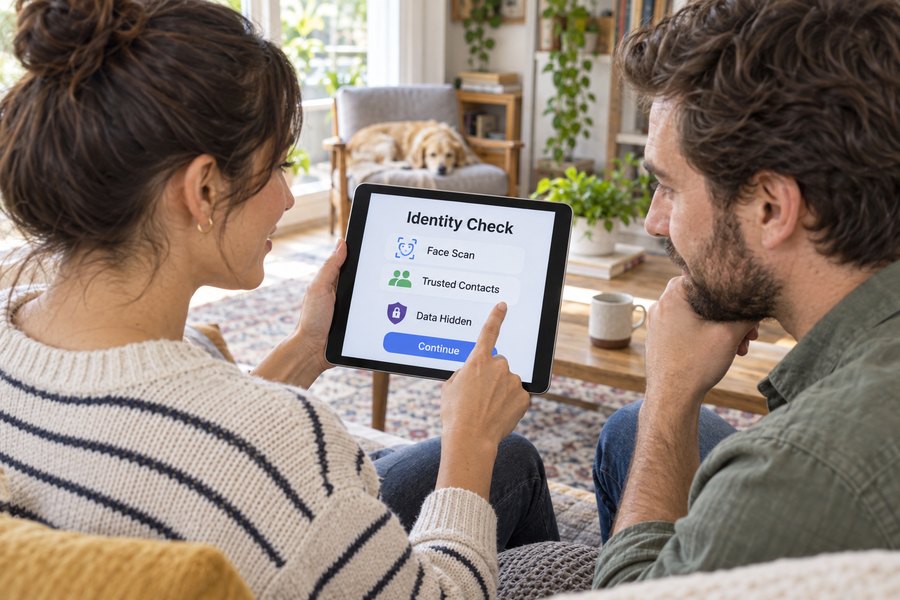
For most of the internet’s history, the question of whether the entity on the other end of a conversation was human answered itself. A comment on a forum, a message in a chat room, a review left on a shopping site: these were, almost by default, produced by a person sitting somewhere typing, because nothing else was capable of producing them convincingly. That default assumption, so basic it rarely needed to be stated, has quietly stopped being true. Generative AI can now write a forum comment, hold a conversational chat exchange, and compose a glowing product review that is, in isolation, indistinguishable from something a real person wrote, and it can do all of this at a speed and scale no human ever could, producing thousands of convincing fake interactions for every genuine one a platform might otherwise expect.
The scale of this shift is easy to underestimate because it happened gradually and then, seemingly, all at once. Early text-generation tools produced output that was often stilted or repetitive enough to be spotted with a moment’s attention, and early image generators produced telltale artifacts, an extra finger, a warped background, that made synthetic content identifiable to anyone looking closely. Each successive generation of these tools closed that gap further, and the current generation has largely closed it, producing text, images, and even short video that a careful, motivated human reviewer often cannot reliably distinguish from something a person made, let alone the automated moderation systems most platforms rely on to screen content at the volume modern usage requires. The result is not a single dramatic breach but a slow erosion of the background assumption that made the internet’s earlier, lighter-touch approach to identity verification workable in the first place.
This shift has quietly undermined a set of assumptions that entire industries were built on. A social media platform that counts engagement assumes, at least implicitly, that engagement reflects real human attention. An online survey, a product review section, a political comment thread, a dating app profile, a voting mechanism in a decentralized organization, all of these systems were designed for a world in which producing a large volume of convincing, distinct human-seeming activity required a large number of actual humans. Generative AI has broken that link, and the practical consequence is a rapidly growing category of problem generally described as Sybil attacks, named after a case study of dissociative identity disorder, in which a single actor creates many fake identities to manipulate a system that was designed to treat each identity as representing one real, distinct person.
Proof of personhood is the general name for a class of technologies built specifically to restore that broken link, verifying that a given digital account or interaction corresponds to one real, unique human being, without necessarily requiring that person to reveal who they actually are. This last part is the detail that makes the problem genuinely difficult rather than trivially solvable. If a system did not care about privacy, verifying humanity would be comparatively simple: require a government identity document, tie it to a real name, and check it against an existing registry, the approach airlines, banks, and government services have used for decades. Proof of personhood is a harder problem precisely because it tries to answer a narrower question, are you a unique human, without answering the broader question of who specifically you are, a distinction that matters enormously to anyone worried about surveillance, discrimination, or the simple, well-founded discomfort of having their identity permanently linked to everything they do online.
That distinction between uniqueness and identity is not a minor technical footnote; it is the entire reason this has become its own field of research and product development rather than a solved problem borrowed wholesale from existing identity-verification industries. A government-issued identity document proves who you are, in the fullest legal sense, but using one for every online interaction would mean permanently attaching a real name and a traceable legal identity to every comment, vote, or transaction a person makes, an outcome most people would reasonably find invasive even if it would technically solve the Sybil-attack problem. Proof of personhood systems are, in effect, an attempt to extract just the one useful property that full identity verification would provide, confidence that an account represents one real person rather than a fabricated duplicate, while discarding everything else about that person’s identity that a platform does not actually need to know in order to prevent abuse.
Two broad technical strategies have emerged to solve this problem, and they carry sharply different tradeoffs. The first relies on biometric uniqueness, scanning some physical feature of a person, an iris, a palm, a face, that is extremely difficult to fake or duplicate, and using a mathematical representation of that feature to ensure no one registers more than once. The second relies on social uniqueness, building a graph of verified human relationships and inferring that an account is real based on how it is vouched for by other accounts already established as real. This article examines both approaches in detail, focusing on two real, operating projects that embody each strategy: World, the iris-scanning project formerly known as Worldcoin, which has achieved enormous scale while triggering a remarkable, well-documented wave of government bans and suspensions across multiple continents, and BrightID, a smaller, social-graph-based alternative that has taken a deliberately different path built around relationships rather than biometrics. It closes with an honest look at the deeper tradeoffs neither approach fully escapes: the difference between data that, once compromised, stays compromised forever, and data that scales more slowly but asks less of the people who provide it.
The Bot Problem: Why the Internet Needs Proof of Personhood
The specific technical threat that proof of personhood is designed to counter is the Sybil attack, a term borrowed from computer science literature describing any situation in which a single adversary creates a large number of pseudonymous identities to gain a disproportionate influence over a system that assumes each identity represents an independent, distinct participant. Sybil attacks are not new; they have been a known problem in distributed computing and online systems for decades, showing up in early peer-to-peer networks, online voting systems, and social media manipulation campaigns long before generative AI became a mainstream concern. The term itself comes from a well-known 1970s book describing a woman diagnosed with what was then called multiple personality disorder, and computer scientists borrowed the name in the early 2000s specifically because it captured the core dynamic precisely: one underlying actor presenting as many distinct, seemingly independent identities to an outside observer with no easy way to tell them apart. What has changed is the cost of executing a convincing Sybil attack at scale, which has collapsed dramatically as generative AI has made it possible to produce large volumes of distinct, plausible, human-seeming content, profile pictures, and conversational responses without any human labor at all.
The consequences of this shift show up across a wide range of online systems that were never built to withstand it. Social media platforms report increasing volumes of accounts that behave, post, and interact in ways indistinguishable from genuine users but that are, in fact, coordinated networks controlled by a small number of actual operators, used to manufacture the appearance of grassroots support for a product, a political position, or a piece of misinformation. Online marketplaces and review platforms face a parallel problem with fake reviews generated at a volume and quality that increasingly defeats older detection methods built around spotting repetitive phrasing or unnatural timing patterns, patterns that generative AI can now vary convincingly across thousands of supposedly independent reviews. Decentralized systems that distribute resources based on a one-person-one-vote or one-person-one-share principle, quadratic funding platforms, universal basic income experiments built on cryptocurrency, and decentralized governance votes, are especially vulnerable, since a Sybil attacker who can cheaply create many apparently independent identities can claim a share of resources or voting power vastly disproportionate to their actual, singular presence in the system. These decentralized use cases are, not coincidentally, where proof of personhood technology first found its most committed early adopters, since a traditional, centralized identity-verification service, requiring a government ID checked against a national database, is structurally at odds with the values of privacy and censorship resistance that motivate much of the decentralized technology community in the first place, creating real demand for an alternative that could deliver Sybil resistance without reintroducing the centralized, identity-revealing verification these systems were often built specifically to avoid.
The traditional first line of defense against automated abuse, the CAPTCHA, a challenge designed to be trivial for a human but difficult for a computer program, has become a steadily less reliable barrier precisely because the underlying premise no longer holds. Early CAPTCHAs asked users to read distorted text or identify objects in a grid of photographs, tasks that were, for years, genuinely difficult for automated systems to solve reliably. Modern AI systems, particularly the same generative and computer-vision models driving the broader Sybil-attack problem, can now solve many of these challenges with accuracy that rivals or exceeds human performance, and a thriving underground market of low-cost human CAPTCHA-solving services fills in whatever gap remains, meaning even a CAPTCHA an AI genuinely cannot solve is often defeated within seconds by routing it to a real person being paid a small fee per solve. Proof of personhood systems represent a fundamentally different kind of defense, one that does not try to distinguish a human from a bot at the moment of a single interaction, but instead tries to establish, once, in a way that is durable and hard to repeat, that a given digital identity corresponds to exactly one real person, shifting the defense from a per-action challenge to a foundational property of the account itself.
Two Approaches to Proving You’re Human
Faced with the challenge of establishing durable, hard-to-fake human uniqueness without necessarily revealing a person’s full identity, the field has converged on two broadly distinct technical strategies, each grounded in a different source of evidence about what makes a person genuinely unique and difficult to duplicate. The first strategy looks inward, to the body itself, using a biological feature that is both extremely difficult to replicate and, unlike a name or an email address, cannot simply be typed in twice by the same person hoping to register two accounts. The second strategy looks outward, to a person’s relationships with other verified people, reasoning that while any individual account might be fake, a large, organically formed network of mutual human vouching is difficult for a single attacker to fabricate convincingly at scale.
Both strategies share a common structural goal despite their different sources of evidence: each tries to make registering a second, fraudulent identity meaningfully harder or more costly than registering a first, genuine one, rather than trying to achieve the impossible task of perfectly verifying every claim of humanity with complete certainty. A biometric system raises this cost by requiring a genuinely distinct physical feature for every registration, something a single person cannot manufacture more of on demand. A social system raises this cost by requiring a genuinely distinct set of real-world relationships for every registration, something that, similarly, a single person acting alone cannot simply invent at scale without either recruiting real collaborators or building a convincingly dense fake network, either of which takes real effort and carries real risk of detection. Neither system claims to make fraud mathematically impossible; both aim to make it expensive and difficult enough that it stops being worthwhile for all but the most determined and well-resourced attackers, a more modest but more achievable goal than perfect verification.
It is also worth noting that these two strategies are not the only conceivable approaches, even if they are the two that have attracted the most serious investment and real-world deployment to date. Some proposals have explored combining smaller pieces of behavioral or contextual evidence, typing patterns, device history, network reputation, into a probabilistic score rather than a binary human-or-not determination, and others have proposed hybrid systems that layer a lighter social or behavioral check on top of an occasional, less frequent biometric check to balance the strengths of both approaches. None of these hybrid or alternative approaches has yet achieved anything close to the scale or public documentation of the two primary strategies this article focuses on, which is why World and BrightID, examined in detail in the sections that follow, remain the clearest and most instructive real-world test cases available today.
Neither strategy is a clean, obviously correct solution, and the choice between them involves a genuine tradeoff rather than a simple technical upgrade path from one to the other. A biometric approach offers a very strong, mathematically precise uniqueness guarantee, since a given iris or palm print genuinely does belong to exactly one person and cannot be organically shared or split the way a social relationship can be gamed, but it requires collecting and processing sensitive physical data that carries permanent consequences if mishandled or breached. A social approach avoids collecting any physical data at all, preserving a meaningfully different privacy profile, but it inherits the harder, less mathematically clean problem of actually verifying that a claimed social relationship is genuine rather than itself part of a coordinated fabrication, and it necessarily grows more slowly, since it depends on an organic, real-world web of human connections rather than a device that can process a new registration in seconds.
Biometric Verification: Unique but Irreversible
Biometric proof of personhood systems work by capturing a detailed digital scan of a physical feature, most commonly an iris, a palm print, or in some proposed designs a fingerprint or facial structure, and converting that scan into a mathematical representation, often called a hash or embedding, that captures the feature’s uniqueness without necessarily storing a literal, reconstructable image. When a new registration occurs, the system compares this mathematical representation against every previous registration already in its database, and if a sufficiently close match is found, the system can conclude that this same physical feature has already been registered under a different identity, flagging a likely duplicate registration attempt. This comparison is what gives biometric proof of personhood its strongest selling point: an iris genuinely is unique to one person and does not change in any way that would let someone easily circumvent the system by registering the same eye multiple times under different names.
The core weakness of this approach follows directly from what makes it strong. Biometric data is permanent in a way that almost no other form of identifying information is; a compromised password can be changed, a stolen credit card can be canceled and reissued, but a person cannot get a new iris if their biometric data is ever breached, leaked, or misused by the organization that collected it. This permanence transforms every design and security decision a biometric proof of personhood system makes into a decision with essentially irreversible stakes, since any failure of data handling, encryption, or organizational trust cannot later be corrected the way a conventional data breach involving passwords or financial information sometimes can be, through reissuance and monitoring. It also raises a harder philosophical question that biometric systems have to answer explicitly: even if the organization operating the system has no current intention of misusing the biometric data it collects, what happens to that data, and to the people it describes, if the organization changes ownership, changes its policies, is compelled by a future government to share the data, or is compromised by a sophisticated attacker years after collection, long after the original context and assurances that convinced someone to participate have faded from memory.
Biometric systems have generally tried to address at least part of this concern through technical design rather than policy promises alone, most commonly by processing the physical scan on the device itself and discarding the original image immediately, retaining only the derived mathematical representation rather than a literal, reconstructable photograph of the iris or palm. This design choice meaningfully reduces, though it does not eliminate, the practical risk of a breach exposing a usable image of someone’s biometric feature, since an attacker who gains access to a database of mathematical hashes generally cannot directly reconstruct the original physical image from them using current cryptographic methods. What this design cannot solve is the underlying policy and trust question of who controls the enrollment database, the mathematical representations themselves, and the infrastructure used to compare new scans against it, since that database, however well protected, remains a single, permanent, and highly sensitive record of who has been enrolled and when.
Social Verification: Private but Slower to Scale
Social-graph-based proof of personhood systems take a fundamentally different approach, building a network in which each person vouches for other people they know personally, typically by connecting with them through a dedicated app in a way that creates a private, cryptographically recorded link between the two accounts without revealing the specific nature of their relationship to anyone else. Over time, as more people join and vouch for each other, this produces a large, decentralized graph of human connections, and the system’s core insight is that a real, organically grown social network has a distinctive mathematical structure, dense clusters of mutual connections reflecting genuine communities and relationships, that is difficult for a single attacker to fabricate convincingly at the scale needed to register a large number of fake identities, since fabricating that structure would require creating a correspondingly large and internally consistent web of fake relationships rather than simply generating a single fake biometric scan.
This approach’s central advantage is exactly what the biometric approach cannot offer: no physical, permanent data ever leaves a person’s control, meaning there is nothing equivalent to an iris scan that could be breached, leaked, or misused in a way the affected person could never undo or change. A social-graph system’s privacy profile is also generally more granular and negotiable than a biometric system’s binary choice to participate or not, since a person can typically control how many connections they make, with whom, and can, in principle, exit the system without leaving behind a piece of permanently compromising physical data, closer to deleting a social media account than to trying to retract a fingerprint from a government database.
The tradeoffs run in the opposite direction from the biometric approach’s weaknesses. Building a dense, trustworthy social graph takes time and organic growth in a way that installing biometric scanning devices in high-traffic locations does not, since a social verification system can only grow as fast as real people are willing to vouch for other real people they actually know, a process that resists the kind of rapid, capital-funded scaling that a company can achieve by manufacturing and deploying thousands of scanning devices simultaneously. Social systems are also vulnerable to a different, subtler failure mode than biometric duplication: coordinated collusion, in which a determined attacker recruits or pays a number of real, already-verified people to vouch for fake accounts, exploiting the fact that the system cannot always distinguish a genuine, spontaneous vouching relationship from one that has been arranged specifically to defeat the verification process, a vulnerability that grows more serious as the value of a fraudulent verification, whether an airdropped cryptocurrency reward or access to a valuable service, increases.
The analytical work of distinguishing a genuine social graph from a manufactured one is, correspondingly, an ongoing and never fully finished task rather than a one-time engineering problem, since a sufficiently patient and well-funded attacker can, in principle, cultivate real relationships over time specifically in order to eventually exploit them, a slower and more expensive form of attack than fabricating a biometric scan but not an impossible one. Social-graph systems typically respond to this by continuously analyzing the overall structure of the network for statistically unusual patterns, unusually dense clusters of connections formed in a short time window, or accounts whose only connections lead to other recently created accounts, rather than relying on any single connection’s legitimacy in isolation, an approach that trades the biometric system’s clean, per-registration certainty for an ongoing, network-wide, probabilistic assessment that improves as the graph grows larger and more mature.
World (Formerly Worldcoin): Biometric Proof of Personhood at Scale
World is, by a wide margin, the most ambitious, best-funded, and most controversial attempt to build biometric proof of personhood at global scale. The project was announced in October 2021 by co-founders Sam Altman, better known as the chief executive of OpenAI, and Alex Blania, under the name Worldcoin, conceived from the outset as a combination of a digital identity system and an associated cryptocurrency-based financial network. Its signature piece of hardware, called the Orb, is a polished spherical device roughly the size of a bowling ball that uses specialized optical sensors to scan a person’s iris and generate a unique mathematical identifier, called an IrisCode, intended to guarantee that each individual can register only once within the system regardless of how many times they might attempt to sign up under a different name or account. The company’s stated ambition was extraordinarily large from the beginning: its original hardware roadmap called for Orbs capable of scanning around 700 new people per week each, with plans to manufacture more than 50,000 devices annually to support a genuinely global rollout.
The project’s original design also tied its identity layer directly to a cryptocurrency token, WLD, distributed to newly verified users as an incentive to complete registration, reflecting Altman and Blania’s founding thesis that a global, verified identity network and a global digital currency were most likely to succeed if built and adopted together rather than as separate products competing for the same early user base. This dual identity-and-currency structure has shaped much of the project’s subsequent history, since it meant the company’s early growth strategy in lower-income countries frequently involved offering direct financial incentives, cash or cryptocurrency worth real, meaningful sums to people in the specific communities being targeted, for completing what was simultaneously being marketed as a contribution to a global public good and a financial opportunity, a combination that drew sustained criticism, discussed further later in this article, for blurring the line between informed consent and financial inducement in a way that would likely not have been tolerated in a wealthier market with stronger existing consumer protections.
The Technology, the Scale, and the Corporate Pivot
World’s parent company, Tools for Humanity, launched the full World ID system in July 2023, with plans to install iris-scanning Orbs across more than 35 cities in 20 countries, frequently offering a signup incentive of roughly $50 worth of cryptocurrency to encourage people to visit an Orb and complete registration, a strategy that produced long queues at Orb locations in cities including Nairobi, Bengaluru, and Hong Kong. The technology has continued to evolve since that initial launch: the company introduced World ID 2.0, adding selfie-based authentication as a complement to iris scanning, and later released a more compact Orb Mini device intended to make deployment easier and less capital-intensive than the original full-size hardware. In October 2024, the company rebranded from Worldcoin to World, a change that coincided with its continued push into new markets, including a formal United States launch in April 2025 that deployed roughly 7,000 Orbs across six major American cities, followed by an additional $135 million funding round in May 2025, raised through token sales to institutional investors including Andreessen Horowitz and Bain Capital Crypto, specifically earmarked for expanding the domestic Orb network.
The scale figures the company has reported are substantial by any measure, though they require some care to interpret consistently, since different reports issued at different times have emphasized different metrics. As of around April 2025, the company reported more than 26 million World App users, with more than 12.5 million of those having completed the full Orb-based iris verification needed to obtain a genuine World ID, and by around April 2026, the company’s own public claims described more than 18 million people verified across some 160 countries, figures that illustrate both real, continued growth and a persistent, meaningful gap between total app downloads and the smaller subset of users who have actually completed the in-person biometric verification step. That gap matters because it is the Orb-verified figure, not the broader app-download figure, that represents genuine proof-of-personhood coverage, and it suggests the physical, in-person nature of Orb verification remains a real bottleneck on the system’s growth regardless of how quickly the underlying app itself spreads.
The company’s own reporting has, at times, further complicated this picture by publishing surveys emphasizing public support for its return to markets where it had previously been suspended, releasing studies in Portugal, Spain, and South Korea reporting that a large majority of existing World ID holders in each country supported the project resuming full operations, and separately publishing an April 2026 blueprint outlining how partner companies could generate revenue by integrating World ID into their own products. Taken together, this pattern of parallel activity, continued technical expansion, favorable survey publication, and a monetization pitch to potential partners, illustrates a company actively working multiple tracks simultaneously: rebuilding legitimacy in markets it had lost, while building the commercial case that ultimately culminated in its 2026 corporate partnerships.
Most strikingly, after several years defined primarily by regulatory conflict, described in detail in the next section, World executed a clear pivot toward mainstream corporate partnerships in 2026. On April 17, 2026, the company announced strategic partnerships with Tinder, Zoom, and Docusign, each intending to use World’s identity verification to combat deepfakes, dating scams, fraudulent video-call impersonation, and fraudulent document signing respectively, marking a significant shift from a project once associated primarily with cryptocurrency speculation and controversial biometric data collection in lower-income countries toward integration with some of the most widely used communication and productivity platforms in the developed world.
A Global Regulatory Reckoning
Even as World’s technology and corporate adoption expanded, the project generated an unusually long, well-documented, and geographically wide-ranging sequence of government interventions, investigations, and outright bans, a regulatory history detailed enough to function as its own case study in how governments around the world have responded to large-scale biometric data collection by a private company. The trouble began early: an April 2022 investigation by MIT Technology Review found that the project’s early field operations across Africa and Asia involved deceptive marketing practices and the collection of biometric data beyond iris scans, including heartbeat and breathing measurements, often without meaningful informed consent from the people being enrolled, well before the project’s formal July 2023 public launch.
The most consequential and sustained regulatory action came from Kenya, one of the project’s earliest and most active markets, where authorities paused all biometric verification in August 2023, questioning the “authenticity and legality” of the process and forming a fifteen-person parliamentary committee to investigate. Kenya’s suspension outlasted a full year-long government probe, which was ultimately dropped in June 2024, yet Kenya still had not resumed data collection as of that decision, illustrating how a single early enforcement action can create lasting operational disruption even after the specific legal investigation that triggered it concludes. Europe’s response arrived in March 2024, when Spain’s data protection authority, the AEPD, imposed a three-month precautionary ban after receiving complaints about the platform’s lack of transparency, its collection of data from minors, and its failure to let adult users withdraw consent for data sharing already given, and Portugal’s national data protection commission followed within weeks with its own order suspending the Orb’s data collection on nearly identical grounds. Notably, when the three-month Spanish ban period ended in June 2024, the company chose to voluntarily hold off on relaunching operations there until the relevant laws became clearer, rather than immediately resuming. Argentina’s Buenos Aires provincial authorities added a further, distinct line of scrutiny in April 2024, accusing the company of including abusive clauses in the contracts users agreed to before scanning their irises, even as reporting from the region found that many Argentines continued participating in exchange for cryptocurrency rewards despite the ongoing regulatory concerns, illustrating how financial incentive and regulatory caution can pull in opposite directions within the same population at the same time.
The pattern continued expanding through 2024 and into 2025, spanning a remarkable range of jurisdictions and legal rationales. Hong Kong’s privacy watchdog conducted ten covert site visits at locations linked to the company in May 2024 before ordering a halt to operations over what it termed unnecessary and excessive data collection. Germany’s data protection authority ordered the deletion of certain collected data in December 2024 for failing to comply with the European Union’s General Data Protection Regulation. Brazilian regulators banned the company’s operations in January 2025 after determining it had been paying citizens for iris scans in violation of a national data law requiring biometric consent to be free, informed, and unequivocal, and reaffirmed that ban in March 2025 with the threat of a daily fine equivalent to roughly $8,800 if data collection resumed. Indonesia temporarily suspended World ID operations in May 2025 pending a licensing investigation, the Philippines’ National Privacy Commission ordered an immediate halt to operations in October 2025 over consent concerns and the alleged exploitation of vulnerable populations, and Thai authorities shut down the project’s biometric data collection entirely in November 2025, ordering deletion of collected data. Taken together, this sequence, spanning at least eight countries across four continents over roughly three years, represents one of the most extensive and sustained regulatory pushbacks against a single private biometric data collection effort in the short history of large-scale consumer biometric technology, even as the same project simultaneously secured partnerships with some of the largest consumer technology companies in the United States.
A pattern worth noting across nearly every one of these interventions is that the specific legal objection rarely centered on the core technical premise of iris scanning itself, but rather on the surrounding process: whether consent was genuinely informed, whether it could be withdrawn, whether minors were inadvertently included, and whether financial incentives had improperly influenced people’s willingness to participate. This distinction matters for evaluating the technology’s future, since it suggests that regulators have generally been reacting to specific implementation choices, particularly the use of cash and cryptocurrency incentives in lower-income countries and gaps in consent infrastructure, rather than issuing a blanket judgment that biometric proof of personhood can never be operated in a way that satisfies data protection law, leaving open at least the theoretical possibility of a more carefully governed version of the same underlying technology eventually satisfying the concerns that have driven this remarkable string of enforcement actions.
BrightID and the Social-Graph Alternative
BrightID represents a deliberately different answer to the same underlying problem, built on the explicit premise, reflected in the project’s own public messaging describing itself as requiring “no sketchy Orbs,” that Sybil resistance does not have to come at the cost of collecting anyone’s physical biometric data. The framing is a pointed one, positioning the project as a direct, values-driven alternative to the biometric approach rather than simply a smaller competitor pursuing the same strategy at a slower pace, and it reflects a broader current within parts of the decentralized technology community that has grown increasingly skeptical of biometric data collection specifically because of the kind of regulatory and ethical controversies documented in the preceding section. Founded in February 2020 and operated as a nonprofit-structured organization, BrightID works by having users make private, cryptographically secured connections to other people they know personally through a dedicated smartphone app, building a pseudonymous social graph that a decentralized network of independently operated nodes analyzes to assess how likely it is that a given account represents one genuine, unique person based on the pattern and density of its verified connections to other already-established accounts, rather than on any single piece of physical evidence.
The project has found its clearest and most consequential adoption within the decentralized funding and governance ecosystem, most notably through its integration with Gitcoin, a widely used platform for quadratic funding, a mechanism that allocates matching funds to public-goods projects based partly on the number of unique individual contributors they attract rather than simply the total dollar amount raised, making it an unusually attractive and lucrative target for Sybil attacks by anyone hoping to fabricate the appearance of broad grassroots community support. BrightID’s own reporting on its Gitcoin-linked verification campaign describes surpassing 73,000 verified users, a modest figure next to World’s tens of millions but a meaningful base for the specific, narrower niche of Sybil-resistant identity within decentralized governance and public-goods funding that BrightID has focused on, rather than pursuing World’s broader ambition of a single, universal, global identity layer. Beyond Gitcoin specifically, the project has also been used to protect other funding rounds from Sybil manipulation, to power free cryptocurrency gas fee distributions for new users, and to support social account recovery, letting a user regain access to a lost account by having their existing verified connections vouch for the recovery request rather than relying on a centrally administered password reset process.
Technically, BrightID has continued to iterate on its privacy-preserving design, including what the project describes as the first large-scale production use of blind signatures, a cryptographic technique that lets the network confirm a user has been verified as unique without the verifying party or any downstream application ever seeing the specific details of the user’s underlying social connections, a meaningfully stronger privacy guarantee than simply promising not to misuse collected data, since the sensitive connection data is never fully exposed to any single party in the first place. The tradeoffs described earlier in this article show up clearly in BrightID’s own practical experience: the project has had to build tools specifically to detect and resist coordinated attempts by groups of already-verified users to fabricate connections to fake accounts in exchange for payment, an ongoing cat-and-mouse dynamic that has no direct equivalent in a biometric system, where a fabricated iris scan is far harder to produce convincingly than a fabricated social connection between cooperating parties.
The project’s governance structure also reflects its broader philosophical commitment to decentralization over rapid, centrally directed growth. BrightID’s core operations are stewarded by a legally wrapped decentralized organization that funds the core development team and holds responsibility for centralized infrastructure pieces, such as the app registry and app store listings, until they can eventually be further decentralized, while a separate, more loosely organized contributor structure allows community members to propose and receive funding for their own initiatives that extend the project in new directions. This structure trades the speed and coordination advantages of a single, centrally directed company, the kind of structure that let World negotiate and close partnerships with Tinder, Zoom, and Docusign in a matter of months, for a governance model more consistent with the decentralized, community-owned ethos that motivated the project’s founding in the first place, a tradeoff that mirrors, at the organizational level, the same fundamental choice between speed and distributed control examined throughout this article.
The Real Trade-offs: Privacy, Access, and Trust
Comparing World and BrightID directly makes the deeper, harder-to-resolve tradeoffs in this entire technology category concrete rather than abstract. The most fundamental difference is reversibility: BrightID’s worst-case privacy failure, a breach exposing which pseudonymous accounts are socially connected to which other accounts, is serious but survivable, since a compromised account can be abandoned and a new one rebuilt through new, presumably more careful connections. World’s worst-case privacy failure, a breach or misuse of collected iris data at meaningful scale, has no equivalent path to recovery, since the biometric feature it depends on cannot be reissued or changed by the person it belongs to, a distinction that explains much of the specific intensity and persistence of the regulatory reaction World has faced across so many different countries and legal systems, compared to the comparatively limited regulatory attention social-graph-based alternatives like BrightID have drawn. This is not simply a matter of BrightID having a smaller user base and therefore attracting less scrutiny, though scale is certainly part of the story; it also reflects a real, substantive difference in the underlying risk each system’s failure mode presents to a regulator whose core mandate is protecting the people within its jurisdiction from exactly the kind of permanent, unrecoverable harm that a biometric data breach represents in a way a social-graph data breach generally does not.
Physical and economic access represents a second significant divergence between the two models. World’s biometric approach requires a person to physically travel to a location where an Orb has been deployed, a real and sometimes serious barrier for people in rural areas, in countries where the company has paused operations following a regulatory action, or simply anywhere the company has not yet found it commercially worthwhile to install hardware, and the company’s own historical use of cash and cryptocurrency incentives to encourage sign-ups in lower-income countries has drawn specific, pointed criticism, including from prominent privacy advocates, for effectively paying financially vulnerable people to trade permanent biometric data for a comparatively small, one-time payment. BrightID’s social-graph approach requires no physical hardware and no travel, but it depends entirely on a person already having, or being able to build, a network of other verified contacts, which can itself function as a meaningful barrier for someone new to a community, isolated, or lacking existing social connections to people who have already gone through the verification process, a different but no less real form of unequal access than World’s hardware-driven bottleneck.
A third, less discussed tradeoff concerns who ultimately controls and can revoke access to the verifying infrastructure itself. World’s system, despite the decentralized aspirations reflected in its blockchain-based World Chain infrastructure, is fundamentally operated by a single private company, Tools for Humanity, which controls the Orb hardware, the enrollment process, and the underlying verification database, meaning the company itself functions as a single point of institutional control and, correspondingly, a single point of potential failure, compromise, or policy change that no individual user can meaningfully contest or route around. BrightID’s node-based verification network is more distributed by design, with multiple independently operated nodes analyzing the social graph rather than a single central authority, though this distribution comes with its own tradeoff, since a more decentralized system is often slower to adapt, harder to fund at the scale needed for rapid global growth, and less able to strike the kind of large, well-resourced corporate partnerships that World secured with Tinder, Zoom, and Docusign, deals that depend partly on a single, identifiable company being able to negotiate, sign contracts, and take on legal liability in a way a loosely coordinated decentralized node network structurally cannot.
This centralization tradeoff also shapes how each system can respond when something goes wrong. When a regulator orders World to halt operations or delete data, there is a single company that can, and generally does, comply, however reluctantly, because it has both the legal obligation and the technical ability to do so across its entire infrastructure. A more genuinely decentralized system built on BrightID’s model would face a structurally different, and in some ways more complicated, relationship with regulatory enforcement, since there may be no single party capable of unilaterally deleting data distributed across independently operated nodes, an arrangement that offers real resilience against a single point of censorship or shutdown but that could equally frustrate a legitimate regulatory order meant to protect the very users the system was built to serve, illustrating that decentralization is not an unambiguous good in every context but rather another tradeoff whose value depends heavily on whether the situation calls for resilience against control or accountability to oversight.
Final Thoughts
The rise of proof of personhood as a serious technology category is, in a strange way, a direct measure of how much confidence the internet has lost in its own oldest and most basic assumption: that the accounts, comments, and interactions filling any given platform were produced by distinct human beings acting more or less independently. Generative AI did not create the underlying incentive to fake human presence online, that incentive has existed as long as systems have rewarded engagement, votes, or unique participation, but it collapsed the cost of acting on that incentive so dramatically that older, lighter-touch defenses like CAPTCHAs have become unreliable faster than most platforms have been able to adapt. Proof of personhood is the most direct technical response to that collapse, and the fact that two such different approaches, one built around the unchangeable uniqueness of the human eye and the other built around the organic structure of human relationships, have both attracted real users, real funding, and real institutional adoption suggests the underlying problem is significant enough to sustain multiple, genuinely different solutions rather than converging quickly on one obviously correct answer.
What World’s remarkable regulatory history demonstrates, more than anything specific to iris-scanning technology itself, is that the world’s data protection authorities have not been willing to treat “we need this data to prevent bots” as a sufficient justification for collecting a category of information that can never be changed once compromised, regardless of how sophisticated the encryption or how sincere the stated intentions of the company collecting it. Eight or more countries across four continents independently arriving at some version of the same conclusion, that this specific tradeoff between Sybil resistance and permanent biometric exposure was not acceptable as originally implemented, is a meaningful signal about where the practical and legal limits of biometric proof of personhood currently sit, even as the same technology finds a warmer reception among corporate partners in less biometrically cautious markets. BrightID’s slower, smaller, more privacy-preserving path has drawn far less regulatory scrutiny, but it has also, by its own account, reached a user base smaller by more than two orders of magnitude, a difference that reflects the genuine, unavoidable tradeoff this entire article has traced between how quickly a verification system can scale and how much it asks of the people it verifies.
Neither approach has definitively won, and neither is likely to, because they are not really competing to solve identical problems so much as offering different answers to different risk tolerances and different use cases. A dating app trying to prevent romance scams and a decentralized grants platform trying to prevent Sybil attacks on public-goods funding face genuinely different stakes, and the world these two projects are building toward is more plausibly one in which several proof-of-personhood systems coexist, each suited to contexts where its particular tradeoffs are acceptable, than one in which a single universal standard for proving humanity ultimately prevails.
As generative AI continues to improve, the pressure driving this entire category of technology will almost certainly intensify rather than ease, and the choices a person makes about which systems to trust with their uniqueness, an iris scan handed to a private company, a web of real relationships mapped by a decentralized network, or simply the growing inconvenience of an internet where fewer institutions can tell human from machine at all, are likely to become a more routine and less avoidable part of ordinary digital life than they have been at any earlier point in the internet’s history.
FAQs
- What does “proof of personhood” actually mean?
It refers to technology that verifies a digital account or interaction corresponds to one real, unique human being, without necessarily requiring that person to reveal their name or full identity. It answers the narrower question of uniqueness rather than the broader question of who someone is. - Why can’t CAPTCHAs solve this problem anymore?
Modern generative AI and computer-vision systems can solve many CAPTCHA challenges with accuracy rivaling or exceeding humans, and a low-cost underground market of human CAPTCHA-solving services fills in whatever gap remains, defeating even effective CAPTCHAs within seconds for a small fee. - What is a Sybil attack?
A Sybil attack occurs when a single actor creates many fake identities to gain disproportionate influence over a system designed to treat each identity as an independent, distinct person, such as manipulating a vote, a funding allocation, or a platform’s engagement metrics. - How does World’s iris-scanning technology actually work?
World’s Orb device uses optical sensors to scan a person’s iris and generate a unique mathematical identifier called an IrisCode. New registrations are compared against previous ones to detect and block duplicate sign-ups by the same person under a different identity. - Why have so many countries banned or suspended World’s operations?
Regulators in Kenya, Spain, Portugal, Hong Kong, Germany, Brazil, Indonesia, the Philippines, and Thailand have all taken action, citing issues including inadequate consent, collection of minors’ data, excessive data collection, and paying financially vulnerable people for permanent biometric data, actions spanning from August 2023 through November 2025. - What is BrightID, and how is it different from World?
BrightID is a social-graph-based proof-of-personhood system that verifies uniqueness through a private network of human connections rather than biometric scanning, avoiding the collection of any physical, irreversible data. It has around 73,000 verified users through its integration with the Gitcoin funding platform, far smaller in scale than World. - Is biometric data ever really safe once it’s been collected?
It carries permanently higher stakes than most other data types. Unlike a password or credit card number, a compromised iris scan cannot be reissued or changed, so any future breach, policy change, or misuse of that data has no path to correction for the affected person. - Can social-graph verification systems be gamed?
Yes, primarily through coordinated collusion, where a group of already-verified real people are recruited or paid to vouch for fake accounts. This is a different vulnerability than biometric duplication and requires ongoing detection efforts rather than a single technical fix. - Why did companies like Tinder, Zoom, and Docusign start partnering with World in 2026?
These companies are using World’s identity verification to combat deepfakes, romance scams, fraudulent video-call impersonation, and fraudulent document signing, representing a shift toward mainstream corporate adoption after years defined primarily by regulatory conflict in other markets. - Will one proof-of-personhood system eventually become the global standard?
It seems unlikely in the near term. Biometric and social-graph approaches serve different risk tolerances and use cases, and the more probable outcome is that multiple systems coexist, each suited to contexts where its specific tradeoffs between speed, privacy, and permanence are acceptable.